
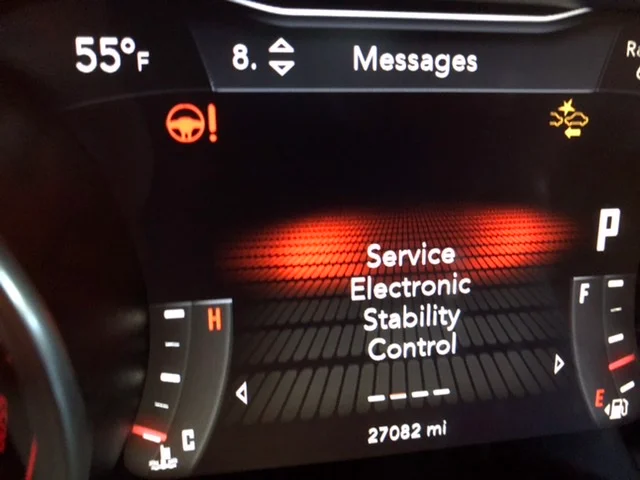
If you drive a Dodge Charger and you suddenly see a “Service Electronic Stability Control” message pop up on your dashboard, do not panic. But do not ignore it either. That warning is your car telling you something is off with one of its most important safety systems, and understanding what that means could genuinely save your life on a slippery road.
This guide breaks down exactly what the electronic stability control system does, why it throws that warning message, what causes it to fail, and how to fix it without wasting money on guesswork. We will keep things straightforward and practical, whether you are a seasoned DIYer or someone who just wants to understand what their mechanic is talking about.
What Does “Service Electronic Stability Control” Actually Mean on a Dodge?
Before getting into the warning message itself, it helps to understand what the Electronic Stability Control system actually does. Think of it as your car’s invisible co-pilot. It is always watching, always calculating, and ready to step in the moment your vehicle starts going somewhere you did not intend.
Here is a real-world scenario. Imagine you are driving your Dodge Charger on a wet highway and you take a corner a little too fast. Your rear wheels start to slide outward. Without ESC, that could become a spin. With ESC working properly, the system detects the skid before you even fully register it and applies targeted braking to specific wheels to pull the car back in line.
That all sounds great. But when the “Service Electronic Stability Control” message shows up, it means the system has detected a problem with itself. It cannot guarantee it will work when you need it. That is the core issue.
The message can appear because of a sensor fault, an electrical issue, a blown fuse, or even a weak battery. The ESC system is not a single standalone unit. It is a network of components that all have to communicate and cooperate. When one part of that network breaks down, the whole system flags itself as unreliable.
How the ESC System Works: The Sensors Behind the Safety
The ESC system does not work by magic. It relies on a set of sensors that constantly feed it data about what the car is doing. Each sensor plays a specific role, and if even one of them goes bad, the entire system can be compromised.
Here is a breakdown of the key sensors involved and what they each do.
The Steering Angle Sensor: Knowing Where You Want to Go
This sensor sits inside the steering column and monitors the exact position of your steering wheel at all times. It tells the ESC system which direction you intend to go. Think of it as the system’s reference point for “intended path.”
If the steering angle sensor is off or miscalibrated, the ESC system cannot correctly compare where you are trying to go with where the car is actually going. That comparison is the entire foundation of how ESC works.
Wheel Speed Sensors: Tracking Every Rotation
There is one wheel speed sensor at each wheel, and they are constantly measuring how fast each wheel is spinning. These sensors are also shared with your ABS (Anti-lock Braking System), which is why a bad wheel speed sensor often triggers multiple warning lights at once.
The ESC system uses wheel speed data to detect traction loss. If one wheel is spinning significantly faster than the others, that is a sign the vehicle is skidding or losing grip. The system then steps in to apply corrective braking.
The Lateral Acceleration Sensor: Measuring the G-Forces in Corners
When your car goes around a bend, centrifugal force pushes it outward. The lateral acceleration sensor measures how strong that force is. This tells the ESC system how hard the car is being pushed sideways relative to the direction you are traveling.
This sensor is especially important during fast cornering, emergency lane changes, or situations where the car might be on the edge of rolling or sliding.
The Yaw Rate Sensor: Detecting Spin Before It Happens
Yaw refers to the rotation of the vehicle around its vertical axis. If the rear of the car starts swinging out to the right while the front is pointed left, that is yaw. The yaw rate sensor detects how quickly that rotation is happening.
When the system detects an unexpected yaw rate, it knows the car is starting to spin or oversteer, and it acts immediately. A damaged yaw rate sensor means the system is essentially blind to this type of instability.
All four of these sensors work together in real time. Lose one of them and the ESC system loses a piece of the picture it needs to do its job accurately. That is why a fault in any one sensor is enough to trigger the “Service Electronic Stability Control” warning.
The Real Reasons Your Dodge Is Showing This Warning
There are several things that can cause this warning message to appear. Some are simple and cheap to fix. Others require a bit more work. Here is what you are most likely dealing with.
1. A Faulty Wheel Speed Sensor
This is the most common culprit. The wheel speed sensors are located in a harsh environment. They sit right near the wheel hub, close to the brake assembly, where they are exposed to road grime, water, salt, and heat cycles every single day.
Over time, the sensor itself can fail, or the reluctor ring (the toothed ring the sensor reads) can become damaged or coated in debris. When the sensor stops sending accurate data, the ESC system goes into fault mode.
One tell-tale sign that a wheel speed sensor is at fault is when you see the ABS warning light come on at the same time as the ESC warning. Because both systems share these sensors, a single failed sensor can trigger both warnings simultaneously.
2. Damaged or Corroded Wiring
The ESC system is entirely electrical. Every sensor, every module, every communication between components depends on wiring. And wiring can fail in ways that are surprisingly hard to spot.
Corrosion is a big one, especially in regions where roads are salted in winter. Rodent damage is another surprisingly common cause. A mouse chewing through a wiring harness in your engine bay or under the car can take out a sensor circuit in minutes.
When wires are damaged, two things happen. First, the components that depend on that wiring lose their power supply. Second, communication between the ESC module and its sensors gets interrupted. Either way, the system cannot function and throws the warning message.
3. A Weak or Failing Battery
This one surprises a lot of people. A weak battery might not prevent your car from starting, but it can absolutely cause electrical gremlins throughout the vehicle, including in the ESC system.
Here is why. The ESC system requires a stable, consistent voltage to operate accurately. When the battery is aging and its voltage drops under load, the ESC module can misread that as a fault and trigger the warning.
If you notice the warning message appearing mostly when you start the car cold, or when you are running a lot of electrical accessories, the battery is a logical place to start your investigation. A simple load test at any auto parts store can confirm whether the battery is healthy or needs replacing.
4. A Blown Fuse
Every electrical system in your vehicle has a fuse protecting it. The ESC system is no different. When there is a sudden spike in current, the fuse blows to protect the circuit from damage. That is actually the fuse doing its job correctly.
But once a fuse blows, the system it was protecting goes dead. No current means no ESC function, and the warning message appears. The good news is that a blown fuse is one of the cheapest and simplest fixes in automotive repair. The trickier part is figuring out why it blew in the first place, because if something in the circuit caused a power surge, simply replacing the fuse might just cause it to blow again.
5. Faulty Yaw Rate, Steering Angle, or Lateral Acceleration Sensor
Beyond the wheel speed sensors, any of the other ESC-related sensors can fail. The yaw rate sensor and lateral acceleration sensor are typically housed together in a single module located under the center console or seats. The steering angle sensor sits in the steering column.
These sensors are less exposed to physical damage than wheel speed sensors, but they can still fail due to age, electrical issues, or physical damage from an accident. Even a minor fender bender can knock a sensor out of calibration.
Worth noting: after any collision, even a small one, it is always a good idea to have the ESC system checked and the sensors recalibrated. The system relies on precise measurements, and even slight misalignment can cause it to behave erratically or throw fault codes.
6. A Faulty ESC Control Module
Less common, but worth mentioning. The ESC control module is the brain of the system. It receives all the sensor data and makes decisions about when and how to apply corrective braking. Like any electronic module, it can fail.
Module failures are typically not the first thing to check, because sensors and wiring are far more likely culprits. But if everything else checks out and the warning persists, the module itself may need to be tested or replaced.
How to Diagnose the Problem Before Spending Any Money
Before you start replacing parts, spend a few minutes diagnosing the issue properly. Throwing parts at a problem without knowing the cause is a fast way to waste money.
Here is a logical approach to diagnosing a “Service Electronic Stability Control” warning on a Dodge Charger.
Step 1: Plug in an OBD-II Scanner
This is your first move. An OBD-II scanner connects to the diagnostic port under your dashboard and reads any fault codes stored by the vehicle’s computer. These codes will tell you exactly which system or sensor triggered the warning.
Not all OBD-II scanners are created equal. A basic generic scanner will read engine codes, but ESC-related codes often fall under “body” or “chassis” codes that require a more capable scanner. If you only have a basic reader, consider borrowing or renting a more advanced unit from an auto parts store, or taking the car to a shop for a proper scan.
Write down every code you get. Do not just note the ESC-related ones. Sometimes a separate code for a wheel speed sensor or steering angle sensor is the actual root cause.
Step 2: Check the Battery First
Before diving into sensors and wiring, check the basics. A battery that tests below 12.6 volts at rest or drops significantly under load is a suspect. Have it load tested. If it is more than 4-5 years old and struggling, replace it. This is cheap insurance and could resolve the issue entirely.
While you are at it, check the battery terminals for corrosion. A layer of white or greenish buildup on the terminals can cause enough resistance to disrupt electrical signals throughout the car. Clean the terminals with a mixture of baking soda and water, rinse, and reconnect securely.
Step 3: Inspect the Fuses
Pull out your owner’s manual and find the fuse diagram. Locate any fuses related to the ESC, ABS, or stability systems. Pull those fuses and inspect them visually. A blown fuse has a visible break in the metal strip inside.
Replace any blown fuses with exact same amperage rating. Do not go higher in amperage thinking it will be more reliable. A higher-rated fuse defeats the purpose of protection and can cause serious damage to the circuit.
Step 4: Visually Inspect the Wheel Speed Sensors and Wiring
With the car safely lifted and supported, take a look at each wheel speed sensor. They are located at each wheel hub, close to the brake rotor. Look for:
- Physical damage to the sensor body
- Corrosion on the connector
- Frayed, cracked, or broken wiring
- Heavy buildup of dirt or metallic debris on the sensor tip
Sometimes a sensor is not actually failed. It is just coated in brake dust and metallic debris to the point where it cannot read the reluctor ring accurately. Cleaning the sensor tip can sometimes resolve the fault without any replacement at all.
Step 5: Test the Sensors with a Multimeter
If you have some comfort with basic electrical testing, a multimeter can tell you whether a wheel speed sensor is producing a signal. Most wheel speed sensors on modern vehicles are active sensors that output a voltage signal. Your repair manual or a quick online search for your specific Charger model year will tell you what the expected resistance or voltage output should be.
If the sensor is producing no signal or an erratic one, replacement is the right call.
How to Fix Each Cause of the Service Electronic Stability Control Warning
Now that you know what causes the problem and how to find it, here is how to fix each one.
Fixing a Bad Wheel Speed Sensor
Replacing a wheel speed sensor is a job most mechanically inclined people can handle at home. Here is the general process:
- Lift and safely support the vehicle on the affected wheel.
- Remove the wheel.
- Locate the sensor at the wheel hub. It is usually held in place with one bolt.
- Disconnect the wiring harness connector.
- Remove the mounting bolt and pull the sensor out.
- Install the new sensor, reconnect the harness, torque the bolt to spec, and reinstall the wheel.
- Clear the fault codes with your OBD-II scanner and test drive the vehicle.
Always use a sensor that matches your exact Charger model year and trim level. Sensors are not universally interchangeable, and using the wrong one can cause fitment issues or incorrect readings.
One thing worth doing while you are in there: inspect the reluctor ring on the axle shaft or wheel hub. This is the toothed ring the sensor reads. If teeth are chipped, broken, or coated in debris, even a new sensor will struggle to get accurate readings.
Repairing Wiring Issues
Wiring repairs range from simple to complex. If you find a single connector that is corroded, cleaning it with electrical contact cleaner and applying dielectric grease before reconnecting can often restore the circuit.
If you find physically damaged wiring, it needs to be properly repaired or the affected section of harness replaced. Do not just tape over a chewed-through wire. That is a temporary fix that will fail again. Use proper automotive wire connectors and heat shrink tubing to make a solid, weatherproof repair.
If the damage is extensive, a full wiring harness replacement may be the cleanest solution. This is a more involved job that is often better handled by a shop if you are not experienced with automotive wiring.
Dealing with Battery Problems
If the battery is confirmed weak or failing, replace it. Use the correct group size for your Charger and make sure the replacement meets or exceeds the original CCA (cold cranking amps) rating. After replacing the battery, clear any stored fault codes. Sometimes the ESC warning disappears entirely once stable voltage is restored.
If the battery is fine but the terminals are corroded, clean them thoroughly. Here is a simple method:
- Mix one tablespoon of baking soda with one cup of water.
- Pour or brush the mixture onto the corroded terminals.
- Let it fizz and bubble for a minute, then scrub with an old toothbrush or wire brush.
- Rinse with clean water and dry thoroughly.
- Apply a thin coat of battery terminal protector or petroleum jelly before reconnecting.
Replacing a Blown Fuse
Locate the fuse box using your owner’s manual. Dodge Chargers typically have both an underhood fuse box and an interior fuse panel. Find the fuses related to ABS, ESC, or stability control.
Use a fuse puller tool (or needle-nose pliers if that is all you have) to pull the suspect fuse. Hold it up to a light source. If the metal strip inside is broken, it is blown. Replace it with an identical fuse of the same amperage rating.
If the new fuse blows again quickly, stop. You have a short circuit somewhere in the wiring, and you need to find it before replacing fuses repeatedly. Continuing to blow fuses without finding the root cause can damage the wiring harness further.
Replacing Other ESC Sensors
If the OBD-II scanner points to the yaw rate sensor, lateral acceleration sensor, or steering angle sensor, replacement of the specific sensor is the fix. These sensors are generally more straightforward to access than wheel speed sensors, but they often require recalibration after replacement.
Calibration is important. The steering angle sensor, in particular, must be zeroed out after replacement, otherwise the ESC system will have an incorrect baseline for “straight ahead” and may apply corrective braking at the wrong times. This calibration procedure typically requires a scan tool with bidirectional capability, meaning a basic code reader will not cut it.
Some shops can perform sensor calibration in minutes. Factor that into your repair plan if you are replacing these sensors yourself.
Can You Keep Driving With the Service ESC Warning On?
This is a question a lot of people ask, and it deserves an honest answer.
Technically, yes. The car will still drive. The engine runs fine. The brakes still work. You are not going to suddenly lose the ability to steer or stop. But here is what you need to understand: the ESC system may be partially or fully disabled when that warning is on. Which means if you hit a patch of ice, take a wet corner too fast, or need to make a sudden emergency maneuver, the system that would normally step in and prevent a skid might not be there.
How long you can safely drive with it on depends on your driving conditions. If you are doing low-speed city driving on dry roads for a few days while you sort out the repair, the risk is relatively low. But if you regularly drive on highways, in rain, or in winter conditions, driving without a functioning ESC system adds real risk to every trip.
Do not wait months on this one. Get it diagnosed and fixed promptly.
How Much Does It Cost to Fix This on a Dodge Charger?
Cost depends entirely on the root cause. Here is a rough breakdown of what you might expect to pay, including parts and labor if you take it to a shop.
| Repair Needed | Estimated Cost (Parts + Labor) |
|---|---|
| Wheel speed sensor replacement | $150 – $350 per sensor |
| Fuse replacement | $5 – $20 (DIY possible) |
| Battery replacement | $150 – $300 |
| Wiring harness repair | $200 – $800+ depending on damage |
| Steering angle sensor replacement + calibration | $200 – $500 |
| Yaw rate / lateral acceleration sensor | $200 – $600 |
| ESC control module replacement | $400 – $1,200+ |
These are ballpark figures. Prices vary by region, shop labor rates, and the specific model year of your Charger. The good news is that the most common cause, a wheel speed sensor, sits on the lower end of the cost range.
If you are comfortable doing basic mechanical work and have access to an OBD-II scanner, you can potentially handle the diagnosis and simpler fixes yourself and cut the cost significantly.
What Happens If You Ignore It Long Enough?
Ignoring the warning message does not make the underlying problem worse in most cases. But it does leave you driving without a fully functional safety net. And in some situations, the root cause of the ESC fault can be a symptom of a broader electrical problem.
For example, if corroded wiring is causing the ESC fault, that same corrosion could be spreading to other circuits. If a dying battery is the issue, it can eventually leave you stranded or cause damage to other sensitive electronics like the alternator.
The warning message is not just about the ESC system. It is your vehicle telling you something needs attention. Take it seriously.
Preventing Future ESC Problems on Your Dodge Charger
Once you have fixed the issue, a few habits can help keep it from coming back.
- Keep up with brake maintenance. The wheel speed sensors sit right next to the brake assembly. Old, degraded brake components can cause excess heat and debris that shortens sensor life.
- Wash your wheel wells regularly. Especially in winter. Road salt is brutal on wheel speed sensors and their wiring harnesses. A regular rinse goes a long way.
- Check your battery every two to three years. Proactively testing and replacing an aging battery before it causes electrical faults is much cheaper than diagnosing those faults after the fact.
- Do not skip electrical inspections after minor accidents. Even a small bump can knock a sensor out of calibration or damage a wiring connector. Always have the ESC system checked after any collision, however minor it seems.
- Address warning lights promptly. The longer a sensor fault goes unaddressed, the greater the chance of secondary damage developing.
A Note on Dirt, Debris, and Sensors That Are Not Actually Broken
Here is something that does not get mentioned enough. Not every sensor fault means the sensor is dead and needs to be replaced.
Wheel speed sensors in particular can throw fault codes simply because they are caked in brake dust, metallic debris, or road grime. The sensor tip needs a clear view of the reluctor ring to generate an accurate signal. When that view is blocked by buildup, the signal becomes erratic or disappears entirely.
Before replacing a sensor that the scanner flags as faulty, take a minute to pull it out and clean the tip. Use a rag and some brake cleaner. Clean the reluctor ring it reads as well. Reinstall, clear the code, and take a test drive. You might be surprised how often a “failed” sensor comes back to life with just a cleaning.
The same logic applies to sensor connectors. A corroded connector causes resistance in the circuit, which can look exactly like a sensor failure when you scan for codes. Clean the connector pins, apply dielectric grease, reconnect firmly, and retest before ordering parts.
This kind of systematic thinking saves money and prevents unnecessary part replacement. Check the simple stuff first. Not because every problem has a simple solution, but because simple problems are common, and ruling them out takes only a few minutes.
When to Take It to a Professional
There is no shame in taking this to a shop. Some of these repairs genuinely require specialized equipment or expertise that most home mechanics do not have access to.
Take it to a professional if:
- You cannot read the fault codes because your scanner does not support chassis or body codes.
- You have replaced obvious parts and the warning light keeps coming back.
- The repair involves sensor calibration, which requires a bidirectional scan tool.
- You suspect wiring damage but cannot locate the source.
- The ESC control module itself may be the issue.
A good independent mechanic or a Dodge dealership service department can run a thorough diagnostic that goes well beyond basic code reading. They have access to live data streaming from the sensors, which lets them see exactly what each sensor is reporting in real time. That level of visibility makes finding intermittent faults much easier.
If you choose a shop, ask them to explain what they found before authorizing any repairs. A reputable shop will walk you through the diagnosis and show you which component failed and why. If a shop just wants to throw parts at the problem without a clear diagnostic finding, get a second opinion.
The Bottom Line on Your Dodge ESC Warning
The “Service Electronic Stability Control” message on your Dodge Charger is not something to brush off. It is the car’s way of telling you that the system designed to keep you in control during a skid or sudden maneuver may not be operating properly.
The fix is almost always traceable to one of a handful of causes: a wheel speed sensor, damaged wiring, a weak battery, a blown fuse, or another sensor in the ESC network. Most of these are fixable without breaking the bank, especially if you diagnose correctly before buying parts.
Start with an OBD-II scan. Check the basics first. Work through the list systematically. And if you hit a wall, bring in a professional with the right tools to finish the job properly.
Your Charger is a powerful car. It deserves a safety system that works. Do not get behind the wheel on questionable roads with a warning light staring at you and hope for the best.