
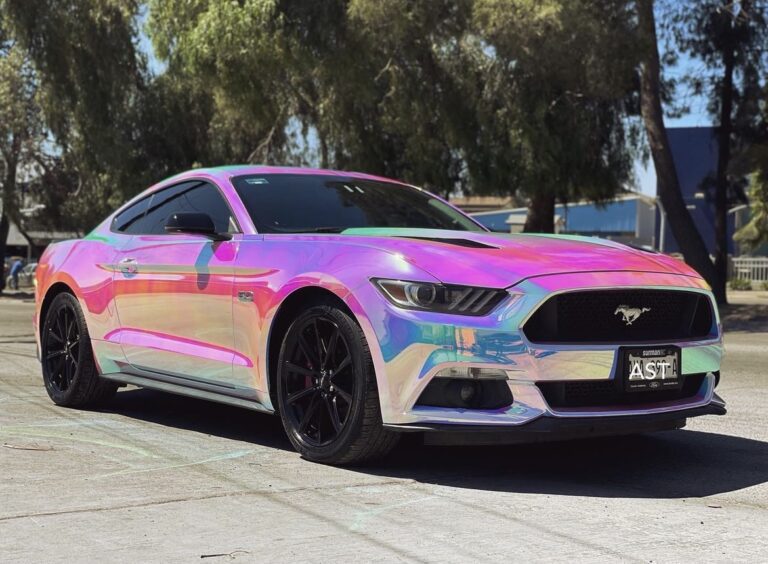
You have seen it before. Maybe a lowered sports coupe at a weekend meet, its wheels shimmering blue, purple, and gold all at once as you walk around it. Or a motorcycle fuel tank that looks like an oil slick frozen in metal. That finish has a name. It is called Neo Chrome, and it generates a ton of questions whenever it rolls into the shop. Is it paint? Is it some kind of wrap? Can you put it on your car, and if so, what does the job actually cost?
I have had customers ask me everything from “Can I spray this on my hubcaps?” to “Will my hood look like a discoball if I do this?” The short answer is yes, you can use a Neo Chrome finish on a car. The longer answer, the one that saves you from a ruined paint job or a set of ruined wheels, involves chemistry, some serious preparation work, and a realistic look at what this finish does well and where it falls short. By the time we are done here, you will understand exactly what Neo Chrome is, how it gets applied, what parts of the car make sense for it, and why the best examples you have seen likely came from a professional plating shop and not a spray can.
What Is Neo Chrome, Really?
Neo Chrome is a finish that shifts through a rainbow of colors depending on the angle of the light and your viewing position. It is not a single pigment. It works by creating a translucent oxide layer over a highly reflective base, usually nickel or chrome. Light passes through that oxide layer, bounces off the reflective surface underneath, and interacts with the oxide again on the way back. The result is a shifting iridescence that can move from deep blue to magenta to gold as you walk past the car. The effect is similar to what you see on a soap bubble or a drop of oil on a wet road, but locked into a durable metal surface.
The automotive world first noticed this finish on high-end motorcycle exhaust pipes and imported car wheels. Enthusiasts call it “burnt titanium” sometimes, but that name is not quite accurate. True burnt titanium involves heating titanium metal to a specific temperature, which naturally forms an oxide layer that produces color. Neo Chrome, on the other hand, is an electroplating process. It layers a chromium-based finish over steel or aluminum and achieves the color shift through a carefully controlled bath. The two methods share a look, but underneath, they are very different. The good news is that electroplating can be done on many automotive metals, while burning titanium would require you to actually use titanium, which is not practical for most body panels or wheels.
So when someone says they have Neo Chrome wheels, what they almost always have is a steel or aluminum wheel that has been through a multi-step electroplating process. First, the surface is cleaned to bare metal. Then it is plated with nickel for a bright, reflective base. The final bath adds the chromium oxide layer that produces the color. The thickness of that oxide layer determines which colors appear. A few nanometers of difference and the wheel shifts from purple to green. That is why producing a consistent Neo Chrome batch is difficult and why good shops charge what they charge.

Can You Actually Use Neo Chrome on a Car?
The direct answer is yes. The realistic answer is that it works best on specific parts and not on entire body panels unless you are prepared to spend a lot of money and handle some serious prep work. The most common automotive applications for Neo Chrome are wheels and rims, exhaust tips, interior trim pieces, motorcycle frames, and sometimes bolt-on engine bay components like strut braces and fluid reservoir caps. I have seen full hoods and fenders done, and they look stunning, but they also come with a level of commitment that most owners do not fully appreciate before they start.
Unlike a vinyl wrap that can be peeled off when you get bored, a real Neo Chrome finish is a permanent treatment. It cannot be removed without grinding it off. And because it relies on a flawless mirror base to produce the color shift, any scratch, ding, or clear-coat failure will be extremely noticeable. On a daily driver, that can mean a lot of upkeep. On a show car that lives in a garage and only sees sunlight on weekends, the trade-off makes more sense.
I have a customer, Jay, who Neo Chromed the wheels on his 2015 Subaru WRX. He paid a local plating shop around $800 for the set. Three years later, those wheels still draw a crowd. He cleans them with mild soap and water, never uses abrasive cleaners, and applies a high-temperature sealant every few months. They look just as good as the day they were mounted. Jay will be the first to tell you that Neo Chrome is not a set-and-forget finish. It asks for attention. If you are willing to give it that attention, the results can be remarkable.
The Plating Process: Why It Cannot Be Done in a Backyard
One of the biggest misunderstandings I hear is that Neo Chrome is just a fancy spray paint. Walk through any automotive aisle and you will see cans of “chrome effect” or “anodized look” spray paint. Those are not Neo Chrome. They are a single-stage color that tries to mimic a metallic shine. They will not produce color shift, they will not be durable, and they will leave your parts looking cheap within six months. Real Neo Chrome requires electroplating, which is a whole different world.
Electroplating works by submerging the part in a series of chemical baths while an electric current runs through the setup. The part is essentially the cathode, and the plating material is the anode. As the current flows, metal ions migrate through the solution and deposit evenly onto the surface of your part. Each bath adds a layer: first a copper or nickel layer for adhesion and reflectivity, then the chromium layer that gives the color effect. The colors appear because the chromium oxide layer is so thin that it interferes with light waves. That is the same phenomenon you see on an oil slick, except here the layer is solid and bonded to the metal. The process requires exact voltages, solution temperatures, and timing. A shop that does this well has engineers, not just guys with a tank in the back.
The chemicals involved are not friendly. Chromic acid, used in the plating bath, is toxic and highly regulated. The dip tanks, ventilation systems, and waste disposal must meet strict safety standards. This is not a project you can safely do in your garage, no matter how many YouTube videos you watch. The guys who try it at home often end up with a blotchy, uneven finish that peels off within weeks, and worse, they expose themselves to serious health risks. When customers ask me about DIY Neo Chrome, I tell them to treat it like welding or bodywork: the tools and expertise needed are not worth the shortcut. Pay the professional. The outcome will be better, and your health will stay intact.
Preparing a Car Part for Neo Chrome
Before anything goes into a plating tank, the part has to be absolutely flawless. Any pit, scratch, or surface imperfection will be magnified by the mirror finish. In fact, the plating does not fill defects; it copies them. So if your wheel has a half-inch curb rash, sending it straight to the plater guarantees you will see that rash shimmering back at you in purple and blue. The right approach is to have the part stripped down to bare metal, repaired, sanded, polished, and then handed over to the plating shop. Some platers do this in-house. Others require the customer to deliver parts that are already body-shop-ready.
Let me give you a real example. I had a client who wanted Neo Chrome valve covers for his vintage Mustang. The original covers were cast aluminum, pitted from decades of heat cycles. We sandblasted them, used a high-build primer, and sanded through multiple grits until the surface felt like a pane of glass. Only then did we send them to the plater. The result was jaw-dropping. If we had skipped any of those steps, the covers would have come back with a cloudy, uneven finish and the customer would have been rightfully disappointed.
On wheels, the prep is even more involved. The rims need to be dismounted from the tires, and the bead surfaces must be shielded from the plating if they are supposed to remain uncoated. Some shops will also apply a final clear powder coat over the Neo Chrome for added protection, although that can slightly mute the color shift. There is a trade-off between maximum pop and long-term durability. For a daily driver that sees road salt and brake dust, the extra clear coat is a smart move. For a show car, some owners skip the clear and just stay meticulous with their cleaning routine.
A quick note on the spray-paint route. If you are on a tight budget, there are Neo Chrome-look paints that can be applied at home. The process usually involves scuffing the surface with a gray scuff pad, masking off anything you do not want painted, laying down a black base coat, then applying the color-shifting paint over it. You will not get the mirror reflection of real plating. You will get a somewhat glossy color-shift that can look nice from ten feet away but will lack depth up close. It is a compromise. For wheels on a commuter car, it might be a fun weekend experiment. For a centerpiece part on a build you care about, real plating is the only way to go.
What Parts of a Car Benefit Most From Neo Chrome?
While you can technically Neo Chrome almost any metal part, some applications make more sense than others. Wheels are the number one choice. They are a focal point of the car’s appearance, they are metal, and they withstand heat. A set of Neo Chrome wheels transforms the entire presence of a vehicle. I have seen them on everything from classic Mini Coopers to lifted trucks, and they always draw a second look.
Exhaust tips are another favorite. They live in a hot, dirty environment and are mostly out of sight until someone walks around the back of the car. A Neo Chrome exhaust tip catches the light and gives just a hint of personality without being overbearing. Motorcycle exhaust systems often use a similar look, and on a car, it can be a subtle but classy detail.
Interior trim pieces like shift knobs, door handles, and steering wheel inserts also work well. Because they are not exposed to road debris and weather, they can stay looking fresh for years with just an occasional wipe. Under the hood, a Neo Chrome strut bar or coolant reservoir tank can tie a whole engine bay together. These are small pieces that do not demand a huge investment, yet they make the opening of a hood an event.
Larger panels like hoods, doors, and roof panels are less common. When they are done, they are almost always on show vehicles. The challenge with large surfaces is maintaining a uniform color gradient. The plating tank must be large enough to submerge the entire panel, and the current distribution has to be flawless across every square inch. That is a tall order. A hood with uneven coloring looks like a mistake, not an upgrade. Additionally, large body panels are much harder to protect from stone chips and scratches. If you do decide to go big, plan on paint protection film and a very careful driving style.
How Much Does Neo Chrome Cost?
Cost is the question I get most often, and it varies wildly depending on what you are having done and who is doing it. A professional plating job on a set of four wheels can range from $600 to over $1,500. Smaller parts like exhaust tips might run $100 to $250 each. A full set of engine bay covers could easily hit $500. Those numbers assume the parts arrive at the shop clean and ready for plating. If the shop has to strip, repair, and polish the parts first, the price climbs from there.
By comparison, the spray-paint alternative is far cheaper. A can of quality color-shifting spray paint runs about $30 to $50. A do-it-yourself wheel project might cost under $150 in materials. The trade-off is longevity and finish quality. The spray paint will chip and fade faster, especially on wheels that see heat and brake dust. The real plating will look better for longer, but the initial investment is significantly higher. For a car you plan to keep and show, the plating pays for itself in the long run. For a car that is near the end of its life, a spray-and- enjoy approach might feel more appropriate.
Vinyl wraps that mimic the Neo Chrome effect are a newer middle ground. They cost somewhere between paint and plating, typically a few hundred dollars for a set of wheels, and can be professionally installed on larger panels as well. A wrap will not have the same depth as real chrome, but it can produce a convincing color shift and is completely removable. That reversibility matters if you lease your car or change your mind frequently.
Advantages of a Neo Chrome Finish
The first and biggest advantage is the look. Nothing else on the road produces that liquid rainbow effect. It is a conversation starter at every gas station and cars-and-coffee event. If you enjoy standing out, Neo Chrome delivers.
From a practical standpoint, a professionally plated Neo Chrome surface is extremely hard. The chromium layer resists scratching far better than standard automotive paint. It does not allow water to penetrate, so corrosion cannot get a foothold if the plating remains intact. Cleaning is straightforward: mild soap, water, and a microfiber cloth. Wax or sealant helps protect the finish from oxidation and keeps the colors popping. You do not need special cleaners, and you do not risk stripping the color because the color is not a topcoat; it is part of the metal itself.
The finish handles heat exceptionally well. That is why you see it on exhaust components and turbocharger housings. While regular clear coat can yellow or peel under extreme temperatures, Neo Chrome stands firm. An egg-on-the-hood hot day will not faze it. The plating also provides a barrier against small debris kicked up from the road. Brake dust and road grime wipe off with less effort than they would on a porous painted surface.
Disadvantages and Real-World Drawbacks
The downsides are just as real. Cost is the obvious one. The plating process is labor-intensive and uses regulated chemicals. You cannot get the genuine finish without spending genuine money.
Weight is a minor but measurable factor. Plating adds a thin layer of metal to the part. On a single wheel, the weight increase is not something you will feel through the steering wheel, but if you are counting every ounce for track performance, it is worth noting. On a show car, this is irrelevant.
One unexpected disadvantage is glare. A Neo Chrome surface acts like a mirror. On a sunny day, the hood of a Neo Chromed car can reflect sunlight straight into the eyes of other drivers. This is not just annoying; it can be dangerous. I know one owner who Neo Chromed his entire engine cover, only to realize that every time he opened his hood at an outdoor meet, people had to shield their eyes. It looked incredible in photos, but in person it was punishing. He ended up having a clear matte wrap applied over the top to cut the glare while keeping the color.
Durability on daily-driven parts is another concern. While the chromium layer is hard, it is also brittle. A hard enough impact, like a rock flung from a truck tire, can chip the plating. Once the underlying steel or aluminum is exposed, corrosion can start underneath the plating and spread. Touch-ups are not simple. You cannot just spray over a chip and blend it. The entire part would need to be stripped and re-plated. That makes long-term maintenance on a vehicle that sees real-world miles a real consideration.
Finally, repair work is complicated. If you bend a Neo Chromed wheel on a pothole, you cannot simply have it straightened and re-plated at a local wheel shop. The repair facility must understand how to handle plated wheels, and often the most practical solution is to replace the wheel entirely. Insurance is not always cooperative with expensive custom finishes either. Before investing in Neo Chrome, check your policy and consider whether you can stomach a surprise out-of-pocket replacement cost.
How Neo Chrome Compares to Other Finishes
Neo Chrome sits at the intersection of several finish types. A standard chrome finish gives you a pure silver mirror but no color shift. An anodized finish provides color but not the deep reflectivity. Powder coating is tough and available in many colors but cannot deliver the liquid metal look. Vinyl wraps offer ultimate flexibility and reversibility but lack the depth and durability of plating. Burnt titanium, as mentioned earlier, is a different process that requires actual titanium and is mostly confined to small exhaust parts and fasteners.
For wheels, many enthusiasts compare Neo Chrome to black chrome or gold chrome. Black chrome has a deeper, more menacing tone. Gold chrome is a warmer, more classic statement. Neo Chrome brings something no other finish provides, which is why it remains a niche choice despite strong loyalty from those who choose it.
If I had to guide someone based on their priority, here is how I would break it down:
- Maximum durability: Powder coating or paint with a clear coat.
- Maximum pop at shows: Real Neo Chrome plating, clear coat optional.
- Budget flexibility: Neo Chrome-look spray paint or color-shifting vinyl wrap.
- Daily driver practicality: Vinyl wrap; damage is easier and cheaper to fix.
The key is matching the finish to how you actually use the car, not how you imagine using it. Be honest with yourself. If you are the type who washes the car weekly and touches up tiny chips with a toothpick, you can probably handle Neo Chrome. If you go six months without a wash and your wheels are black with brake dust, save your money and keep a simpler finish.
What to Ask a Plating Shop Before You Hand Over Your Parts
Not all plating shops are equal. Some specialize in restoration work. Some focus on decorative parts and are not accustomed to the abuse automotive wheels endure. Before you leave your wheels or engine parts with a shop, run through a list of questions.
- Do you have experience with automotive components, specifically the parts I am bringing? A shop that mostly plates bathroom fixtures may not understand the demands of a wheel spinning at highway speeds.
- What is your preparation process? A good shop will explain how they strip, clean, and polish before plating. If they give a vague answer, move on.
- Do you do the prep work in-house, or do I need to provide parts ready for plating? This massively affects cost and turnaround time.
- Can you provide photos of past automotive work? Look for consistency of color across entire wheels, not just close-ups.
- What warranty or guarantee do you offer? Plating defects like peeling or clouding should be covered for a reasonable period.
- How do you handle the bead area of wheels and the hub mating surface? These critical areas must be masked or left unplated to ensure proper tire seal and safe lug nut torque.
A trustworthy shop welcomes these questions. One that gets defensive should be avoided. I have seen too many beautiful parts come back with plating flaking off because a shop cut corners on surface prep. The difference between a decade of stellar looks and a trash can full of regrets is the quality of the shop you choose.
The Realistic Lifespan of Neo Chrome on a Car
Here is the reality from years of seeing these finishes come and go. A garage-kept, weekend-only car with Neo Chrome wheels and no daily exposure to winter road salt can look pristine for five years or more with proper care. A daily driver in the northeast that sees salt, brine, and freezing temperatures will show degradation much faster, possibly within a couple of winters. The plating itself can hold up, but the edges where stones nick the surface will become entry points for moisture. Once rust blooms under the plating, the finish is compromised.
If you want your Neo Chrome to last, invest in ceramic coating or a high-quality sealant designed for chrome surfaces. Wash the parts regularly to remove brake dust, which is corrosive when wet. Do not use acidic wheel cleaners, which can eat into the oxide layer and dull the colors. Fix any chips immediately with a touch of clear nail polish to seal the exposed metal until you can get a professional repair. These are small habits, but they add years to a finish that was never designed to be low-maintenance.
The Instagram-famous cars you see with flawless Neo Chrome are not daily driven in rain and snow. They are detailed constantly and never encounter a gravel road. The gap between online perfection and real-life durability is significant. The more you understand that gap, the happier you will be with your decision.

Is Neo Chrome Right for Your Car?
I always end these conversations in the shop with a few honest checks. Does your car have a cohesive visual direction, or are you slapping a flashy finish on an otherwise stock vehicle? Neo Chrome demands attention. It works best when the rest of the car is clean and purposeful, not when it is the only modified part on a neglected daily. Think of it as a highlighted feature, like a statement necklace. It can elevate an outfit, but it can also overwhelm it.
Are you prepared for the attention? This finish draws conversation. Some people love it. Some people hate it. Very few people ignore it. If you are comfortable with strangers asking about your wheels at every fuel stop, then great. If you prefer to blend in, this finish is not for you.
Can you commit to the ongoing care? Neo Chrome is not a one-time expense. It is a relationship. You will spend more time cleaning and protecting the parts than you would with painted wheels. If that sounds enjoyable, the finish will reward you. If it sounds like a chore, choose something more forgiving.
The automotive world is full of ways to personalize your ride. Neo Chrome is among the most dramatic and demanding. When done right, it is unforgettable. When done wrong or neglected, it becomes an expensive lesson. The key is to go in with your eyes open, hire the right people, and treat the finish with the respect it requires. If you can do that, your car will stand out in a sea of monochrome SUVs, and every glance at those shifting colors will remind you why you chose the path less polished.