
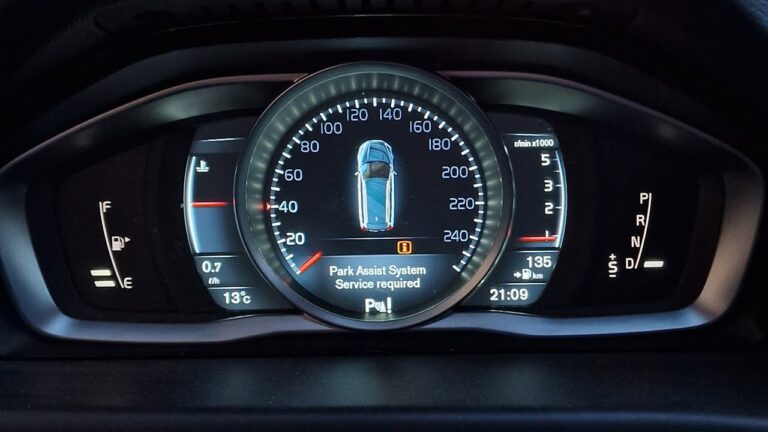
Parking in tight spots is stressful enough without having to worry about whether your parking assist system is actually working. So when that “Park Assist System Service Required” message pops up on your Volvo’s dashboard, it is more than just an annoying notification. It means something in the system has failed, and until it is fixed, you are on your own when squeezing into that parallel parking space.
The good news is that this warning is usually traceable to a handful of well-known causes. Most of them are fixable without a major repair bill. But you do need to understand what is going on under the surface before you can solve it properly.
What the Volvo Park Assist System Actually Does
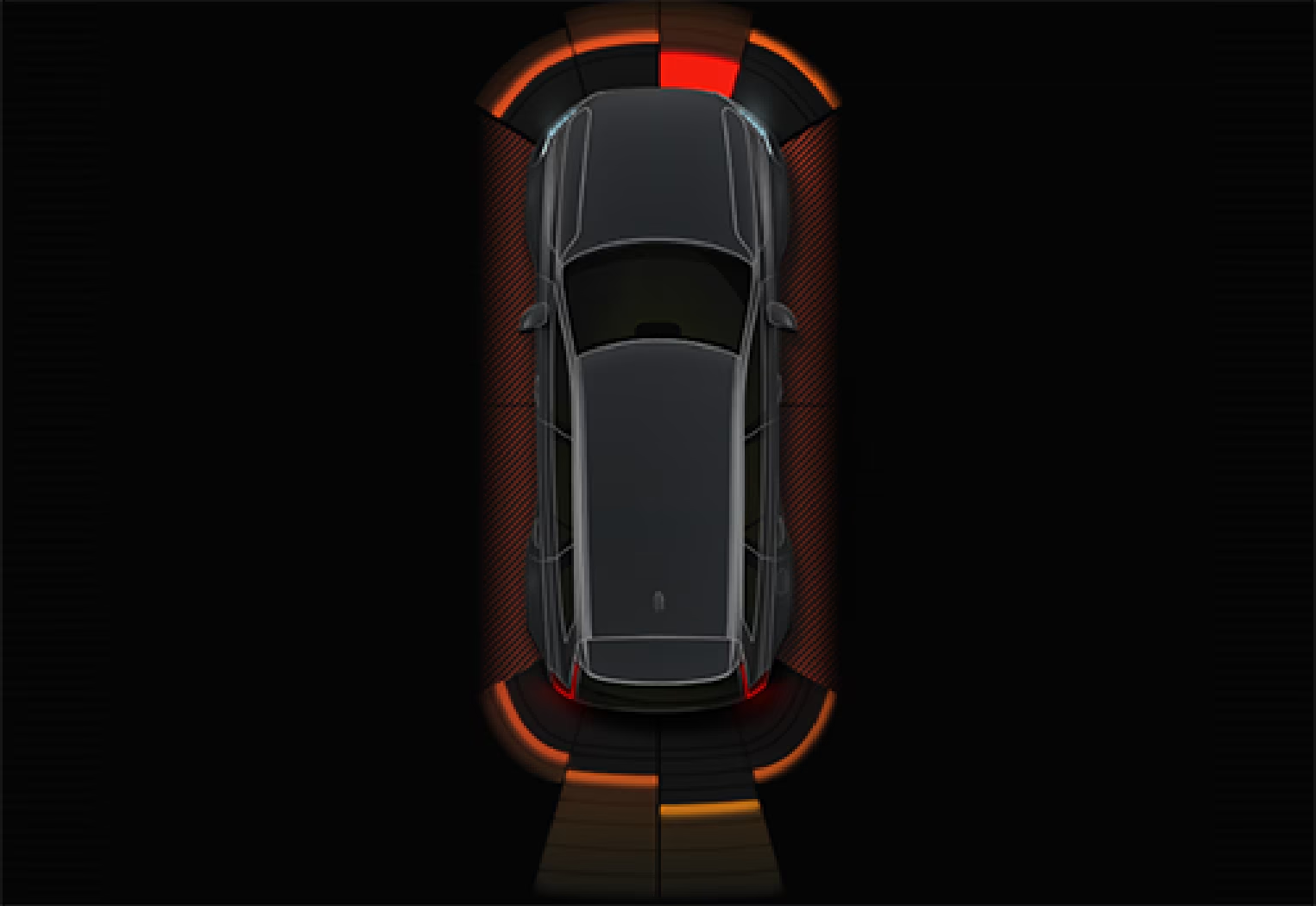
Before getting into what goes wrong and why, it helps to understand what this system is actually doing for you. The Park Assist System (PAS) is a computerized parking aid that uses a network of sensors placed around your vehicle to detect open spaces and nearby obstacles. Once you activate it, the system calculates the best path into a parking spot and guides you through the maneuver.
On more advanced versions, the system actually takes over steering control entirely. You stay in charge of the accelerator, gear selection, and brake pedal while the car steers itself into the space. If at any point you feel the need to take back control, just grab the steering wheel and the system hands it right back to you.
The more advanced versions of the PAS, like the Active Parking Assist 2.0, use up to 12 ultrasonic sensors distributed around the entire vehicle. Here is how they are positioned:
| Location | Number of Sensors | Purpose |
|---|---|---|
| Rear bumper | 4 | Detect obstacles and measure space behind |
| Front bumper | 4 | Detect obstacles and measure space ahead |
| Driver’s side | 2 | Scan for available parking space on left |
| Passenger’s side | 2 | Scan for available parking space on right |
That full coverage is what allows the system to give you a 360-degree picture of the space around your vehicle. But here is the thing: if even one of those sensors stops sending accurate data, the entire system can flag a fault and shut down. That is usually what is behind the “Park Assist System Service Required” warning.
What the Warning Actually Means
“Park Assist System Service Required” is your Volvo’s way of telling you that the PAS has detected a problem it cannot work around. The system has essentially decided it cannot guarantee accurate parking guidance, so it takes itself offline and alerts you instead of continuing to operate in a compromised state.
In most cases, the fault starts with the rear bumper sensors. They take the most punishment from daily driving, road debris, dirt buildup, and weather exposure. But the warning is not limited to rear sensor faults alone. Any sensor in the network, or any electrical issue affecting the system, can trigger it.
The important thing to understand is that this warning does not go away on its own in most situations. You need to identify the root cause and address it directly.
6 Reasons Your Volvo Is Showing This Warning
There is no single answer to why this message appears. Here are the most common causes, ranked from the simplest to the more involved.
1. Dirty Sensors Blocking the Signal
This is the most common and, thankfully, the easiest cause to fix. The PAS sensors are embedded in your bumpers and along the sides of your vehicle. They sit low to the ground and face outward, which means they are in the direct path of road splash, mud, dust, and debris every time you drive.
Over time, a thick enough layer of dirt or grime can physically block the sensor’s ability to send and receive ultrasonic signals. When that happens, the system cannot get a reliable reading from the affected sensor, and it throws the warning message.
The good news here is obvious: if dirt is the only problem, cleaning the sensor may resolve the warning entirely without any repair work needed. This is always the first thing to check before anything else.
2. Water Intrusion Into the Sensor or Connector
Water is one of the most underestimated causes of electronic faults in vehicles. Sensors that sit in the bumper are exposed to rain, car washes, puddles, and road spray on a regular basis. Over time, if the sensor housing develops a crack or the seal around it degrades, water can get inside.
Water in the sensor or its electrical connector causes corrosion on the contacts, damages the internal components, and can cause splices or breaks in the wiring harness connected to it. Once that happens, the sensor stops communicating properly with the PAS control unit, and the warning appears.
This type of damage is not always visible from the outside. The housing might look perfectly intact while water corrosion is doing damage inside. This is why a proper diagnostic inspection matters rather than just a visual check.
3. Damaged Wiring in the Harness
The wiring harness that connects the PAS sensors to the control module runs through areas of the vehicle that are exposed to heat, vibration, and potential pest damage. Rodents chewing through wiring is more common than most people realize, especially in vehicles that are parked outdoors or in garages for extended periods.
Beyond rodents, wiring can also be damaged by:
- Prolonged exposure to engine heat causing insulation to crack or melt
- Corrosion from road salt or moisture working through the insulation
- Physical abrasion where a wire rubs against a sharp edge over time
- Previous repairs or modifications that damaged nearby wiring
A damaged wire does not always cause a complete failure. Sometimes it causes an intermittent fault where the warning appears and disappears seemingly at random. That pattern is actually a useful clue that wiring is likely the issue rather than a completely failed sensor.
4. A Physically Damaged Sensor
Parking sensors take physical hits regularly. A tap against a curb, a minor low-speed collision, a rock kicked up by another vehicle, or even pressure from a car wash brush can crack or break a sensor housing. Once the housing is compromised, the sensor is exposed to everything it was designed to be protected from.
A cracked or broken sensor typically cannot be repaired. It needs to be replaced. The good news is that individual parking sensors are not enormously expensive parts. The cost is manageable, especially compared to ignoring the issue and losing the functionality of the whole system.
It is also worth knowing that a damaged sensor in one position does not always mean the other sensors are fine. If one took a physical hit, inspect the surrounding area too. Damage from a curb tap to the rear bumper, for example, can affect multiple sensors in that zone at once.
5. A System Malfunction or Software Glitch
Like any electronic system in a modern vehicle, the PAS control module can occasionally glitch without any physical component actually being damaged. Software errors, temporary communication faults between modules, or a corrupted data signal can all cause the warning to appear even when the hardware is perfectly fine.
In these cases, a system reset is often enough to clear the fault. But if the warning keeps coming back after a reset, you are likely dealing with something more than a software glitch. Persistent warnings after resetting point to a genuine hardware fault that needs to be found and repaired.
More serious software issues, such as a corrupted module or an ECM fault that affects how the PAS communicates with the rest of the vehicle’s systems, typically require dealer-level diagnostic tools and potentially a software update or module replacement to fix properly.
6. An Electrical Fault in the System
Beyond damaged wiring, there are other electrical issues that can knock out the PAS entirely. A blown fuse is the simplest and most overlooked. Every electronic system in your vehicle is protected by a fuse, and the PAS is no different. If the fuse dedicated to the parking assist system blows, no power reaches the system at all, and the warning appears.
A weak or failing battery can also affect the PAS. Just like the electronic brake system discussed earlier, the PAS needs consistent, stable voltage to function correctly. A battery that is not delivering proper voltage can cause erratic behavior across multiple electronic systems, including the parking assist.
It is also worth noting that some environmental conditions, like heavy snow covering the sensors or extremely heavy rain interfering with the ultrasonic signals, can temporarily trigger the warning. In those cases, the message will often clear on its own once conditions improve and the sensors are clean and unobstructed again.

How to Diagnose the Problem Properly
Before you start replacing sensors or pulling wiring harnesses apart, take a few minutes to diagnose the issue methodically. Jumping straight to parts replacement without knowing what is actually wrong is expensive and often unnecessary.
Step 1: Start With a Visual Inspection
Walk around your vehicle and look at every sensor you can see. They are the small cylindrical or disc-shaped components embedded in the front and rear bumpers and along the sides of the vehicle. Look for:
- Obvious cracks or breaks in the sensor housing
- Heavy dirt, mud, or debris buildup directly on the sensor face
- Any sensor that is pushed in or sitting at an odd angle
- Snow or ice packed around the sensors in cold weather
If you see obvious dirt or debris, clean the sensors first and see if the warning clears. This takes about five minutes and costs nothing. It is always worth trying before moving to more involved diagnostics.
Step 2: Use an OBD-II Scanner With ABS and PAS Capability
A basic OBD-II scanner reads generic engine codes, but diagnosing a park assist fault properly requires a scanner that can access body and chassis fault codes. These are sometimes called “enhanced” or “bi-directional” scanners. Many auto parts stores will offer a free scan, but make sure the scanner they use is capable of reading Volvo-specific system codes, not just generic ones.
The fault codes pulled from the system will tell you which specific sensor or component is reporting a fault. For example, a code pointing to the left rear parking sensor narrows your focus immediately. You know exactly which sensor to inspect, clean, or replace without guessing at the others.
Step 3: Check the Fuse Box
If the scanner does not find a specific sensor fault but the system is completely inactive, check the fuse for the park assist system. Your owner’s manual will identify which fuse corresponds to the PAS. Pull it out and inspect it. A blown fuse will have a visibly broken wire inside the transparent casing. Replacing a fuse takes less than a minute and costs essentially nothing.
If the new fuse blows again quickly, that tells you there is an underlying short circuit somewhere in the system drawing too much current. That requires deeper electrical investigation.
How to Fix the Park Assist System Service Required Warning
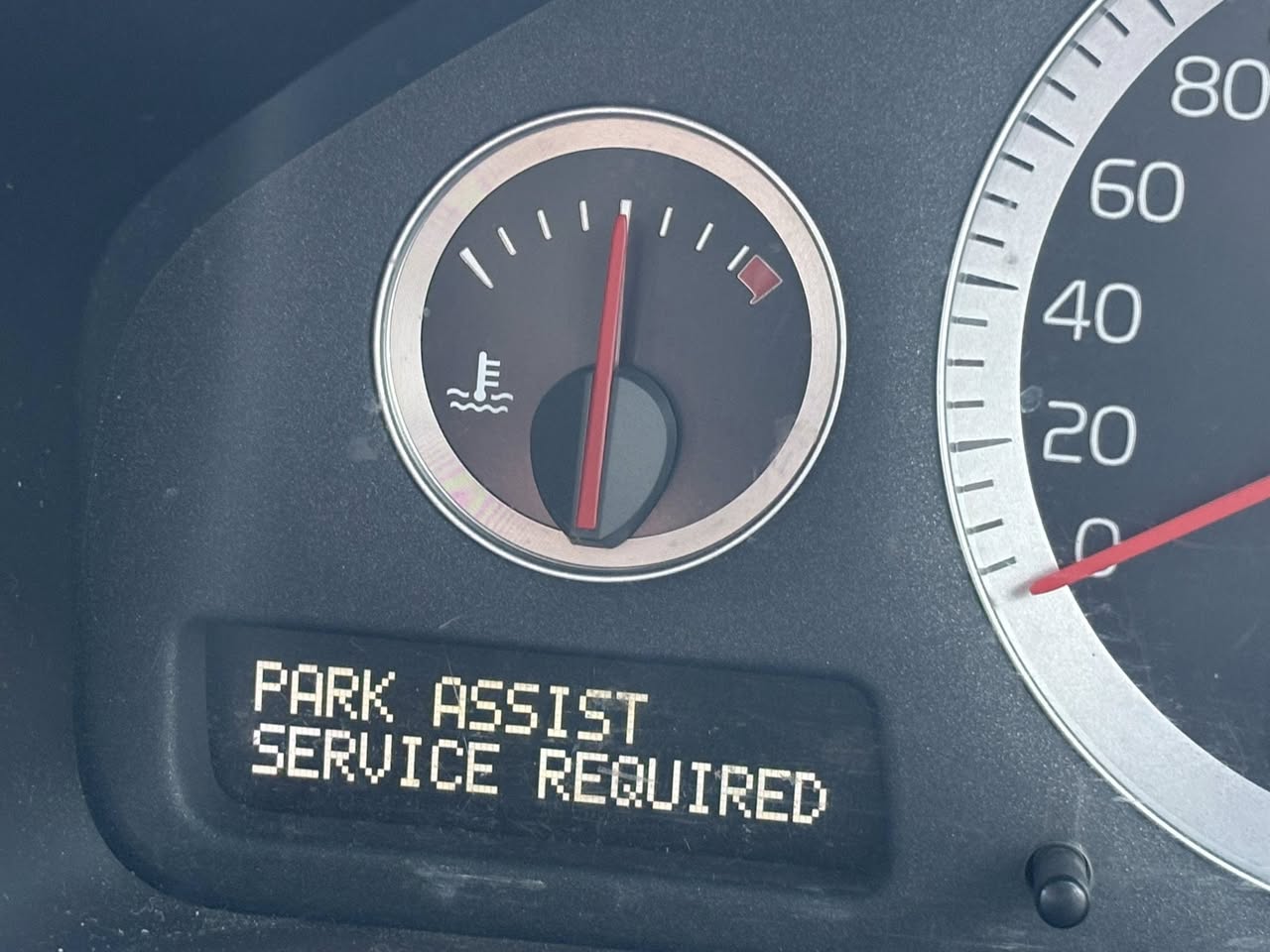
Once you know what is causing the warning, here is how to address each scenario.
Fix 1: Clean the Sensors Thoroughly
If dirt or debris is the problem, cleaning the sensors is straightforward. Use a soft cloth or sponge with warm soapy water to gently clean the face and surrounding area of each sensor. Avoid high-pressure water directly on the sensor housing, especially if there are any signs of age-related wear around the seals.
Once cleaned, dry them off and start the vehicle. If the warning clears after a minute or two, the dirt was the issue. Keep an eye on it for the next few days to confirm the fix held. If the warning returns after the next rain or after driving on a dirty road, consider whether the sensors might need better sealing or replacement.
Fix 2: Replace a Damaged or Failed Sensor
Once you have confirmed through the scanner which sensor is faulty, removing and replacing it is a manageable job. Here is the general process:
- Disconnect the negative battery terminal before starting any electrical work
- Access the sensor from behind the bumper, which may require removing a section of interior bumper trim
- Disconnect the electrical connector attached to the sensor
- Release the retention clip holding the sensor in place and push it out
- Insert the new sensor, making sure it clicks firmly into place
- Reconnect the electrical connector and reinstall any trim pieces removed
- Reconnect the battery, start the vehicle, and clear the fault code with the scanner
Make sure the replacement sensor is the correct part number for your specific Volvo model and year. Using a sensor with slightly different specifications can cause the system to read inaccurate distances and may not clear the fault properly.
Fix 3: Repair or Replace Damaged Wiring
Wiring repairs require patience and access to your vehicle’s wiring diagram. Your owner’s manual may have a basic layout, but for detailed wiring diagrams, a vehicle-specific repair manual or a subscription to an online service database for Volvo vehicles is more reliable.
Trace the wiring from the affected sensor back toward the PAS control module, inspecting every inch for damage. Pay particular attention to areas where the harness passes through grommets, clips, or near heat sources. Common damage points include:
- Where the harness enters or exits the bumper assembly
- Any section near the exhaust system where heat exposure is higher
- Connector pins that have corroded or backed out of their housing
Minor wire damage can sometimes be repaired by splicing in a new section of wire using proper automotive-grade connectors and heat-shrink tubing. More extensive harness damage typically requires replacing the entire affected harness section for a reliable, long-term repair.
Fix 4: Reset the System
If no physical damage is found and the scanner does not point to a specific component failure, try resetting the PAS before anything else. Here is how to do a basic reset:
- Turn the engine off completely
- Press and hold the park assist button for approximately 5 seconds
- Start the vehicle and listen for a confirmation beep from the system
- Check if the warning message has cleared
Alternatively, disconnecting the negative battery terminal for 15 minutes and then reconnecting it can clear stored faults from the system’s memory. If the warning does not return after the reset, the issue was likely a temporary glitch. If it comes back within a short period of driving, something physical is wrong and needs to be diagnosed properly.
Fix 5: Address Electrical Faults (Fuse, Battery, Circuit)
Check the PAS fuse as described earlier. If the fuse is intact and the battery is tested and found to be weak, replace the battery. A battery that is more than four to five years old and showing signs of reduced performance is worth replacing proactively even if it tests at the borderline of acceptable voltage.
For circuit-level faults beyond a simple blown fuse, this is where getting a professional involved pays off. Tracking down a short circuit or a ground fault in an automotive electrical system without the right tools and experience can take a long time and lead to incorrect diagnoses. A qualified technician with Volvo-specific diagnostic equipment can pinpoint these faults much more efficiently.
When to Take It to a Professional
Some parts of this repair process are perfectly manageable at home for someone who is comfortable doing basic vehicle maintenance. Cleaning sensors, replacing a fuse, swapping a single parking sensor, or doing a system reset are all jobs that do not require specialized tools or deep technical knowledge.
But there are situations where a professional is the right call:
- The warning persists after you have cleaned the sensors and attempted a reset
- The scanner points to the PAS control module rather than a specific sensor
- You find obvious wiring damage but are not comfortable doing electrical repairs
- The system needs a software update or module reprogramming to function correctly
- Multiple sensors are reporting faults simultaneously, pointing to a central system or power supply issue
Volvo’s park assist system is a sophisticated piece of technology, and some faults genuinely require dealer-level diagnostic equipment and software to diagnose and repair correctly. Trying to force a DIY fix on a problem that needs professional tools usually results in more time and money spent, not less.
Quick Reference: Causes and Fixes
| Cause | Key Sign | Fix |
|---|---|---|
| Dirty sensors | Warning appears after driving in mud or rain | Clean sensor faces with soft cloth and warm water |
| Water in sensor or connector | Warning after rain or car wash, intermittent faults | Inspect and replace affected sensor or connector |
| Damaged wiring | Intermittent or persistent warning, no sensor fault code | Trace and repair or replace damaged wire sections |
| Physically broken sensor | Visible crack or impact damage on bumper area | Replace the damaged sensor with correct OEM part |
| System glitch or software fault | Warning with no physical damage found | Reset system; seek software update if reset fails |
| Blown fuse or electrical fault | System completely inactive, no response at all | Check and replace fuse; test battery voltage |

A parking assist system that is not working is not going to leave you stranded on the side of the road. But it is a system you paid for, and it is a genuine convenience and safety feature, especially in tight urban parking situations. Leaving the warning unaddressed also means leaving an undiagnosed electrical or sensor fault sitting in your vehicle’s system, which sometimes points to a problem that can grow into something more serious over time. Start with the simple checks, use a scanner to get specific, and work through the causes systematically. You will have it sorted out faster than you might think.