
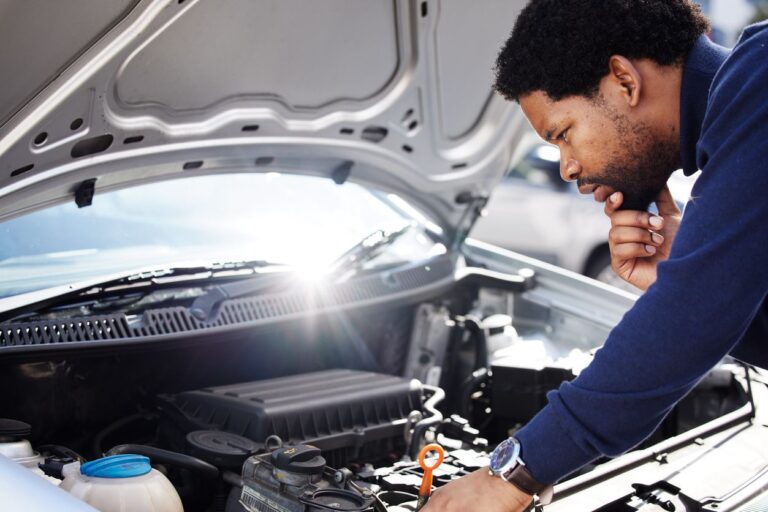
You are driving along a familiar road, and out of nowhere a new sound joins the chorus of engine hum and tire noise. A knock. A rattle. A whistle that seems to come from somewhere deep inside the car. Your ears perk up. You turn down the radio. You tap the accelerator lightly to see if the noise changes. Something is not right, and you know it. The question is whether you can keep driving or whether you should pull over right now and call a tow truck.
Cars are designed to operate quietly enough that unusual sounds stand out immediately. A healthy engine produces a steady, muted rhythm. A good suspension glides over bumps with a soft thump and nothing more. When a knock, a clatter, or a hum appears, it is almost always a sign that something mechanical has developed play or wear. The sound you are hearing is the physical result of two parts that were once held tightly together now moving in ways they were not designed to move. Metal is hitting metal where it should not. Rubber bushings have hardened or torn. Bearings have lost their smooth rolling surfaces. Every one of these problems will get worse with time. The only variable is how quickly.
The good news is that most noises can be identified before they lead to catastrophic failure. You do not need an engineering degree to narrow down the source. You need patience, a quiet stretch of road, and a willingness to listen carefully while you manipulate the controls. This guide walks you through the most common knocks and noises a driver hears during acceleration, and it explains what each one typically means, how urgent the repair is, and what you can do about it right now.
How to Narrow Down Where a Noise Is Coming From
The first step in diagnosing any car noise is locating its general area. A knock that seems to come from the front right corner might be a suspension component. A noise that comes from directly under the engine could be internal. The side, front versus back, left versus right, all help rule out possibilities. The second clue is when the noise happens. Does it occur only during acceleration? Does it disappear when you coast? Does it change with engine speed, road speed, or steering angle? The relationship between the sound and what the car is doing is often more revealing than the sound itself.
If the noise changes frequency with engine RPM but not with vehicle speed, the source is almost certainly related to the engine, the accessories driven by the belt, or the transmission input shaft. If the noise changes with road speed regardless of what gear you are in, the problem lies somewhere in the wheels, axles, differential, or wheel bearings. If the noise appears only when turning, the CV joints or wheel bearings are prime suspects. If it happens only over bumps, the suspension is at fault. Taking a few minutes to establish these relationships before you call a mechanic will save a lot of diagnostic time and, often, a lot of money.
Common Engine Noises When Accelerating and What They Mean
The engine bay is home to dozens of moving parts, and any one of them can develop a noise when it starts to fail. The engine itself, with its pistons, valves, timing components, and accessories, produces distinct sounds depending on where the trouble is brewing. Here is a breakdown of the most frequent culprits.
A Failing Water Pump That Whistles and Knocks
The water pump is a belt-driven component that circulates coolant through the engine. Inside it is a shaft supported by a bearing and a seal that keeps coolant from escaping. When that bearing begins to wear, it produces a thin whistle or a light knocking sound from the front of the engine compartment. The noise may be most noticeable at idle and become less obvious as engine speed rises and other sounds mask it. But the bearing will not heal itself. If the water pump bearing fails completely, the pump can seize, snapping the serpentine belt and instantly stopping the flow of coolant. The engine will overheat within minutes, risking a blown head gasket or a warped cylinder head.
A water pump noise is not something to ignore for more than a day or two. The replacement cost is modest compared to the damage a seized pump can cause. A mechanic can quickly confirm the diagnosis by removing the serpentine belt and spinning the water pump pulley by hand. A healthy pump spins smoothly and silently. A failing one feels gritty or has noticeable play. If the water pump is the source of the noise, have it replaced, along with the serpentine belt if it is due for service, and flush the cooling system while you are at it. This is a repair that is far cheaper when done on your schedule than when done on the side of the highway.
Detonation: That Loud Metallic Clatter That Sounds Like Marbles in a Can
A loud metallic clatter that occurs specifically when you accelerate, especially under load like climbing a hill, is a classic sign of detonation. Detonation is not a normal engine sound. It is the result of the fuel-air mixture in the combustion chamber igniting unevenly and at the wrong time, creating shock waves that hammer the pistons, cylinder head, and head gasket. The sound is often described as a pinging sounds like someone shaking a coffee can full of pebbles. It is the sound of the engine hurting itself.
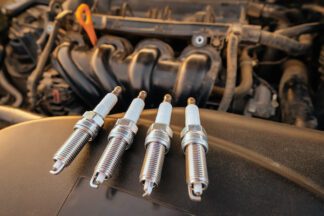
Detonation has several common causes. Using low-octane fuel in an engine that requires premium is the most frequent. The lower octane rating allows the mixture to ignite too early under heat and pressure. A large buildup of carbon deposits on the piston crowns and valves can create hot spots that act like glow plugs, igniting the mixture before the spark plug fires. Engine overheating lowers the threshold for detonation. A lean air-fuel mixture, often caused by a vacuum leak or a failing fuel pump, elevates combustion temperatures and invites detonation. Spark plugs with the incorrect heat range can also act as hot spots. In some cases, the ignition timing is simply set too far advanced, either from an incorrect adjustment or from a faulty knock sensor that is not retarding timing as it should.
Do not ignore engine detonation. Those shockwaves are physically eroding the pistons and the head gasket. Sustained detonation can burn a hole through a piston crown, crack a ring land, or blow the head gasket. Each of those failures costs thousands of dollars to repair. If you hear pinging under acceleration, check your owner’s manual and confirm you are using the recommended fuel grade. If that does not solve it, have a mechanic check the fuel mixture, the ignition timing, and the condition of the spark plugs. A bottle of good quality fuel system cleaner can sometimes remove light carbon deposits and eliminate the pinging, but heavy carbon may require a professional induction cleaning service.
A Loose Timing Chain That Whistles, Pops, and Threatens to Jump
The timing chain, or in some engines a timing belt, synchronizes the rotation of the crankshaft and the camshaft so that the valves open and close at precisely the right moments. A timing chain is a sturdy metal chain that runs inside the engine, usually lubricated by engine oil. Over time, the chain can stretch, the tensioner can wear, and the guides can crack. A loose timing chain makes a variety of noises, including a rattling sound at startup, a whining or whistling sound that follows engine speed, and a popping or slapping sound that can be heard from the front of the engine.
The noise from a failing timing chain tends to increase as the engine speed increases and may disappear when you release the accelerator pedal because the load on the chain relaxes on deceleration. If the chain jumps a tooth, the engine’s valve timing will be off, causing rough running, loss of power, and potential valve-to-piston contact that bends valves and destroys the top end of the engine. A timing belt, by contrast, usually gives no audible warning before it breaks. It is a rubber component that must be replaced at strict mileage intervals, typically every 60,000 to 100,000 kilometers, or roughly 35,000 to 60,000 miles. If you do not know when your timing belt was last changed, find out. A broken timing belt on an interference engine will cause immediate, severe damage that often requires replacing or rebuilding the entire cylinder head.
If your engine has a timing chain and you hear rattling or slapping from the front of the engine, have a mechanic inspect the chain tensioner and guides as soon as possible. Replacing a worn timing chain and tensioner is far less expensive than repairing bent valves and shattered pistons.
Pistons, Valves, and Crankshaft Bearings: Deep Metal Knocks That Spell Trouble
The deepest, most ominous knocks come from the engine’s rotating and reciprocating assembly. A dull, heavy metallic knock that increases in frequency as the engine speed increases, especially when you sharply press the accelerator at idle, often points to worn main bearings. The main bearings support the crankshaft in the engine block, and when they wear, the crankshaft develops extra clearance that allows it to move slightly with each combustion event. The knock you hear is the crankshaft journal hitting the bearing surface.
A similar but sharper knock, sometimes with an irregular cadence, can come from excessive crankshaft axial clearance, also called thrust bearing wear. Thrust bearings control fore-and-aft movement of the crankshaft, and when they fail, the crankshaft can walk back and forth, causing a distinct knock that changes when you press and release the clutch pedal on a manual transmission vehicle.
Connecting rod bearings produce a sharper, rhythmic knock that is often loudest under load, such as when accelerating up a hill. Rod bearing failure is a ticking time bomb. If a rod bearing spins or disintegrates, the connecting rod can break, punch a hole through the engine block, and destroy the engine beyond repair. A light, rhythmic tapping from the top of the engine, often at half the frequency of the crankshaft speed, is typically a valve train noise. It can be caused by excessive valve clearance that requires adjustment, a worn camshaft lobe, a collapsed hydraulic lifter, or a bent pushrod. Valve train noise is less immediately catastrophic than a bottom-end knock, but it still needs attention. Ignoring a worn valve train can lead to a dropped valve, which will destroy the piston and cylinder head.
Any internal engine knock is serious. A mechanic can use a mechanic’s stethoscope or even a long screwdriver held against the engine block to isolate the source. A bottom-end knock usually condemns the engine to a rebuild or replacement. A top-end knock may be repairable without removing the entire engine. In either case, continuing to drive is gambling with the engine’s life.
Exhaust System Problems That Rumble, Rattle, and Backfire
The exhaust system runs from the engine to the rear bumper, and it absorbs a tremendous amount of heat, vibration, and corrosion. When components fail, they produce unique noises that are usually easy to distinguish from engine or suspension sounds. A bad muffler will rattle and produce a sound like a small explosion, especially under hard acceleration. That sound is often accompanied by a sudden increase in exhaust volume because the muffler is no longer dampening the noise.
A rattling heat shield is another common exhaust noise. The thin metal shields that protect the floor pan from exhaust heat can rust at their mounting points and vibrate against the exhaust pipe at certain RPMs. A leaking exhaust manifold gasket makes a ticking or puffing sound that follows engine speed, and it will get louder under load. A crack in the exhaust manifold itself produces a sharper, more metallic version of that same sound. Exhaust leaks before the catalytic converter can also cause the engine to run poorly because the oxygen sensors get false readings, leading to a check engine light and poor fuel economy.
The sooner an exhaust problem is addressed, the cheaper the repair. A rattling heat shield can often be secured with a clamp or replaced for pocket change. A leaking gasket is a straightforward replacement. A failing muffler or a cracked manifold is more expensive, but delaying the repair can lead to exhaust gases entering the cabin, which is a serious health and safety risk. If you smell exhaust inside the car, address it immediately regardless of the noise.
Transmission and Driveline Noises Under Acceleration
Once you move past the engine, the driveline takes over. The transmission, axles, and differential all rotate and can produce knocks and hums when worn. These noises are typically more related to vehicle speed than engine speed, and they often have a distinct location.
Transmission Input Shaft Bearing Wear
The transmission’s input shaft is supported by a bearing that spins whenever the engine is running and the clutch is engaged, or whenever the torque converter is transmitting power in an automatic. A worn input shaft bearing produces a knocking or rumbling sound that increases with engine speed while the vehicle is in neutral with the clutch engaged, or while driving under load. The noise may disappear when the clutch is disengaged or when the transmission is in neutral if the vehicle is coasting. A failing input shaft bearing will eventually degrade to the point where the transmission becomes noisy in all gears and may damage the input shaft itself. Repairing it requires transmission removal and partial disassembly. If the noise is caught early, bearing replacement can save the transmission. If ignored, the metal debris from the failing bearing can contaminate the fluid and damage gears, synchronizers, and other bearings, leading to a full transmission rebuild at a much higher cost.
Failing CV Joints That Click and Knock When Turning
Constant velocity joints, or CV joints, are the flexible couplings that allow the axles to transmit power to the front wheels while accommodating steering angles and suspension movement. A CV joint is protected by a rubber boot filled with grease. When that boot tears, dirt and water enter, and the grease escapes. The joint runs dry, and the hardened steel balls and races begin to wear. The first symptom is a clicking or knocking noise that occurs when turning, particularly during sharp turns while accelerating. The noise is loudest on the side that is on the outside of the turn because that CV joint is experiencing the greatest angle and load.
As the CV joint wears further, the noise may progress from a click to a knock that occurs even in a straight line during acceleration. Eventually, the joint can separate entirely, leaving the car unable to move under its own power. Replacing a CV joint or the entire axle assembly is relatively affordable if done before the joint fails catastrophically. If the boot is torn but the joint has not yet started making noise, sometimes the boot can be replaced and fresh grease packed in, saving the joint. Once the noise starts, the joint is permanently damaged and must be replaced. Do not ignore a clicking CV joint. It is giving you a clear warning.
Bad Front Axles and Wheel Bearings That Hum and Knock
The front axles on a front-wheel-drive vehicle, or the half shafts on an all-wheel-drive car, each have an outer and inner joint as well as a support bearing on some designs. A failing axle bearing produces a hum that increases with road speed. The hum changes pitch when the vehicle turns because the load on the bearing shifts. A bad wheel bearing produces a similar hum, but it can also create a knocking sound if there is excessive play. A knocking wheel bearing is at a critical stage of failure. The bearing rollers have worn to the point where the hub assembly can wobble, which affects steering stability and brake performance.
You can often diagnose a bad wheel bearing by rocking the wheel. Jack up the corner of the vehicle safely, support it on a jack stand, and grab the tire at the top and bottom. Attempt to rock it in and out. Any noticeable play, especially if accompanied by a metallic clunk, indicates a worn bearing. You can also spin the wheel and listen for a grinding or rumbling sound. A humming bearing that is caught early can be replaced before it damages the hub or the axle. A knocking bearing needs to be replaced immediately. Driving with a bearing that has excessive play can cause the wheel to come off, which is as dangerous as it sounds.
Rear Axle Rods and Bushings That Knock During Acceleration and Braking
In rear-wheel-drive and some all-wheel-drive vehicles, the rear axle is located by rods or control arms. These rods have rubber bushings at their mounting points. Over time, the bushings wear, compress, and tear. When they fail, the axle can shift under load, producing a knock during hard acceleration or braking. The driver may also feel the rear of the car pull to one side when the gas pedal is pressed suddenly, requiring a steering correction to keep the car straight. This is a dangerous condition because the vehicle’s rear alignment is inconsistent. Replacing the worn rods or bushings restores proper axle location and eliminates the knock. The repair is straightforward and relatively inexpensive compared to the potential loss of control.
Suspension Noises: Shocks, Ball Joints, and Hub Bearings
The suspension is responsible for absorbing bumps and keeping the tires in contact with the road. It is a network of metal arms, rubber bushings, hydraulic dampers, and ball joints. Each of these components can wear out and produce noise. Acceleration itself does not cause suspension noise directly, but the forces of acceleration, weight transfer, and the bumps encountered during acceleration can cause failing parts to reveal themselves.
Worn Shock Absorbers That Squeak, Knock, and Lose Damping
Shock absorbers typically operate silently. When they start making noise, it is usually because of worn rubber mounting bushings or because the shock body itself is leaking oil and has lost its internal valving integrity. A knocking or squeaking sound over bumps is the most common complaint. You can test for bad shock mounts by pressing down firmly on each corner of the car. If the body oscillates more than a single bounce and a half after you release pressure, the shocks are likely worn. Visible oil leaks on the shock body confirm the diagnosis. Driving with worn shocks reduces tire contact with the road, increases braking distances, and causes excessive tire wear. Replacing them restores handling and safety.
Failing Ball Joints That Creak and Knock on Rough Roads
Ball joints are the pivot points between the suspension control arms and the steering knuckles. They carry the weight of the car and allow the wheels to turn and move up and down. When a ball joint wears, the internal ball and socket develop play. This produces a creaking or knocking noise when driving over bumps, and the noise can intensify when accelerating over rough surfaces because the suspension is working harder. A worn ball joint can separate without warning. If the ball joint fails while driving, the affected wheel will collapse, causing a complete loss of control. This is a catastrophic failure. Ball joints that are worn must be replaced immediately. A mechanic can check for play by lifting the vehicle and using a pry bar to test the joint for movement beyond the specification.
Hub Bearing Failure That Causes Hum and Knock
We already touched on wheel bearings, but the hub bearing specifically deserves a mention in the suspension context because it is a critical safety component. A bad hub bearing can produce both a hum and a knock. The hum is caused by pitted or spalled rollers, while the knock comes from excessive play. The noise increases with vehicle speed and changes when cornering. A failing hub bearing can overheat and seize, locking up the wheel. It can also disintegrate, causing the wheel to detach. If you suspect a bad hub bearing, have it inspected immediately. Replacing a hub assembly is a common repair, and it is far safer and cheaper than dealing with the aftermath of a failure on the road.
A Quick Reference: Matching Noises to Likely Causes
| Sound Description | When It Happens | Likely Source | Urgency |
|---|---|---|---|
| Thin whistle or light knock from front of engine | At idle and during acceleration | Failing water pump | Repair within days |
| Loud metallic clatter | Hard acceleration, especially uphill | Engine detonation (pinging) | Address immediately |
| Whistling, popping, slapping from front of engine | Increases with engine speed, may vanish on deceleration | Loose timing chain | Repair as soon as possible |
| Dull metallic knock at idle, louder with RPM | Sharp throttle input, follows crankshaft speed | Main bearing wear | Critical; stop driving |
| Shrill, irregular metallic knock | Changes with clutch pedal on manual transmission | Thrust bearing wear | Critical; stop driving |
| Rhythmic tapping from top of engine | Valve train speed | Valve clearance or lifter noise | Repair within weeks |
| Rattle and muffled explosion | Acceleration, especially under load | Exhaust leak or failing muffler | Repair soon; cabin fume risk |
| Knocking from transmission area | Under load, changes with throttle | Input shaft bearing wear | Repair soon |
| Clicking or knocking when turning | Sharp turns, acceleration in turns | Worn CV joint | Repair immediately if loud |
| Hum that increases with speed, knocks when load shifts | Straight driving, changes in corners | Wheel bearing or hub bearing | Critical if play present |
| Clunk during hard acceleration/braking, rear pulls to side | RWD/AWD vehicles only | Worn rear axle rod bushings | Repair soon |
| Squeak or knock over bumps | Rough roads | Shock mounts or ball joints | Repair before failure |
Why Ignoring a Knock Is Never the Economical Choice
Every noise you hear while driving is a physical consequence of wear. Parts are moving that should be static. Surfaces are rubbing that should be separated by a film of oil or grease. The longer that condition persists, the wider the damage spreads. A worn water pump bearing eventually seizes and snaps the belt. A loose timing chain eventually jumps and bends valves. A clicking CV joint eventually separates and strands you on the highway. In every case, the cost of repairing the problem at the first sign of noise is a fraction of the cost of repairing the secondary damage caused by ignoring it.
Beyond the financial cost, there is the safety cost. A bad ball joint, a failing wheel bearing, or a loose suspension component can cause a sudden, violent loss of control. Your car is a heavy machine moving at speed. When a critical suspension or steering component fails, you are not just paying for a repair. You are risking your life and the lives of the people around you. No noise is too small to investigate. If you hear something new, something out of the ordinary, something that was not there yesterday, find a safe place to pull over and listen. Try to isolate the location. Note the conditions. Then, as soon as possible, get under the car or get it to a trusted mechanic for an inspection.
Your ears are the cheapest and most effective diagnostic tool you own. They will tell you what is wrong long before a dashboard light comes on, long before the car stops moving. Pay attention to them. When your car knocks, it is asking for help. The longer you wait, the louder and more expensive that knock becomes. This week a simple bearing replacement. Next month a full engine rebuild. The choice is yours every time you turn the key and decide whether to investigate or to turn up the radio and hope it goes away.