
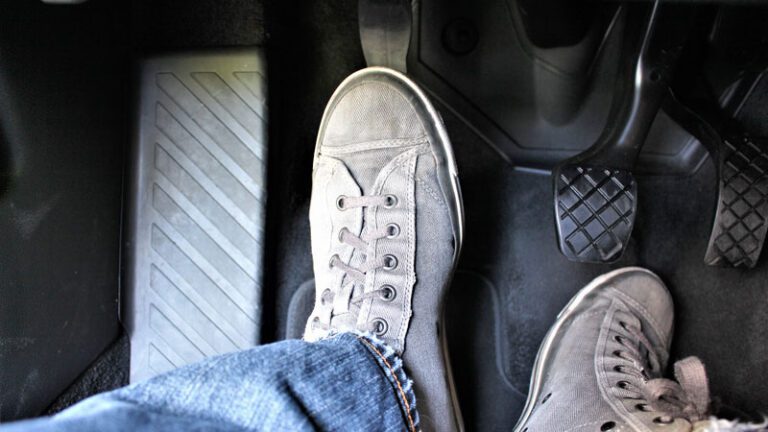
You slide into the driver’s seat, press the clutch pedal to the floor, and turn the key. Except this time, the pedal does not want to go to the floor. It fights back. It feels like you are pressing against a brick wall instead of a smooth, progressive spring. Your leg is already tired, and you have not even put the car in gear yet. That rock-hard clutch pedal is not just an inconvenience. It is a clear signal that something inside the clutch system has gone wrong, and continuing to drive with it in that state can turn a small repair into a very large one.
The clutch pedal is the single point of contact between you and the complex mechanical ballet happening inside the bell housing. Every time you press it, you are commanding a series of components, a release bearing, a pressure plate, a clutch disc, and a flywheel, to disengage the engine from the transmission so you can shift gears smoothly. When everything is working correctly, the pedal effort is moderate and consistent. You can feel the engagement point through your foot, and the pedal returns to its resting position without any drama. When something in that chain fails, the pedal tells you immediately. A hard pedal is one of the most common complaints drivers bring to a transmission shop, and it has a specific list of suspects behind it.
What Causes a Clutch Pedal to Feel Like Pressing a Brick Wall
The clutch system in most modern cars is hydraulic. It uses brake fluid, stored in a small reservoir usually shared with the brake master cylinder or mounted separately, to transmit the force from your foot to the clutch release mechanism. When you press the pedal, a master cylinder pushes fluid through a line to a slave cylinder mounted on or near the transmission. The slave cylinder then moves a rod or fork that presses against the release bearing, also called the throwout bearing, which pushes against the fingers of the pressure plate diaphragm spring. That action flexes the spring, pulls the pressure plate away from the clutch disc, and interrupts the flow of power from the engine to the transmission. Release the pedal, and hydraulic pressure drops. The diaphragm spring pushes the pressure plate back against the disc, clamping it firmly to the flywheel, and power flows again.
When the pedal becomes hard to press, the resistance you feel is not coming from the hydraulic system itself. It is coming from something mechanical that is supposed to move freely and is not. The hydraulic system amplifies your leg force, so a small effort at the pedal translates into a significant force at the release bearing. If the components that the hydraulic system is trying to move are seized, binding, or mechanically obstructed, that resistance is fed back through the hydraulic fluid and into the pedal. Your foot feels the blockage directly. Understanding which component is causing the problem is a process of elimination, starting with the most common failures and working toward the less frequent ones.
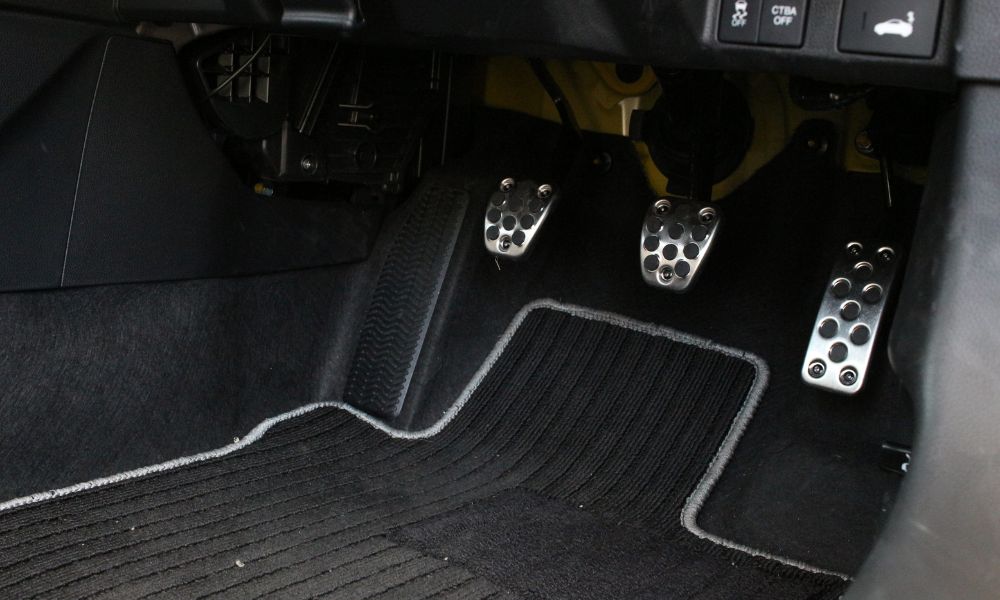
Your Throwout Bearing Is Worn Out and Crying for Help
The throwout bearing, officially called the clutch release bearing, is a small but mighty component that lives on the transmission input shaft, sliding back and forth each time you press and release the clutch pedal. Its job is to make contact with the spinning fingers of the pressure plate diaphragm spring and transfer the linear force from the slave cylinder into the rotational assembly of the clutch. It is a sealed ball bearing in most modern applications, and it is designed to spin only when the clutch is being disengaged. That intermittent duty cycle, combined with proper factory lubrication, allows it to last roughly the life of the clutch disc under normal driving conditions.
Over time, the grease inside the sealed bearing degrades. Heat from the engine and transmission bakes it. Small amounts of clutch dust, which is abrasive, can work their way past the seal. The bearing begins to run dry. When the lubricant is gone, the steel balls and races start wearing against each other. The bearing develops flat spots, roughness, and eventually, it can seize entirely. When the throwout bearing seizes, the smooth sliding motion becomes a grinding resistance. The force you apply at the pedal is now trying to overcome a bearing that no longer wants to rotate. The pedal firms up dramatically. You might also hear a chirping or squealing sound when you press the clutch, a noise that disappears when you release the pedal and the bearing stops spinning against the pressure plate fingers. That chirp is the bearing telling you it is running dry.
If caught early, before the bearing has completely seized and damaged the pressure plate fingers or the transmission input shaft sleeve, the repair involves replacing the throwout bearing, often as part of a complete clutch kit replacement. The transmission must be removed to access the bearing, so even though the bearing itself is not an expensive part, the labor involved is significant. Replacing the clutch disc, pressure plate, and throwout bearing together while the transmission is out is standard practice and the most economical approach. If the bearing is allowed to seize completely, it can weld itself to the pressure plate fingers, damage the input shaft sleeve that the bearing slides on, and require replacement of those additional components. A chirping throwout bearing is an urgent warning sign. Do not let it progress to a seized bearing and a rock-hard pedal.
The Cross Shaft or Transmission Lever Is Binding Up
On many vehicles, especially those with an external slave cylinder that pushes a fork protruding from the bell housing, the force from the hydraulic system passes through a mechanical lever called the cross shaft or release fork. This lever pivots on a ball stud inside the bell housing, and its far end contacts the throwout bearing, sliding it along the input shaft to engage and disengage the clutch. The cross shaft is a simple steel or cast iron component, but it operates in a harsh environment. It is exposed to heat, clutch dust, and sometimes moisture that sneaks past the bell housing seals.
Over many thousands of cycles, the pivot point where the cross shaft rotates on the ball stud can wear. The ball stud itself can develop a flat spot. The fork tips that contact the throwout bearing can wear unevenly. If the cross shaft becomes bent from a previous improper installation, from forcing a seized bearing, or from debris that wedged itself into the bell housing, it will bind instead of pivoting smoothly. When the cross shaft binds, the hydraulic system is trying to move a lever that is mechanically stuck. That resistance goes straight to the pedal. The clutch becomes progressively harder to press, and you might feel a notchy, uneven resistance as the fork scrapes against the bell housing or binds on its pivot.
Diagnosing a binding cross shaft requires removing the rubber boot where the fork enters the bell housing, if accessible, and visually inspecting the pivot area. A mechanic can use a borescope inserted through the boot opening to examine the fork and ball stud without removing the transmission. If the cross shaft is worn, bent, or binding, the transmission must be removed to replace it, along with the pivot ball stud and the throwout bearing as part of a complete clutch service. Some cross shafts are discontinued for older vehicles, requiring careful sourcing of a used but serviceable replacement. This is a less common cause of a hard pedal than a seized throwout bearing, but it is one that a thorough mechanic will always check.
Your Clutch Hydraulic Lines Are Blocked or Collapsed
The hydraulic system that makes your clutch pedal feel light and progressive depends on clean, unobstructed fluid flow between the master cylinder and the slave cylinder. The fluid travels through a metal line and often through a section of flexible rubber hose. That rubber hose is a hidden failure point. Over time, the inner lining of the hose can deteriorate. It can swell, delaminate, or collapse internally while the outer rubber surface looks perfectly fine. When the inner lining collapses, it acts like a one-way valve. Fluid can be pushed through when you press the pedal, but it cannot return freely when you release it. The result is a pedal that gets progressively harder to press and may not return fully to its resting position.
Blockages can also occur from contamination in the fluid. Brake fluid is hygroscopic, meaning it absorbs moisture from the air over time. That moisture causes corrosion inside the metal lines and the master and slave cylinder bores. Rust particles, flakes of deteriorated seal material, and sludge from degraded fluid can accumulate at the narrowest points in the system, typically at the fittings or inside the slave cylinder inlet. The blockage restricts fluid flow, creating a hydraulic lock that makes the pedal difficult to depress. A full hydraulic system flush and inspection is the first diagnostic step. A mechanic will disconnect the line at the slave cylinder, check for fluid flow while the pedal is pressed, and look for debris in the expelled fluid. If the rubber hose is collapsed, it must be replaced. If the metal line is corroded internally, it should be flushed or replaced. The master and slave cylinders themselves should be inspected and replaced if their bores are pitted or their seals are degraded.
The Pivot Ball Has Worn Out and Stopped Rolling
Inside the bell housing, the cross shaft or release fork pivots on a ball stud that is threaded into the transmission case or bolted to a bracket. This pivot ball allows the fork to rotate smoothly with very little friction as it moves the throwout bearing back and forth. The ball stud is usually a hardened steel component, and in some designs, it has a replaceable plastic or nylon seat that the fork snaps onto. That seat, or the ball surface itself, is a wear item.
When the clutch is operated hundreds of thousands of times over the life of a vehicle, the constant pivoting motion wears away at the pivot ball and its seat. The smooth, polished surface becomes rough and galled. The fork no longer pivots freely. It scrapes and binds against the worn pivot. The hydraulic force that is supposed to move the fork smoothly through its arc now has to overcome the additional friction of the damaged pivot. The pedal becomes harder to press, and the engagement point may become inconsistent as the fork binds and releases unevenly.
This problem is often discovered during a routine clutch replacement. A mechanic removes the transmission, inspects the pivot ball and the fork, and finds the wear. Most clutch kits do not include the pivot ball or the fork seat as standard, so it is important to ask the shop to inspect these components and replace them if they show any wear. A new pivot ball and seat, lubricated with the correct high-temperature grease, restore the smooth, low-effort pedal feel that a healthy clutch system should provide. If you are having a clutch replaced and the shop does not mention the pivot ball, ask about it. The incremental cost of replacing the pivot while the transmission is already out is minimal compared to the labor of going back in later because a worn pivot caused a hard pedal.
The Vacuum Clutch Assist Has Failed
Some vehicles, particularly older trucks and performance cars, use a vacuum-assisted clutch system to reduce pedal effort. The vacuum assist works on the same principle as a brake booster. Engine vacuum is routed to a diaphragm inside a booster unit mounted on the firewall. The diaphragm uses atmospheric pressure to multiply the force your foot applies to the clutch master cylinder pushrod. When the vacuum assist is working, the pedal effort is light and easy. When it fails, the pedal immediately becomes significantly harder to press because your leg is now doing all the work that the booster was helping with.
Vacuum assist failure can be caused by a leaking vacuum hose, a cracked or ruptured booster diaphragm, a failed check valve that allows vacuum to escape, or a loss of engine vacuum due to an intake manifold or carburetor issue. Diagnosing a vacuum assist problem starts with checking the vacuum line from the intake manifold to the booster for cracks, loose connections, or disconnection. The check valve, which is a small plastic component in the vacuum line, can be tested with a hand vacuum pump. A booster diaphragm leak will often produce a hissing sound when the clutch pedal is pressed, and the engine idle may change because the leak allows unmetered air into the intake manifold.
Replacing a failed vacuum booster or its associated hoses and check valve restores the power assist and returns the clutch pedal to its normal light effort. These systems are less common on modern vehicles, which tend to use hydraulic systems designed with a sufficiently large master cylinder bore to provide acceptable pedal effort without vacuum assistance. If you are driving an older vehicle with a vacuum clutch booster and the pedal suddenly becomes hard, check the vacuum system first. It is often a simple, inexpensive fix.
The Clutch Cable Has Stretched, Frayed, or Broken
Before hydraulic clutch systems became nearly universal, most manual transmission vehicles used a mechanical cable to connect the clutch pedal to the release fork. A steel cable, housed in a flexible sheath, ran from the pedal assembly through the firewall to a lever on top of the transmission. Pressing the pedal pulled the cable, which rotated the lever, which moved the release fork and the throwout bearing. A cable-operated clutch is simple and direct, but it requires periodic adjustment and eventual cable replacement.
A clutch cable can fail in several ways, all of which affect pedal feel. Over time, the cable stretches, increasing the amount of pedal travel required to fully disengage the clutch. A stretched cable can be adjusted at the lever end, but there is a limit to the adjustment range. When the cable stretches beyond that limit, the clutch will not fully release, causing grinding shifts and difficult engagement. More dramatically, the individual wire strands inside the cable can begin to fray. A frayed cable creates resistance as the broken strands drag against the inside of the sheath. That resistance translates directly to a harder pedal. The pedal may also feel notchy or rough as the frayed strands catch and release inside the sheath. Eventually, a frayed cable can snap entirely, leaving the pedal on the floor with no connection to the release mechanism at all.
The cable sheath can also cause problems. If the sheath is kinked, crushed, or internally contaminated with dirt and corrosion, the cable cannot slide smoothly inside it. The added friction makes the pedal harder to press. Routing a new clutch cable carefully along the original path, avoiding sharp bends, and lubricating the cable with the correct lubricant if specified by the manufacturer, restores smooth operation. If your vehicle uses a cable clutch and the pedal has become stiff or notchy, inspect the cable and its routing before assuming a more serious internal transmission problem.
Something Is Physically Blocking the Pedal Assembly
Not every hard clutch pedal originates from a complex mechanical failure under the hood. Sometimes the cause is as simple as a physical obstruction in the pedal assembly itself. The clutch pedal is a lever that pivots on bushings inside the pedal bracket under the dashboard. Over the years, items can fall into the footwell and become lodged behind the pedal. A floor mat that has slid forward can bunch up under the pedal arm, restricting its travel and making it feel harder to press. A loose piece of trim, a dropped pen, or even accumulated debris from shoes and boots can create a blockage that you cannot see from the driver’s seat.
The pedal pivot bushings themselves can wear out. When the bushings dry out and deteriorate, the steel pedal arm begins to pivot directly against the steel bracket. The resulting metal-on-metal contact creates friction that makes the pedal harder to move. The pedal may also squeak or groan as it travels. Replacing the worn bushings with new nylon or bronze bushings, and lubricating them with white lithium grease or a similar lubricant, restores smooth, quiet operation. This is one of the few hard pedal causes that can be diagnosed and fixed without a mechanic, simply by laying on your back in the driver’s footwell with a flashlight and inspecting the pedal pivot area while you press the pedal by hand.
The Clutch Master or Slave Cylinder Has Internally Failed
The master cylinder and slave cylinder are the core components of a hydraulic clutch system. The master cylinder converts the mechanical motion of the pedal into hydraulic pressure. The slave cylinder converts that pressure back into mechanical motion at the release fork. Both cylinders contain seals that ride against a precisely honed bore. When the seals are intact and the bore is smooth, hydraulic pressure is generated and maintained efficiently. When either cylinder fails internally, the pedal feel changes.
A master cylinder can fail in a way that makes the pedal hard. If the compensating port, a small hole inside the master cylinder that allows fluid to flow between the reservoir and the cylinder bore, becomes blocked by debris or a swollen seal, the hydraulic fluid behind the piston cannot escape. The system becomes hydraulically locked. Pressing the pedal feels like pressing against a solid object because the fluid has nowhere to go. A master cylinder with a blocked compensating port will also cause the clutch to slip because the pressure plate cannot fully clamp when the pedal is released. The fluid trapped in the line holds the pressure plate partially disengaged.
A slave cylinder can fail in a way that creates mechanical resistance. If the slave cylinder bore is corroded, the piston can seize. If the pushrod that extends from the slave cylinder to the release fork is bent or binding, the hydraulic force meets mechanical resistance. Both failures feed back through the fluid to the pedal, which becomes hard and unresponsive. The fix for either cylinder failure is replacement. Master and slave cylinders are not typically rebuilt in modern shops. They are replaced as units, and the system is thoroughly flushed with fresh brake fluid to remove any contamination from the failed cylinder.
What Happens When the Clutch Is Out of Specification
A clutch that has been recently replaced but is not adjusted correctly can also cause a hard pedal. This is a common issue that appears immediately after a clutch service. If the clutch pedal free play, the distance the pedal travels before you feel resistance, is not set to the manufacturer’s specification, the pedal may rest at the wrong point in its travel. Too little free play means the release bearing is constantly in contact with the pressure plate fingers, which can cause the bearing to spin continuously, overheat, and eventually seize. Too much free play means the pedal must travel farther before the clutch begins to disengage, which can make the pedal feel heavier and reduce the available travel for a clean shift.
A new clutch master cylinder or slave cylinder that has an incorrect pushrod length can also cause pedal issues. Some pushrods are adjustable. If the pushrod is adjusted too long, the compensating port in the master cylinder is blocked, causing hydraulic lock and a hard pedal. If the pushrod is too short, there is excessive free play and the clutch may not fully disengage. Setting the pushrod and the pedal free play to the factory specification, found in the vehicle’s service manual, eliminates this entire category of problems. If you have just had clutch work done and the pedal is hard, return to the shop and ask them to verify that the hydraulic system and pedal free play are adjusted correctly. A reputable shop will do this at no additional charge as part of standing behind their work.
How a Mechanic Diagnoses a Hard Clutch Pedal Step by Step
When a vehicle arrives at a shop with a complaint of a hard clutch pedal, the mechanic follows a logical diagnostic path that moves from the simple and external to the complex and internal. The first check is always the hydraulic fluid level and condition. A reservoir that is low or filled with dark, contaminated fluid points to a leak or neglected maintenance. The mechanic looks for signs of fluid leaking at the master cylinder where it mounts to the firewall, along the hydraulic line, at the rubber hose section, and at the slave cylinder on the transmission. Any external leak is addressed before further diagnosis.
Next, the mechanic checks the pedal assembly itself. They feel the pedal action with the engine off, listening for squeaks and feeling for roughness that might indicate dry pivot bushings or a floor mat obstruction. They measure the pedal free play with a ruler, comparing it to the specification. If the free play is out of range, they adjust it at the master cylinder pushrod if the design allows.
With the external checks complete, the mechanic listens to the clutch operation. With the engine idling and the transmission in neutral, they press and release the clutch pedal slowly, listening for noises. A chirp or squeal that happens when the pedal is pressed, and stops when the pedal is released, points strongly to a failing throwout bearing. A rattle or grinding that happens when the pedal is released, and stops when it is pressed, can indicate a worn input shaft bearing. A grinding during engagement can indicate a worn clutch disc or a damaged pressure plate.
If the external checks and noise diagnosis point toward an internal problem, the mechanic will often perform a hydraulic system test before recommending transmission removal. They disconnect the hydraulic line at the slave cylinder and connect a pressure gauge. Pressing the clutch pedal should generate a specific pressure, usually several hundred pounds per square inch, that holds steady when the pedal is held down. If the pressure builds but then drops, the master cylinder is leaking internally. If the pressure is low, the master cylinder seals are worn. If the pressure is normal and steady, the hydraulic system is healthy, and the problem is mechanical inside the bell housing.
The definitive diagnosis of an internal clutch problem requires removing the transmission, either partially by sliding it back from the engine or fully by removing it from the vehicle. Once the transmission is out, the mechanic can inspect the clutch disc, pressure plate, flywheel, release bearing, pivot ball, and cross shaft. The visual evidence usually makes the cause of the hard pedal obvious. A seized release bearing will be discolored from heat and will not spin freely. A worn pivot ball will show galling and a rough surface. A binding cross shaft will show uneven wear marks. At this stage, the mechanic provides a clear estimate for the parts and labor needed to restore proper operation.
What It Costs to Fix a Hard Clutch Pedal
The cost of repairing a hard clutch pedal varies enormously depending on which component has failed. Replacing a collapsed rubber hydraulic hose costs between fifty and one hundred fifty dollars, including the part and the labor to install it and bleed the system. Replacing a master or slave cylinder costs between one hundred fifty and four hundred dollars, depending on the vehicle and the accessibility of the components. Replacing a worn clutch cable costs between one hundred and three hundred dollars, including the cable and the labor to route and adjust it.
If the transmission must be removed to replace the throwout bearing, pivot ball, cross shaft, or the clutch assembly itself, the costs increase substantially. A complete clutch replacement, which includes the clutch disc, pressure plate, throwout bearing, pilot bearing or bushing if applicable, and often a resurfaced or replaced flywheel, typically costs between eight hundred and two thousand dollars on a front-wheel-drive vehicle. Rear-wheel-drive vehicles and trucks are usually less expensive because the transmission is easier to access. The labor is the dominant cost. A clutch replacement typically requires five to eight hours of labor, at a shop rate that varies by location. The parts themselves, a quality clutch kit from a reputable manufacturer, cost between two hundred and five hundred dollars. Using the cheapest available clutch kit is a false economy. A high-quality clutch, correctly installed, will provide years of smooth, quiet, light-pedal operation.
Preventing a Hard Clutch Pedal Through Good Habits
The clutch system wears with every shift. Nothing can stop that entirely, but several driving habits and maintenance practices dramatically extend its life. The single most damaging habit for clutch longevity is resting your foot on the clutch pedal while driving. Even light pressure on the pedal partially engages the release bearing and can cause the clutch disc to slip microscopically. That constant contact wears the bearing, overheats the pressure plate, and glazes the clutch disc friction material. Keep your foot completely off the clutch pedal unless you are actually shifting. Use the dead pedal, the footrest to the left of the clutch, if your vehicle has one.
Avoid slipping the clutch excessively. Slipping the clutch means holding the pedal at the engagement point for longer than necessary, typically when starting on a hill or creeping in traffic. While some slipping is unavoidable when starting from a stop, prolonged slipping generates enormous heat at the friction surfaces and wears the disc rapidly. A clutch that has been overheated repeatedly will develop a chattered engagement, a hard pedal, and a distinct burning smell that resembles overheated brakes. Let off the clutch pedal as soon as the vehicle is moving smoothly, and use the handbrake for hill starts instead of balancing the car on the clutch.
Change the clutch hydraulic fluid at the intervals recommended by the manufacturer, or every two to three years if no interval is specified. Brake fluid absorbs moisture, and that moisture corrodes the internal components of the master and slave cylinders and the metal hydraulic lines. Fresh, clean fluid protects those components and ensures smooth hydraulic operation. Flushing the hydraulic system is a simple procedure that any competent shop can perform, and it is far less expensive than replacing corroded cylinders. If the fluid in your clutch reservoir is dark brown or black instead of clear or light amber, it is overdue for a change.
If your vehicle has a cable-operated clutch, inspect the cable at least once a year. Look for fraying at the ends, cracks in the sheath, and smooth operation throughout the pedal travel. Lubricate the cable according to the manufacturer’s recommendations. Some cables are Teflon-lined and should not be lubricated because oil or grease will attract dirt and cause binding. Know which type your vehicle uses. If the cable shows any signs of damage, replace it proactively. A cable that snaps while driving leaves you stranded.
A Summary of Clutch Pedal Hardness Causes and Fixes
| Cause of Hard Clutch Pedal | Symptoms Beyond Hardness | Typical Fix | Approximate Cost Range |
|---|---|---|---|
| Worn or seized throwout bearing | Chirping when pedal pressed, noise stops when released | Replace throwout bearing (usually with full clutch kit) | $800 – $2,000 (includes transmission removal) |
| Binding cross shaft or release fork | Notchy, uneven pedal feel; possible grinding | Replace cross shaft, pivot ball, throwout bearing | $800 – $2,000 (includes transmission removal) |
| Blocked or collapsed hydraulic line | Pedal may not return fully; fluid appears contaminated | Replace hose, flush system | $50 – $150 |
| Worn pivot ball | Pedal feel changes inconsistently | Replace pivot ball and lubricate with high-temp grease | Included with transmission removal during clutch service |
| Failed vacuum clutch assist | Pedal suddenly becomes hard; possible hissing noise under dash | Replace vacuum booster, hose, or check valve | $200 – $600 |
| Frayed or binding clutch cable | Notchy pedal feel; grinding sensation through pedal | Replace clutch cable, route correctly, adjust free play | $100 – $300 |
| Physical obstruction at pedal | Pedal travel restricted; may feel something under the pedal | Remove obstruction, secure floor mat, replace worn bushings | $0 – $50 |
| Hydraulic lock from blocked compensating port | Clutch may slip; pedal feels completely solid | Replace master cylinder, flush system | $150 – $400 |
| Clutch out of adjustment after replacement | Appeared immediately after recent clutch work | Adjust pedal free play and pushrod length to spec | Usually covered under shop warranty |
When the Hard Pedal Is Telling You Something Urgent
A clutch pedal that suddenly becomes hard to press is not a suggestion. It is a warning, and the severity of that warning depends on the root cause. A collapsed hydraulic hose or a failed vacuum booster makes the car harder to drive but is unlikely to cause immediate catastrophic damage. A seized throwout bearing or a binding cross shaft is different. The additional force required to operate the clutch is being transferred through components that were not designed to handle that level of stress. The clutch pedal bracket can bend or crack. The firewall, especially in older vehicles with thinner sheet metal, can flex or develop fatigue cracks where the master cylinder mounts. The excessive hydraulic pressure can blow out a seal in the master or slave cylinder, causing a sudden complete loss of clutch function. A clutch that cannot be disengaged means you cannot shift out of gear, cannot stop the car without stalling the engine, and cannot safely pull over if you are moving.
If your clutch pedal becomes hard and you also notice the clutch slipping, meaning the engine revs rise without a corresponding increase in road speed, the problem is even more urgent. A clutch that is simultaneously hard to press and slipping is likely experiencing hydraulic lock from a blocked master cylinder compensating port, combined with a pressure plate that cannot fully clamp because fluid is trapped in the line. This condition destroys the clutch disc in a matter of miles. The friction material overheats, glazes, and loses its ability to grip. The flywheel and pressure plate surfaces can warp from the heat. What might have been a simple hydraulic repair becomes a complete clutch replacement costing ten times as much.
Pay attention to what the pedal is telling you. A change in pedal effort that happens gradually over weeks or months suggests normal wear that should be addressed at your earliest convenience. A change that happens suddenly, from a normal pedal to a rock-hard pedal in a single drive, suggests a component failure that requires immediate attention. The clutch is a safety-critical control. You cannot drive the car without it. Do not let a hard pedal become a broken car on the side of the road. If you do not know what is causing the problem, have a professional diagnose it. The diagnostic fee is always cheaper than the repair that becomes necessary when the initial warning is ignored.
The clutch pedal is the only voice the clutch system has. When it screams at you through a rock-hard feel, through a chirping bearing, through a notchy engagement, listen to what it is saying. Find the source of the problem, fix it properly with quality parts, and you will be rewarded with thousands of miles of smooth, effortless shifts. Ignore it, and the clutch will eventually stop talking to you entirely, because the car will not move. The choice is yours, and it is made at the moment you feel that pedal resist your foot for the first time.