
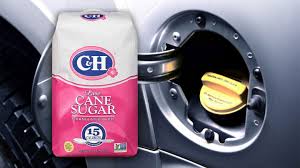
Does sugar in your gas tank kill your engine? It is one of those roadside myths that refuses to die. Someone tells a story, another person repeats it, and suddenly “pour sugar in the tank” turns into a “sure way” to ruin a car.
But when you look at what sugar actually does in gasoline, the story changes. Sugar does not dissolve the way people imagine. It tends to sink. A fuel filter is designed to trap particles. And if the only thing added is a small amount of dry sugar, it is very unlikely to cause the kind of damage people claim.
Here is the part nobody tells in the bullying version of this myth: the real “engine killer” many owners should actually worry about is water. Water behaves very differently than sugar in a fuel tank and fuel system. It can disrupt combustion and contaminate the fuel lines.
In this guide, I will keep it grounded and practical. We will use the sugar-and-water experiment, we will talk about the 1994 experiment by Professor John Thornton, and we will cover why sugar goes to the bottom of the tank. Then we will answer the real question: what substance can truly cause serious engine trouble, and what you should do if the wrong thing ends up in your tank.
Fair warning. This article is about the myth, not about helping anyone sabotage a vehicle. If someone pours anything into your tank or you suspect contamination, the smart move is to handle it safely and get it cleaned properly.
Try out this experiment with sugar and water
Let us start with a simple experiment you can visualize. Pour sugar in water, then pour the same quantity of sugar in gasoline. In water, the sugar disappears. In gasoline, it does not dissolve. The granules sink and settle to the bottom.
That is exactly what the myth people get wrong. They talk about sugar “mixing” with fuel like it turns into something that can ruin combustion. In reality, dry sugar does not dissolve in gasoline the way it dissolves in water. So it does not automatically circulate through the engine like an additive.
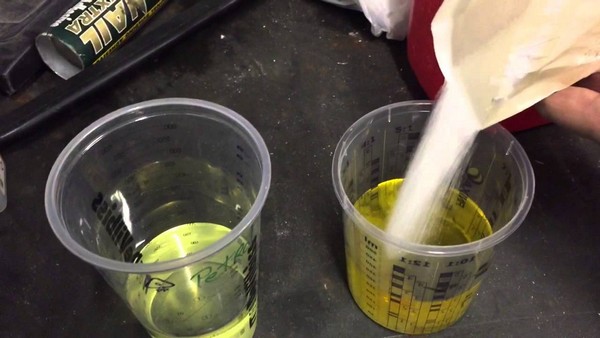
The sugar dissolves in water but goes down to the bottom of the gasoline container
Now let us connect that to how a car tank is set up. Most cars have a fuel filter as part of the fuel delivery system. That filter helps keep particles from traveling forward into the engine.
In other words, even if sugar sits at the bottom of the tank, that is not the same as sugar magically reaching the combustion chamber. A lot of it will be trapped by the filter system instead of circulating freely.
There is another important detail. The experiment shows the core behavior: sugar does not dissolve in gasoline like it does in water. That means there is no realistic way for it to “mix” with fuel and create a widespread chemical problem across the engine the way water does.
In everyday ownership terms, this is why the sugar myth does not hold up. A small amount of sugar is more likely to cause inconvenience, clogging at some level, or filter issues than it is to cause immediate, total engine failure from inside the cylinders.
But here is where real-world ownership gets nuanced. Even if sugar itself is not dissolved and circulating as a solution, it can still create trouble if enough of it makes it past filters or if the fuel system gets clogged. The original claim people repeat is “sugar kills engines,” which is too absolute. The more accurate story is: sugar tends to sink, and water is the real danger.
Professor John Thornton carried out the experiment in 1994
This is where the myth stops being only “common sense” and becomes a measured claim. A Professor at University of California, John Thornton, carried out the experiment in 1994. The key point is that he did not guess. He tested and measured.
According to the experiment description, he combined gasoline with radioactive-carbon-atom sugar. Then he used a centrifuge to separate the undisolved sugar from the gasoline and measured the gas radioactivity after it was “contaminated” with sugar.
The result was specific: fifteen gallons of gas absorbed less than a teaspoon of sugar. The takeaway is clear. That quantity is not enough to cause problems, at least in the measured way the experiment looked at contamination by dissolved sugar.
The experiment statement also notes that the sugar would have to be a lot more to have a negative effect on the gasoline. That does not mean sugar is harmless in every scenario. It means the blanket “a little sugar ruins everything” claim is not supported by the contamination measurement.
Here is a mechanic’s translation: most real engine damage from fuel “contamination” happens when the contaminant changes combustion chemistry, affects injector behavior, or causes misfires. Dissolved sugar in fuel would be closer to a chemistry problem. But the measured behavior suggests the sugar is mostly not dissolving, so it is not behaving like a dissolved additive.
So when you hear people repeat “pour sugar in the tank to kill an engine,” treat it like what it is: a story that sounds satisfying but does not match how fuel chemistry and fuel filtration actually work.
That said, if someone dumped a huge amount of sugar into your tank, do not assume nothing will happen. Excess sugar can cause clogging at some stage, especially with enough granules and enough time. The original guidance you have includes that scenario too: a large quantity requires a mechanic for complete cleaning.
Why sugar goes to the bottom of the gas tank
Sugar does not magically “aim itself” to the bottom. It behaves like a solid that is heavier than the liquid around it. Gasoline is a mixture of hydrocarbons that stays liquid and flows. Sugar is a solid granule. So if it is added to a gasoline tank, it naturally sinks and occupies the bottom space.
Here is the simple logic described: the weight of sugar is more than that of gas. Because of that, it sits at the bottom and cuts short the quantity of gasoline you can put in the tank. That matters because you are not just adding a “harmless prank.” You are displacing fuel volume, and you can reduce how much usable fuel remains.
In the real world, cars also move. If you hit a bump or if there is a collision, some sugar can get suspended above the bottom layer. The original guidance explains this exact possibility: the fuel filter in the tank will hold some of it when it is suspended.
This is where the “sugar does not dissolve” story becomes “sugar can still cause issues” depending on quantity and movement. When a filter traps particles, it can restrict fuel flow. Restricted fuel flow can lead to rough running, stalling, or hard starts, even if the sugar never dissolved like water.
The guidance also says you may have to clean the fuel filter to ensure the sugar does not clog it. That is the realistic bridge between “sugar does not kill engines instantly” and “sugar can still cause problems.” It is not chemical poisoning. It is physical blockage risk and fuel delivery disruption risk.

A teaspoon of sugar has no effect on your gasoline
Now let us talk about the “large quantity” scenario, because people often use vague amounts in the rumor version. The original guidance is straightforward: if someone pours a large quantity of sugar in your car, you need to take your car to the mechanic for complete cleaning.
That is the honest owner advice. Large amounts can overwhelm the filtration system and clog fuel components faster than simple cleaning can fix. At that point, the correct repair path is fuel system cleaning and possibly parts replacement depending on what is affected.
If you want a real-world example, imagine two incidents. Scenario one involves a small amount, like a teaspoon. Scenario two involves a cup or more. In scenario one, the sugar mostly sinks and a filter may trap most of it. In scenario two, the filter can become loaded quickly, and you can end up with fuel starvation issues. Those are drivability issues, not the “sugar dissolves and instantly melts your engine” type of failure people claim.
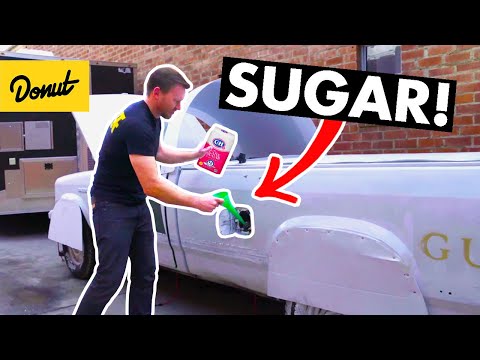
If the video is anything like the experiment descriptions, the main message stays the same. Sugar behaves like a solid that settles. Water behaves like a liquid contaminant that mixes and travels with fuel. That difference is everything.
What substance can actually kill your engine?
Here is the real “engine killer” logic. If sugar is not so harmful to your engine, what substance actually is?
The substance named in the original guidance is water.
As harmless as water might seem, it can be dangerous for a car. Putting water in your gas tank affects your engine performance by disrupting the combustion process. In simple terms, your engine is designed to burn gasoline vapor with the right fuel-air mix. Water is not part of that design.
The critical difference between sugar and water is where they go and how they move. With sugar, the sugar goes to the bottom of the gas tank. It stays as solid granules until removed. With water, the gasoline flows over and around it. The fuel system pulls from the tank, so the water enters the system instead of just sitting there quietly.
According to the guidance, the fuel lines get filled with water instead of gas. In some cases, fuel can mix with water, leaving the system full of a mixture that does not burn properly.
The guidance also makes an important point. Water does not kill the engine outright by itself. It can still cause serious damage if you keep running it. To prevent further damage, you should have it cleaned immediately by a mechanic.
That “clean immediately” advice is what separates a small issue from a costly failure. If water contaminates the system and you continue driving, you can end up with misfires, rough running, and potentially other damage from poor combustion and repeated operating under bad conditions.
Here is why this matters to owners. Most people treat engine damage as something that happens instantly. In reality, fuel system contamination often causes problems that build. A few minutes of wrong fuel behavior can become a larger problem if you keep trying to drive through it.
So when someone repeats the sugar myth as an “engine kill” trick, you should file it under “fiction that distracts from the actual risk.” Water contamination is the scenario where the car is more likely to struggle and the fuel system can deliver the wrong contents to the engine.
Sugar versus water: why the outcomes are so different
You can think of sugar and water as two completely different kinds of “problems” even though they both can end up in a gas tank. Sugar is a solid granule that mostly sinks. Water is a liquid contaminant that can travel with the fuel and reach the injectors and combustion process.
The original guidance basically gives you the comparison in a simple way: sugar goes to the bottom and stays there, while water rides along with the fuel flow and contaminates the fuel lines. That is why water can disrupt combustion and sugar typically does not mix into the fuel.
If you want a quick comparison table, here is an owner-friendly one based on the exact points already stated.
| Substance | What it does in the gas tank | Does it dissolve like it does in water? | Main risk to the engine | What the guidance says to do |
|---|---|---|---|---|
| Sugar | Sinks to the bottom because it is heavier | No. It does not dissolve in gasoline like in water | Possible clogging of the fuel filter if suspended | Fuel filter may trap it; clean filter if needed. Large quantity requires complete cleaning by a mechanic |
| Water | Fuel flows on the water, so it moves through the fuel system | It contaminates fuel flow and can mix with gas | Disrupts combustion process by filling fuel lines with water or a mixture | Have it cleaned immediately by a mechanic to prevent further damage |
That table matches the core facts in your source text. It also matches what I see in shops when fuel quality issues show up: it is usually the contaminant behavior and fuel delivery path that decides what happens next.
So does sugar ever cause problems? The honest answer
This is where people get stuck. The myth is “sugar kills the engine.” The science result says sugar does not dissolve like water. Those two facts sound contradictory until you realize they are about different outcomes.
Sugar is not likely to cause immediate, internal engine combustion damage the way water can. However, sugar can still cause problems indirectly if enough granules enter the fuel delivery system. Even if sugar does not dissolve, it can still be a particle load the filter has to catch.
That means “sugar in the tank” problems often look like fuel delivery problems rather than “engine chemistry” problems. Examples include hard starting, sputtering, or fuel starvation when a filter becomes restricted.
Remember the original guidance that if sugar is suspended above the bottom due to bumps or collision, the fuel filter will hold some of it. If that happens, you may have to clean the fuel filter to prevent clogging. That is a very real and very mechanical risk.
Here is a practical way to think about the “amount” issue without adding new facts that contradict the original guidance. A teaspoon is not likely to cause problems, based on the 1994 experiment measurement. A large quantity increases the chance of clogging and requires complete cleaning by a mechanic.
So if you are reading this because you suspect someone added sugar, the best approach is to treat it like a fuel system cleanliness issue. If the amount is small, the car might not show symptoms. If you see symptoms, a mechanic can check the filter and fuel delivery behavior.
What you should do if you suspect sugar or water contamination
Let us get practical now. Let us say you suspect sabotage, or you simply made a mistake while refueling, or you got the wrong fuel from a station. What do you do next?
The right response depends on whether you think it was sugar or water, but you can still follow a safe decision process either way. The goal is to protect the engine and avoid making the contamination worse by continuing to run the car under bad fuel conditions.
Here is a safe, owner-friendly decision list based on the guidance you provided.
- If it is likely sugar: expect it to sink. The fuel filter may trap particles. If you suspect a large quantity or you see fuel delivery symptoms, take the car to a mechanic for complete cleaning. If it is a smaller amount and symptoms are minor, the mechanic will still inspect filter condition.
- If it is likely water: do not keep driving. Water can disrupt combustion by filling fuel lines with water or a water-fuel mixture. The guidance says to have it cleaned immediately by a mechanic.
- If you are unsure: treat it as contamination. Stop pushing it. Get the fuel system inspected and cleaned as needed, because guessing is how small contamination turns into bigger repairs.
In the real world, owners sometimes feel tempted to “try it again.” A second start does not fix contamination. It just gives the engine more chances to misfire or pull restricted flow.
When owners call me about fuel weirdness, I usually ask what changed right before the symptoms. Was there a weird drink spilled near a tank? Was the car vandalized? Did the car go through a questionable refuel situation? Those details matter because sugar and water produce different fuel behavior, and the correct repair path depends on the contaminant.
Common owner stories: why the sugar myth keeps spreading
Here is the uncomfortable truth. Even if sugar is not the “instant engine killer” people claim, the story spreads because people remember what happened after a prank, not what caused it.
For instance, someone pours something into the tank, the car runs rough later, and the owner concludes it must be the sugar. That conclusion might be partially correct because the car could develop fuel delivery issues from clogged filtration. But the “sugar killed the engine” version is usually exaggerated.
Another common reason is confusion with water-based liquids. If a person pours something sweet like syrup or a sugary drink, it is not pure sugar. It can include water. Water is the substance that can travel with fuel flow and disrupt combustion. That is where you get real engine trouble, and then the story gets simplified into “sugar did it.”
Also, timing matters. If the car had a fuel filter that was already near the end of its life, adding any extra particles can push it into failure sooner. Owners experience the failure after the prank, and the blame goes to sugar.
I am not saying sugar is never a problem. I am saying the “kills the engine” claim is not accurate based on the experiment behavior described. The more accurate explanation is: sugar tends to sink and get trapped, while water travels and interferes with combustion.
That is how myths persist. They combine a real partial effect with an overconfident conclusion. When you look at the actual fuel behavior, the conclusion becomes less dramatic and more accurate.
Frequently Asked Questions (FAQ)
Does sugar dissolve in gasoline?
No, the experiment described shows sugar dissolves in water but does not dissolve in gasoline. Instead, the granules move down to the bottom in line with the gasoline flow and settle there.
Will a fuel filter stop sugar from reaching the engine?
In most cars, there is a fuel filter that stops sugar from going down to the engine. The guidance also explains that if sugar becomes suspended after bumps or collisions, the fuel filter can hold some of it. If enough gets trapped, you may need to clean the fuel filter.
How much sugar did the 1994 experiment actually find as dissolved or absorbed?
Professor John Thornton’s 1994 experiment measured that fifteen gallons of gas absorbed less than a teaspoon of sugar. The guidance says that quantity is not enough to cause problems and that sugar would need to be a lot more to have a negative effect on the gasoline.
What substance can actually harm the engine more seriously?
The guidance calls out water. Water disrupts the combustion process by contaminating the fuel lines, either filling them with water instead of gas or mixing water and gas. The engine does not have to be destroyed instantly for damage to happen. The guidance says to have it cleaned immediately by a mechanic to prevent further damage.
If someone pours a large amount of sugar into my tank, what should I do?
If for any reason someone pours a large quantity of sugar into your car, the guidance says you need to take your car to the mechanic for complete cleaning. Even though sugar is not likely to dissolve, a large amount can still create fuel delivery problems by clogging or overwhelming the filtration system.
If water gets in, can I keep driving?
The guidance says water does not kill the engine outright, but it can still cause damage if you do not clean it immediately. So you should not keep driving it. Get the fuel system cleaned by a mechanic to prevent further damage.
The bottom line, without the myth
Here is what the guidance concludes. Sugar does not have the capacity to kill your engine in the way people claim because it does not mix well with gasoline. It goes to the bottom of the tank and remains there until removed. The particles that gas absorbs are too small to cause harm.
Water is the substance that can actually kill or seriously damage performance because water affects the combustion process by contaminating the fuel lines. That is why the correct move is immediate cleaning by a mechanic if water is suspected.
Action you can take right now: if you suspect someone added sugar, do not assume it is harmless, especially if it was a large amount. If you suspect water, treat it like an emergency and get it cleaned immediately. And if you are unsure which substance it was, get the fuel system inspected instead of guessing.
Now be honest with yourself: if your car ever had fuel “mystery” behavior after a refuel or after a prank, did you ever check the fuel system or did you just blame the loudest rumor online?