
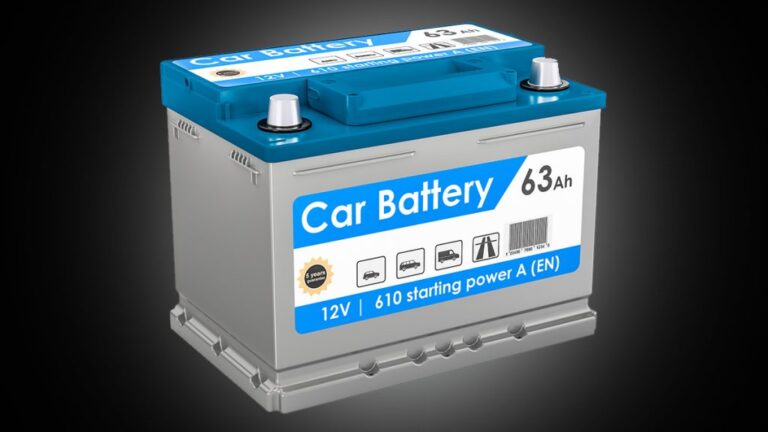
A swollen car battery is not something you see every day, but when you do spot it, one or both sides of the battery case visibly bulging outward, it demands attention. This is not a cosmetic issue you can monitor and revisit later. A battery that is swelling is telling you that something has gone wrong internally, and in some cases that something poses a real risk to other components in the engine bay.
Understanding why batteries swell, what the swelling means for the battery’s condition, and what you should actually do about it is genuinely useful knowledge for any car owner.
Why Do Car Batteries Swell?
Lead-acid batteries, the type used in the vast majority of passenger vehicles, contain a mixture of sulfuric acid and water as their electrolyte, and a series of lead plates suspended in that electrolyte. The battery casing is sealed, though it contains a small gas venting system. When conditions inside the battery change significantly, due to temperature extremes, charging faults, or internal damage, the casing can deform outward. There are several distinct causes.
Frozen Electrolyte in Cold Weather
This is the cold-season cause of battery swelling. The electrolyte inside the battery is not a fixed substance, its freezing point changes depending on how charged the battery is and therefore how concentrated the acid solution is.
- A fully charged battery has a highly concentrated electrolyte with a freezing point of around -60°C (-76°F), practically immune to freezing in any real-world condition
- A battery at approximately 50 percent charge has a diluted enough electrolyte that it will freeze at around -24°C (-11.2°F)
- A nearly fully discharged battery can freeze at temperatures as mild as -7°C to -10°C (19°F to 14°F)
When the electrolyte freezes, it expands, just as water does when it freezes. The solid, expanded electrolyte pushes against the battery casing from the inside, bulging the sides outward. This is the same physical principle that can burst water pipes in winter.
In cold weather, the risk compounds naturally. Lower temperatures reduce the battery’s capacity and its ability to hold charge. Meanwhile, drivers are running more electrical loads, heating, lights, heated seats, rear window demisting, which further drains the battery. An undercharged battery in winter is not just an inconvenience in terms of starting reliability. It is specifically the condition that makes the electrolyte vulnerable to freezing.
Gas Buildup in Hot Weather
The summer version of battery swelling has a completely different mechanism. During normal battery operation, particularly during charging, electrolysis occurs within the battery. The charging process splits water molecules in the electrolyte, releasing hydrogen and oxygen gas as byproducts. This is normal and expected. These gases need to escape through the battery’s venting system.
When they cannot escape, because the venting ports are clogged with dust, dirt, or electrolyte deposits, pressure builds inside the sealed casing. The trapped gas pushes outward against the battery walls, causing visible bulging. High temperatures accelerate the rate of gas production, which means a clogged vent that causes no problem in mild weather can rapidly cause significant swelling in summer.
Overcharging From a Faulty Alternator Regulator
The alternator in your car generates electricity to charge the battery while the engine runs. A voltage regulator within the alternator controls how much voltage the charging system delivers, typically between 13.8 and 14.4 volts. This controlled voltage is what allows the battery to charge at a safe rate without overheating.
When the voltage regulator fails, the alternator can deliver excessive voltage to the battery, sometimes significantly above the safe charging threshold. This causes the charging reaction inside the battery to become extremely aggressive, producing gas at a rate far beyond what the venting system can handle. The electrolyte can boil. Heat builds rapidly. The result is severe swelling, and in extreme cases, the risk of the casing rupturing or the battery venting corrosive gas.
A battery that swells rapidly while the car is running, rather than developing gradually over cold nights, is pointing strongly toward an alternator charging fault. This is also a situation where the battery is not the only component at risk: overcharging voltage can damage other sensitive electronics connected to the vehicle’s electrical system.
Improper External Charging
Charging a battery with too high a current, or leaving it connected to a charger for too long without monitoring, can replicate the effects of alternator overcharging. Battery chargers without automatic cutoff or float maintenance modes are the most common culprits. A battery that has been charged at a high current setting for an extended period will generate excessive gas and heat.
Internal Short Circuits Between Plates
Inside the battery, the lead plates are separated by dividers to prevent them from making direct electrical contact. If these separators fail, from age, mechanical damage, or manufacturing defects, the plates can short-circuit internally. This causes a rapid and uncontrolled discharge that generates significant heat, which in turn causes gas production and swelling. Internal short circuits are often accompanied by the battery losing charge very rapidly despite being freshly charged.
Manufacturing Defects and Physical Damage to the Case
Less common than the above, but worth noting: some batteries leave the factory with latent defects in the internal structure or venting system that only manifest after a period of use. Physical impacts or mechanical stress to the battery casing can also compromise its structural integrity, making it more susceptible to deformation under normal internal pressures.
Can a Swollen Battery Be Fixed?
This is where honesty is important. Yes, there are things you can do with a swollen battery depending on the cause. But in almost every case, the underlying damage to the battery’s internal structure means it will not perform as well as it did before the swelling occurred and in most cases, replacement is the right answer.
If the Swelling Was Caused by Frozen Electrolyte
This is the most recoverable scenario. If the casing has not cracked and the plates have not been physically damaged by the expansion of the frozen electrolyte, warming and recharging the battery may restore it to functional condition. Here is how to approach it:
- Remove the battery from the vehicle and bring it to a room with a temperature of approximately 19 to 22°C (66 to 73°F).
- Allow the battery to warm up gradually and completely. Do not accelerate this process with external heat, warming the battery too quickly after it has been frozen can cause additional stress.
- Once fully at room temperature, charge the battery at a low current, no more than 10 percent of the battery’s capacity. For a 60 Ah battery, this means a maximum of 6 amperes.
- Watch the battery carefully during the early stages of charging. If the electrolyte boils or gases heavily almost immediately, the internal plates have been damaged by the freezing and the battery is unlikely to recover usefully.
- After a full slow charge, check the terminal voltage. A healthy recovered battery should read approximately 12.6 volts. A reading below 12 volts after a full charge indicates plate damage and the battery should be replaced.
- Inspect the casing carefully for any cracks where electrolyte might be leaking before reinstalling.
If the Swelling Was Caused by Clogged Gas Vents
The vent ports on a battery are typically small holes in the case, often on the top near the cell caps. If these are blocked with dust, dirt, or dried electrolyte deposits, cleaning them carefully can allow the trapped gas to escape and the swelling to reduce. This can often be done without removing the battery, the clog is usually external and accessible. The gas pressure from hydrogen and oxygen venting through the cleared ports is not high enough to cause injury, but working near a battery that has been producing gas in any enclosed space warrants ventilation.
Even if cleaning the vents resolves the immediate swelling, the battery that experienced this condition should be monitored carefully. The internal condition, plate health, electrolyte density, may have been compromised by the period of elevated pressure and temperature.
When Only Replacement Is the Answer
In these situations, there is no recovery option worth pursuing:
- The battery casing is cracked and electrolyte is leaking
- The plates are confirmed damaged (immediate boiling on charge, voltage below 12V after full charge)
- The swelling was caused by an internal short circuit
- The swelling was severe enough to cause structural deformation of the internal plate assembly
Even in scenarios where the battery appears to have recovered, voltage looks good, swelling has partially reduced, the battery’s capacity and longevity will typically be noticeably reduced from what it was before the event. A battery that has been frozen and thawed, or that has experienced significant gas buildup, has suffered internal stress that degrades its performance over subsequent charge-discharge cycles. Replacement gives you a known, reliable starting point rather than a compromised component you are hoping will last.
Is It Safe to Drive With a Swollen Battery?
The short answer is no, not if the swelling is significant. Here is why:
- Acid leakage risk: A swollen battery casing is under internal stress. Vibration from driving can cause a stressed casing to crack, allowing sulfuric acid to leak onto surrounding components. Battery acid is highly corrosive, it can damage wiring, metal brackets, and plastic components in the engine bay, and contact with skin or eyes is a medical emergency.
- Compromised electrical performance: A battery that has swollen from any of the above causes is likely delivering reduced capacity and possibly inconsistent voltage output. This affects starting reliability and can stress other electrical components that depend on stable voltage.
- Fire risk in severe cases: A battery that is actively producing hydrogen gas without adequate venting creates a flammable gas buildup in an environment (the engine bay) full of ignition sources. This is an extreme scenario, but it is not hypothetical, battery fires from overcharging or severe internal faults do occur.
If you discover your battery is swollen, remove it from the vehicle safely or have it done professionally, and do not continue driving until the situation is resolved.
What to Do With the Cause, Not Just the Battery
Replacing a swollen battery without addressing what caused it is an expensive half-measure. The replacement battery will face the same conditions and may develop the same problem. Before fitting a new battery, identify and fix the underlying cause:
- If the cause was a faulty alternator voltage regulator: Have the charging system tested with a proper battery and charging system tester before fitting the new battery. The alternator output voltage should be between 13.8 and 14.4 volts at normal engine speeds. If it is higher, the regulator needs repair or replacement before the new battery goes in.
- If the cause was an overcharge from an external charger: Use a quality charger with automatic cutoff and maintenance float mode. Never use a fixed-output high-current charger without monitoring.
- If the cause was cold weather and a discharged battery: Make battery maintenance a winter priority. Check electrolyte density, keep the battery charged, and consider removing it during extended cold-weather storage periods.
- If the cause was clogged vents: Clean the battery tray and surrounding area when fitting the new battery. Keep the vent ports clear as a routine maintenance check.
Preventing Battery Swelling: Practical Habits That Help
- Keep the battery charged, especially in winter. A fully charged battery resists freezing down to -60°C. A discharged one can freeze at just -7°C. These are very different levels of winter resilience.
- Start the car regularly if it is not being driven. This keeps the alternator topping up the battery charge and prevents the slow self-discharge that makes cold-weather freezing more likely.
- If the car will be unused for weeks in winter, remove the battery and store it indoors, or keep it connected to a maintenance charger that holds it at a safe charge level without overcharging.
- Check the alternator charging voltage periodically, particularly if the battery is relatively new but showing signs of stress. Most tyre shops and battery retailers can test this for free in a few minutes.
- Inspect the battery vent ports during routine maintenance. A quick visual check to confirm they are clear costs nothing.
- Check for parasitic current drain if the battery is regularly found low. An electrical fault that drains the battery overnight, a light staying on, a faulty relay, an aftermarket accessory installed incorrectly, is a common and frequently overlooked cause of repeated deep discharge and the cold-weather swelling risk it creates.
A swollen battery is a problem worth taking seriously and resolving quickly, but it is also a useful signal. It is telling you something went wrong either with the battery’s operating conditions, the charging system, or the maintenance routine. Fix the signal, fix the cause, and the next battery should give you its full expected service life without the same problem recurring.