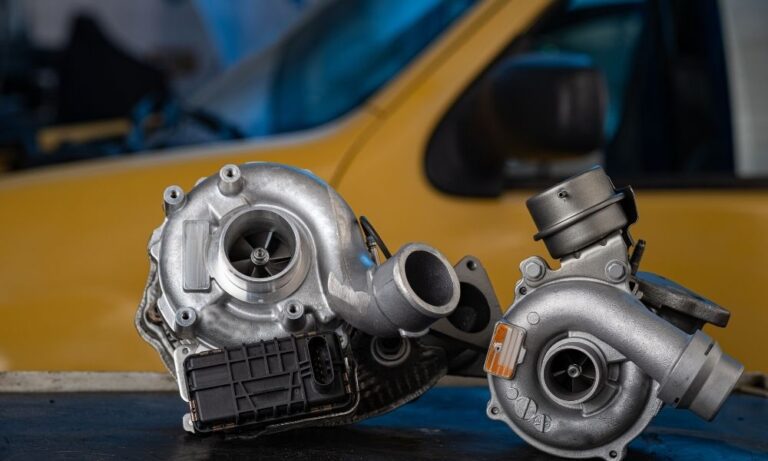
The turbocharger has become one of the defining technologies of modern automotive engineering. More than 75 percent of new cars sold today are equipped with turbocharged engines, and for good reason, a well-designed turbo allows a smaller engine to produce the power of a much larger one, delivering better performance with improved fuel economy and lower emissions. But most drivers who own turbocharged cars have very little idea of how the system actually works, and even fewer have heard of the component that keeps the whole thing from destroying itself.
That component is the wastegate valve. It is not glamorous, it is not something you will find on a spec sheet or in a sales brochure, but without it, a turbocharger would spin itself to destruction within minutes. Understanding what it does, what can go wrong with it, and why it demands respect when you are working around it is important knowledge for any turbocharged car owner.
How a Turbocharger Actually Works
Before getting into the wastegate specifically, it helps to understand the turbocharger itself, because the wastegate only makes sense in context.
A turbocharger is essentially an air pump driven by exhaust gas energy that would otherwise be wasted. Here is the sequence:
- The engine burns fuel and produces exhaust gases at high temperature and pressure.
- Those gases are directed into the turbine housing of the turbocharger.
- The hot gases spin a turbine wheel inside the housing at extraordinarily high speeds, often exceeding 200,000 to 250,000 rpm in some applications.
- The turbine wheel is connected by a common shaft to a compressor wheel on the other side of the turbocharger.
- The spinning compressor wheel draws in atmospheric air and compresses it before pushing it into the engine’s intake system.
- More compressed air means more oxygen available for combustion, which means more fuel can be burned, which means more power from the same displacement of engine.
The elegance of this system is that it uses energy that was simply being expelled out of the exhaust pipe to do useful work. But it creates an immediate engineering problem. The more exhaust gas flows through the turbine, the faster it spins. The faster it spins, the more boost pressure it generates. If nothing limits this process, the turbo will eventually spin beyond what its materials can withstand, and the engine will be forced to accept more boost pressure than it was designed to handle. Both outcomes are catastrophic.
This is the problem the wastegate valve was invented to solve.
What Is the Wastegate Valve and What Does It Do?
The name is self-explanatory once you know what you are looking for. “Wastegate” essentially means an escape gate for waste gases, a bypass valve that diverts exhaust gases away from the turbine wheel when boost pressure reaches the target level set by the manufacturer.
Here is how it functions in practice. As the engine runs and exhaust gas flows into the turbocharger, boost pressure builds. The wastegate valve monitors this pressure. When it reaches the designated maximum, the level the engine management system has determined is safe for the engine, the wastegate opens. This creates a bypass path that allows some of the exhaust gas to flow around the turbine wheel rather than through it.
Less exhaust gas hitting the turbine means the turbine spins more slowly. Slower turbine speed means lower boost pressure. The system reaches an equilibrium where boost is maintained at precisely the target level, not too low to lose performance, not too high to damage the engine.
In standard factory vehicles, the bypassed exhaust gases are directed back into the exhaust system downstream of the turbo and exit through the tailpipe normally. In some modified performance vehicles, external wastegates vent directly to the atmosphere, producing the distinctive metallic hiss or chatter that performance car enthusiasts associate with modified turbocharged engines.
Internal vs. External Wastegates
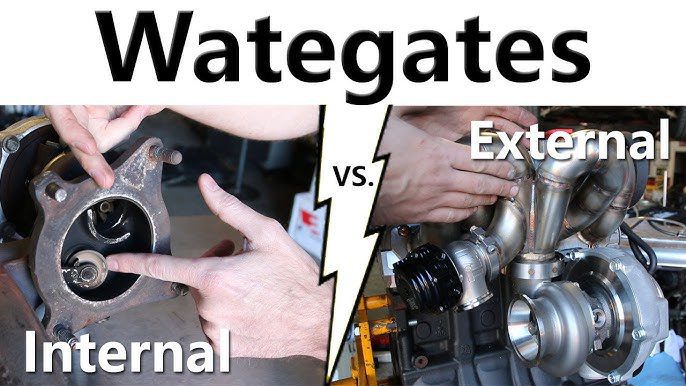
There are two fundamental wastegate designs, and they each suit different applications.
Internal Wastegate
The most common type found on production vehicles. The wastegate valve is integrated directly into the turbine housing of the turbocharger itself. This makes the overall system more compact, less expensive to manufacture, and easier to package in tight engine bays. The bypass passage and valve are built into the housing, and the actuator that opens and closes the valve is mounted on the outside of the turbo body.
Internal wastegates are adequate for standard factory boost levels and normal driving conditions. Their limitation is that the bypass passages within the housing restrict how much gas can be diverted at once, which limits the maximum boost pressure range the system can manage.
External Wastegate
A separate unit mounted in the exhaust piping upstream of the turbo, with its own housing and larger bypass passage. External wastegates can flow significantly more exhaust gas than internal designs, which makes them the preferred choice for high-performance builds where large amounts of boost are being generated. They offer more precise boost control and allow for easier adjustment of target boost pressure.
External wastegates are common on track cars, rally vehicles, and heavily modified road cars. They are rarely found on standard factory vehicles due to their cost and packaging complexity.
How the Wastegate Is Controlled: The Actuator
The wastegate valve does not open and close on its own, it is controlled by an actuator. The actuator is the muscle that physically moves the wastegate valve based on either pressure signals, vacuum signals, or electronic commands. There are three main types:
Pneumatic (Boost Pressure) Actuator
The traditional design, still common on many vehicles. A canister connected by a hose to the intake system monitors boost pressure. When pressure in the intake reaches the target level, the pressure acting on the actuator’s diaphragm overcomes a pre-set spring tension and physically pushes the wastegate open. When boost drops below the target, the spring closes the valve again. This system is simple, reliable, and requires no electronics to function, but it offers limited precision and cannot be easily adjusted without physically modifying the actuator spring preload.
Vacuum-Controlled Actuator
Uses engine vacuum rather than direct boost pressure to control the wastegate position. A solenoid valve, controlled by the ECU, regulates how much vacuum is applied to the actuator. This gives the ECU more control over boost levels compared to a simple pneumatic system, allowing target boost pressure to vary with engine speed, throttle position, and other parameters rather than being fixed by a spring. Vacuum hose condition is critical, a cracked or disconnected vacuum line will cause the wastegate to behave erratically.
Electronic Actuator
The most sophisticated and increasingly common design on modern turbocharged vehicles. An electric motor drives the wastegate valve directly, with position feedback provided by a sensor that tells the ECU exactly where the valve is at any given moment. The ECU can adjust wastegate position in real time, in some systems, down to millimetre precision, based on continuous readings from boost pressure sensors, throttle position, engine speed, intake air temperature, and many other parameters.
The advantage of the electronic actuator is precise, adaptive boost control across all operating conditions. The disadvantage is that it is an electrical component operating in an extremely hostile environment, temperatures at the turbine housing can reach 800 degrees Celsius (1,472 degrees Fahrenheit), and vibration levels are continuous and significant. Electronic components exposed to this environment over years of operation can fail, and when they do, repair costs are typically between $200 and $350 for the actuator alone, not counting labour.
What Goes Wrong With the Wastegate Valve
The wastegate valve itself is a relatively robust component, but it is not immune to failure. Several specific failure modes are worth knowing about.
Carbon and Calamine Buildup Causing the Valve to Stick
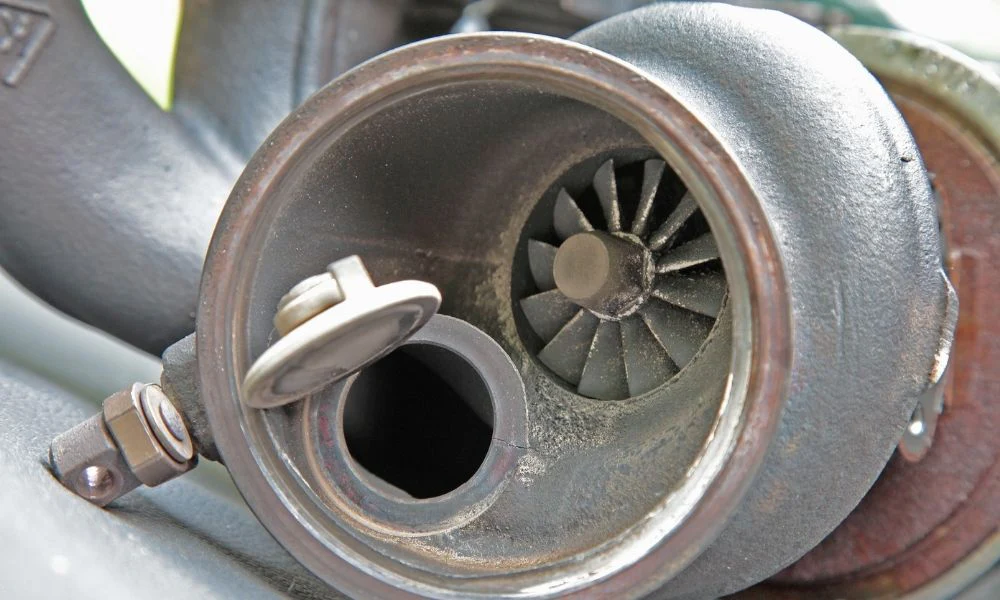
This is the most common wastegate failure on diesel engines and high-mileage petrol engines. Carbon deposits, the byproduct of combustion, gradually accumulate around the wastegate valve and its seat. Over time, these deposits harden and can cause the valve to stick in either the open or closed position.
The consequences of each stuck position are very different:
- Stuck closed: No exhaust gas can be bypassed around the turbine. All exhaust flow passes through the turbine wheel, spinning it to maximum speed regardless of actual boost pressure demand. The turbocharger overboosts, and the engine is subjected to intake pressures significantly above its design limit. Intake valves, piston rings, head gaskets, and connecting rods are all vulnerable to damage from sustained overboosting. The engine may initially feel exceptionally powerful and it will, briefly, but component failure follows if the condition is not identified and corrected quickly.
- Stuck open: Exhaust gas constantly bypasses the turbine. The turbo cannot build adequate boost pressure regardless of engine demand. The car feels flat, unresponsive, and significantly down on power. Fuel economy deteriorates as the ECU compensates for the reduced intake pressure. This failure mode is safer for the engine than stuck-closed, but the performance penalty is obvious and the underlying cause needs to be addressed.
Actuator Diaphragm Failure
In pneumatic and vacuum-controlled actuators, the mechanism that moves the wastegate valve is a rubber diaphragm inside a sealed canister. When pressure or vacuum is applied to one side of the diaphragm, it deflects and moves the actuator rod, which opens or closes the wastegate. Over time, particularly in vehicles that regularly experience high underbonnet temperatures, the rubber diaphragm can crack, harden, or develop pinholes.
A failed diaphragm means the actuator can no longer generate or hold the force needed to control the wastegate position. The wastegate may default to its spring-closed position, causing overboosting, or it may sit partially open, preventing the turbo from building full boost. A simple test for this: disconnect the vacuum hose from the actuator and apply gentle mouth pressure to it (or use a hand vacuum pump). A healthy diaphragm will hold pressure. A ruptured one will not.
Vacuum Hose Failures
On vacuum-controlled systems, the rubber hoses that connect the actuator to the boost source and to the ECU-controlled solenoid valve are exposed to significant heat cycling over their service life. They become brittle, crack, and eventually split or detach from their fittings. A vacuum leak in this circuit can cause erratic boost behaviour, the car may sometimes boost normally and sometimes not, depending on which operating condition stresses the cracked hose most.
Inspecting the wastegate vacuum lines is one of the first checks worth making on any turbocharged vehicle that is showing inconsistent performance or boost pressure issues. The hoses are inexpensive to replace and easy to access on most vehicles.
Electronic Actuator Failures
The electric motor within an electronic actuator can fail from heat damage, vibration fatigue, or moisture ingress. The position sensor can give inaccurate readings, causing the ECU to think the wastegate is in a different position than it actually is. Wiring harness damage from heat or abrasion can cause intermittent connection faults. When an electronic actuator fails, it typically triggers a fault code in the ECU related to the turbocharger control system, and the engine may enter a limp mode where boost is heavily restricted to protect the engine.
The Adjustment Risk: A Real-World Warning
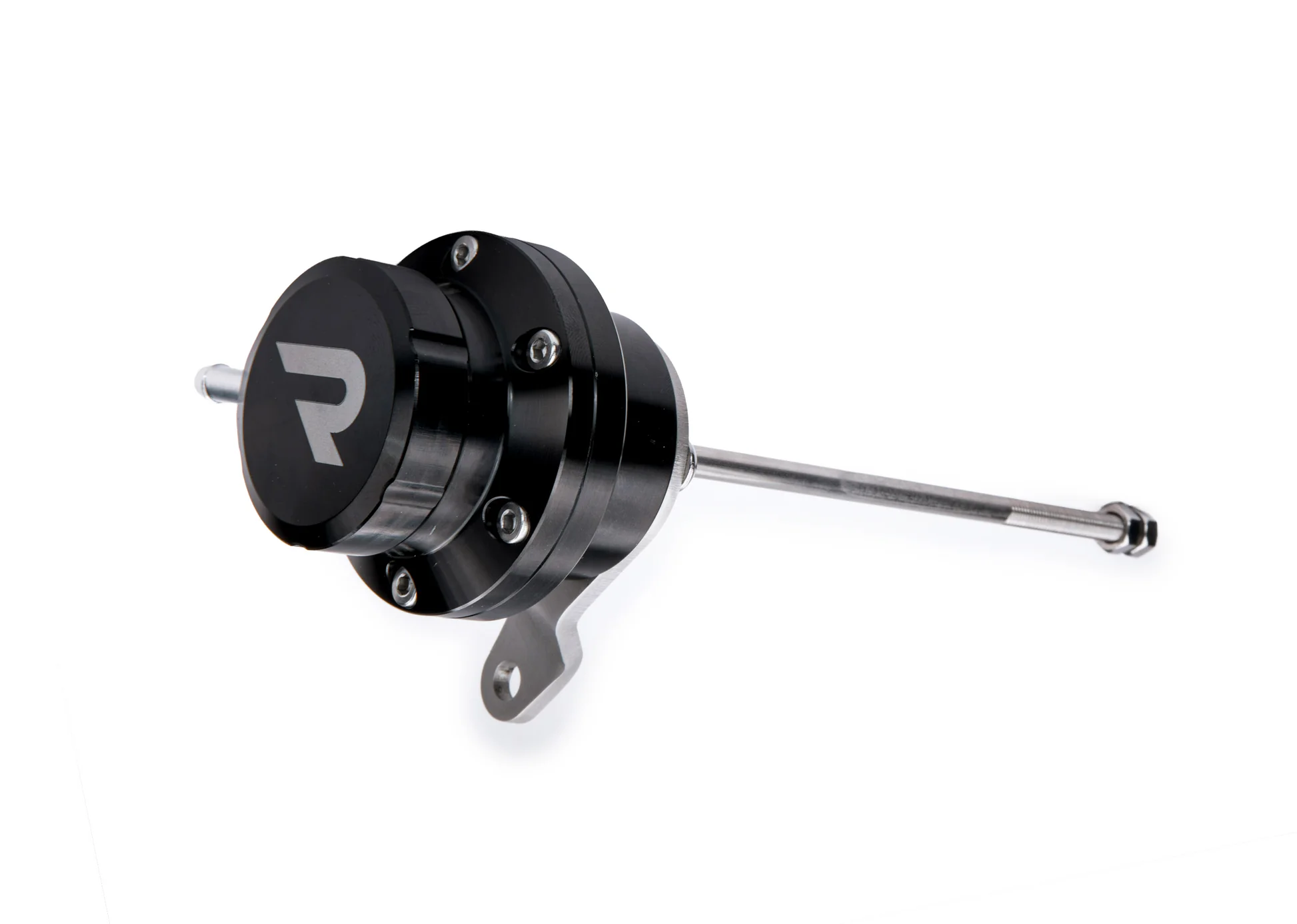
Many wastegate actuators have an adjustable rod end, a threaded fitting that allows the pre-tension on the actuator to be altered, which in turn changes the boost pressure at which the wastegate opens. The mechanical logic is simple: tighten the rod, the wastegate opens later, boost pressure rises. Loosen it, the wastegate opens earlier, boost is reduced.
The temptation to adjust this for “a little more power” is real and understandable. What is also real is what happens when this adjustment is made without proper equipment, proper knowledge, and a genuine understanding of what the rest of the engine can withstand. A real example: an adjustment made “by ear” on a turbocharged van resulted in a turbocharger that failed after approximately 5,000 kilometres, followed by engine failure shortly after, an expensive lesson in the relationship between boost pressure, heat, and mechanical stress. The van was also being used under load regularly, which amplified the thermal stress significantly.
Do not adjust the wastegate actuator without access to a boost pressure gauge, a comprehensive understanding of your engine’s design boost limit, and ideally, the ability to monitor intake air temperatures and other parameters during the process. The few tenths of a bar of additional boost that might be gained is not worth the risk of a turbocharger replacement or an engine rebuild.
Symptoms of a Failing Wastegate: What to Watch For
| Symptom | Likely Wastegate Condition | Engine Risk Level |
|---|---|---|
| Sudden and unusual power increase, then engine damage | Stuck closed ,over-boosting | Very High |
| Flat power delivery, car feels slow and lacks pull | Stuck open, insufficient boost | Low to Medium |
| Inconsistent power, sometimes boosting normally, sometimes not | Sticking valve or vacuum hose leak | Medium |
| Check engine light with turbo-related fault codes | Electronic actuator fault or sensor issue | Medium |
| Boost pressure higher than normal under hard acceleration | Actuator diaphragm failure (closed side) | High |
| Engine entering limp mode under boost | ECU detecting out-of-range boost pressure | Medium protective mode |
| Audible hissing from turbo area without performance change | Vacuum hose disconnected or split | Low to Medium |
What to Do If You Suspect a Wastegate Problem
The right approach is methodical and conservative. Here is where to start:
- Read the fault codes first. Connect an OBD2 scanner and check for any stored codes related to boost pressure, turbocharger control, or the actuator. This immediately narrows down whether the issue is electronic, mechanical, or a combination.
- Inspect the vacuum hoses. Physically check every hose in the wastegate circuit for cracks, splits, loose connections, or hardening. This is free and often produces a quick diagnosis.
- Test the actuator diaphragm. Disconnect the vacuum hose and test for pressure retention. No retained pressure confirms a ruptured diaphragm.
- Check for carbon buildup on the valve. If the vehicle has high mileage or has not been properly maintained, carbon fouling of the wastegate is a realistic possibility. This often requires the turbo to be removed for inspection and cleaning, which is a job for a specialist.
- Leave actuator adjustment alone unless you have the equipment and expertise to do it properly. If you are considering performance modifications involving boost pressure changes, have this done by a qualified turbocharger specialist who can verify the engine is capable of handling the increased output safely.
The wastegate valve is a small component that sits inside or adjacent to one of the most mechanically stressed parts of your engine. It operates in an environment of extreme heat, extreme pressure, and relentless vibration. When it works correctly, you never know it exists. When it fails, the consequences range from a flat-feeling car to a destroyed turbocharger or a damaged engine. Treat it with the respect that operating environment deserves, and leave anything beyond basic inspection to a specialist who works with turbocharger systems regularly.