
Your brakes are not just another car part. They are the single most important safety system on your vehicle. Without them working properly, you lose the ability to control your car in an emergency. That is a terrifying thought, and it is exactly why a sticking brake problem should never be ignored or pushed to next week’s to-do list.
Brakes function through a series of precisely machined metal components that work together under enormous pressure. When everything is working correctly, it all feels seamless. You press the pedal, the car stops, you release the pedal, the brakes back off. Simple.
But here is the thing. Those metal parts are constantly exposed to heat, moisture, and road grime. When rust and contamination enter the equation, the smooth operation of the system breaks down fast. Parts start jamming and sticking, and what started as a minor annoyance can quickly turn into a full-blown safety hazard.
So yes, brakes absolutely can and do stick while you are driving. You can often tell it is happening by a sharp burning smell coming from your wheels, a grinding or squealing noise, or the car pulling aggressively to one side even when you are not touching the pedal.
The most common cause of sticking brakes is a seized brake caliper. Understanding why calipers seize, what triggers the problem, and how to fix it will save you money and keep you safe. Let us get into it.
Why Are My Car’s Brakes Sticking? The Six Most Common Causes
Before we dig into the individual causes, you need to understand one thing clearly. A sticking brake means the brake components are engaging the rotor when they should not be. The car is essentially fighting its own braking system while you are trying to drive forward. Over time, this destroys your brake pads, overheats your rotors, puts unnecessary strain on your transmission, and burns extra fuel. Every mile you drive with a sticking brake is a mile of accelerated damage.
1. Rusty or Damaged Caliper Pistons and the Caliper Boot
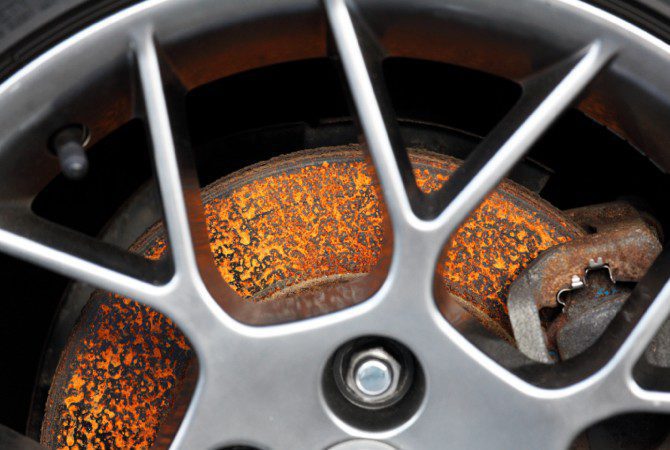
When you press the brake pedal, hydraulic pressure forces the caliper pistons outward. These pistons push the brake pads firmly against the spinning brake disc, which is what slows your car down. The moment you release the pedal, the pistons are supposed to retract slightly, pulling the pads away from the disc.
A rubber boot is installed around each caliper piston. Its entire job is to act as a protective seal, keeping road water, dirt, and brake dust away from the piston’s sliding surface. It is a small but incredibly important piece of rubber.
If that boot gets cracked, torn, or completely missing, the piston surface is suddenly exposed to everything the road throws at it. Water seeps in. Rust begins to form on the piston. At first, the sticking might be barely noticeable. The car might just feel slightly sluggish pulling away from a stop.
Left untreated, the rust builds up until the piston cannot retract at all. At that point, the brake pad is permanently pressed against the rotor, and your car will feel like it is dragging against an invisible wall every time you try to accelerate. Replacing the caliper is the recommended fix, and in most cases, it is not as expensive as people fear.
2. Rusty or Contaminated Brake Pads
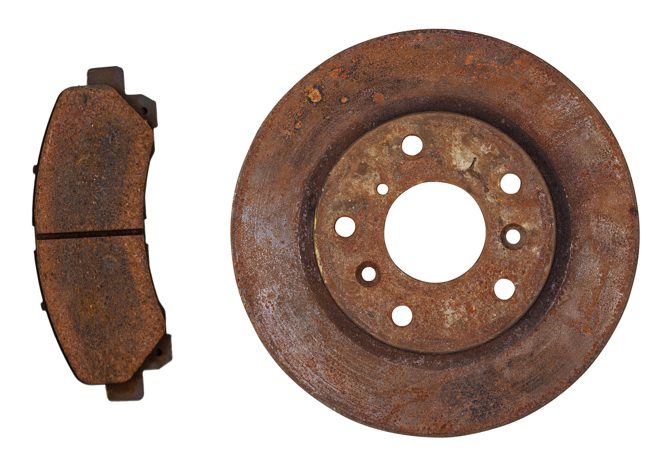
Brake pads can develop surface rust surprisingly fast. It only takes one rainy night sitting in a parking lot for a thin layer of rust to form on the pad’s metal backing plate and along the edges that contact the caliper bracket.
The brake pad slides within a channel on the caliper bracket called the pad slide or bracket slide. For the brake to release properly after you lift your foot, the pad must be able to slide freely within this channel. When rust or brake dust builds up in that channel, the pad gets stuck.
A stuck brake pad will continue pressing against the rotor even when the hydraulic pressure is released. The result is exactly the same as riding your brakes constantly. Your rotor gets hot, your pad wears out rapidly on one side, and the car pulls in the direction of the stuck pad.
The fix is straightforward. You remove the brake pads, clean the bracket slides thoroughly with a wire brush or file, remove all the rust and debris, and then apply a thin layer of high-temperature copper grease or brake caliper lubricant to the slide surfaces. Never put lubricant on the friction surface of the pad itself. Only apply it to the metal edges and the areas that contact the bracket.
3. Dirty or Seized Caliper Guide Pins
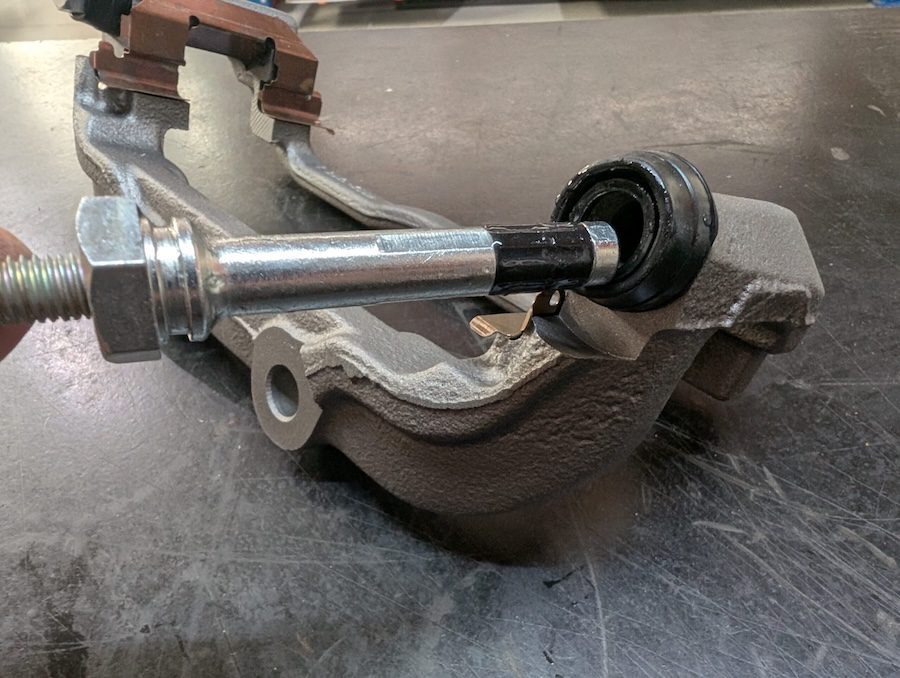
Caliper guide pins are two threaded bolts that the caliper body slides along when the brakes are applied and released. When you press the pedal, the caliper moves inward on these pins to clamp the rotor. When you release the pedal, it slides back outward. If the pins cannot slide freely, the caliper cannot release properly.
Each guide pin has its own rubber boot, just like the caliper pistons. When these boots are intact and the pins are properly lubricated, they work perfectly for years. When the boots fail or the lubricant dries out and gets contaminated, the pins corrode and seize inside the caliper housing.
A seized guide pin is not always obvious. Sometimes the car will pull to one side. Sometimes you will notice that the brake pad on one side of the axle wears down much faster than the other side. That uneven wear is a dead giveaway that the caliper is not floating correctly on its guide pins.
To fix this, remove the boots, clean the guide pins with a wire brush to remove all the corrosion, apply fresh brake caliper grease, reinstall the boots, and torque the pins back to the manufacturer’s specification. If the pins are severely corroded or damaged, replace them. Guide pins are cheap. A warped rotor from an overheated brake is not.
4. Rusted or Seized Parking Brake Cables
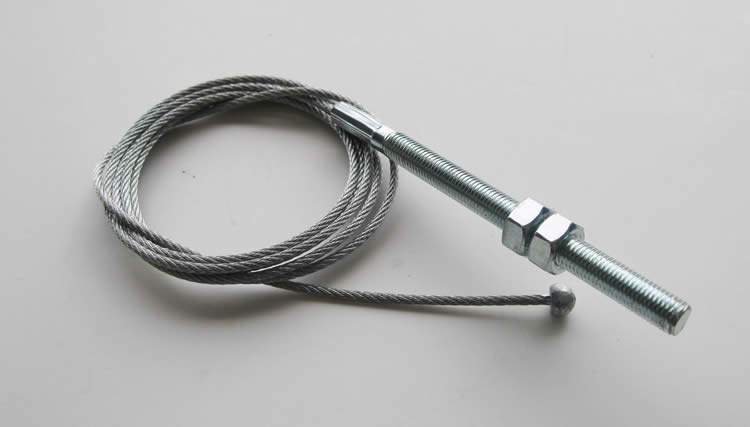
The parking brake system is a frequent suspect when sticking brake problems originate from the rear wheels. On most modern vehicles, the parking brake mechanism is integrated directly into the rear brake calipers rather than operating on a separate drum system. This means the parking brake cable connects directly to a lever arm on the rear caliper.
When moisture finds its way into the steel parking brake cable housing, the inner wire begins to rust. A rusted cable does not spring back freely when you release the parking brake lever or pedal. Instead, it stays partially engaged, keeping the rear caliper pressed against the rotor.
This is an especially common problem in regions that use road salt in the winter. The salt aggressively attacks exposed steel cables. You might release the parking brake inside the cabin and genuinely believe it is fully disengaged, but if the cable is rusted, the rear caliper may still be clamping down.
If you suspect this is your issue, try lubricating the cable with a penetrating oil or cable lubricant and work the parking brake lever back and forth several times. This sometimes breaks loose mild corrosion. If the cable is heavily rusted or the inner wire is fraying, replace it. A seized parking brake cable that snaps while driving is a serious safety event.
5. A Damaged or Collapsed Brake Hose
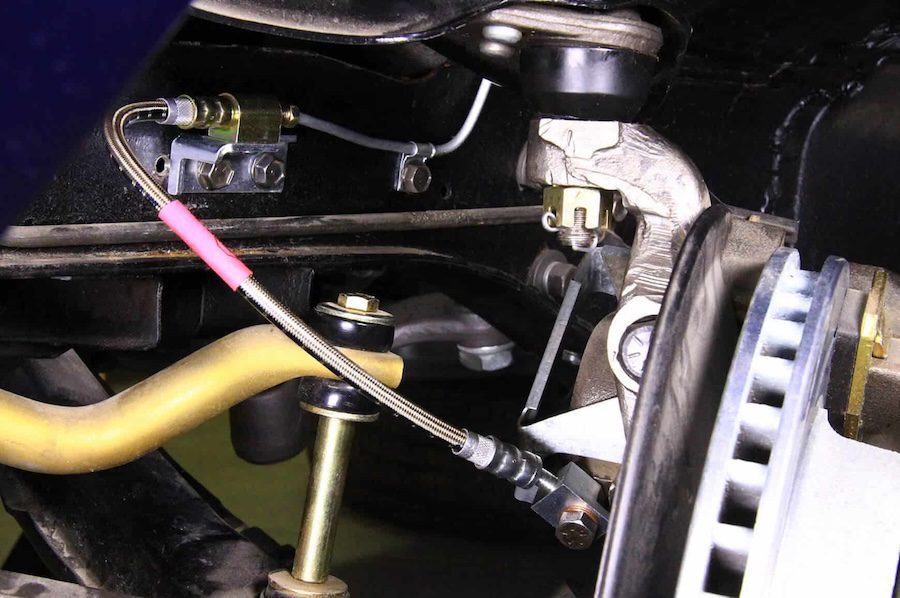
The flexible brake hose is the rubber line that connects the hard brake line on the vehicle’s chassis to the brake caliper on the moving wheel. It has to be flexible because the wheel moves up and down with the suspension and turns with the steering.
Inside that rubber hose is a precisely engineered channel that allows brake fluid to flow in both directions. Fluid pushes through it when you apply the brakes, and it flows back through it when you release the pedal.
Over time, the internal lining of a rubber brake hose can deteriorate and collapse. When this happens, the hose acts like a one-way valve. Brake fluid can push through to engage the caliper, but it cannot flow back freely to allow the caliper to release. The caliper stays engaged.
A collapsed brake hose is harder to diagnose than a seized caliper or rusty guide pin. One quick test mechanics use is to open the bleeder screw on the caliper while the brakes are stuck. If the caliper releases the moment fluid escapes through the bleeder, the problem is almost certainly a collapsed hose blocking the fluid return path.
This is less common in newer vehicles but becomes a real concern in older cars or any vehicle where the brake hoses have never been replaced. If your shop has ruled out everything else and the calipers keep sticking, ask about the condition of the brake hoses.
6. Dirty or Contaminated Brake Fluid
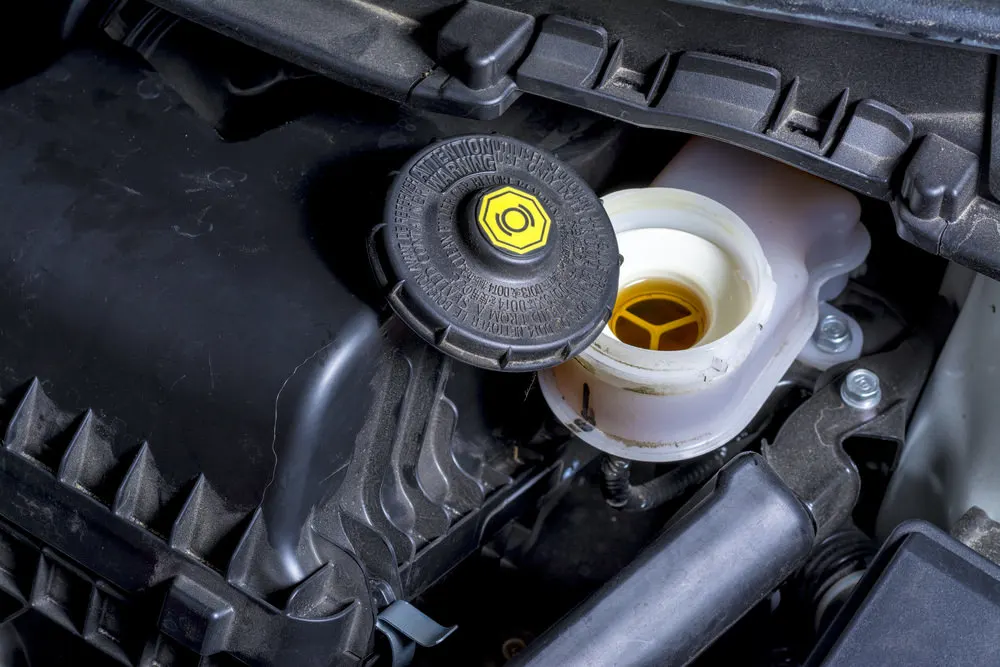
Brake fluid is hygroscopic. This is a technical word that means it actively absorbs moisture from the surrounding air. Every drop of brake fluid in your system is slowly pulling water molecules out of the atmosphere and mixing them in.
Fresh brake fluid is clear or very slightly yellow. Old, water-contaminated brake fluid turns dark brown or almost black. Beyond the color change, that absorbed water causes real problems inside the brake system. It promotes internal corrosion in the master cylinder, the calipers, and the ABS modulator. It also lowers the boiling point of the fluid, which can cause brake fade under heavy use.
Most vehicle manufacturers recommend replacing brake fluid every two years regardless of mileage. A brake flush is one of the cheapest preventive maintenance services you can get done. Neglecting it is one of the most expensive mistakes in the long run.
Can Old Brake Fluid Actually Cause Brakes to Stick?
Absolutely. Old, water-saturated brake fluid is a direct contributor to the corrosion that causes calipers, pistons, and guide pins to seize. Water is the foundation of the rust process. If your brake fluid has been sitting in the system for three or four years, it has absorbed a significant amount of moisture.
That moisture does not just sit harmlessly in the fluid. It circulates through the entire hydraulic system every time you press the brake pedal. It coats the internal surfaces of your calipers and master cylinder with a thin film of water. Over months and years, rust forms on those internal surfaces, and components begin to stick.
Replacing your brake fluid on schedule is one of the simplest ways to extend the life of your entire braking system. It costs very little at a shop and even less if you do it yourself. Think of it as cheap insurance against a very expensive repair.
Will a Bad Master Cylinder Cause the Brakes to Stick?
Yes, it can, and here is exactly why. The master cylinder is the hydraulic heart of your brake system. When you press the pedal, it pushes brake fluid out through the brake lines to the calipers. When you release the pedal, it must draw that fluid back to allow the calipers to retract.
Inside the master cylinder are small rubber seals and a tiny compensating port that allows fluid to return to the reservoir when the brakes are released. If the internal seals swell, the compensating port becomes blocked, or the internal bore corrodes, the fluid cannot return properly. Pressure stays trapped in the brake lines, keeping the calipers partially engaged.
A failing master cylinder can be tricky to diagnose because the symptoms overlap with a collapsed brake hose or a seized caliper. If your brakes are sticking and all the calipers and hoses check out fine, the master cylinder is the next logical suspect. Have it replaced by a qualified technician, as this is not a job where guesswork is acceptable.
Is It Safe to Drive With a Sticking Caliper?
The short answer is no. You should not drive any significant distance with a confirmed sticking caliper.
Here is what happens when you try. The brake pad stays pressed against the rotor continuously. The rotor heats up rapidly. The brake pad overheats and begins to glaze over, which actually reduces its stopping power in a real emergency. The wheel bearing on that corner gets cooked by the sustained heat. The transmission and drivetrain have to work harder to overcome the drag from the engaged brake.
In severe cases, the rotor can overheat to the point where it cracks or warps. The brake fluid inside the caliper can boil, introducing air into the hydraulic circuit. At that point, you press the brake pedal and it goes to the floor because there is nothing solid in the line to transfer the force.
If you suspect a caliper is sticking right now, drive the car only as far as necessary to get it safely off the road and to a repair shop. Do not push through it.
How Much Does It Cost to Fix Sticking Brakes?
The repair cost depends entirely on what component is causing the problem. Here is a general breakdown to help you set your expectations before you walk into a shop.
| Repair Type | Estimated Cost Range | Notes |
|---|---|---|
| Caliper cleaning and lubrication | $50 to $80 per axle | Often done during a brake service if caught early. |
| Caliper replacement (one side) | $70 to $200 per caliper | Cost varies significantly by vehicle make and model. |
| Brake pad replacement | $80 to $150 per axle | Often needed alongside a caliper replacement. |
| Guide pin replacement | $20 to $60 per axle | Parts are cheap. Labor is usually minimal. |
| Parking brake cable replacement | $100 to $250 | Labor cost increases on vehicles with hard-to-reach cables. |
| Brake hose replacement | $60 to $150 per hose | Replace all hoses at the same time if one is collapsing. |
| Brake fluid flush | $80 to $130 | One of the best value maintenance services you can do. |
| Master cylinder replacement | $200 to $500 | Higher end for European or luxury vehicles. |
Always get a written estimate before any work begins. If the shop recommends replacing the rotor alongside a stuck caliper, take that advice seriously. A rotor that has been overheated by a sticking brake is often warped or has hot spots that will cause brake pedal pulsation and vibration long after the caliper is fixed.
Can a Seized Caliper Unseize Itself?
Sometimes, yes. If the seizing is very mild and caused by light surface rust after a period of the car sitting unused, driving the car and applying the brakes normally a few times can break the rust loose. You might hear a clunk or a brief grinding sound as the rust breaks free, and then everything returns to normal.
But do not count on this as a permanent solution. If the caliper seized once from surface rust, it can and will happen again. This is a sign that the caliper boots are failing, the guide pins need fresh lubrication, or the brake fluid is overdue for a change.
If the caliper has seized due to severe corrosion or internal piston damage, it will not fix itself. It will only get worse. A caliper that is partially seized and then driven on will eventually seize completely, and by that point, you will likely need to replace the rotor as well.
What Does a Sticking Brake Sound Like?
Your ears are one of the best diagnostic tools you have. A sticking brake typically announces itself in several ways.
- Grinding noise from one wheel: This is the sound of the brake pad rubbing against the rotor continuously. It gets worse as the pad wears down and the metal backing plate contacts the rotor directly.
- High-pitched squealing: Brake pads have a small metal wear indicator tab that is designed to squeal when the pads get thin. A sticking brake wears pads down much faster, so this sound can appear sooner than expected.
- Rhythmic thumping or pulsing: If the rotor has already warped from the heat of a sticking brake, you will feel and sometimes hear a rhythmic thumping through the steering wheel or the brake pedal.
- General dragging sound at low speed: A scraping or dragging noise that fades slightly once the car warms up is often an early sign of surface rust on the rotors, especially after rain or a night sitting outside.
Beyond the sounds, pay attention to the smell. A sticking brake generates an enormous amount of friction heat. That heat burns the brake pad material and creates a very distinct sharp, acrid smell. It is similar to burning rubber but with a slightly chemical edge to it. If you smell it coming from one of your wheels after driving, pull over and let things cool down before inspecting.
How to Prevent Your Brakes From Sticking in the First Place
Prevention is always cheaper than repair. Here are the practical habits that will keep your brake system working cleanly for years.
- Flush your brake fluid every two years. Do not skip this. Contaminated fluid corrodes your system from the inside out.
- Inspect your caliper boots regularly. During tire rotations, take ten seconds to look at the rubber boots on each caliper piston and guide pin. A small crack found early is a five-dollar rubber boot. A cracked boot ignored for a year is a two-hundred-dollar caliper replacement.
- Lubricate the guide pins and brake pad slides at every brake job. This is not optional. Dry contact points rust quickly, especially in wet climates.
- Do not leave your car sitting for weeks without driving it. Brake rotors rust surprisingly fast when left idle. Driving the car regularly and applying the brakes a few times keeps the contact surfaces clean.
- Release your parking brake before you drive. This sounds obvious, but partially engaged parking brakes are a more common cause of rear brake damage than most people realize.
- Replace brake pads before they wear completely down. Worn-out pads cause overheating and damage to the rotor, which puts extra thermal stress on the caliper components.
A Quick Note on DIY Versus Professional Repair
Cleaning and lubricating caliper guide pins and brake pad slides is a job that a confident home mechanic can handle with basic tools. You need a floor jack, jack stands, the correct socket set, a wire brush, and proper brake caliper grease. If you have replaced brake pads before, the process will feel familiar.
However, replacing a caliper, a brake hose, or a master cylinder requires bleeding the brake system afterward. If air gets trapped in the brake lines during the repair and the system is not properly bled, your brake pedal will go soft and the car will not stop correctly. This is a safety-critical step. If you are not confident in bleeding brakes properly, have a professional handle any repair that requires opening the hydraulic circuit.
If you want a deeper look at how brake systems work mechanically, resources like xerodrive.com cover these topics in solid detail. Understanding how the system functions makes it much easier to spot problems before they get expensive.
A sticking brake will not get better on its own. The longer you wait, the more components get damaged by the heat, and the higher the repair bill climbs. If your car is pulling to one side, smelling like burning material near the wheels, or making grinding sounds that were not there last week, get it looked at today. Your brakes are not a system you negotiate with.