
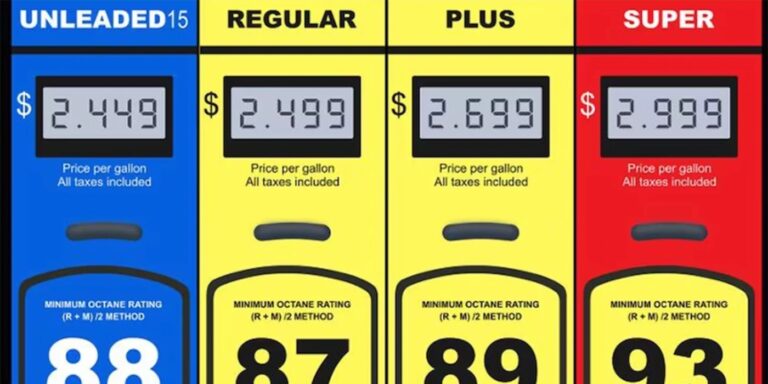
Most drivers pull up to the pump, grab the regular unleaded nozzle, fill up, and drive away without a second thought. And for a lot of vehicles, that is perfectly fine. But walk into a gas station and you will notice there are usually at least three or four fuel options sitting right there on the pump. Some drivers never wonder what the difference actually is. Others wonder but are not sure where to find a straight answer.
This article breaks down the five main types of fuel you will encounter as a driver, what makes each one different, and more importantly, what happens to your engine when you put the wrong one in. Some of these mistakes are minor. Others will leave you with a very expensive repair bill and a tow truck on the way.
What Is Car Fuel and Where Does It Come From?
All petroleum-based fuels start the same way: as crude oil pulled from the ground. That crude oil goes through a refining process that separates it into different products based on the weight and chemical makeup of the molecules. Gasoline is one of those products. Diesel is another. They come from the same source but behave completely differently once they are inside an engine.
What most people pump into their cars at a regular gas station is not pure gasoline. It is a blended product that combines refined gasoline with other liquids, most commonly ethanol, to meet performance targets, emissions standards, and regulatory requirements. The blend ratio and the refining process are what create the different fuel grades and types you see at the pump.
Those numbered ratings you see on the pump, 87, 89, 91, 93, refer to the octane rating of the fuel. Understanding what that number actually means is the key to understanding why different cars need different fuel grades.
What Does the Octane Rating Actually Mean?
Octane rating measures a fuel’s resistance to premature combustion, which is also called engine knock or detonation. In a healthy engine, the fuel and air mixture is compressed by the piston and then ignited at precisely the right moment by the spark plug. The ignition is controlled and timed.
In an engine running on fuel with too low an octane rating for its compression level, the fuel can ignite from compression alone before the spark plug fires. That uncontrolled ignition is what causes the knocking or pinging sound some drivers notice. It is not just annoying. Over time, repeated engine knock causes real mechanical damage to pistons, bearings, and cylinder walls.
Higher octane fuel is more resistant to that premature ignition. It can handle more heat and pressure before it combusts, which is exactly what high-compression and turbocharged engines need to function correctly.
The 5 Types of Car Fuel Explained
1. Regular Fuel: The Standard Choice for Most Vehicles
Regular unleaded fuel, rated at 87 octane in the United States, is the most commonly purchased fuel at gas stations. It is what the majority of passenger cars, crossovers, minivans, and daily drivers are designed to run on. If your owner’s manual says regular fuel is the recommended grade, that is exactly what you should use. Nothing more, nothing less.
Regular fuel is refined for engines with standard compression ratios. These engines are not built to extract performance from high-octane fuel, and they do not need it. Running regular fuel in a vehicle designed for it produces the best fuel economy, the correct power output, and reliable long-term engine health.
Where regular fuel becomes a problem is when it is put into an engine that specifically requires premium. High-performance engines, turbocharged engines, and engines with high compression ratios need fuel that resists premature ignition. Regular fuel in those engines leads to knock, reduced power, and if ignored long enough, real engine damage.
Modern vehicles with knock sensors can detect detonation and automatically retard ignition timing to compensate. This prevents immediate damage but also means your engine is running in a compromised state, producing less power and burning more fuel than it should be. It is a protection mechanism, not a solution.
2. Premium Fuel: When Your Engine Actually Needs It
Premium fuel typically carries an octane rating of 91 or 93 depending on the state and the station. It is formulated for engines that operate at higher compression ratios, including most turbocharged engines, supercharged engines, high-performance sports cars, and many luxury vehicles.
If your owner’s manual says premium fuel is required, treat that as a hard requirement, not a suggestion. Those engines are calibrated to take full advantage of the higher octane rating, and using regular fuel in them will result in exactly the knock problem described above, along with reduced power and potentially long-term engine wear.
If your owner’s manual says premium fuel is recommended but not required, the situation is a bit more flexible. Many of those engines are designed to run on regular fuel with some loss of performance, and the knock sensor system will manage the difference. Whether that trade-off is worth the cost savings is a personal decision.
Here is where a lot of drivers get confused: running premium fuel in a car that only requires regular does nothing useful. It does not clean the engine. It does not improve fuel economy in a vehicle not designed for it. It does not produce more power in an engine with a standard compression ratio. All it does is cost more money per gallon. If your manual says regular, buy regular.
Mid-grade fuel, typically rated at 89 octane, sits between regular and premium. Some older vehicles specify it, but it has become increasingly uncommon as a required grade. In most modern vehicles, mid-grade offers no meaningful advantage over regular if the engine is designed for regular fuel.
| Fuel Grade | Octane Rating (US) | Best For | Using the Wrong Grade |
|---|---|---|---|
| Regular | 87 | Most standard passenger vehicles | Engine knock in high-compression engines |
| Mid-Grade | 89 | Some older vehicles that specify it | Minimal effect if swapped with regular or premium |
| Premium | 91 to 93 | High-performance, turbocharged, luxury engines | No benefit in standard engines; wasted money |
3. Diesel Fuel: A Completely Different Engine, a Completely Different Fuel
Diesel fuel is not just a different grade of gasoline. It is a fundamentally different fuel that works on a completely different combustion principle. Gasoline engines ignite fuel with a spark plug. Diesel engines ignite fuel using heat from compression alone, with no spark plug involved. That difference in combustion design means diesel and gasoline are not interchangeable in any way.
Diesel fuel is denser than gasoline and contains more energy per gallon, which contributes to the better fuel economy that diesel vehicles are known for. Diesel engines also tend to produce more torque at lower engine speeds, which is why they are the preferred powertrain for trucks, commercial vehicles, towing applications, and heavy equipment.
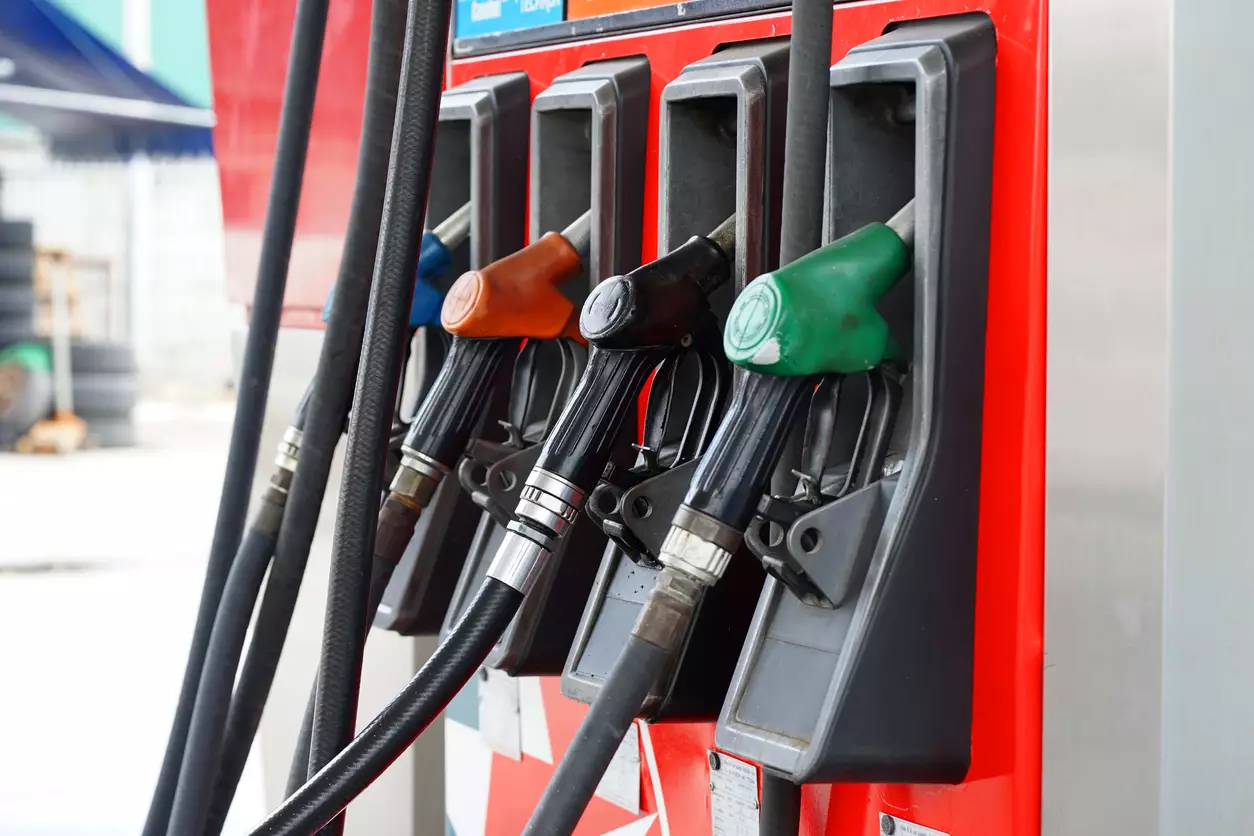
Gas stations design diesel pumps specifically to prevent accidental misfueling. Diesel nozzles are physically larger in diameter than gasoline nozzles, so in most cases they will not fit into the filler neck of a gasoline-powered vehicle. Diesel pumps are also typically colored bright green and labeled clearly to differentiate them from gasoline pumps.
But the reverse mistake is more common and more dangerous. If you accidentally pump gasoline into a diesel vehicle’s tank, the consequences can be severe. Gasoline acts as a solvent in a diesel fuel system and strips away the lubrication that diesel fuel naturally provides to the fuel pump and injectors. Even a relatively small amount of gasoline contamination in a diesel system can cause significant damage to the high-pressure fuel pump and injectors, which are very expensive components to replace.
If you ever put the wrong fuel into any vehicle, the safest course of action is to not start the engine. Call a specialist immediately to have the fuel system drained and flushed before any fuel reaches critical components. Starting the engine and running contaminated fuel through the system dramatically increases the repair cost.
4. E85 Flex Fuel: High Ethanol Content for Flex-Fuel Vehicles Only
E85 is a fuel blend that contains approximately 85 percent ethanol and only 15 percent gasoline. The ethanol portion is produced from renewable plant sources such as corn and soybeans, which is part of the reason E85 tends to be priced lower than regular gasoline at the pump. It is a domestically produced fuel that reduces dependence on imported crude oil.
Ethanol has a high octane rating, which is one of its performance advantages. E85 can support high compression ratios and is used in some performance applications where its knock resistance and relatively low cost are both appealing. Some performance tuners and motorsport applications specifically seek out high-ethanol blends for these properties.
The trade-off is energy density. Ethanol contains less chemical energy per gallon than gasoline. A vehicle running on E85 will typically see a reduction in fuel economy of around 15 to 25 percent compared to running on gasoline, because the engine has to burn more fuel to produce the same amount of energy. The lower pump price partially offsets this, but the math varies depending on current fuel prices.
E85 can only be used in flex-fuel vehicles. Flex-fuel vehicles are specifically engineered with fuel system components, including fuel lines, seals, injectors, and sensors, that can handle the corrosive properties of high-ethanol blends. The engine management system on a flex-fuel vehicle can also detect the ethanol content of the fuel and adjust the fuel mapping accordingly.
Running E85 in a standard gasoline vehicle that is not flex-fuel rated is a serious mistake. The high ethanol content will degrade rubber fuel lines and seals over time, cause corrosion in fuel system components not rated for ethanol exposure, and confuse the engine management system. The check engine light will come on, performance will suffer, and the long-term damage to the fuel system can be expensive to repair. If your vehicle does not have a flex-fuel badge or a yellow fuel cap indicating E85 compatibility, do not use it.
5. E15 and Other Ethanol Blends: The Middle Ground at the Pump
Beyond the standard regular, premium, and diesel options, many gas stations now offer intermediate ethanol blend options labeled E15, E20, or E30. These blends contain 15, 20, or 30 percent ethanol respectively, with the remainder being standard gasoline.
These mid-level ethanol blends are generally considered safe for use in vehicles manufactured in 2002 or later. They typically come out of pumps with blue-colored nozzles to distinguish them from standard gasoline pumps. If you are not sure whether your vehicle is compatible, check the owner’s manual or look for the ethanol compatibility information typically printed on the inside of the fuel filler door.
E15 in particular has been approved by the EPA for use in model year 2001 and newer passenger cars, light-duty trucks, and flex-fuel vehicles. However, it is not recommended for motorcycles, boats, small engines, or older vehicles. The compatibility window is specific, so confirming your vehicle falls within it before using these blends is a smart habit.
The appeal of these intermediate blends is a combination of lower pump prices than pure gasoline and a reduced carbon footprint compared to standard fuel. The ethanol component is renewable and burns more cleanly in some respects than petroleum-based fuel. For drivers looking to reduce fossil fuel consumption without committing to a full E85 flex-fuel setup, E15 offers a relatively accessible middle ground.
Does the Type of Fuel You Choose Actually Affect Your Engine’s Health?
Yes, but not in the way a lot of people assume. The relationship between fuel type and engine health is specifically about using the grade your engine was designed for. Getting that right matters. Getting it consistently wrong matters even more.
Using a fuel grade lower than what your engine requires is where real damage potential exists. A high-compression engine running on regular fuel when it needs premium will experience knock, reduced power output, and over time, measurable wear to internal components. Modern knock sensor systems provide some protection by retarding ignition timing, but that adjustment comes at the cost of efficiency and performance. It is a damage-mitigation strategy, not a pass to ignore the fuel requirement.
On the other side, using a higher grade than required is a waste of money, not a benefit. Premium fuel in an engine designed for regular fuel will not produce more power, will not clean the engine, and will not extend the engine’s life. The extra cost per gallon provides zero return for most standard vehicles. The owner’s manual recommendation exists for a reason, and in most cases, following it exactly is the right answer.
Using the wrong fuel type entirely, such as diesel in a gasoline engine or E85 in a standard gasoline vehicle, is in a different category altogether. Those are not grade mismatches. They are chemical incompatibilities that can cause immediate and severe damage to fuel system components and, in some cases, the engine itself.
How Fuel Quality Affects Long-Term Engine Performance
Beyond fuel type and grade, the quality of the fuel itself matters. Not all gasoline is identical even when it carries the same octane rating. Top Tier gasoline is a classification established by a group of automakers that sets higher detergent additive standards than the EPA minimum requirements. These detergents help prevent carbon deposits from building up on intake valves and fuel injectors over time.
Carbon deposit buildup on intake valves is a particularly common issue in modern direct injection engines, where fuel is injected directly into the cylinder rather than into the intake port. In port injection engines, the fuel itself washes the intake valves on every cycle, helping to keep them clean. In direct injection engines, that washing effect does not occur, and carbon from blow-by gases builds up on the valve stems and heads over time.
Using Top Tier fuel consistently does not eliminate this issue for direct injection engines but does reduce it. Over the life of the vehicle, less carbon buildup means better airflow, better combustion efficiency, and reduced likelihood of rough idle, misfires, or power loss related to restricted intake valves.
The Top Tier program is voluntary, and many major fuel brands participate. You can typically identify Top Tier fuel at stations that display the Top Tier logo on the pump. It does not cost more than non-Top Tier fuel of the same grade, but not every station or brand meets the standard.
How Regular Maintenance Supports Good Engine Health Alongside the Right Fuel
Using the correct fuel is one piece of the engine health equation. But fuel choice alone cannot compensate for deferred maintenance, and proper maintenance cannot fully compensate for consistently using the wrong fuel. Both matter, and they work together.
Here are the maintenance items that directly interact with fuel quality and fuel system health:
- Fuel filter replacement: the fuel filter catches contaminants before they reach the injectors and fuel pump. A clogged fuel filter restricts flow, which causes the fuel pump to work harder and can lead to premature pump failure. Replace it on the interval your manufacturer specifies.
- Spark plug replacement: worn spark plugs cause incomplete combustion, which wastes fuel and can allow unburned fuel to reach the catalytic converter. Fresh plugs at the correct gap setting are essential for efficient combustion regardless of fuel grade.
- Air filter maintenance: a clogged air filter restricts the airflow the engine needs to combust fuel efficiently. The fuel-to-air ratio becomes too rich, fuel economy drops, and emissions increase. This is one of the simplest and cheapest maintenance items to stay on top of.
- Oil changes: engine oil does not directly interact with fuel, but it lubricates the components that combustion depends on. Old, degraded oil allows more friction and wear in the components surrounding the cylinders. Fresh oil on a regular schedule keeps those components functioning as they should.
- Fuel system cleaning: on higher-mileage vehicles, especially those with direct injection engines, periodic fuel system cleaning services can remove carbon deposits that have accumulated on intake valves and injectors. These services do not replace the benefit of using quality fuel consistently, but they can restore some lost performance in engines that have accumulated significant deposits.
Driving fewer miles also genuinely reduces wear and tear over time. A low-mileage driver puts the fuel system, the engine, and every mechanical component through fewer stress cycles. That translates directly into less frequent service needs and a longer overall vehicle lifespan. But for drivers who cover significant distances, the priority shifts to staying on top of service intervals consistently rather than trying to extend them.
Quick Reference: Which Fuel Goes in Which Vehicle?
| Fuel Type | Compatible Vehicles | What Happens if Used in the Wrong Vehicle |
|---|---|---|
| Regular 87 | Most standard passenger vehicles | Engine knock and potential damage in high-compression engines |
| Premium 91 to 93 | High-performance, turbocharged, and luxury vehicles | No benefit in standard engines; money wasted |
| Diesel | Diesel engines only | Severe fuel system and engine damage in gasoline vehicles |
| E85 | Flex-fuel vehicles only | Fuel system damage, check engine light, poor performance in standard vehicles |
| E15 and higher blends | Model year 2002 and newer in most cases | Not recommended for older vehicles, motorcycles, or small engines |
Frequently Asked Questions About Car Fuel Types
Can I switch between regular and premium fuel in the same vehicle?
If your vehicle specifies regular fuel, switching to premium occasionally does nothing beneficial and costs more money. If your vehicle requires premium, switching to regular risks engine knock and reduced performance. In vehicles where premium is recommended but not required, switching to regular will cause the knock sensor system to adjust ignition timing, which slightly reduces power and efficiency but does not cause immediate damage.
Does premium fuel actually clean your engine better than regular?
No. Engine cleaning properties in fuel come from detergent additives, not from the octane rating. Regular fuel with a high detergent additive package, such as Top Tier certified fuel, does more for engine cleanliness than premium fuel with minimal additives. The grade number on the pump tells you nothing about the detergent content of the fuel.
Is E85 actually cheaper than regular gasoline?
At the pump, E85 is often priced lower per gallon than regular gasoline. But because ethanol contains less energy per gallon than gasoline, a vehicle running on E85 burns more fuel to travel the same distance. Whether E85 is actually cheaper to run depends on the price difference between E85 and regular gasoline at your local stations and how the fuel economy reduction affects your specific vehicle. The calculation changes constantly as fuel prices shift.
How do I know what fuel my car actually needs?
The most reliable source is your owner’s manual. It will specify whether the vehicle requires or recommends a particular fuel grade and whether ethanol blends above a certain level are acceptable. Many vehicles also display the recommended fuel grade on a label inside the fuel filler door. If you are still unsure, a quick call to the dealership’s service department with your VIN will get you a definitive answer.
The fuel you put in your vehicle is one of the few maintenance decisions you make every single week. Getting it right consistently is one of the simplest things you can do to protect an engine that, maintained properly, should last hundreds of thousands of miles. Check the manual, use what it specifies, and do not pay extra for grades your engine was never designed to use.