
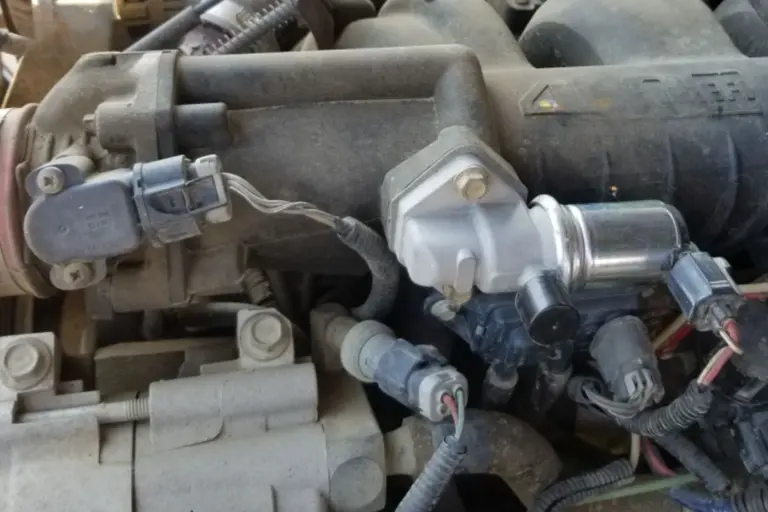
If you have ever been chasing a rough idle or a stalling problem on an older vehicle, chances are someone told you to try unplugging the idle air control valve to see what happens. It is a common diagnostic step, and it does tell you something useful about what is going on with your engine. But understanding what is actually happening when you do that, and what the longer-term consequences are, is worth knowing before you start pulling connectors.
This guide covers everything about the idle air control valve: what it does, what happens when you disconnect it, the symptoms of a failing one, and how to properly diagnose, clean, or replace it.
What the Idle Air Control Valve Actually Does
To understand the consequences of unplugging the IAC valve, you first need to understand what problem it was designed to solve.
When your engine is running at idle, the throttle plate in the throttle body is nearly closed. Only a tiny amount of air is getting through, which is all the engine needs to maintain a low, stable RPM without any load on it. But here is the challenge: the engine’s air demand is not constant at idle. It fluctuates based on the loads placed on the engine, things like the air conditioning compressor engaging, the power steering pump under load during a turn, the alternator charging a nearly depleted battery, or even just the engine being cold and needing to warm up.
Without some way to compensate for these changing loads, the idle speed would surge and drop constantly, and the engine would stall every time an electrical accessory turned on. The idle air control valve solves this by providing a bypass passage around the throttle plate. The engine control unit, or ECU, sends commands to the IAC valve telling it how much to open or close this bypass, effectively adding or removing air to keep the idle speed stable at whatever target RPM the ECU has calculated for current conditions.
The IAC valve responds to changes in engine load faster than the throttle can be physically opened, which is what makes it so effective at maintaining smooth, consistent idle behavior across a wide range of operating conditions.
Signs Your IAC Valve Is Failing
Before getting into what happens when you unplug the valve, it is worth reviewing what a failing IAC valve actually feels and looks like. These symptoms often motivate the decision to unplug it in the first place.
Fluctuating or Hunting Idle Speed
This is the most recognizable symptom. You sit at a red light and watch the tachometer needle drift up and down rhythmically, the engine revving higher and then dropping back, over and over. The technical term for this is “idle hunting” and it happens because the IAC valve is either partially stuck, intermittently failing, or clogged with carbon deposits that prevent it from holding a precise position. The ECU keeps trying to correct the idle, overshoots, corrects again, and the cycle repeats.
Rough Idling
Rough idling feels different from a fluctuating idle. Instead of the RPM moving around, the engine may hold a steady RPM but feel rough, almost like it is shaking or missing beats. A failing IAC valve that is stuck in a partially open or partially closed position prevents the ECU from delivering the precise air mixture needed for smooth combustion at idle. The result is an engine that sounds and feels like it is struggling to maintain its own rhythm.
Engine Stalling
This is the most disruptive symptom. The engine stalls when it comes to idle, typically when you come to a stop after driving. What is happening is that the IAC valve is failing to open the bypass passage enough to maintain combustion at low throttle, and the RPM drops below the point where the engine can sustain itself.
Stalling in traffic is not just annoying. It is a genuine safety concern. A stalled engine means loss of power steering assist and significantly reduced brake booster effectiveness in the moments before the vehicle comes to a complete stop. If this is happening, addressing the IAC valve is a priority, not a someday project.
Difficulty Starting
The IAC valve plays a role in cold starts as well. When the engine is cold, it needs more air to maintain a higher warm-up idle speed. A failing IAC valve that cannot open adequately for cold start conditions can make starting difficult, particularly in cold weather, and can cause the engine to stumble or stall shortly after starting before it has had a chance to warm up.
Check Engine Light
When the IAC valve fails in a way the ECU can detect, it typically stores a fault code and illuminates the check engine light. Common codes associated with IAC valve problems include P0505 (idle air control system malfunction), P0506 (idle air control system RPM lower than expected), and P0507 (idle air control system RPM higher than expected). These codes do not always appear with every type of IAC failure, but when they do, they provide a direct pointer toward the idle system as the area to investigate.
Reduced Fuel Economy
When the IAC valve is not regulating idle air correctly, the ECU compensates by adjusting fuel delivery to try to maintain the correct air-fuel ratio. These compensations are imperfect and often result in slightly rich or slightly lean conditions at idle, both of which reduce fuel efficiency. This symptom tends to be subtle compared to the others and is more likely to be noticed as a gradual trend rather than a sudden change.
What Actually Happens When You Unplug the IAC Valve
This is the question most people are here for, so let us get into it properly.
The Engine Loses Idle Speed Control
When you disconnect the IAC valve, the ECU can no longer command the bypass passage to open or close. The valve itself may default to a partially open or fully closed position depending on its design when power is removed. Either way, the ECU has lost its primary tool for managing idle speed in response to changing engine loads.
The immediate result is that the idle speed becomes fixed and unresponsive. The engine holds whatever RPM the air flowing through the bypass passage at rest allows, which may be too high, too low, or approximately correct but with no ability to compensate for load changes.
RPM Fluctuations Become More Pronounced
Without active IAC control, every time an accessory turns on or off, you will feel the idle react. Turn on the air conditioning and the RPM drops noticeably. Turn on the rear defroster and the idle stumbles. The alternator loads up to charge the battery and the engine struggles to compensate. In a car with a functioning IAC valve, these fluctuations are largely invisible because the IAC corrects for them faster than you can feel them. Without it, you feel every one of them.
Stalling Becomes More Likely
With no IAC control available, the idle speed the engine holds is whatever the fixed bypass opening provides. In conditions where the engine needs more air to maintain idle, such as cold starts, high electrical loads, or the air conditioning compressor engaging, the engine may simply stall because it cannot get enough air through the uncontrolled bypass passage.
In some vehicles, the engine will actually idle better without the IAC valve plugged in if the valve has been sticking in the wrong position. This is what makes unplugging it a useful diagnostic step. If the idle improves when the IAC is disconnected, the valve itself is the problem. If the idle gets worse, something else is going on.
The ECU Detects a Fault and Logs a Code
Almost immediately after disconnecting the IAC valve on a running engine, the ECU will detect the loss of signal or the sudden change in idle behavior and log a fault code. The check engine light will illuminate if it was not already on. This is expected and simply confirms that the ECU is aware the valve is disconnected or non-functional.
Cold Start Performance Degrades
Cold starts in particular are significantly affected by a disconnected IAC valve. The additional air needed to hold a higher warm-up idle simply is not available without IAC control. Starting the engine in cold weather with the IAC unplugged is harder, and the engine is more likely to stall in the first few minutes after a cold start.
It Is Not a Long-Term Solution
This point deserves emphasis. Unplugging the IAC valve as a diagnostic step for a few minutes while diagnosing a problem is reasonable. Leaving it unplugged and driving the vehicle as normal is not. Without IAC control, the engine is more prone to stalling in traffic, idle quality is poor across all conditions, and fuel economy suffers. The underlying problem that prompted the disconnection in the first place is still present and continues to affect the engine management system.
How to Properly Diagnose IAC Valve Problems
Rather than unplugging the valve and hoping for the best, a proper diagnostic approach will tell you definitively what is wrong and what needs to be done about it.
Step 1: Pull the Fault Codes
Connect an OBD2 scanner and read all stored fault codes before doing anything else. IAC-specific codes narrow the issue quickly. Also look for codes related to mass airflow, oxygen sensors, and throttle position, as problems with these sensors can produce symptoms that mimic IAC failure.
Step 2: Check for Vacuum Leaks
A vacuum leak produces symptoms almost identical to a failing IAC valve: rough idle, fluctuating RPM, stalling, and poor fuel economy. Before deciding the IAC valve is the problem, rule out vacuum leaks.
With the engine idling, carefully spray short bursts of carburetor cleaner or brake cleaner along vacuum hoses, intake manifold gaskets, and throttle body connections. If the idle speed changes when you spray a specific area, you have found a vacuum leak at that location. Visually inspect all rubber vacuum hoses for cracking, brittleness, or obvious damage, and replace any that look questionable.
Step 3: Inspect the IAC Valve Electrically
Disconnect the IAC valve connector and check the connector pins for corrosion, bent pins, or damage. Use a multimeter to check the resistance of the IAC valve’s coil windings. Compare the reading to the specification in a service manual for your vehicle. An out-of-specification reading indicates internal electrical failure in the valve. Check the wiring between the IAC connector and the ECU for continuity and resistance as well to rule out wiring harness issues before condemning the valve itself.
Step 4: Inspect the Valve Physically
Remove the IAC valve from the throttle body or intake manifold mounting point. Inspect the passage it controls for carbon buildup, which is the most common reason IAC valves fail without any electrical fault. Look at the tip of the valve for heavy carbon deposits that would prevent it from seating correctly or moving freely through its range of motion.
Cleaning the IAC Valve: When It Makes Sense and How to Do It
If the valve is clogged with carbon deposits rather than electrically failed, cleaning it is a legitimate fix that can restore full functionality without the cost of replacement.
What You Will Need
- Throttle body cleaner or a dedicated IAC valve cleaner spray
- A soft brush, an old toothbrush works well
- Clean lint-free rags
- Basic hand tools to remove the valve
The Cleaning Process
- Turn the engine off and allow it to cool
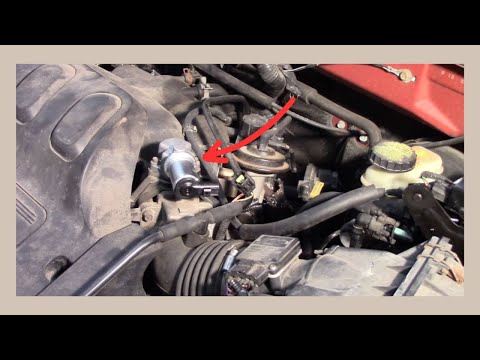
- Locate the IAC valve. On most vehicles it is mounted on or near the throttle body, or directly on the intake manifold. Consult your service manual for the exact location on your specific vehicle
- Disconnect the electrical connector from the valve
- Remove the valve from its mounting, noting the orientation and any gaskets or O-rings that seal it
- Spray the throttle body cleaner into the valve’s pintle or plunger opening and into the air passage it controls. Allow it to soak for a few minutes to loosen carbon deposits
- Use the soft brush to scrub away loosened deposits from the valve tip and the passage
- Spray again and wipe clean. Repeat until the deposits are fully removed and the passage looks clean
- Allow everything to dry completely before reinstalling
- Inspect the O-ring or gasket before reinstalling. If it shows signs of cracking or compression damage, replace it to prevent a vacuum leak at the IAC valve mounting point
- Reinstall the valve, reconnect the electrical connector, and start the engine
After reinstalling a cleaned IAC valve, you may need to let the ECU relearn the idle. On some vehicles, this involves letting the engine idle undisturbed for several minutes, or following a specific relearn procedure outlined in the service manual. If the idle still hunts after cleaning, run the relearn procedure before concluding the valve needs replacement.
When Cleaning Is Not Enough: Replacing the IAC Valve
If cleaning resolves the visual issue but symptoms persist, or if electrical testing confirmed an internal failure, replacement is the right path. The IAC valve is not an expensive component on most vehicles, and replacement is generally a straightforward job.
When purchasing a replacement IAC valve:
- Match the part exactly to your vehicle’s make, model, year, and engine size. IAC valves are not universal, and even a valve that physically fits may have different internal resistance or travel characteristics that cause problems
- Stick to OEM or a reputable aftermarket brand with a track record for your specific vehicle. Cheap no-name IAC valves from unknown suppliers frequently fail prematurely and can introduce new symptoms that are harder to diagnose than the original problem
- Replace the O-ring or gasket at the same time if it is not included with the new valve
After installing the new valve, follow the IAC relearn procedure for your vehicle to allow the ECU to calibrate the new valve’s characteristics and return to stable idle control.
Other Causes That Mimic IAC Valve Failure
Because the IAC valve is part of a broader idle management system, problems with other components can produce nearly identical symptoms. Before replacing the IAC valve, rule out these alternative causes.
Dirty Throttle Body
Carbon deposits on the throttle plate and the inside of the throttle body bore restrict airflow and can cause the same rough idle and stalling symptoms as a failing IAC valve. If you are removing the IAC valve for cleaning or replacement, clean the throttle body at the same time. The deposits that clog the IAC passage also tend to accumulate on the throttle plate, and cleaning both at once gives the idle management system the best chance of returning to normal.
Mass Airflow Sensor Contamination
The mass airflow sensor measures the volume of air entering the engine, and the ECU uses this data to calculate the correct fuel delivery. A contaminated MAF sensor gives inaccurate readings, leading to incorrect fuel trims and idle problems that can look like IAC failure. Cleaning the MAF sensor with a dedicated MAF sensor cleaner spray is inexpensive and worth doing as part of any idle diagnosis.
Faulty Oxygen Sensors
Oxygen sensors provide feedback to the ECU about the actual air-fuel ratio in the exhaust. Slow or failed oxygen sensors mean the ECU cannot make accurate fuel trim corrections, which can produce rough idle conditions that mimic IAC issues. Fault codes for oxygen sensor performance or response time will be stored alongside any IAC-related codes if this is the case.
Electrical Connector and Wiring Faults
A corroded or damaged connector at the IAC valve can produce intermittent faults that look identical to a failing valve. The valve itself may be perfectly functional, but if the connection between it and the ECU is unreliable, the result is the same erratic idle behavior. Always inspect the connector and the wiring before replacing the valve. Clean corroded pins with electrical contact cleaner, check for backed-out terminals, and verify wiring continuity before concluding the valve is at fault.
IAC Valve Diagnosis and Repair Cost Overview
| Service | DIY Cost | Professional Repair Cost |
|---|---|---|
| OBD2 diagnostic scan | $0 with your own scanner | $50 – $100 at a shop |
| IAC valve cleaning | $5 – $15 (cleaner spray) | $50 – $150 with labor |
| IAC valve replacement | $20 – $100 (parts only) | $100 – $300 with labor |
| Throttle body cleaning | $10 – $20 (cleaner spray) | $80 – $200 with labor |
| Vacuum hose replacement | $5 – $30 (parts only) | $50 – $200 with labor |
| MAF sensor cleaning | $10 – $15 (cleaner spray) | $50 – $100 with labor |
| MAF sensor replacement | $30 – $150 (parts only) | $100 – $300 with labor |
IAC valve problems are almost always solvable for well under $300, and in many cases a $10 can of throttle body cleaner and thirty minutes of your time is all it takes. The key is accurate diagnosis before spending anything. A proper diagnostic scan and a vacuum leak check first will tell you whether the IAC valve is genuinely the cause or whether you are about to replace a component that was working fine all along.
Unplugging the IAC valve tells you something useful in a diagnostic context. Leaving it unplugged solves nothing and makes your vehicle harder to drive safely. If your engine is hunting, stalling, or struggling to idle smoothly, the valve deserves a proper inspection, not just a disconnected connector and a hope that things settle down on their own.