
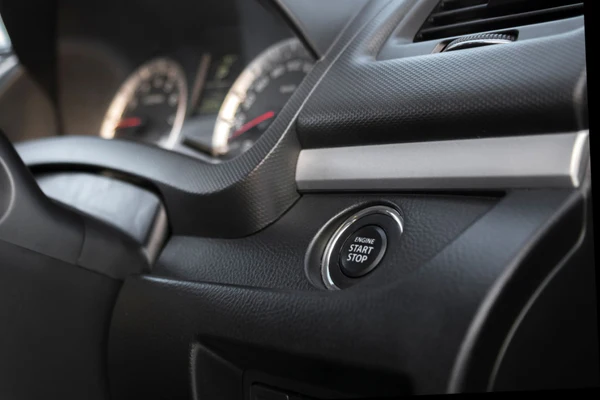
There are few things more frustrating than getting into your Lexus, pressing the start button, and absolutely nothing happening. You press it again. Still nothing. Maybe you get a click, or the dashboard lights flicker, or the car just sits there completely unresponsive. Whatever the specific symptom, a push-button start that refuses to work is a problem that can throw your entire day into chaos.
The good news is that push-button start failures in Lexus vehicles are well-understood and usually traceable to a handful of specific causes. None of them are mysterious. They all have logical explanations and practical fixes. This guide walks you through everything from how the system works to what is likely causing the problem and exactly what to do about it.
How the Lexus Push-Button Start System Works
Before troubleshooting any system, it helps to understand what is supposed to happen when it works correctly. The Lexus push-button start is not just a button wired to the ignition. It is a complete system involving multiple components working together in sequence.
Here is the chain of events that unfolds every time you successfully start your Lexus:
- Your key fob continuously broadcasts a low-frequency radio signal. When you enter the vehicle with the fob in your pocket or bag, the car’s receiver picks up that signal.
- The vehicle’s Smart Key system authenticates the fob’s unique code. Once confirmed, it unlocks the ignition system and allows the start button to become active.
- When you press the brake pedal and push the start/stop button, a signal travels from the button through the wiring to the starter relay.
- The starter relay closes the circuit between the battery and the starter motor. The battery sends a high-current charge to the starter motor.
- The starter motor cranks the engine. The Engine Control Module takes over, managing fuel injection and ignition timing to bring the engine to life.
If any link in that chain breaks down, the start process fails. The symptoms you experience depend on exactly where in the chain the failure is occurring, and that is your best diagnostic clue.
Reading the Symptoms: What the Failure Is Telling You
Not all push-button start failures look the same. The specific behavior your Lexus exhibits when you press the button gives you important information about where the problem is located. Before diving into causes and fixes, pay attention to exactly what is happening.
| What You Experience | What It Likely Indicates |
|---|---|
| Completely no response, no lights, no click | Dead battery or severe wiring fault |
| Dashboard lights come on but engine does not crank | Weak battery, bad starter relay, or faulty starter motor |
| Single click when button is pressed | Battery low on charge or starter relay fault |
| Rapid clicking when button is pressed | Battery significantly discharged |
| Engine cranks slowly but does not fully start | Weak battery or failing starter motor |
| No response unless key fob is held near the button | Key fob battery is dead or fob is malfunctioning |
| Intermittent starting, works sometimes but not others | Wiring fault, failing starter relay, or ECM issue |
| Warning message about key fob not detected | Key fob battery dead or Smart Key system fault |
Keep this reference in mind as you work through the causes below. Matching your symptom to the likely cause narrows down the diagnosis significantly before you even open the hood.
Every Reason Your Lexus Push-Button Start Is Not Working
1. A Dead or Weak Key Fob Battery
Start here. Seriously. This is the single most common reason a Lexus push-button start stops working, and it is the simplest fix imaginable. The key fob runs on a small CR2032 coin battery. These batteries typically last one to three years depending on usage. When the battery gets low, the fob’s signal becomes too weak for the car’s receiver to reliably detect.
You might notice the problem creeping up gradually. Maybe you have to be closer to the car than usual for the doors to unlock automatically. Maybe you have pressed the lock button a few times before it responds. These are early warning signs that the fob battery is running low.
When the fob battery is completely dead, the car will display a message saying the key is not detected or the Smart Key system cannot find the fob. Do not panic. Lexus builds an emergency backup into every vehicle for exactly this situation.
Here is what to do when the key fob battery is completely dead:
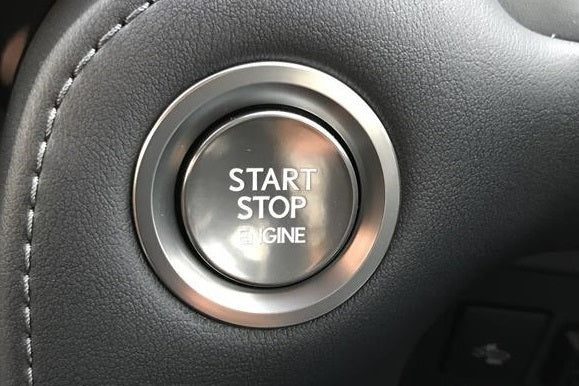
- Hold the key fob directly against the start button. Most Lexus models have a transponder coil around the button that can read the fob’s passive chip even with a dead battery.
- With the fob pressed to the button, press the brake pedal and then push the start button normally.
- If the car starts, the fob battery is your only problem. Replace the CR2032 battery as soon as possible.
A replacement CR2032 battery costs around $5 at any pharmacy, grocery store, or auto parts store. This is the cheapest possible fix for a push-button start failure, so rule it out first every time.
2. A Weak or Dead Vehicle Battery
The vehicle battery powers everything. When it drops below a certain voltage threshold, the starter motor cannot crank the engine and the push-button start fails. A completely dead battery means even the dashboard lights may not come on when you press the button.
Lexus vehicles typically use a 12-volt battery. Under normal circumstances, a resting battery should read between 12.4 and 12.7 volts. When it drops below 12 volts, starting becomes unreliable. Below 11.8 volts, the car likely will not start at all.
There are several reasons the vehicle battery can fail or discharge:
- Age. Lexus batteries typically last four to six years. After that, their capacity degrades and they become unreliable.
- A door or interior light left on overnight draining the battery
- A failing alternator that is not recharging the battery while the engine runs
- Extreme cold weather reducing the battery’s ability to deliver current
- A parasitic drain from an aftermarket accessory or a malfunctioning module drawing power when the car is off
Test the battery voltage with a multimeter. If it reads below 12.4 volts with the engine off, the battery needs charging or replacement. If it reads fine at rest but drops sharply when you try to crank the engine, the battery cannot deliver adequate current under load, which points to a battery that has lost internal capacity even though it shows acceptable resting voltage.
A battery load test, available for free at most auto parts stores, will reveal the true condition of the battery under real electrical demand. If the battery fails the load test and is more than three years old, replace it. Trying to limp along on a failing battery is a false economy that often results in getting stranded at the worst possible moment.
Also inspect the battery cables at the terminals. Corroded or loose connections at the positive or negative terminal can prevent adequate current flow even when the battery itself is fully charged. Clean any corrosion off with a wire brush and a baking soda and water solution, and ensure both terminals are tight.
3. A Faulty Starter Relay
The starter relay acts as an electrically controlled switch between the battery and the starter motor. When you press the start button, a small signal current activates the relay, which then closes a high-current circuit that sends power from the battery to the starter motor. Without a functioning relay, that high-current path never opens and the starter motor never receives power.
A failed starter relay usually produces one of two symptoms: either nothing happens at all when you press the start button, or you hear a single click from the relay location without the engine cranking.
The starter relay is located in the fuse box under the hood. Your owner’s manual will show you exactly which relay is the starter relay. Here is a simple way to test it:
- Locate the starter relay in the fuse box using your owner’s manual diagram.
- Pull the relay out carefully.
- Find another relay in the fuse box that has the same part number. Many relays in the same fuse box are identical and interchangeable for testing purposes.
- Swap the starter relay with the known-good relay and try to start the car.
- If the car starts, the original starter relay was the problem. Replace it with a new one.
You can also listen for a clicking sound from the relay area when a helper tries to start the car while you listen near the fuse box. A relay that clicks is receiving a signal and attempting to close, but may not be making a complete internal connection. No click at all suggests the relay is not receiving signal at all, pointing toward a wiring or switch problem upstream of the relay.
Starter relays are inexpensive, usually $10 to $30 for a direct replacement. This is a quick and cheap repair if the relay is confirmed faulty.
4. Wiring Connection Faults
The push-button start system relies on wiring to connect every component in the start sequence. A fault anywhere in this wiring network can break the chain and prevent the car from starting. These faults can be subtle and intermittent, which makes them particularly frustrating to diagnose because the car might start fine five times in a row and then refuse on the sixth attempt.
Common wiring problems that affect the push-button start system include:
- Corroded connectors at the starter motor or ignition control module
- Damaged wiring insulation where wires pass through tight spaces or near heat sources
- Rodent damage to wiring, which is more common in vehicles parked in garages or outdoor areas where pests are present
- Water intrusion into connectors causing corrosion of the internal pin contacts
- A loose or corroded ground connection that creates an unstable electrical reference for the entire ignition system
Use your owner’s manual or a Lexus wiring diagram to locate the wiring associated with the push-button start system. Physically inspect all accessible wiring and connectors for visible damage. Pay special attention to ground points, which are connection points where wires bolt to the chassis or engine block. A corroded ground can cause a wide range of mysterious electrical symptoms including intermittent starting failures.
When wiring needs repair, replace the damaged section with wire of the same gauge. Patched connections are a temporary fix at best in an automotive environment where vibration, heat, and moisture will break down makeshift repairs faster than you expect.
5. A Failing Engine Control Module
The Engine Control Module, or ECM, is the central computer that manages the engine’s operation. It controls fuel injection timing, ignition spark timing, and a long list of other parameters that determine whether the engine starts and runs correctly. When the ECM develops a fault, the engine’s ability to start and run is directly compromised.
ECM failures are less common than battery or relay problems, but they do happen. The ECM can fail for several reasons:
- Water or moisture intrusion into the module
- Voltage spikes from a failing alternator or improper jump-starting that damage the internal circuitry
- Software corruption caused by an interrupted update or programming session
- General component failure due to age and heat cycling over many years
An ECM problem is usually accompanied by other symptoms beyond just the start button not working. You might see multiple warning lights on the dashboard, experience rough running or misfires when the car does start, or notice the car behaving erratically in other ways. A stored fault code in the ECM will typically point directly to the module if it is failing.
Diagnosing an ECM problem requires a professional-grade scan tool. If the ECM has a software problem, reprogramming it at a Lexus dealer or a shop with the appropriate programming equipment may resolve the issue. If the module itself is physically damaged, replacement is necessary. ECM replacement is expensive, often ranging from $800 to $2,500 depending on the model and whether a dealer or independent shop performs the work, so confirm the diagnosis carefully before committing to this repair.
6. A Faulty Brake Light Switch
This is one that many people overlook entirely. The push-button start system requires the brake pedal to be pressed as a safety measure before the engine will crank. The car detects brake pedal input through the brake light switch, a small sensor located near the top of the brake pedal assembly.
If the brake light switch fails, the vehicle does not register that the brake is being pressed even when it genuinely is. From the car’s perspective, the start conditions have not been met, so it refuses to start. This is a deceptively simple cause of what seems like a complex problem.
A quick way to check for this: when you press the brake pedal, do your brake lights come on? Have someone stand behind the car and check while you press the pedal. If the brake lights do not illuminate when the pedal is pressed, the brake light switch has likely failed. Replacing the brake light switch is a relatively simple job, usually involving just a few bolts and an electrical connector, and the part typically costs between $20 and $80.
7. A Faulty Starter Motor
If the battery is good, the relay is working, and the wiring is intact, but the engine still does not crank when you press the start button, the starter motor itself may have failed. The starter motor is the component that physically turns the engine over during starting. When its internal windings, brushes, or solenoid wear out, it can stop working suddenly or become intermittent.
Symptoms of a failing starter motor include:
- A grinding or whirring noise when you press the start button without the engine turning over
- The engine cranking very slowly before stopping
- The start button requiring multiple presses before the engine eventually cranks
- Smoke or a burning smell from beneath the vehicle near the starter location
Starter motor replacement on a Lexus is typically a job for a professional given the location of the starter on most models. Labor costs can be significant due to access difficulty, and parts range from $150 to $400 for the starter itself. Expect total repair costs between $300 and $700 depending on the model.
Step by Step Troubleshooting Process
Work through this process in order. Start with what is free and quick, then move toward what requires professional diagnosis.
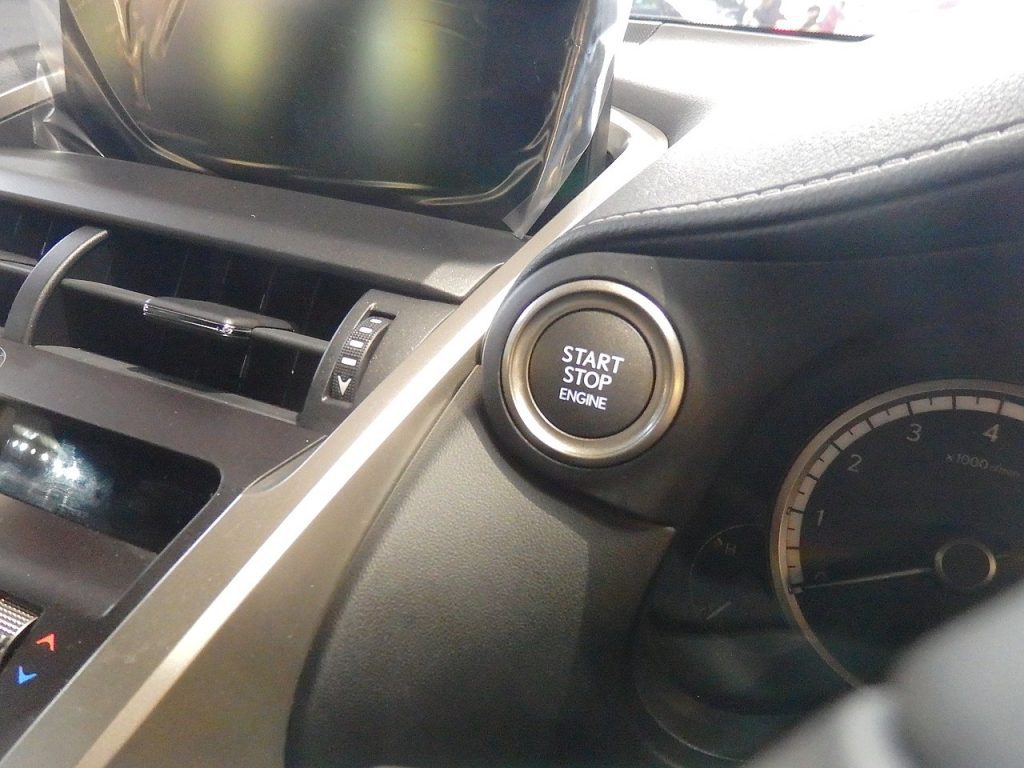
- Try the emergency start with the fob pressed to the button. Hold the key fob directly against the start button, press the brake, and push the button. If this works, replace the key fob battery immediately.
- Check if the dashboard lights come on. If nothing illuminates when you press the button, the vehicle battery is likely dead or there is a complete wiring failure. If the lights do come on, the battery has some charge remaining.
- Test the vehicle battery voltage. Use a multimeter to check voltage. Below 12.2 volts indicates a significantly discharged battery. Have it load-tested at an auto parts store if voltage looks acceptable.
- Check the brake lights. Have someone verify the brake lights illuminate when you press the pedal. If they do not, the brake light switch is a likely culprit.
- Listen carefully for any sound when pressing the start button. A click from the fuse box area suggests the relay is receiving a signal. Rapid clicking suggests a discharged battery. Silence suggests a relay, wiring, or Smart Key system issue.
- Inspect and test the starter relay. Swap it with an identical relay from elsewhere in the fuse box and retest.
- Inspect accessible wiring. Check battery terminals, ground connections, and visible wiring around the battery and starter for corrosion or damage.
- Run an OBD-II scan. If you have access to a scan tool, pull any stored fault codes. Codes related to the ECM, Smart Key system, or ignition circuit will point you toward the remaining possibilities.
Repair Cost Overview
| Issue | Estimated Cost |
|---|---|
| Key fob battery replacement | $3 to $8 |
| Battery terminal cleaning | Free to $20 |
| Vehicle battery replacement | $100 to $250 |
| Starter relay replacement | $10 to $30 |
| Brake light switch replacement | $50 to $150 |
| Wiring repair (minor) | $50 to $250 |
| Wiring harness repair (major) | $300 to $800 |
| Starter motor replacement | $300 to $700 |
| ECM reprogramming | $150 to $400 |
| ECM replacement | $800 to $2,500 |
What To Do If Your Lexus Absolutely Will Not Start Right Now
If you need to move the vehicle immediately and have exhausted the quick checks above, here are your emergency options.
Try the physical key. Inside your Lexus Smart Key fob, there is a small mechanical key blade. Pop the fob open and slide it out. This key will manually unlock the driver’s door if the fob’s battery is dead and the emergency start method described above does not work on your specific model. It will not start the car, but it gets you inside.
Jump-start the vehicle. If the battery is the problem and you have access to jumper cables or a portable jump starter pack, a jump-start may get the vehicle running. Once started, drive directly to an auto parts store or mechanic to have the battery and charging system properly tested.
Place the key fob against the start button before pressing. Even with a dead fob battery, many Lexus models will recognize the passive transponder chip inside the fob when it is held directly against or immediately behind the start button. This is the intended backup procedure for a dead fob battery. It works on most Lexus models with keyless ignition systems.
How to Prevent Push-Button Start Problems Before They Happen
Most push-button start failures are preventable with basic proactive maintenance. These habits keep the system reliable:
- Replace the key fob battery every one to two years. Do not wait for it to die completely. Mark a reminder on your calendar and replace it proactively. A $5 battery prevents the aggravation of being stranded.
- Have the vehicle battery tested annually once it is three years old. A free load test at an auto parts store tells you the true health of the battery well before it reaches the point of failure.
- Keep battery terminals clean. Check them at every oil change and clean off any corrosion immediately.
- Do not ignore warning signs. If the fob range is shortening, the car takes longer to start than usual, or you are seeing dashboard warnings related to the Smart Key or battery, address them before they become a no-start situation.
- Be careful with jump-starting. Improper jump-starting with the wrong polarity can instantly damage the ECM and other sensitive electronics. Always double-check cable polarity before attempting a jump-start on a modern Lexus.
The push-button start system on a Lexus is genuinely reliable technology
when the supporting components are maintained properly. The majority of
failures trace back to something as basic as a $5 key fob battery or a
battery that has simply reached the end of its service life. Start with
the simple checks, work systematically through the possibilities, and you
will have your Lexus starting reliably again without throwing unnecessary
money at the wrong repair.