
Your engine runs on a balance. Too much fuel relative to air, and the mixture goes rich. Too little fuel, and it goes lean. The engine control module watches that balance constantly through a network of sensors, and when it needs to make persistent corrections to keep the air-fuel ratio where it belongs, those corrections show up as fuel trim values.
A negative long-term fuel trim, usually shortened to negative LTFT, is one of the more misunderstood readings a scanner can display. It tells you the ECM has been consistently removing fuel from the mixture, which means the engine has been running rich and the computer is compensating. That compensation can only go so far before the symptoms become impossible to ignore and real engine damage becomes a risk.
This guide explains what negative LTFT means in practical terms, what the symptoms look like from the driver’s seat, what typically causes it, and how to work through the diagnosis and fix each possible cause correctly.
What Long-Term Fuel Trim Is and What “Negative” Actually Tells You
The ECM manages the air-fuel ratio through a feedback loop. Several sensors feed the ECM continuous data about what is happening inside and around the engine. The ECM uses that data to calculate how much fuel to inject and adjusts the mixture in real time based on what the sensors report.
The three sensors most directly involved in fuel trim decisions are:
- The oxygen sensor (O2), which measures the oxygen content in the exhaust stream and tells the ECM whether combustion was lean or rich
- The mass airflow sensor (MAF), which measures the volume and density of air entering the engine so the ECM can calculate an appropriate fuel quantity
- The upstream air-fuel ratio sensor (A/F), which provides more precise mixture feedback than a conventional oxygen sensor and is found on many modern vehicles
Short-term fuel trim is the immediate, real-time correction the ECM makes based on live sensor readings. It fluctuates constantly. Long-term fuel trim is what the ECM learns over time. If the short-term correction keeps pointing in the same direction, the ECM writes that pattern into long-term memory so it does not have to relearn it every time the engine starts.
A negative LTFT value means the ECM has learned to reduce fuel delivery persistently. The fuel trim percentage is expressed as a negative number, and the ECM is pulling that percentage of fuel out of the commanded injection quantity continuously. Under normal operating conditions, both long-term and short-term fuel trim values should sit close to zero, typically within plus or minus 10 percent. A negative LTFT that consistently exceeds negative 10 percent indicates the engine has been running rich for long enough that the correction has become a learned behavior.
Where your vehicle shows a negative LTFT, it means an adjustment the ECM is making is causing the engine to run with more fuel than it needs, which reduces efficiency and over time can cause damage to exhaust components, particularly the catalytic converter.
Symptoms of Negative Long-Term Fuel Trim You Can Feel and Observe
A negative LTFT does not always announce itself with a dramatic failure. In early stages, the ECM compensates well enough that normal driving feels almost acceptable. As the condition worsens or the underlying fault becomes more severe, the symptoms become harder to dismiss.
Loss of Engine Power
One of the earliest and most consistent symptoms is a noticeable reduction in engine power. Whether the engine is running rich because too much fuel is being delivered or the ECM has over-corrected and pushed the mixture lean, the combustion event is no longer optimal. Power output drops, acceleration feels sluggish, and the engine may hesitate under load.
The engine needs a precise ratio of air and fuel. An excess of either disrupts the combustion process and reduces the work the engine can extract from each charge. A rich condition wastes fuel and lowers combustion efficiency. An over-corrected lean condition can cause misfires and rough running that compounds the power loss.
Increased Fuel Consumption
If the negative LTFT is the result of an underlying rich condition that the ECM is trying to correct, the fuel system may be delivering more fuel than needed before the correction kicks in. Even with the ECM reducing injection quantities, fuel consumption can be higher than normal because the system is working against a persistent over-fueling problem.
There is also a secondary effect worth understanding. Even in cases where the engine runs lean after over-correction, fuel economy often suffers because the combustion conditions are not optimal. Efficient combustion requires the correct mixture at the right time. When the system is out of balance, economy takes the hit regardless of which direction the error falls.
Engine Stalling
As a negative fuel trim condition becomes more severe, the ECM may not be able to maintain stable combustion. The engine can begin stalling, particularly at idle where the margin for error in the air-fuel mixture is smallest. At idle, the throttle is nearly closed and airflow is minimal. Any disruption to the fuel delivery or air balance at that point can cause the engine to lose the power needed to keep running.
Intermittent stalling that becomes more frequent over time is a reliable indicator that the fuel trim issue is progressing rather than staying stable.
Check Engine Light
The ECM monitors its own corrections. When the fuel trim correction has moved beyond a defined threshold and is not being resolved, the ECM stores a fault code and triggers the check engine light. Fuel trim-related codes point directly to the fact that the ECM cannot maintain the target air-fuel ratio within acceptable limits using its normal correction range.
The check engine light with a fuel trim code stored does not tell you exactly which component caused the problem. It tells you the air-fuel balance is outside specification and that the system has been unable to correct it. The actual diagnostic work begins from there.
Engine Will Not Start
In the most severe cases, the underlying cause of the negative fuel trim has progressed far enough that the engine cannot achieve combustion at all. If the fuel system fault, sensor failure, or other underlying problem has left the mixture far outside combustible range, the engine cranks without firing. At this stage, stop attempting to start the vehicle and have it inspected and repaired before continuing to try.
What Causes Long-Term Fuel Trim to Go Negative
| Cause | Why It Creates a Negative LTFT | Most Common Signs |
|---|---|---|
| Oxygen sensor failure | Sensor reports rich when mixture is correct, ECM removes fuel unnecessarily | Fuel trim persistently negative, poor mileage, O2 sensor code |
| Mass airflow sensor failure | Sensor over-reports airflow, ECM adds too much fuel, LTFT compensates negative | Power loss, rough idle, MAF-related fault code |
| Failing fuel system | Leaking injectors, excessive fuel pressure, or faulty pressure regulator delivers too much fuel | Rich smell, black exhaust smoke, fuel economy drop |
| ECM malfunction | Programming error or internal fault causes incorrect fuel delivery commands | Multiple unrelated fault codes, erratic sensor data |
| Fuel or air leaks | Fuel leaks increase available fuel; certain air system faults affect delivered mixture | Fuel smell, visible leak under vehicle, irregular mixture readings |
Oxygen Sensor Failure
The oxygen sensor sits in the exhaust stream and measures how much oxygen remains after combustion. That reading is the primary feedback signal the ECM uses to decide whether the current mixture was lean or rich and whether the next injection event needs adjustment.
When an oxygen sensor fails or degrades, it may report a consistently rich exhaust condition even when the mixture is correct. The ECM takes that signal at face value, concludes the mixture needs to be leaner, and begins pulling fuel. That correction gets written into the long-term fuel trim as a persistent negative value.
A contaminated oxygen sensor, one that has been exposed to coolant from a head gasket leak, oil from excessive consumption, or silicone compounds from improperly applied RTV sealant, may give skewed readings that mimic a genuine rich condition. A sensor that has simply worn out and lost its response speed can also cause the ECM to make incorrect corrections because the timing of the feedback signal is off even if the voltage range looks acceptable.
Mass Airflow Sensor Failure
The MAF sensor measures the air entering the engine. The ECM uses that measurement to calculate how much fuel to inject. If the MAF sensor over-reports airflow, the ECM calculates that more fuel is needed to match the reported air quantity. The engine runs rich. The oxygen sensor detects the rich condition and signals the ECM, which then pulls fuel and records that correction as a negative long-term fuel trim.
MAF sensor contamination is a common culprit. The sensing element is a fine wire or film suspended in the air path. Oil from a poorly maintained air filter, dust, and fine carbon particles can coat the sensing element and cause it to over-read. This type of contamination-related failure often responds well to cleaning before replacement becomes necessary.
A damaged or incorrectly installed air filter can also allow unfiltered air to bypass the sensor element, causing inconsistent readings. Physical damage to the sensor from improper handling during air filter changes is another possibility on high-mileage vehicles that have had multiple services.
Failing Fuel System Components
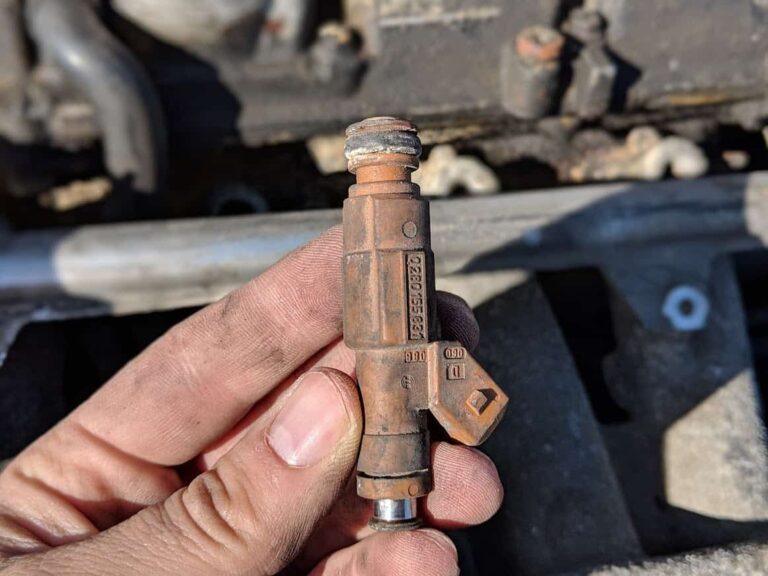
The fuel system can deliver too much fuel through several different failure modes. A leaking fuel injector that does not fully close between injection events continues to drip fuel into the cylinder when it should not be. A failed fuel pressure regulator that allows system pressure to climb above specification pushes more fuel through the injectors than the ECM commanded. A stuck-open or chattering injector delivers inconsistent and excessive amounts of fuel.
All of these conditions create a rich mixture that the oxygen sensors detect. The ECM responds by pulling fuel trim negative to compensate. The problem is that the ECM is compensating for an actual fuel delivery fault rather than a sensor measurement error. The correction masks the symptom temporarily, but the underlying fuel system fault continues causing damage over time.
The fuel system involves multiple components working together, and diagnosing which specific part is at fault often requires professional equipment including fuel pressure gauges, injector test equipment, and in some cases oscilloscope testing of injector electrical signals.
ECM Issues
The ECM itself is rarely the cause of a negative fuel trim problem, but it belongs on the list because it does occasionally fail in ways that produce incorrect fuel delivery commands. A programming error following a software update, a corrupted memory cell, or physical damage to the ECM circuit board can cause the module to send incorrect injection commands that are not accurately reflected in the sensor feedback loop.
ECM issues are often characterized by multiple unrelated fault codes appearing simultaneously, or by sensor readings that do not match what the engine should be doing based on its physical condition. If all sensors test correctly and the fuel system checks out, but the fuel trim remains inexplicably negative, the ECM warrants evaluation by a technician with the appropriate diagnostic equipment.
In many cases, what appears to be an ECM fault is actually a reprogramming requirement. If the vehicle received an over-the-air update that was interrupted, or if a battery disconnection occurred during a software update procedure, the ECM may need to be reflashed rather than replaced.
Fuel Leaks and Fuel System Damage
An obvious fuel leak is a safety concern first and a fuel trim issue second, but both deserve attention. A leak that allows raw fuel vapor into the intake system, or that is depositing excess fuel into areas where it is being drawn into combustion, can create a rich mixture that the ECM reads through the oxygen sensors and compensates for with negative fuel trim.
A fuel smell around the vehicle, wet spots or puddles under the car after it has been parked, or the strong odor of gasoline from the engine bay are all signs of a leak that needs to be addressed immediately regardless of what the fuel trim readings show.
How to Fix Negative Long-Term Fuel Trim
Effective repair depends on accurate diagnosis. Replacing parts without confirming the cause is expensive and often leaves the real problem in place. Work through the likely causes systematically.
Fix 1: Oxygen Sensor Replacement or Inspection
Start by testing the oxygen sensor using a scanner that can display live O2 sensor data. A healthy upstream oxygen sensor should switch between approximately 0.1 and 0.9 volts rapidly at idle, typically multiple times per second. A sensor that holds steady near one end of that range, switches slowly, or produces unusual patterns is not giving the ECM accurate feedback.
Locate the oxygen sensor in the exhaust system. On most four-cylinder engines, the upstream sensor threads into the exhaust manifold or the downpipe close to the engine. On V6 and V8 engines, there will be sensors on each exhaust bank. Inspect the sensor body and the wiring harness for physical damage, heat damage to the wiring insulation, or corrosion at the connector before removing it.
If the sensor is old, past roughly 100,000 miles on a conventional sensor, or testing shows sluggish or inaccurate response, replace it. Use an oxygen sensor socket and penetrating oil on the threads if the vehicle has high mileage. Corroded threads require patience rather than force. Replace with a sensor that matches the original specification including the connector type and thread pitch.
Fix 2: Mass Airflow Sensor Cleaning or Replacement
Locate the MAF sensor between the air filter housing and the throttle body. It is typically a small unit with a two-wire or multi-wire electrical connector and a sensing element visible inside the intake tube. Remove it carefully following the manufacturer’s procedure, which on most vehicles involves releasing two clips or screws and disconnecting the electrical connector.
Spray the sensing element with dedicated MAF sensor cleaner, which is specifically formulated to be safe for delicate sensing components. Do not use generic electrical contact cleaner or carburetor cleaner, as these can damage the element permanently. Allow the sensor to dry completely, reinstall it, and clear the fault codes before a test drive.
If cleaning does not improve the MAF readings and the sensor is still producing inaccurate data, replacement is the next step. After replacement, clear the long-term fuel trim values and ECM adaptive data by disconnecting the battery briefly or using a scanner, then drive through a full operating cycle to allow the ECM to relearn from the corrected sensor data.
Fix 3: Fuel System Diagnosis and Repair
The fuel system covers multiple components, and the specific repair depends on which part is causing the excessive fuel delivery. Professional diagnosis is often the right call here because the tools required for accurate fuel system testing, particularly for injector testing and fuel pressure measurement at multiple points in the system, are not commonly found in a home garage.
That said, some initial checks are accessible without specialist equipment. Listen for the characteristic ticking of a chattering injector at idle. Check for the smell of raw fuel from the intake or around the engine bay. Inspect accessible fuel lines for cracks or weeping joints. Check the condition of the fuel filler cap, as a failed cap can cause fuel vapors to enter the EVAP system in ways that affect mixture readings.
Fuel injector replacement, fuel pressure regulator replacement, and fuel pump replacement all carry different levels of complexity depending on the vehicle. Fuel tank removal for pump or sending unit access, for example, requires proper lifting equipment and safety precautions around fuel vapors. If the diagnosis points to fuel system components inside the tank or at the injectors on a direct injection engine, professional help is the most efficient and safest path.
Fix 4: ECM Evaluation and Reprogramming
If all sensor and fuel system testing comes back normal but the negative fuel trim persists, the ECM needs professional evaluation. A technician with a manufacturer-specific or professional-grade scan tool can perform bidirectional tests, verify that commanded and actual values match, check for corrupted memory, and confirm whether reprogramming resolves the issue.
ECM replacement is expensive and should only be considered after reprogramming has been ruled out and all other causes have been definitively eliminated. On many vehicles, a replacement ECM also requires programming to the specific vehicle VIN, which typically can only be done at a dealer or a shop with the appropriate software.
Fix 5: Fuel Leak Repair
Fuel leaks need to be repaired before anything else because they are a fire hazard. The repair approach depends entirely on where the leak originates.
A leaking fuel tank can sometimes be repaired with a tank sealer applied internally, but a tank with significant corrosion or impact damage is usually more reliably replaced. Cracked fuel lines are replaced with matching-specification fuel-rated hose or metal line. A leaking injector O-ring is replaced by removing the fuel rail and swapping the seals. A failed pressure regulator is typically a straightforward replacement once the fuel rail is depressurized and the regulator is identified.
Work on any fuel system component with the engine cold and in a well-ventilated area away from ignition sources. Depressurize the fuel system before opening any fittings by removing the fuel pump fuse and running the engine until it stalls from fuel starvation. Have an appropriate fire extinguisher nearby when working with fuel system components.

After the Repair: Clearing and Relearning Fuel Trim
Once the underlying cause has been fixed, the ECM needs the opportunity to relearn correct fuel trim values from a clean baseline. The stored negative LTFT values represent what the ECM learned while compensating for the fault. Those values can persist and continue influencing fueling even after the fault is corrected.
Disconnect the negative battery terminal for approximately ten minutes to clear the ECM’s learned values, or use a scanner with an ECM reset function. After reconnecting, drive through a complete operating cycle that includes a cold start, warming up to full operating temperature, and a mix of idle, city, and highway driving. Monitor the LTFT values using a scanner during and after this relearn period.
A correctly repaired system will show fuel trim values returning to near zero over the first several drive cycles. If the negative LTFT returns after clearing and the relearn period, the root cause has not been fully resolved and further diagnosis is needed.
When Professional Help Is the Right Call
Some negative LTFT fixes are genuinely accessible to a mechanically comfortable owner. Cleaning a MAF sensor, replacing an oxygen sensor, or inspecting wiring harnesses for damage are reasonable home repairs. Fuel system diagnosis involving injector testing, fuel pressure regulator evaluation, or ECM reprogramming requires equipment and expertise that most home mechanics do not have access to.
If the diagnosis points to the fuel system beyond the basic checks, if the fault codes return quickly after clearing, or if the symptoms include anything related to driveability that creates a safety concern, professional diagnosis is the efficient and safe choice. The cost of a proper diagnosis at a reputable shop is almost always less than the cost of replacing parts based on guesswork.
A negative long-term fuel trim that stays below negative 10 percent consistently is telling you the ECM has already exhausted a significant portion of its correction authority trying to compensate for a rich condition. Find the cause before the compensation reaches its limit and the symptoms become unavoidable.