
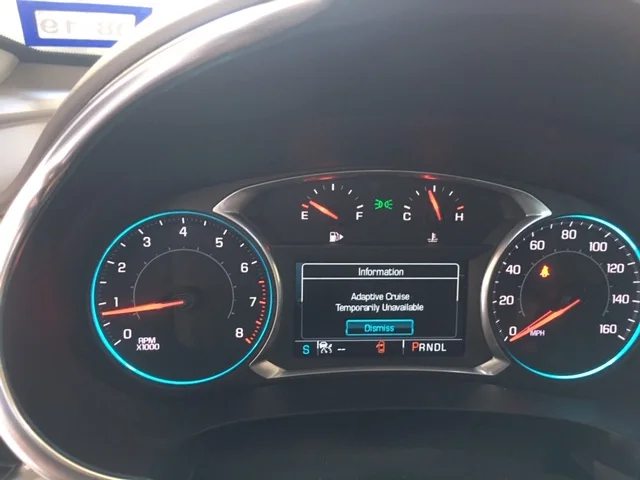
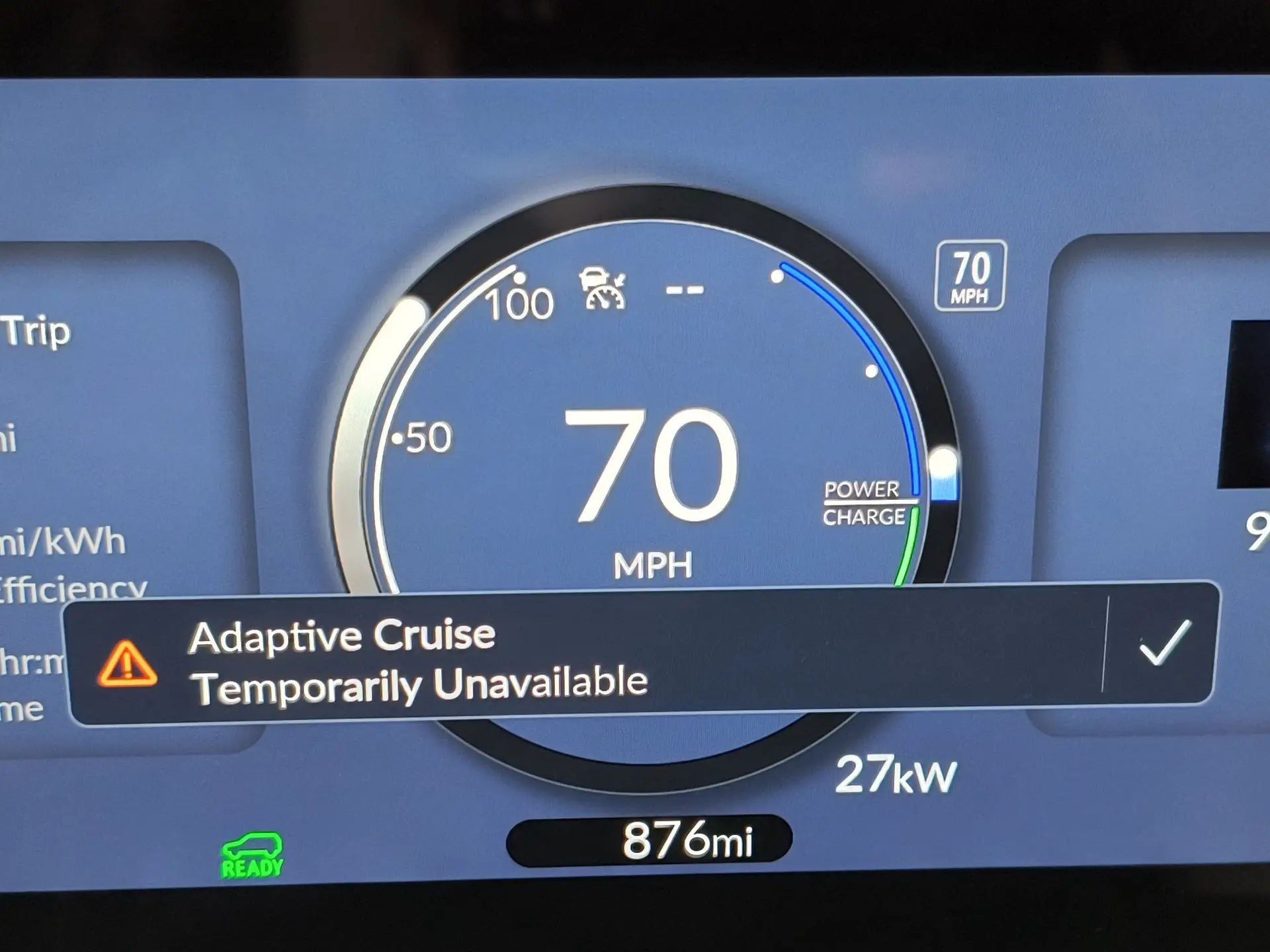
You are cruising on the highway, traffic is light, and you reach over to activate your adaptive cruise control. Then your dashboard throws up a message: “Adaptive Cruise Control Temporarily Unavailable.” Frustrating, right? Especially when you were counting on it for a long drive.
Here is what that warning actually means. The system has detected something that prevents it from operating safely, so it shuts itself off. It is not a random glitch. The system is protecting you from relying on a feature that cannot guarantee accurate performance in that moment. The causes range from something as simple as a dirty sensor to something more involved like a faulty brake module or a failed speed sensor.
Let us break down everything you need to know, starting with what adaptive cruise control actually is and how it works.
What Adaptive Cruise Control Is and How It Works
Adaptive cruise control, or ACC, is not your grandfather’s cruise control. The old-school version simply held a fixed speed. Adaptive cruise goes several steps further. It monitors the vehicle ahead of you, adjusts your speed automatically to maintain a safe following distance, and in some advanced versions, can even bring the car to a complete stop and accelerate again in stop-and-go traffic.
The technology was first introduced by Mitsubishi back in 1992. Since then, every major automaker has developed their own version of it. Ford calls it Intelligent Adaptive Cruise Control. BMW calls it Active Cruise Control. Toyota uses Dynamic Radar Cruise Control. The names are different but the core function is the same: keep a safe gap between your vehicle and the one in front without you having to constantly manage the throttle and brake.
To do all of this, the system relies on a network of components working together in real time. Sensors out front detect objects on the road. The data feeds into the vehicle’s Engine Control Unit, or ECU. The ECU then communicates with the throttle system and braking system to adjust the speed accordingly. If any part of that chain breaks down, the whole system disables itself and throws the “Adaptive Cruise Control Temporarily Unavailable” warning on your dashboard.
Over the years, adaptive cruise systems have gotten significantly smarter. Some now integrate with lane-keeping assist, traffic sign recognition, and even predictive speed adjustment using GPS data to anticipate curves and speed limit changes. But with greater complexity comes more potential points of failure.
Every Reason Your Adaptive Cruise Control Is Temporarily Unavailable
1. The Object-Detecting Sensor Has a Problem
This is the most common cause. Adaptive cruise control systems use either radar, laser (LIDAR), or a combination of both to detect vehicles and objects ahead. Without reliable data from these sensors, the system simply cannot do its job and will not attempt to.
Radar-based systems are more common in modern vehicles because they handle adverse weather conditions better than laser systems. But even radar sensors can be compromised by certain conditions. Here is what typically causes the sensor to fail or underperform:
- Physical obstructions like snow, ice, mud, or heavy road grime coating the sensor face
- Inclement weather such as heavy rain, dense fog, or blowing snow that scatters the sensor signal
- A broken or physically damaged sensor from a minor impact or road debris strike
- An unusual vehicle ahead, such as a trailer riding very low to the ground or a vehicle with an irregular shape that the sensor struggles to classify
- Faded or unclear lane markings on older or poorly maintained roads, which certain systems rely on alongside the radar data
In most cases involving weather or temporary obstructions, the system will come back online on its own once conditions improve. But if the sensor has a physical blockage, you need to clean it before it will work again. Radar sensors are usually mounted behind the front grille or bumper badge. Check that area for anything that should not be there.
If cleaning does not fix it and the warning persists, the sensor itself may be damaged. A replacement radar sensor for most vehicles ranges from $200 to $900 depending on the brand and whether calibration is required after installation. And calibration almost always is required, because the sensor needs to be precisely aligned to function correctly.
2. The Camera Has a Blocked or Dirty View
Many modern adaptive cruise systems use a front-facing camera alongside the radar sensor to improve object detection accuracy. Some budget-focused implementations rely on the camera alone without any radar. Either way, if the camera cannot see clearly, the system shuts down.
The camera is typically mounted at the top of the windshield, behind the rearview mirror. This placement gives it a wide forward field of view, but it also means it can be affected by things you might not immediately think about.
Common camera-related causes include:
- Bright direct sunlight or intense glare washing out the camera’s image processing ability
- A dirty windshield in the area directly in front of the camera
- A cracked or fogged windshield obstructing the camera’s line of sight
- Window tint or film applied too close to the camera area
- A recent paint job, vinyl wrap, or body modification that accidentally blocked the camera housing
Start by cleaning the windshield thoroughly in the area around the camera. Use a quality glass cleaner and make sure there is no film, haze, or residue. If glare is the issue, it will typically resolve once lighting conditions change. If the camera itself is damaged or the windshield is cracked directly in the camera’s field of view, you may need a windshield replacement, which will also require camera recalibration afterward.
Windshield camera recalibration is not optional. If the camera is not precisely aligned after a windshield replacement, every system that relies on it, including adaptive cruise, lane departure warning, and automatic emergency braking, will be compromised. Always use a shop that performs camera calibration when replacing a windshield on a vehicle with driver assistance systems.
3. A Blown Fuse or Bad Relay
Every electrical system in your vehicle, including the adaptive cruise control, is protected by a fuse. The fuse is there to act as a sacrificial component. If there is a voltage surge or a short circuit, the fuse blows and breaks the circuit before more expensive components get damaged.
If the fuse protecting the adaptive cruise control circuit has blown, the system will be completely dead. No warning lights, no response from the controls, just the “Adaptive Cruise Control Temporarily Unavailable” message and nothing else.
Most vehicles have two fuse boxes. One is in the engine bay, usually along the firewall or near the battery. The other is in the passenger compartment, often in the glove box or beneath the driver’s side dashboard. The adaptive cruise control fuse is typically found in the engine bay fuse box, since it controls electronic drive features.
Here is how to check it:
- Look up the fuse diagram in your owner’s manual. Find the fuse labeled for adaptive cruise control or the related system (labels vary by manufacturer).
- Turn the engine off and locate the fuse box.
- Pull the relevant fuse using fuse pullers or needle-nose pliers.
- Hold it up to a light source and look at the metal wire inside. If it is melted or broken, the fuse has blown.
- Replace it with a fuse of the identical amperage rating. Never use a higher-rated fuse as a substitute.
Fuses are cheap, usually a dollar or two each. But here is the important part: if the new fuse blows again shortly after replacement, that tells you there is an underlying electrical problem causing the overload. At that point, stop replacing fuses and get the vehicle to a mechanic for a proper electrical diagnosis. Repeatedly blowing fuses is a symptom, not the root cause.
4. A Faulty Brake Module
Adaptive cruise control does not just manage the throttle. It actively works with the braking system to slow the vehicle down when it detects a car getting too close ahead. For this to happen safely, the adaptive cruise system needs to communicate seamlessly with the brake module.
When there is a fault in the brake module, the adaptive cruise system loses confidence in its ability to control speed safely and disables itself. Two specific issues come up most often here.
The first is a miscalibrated brake pedal position sensor. This sensor tells the vehicle’s computer where the brake pedal is at any given moment. If it is reporting that the pedal is being pressed when the driver’s foot is nowhere near it, the adaptive cruise system interprets this as an active braking command and disengages. The fix here is recalibrating the sensor, which requires a scan tool that can access the brake system’s data and adjustment parameters.
The second is a blown brake light bulb. This one surprises people. On some vehicles, the adaptive cruise control system monitors the brake light circuit as part of its braking integration. A burnt-out brake bulb can trigger a fault in that circuit and disable the ACC. Before digging into more complex brake module diagnostics, check your brake lights first. Have someone stand behind the car while you press the pedal, or use a mirror in a garage. If a bulb is out, replace it. It costs a few dollars and takes minutes.
If neither of those resolves it, a brake module fault will need to be diagnosed with a professional scan tool that can read ABS and brake system codes beyond what a basic OBD-II reader can access.
5. A Faulty Vehicle Speed Sensor
For adaptive cruise control to maintain a set speed, the system needs to know what speed the vehicle is actually traveling at. That data comes from the vehicle speed sensor, or VSS. The speed sensor sends continuous data to the ECU, and the ECU uses that information to decide whether to increase throttle, hold steady, or apply braking.
When the speed sensor fails or sends erratic data, the ECU cannot trust the information it is receiving. In response, the adaptive cruise control disables itself because it literally cannot do its job without knowing the vehicle’s speed. The “Adaptive Cruise Control Temporarily Unavailable” message follows.
Other symptoms that often accompany a failing speed sensor include:
- Speedometer reading incorrectly or fluctuating erratically
- The transmission shifting at the wrong times or behaving oddly
- The ABS warning light appearing alongside the ACC warning
- The traction control system disabling unexpectedly
Most vehicles have multiple speed sensors, one at each wheel as part of the ABS system and sometimes a separate transmission output shaft speed sensor. A multimeter can be used to test the sensor’s resistance and output, but you will need to know the correct specification for your specific vehicle to interpret the reading. The sensor location varies by make and model, so a quick search for your specific vehicle will point you to the right spot.
Speed sensor replacement is generally not expensive in terms of parts, typically $20 to $100 for the sensor itself. Labor adds to that depending on how accessible the sensor is on your particular vehicle.
6. A Bad Adaptive Cruise Control Switch or Clockspring
The button you press to activate adaptive cruise control is typically located on the steering wheel. Simple enough. But here is where it gets interesting: that button does not connect directly to the adaptive cruise system with a physical wire running through the steering column. That would be impossible given how the steering wheel rotates.
Instead, all the steering wheel controls, including the cruise control buttons, horn, and audio controls, communicate through a component called a clockspring. The clockspring is a coiled ribbon cable hidden behind the steering wheel that maintains an electrical connection between the rotating wheel and the stationary column, regardless of how many times you turn the wheel.
When the clockspring fails, it breaks the electrical connection for everything connected through it. The adaptive cruise control button becomes non-functional. Press it as many times as you like and nothing happens. The system registers no input and the warning appears.
Signs that the clockspring might be the culprit include:
- The horn stops working or works intermittently
- Other steering wheel controls like audio or phone buttons also stop responding
- An airbag warning light appears on the dashboard
If you are seeing multiple steering wheel controls failing at once alongside the ACC warning, the clockspring is very likely the common cause. Replacing it is a job that involves removing the steering wheel and airbag, which means it falls into the category of work best done by a professional unless you have experience with airbag systems. Airbag components can deploy unexpectedly if handled incorrectly, so this is not a repair to take lightly.
7. Software or ECU Glitch
Modern vehicles are computers on wheels, and like any computer, they can occasionally experience software glitches. If the adaptive cruise control module receives corrupted data or encounters a software error, it may disable itself even when there is nothing physically wrong with any component.
This is more common after a battery disconnection, a software update that did not complete properly, or after a low-voltage event like a severely drained battery. When the system reboots, sometimes it comes back up with a lingering error flag that has no actual underlying hardware cause.
In these cases, a full system reboot by disconnecting the battery for 10 to 15 minutes can sometimes clear the fault. If it comes back, an OBD-II scanner with advanced module access can read the specific fault codes stored in the adaptive cruise control module and identify whether the issue is a real hardware problem or a software flag that needs clearing.
Some vehicles also have manufacturer-issued software updates specifically addressing known adaptive cruise control glitches. Dealers receive these as Technical Service Bulletins. If your ACC has been misbehaving without a clear hardware cause, it is worth asking a dealer whether any applicable software updates exist for your vehicle.
How to Diagnose the Warning Yourself Before Going to a Shop
You do not always need to drive straight to a mechanic when this warning appears. A systematic approach can help you identify whether the issue is something you can fix yourself or whether professional help is genuinely needed.
Start with the free and obvious checks first:
- Check the weather and conditions. Is it raining heavily, foggy, or snowing? If so, the system may have disabled itself temporarily. Wait for conditions to clear and try again.
- Inspect the front sensor area. Look at the front grille, bumper, or wherever your vehicle’s radar sensor is located. Is there mud, snow, ice, or any physical obstruction? Clean it thoroughly and retest.
- Check the windshield around the camera. Clean the glass in the camera’s field of view. Make sure nothing is blocking the camera housing itself.
- Test the brake lights. Have someone help you or use a reflection. If a brake light bulb is burnt out, replace it before anything else.
- Check the fuse. Pull the adaptive cruise control fuse and inspect it visually. If it is blown, replace it with one of the same amperage rating.
- Test the steering wheel controls. Do the other buttons on the steering wheel work? If the horn and audio controls are also not responding, a failed clockspring is the likely explanation.
- Run an OBD-II scan. A basic OBD-II scanner will pull general engine and emissions codes, but to access adaptive cruise control module faults specifically, you may need a more advanced scanner or a dealer-level diagnostic tool.
Working through these steps in order takes less than 30 minutes and can tell you a lot. If you reach the end of this list without finding anything obvious, the issue is likely internal to one of the modules and will need a professional diagnosis.
A Quick Reference Guide to Causes and Fixes
| Cause | Common Symptoms | Typical Fix | Estimated Cost |
|---|---|---|---|
| Obstructed radar sensor | Warning appears in bad weather or after driving on dirt roads | Clean the sensor area | Free |
| Damaged radar sensor | Persistent warning with no obstructions present | Sensor replacement and calibration | $200 to $900 |
| Blocked or dirty camera | Warning appears after rain or new windshield | Clean windshield or recalibrate camera | Free to $300 |
| Blown fuse | System completely unresponsive | Replace fuse | Under $5 |
| Brake pedal position sensor fault | ACC disengages immediately after activation | Recalibrate or replace sensor | $100 to $300 |
| Blown brake light bulb | Brake light not functioning | Replace bulb | Under $20 |
| Faulty vehicle speed sensor | Erratic speedometer, transmission issues | Replace speed sensor | $50 to $250 |
| Failed clockspring | Multiple steering wheel controls failing, horn not working | Replace clockspring | $150 to $400 |
| Software or ECU glitch | Warning appears after battery replacement or update | Battery reset or software update | Free to $150 |
Is It Safe to Drive with the Adaptive Cruise Control Warning On?
In most cases, yes. The “Adaptive Cruise Control Temporarily Unavailable” warning means the ACC system is disabled, not that there is something wrong with the core driving functions of the vehicle. Your engine, brakes, steering, and transmission all continue to operate normally. You just cannot use adaptive cruise control until the issue is resolved.
That said, there are scenarios where the underlying cause of the ACC warning also affects other safety systems. If the speed sensor has failed, for example, it can also affect the ABS and traction control systems, which directly impact your ability to stop and maintain control in emergency situations. If you are seeing multiple warning lights alongside the ACC message, get the vehicle diagnosed before driving further.
Also worth noting: if your adaptive cruise control is part of a broader suite of driver assistance features, a fault that disables ACC may also disable lane departure warning and automatic emergency braking. These are significant safety systems, and driving without them while assuming they are active could be genuinely dangerous. Know what is and is not working on your vehicle at any given time.
How to Prevent This Warning from Appearing
You cannot prevent every cause of the ACC warning, but you can reduce the frequency of unnecessary triggers with a few simple habits.
- Keep your front grille and bumper area clean. After driving on muddy roads or in winter conditions, run the vehicle through a car wash that rinses the undercarriage and front end. Built-up grime directly over the radar sensor is one of the most common and easily preventable causes.
- Keep the windshield clean. Not just for visibility, but for the camera mounted behind it. A clean windshield means a clear camera view.
- Inspect brake lights regularly. A quick monthly check of your brake lights takes 30 seconds and can prevent a range of electrical faults from cascading into your driver assistance systems.
- Stay current on software updates. If your vehicle has an over the air update function or you service it at a dealer, make sure software updates are applied. Known software bugs causing ACC issues are often addressed in these updates.
- Be thoughtful with aftermarket modifications. Adding tow hitches, brush guards, vinyl wraps, or other aftermarket parts near the front of the vehicle can interfere with radar sensors. If you add anything to the front of your vehicle, verify that the sensor’s field of view remains unobstructed.
When to Stop Troubleshooting and Call a Professional
There is a point where DIY troubleshooting reaches its limit, and recognizing that point saves you time, money, and potential damage from an incorrect repair. Hand the job to a professional when:
- The warning persists after cleaning sensors, replacing the fuse, and checking brake lights
- A replaced fuse blows again shortly after
- Multiple warning lights are appearing simultaneously
- The speedometer is behaving erratically alongside the ACC warning
- You suspect a clockspring failure, since the airbag system is involved
- An OBD-II scan returns a fault code you cannot interpret or address without specialized tools
Advanced adaptive cruise control systems require dealer-level diagnostic tools and, in many cases, specialized calibration equipment to properly diagnose and repair. Guessing at repairs on these systems can lead to incorrect calibration that makes the system less safe even when it appears to be working. That is a risk not worth taking.
Adaptive cruise control is one of the most genuinely useful driver assistance technologies available today, particularly on long highway drives where fatigue is a real factor. When it works, it works brilliantly. When it does not, the warning system is doing you a favor by telling you upfront rather than operating in a compromised state you cannot detect. Take the warning seriously, start with the simple checks, and escalate from there if needed.
