
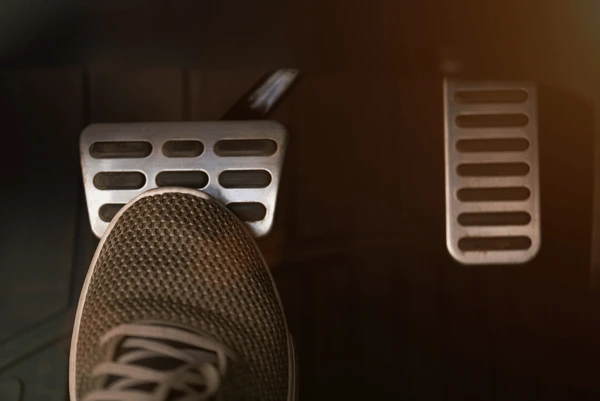
When you press your brake pedal, it should push back. There should be a firm, reassuring resistance under your foot that tells you the system is doing its job. So when that pedal suddenly feels soft, spongy, or like it is sinking closer to the floor than usual, that is not something you ignore.
A soft brake pedal goes by a few different names. Some mechanics call it a spongy pedal. Others call it an elastic pedal. Whatever you call it, the feeling is the same: something is wrong with your braking system, and your car is telling you about it in the most direct way it knows how.
Here is the thing about brakes: they are not optional. You can drive with a check engine light on for weeks and probably be fine. You can deal with a slightly rough idle or a window that does not roll all the way down. But soft brakes? That is a safety issue that demands immediate attention. People have gotten into serious accidents because they assumed the pedal would eventually feel normal again. It does not just fix itself.
In this article, we are going to walk through every major cause of a soft or spongy brake pedal, explain what is actually happening inside your braking system, and tell you exactly what to do about each situation. Whether you are a first-time car owner trying to understand what is going on, or someone who just wants to have an informed conversation with your mechanic, this breakdown will help you get there.
How Your Braking System Actually Works
Before we get into what goes wrong, it helps to understand what is supposed to go right.
Your car uses a hydraulic braking system. When you press the brake pedal, you are not directly squeezing the brake pads yourself. What you are actually doing is pushing a piston inside the brake master cylinder, which then sends pressurized brake fluid through a network of metal and rubber lines to each wheel.
At each wheel, that pressurized fluid either squeezes brake calipers against rotors (on disc brakes) or pushes brake shoes against drums (on drum brakes). That friction is what slows the car down and brings it to a stop.
The key word here is hydraulic. The entire system depends on an incompressible liquid to transfer force from your foot to the wheels. Brake fluid does not compress. It transmits pressure almost instantly from one end of the system to the other.
But air? Air compresses. Gas compresses. And that is where the problems begin.
Anytime something disrupts the integrity of that sealed, pressurized fluid system, whether it is air getting in, fluid leaking out, or a component starting to fail, the result is almost always the same: a brake pedal that feels soft, spongy, or unreliable.
Now let us get into the specific causes.
Air Trapped in the Brake Lines Is the Most Common Culprit
If your brake pedal suddenly feels like you are pressing a sponge instead of a firm lever, there is a very good chance air has gotten into your brake lines.
This is, without question, the most common cause of a spongy brake pedal. And understanding why requires understanding that simple physics principle we touched on above.
Brake fluid is a liquid. Liquids are incompressible. When you push fluid, it moves immediately and transfers that force directly to the brakes. But when air finds its way into the brake lines, it creates a pocket of compressible gas inside the system. Now, when you press the pedal, some of that foot pressure goes toward compressing the air bubble instead of transferring force to the brakes. The result is that mushy, sinking feeling under your foot.
How does air get into brake lines in the first place?
- During a brake repair or fluid flush, if the system is not bled properly afterward
- When brake fluid drops so low that air gets pulled into the lines
- Through a leaking caliper, brake line, or master cylinder that allows fluid out and air in
- Over time in an aging system with deteriorated seals
The fix for air in the lines is brake bleeding. This is the process of systematically pushing fluid through the system until all the air pockets are forced out through the bleeder screws at each wheel. You can do this with a partner using the two-person pedal method, or with a vacuum bleeder tool.
Most mechanics recommend bleeding brakes starting from the wheel farthest from the master cylinder and working your way closer. Typically that means starting at the rear passenger side, then rear driver side, then front passenger side, and finishing at the front driver side.
If you have never bled brakes before, here is a quick look at the general process so you understand what is involved:
- Locate the bleeder screw on each brake caliper or wheel cylinder
- Attach a clear plastic hose to the bleeder screw and run the other end into a container of clean brake fluid
- Have a helper press the brake pedal slowly and hold it down
- Crack open the bleeder screw until fluid (and any air bubbles) starts flowing out
- Close the bleeder screw before your helper releases the pedal
- Repeat until no more air bubbles appear in the fluid flowing through the hose
- Move to the next wheel and repeat the process
- Check and top off the master cylinder reservoir between each wheel
One important note: always keep the master cylinder reservoir topped up during this process. If it runs dry while you are bleeding, you will pull more air into the system and have to start over.
Brake Fluid Leaks: When the System Loses What It Needs Most
Your braking system is sealed for a reason. The fluid inside needs to stay inside. When it does not, hydraulic pressure drops, and your pedal tells you about it almost immediately.
There are several places a brake fluid leak can originate:
Leaking Brake Lines
The brake lines in your car are thin metal tubes (usually steel) that run from the master cylinder out to each wheel. They are tucked underneath the car, which means they are constantly exposed to road spray, salt, moisture, and grime.
Over years of exposure, those metal lines can develop rust and corrosion. Eventually, corrosion can eat through the line wall and create a pinhole or crack. Brake fluid then seeps out at that point, the system loses pressure, and your pedal goes soft.
You might notice a small puddle of fluid under the car, or you might just notice the brake pedal slowly getting worse over time. Either way, a leaking brake line needs to be replaced, not patched. This is not a zip-tie-and-tape situation.
Replacing brake lines is a job most experienced home mechanics can handle with the right tools, but it does require getting under the vehicle, routing new lines correctly, and properly flaring the ends for a leak-free connection. If that sounds like more than you want to take on, a shop can handle it.
Leaking Brake Calipers
Brake calipers contain pistons and seals that keep brake fluid contained while also allowing the pistons to move and apply pressure to the brake pads. Over time, those seals age, crack, and deteriorate. When they do, fluid leaks past the seals, often pooling inside the wheel or dripping down the back of the rotor.
A leaking caliper is a double problem. Not only does it reduce hydraulic pressure in the system, but brake fluid contaminating your brake pads will ruin them quickly. Brake pads soaked in fluid lose their friction properties entirely.
Calipers can sometimes be rebuilt with a caliper rebuild kit that includes new seals and boots. But honestly, for most people, replacing the caliper outright is easier, often similar in cost, and gives you a clean start with a fresh unit.
Leaking Wheel Cylinders (Drum Brakes)
If your vehicle has drum brakes at the rear (many older vehicles and some newer economy cars still do), you have wheel cylinders instead of calipers. These small hydraulic cylinders push the brake shoes outward against the drum.
Wheel cylinders are relatively simple components, but their internal seals wear out over time, leading to fluid leaks. You will often notice brake fluid weeping out from behind the drum or see residue around the wheel cylinder when you pull the drum off.
Like calipers, wheel cylinders can be rebuilt or replaced. Given how inexpensive replacement wheel cylinders typically are, most mechanics just replace them rather than bother with a rebuild.
Low Brake Fluid: A Simple Problem With Serious Consequences
Sometimes the cause is as straightforward as a low fluid level in the master cylinder reservoir.
The reservoir sits on top of the master cylinder, usually visible near the firewall when you open the hood. It has a minimum and maximum fill line marked on the side. If the fluid drops below the minimum line, the system does not have enough fluid to maintain proper hydraulic pressure.
Checking your brake fluid level should be part of your regular under-hood inspection routine. It takes about ten seconds. Pop the hood, look at the reservoir, and confirm the fluid is between the min and max marks.
Here is something important to understand though: brake fluid does not get consumed the way engine oil does. In a healthy, fully sealed system, the fluid level should stay relatively stable. The main reason fluid levels drop in a normal, functioning system is because the brake pads are wearing down.
As brake pads wear thinner, the calipers have to extend further to maintain contact with the rotors. That means the caliper pistons travel further out, which pulls more fluid from the reservoir into the caliper. This is actually normal and expected. It is one of the reasons why you should never overfill the reservoir when your pads are almost worn out, because when you put on new, thick pads, the pistons get pushed back in and that fluid has to go back somewhere.
But if your fluid level is dropping faster than normal, or dropping significantly without an obvious explanation related to pad wear, that is a strong sign you have a leak somewhere in the system.
To check and top off brake fluid:
- Open the hood and locate the brake master cylinder reservoir
- Look at the fluid level through the translucent reservoir wall, or remove the cap if the reservoir is not translucent
- The fluid should be between the MIN and MAX lines
- If it is low, add the correct type of brake fluid for your vehicle (check your owner’s manual for DOT 3, DOT 4, or DOT 5.1 specification)
- Do not mix different types of brake fluid unless they are compatible
- Replace the cap securely when finished
Adding fluid gives you temporary relief, but remember: if the level was low because of a leak, the new fluid will leak out too. Get the system inspected.
Worn or Degraded Brake Fluid: The Problem Nobody Talks About Enough
Here is something that surprises a lot of car owners: brake fluid goes bad.
Most people assume that since brake fluid is just sitting in a closed system, it stays fresh indefinitely. But that is not how it works. Brake fluid is hygroscopic, which is just a technical way of saying it actively absorbs moisture from the surrounding environment over time, even through the rubber hoses and seals in the system.
As the fluid absorbs water, two things happen. First, the fluid’s boiling point drops significantly. Fresh DOT 3 brake fluid has a dry boiling point around 401 degrees Fahrenheit. Once it absorbs just 3.7% water by volume, that boiling point drops to around 284 degrees. That might sound like it is still hot enough, but during hard braking or extended downhill driving, brake fluid temperatures can easily exceed those levels.
When brake fluid boils, it vaporizes. And vapor, unlike liquid, compresses. Now you have the same problem as air in the lines: your foot pressure compresses the vapor instead of transferring force to the brakes.
Second, moisture-contaminated brake fluid accelerates corrosion inside the brake system. Calipers, wheel cylinders, master cylinders, and steel brake lines are all vulnerable. Degraded fluid acts almost like a corrosion agent against the very components it is supposed to protect.
Most manufacturers recommend flushing and replacing brake fluid every two years, regardless of mileage. Some recommend every 30,000 miles. Check your owner’s manual for the specific interval for your vehicle.
If your brake fluid looks dark brown or black instead of clear or light yellow, that is a definite sign it is overdue for a change. Fresh brake fluid is nearly colorless. Dark fluid has been in there too long.
A complete brake fluid flush involves draining all the old fluid from the system and refilling it with fresh fluid, then bleeding the system to make sure there are no air pockets. It is not an expensive service, and it can make a noticeable difference in pedal feel and braking performance.
A Failing Brake Master Cylinder
The master cylinder is the heart of your braking system. Every bit of hydraulic force that reaches your wheels originates here.
Inside the master cylinder are pistons with rubber seals that create the pressure in the system. When those seals start to wear out or fail, the pistons can no longer build and hold pressure effectively. Instead of pushing fluid forward with each press of the pedal, the pistons allow fluid to bypass the seals internally.
The result is a pedal that sinks slowly to the floor when you hold pressure on it. You might notice the car still stops, but the pedal continues to travel downward even while you are holding your foot still. That is a textbook symptom of an internally leaking master cylinder.
External leaks are also possible. Corrosion and age can cause the master cylinder body itself to crack or deteriorate, allowing fluid to seep out around the reservoir connection or at the rear of the cylinder where it connects to the brake booster.
Signs of a failing master cylinder include:
- Brake pedal that slowly sinks toward the floor under steady pressure
- Brake fluid leaking from around the master cylinder area under the hood
- Uneven braking where one side seems to pull more than the other
- Warning light on the dashboard related to the braking system
Replacing a master cylinder is a moderately involved job. The cylinder itself is usually not expensive, but proper installation requires bench bleeding the new unit before installation, careful fitting, and thorough system bleeding afterward. If this component is at fault, get it replaced promptly. Do not drive the vehicle normally with a failing master cylinder.
Corroded or Stuck Brake Calipers: When Things Seize Up
We mentioned leaking calipers earlier, but calipers can cause pedal problems in a different way too. Sometimes instead of leaking, they seize.
A seized caliper is one where the piston (or the sliding pins that allow the caliper to move) gets stuck due to corrosion, lack of lubrication, or debris. When a caliper seizes in the applied position, it drags continuously against the rotor, causing excessive heat, accelerated pad wear on that corner, and a pulling sensation while braking or even while just driving.
When a caliper seizes in the released position, that wheel loses braking force almost entirely. The other wheels pick up the slack, but the overall braking performance drops and the pedal may feel different than normal.
Calipers that are stuck due to corroded slide pins are sometimes fixable with cleaning and new lubrication. But calipers with seized pistons usually need to be replaced. If one caliper is this far gone, it is worth checking the one on the opposite side as well, since they typically age at similar rates.
Rear Brake Shoes That Need Adjustment
If your vehicle has drum brakes in the rear, there is another potential cause of a soft brake pedal that is specific to those systems: out-of-adjustment brake shoes.
Drum brake shoes expand outward to press against the inside of the drum. Unlike disc brakes, which are self-adjusting in a sense (the caliper pistons simply extend further as pads wear), drum brakes have an adjusting mechanism that maintains proper shoe-to-drum clearance as the shoes wear down.
If this adjuster is not doing its job, whether because it is seized, corroded, or simply never activated, the shoes will sit further from the drum surface than they should. When you press the pedal, more travel is needed just to get the shoes in contact with the drum. That extra travel translates to a pedal that feels like it is going down too far before the brakes engage.
Here is something practical that many people do not know: using your parking brake regularly actually helps keep rear drum brakes adjusted. Most drum brake adjusters are triggered by the parking brake mechanism. When you engage the parking brake, it pulls the shoes outward, and the adjuster clicks forward to take up any slack that has developed. If you never use your parking brake, the shoes slowly creep further from the drum over time and your pedal gets longer and softer.
This is one reason why, even if you park on a flat surface, it is a good habit to set the parking brake. It is not just for safety. It is also doing a small maintenance task on your drum brakes every single time you use it.
If the shoes are significantly out of adjustment, a technician can manually back off the adjuster, set the proper clearance, and verify the automatic adjuster is working correctly.
Worn Brake Pads: The Most Visible Wear Item
Brake pads are the component most people are at least somewhat aware of. They are the friction material that clamps against the rotors to create stopping power.
As pads wear down, two things happen that relate to pedal feel. First, as mentioned earlier, the caliper pistons have to travel further out to maintain contact with the thinner pads, which subtly affects the feel of the pedal over time. Second, severely worn pads start to reduce braking effectiveness, which can feel similar to a soft pedal in the sense that the car takes longer to slow down even though you are pressing just as hard.
Signs your brake pads are worn and need replacement:
- A high-pitched squealing sound when braking (this is the wear indicator doing its job)
- A grinding or metal-on-metal noise (this means the pads are completely gone and the metal backing plate is contacting the rotor)
- Increased stopping distances
- Vibration or pulsing through the brake pedal when stopping
- Visual inspection shows less than 3mm of pad material remaining
Checking pad thickness is easy if you know where to look. On most vehicles with disc brakes, you can see the pad through the spokes of the wheel without removing anything. Look at the caliper: you will see the pad material sandwiched between the caliper and the rotor. If it looks very thin, probably the thickness of a few credit cards stacked together, it is time for replacement.
Do not wait for the grinding to start. By the time you hear metal on metal, you have likely damaged the rotor and turned a pad replacement job into a pad-and-rotor replacement job, which costs significantly more.
Overheated Brake Fluid: What Happens When You Push Too Hard
There is a scenario worth discussing separately from everyday brake fluid degradation, and that is acute overheating from aggressive use.
If you have been driving down a long steep mountain road with your foot on the brake the entire way, towing a heavy trailer, or doing repeated hard stops from high speed, you may have superheated the brake fluid. Even relatively fresh fluid can reach its boiling point under these conditions.
When the fluid boils, gas bubbles form inside the calipers and lines. Suddenly your nice, incompressible hydraulic system has compressible gas in it. The pedal goes soft or goes to the floor. This is called brake fade, and more specifically fluid fade or vapor lock.
The solution in the moment is to stop the vehicle safely and let the brakes cool completely before driving again. Do not try to keep braking your way down a hill with vapor-locked brakes. Pull over. Wait. Let everything cool.
After the system cools, the gas often re-dissolves back into the fluid and braking returns to normal. But if this happened because your fluid was old and moisture-contaminated, it is going to happen again. The real fix is a complete brake fluid flush with fresh, dry fluid.
For people who regularly tow or drive in mountainous terrain, using a higher-spec brake fluid with a higher boiling point (like DOT 4 or DOT 5.1 depending on what your system is designed for) is worth considering.
What to Do Right Now If Your Brake Pedal Is Soft
Okay, so you are sitting in a parking lot, or maybe you just noticed on the way home that your pedal does not feel right. Here is your immediate action plan.
Step 1: Do not panic, but do take it seriously.
A soft pedal does not always mean total brake failure is seconds away. Often it means something in the system needs attention. Stay calm, drive conservatively, leave extra stopping distance, and get the car looked at as soon as possible.
Step 2: Try pumping the pedal.
If the pedal is soft, press it firmly several times in quick succession. In many cases, this temporarily builds enough pressure in the system to restore some braking ability. This is because repeated pedal strokes push fluid more forcefully through the system, which can compress any air pockets to a smaller volume and restore partial pressure. This is a temporary measure only, not a fix.
Step 3: Check for visible leaks.
Look under the car. Look at the area behind each wheel. Look at the master cylinder under the hood. Any sign of fluid pooling, dripping, or wet spots on components is a strong clue about where the problem originates.
Step 4: Check the master cylinder reservoir level.
If it is low, add the correct type of fluid to bring it up to the maximum line. This alone may temporarily restore some pedal feel, but again, if it was low due to a leak, the new fluid will also eventually leak out.
Step 5: If the pedal feels truly unsafe, do not drive the vehicle.
If pumping the pedal does not restore a firm stop, or if the pedal goes to the floor, that vehicle should not be on the road. Have it towed to a shop. The cost of a tow is dramatically less than the cost of an accident.
How to Avoid a Soft Brake Pedal in the First Place
Preventive maintenance is genuinely the best tool you have here. Most of these causes are predictable and preventable.
Build these habits:
- Check your brake fluid level every time you check your engine oil. It takes five seconds.
- Flush and replace brake fluid every two years or as recommended by your vehicle manufacturer.
- Inspect brake pads and rotors at every tire rotation, which should be every 5,000 to 7,000 miles.
- Use your parking brake regularly if you have rear drum brakes.
- Listen to your car. Squealing, grinding, or a pedal that feels different than normal are all messages worth paying attention to.
- Inspect brake lines on older vehicles annually, especially if you live somewhere roads are salted in winter. Rust on brake lines is a serious and sometimes sudden failure risk.
Quick Reference: Soft Brake Pedal Causes and Fixes
| Cause | Symptoms | Fix |
|---|---|---|
| Air in brake lines | Spongy pedal, pedal improves with pumping | Bleed the brake system |
| Brake fluid leak (lines) | Fluid under car, dropping reservoir level | Replace damaged brake lines |
| Leaking brake caliper | Fluid behind wheel, uneven braking | Rebuild or replace caliper |
| Leaking wheel cylinder | Fluid inside drum, spongy pedal | Replace wheel cylinder |
| Low brake fluid | Low reservoir level, soft pedal | Top off fluid, find and fix leak source |
| Worn/contaminated fluid | Dark fluid, pedal fade during hard use | Complete brake fluid flush |
| Failing master cylinder | Pedal sinks to floor under steady pressure | Replace master cylinder |
| Corroded or seized caliper | Pulling, dragging, uneven wear | Clean/lubricate or replace caliper |
| Out-of-adjustment drum brakes | Long pedal travel, rear brakes feel weak | Adjust brake shoes, repair adjuster |
| Worn brake pads | Squealing or grinding, reduced stopping | Replace brake pads |
| Overheated fluid (vapor lock) | Sudden soft pedal during hard use | Stop and cool, then flush fluid |
Brake System Service Intervals Worth Knowing
| Component | Typical Service Interval |
|---|---|
| Brake pads (front) | 30,000 to 70,000 miles depending on driving style |
| Brake pads (rear) | 40,000 to 80,000 miles |
| Brake rotors | Inspect at every pad change, replace when worn below minimum thickness |
| Brake fluid | Every 2 years or 30,000 miles |
| Brake hoses | Inspect annually, replace if cracked or swollen |
| Brake lines | Inspect annually on older vehicles, replace if corroded |
| Calipers | Inspect at every pad change, replace if leaking or seized |
| Master cylinder | Replace only if failing (symptoms above) |
Your braking system is the single most important safety system on your vehicle. Not the airbags, not the stability control, not the backup camera. If everything else fails, you can often still manage. But if your brakes fail, you are out of options fast.
A soft brake pedal is your car trying to tell you something is wrong before something worse happens. Whether it is air in the lines, a slow fluid leak, worn pads, or a deteriorating master cylinder, each of these problems has a solution. None of them require you to panic. All of them require you to act.
The next time you get into your car, before you even start the engine, press the brake pedal once with moderate force and notice how it feels. Is it firm and resistant? Good. Does it feel softer than usual, or does it sink lower than it should? Now you know what to look for, what is likely causing it, and what needs to happen next.
Do not be the person who says, “Yeah, the brakes have felt weird for a couple of weeks.” Be the person who got it checked out immediately, spent a couple hundred dollars on a caliper and a brake bleed, and went home knowing the car stops when they need it to.