
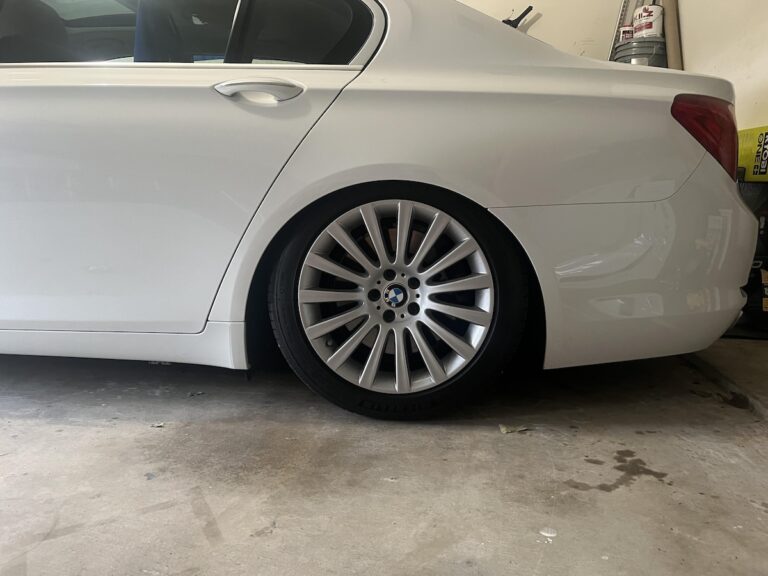
If your BMW has thrown up a “Level Control Malfunction” warning, you are probably wondering whether you can keep driving or whether something underneath the car is about to give up entirely. It is a fair concern. The level control system is directly tied to your suspension, and a failing suspension is not something to take lightly, especially at highway speeds or when carrying a heavy load.
The good news is that this warning does not always mean catastrophic failure. But it does mean something in your suspension system needs attention, and knowing what that something is makes all the difference between a straightforward repair and an unnecessarily expensive guessing game at the dealership.
This guide walks you through everything: what the level control system actually does, why it fails, how to read the symptoms, and exactly how to fix it.
What the BMW Level Control System Does and Why It Matters
The level control system in a BMW is designed to do one specific thing: keep the vehicle body at a consistent, stable height regardless of how much weight the car is carrying. Load up the trunk with luggage, add three passengers to the rear seats, or tow something heavy, and without a level control system the rear end of the car would sag noticeably under that weight. The headlights would angle upward, handling would be compromised, and the suspension geometry would be thrown off.
BMW addresses this with an air suspension system on many models, particularly the larger and more premium variants. Air suspension uses pressurized air inside flexible spring chambers rather than traditional steel coil springs. By adjusting the amount of air pressure in those chambers, the system raises or lowers each corner of the vehicle to maintain the correct ride height at all times.
Height sensors at the rear of the vehicle continuously measure ride height and report that data to the Electronic Height Control module, or EHC. The EHC processes that data and commands the air compressor to add or release air from the springs as needed. The result, when everything is working, is a smooth, consistent ride height and a level vehicle stance regardless of load.
When any part of this chain breaks down, the EHC detects the fault and triggers the “Level Control Malfunction” warning on your dashboard. The message is the system being honest with you: something in this sequence is not working the way it should.
Which BMW Models Are Most Affected
Not every BMW has air suspension. The level control malfunction warning is specific to models equipped with self-leveling suspension or air spring systems. These include:
- BMW 5 Series (E61 wagon and certain E60 variants)
- BMW 7 Series (E65, E66, F01, F02, G11, G12)
- BMW X5 (E53, E70, F15, G05) and X6 (E71, F16)
- BMW 6 Series Gran Turismo and certain 5 Series Gran Turismo models
Higher-mileage examples of these models, particularly vehicles that have crossed the 80,000 to 100,000 mile mark, are where this warning is most commonly reported. Air suspension components have a finite lifespan, and age combined with mileage is when they typically begin to show their limitations.
How to Tell If Your Air Suspension Is Failing Before the Warning Appears
The level control malfunction warning is not always the first sign of trouble. In many cases, the air suspension starts giving early warnings that owners either miss or attribute to something else. Knowing what to look for can help you catch the problem before it becomes a roadside emergency.
- The rear of the car sits noticeably lower than the front. This is often the first visible symptom of a leaking air spring. After the car has been parked overnight, the rear end has sagged compared to its normal position. As the engine starts and the compressor runs, the rear may come back up to the correct height temporarily.
- A hissing sound from the rear suspension area. A leaking air spring produces a distinct hissing or escaping air sound, particularly when weight is applied to the vehicle or when the compressor tries to re-inflate the spring. This sound is easy to confuse with other things but is a clear indicator of an air leak.
- The compressor runs longer than usual or runs constantly. If the compressor has to run for an unusually long time to maintain ride height, or if you can hear it cycling on and off frequently, it is working overtime to compensate for an air leak. Left unaddressed, this overwork will eventually kill the compressor.
- The compressor fails to engage at all. If the compressor is completely silent when the system should be adjusting, the compressor itself may have failed.
- Uneven ride height between left and right sides. If one corner of the car sits lower than the others, that specific corner’s air spring is likely the primary problem.
- A rougher, bouncier ride quality than usual. Air suspension is designed to provide a notably smooth ride. When the air pressure in the springs drops due to a leak or compressor failure, the ride quality degrades noticeably.
- The Level Control Malfunction warning message appears on the iDrive display. At this point, the EHC module has formally logged a fault and is alerting you through the instrument cluster or infotainment system.
Every Cause of the BMW Level Control Malfunction Warning
1. Faulty Rear Ride Height Level Sensor
The height level sensors are the system’s eyes. These sensors, typically mounted on the rear suspension arms or strut assemblies, measure the distance between the chassis and the road surface and relay that data to the EHC module in real time. When the sensor data does not match expected parameters, the module logs a fault and triggers the warning.
A persistent level control warning that stays on constantly, regardless of driving conditions or how long the car has been running, is a strong indicator that a height sensor is the culprit rather than an air leak. A leaking spring typically causes the warning to appear initially and then clear temporarily once the compressor has re-inflated the spring. A bad sensor produces a constant warning because the data it sends is wrong all the time.
Sensor faults are commonly logged in the EHC module as code 005F8E or similar EHC Ride Height Sensor fault codes. A BMW-compatible diagnostic scanner will pull these codes and identify exactly which sensor has failed and on which corner of the vehicle.
Height sensors can fail from physical damage, corrosion in the sensor connector, or simple wear after many years of operation. The sensor itself is relatively inexpensive, typically $50 to $150 for the part, but access can require lifting the vehicle and removing suspension components, which adds labor cost.
2. Leaking Air Spring
The air spring is the pressurized chamber that physically supports the vehicle’s weight at each corner of the suspension. Over time, the rubber bladder that forms the air spring can crack, harden, or develop small tears that allow air to escape slowly. Once the air pressure drops far enough, the suspension loses its ability to maintain correct ride height, the height sensor detects the drop, and the EHC module flags a fault.
Here is the giveaway symptom that distinguishes a leaking spring from a bad sensor: the warning appears when you first start the car or after it has been sitting overnight, but then clears after the engine has been running for a few minutes. What is happening is that the compressor re-inflates the leaking spring, temporarily restoring correct ride height and satisfying the sensor. As the slow leak continues during the day, the spring deflates again, and the warning returns the next time the car sits for a while.
A soap and water spray applied to the air spring while the system is pressurized will reveal the leak location through bubbling. Air spring replacement on a BMW is a moderately involved job. The springs are located at the rear axle on most affected models, and accessing them properly requires lifting the vehicle and supporting the suspension. Parts range from $200 to $600 per spring depending on the model, and labor costs can add another $200 to $400 depending on the shop.
3. Defective Air Suspension Compressor
The compressor is the pump that generates the pressurized air the springs need to operate. Without a functioning compressor, the air springs cannot be inflated or adjusted, and the level control system loses the ability to regulate ride height entirely.
Compressor failures often develop gradually rather than all at once. An aging compressor may take longer to bring the springs to the correct pressure, resulting in the compressor running longer than normal. Eventually it may fail to produce adequate pressure at all, or stop working completely. Common causes of compressor failure include:
- Worn internal pistons and valves from high mileage use
- Overheating from running too frequently to compensate for a leaking air spring
- Moisture contamination inside the compressor due to a failed air dryer
- Electrical failure in the compressor motor or relay
This is why addressing a leaking air spring promptly is important. A slow leak forces the compressor to run constantly, and a compressor that runs constantly overheats and dies prematurely. A single air spring repair becomes a much more expensive air spring plus compressor replacement if the leak is ignored long enough.
BMW air suspension compressors are not cheap components. Replacement units range from $300 to $800 for the part, plus labor, making this one of the more costly repairs associated with the level control malfunction warning.
4. Faulty FRM Module
The Footwell Module, or FRM, is one of BMW’s central electrical control units. It manages a wide range of functions including exterior lighting, interior lighting, and various electrical signals throughout the vehicle. While the FRM is not directly responsible for controlling the air suspension, it communicates with other modules including the EHC. A fault within the FRM can cause it to send incorrect data to other systems, which can indirectly trigger the level control malfunction warning.
FRM failures in BMW vehicles are well-documented and typically involve moisture damage to the module, which is located in the driver’s footwell area and can be exposed to water from a leaking door seal or windshield. Symptoms of FRM failure extend beyond just the level control warning and often include headlight malfunctions, turn signal issues, and multiple simultaneous warning messages.
If you are seeing the level control warning alongside other seemingly unrelated electrical warnings, the FRM is worth investigating as a potential common cause. Module repair or replacement and reprogramming typically runs between $300 and $800 at an independent BMW specialist.
5. Software Glitch or ECU Communication Error
BMW vehicles run sophisticated software across multiple interconnected control modules, and occasionally these modules experience communication errors or software glitches that trigger false fault codes. A software-triggered level control warning will typically appear without any corresponding physical symptoms like sagging suspension or compressor noise.
In these cases, a diagnostic scan will either show no stored fault codes at all, or will show codes that clear easily and do not return. A software update to the EHC or ECU module, or a system calibration, is the fix. This is something a BMW dealership or a specialist with BMW ISTA diagnostic software can perform.
Step-by-Step: How to Diagnose and Fix the BMW Level Control Malfunction
Work through this process in sequence. Starting with diagnostics before committing to parts replacement prevents expensive mistakes.
Step 1: Perform a diagnostic scan with a BMW-compatible scanner
A generic OBD-II scanner will not read the EHC module codes. You need a scanner with BMW-specific module access. Options include the Carly app with a compatible adapter, the Foxwell NT510 Elite with the BMW add-on, or a full ISTA setup. Connect through the OBD-II port under the dashboard, navigate to the Electronic Height Control module, and scan for fault codes. Record every code before clearing anything.
Common codes to look for include:
- 005F8E: EHC Ride Height Level Sensor, Rear
- 005F90: EHC Level sensor, plausibility
- 005F92: EHC Air supply unit
- 005F96: EHC Air spring, leakage
The codes will point you directly toward which component the module has flagged as faulty. This is your roadmap for the repair.
Step 2: Inspect the EHC control unit connector for corrosion or water damage
Before replacing components, physically inspect the EHC module’s electrical connector. Moisture and corrosion inside the connector can create false fault signals that look like sensor or compressor failures in the diagnostic data. If the connector pins show oxidation or corrosion, clean them with electrical contact cleaner, apply dielectric grease, and retest before assuming hardware failure.
Step 3: Inspect the rear ride height level sensor and its wiring
The rear height sensors are mounted on the rear suspension assembly, accessible from underneath the vehicle. Inspect the sensor body for physical damage and check the wiring harness running to and from the sensor for chafing, breakage, or connector corrosion. If the sensor or its wiring is visibly damaged, replace the affected component. If the wiring looks intact but the fault code persists, replace the sensor itself.
Step 4: Inspect the air springs for leaks
With the vehicle parked and the suspension pressurized, spray a soap and water solution across the air spring surface and around the top and bottom mounting connections. Active bubbling indicates the leak location. Pay special attention to the area where the rubber bladder meets the metal end caps, as this junction is where most BMW air spring leaks originate.
A leaking air spring must be replaced, not repaired. Patch repairs on an air suspension spring are not reliable solutions given the pressure cycles the spring experiences during normal operation.
Step 5: Inspect and test the air suspension compressor
Listen to the compressor when the vehicle starts after sitting overnight. A healthy compressor runs briefly and quietly to restore pressure, then stops. A compressor that struggles, makes grinding or laboring sounds, or runs continuously is failing. Check the compressor for physical damage and inspect the relay and fuse that power it before condemning the compressor itself. A bad relay can cause symptoms identical to a failed compressor.
If the relay and fuse are fine and the compressor still fails to produce adequate pressure, replacement is necessary.
Step 6: Update software and perform calibration
After any hardware replacement, and as a standalone fix when no hardware fault is found, perform a software update for the EHC module and recalibrate the suspension system. Calibration involves parking the vehicle on a flat level surface and running the calibration routine through the diagnostic software. This resets the module’s reference points for correct ride height and clears any residual fault data.
How to Reset the BMW Self-Leveling Suspension System
After completing any repairs, the suspension system needs to be reset and calibrated to establish correct baseline measurements. Here is the general procedure that applies to most BMW models with self-leveling suspension:
- Park the vehicle on a completely flat, level surface with no occupants and no cargo. Any unevenness in the surface will affect the calibration accuracy.
- Connect a BMW-compatible diagnostic scanner to the OBD-II port under the dashboard.
- Navigate through the diagnostic software to the Electronic Height Control module.
- Select the Chassis or Suspension menu, then locate the Ride Height Calibration or Self-Leveling Suspension Reset option.
- Follow the on-screen prompts to initiate the calibration routine. The system will measure current ride height and establish new baseline reference values.
- Wait for the procedure to complete fully before disconnecting the scanner or starting the engine.
- Start the engine and verify that the vehicle is sitting at the correct height on all corners and that the level control warning has cleared.
If the warning clears and does not return after a test drive, the repair and calibration were successful. If it returns, the diagnostic process needs to continue to identify any remaining fault.
Repair Cost Summary
| Component | Estimated Part Cost | Estimated Total with Labor |
|---|---|---|
| Rear height level sensor | $50 to $150 | $150 to $400 |
| Air spring (per unit) | $200 to $600 | $400 to $900 |
| Air suspension compressor | $300 to $800 | $500 to $1,200 |
| FRM module repair or replacement | $150 to $500 | $300 to $800 |
| EHC software update and calibration | N/A | $100 to $300 |
| Wiring repair (minor) | $20 to $100 | $100 to $300 |
Is It Safe to Drive with a Level Control Malfunction Warning?
This depends on what is causing the warning. If the suspension is maintaining correct ride height and the warning appears to be a sensor or software issue, short distance driving at moderate speeds is generally acceptable while you arrange a diagnosis.
But if the rear of the car is visibly sagging, riding lower than normal, or you can hear air escaping from the suspension, driving should be kept to a minimum. A severely deflated air spring means the vehicle is riding on its bump stops, which are hard rubber blocks designed only for emergency contact, not continuous use. Driving on bump stops damages them quickly, transfers excessive stress to the suspension arms and bushings, and significantly compromises handling and braking stability.
High-speed motorway driving with a compromised air suspension is genuinely risky. Keep trips short and speeds moderate until the system is repaired.
Dealer vs. Independent BMW Specialist: Which Should You Choose?
For software updates, module programming, and warranty-related repairs, a BMW authorized dealer has access to the latest ISTA software and can perform official programming procedures. That access has genuine value for complex electronic repairs.
For hardware replacements like air springs, compressors, and height sensors on an out-of-warranty vehicle, an independent BMW specialist with proper diagnostic tools and experience on air suspension systems will typically perform the same quality work at meaningfully lower labor rates. BMW air suspension work is common enough that most experienced independent shops deal with it regularly.
The key is ensuring whoever works on the car has BMW-specific diagnostic capability. A generic shop without access to EHC module data is flying blind on this repair and is far more likely to replace the wrong component or miss the root cause entirely. A misdiagnosed air suspension repair is an expensive mistake that is easily avoided by choosing the right shop from the start.