
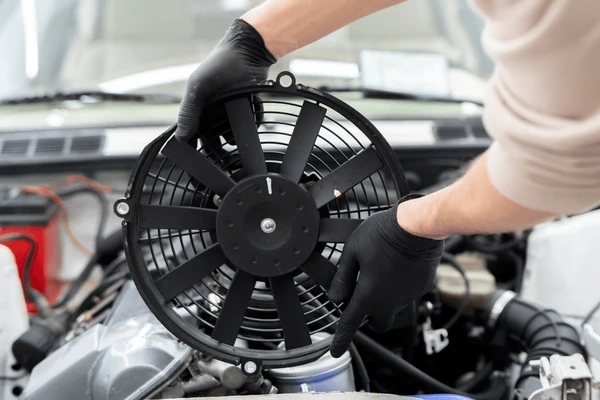
You pull into your driveway, turn the key, and the engine goes quiet. But then the fan keeps running. And running. Maybe it gets louder before it finally stops. What is going on? Is something wrong with your car?
Here is the short answer: sometimes it is completely normal, and sometimes it is a sign that something needs your attention. Knowing the difference can save you from an unnecessary repair bill or, on the flip side, from ignoring a problem until it turns into a much bigger one.
Let us walk through everything you need to know about why your car’s fan makes noise after the engine is turned off, what causes it, and what you should actually do about it.
Why Your Car Fan Runs After You Turn the Engine Off
First, a little context. Your engine generates an enormous amount of heat while it is running. The cooling system, which includes the radiator, coolant, water pump, and cooling fan, works constantly to keep that heat under control. When you shut the engine off, the heat does not vanish instantly. It lingers, especially in the areas immediately around the engine.
The cooling fan is designed to keep working for a short time after shutdown to help pull that residual heat away from the engine compartment. Think of it like an oven that stays warm long after you turn it off. The fan is doing the job of opening a window to help it cool down faster.
This post-shutdown fan operation is completely intentional in many modern vehicles. Car manufacturers, especially European brands, build this behavior into their cooling system logic. So if your fan runs for one to three minutes after you park and then stops on its own, there is a very good chance that is exactly what the car is supposed to do.
But here is the thing: when the fan runs for a long time, makes an unusually loud noise, or keeps cycling on and off repeatedly after you park, that is when you need to start asking more questions.
The Most Common Reasons Your Car Fan Is Noisy After Shutdown
A Faulty Coolant Temperature Sensor
Your car’s engine control unit (ECU) relies on the coolant temperature sensor to know how hot the engine is at any given moment. That sensor feeds real-time data to the ECU, which then decides whether the cooling fan needs to run, for how long, and at what speed.
When that sensor starts malfunctioning, it can send wrong signals to the ECU. For example, it might report that the engine is running at a dangerously high temperature when it is actually perfectly fine. The ECU, trusting the faulty data, keeps the cooling fan running to manage a heat problem that does not exist. The result is a fan that keeps spinning long after it should have stopped.
This is actually a fairly common failure point, and it is one that a lot of car owners overlook because the symptom, a fan running after shutdown, seems minor on the surface. But a bad coolant temperature sensor can also affect how your engine runs while driving, so it is worth addressing.
Here is how to approach it:
- Visually inspect the sensor’s wiring and connector for damage, corrosion, or loose connections.
- Use a multimeter to test the sensor’s resistance. Compare the reading against the spec in your owner’s manual or a reliable repair database for your specific vehicle.
- If the reading is outside the acceptable range, replace the sensor. It is usually an inexpensive part and a straightforward swap.
Low Coolant Level
This one is simpler than it sounds. Your engine’s cooling system needs a full, properly mixed coolant supply to do its job efficiently. When the coolant level drops, the system loses cooling capacity. The engine runs hotter than it should, and when you switch it off, there is more residual heat trapped inside that needs to be dealt with. The fan stays on longer to compensate.
Low coolant can be caused by a slow leak somewhere in the system, a failing head gasket (which is a more serious problem), or simply evaporation over time if your coolant has not been topped up in a while. Check the coolant reservoir when the engine is cold. The level should sit between the minimum and maximum markers. If it is low, top it up with the correct coolant type for your vehicle.
But do not stop there. If the level was noticeably low, you need to find out why. Check under the car for puddles of coolant, inspect hose connections for seepage, and look at the underside of your oil filler cap. A milky or frothy residue on that cap is a warning sign of a head gasket issue, which needs immediate professional attention.
A Stuck Fan Relay
The fan relay is essentially an electrically controlled switch. When the ECU determines that the cooling fan needs to run, it sends a signal to the relay, the relay closes the circuit, and the fan turns on. When cooling is no longer needed, the relay opens the circuit and the fan stops.
Relays can fail in a stuck-closed position. When that happens, the circuit stays permanently closed and the fan runs continuously, regardless of what the ECU is telling it to do. Engine off, key out, fan still spinning. It will keep running until the battery dies or you physically remove the relay.
This is one of the more clear-cut causes of post-shutdown fan operation, and it is also one of the easier fixes. Here is what to do:
- Open the hood and locate the fuse box. The fan relay is typically inside it. Check your owner’s manual for the exact location.
- Pull the relay out and inspect it visually for signs of burning, melting, or corrosion on the contacts.
- Test it with a multimeter to check whether it is stuck in the closed position.
- Alternatively, swap it with an identical relay from the fuse box (check your manual for one with the same part number) and see if that resolves the issue.
- Replace the faulty relay. Fan relays are usually inexpensive, often under $20.
A Cracked Radiator or Coolant Leak
A damaged radiator or a leaking coolant hose creates the same basic problem as a low coolant level: reduced cooling capacity, higher engine temperatures, and a fan that works harder and longer to compensate.
The difference is that a cracked radiator or a significant hose leak is actively losing coolant while you drive. By the time you park, the system may already be depleted enough that the engine is retaining far more heat than it should. The fan keeps running because it actually needs to.
Signs of a coolant leak include:
- A sweet smell coming from the engine bay after driving
- Puddles of greenish, pinkish, or orange fluid under the car after parking
- The engine temperature gauge climbing higher than usual during a drive
- Visible wet staining around hose connections or along the radiator itself
If you spot any of these signs, do not keep driving and hope for the best. A cooling system leak that is ignored long enough will lead to engine overheating, and engine overheating can cause serious internal damage that costs thousands of dollars to repair.
Damaged or Faulty Electrical Wiring
The cooling fan is tied into your car’s electrical system through a network of wires, connectors, relays, and control modules. Any fault in that network can cause erratic fan behavior, including running when it should not, running louder than usual, or cycling on and off at random intervals after shutdown.
Wiring faults are particularly sneaky because they are not always obvious to the eye. A wire that looks fine from the outside might have internal damage from heat, vibration, or rodent activity. Yes, rodents chewing through engine wiring is more common than most people realize, especially if a car sits parked outdoors for extended periods.
Inspecting the wiring around the cooling fan, the temperature sensor, and the relay for any signs of fraying, melting, pinching, or bare copper is a good starting point. If wiring damage is found, it needs to be repaired or replaced. In complex cases involving the ECU or PCM (powertrain control module), professional diagnosis is the safer route.
A Failing Fan Motor
Sometimes the issue is not why the fan is running, it is how it sounds while it is running. A cooling fan that is working correctly tends to produce a steady, relatively smooth noise. A fan with a failing motor, damaged blades, or worn bearings will often make a grinding, rattling, or whining sound that stands out clearly against normal background noise.
If the fan noise after shutdown sounds rough, irregular, or significantly louder than usual, the motor or fan assembly itself might be on its way out. Fan motors do wear out over time, particularly in older vehicles or cars that have spent a lot of time in extreme heat. Replacement is usually straightforward, though the part cost varies depending on the vehicle.
How to Diagnose the Problem the Right Way
Before spending any money on parts, take a few minutes to observe what is actually happening. How long does the fan run after you turn the engine off? Does it run consistently every time, or only after longer drives or in hot weather? Is the noise louder than usual, or does the fan sound the same as always, just running longer?
These observations narrow down the possibilities significantly. Here is a simple framework to work through:
| What You’re Noticing | Most Likely Cause | First Step |
|---|---|---|
| Fan runs for 1-3 minutes then stops | Normal cooling system behavior | Check owner’s manual to confirm this is expected for your model |
| Fan runs for 10+ minutes after shutdown | Faulty temperature sensor, low coolant, or stuck relay | Check coolant level; inspect relay; scan for fault codes |
| Fan runs until battery drains | Stuck fan relay or wiring fault | Pull the fan relay from the fuse box immediately; inspect and replace |
| Fan sounds rough, grinding, or rattling | Worn fan motor or damaged blades | Visually inspect fan assembly; test fan motor |
| Fan runs and engine was overheating during drive | Coolant leak, cracked radiator, or head gasket issue | Stop driving; inspect coolant system; get professional diagnosis |
| Fan runs intermittently after shutdown | Electrical fault or ECU issue | Scan for fault codes; inspect wiring harness |
An OBD-II diagnostic scanner is a worthwhile investment for any car owner who wants to be more self-sufficient. Many auto parts stores offer free code scanning too. Fault codes stored in your car’s ECU can often point directly to the failing component, cutting out a lot of guesswork.
Car Brands Known for Post-Shutdown Fan Operation
Certain vehicles are particularly well known for running their cooling fans after the engine is switched off. If you drive one of these, knowing whether the behavior is normal for your specific model can save you a lot of unnecessary worry.
BMW
BMW owners frequently notice the radiator fan continuing to run after parking. This is a well-documented and intentional design feature across many BMW models. After an extended drive or in hot weather, the fan may run for several minutes to help cool the engine bay down to a safe temperature.
BMW’s cooling systems are engineered to protect the engine from heat soak, which is the phenomenon where engine temperature temporarily rises immediately after shutdown because coolant has stopped circulating. The post-shutdown fan operation is part of how BMW manages this.
That said, if the fan on your BMW is running for more than five to ten minutes after every shutdown, or if it sounds rough and loud rather than smooth and consistent, that warrants a closer look. A stuck relay or failing fan motor is still possible on a BMW, and the fact that some post-shutdown operation is normal does not mean all of it is.
Mercedes-Benz
Mercedes-Benz vehicles share a similar characteristic. The cooling fan on many Mercedes models is designed to run briefly after shutdown as a standard part of the thermal management system. This is especially noticeable on turbocharged engines, where the turbocharger itself generates significant heat that needs to be managed even after the engine stops.
Owners of older Mercedes models sometimes mistake this for a malfunction because they are not expecting it. In most cases, if the fan runs quietly and stops within a few minutes, the car is behaving exactly as it should. If the fan is excessively loud, stays on for an unusually long time, or you are also noticing overheating during drives, then it is worth having the cooling system inspected.
Audi
Audi vehicles, particularly models like the A3, A4, and Q5, are also known for post-shutdown fan operation. Audi’s engineering philosophy around engine cooling is similar to BMW and Mercedes-Benz in that the system is built to protect the engine from residual heat damage.
Some Audi owners have reported that the fan noise after shutdown is more noticeable in certain trim levels or engine configurations, particularly turbocharged variants. Again, a brief run of a few minutes is generally nothing to worry about. A prolonged or abnormally loud fan noise in an Audi should be investigated, particularly because Audi’s TPMS and engine management systems are interconnected, and faults in one area can sometimes cascade into others.
Mazda CX-5
The Mazda CX-5 is a great example of a mainstream family SUV that explicitly builds post-shutdown fan operation into its design. Mazda’s own owner’s manual mentions this feature and explains that the cooling fan may continue to run after the ignition is switched off as part of normal engine cooling. New CX-5 owners sometimes head to forums in alarm about this, only to discover it has been there all along and is completely intentional.
If you have a CX-5 and you are hearing the fan after parking, check your owner’s manual first. Chances are high that what you are hearing is by design. If the fan noise is accompanied by other symptoms like engine overheating during a drive, coolant warning lights, or a noticeable loss of performance, that changes the picture entirely.
What Normal Post-Shutdown Fan Behavior Sounds Like vs. What Is Concerning
This distinction matters a lot, and it is one that trips up a lot of car owners. Here is a practical breakdown:
| Behavior | Normal or Concerning? |
|---|---|
| Fan runs for 1-5 minutes after a long drive and stops on its own | Normal in most modern vehicles |
| Fan runs only in hot weather or after highway driving | Normal, heat-related post-cooling |
| Fan sound is smooth and consistent | Normal fan motor operation |
| Fan runs for 15-30+ minutes after every shutdown | Concerning, investigate temperature sensor and relay |
| Fan runs until battery drains | Very concerning, likely stuck relay |
| Fan makes grinding, rattling, or whining sounds | Concerning, inspect fan motor and blades |
| Fan runs and you noticed overheating during the drive | Very concerning, stop driving and get inspected immediately |
How to Fix It: Practical Steps Based on the Cause
If the Coolant Level Is Low
Top up the coolant with the correct type for your vehicle. Do not mix coolant types unless the product is specifically labeled as compatible with all types. After topping up, monitor the level over the next week or two. If it keeps dropping, there is a leak somewhere that needs to be found and repaired.
If the Fan Relay Is Stuck
Locate the relay in your fuse box, remove it, and test it. If it is stuck closed, replace it with a new one. This is typically one of the cheapest and easiest fixes in the whole cooling system. Just make sure you buy the correct relay for your vehicle’s make and model.
If the Coolant Temperature Sensor Is Faulty
Test it with a multimeter, compare the reading to your vehicle’s specification, and replace it if it is out of range. Coolant temperature sensors are generally inexpensive parts, and replacing one is within the capability of a reasonably confident DIY mechanic. Just make sure the engine is cold before working around the coolant system.
If There Is a Coolant Leak
Minor hose leaks can sometimes be a DIY repair with the right replacement hose and clamps. A cracked radiator or a leaking water pump is more involved and usually requires professional repair. Do not delay on coolant leaks. What starts as a minor seep can become a full-blown overheating situation faster than you expect.
If the Fan Motor Is Failing
A worn or failing fan motor will need to be replaced. In many vehicles, the cooling fan assembly comes as a unit (motor plus blades and shroud), so the entire assembly gets swapped out rather than just the motor. Labor costs vary by vehicle, but this is not a repair to put off indefinitely because a cooling fan that seizes or stops working entirely during a drive can cause rapid engine overheating.
If the ECU or PCM Is Involved
This is where professional diagnosis becomes necessary. ECU and PCM issues require specialized equipment to diagnose and program correctly. Attempting to guess-and-replace at this level gets expensive fast. Take the car to a shop that has manufacturer-level or professional-grade diagnostic tools, ideally one that specializes in your vehicle’s brand.
Preventive Habits That Keep Your Cooling System Healthy
Keeping cooling system problems from developing in the first place is always better than fixing them after they happen. These habits go a long way:
- Check coolant level monthly. Takes less than two minutes and can catch a developing leak before it becomes a real problem.
- Follow the coolant flush schedule in your owner’s manual. Old, degraded coolant loses its ability to transfer heat effectively and can cause corrosion inside the cooling system.
- Pay attention to your temperature gauge. If it is creeping higher than normal during a drive, do not ignore it. That is your first warning that something is off.
- Inspect hoses and connections during oil changes. Coolant hoses degrade over time. Cracks, soft spots, and swelling are signs a hose is about to fail.
- Listen to your car. Changes in how the fan sounds, how long it runs, or when it kicks on are often early indicators of a developing problem.
Your cooling system is one of the hardest-working systems in your car, and it rarely gets the attention it deserves until something goes wrong. A little regular attention can prevent a lot of expensive surprises.
A fan that runs briefly after you park is your car taking care of itself. A fan that will not stop, sounds wrong, or shows up alongside other warning signs is your car asking for help. The question is whether you are paying close enough attention to know which one you are dealing with.