
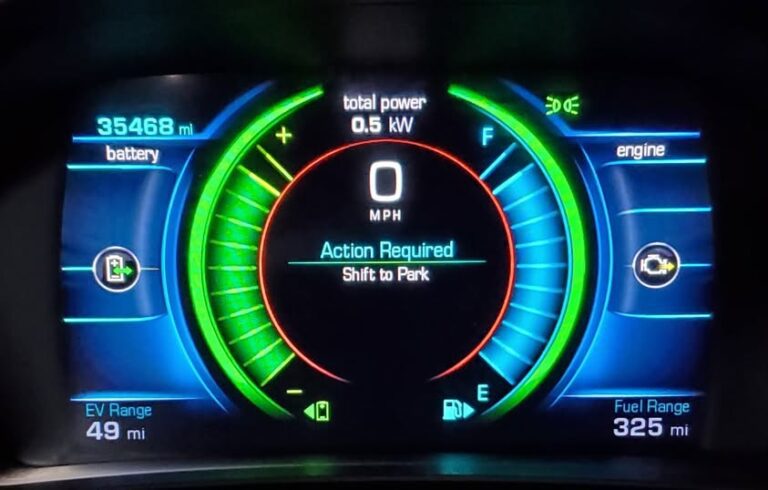
That warning message sitting on your dashboard right now is not something you want to ignore. “Action required shift to park” is your vehicle telling you that something inside the transmission system has gone wrong, and the problem is serious enough that your car may not be shifting into park the way you think it is.
Read that again. You might think your car is safely in park. But it might not be. That alone should get your attention.
The good news is that the list of things that cause this warning is not very long. Once you understand what is happening under the hood, or rather, inside the transmission tunnel, diagnosing and fixing it becomes a lot less scary. So let us walk through all of it, from what this warning actually means to how you fix it yourself or know when to hand it off to a professional.
What “Action Required Shift to Park” Actually Means
Think of your transmission shift cable as the messenger between you and your transmission. Every time you grab that gear shifter and move it from drive to park, neutral, or reverse, the shift cable is what physically carries that message to the transmission. It is a simple but absolutely critical job.
Now imagine that messenger gets injured or goes missing entirely. You are still moving the shifter. You are still going through the motions. But the transmission never gets the message. It does not know you have moved the shifter at all. So it stays wherever it was, completely unaware that you think you have parked the car.
That is exactly what the “action required shift to park” warning is describing. The transmission shift cable has either been damaged or disconnected. Your shifter says “park,” but the transmission itself is not in park. The car could roll. The engine might not shut off. And your dashboard is screaming at you to do something about it.
This warning became a big deal for GMC and Chevy owners, particularly those driving vehicles built between 2009 and 2014. It turned into a notable recall issue for those model years, and honestly, it is still a common complaint among GMC owners today. But it is not exclusive to those vehicles. Any car with a transmission shift cable can develop this problem over time.
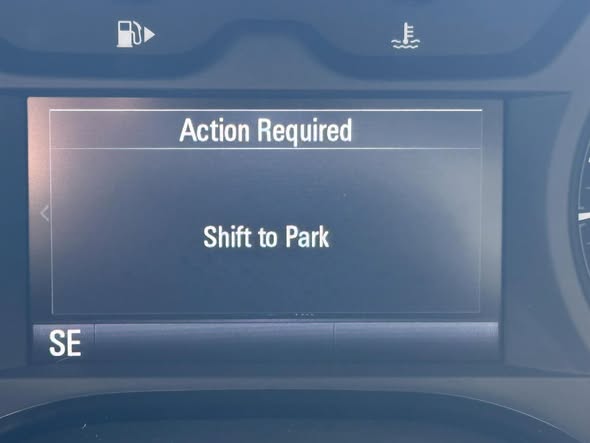
The Symptoms You Will Notice Before (and After) the Warning Appears
The warning message is usually not the first sign something is wrong. Before that light comes on, your car will start behaving strangely in ways that are easy to dismiss if you do not know what to look for. Here is what the transmission shift cable problem actually looks and feels like from the driver’s seat.
- The gear indicator does not match where the shifter is sitting. You shift into drive, but the indicator on your dashboard or center console shows neutral or park. Or you move to park and the indicator says you are still in drive. This mismatch is a textbook sign that the cable is not doing its job.
- The car will not turn off. Most modern vehicles will not let you shut off the engine unless the transmission confirms it is in park. If the transmission does not know it is in park because the cable is broken, the car will just sit there running even after you move the key or press the stop button.
- The “action required shift to park” warning message lights up. This is the most direct symptom. The system has detected the disconnect and is telling you to address it before something worse happens.
- The vehicle stays stuck in one gear. If the transmission is not receiving shift signals from the cable, it will hold whatever gear it was last confirmed in. That means you could end up stuck in park, unable to shift into drive, or stuck in drive and unable to get back to park.
- The car starts in the wrong gear. When you fire up the engine, the transmission might come online in a gear that is not what the shifter is showing. This can feel like the car lurches unexpectedly or behaves erratically right after starting.
None of these symptoms are things you should drive through and hope they resolve on their own. A car that rolls away because the transmission was never actually in park is not just an inconvenience. It is a serious safety risk to you, your passengers, and anyone nearby.
What Causes the “Action Required Shift to Park” Warning in the First Place
There are a few different things that can trigger this warning. Some are more common than others. Understanding what went wrong in your specific situation makes the repair process a whole lot faster and cheaper.
The Transmission Shift Cable: The Most Likely Culprit
This is responsible for the vast majority of “action required shift to park” warnings. The shift cable lives in a tough environment. It runs from your shifter down through the car to the transmission, passing through heat, vibration, and constant mechanical stress every single time you change gears.
Over time, that cable stretches. And when it stretches far enough, it loses the ability to send accurate positional information to the transmission. Keep stretching it and it eventually snaps or pops loose from its connector entirely.
Here is a quick look at what the transmission shift cable does and what happens when it fails:
| Condition | What the Cable Does | What You Experience |
|---|---|---|
| Cable working properly | Transmits exact gear position from shifter to transmission | Smooth, accurate gear changes every time |
| Cable stretched | Transmits slightly off signal, gear position is approximate | Occasional mismatch between indicator and actual gear |
| Cable snapped or disconnected | No signal transmitted at all | Warning message, car stuck in gear, cannot shut off engine |
For the GMC and Chevy vehicles flagged in the recall, the cable design was a known weak point. The cable end connector was prone to popping off the transmission lever under regular driving conditions. That is not a driver error issue. That is a manufacturing design issue.
A Damaged Shifter Switch (Also Called the Shifter Microswitch)
There is a small electrical switch sitting inside your shifter assembly. It is called the shifter microswitch, and its job is to detect where the shifter is positioned and send that information to the vehicle’s control systems. Think of it as a tiny sensor that knows whether you are in park, reverse, neutral, or drive.
When that switch gets dirty, corroded, or physically damaged, it starts sending incorrect signals. The car thinks you are in the wrong gear even when you are not. Or it cannot confirm that you have shifted into park at all, which is exactly what triggers this warning.
The good news about a faulty shifter switch is that it can sometimes be cleaned rather than replaced. More on that in a moment.
A Failing Transmission Control Module (TCM)
The TCM is the brain of your transmission system. It receives all the signals from the shift cable, the shifter switch, and various transmission sensors, then processes those signals and tells the transmission what to do. Park, reverse, drive, it all goes through the TCM first.
When the TCM starts to fail, it can trigger false warning codes and error messages, including the “action required shift to park” message, even when the cable and switch are perfectly fine. A failing TCM might also misinterpret signals it receives, causing the transmission to behave erratically.
That said, TCM failure as the primary cause of this specific warning is relatively uncommon. It happens, but it is not where you should start your diagnosis. Check the cable and the switch first. If both of those check out and the warning persists, then it is time to look at the TCM.
How to Diagnose the Problem Before You Start Spending Money on Parts
Before you order any parts or start pulling things apart, spend a few minutes doing some basic diagnosis. This will save you from fixing the wrong thing and wasting money in the process.
Step 1: Use an OBD-II Scanner
An OBD-II scanner plugs into the diagnostic port under your dashboard (usually located just below the steering wheel on the driver’s side). It reads the fault codes stored in your vehicle’s computer and tells you exactly what system is flagging an issue.
If the scanner pulls codes related to the transmission control module or specific transmission sensors, that points you toward the TCM or electrical components. If there are no stored codes beyond the park warning itself, the problem is almost certainly mechanical, meaning the shift cable or the microswitch.
You can pick up a decent OBD-II scanner for under $30 at most auto parts stores, and some stores will even loan you one for free. It is worth doing this first before anything else.
Step 2: Physically Check the Shift Cable
With the engine off and the parking brake set, trace the shift cable from the base of the shifter assembly down to where it connects to the transmission. Look for:
- Visible fraying or cracking on the cable housing
- The cable end popped off the transmission lever or the shifter bracket
- Kinks or bends in the cable that would restrict movement
- Corrosion around the connector ends
If the cable has popped loose but is otherwise undamaged, reconnecting it might be all you need. But if it is frayed, kinked, or snapped, a full replacement is the only real fix.
Step 3: Check the Shifter Microswitch
With the shifter knob and trim panel removed (usually just a few screws), you can visually inspect the microswitch. Look for obvious signs of damage, corrosion on the contact points, or debris buildup around the prongs. A dirty switch can mimic a broken one, so do not jump straight to replacement before cleaning it.
How to Fix the “Action Required Shift to Park” Warning
Once you have identified the root cause, here is how to address each one. Some of these repairs are genuinely doable at home with basic tools. Others are better left to a professional, and being honest about that distinction will save you a lot of headaches.
Fix 1: Replace the Transmission Shift Cable
This is the most common fix and, for many vehicles, it is a job a mechanically capable DIYer can handle on a weekend afternoon. Here is how the process works.
What you will need:
- Replacement transmission shift cable (specific to your vehicle’s year, make, and model)
- In-line shifter harness jumper (required on many GM vehicles affected by the recall)
- Basic hand tools (screwdrivers, pliers, trim removal tools)
- Your vehicle’s owner’s manual
The process, step by step:
- Locate the shift cable. Depending on your vehicle, the cable connects to either a steering column-mounted shifter or a floor-mounted console shifter. Check your owner’s manual if you are unsure where to look.
- Remove the front console trim plate. This is usually held in place by a handful of clips or screws and pops off with gentle pressure using a trim removal tool. Avoid using a flat screwdriver directly on the plastic, as it will scratch or crack it.
- Access the shift cable connector at the shifter assembly. Disconnect the old cable from the shifter end first, then trace it to the transmission and disconnect it from that end as well.
- If your vehicle uses an in-line shifter harness jumper as part of the repair, connect the jumper to the shift control assembly. Run the other end to the body harness connection point.
- Install the new cable in the reverse order of removal. Make sure the cable runs cleanly without sharp bends. Specifically, do not allow the cable to bend at any angle greater than 90 degrees. A sharper bend will cause the cable to wear out prematurely and you will be back doing this job again in a year or two.
- Reinstall the trim panel, start the vehicle, and test every gear position. Confirm the indicator matches the actual gear and the warning message is gone.
For GMC and Chevy owners dealing with the recall-related version of this problem, there are specific repair kits available that include the upgraded cable and harness jumper. These kits are designed to address the original design flaw, not just replace the failed part with an identical copy of it.
Fix 2: Clean the Park Switch (Shifter Microswitch)
Before you spend money on a new shifter switch, try cleaning the one you have. Dirt, moisture, and grime accumulate on the electrical contact points over time and can cause the switch to misread gear positions. A good cleaning costs almost nothing and takes about 20 minutes.
What you will need:
- Electrical contact cleaner spray (available at any auto parts store)
- A clean toothbrush or small detail brush
- Trim removal tools
- A clean rag
How to do it:
- Park the vehicle on a flat surface and apply the parking brake. Shift the gear to park and turn off the engine.
- Carefully disassemble the shifter knob and boot assembly. This usually involves twisting the knob off and then peeling back or unclipping the shift boot to expose the shifter mechanism underneath.
- Locate the microswitch. It is a small rectangular component with metal prong contacts, usually sitting right at the base of the shifter lever or on the side of the shift gate.
- Spray electrical contact cleaner directly onto the prong contact points. Let it soak in for a few seconds, then use the toothbrush to gently scrub away any visible grime, oxidation, or residue.
- While you have everything apart, wipe down the shifter knob and boot assembly with a clean rag. It is worth keeping everything clean in there since debris around the shifter can contribute to switch problems down the road.
- Reassemble everything in reverse order. Start the car and check whether the warning message has cleared.
If the warning message comes back after cleaning, the switch itself is physically worn out or damaged and needs to be replaced. A new shifter microswitch is usually an inexpensive part, often under $30, and follows the same basic removal and installation process as the cleaning procedure above.
Fix 3: Replace the Transmission Control Module (TCM)
If your OBD-II scan comes back with fault codes pointing directly to the TCM, and you have already ruled out the shift cable and the microswitch, then the TCM needs to be replaced. This is where the job gets considerably more complex.
Here is the thing about TCM replacement: it is not just a swap. The new module usually needs to be programmed to match your specific vehicle. That programming process requires dealer-level diagnostic software or a professional-grade scan tool that most home mechanics do not have sitting in their garage. Going to a shop for this one is not admitting defeat. It is just the smart move.
That said, here is what the process involves so you understand what you are paying for:
- The old TCM is located (position varies by vehicle, often near the transmission or in the engine bay) and disconnected from its wiring harness.
- The new TCM is installed in its place and connected to the same harness.
- The module is then programmed with the vehicle’s VIN, transmission type, and calibration data. Without this step, the new TCM will not function correctly and may trigger additional fault codes.
- A test drive is performed to confirm proper transmission operation across all gear ranges.
TCM replacement costs vary quite a bit depending on the vehicle. The part itself can range from around $200 to over $700 for some luxury or performance vehicles. Add labor and programming fees, and you are looking at a total bill that can run from $400 to $1,200 or more at a dealership. An independent shop with the right programming equipment will often do this for less, so it is worth getting two or three quotes before committing.
Here Is What That Repair Video Covers
If you are a visual learner or you just want to see how the shift cable replacement process works before you commit to doing it yourself, this video walks through the repair in real time. Watching someone do it once before you start makes a big difference.
How Much Does It Cost to Fix This Problem?
Cost is always the question. Nobody wants to go into a repair blind. Here is a realistic breakdown of what each fix typically costs, both DIY and shop prices.
| Repair | DIY Cost (Parts Only) | Shop Cost (Parts + Labor) |
|---|---|---|
| Transmission shift cable replacement | $30 to $100 | $150 to $400 |
| Shifter microswitch cleaning | Under $10 (contact cleaner) | $50 to $150 (diagnostic + labor) |
| Shifter microswitch replacement | $15 to $50 | $100 to $250 |
| TCM replacement + programming | Not recommended as DIY | $400 to $1,200+ |
For most people dealing with this warning, the shift cable replacement is the fix. It is affordable, it is doable at home, and it resolves the issue completely in the overwhelming majority of cases. If you are mechanically inclined and you have an afternoon free, this is absolutely a job you can handle without professional help.
Can You Still Drive the Car When This Warning Is Active?
Short answer: you should not.
Here is why. If the transmission shift cable is broken or disconnected, the car does not actually know what gear it is in. That means when you think you have shifted into park and you step out of the vehicle, the transmission may still be in a different gear. One bump, one slight incline, and the car could start moving on its own.
Beyond the safety risk, driving with a broken shift cable can cause additional transmission wear. The transmission is not receiving accurate shift commands, which means gear engagement is happening incorrectly or not at all. Over time, that adds mechanical stress to components that are not designed to handle those kinds of inputs.
If you absolutely have to move the vehicle to a safe location before doing the repair, use the parking brake every single time you stop. Do not rely on park position alone until the cable is fixed.
The GMC and Chevy Recall Situation: What You Should Know
If you are driving a GMC or Chevrolet vehicle from the 2009 to 2014 model years and you are seeing this warning, there is a decent chance your vehicle was or still is subject to a recall or technical service bulletin related to this exact issue.
General Motors issued recalls and service bulletins addressing the shift cable connector design on several models, including certain Silverado, Sierra, Tahoe, Suburban, Yukon, and Enclave vehicles. The issue was that the cable end connector could separate from the transmission shift lever during normal driving conditions, causing exactly the symptoms described throughout this article.
Before you pay out of pocket for this repair, do this first: go to the National Highway Traffic Safety Administration (NHTSA) website and enter your Vehicle Identification Number (VIN). This will tell you whether any open recalls apply to your vehicle. If there is an open recall, the repair should be done by a dealership at no cost to you.
Even if the recall has technically “closed,” it is worth calling your dealership and explaining the situation. Sometimes there is goodwill coverage available, especially for a known, documented defect like this one.
How to Prevent This From Happening Again
Once you have fixed the problem, you probably do not want to be dealing with it again in another 18 months. Here are a few things you can do to extend the life of your transmission shift cable and the surrounding components.
- Install the upgraded repair kit if one is available for your vehicle. For many GM vehicles, aftermarket and OEM suppliers offer improved cable designs that address the original design weaknesses. Replacing a failed cable with an identical copy is not always the best long-term solution.
- Avoid forcing the shifter. If the shift lever ever feels stiff or resistant, do not muscle it into position. That extra force transfers directly to the cable and accelerates wear. Have the cause of the stiffness investigated.
- Inspect the cable during routine maintenance. Most people never look at the shift cable until it fails. Adding a quick visual inspection every time you change your oil takes about 30 seconds and can catch early signs of fraying or connector looseness before it becomes a full failure.
- Keep the shifter area clean. Debris, spilled liquids, and grime around the shifter assembly can work their way into the microswitch and accelerate wear. A quick wipe-down of the center console area during your regular interior cleaning routine is enough to prevent most of this.
- Address electrical codes promptly. If your OBD scanner ever pulls transmission-related codes, do not sit on them. Early-stage TCM issues or sensor faults that get addressed quickly are usually much cheaper to fix than ones that get ignored until the whole system breaks down.
When the Warning Keeps Coming Back Even After the Fix
You replaced the cable. You cleaned or replaced the microswitch. You even had the TCM checked, and everything came back clean. But the warning message is still there. What now?
At that point, the problem has moved beyond the common causes and into the territory of internal transmission damage. An internal component, whether that is a solenoid, a valve body issue, or physical damage inside the transmission housing, can trigger this warning in the same way that external causes do.
Internal transmission repairs are a different category of job entirely. They require the transmission to be removed from the vehicle, disassembled, inspected, and rebuilt or replaced. This is not weekend DIY territory for most people. It is also not cheap. A transmission rebuild can run anywhere from $1,500 to $3,500 depending on the vehicle and the extent of the damage. A full replacement can go higher.
If you reach this point, get a second opinion from a transmission specialist, not just a general mechanic. Transmission shops deal with these systems every day and are far better equipped to pinpoint internal damage than a general service center.
Also, be cautious of any shop that wants to replace the entire transmission before doing a thorough inspection. Internal failures are often localized, and a skilled transmission specialist can frequently repair just the damaged component rather than replacing the whole unit.
A Quick Summary of Everything You Need to Know
This warning message packs a lot of information into a short phrase. Here is the condensed version of everything covered above:
- The “action required shift to park” warning means the transmission is not recognizing the park position, usually because the shift cable is damaged or disconnected.
- Symptoms include a mismatched gear indicator, an engine that will not shut off, being stuck in a single gear, and the warning message itself.
- The most common cause is a stretched, snapped, or disconnected transmission shift cable.
- Less common causes include a dirty or damaged shifter microswitch and a failing TCM.
- Start your diagnosis with an OBD-II scan and a physical inspection of the cable before assuming anything more expensive is wrong.
- If you drive a 2009 to 2014 GMC or Chevy vehicle, check for open recalls before spending any money on repairs.
- Do not drive the vehicle while this warning is active. Use the parking brake every time you stop until the repair is done.
If the warning stays on after replacing the cable, cleaning the switch, and checking the TCM, get a transmission specialist involved. Something internal needs professional eyes on it, and the sooner that happens, the lower the final repair bill is likely to be.
Your transmission shift cable is a small part doing an enormous job. Treat it with the same attention you give your brakes and your engine oil, because the consequences of ignoring it are just as serious.