
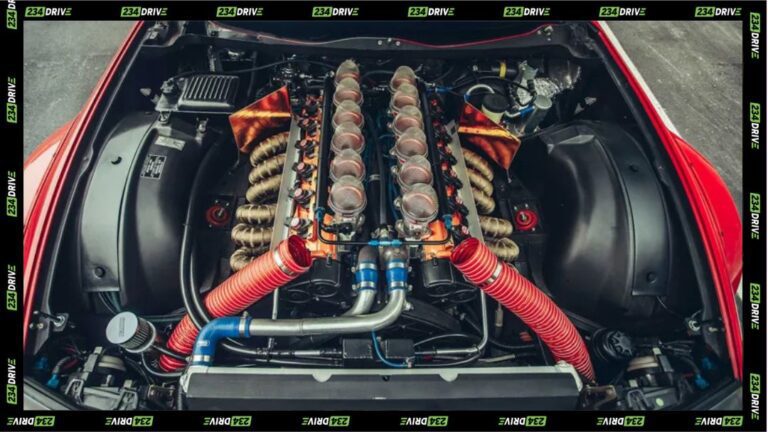
Cars have come a long way, and honestly, the sheer creativity behind modern automobile design still catches people off guard. Every automaker out there is chasing the same two things: something that turns heads in a parking lot, and something that can actually back up its looks on the road.
Most people stop at the looks. A sleek body, a low stance, maybe a loud paint job. But real car people, the ones who actually know what they are looking at, go straight for the engine bay. That is where the real story lives.
And when the conversation turns to engines, one configuration keeps coming up again and again among enthusiasts: the V12. This is a twelve cylinder monster that has been part of automotive history since the very early 1900s, and it has left its mark not just on cars, but on boats and aircraft too.
So naturally, the question that follows is simple. How much horsepower does a V12 actually make? Giving one flat number is tricky, since engine output depends on a long list of factors, from displacement to tuning to what the automaker is trying to achieve. But if we are talking averages, a modern V12 typically lands somewhere around 750 horsepower. Some go well beyond that. Let us get into the details.
What Exactly Is a V12 Engine, Anyway?
Before we go chasing horsepower numbers, it helps to understand what makes a V12 a V12 in the first place, since the name alone does not tell the whole story.
A V12 engine is built with twelve cylinders arranged in two rows of six, angled toward each other to form a V shape when viewed from the front. All twelve pistons connect to a single crankshaft, working together to produce power in a way that is remarkably smooth compared to engines with fewer cylinders.
That smoothness is not just a nice bonus. It is actually one of the defining traits of the V12 layout. With twelve evenly spaced power strokes happening across every rotation of the crankshaft, the engine naturally balances out the vibrations and pulses that smaller engines struggle with. This is part of why V12s have such a reputation for feeling almost eerily refined at high revs, even while producing enormous power.
A Quick Trip Through V12 History
The V12 concept started taking shape around the turn of the twentieth century, and engineers of that era were reportedly blown away by what they had built. By 1904, the first working V12 unit was ready, and interestingly enough, its first home was not a car at all. It ended up powering luxury boats before wealthy car owners decided they wanted that kind of smooth, powerful performance on land too.
What made the V12 so appealing early on was exactly that balance we just talked about. It delivered power smoothly and evenly, without the harsh vibrations that plagued other engine designs of the time. That characteristic did not go unnoticed. Aircraft engineers took interest almost immediately, and V12 engines found their way into airplanes not long after, remaining a dominant choice in aviation all the way until the 1960s, when jet engines finally proved themselves lighter and more powerful for that particular job.
The Second World War gave the V12 its biggest moment on the world stage. These engines powered fighter aircraft, tanks, and other military vehicles, proving their reliability and power under some of the toughest conditions imaginable. That wartime reputation for toughness carried straight into the postwar automotive world, where luxury and performance brands quickly adopted the V12 as their engine of choice for flagship models.
So How Much Horsepower Does a V12 Actually Make Today?
We mentioned that 750 horsepower average earlier, and that number holds up reasonably well when you look across the current lineup of V12 powered vehicles on the market. But averages only tell part of the story. Some of the most celebrated V12 engines being produced right now push well past that number, some even creeping toward 850 horsepower in road legal form.
Let us look at a few specific examples currently sitting near the top of the pile.
Ferrari F140 HC: The Daytona’s Heart
The Ferrari F140 HC delivers up to 829 horsepower, and you will find it sitting under the hood of the 2021 Ferrari Daytona SP3. This engine skips forced induction entirely, running as a naturally aspirated unit on regular gasoline with a 6.5 liter displacement.
Paired with the Daytona’s body, this engine is nothing short of a rocket. The car sprints from zero to 62 miles per hour in less than 2.9 seconds, and its top speed sits at 211 miles per hour. Realistically, that top speed number exists mostly on paper and on a closed track, since finding a stretch of public road where that speed is even remotely legal or sensible is close to impossible.
Ferrari F140 HB: Power Behind the 812
Right below the HC sits the F140 HB, capable of pushing out 819 horsepower without much drama. Ferrari first put this engine to work in the 2021 Ferrari 812, a two seat, rear wheel drive machine built entirely around delivering raw performance in the most Italian way possible.
Just like its sibling, the 812 rockets to 62 miles per hour in under 2.9 seconds. That same 6.5 liter quad cam design pushes the car to a top speed of 211 miles per hour as well, putting these two Ferraris practically neck and neck in terms of straight line performance.
Ferrari F140 GC: Old School Looks, Modern Muscle
The F140 GC brings something a little different to the table. This version of the engine found its home in the striking Ferrari Monza SP2, a car that channels vintage open cockpit racing aesthetics while hiding some very modern engineering underneath. This particular engine produces 798 horsepower.
Despite a curb weight of around 3,527 pounds, the 2018 Monza SP2 still manages that same 2.9 second sprint to 62 miles per hour. Its top speed is capped lower than the other two at 186 miles per hour, likely a deliberate choice given the car’s open top design, since keeping drivers safely in their seats at those speeds without a proper windshield becomes its own engineering challenge. Like the others, this engine is naturally aspirated with the familiar 6.5 liter gasoline setup.
Quick Comparison: Ferrari’s Naturally Aspirated V12 Lineup
| Engine | Peak Horsepower | Vehicle | Displacement | 0 to 62 mph | Top Speed |
|---|---|---|---|---|---|
| F140 HC | 829 hp | Ferrari Daytona SP3 | 6.5 liter | Under 2.9 seconds | 211 mph |
| F140 HB | 819 hp | Ferrari 812 | 6.5 liter | Under 2.9 seconds | 211 mph |
| F140 GC | 798 hp | Ferrari Monza SP2 | 6.5 liter | Under 2.9 seconds | 186 mph |
Notice something interesting here. All three of these engines share the same 6.5 liter displacement, yet each one produces a slightly different horsepower figure. That is a perfect example of how tuning, internal components, and specific engineering goals for each individual model can pull different performance numbers out of what is essentially the same basic architecture.
Which V12 Sits at the Very Top of the Horsepower Chart?
Here is where things get genuinely impressive. Naming one single “most powerful” V12 engine is tricky, since so many different factors go into ranking engine performance beyond just a raw horsepower number. That said, one engine consistently gets mentioned whenever this conversation comes up among enthusiasts and engineers alike.
That engine is the Ferrari F140, found in the track focused Ferrari FXX-K. This version delivers a staggering 1,036 horsepower, moving a car that weighs in at just over 2,767 pounds. With a 6.3 liter displacement working alongside that featherweight body, the FXX-K is capable of speeds that would make most supercars look sluggish by comparison.
There is one important catch here worth mentioning. The FXX-K is not road legal. It exists purely as a track only machine, built for owners who want the absolute peak of what Ferrari’s engineering team can produce, with none of the compromises that come from meeting road going safety and emissions regulations.
Quick Reference: The Most Powerful V12 Engines Around
| Name | Peak Power | Usage | Capacity |
|---|---|---|---|
| F140 (FXX-K version) | 1,036 hp | Ferrari FXX-K (track only) | 6.3 liter |
| F140 HC | 829 hp | Ferrari Daytona SP3 | 6.5 liter |
| F140 HB | 819 hp | Ferrari 812 | 6.5 liter |
| F140 GC | 798 hp | Ferrari Monza SP2 | 6.5 liter |
| M158 | 791 hp | Pagani Huayra | 6.0 liter |
| F140 GA | 789 hp | Ferrari GTS | 6.5 liter |
Take a look at the Pagani entry on that list. The M158 engine, developed in partnership with Mercedes-AMG, produces 791 horsepower from a smaller 6.0 liter displacement, proving that raw size is not always the deciding factor in how much power an engine can produce. Engineering, tuning, and materials play just as big a role as displacement does.
Why Are V12 Engines So Naturally Powerful?
It is worth pausing here to explain why this particular engine configuration keeps producing such huge horsepower figures compared to smaller layouts like a V6 or V8. A few factors work together to make this happen.
- More cylinders mean more combustion events. Each cylinder firing contributes to overall power output, so simply having twelve working together instead of six or eight gives the engine a natural head start.
- Smoother power delivery allows higher rev limits. Since the firing pulses overlap more evenly across twelve cylinders, there is less harsh vibration at high engine speeds, which allows engineers to safely push these engines to higher RPM ranges where more power gets extracted.
- Large displacement per cylinder is common. Even divided across twelve cylinders, many V12 engines still carry a fairly large total displacement, in the 6.0 to 6.5 liter range as we have seen, giving each combustion event more force to work with.
- Premium engineering and materials. Since V12 engines almost exclusively appear in luxury and performance vehicles, manufacturers tend to spare no expense on the internal components, from forged pistons to advanced valve timing systems, all aimed at squeezing out maximum performance.
Can You Actually Add More Horsepower to a V12?
Here is a question that comes up constantly among owners who already have one of these engines sitting in their garage. Once you already have a V12 producing 700 or 800 horsepower, is it even possible to push it further?
The short answer is yes, but do not expect it to be as simple as clicking a few settings on a computer. Adding horsepower to a fully engineered, factory tuned engine like this is nothing like upgrading the memory in a laptop. It usually means swapping out genuinely expensive components for other, often even more expensive components, and the labor involved is just as specialized as the parts themselves.
That said, for the right owner, the payoff is worth every dollar. That extra shove of acceleration and the deeper, more aggressive exhaust note that comes with these upgrades is exactly what a lot of enthusiasts are chasing in the first place. Here are some of the common routes owners take to squeeze more power out of a V12.
- Upgrading the cold air intake. Feeding the engine cooler, denser air helps improve combustion efficiency and can unlock a modest but noticeable power gain.
- Installing a high flow air filter and intake system. Less restriction means the engine can breathe easier, particularly at higher RPM where airflow demand increases significantly.
- Upgrading the exhaust system. Just like the intake side, reducing restriction on the way out helps the engine expel spent gases more efficiently, which in turn helps it draw in the next batch of air and fuel more effectively.
- Improving forced induction. On engines that already use turbocharging, upgrading the turbo components can unlock significant power gains, though this is less common on naturally aspirated V12s like the Ferrari examples covered earlier.
- Installing a supercharger. For naturally aspirated engines, adding forced induction through a supercharger is one of the more dramatic ways to boost output, though it is also one of the more involved and expensive modifications on this list.
- Adding nitrous oxide injection. This provides a short burst of significant extra power on demand, popular in drag racing applications, though it requires careful tuning to avoid engine damage.
- Installing a performance camshaft. A camshaft designed for higher performance changes valve timing and lift, allowing the engine to breathe better at higher RPM ranges at the cost of some low end smoothness.
- Using higher octane fuel suited to the compression ratio. Higher performance engines often benefit from premium fuel that resists knock better, allowing more aggressive ignition timing and better overall power output.
- Keeping the engine properly lubricated. This one sounds basic, but proper lubrication reduces internal friction, and reduced friction means more of the engine’s power actually makes it to the wheels rather than being wasted as heat.
How Much Horsepower Does Professional Tuning Actually Add?
Engine tuning is a genuinely detailed process, and it is rarely cheap, especially when we are talking about an engine as sophisticated as a V12. Shops typically break this work down into stages, with each stage building on the last and adding progressively more cost alongside more performance.
| Tuning Stage | What Gets Done | Typical Power Gain | Typical Cost |
|---|---|---|---|
| Stage 1 | Exhaust improvements and other minor adjustments | 11% to 16% more horsepower | $400 to $500 |
| Stage 2 | Builds on stage 1 with additional engine area improvements | 20% to 25% more horsepower | Around $600 |
| Stage 3 | Bore and camshaft upgrades plus other key engine part improvements | 30% to 40% more horsepower | Around $800 |
| Stage 4 | Further bore and cam work along with cylinder head modifications | 50% to 60% more horsepower | $3,000 to $4,000 |
Keep in mind these percentage gains and costs can shift quite a bit depending on your location, the specific shop doing the work, and the exact engine in question. A V12 tuning job is going to sit on the higher end of any pricing scale simply because of the complexity and number of components involved compared to a smaller four or six cylinder engine.
What About Dyno Tuning Specifically?
Dyno tuning takes a slightly different approach compared to the staged upgrades above. Instead of physically swapping parts, a dyno tune focuses on optimizing the engine’s computer settings, fuel delivery, and ignition timing based on real time performance data collected while the car sits on a dynamometer.
This process is genuinely more complex than it sounds, and the actual horsepower gain depends heavily on what parts have already been installed on the engine beforehand. If everything goes smoothly, a proper dyno tune typically adds somewhere around 10 to 15 additional horsepower, essentially squeezing out extra performance hiding in the gap between factory conservative settings and what the engine’s hardware can actually handle.
Are There V12 Engines Producing More Than 500 Horsepower?
Absolutely, and honestly, most modern V12 engines clear that number without much effort. Track focused cars need serious power to handle the demands of high speed racing, and several road legal supercars on the market today are pushing well past 800 horsepower straight from the factory, as we covered with the Ferrari and Pagani examples earlier.
In fact, finding a modern V12 producing less than 500 horsepower has become somewhat rare, since this engine layout has become almost exclusively associated with flagship performance and luxury vehicles where manufacturers are actively competing to top each other’s power figures.
V12 Versus Other Engine Layouts: How Does It Really Compare?
Since we have spent this much time talking about V12 power figures, it is worth stepping back and comparing this engine layout against some of its more common competitors, just to put things into perspective.
| Engine Type | Typical Cylinder Count | Common Horsepower Range | Typical Use Case |
|---|---|---|---|
| Inline 4 | 4 | 150 to 300 hp | Daily commuter cars, compact vehicles |
| V6 | 6 | 250 to 450 hp | Midsize sedans, sporty coupes |
| V8 | 8 | 350 to 700+ hp | Muscle cars, trucks, performance sedans |
| V12 | 12 | 500 to 1,000+ hp | Luxury flagships, supercars, hypercars |
Notice how the V12 category simply operates in a different league entirely. While a well built V8 can absolutely compete on power figures in some cases, the V12 layout consistently occupies the very top tier of automotive performance, largely reserved for the most expensive and exclusive vehicles on the market.
Why Do V12 Engines Cost So Much to Buy, Maintain, and Repair?
If you are considering ownership of a V12 powered vehicle, or you are just curious why these cars carry such steep price tags, it comes down to a few straightforward reasons connected directly to everything we have covered so far.
- More parts, more complexity. Twelve cylinders mean twelve sets of pistons, rings, valves, and related hardware, roughly double what a V6 requires. More parts means more manufacturing cost and more potential points of maintenance down the line.
- Specialized labor requirements. Not every mechanic is equipped or trained to work on a V12, particularly exotic versions from Ferrari or Pagani. Finding qualified technicians often means paying premium labor rates at specialized shops or dealerships.
- Premium materials throughout. As mentioned earlier, these engines typically use higher grade materials designed to handle extreme performance demands, and replacing those components when needed costs considerably more than standard parts.
- Lower production volumes. V12 powered vehicles are produced in much smaller numbers compared to mainstream cars, meaning parts are less mass produced and generally carry higher prices as a result.
None of this is meant to scare anyone away from V12 ownership, but it is worth going in with realistic expectations about what maintaining one of these engines actually involves over the years.
A Few Interesting Facts Worth Knowing About V12 Engines
- The V12 layout is naturally balanced, meaning it produces very little internal vibration compared to other engine configurations, even at high RPM.
- Rolls-Royce has used V12 engines in its flagship models for decades, prioritizing smoothness and refinement over outright horsepower figures compared to Ferrari’s performance focused approach.
- Aston Martin, Lamborghini, and BMW have all produced notable V12 engines over the years, each bringing their own engineering philosophy to the same basic layout.
- Some of the most legendary racing engines in Formula 1 history, particularly in earlier eras of the sport before turbocharged V6 hybrids took over, were built around the V12 configuration.
- Despite their power, V12 engines are gradually becoming rarer as manufacturers shift toward smaller turbocharged engines and hybrid or fully electric powertrains to meet emissions regulations.
Is the V12 Engine Facing Extinction?
This is a fair question to ask, given how the automotive industry has been shifting in recent years. Emissions regulations around the world have gotten considerably stricter, pushing manufacturers toward smaller displacement turbocharged engines and, increasingly, hybrid or fully electric powertrains.
Several manufacturers have already announced plans to phase out their V12 offerings entirely in the coming years, replacing them with smaller, more efficient engines that often use forced induction or electric assistance to make up the performance difference. Some brands, however, particularly Ferrari, have publicly committed to keeping the V12 alive as a symbol of their brand heritage for as long as regulations allow, even as they simultaneously develop hybrid and electric models alongside it.
So while the V12 is not disappearing overnight, its long term future is genuinely uncertain. If you have ever dreamed of owning one, that dream might be worth pursuing sooner rather than later, since the days of a naturally aspirated twelve cylinder engine roaring under the hood of a brand new car may eventually become a thing of the past.
Frequently Asked Questions About V12 Horsepower
What is the average horsepower of a V12 engine?
Modern V12 engines average around 750 horsepower, though this varies significantly depending on the manufacturer, displacement, and whether the engine uses forced induction.
What is the most powerful V12 engine currently available?
The Ferrari F140 used in the track only FXX-K produces 1,036 horsepower, making it one of the most powerful V12 engines ever built, though it is not road legal.
Do all V12 engines use forced induction to reach high horsepower figures?
No. Many of the most powerful V12 engines on this list, including all three Ferrari examples covered earlier, are naturally aspirated, relying on displacement and precision engineering rather than turbocharging or supercharging to reach their impressive power figures.
Is it worth modifying a V12 engine for more power?
It depends on your goals and budget. Staged tuning can add meaningful power gains, but costs rise quickly at higher stages, and the specialized nature of V12 engines means labor and parts tend to cost more than comparable work on smaller engines.
Why do luxury brands prefer V12 engines over V8s?
V12 engines offer smoother power delivery and reduced vibration due to their balanced firing order, which aligns well with the refined driving experience luxury brands aim to provide, alongside the sheer prestige associated with the configuration.
The V12 has spent over a century proving itself across boats, aircraft, battlefields, and now some of the fastest road going and track only machines ever built. Whether you are drawn to the smooth, refined roar of a Rolls-Royce or the screaming, high revving fury of a Ferrari pushing past 800 horsepower, one thing stays true. This engine configuration represents the point where engineering ambition and raw power meet, and for now, it is still very much alive under some of the most desirable hoods in the world. If you ever get the chance to hear one at full throttle, take it. Some things really do need to be experienced in person.