
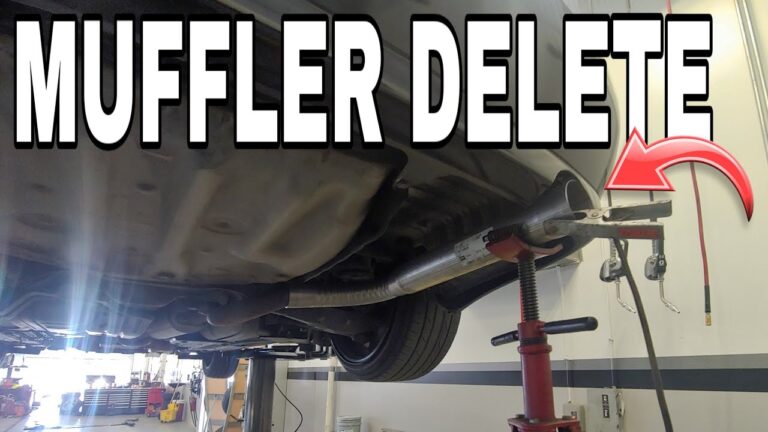
Walk through any parking lot on a Saturday afternoon and you will hear it eventually. That deep, aggressive rumble that turns heads before the car even comes into view. Nine times out of ten, that sound is coming from a muffler delete.
Some drivers love that sound so much they cannot wait to have it done to their own car. Others hear it and wonder if the owner just wrecked their engine for the sake of a loud exhaust note. So which is it? Does pulling the muffler off actually mess with what is happening under the hood?
Here is the short version. No, a muffler delete does not directly affect your engine. The muffler and the engine are two separate systems that just happen to be connected by a pipe. That said, the story does not end there, and there are real consequences worth understanding before you book that appointment or grab a saw yourself. Let us walk through the whole thing properly.
What Exactly Is a Muffler Delete, Anyway?
Before diving into engines and performance numbers, let us get clear on what this modification actually involves, since the term gets thrown around loosely online.
A muffler delete means physically removing the muffler from your car’s exhaust system and replacing that section with a plain metal pipe. The muffler itself is the component responsible for quieting down the noise your engine naturally produces when it is running, especially under acceleration.
Inside a muffler, exhaust gases pass through a series of chambers and baffles specifically designed to cancel out sound waves before they exit the tailpipe. Take that piece out of the equation, and there is nothing left to soften the noise. Every time you press the gas pedal, your car is going to let everyone within a few blocks know about it.
So, Does Muffler Delete Actually Affect the Engine?
Let us answer this directly, since it is the whole reason you are here. No, a muffler delete does not affect your engine in any direct mechanical sense. The muffler is not connected to your engine’s internal components, it does not touch your pistons, valves, or crankshaft, and removing it does not create any physical damage to the engine itself.
Think of it this way. Your engine produces power through combustion, and that power gets sent to your wheels through the transmission and drivetrain. The exhaust system, muffler included, exists purely to manage what happens to the leftover gases after combustion has already occurred. By the time exhaust gases reach the muffler, the engine has already done its job for that particular combustion cycle.
So in the most literal sense, yes, your engine will run just fine without a muffler attached. But here is the thing. Just because something does not directly damage your engine does not mean it comes without consequences. There is a longer, more nuanced story here, and it matters if you actually care about how your car performs and how long it lasts.
The Real Problems a Muffler Delete Can Cause
While your engine itself stays mechanically unharmed, several other issues tend to show up once that muffler comes off. Some of these are minor annoyances. Others can genuinely affect your wallet or your relationship with local law enforcement.
Problem One: It Gets Loud, Fast
This one should not surprise anyone, but it is worth spelling out just how loud things actually get. Once the muffler is gone, your car becomes noticeably, sometimes shockingly loud under acceleration. We are talking about noise levels that come through clearly even with your windows rolled all the way up and the radio playing.
A lot of drivers go into a muffler delete excited about that aggressive sound, and for the first few weeks, it genuinely feels great. Revving the engine at a stoplight and hearing that deep growl never really gets old at first. But here is what mechanics hear from customers again and again. That excitement fades. If this is your daily driver, the car you take to work, to the grocery store, to pick up the kids from school, that constant roar eventually becomes exhausting rather than exciting.
Imagine trying to have a phone conversation on speaker while driving, or attempting to sneak out early in the morning without waking the whole neighborhood. That novelty wears thin fast when you are living with it every single day.
Problem Two: Engine Performance Can Actually Get Worse
Here is where things get a little counterintuitive. A lot of people assume that removing the muffler automatically frees up the exhaust system and boosts performance. In some older vehicles, that can be partially true, and we will get to that shortly. But in modern cars, the opposite often happens.
Newer vehicles come equipped with mufflers that are precision engineered as part of a carefully tuned exhaust system, working hand in hand with oxygen sensors and the engine control unit, commonly called the ECU. That computer constantly monitors exhaust flow and composition to adjust fuel delivery and timing for optimal performance.
Rip the muffler out of that carefully balanced system, and you can throw off the readings those sensors depend on. The result is often poor idling, inconsistent power delivery, and in some cases, a measurable drop in horsepower rather than the gain drivers were hoping for. This is especially true if the job is done without any supporting tune or chip to help the ECU adjust to the new exhaust configuration.
Problem Three: Failed Vehicle Inspections
If you live somewhere that requires regular vehicle inspections, a muffler delete is likely to cause you a real headache. Inspectors check for a functioning exhaust system as part of their safety and emissions checklist, and a missing muffler is an obvious red flag that raises immediate questions about your vehicle’s overall condition.
Some drivers try to get clever here, hoping to reinstall a stock muffler just long enough to pass inspection before removing it again afterward. In practice, this is far more difficult and time consuming than people expect. Welding work does not undo itself in an afternoon, and swapping exhaust components back and forth repeatedly is neither cheap nor convenient.
Problem Four: It Is Genuinely Illegal in Many Places
This is not just a minor technicality. Excessive vehicle noise violates regulations in most states and countries, and a muffler delete puts you squarely in violation of those noise ordinances in a lot of areas.
Realistically, this means you are significantly increasing your odds of getting pulled over, not necessarily for anything else you did wrong, but purely because your car is loud enough to attract attention. Once you are pulled over, you are looking at a citation, and depending on your local laws, potentially a requirement to fix the issue before your vehicle is considered street legal again.
| Common Muffler Delete Problem | Why It Happens | How Serious Is It? |
|---|---|---|
| Excessive noise | No sound dampening chambers left in the exhaust system | Annoying long term, especially on daily drivers |
| Reduced performance | Sensor and ECU calibration thrown off without a supporting tune | Can genuinely hurt power output on modern vehicles |
| Failed inspection | Missing required exhaust component | Can prevent legal registration renewal |
| Legal citations | Violates local noise ordinances | Fines and potential mandatory repairs |
Will a Muffler Delete Actually Affect Performance?
We touched on this above, but it deserves a closer look since it is probably the most debated topic among people considering this modification. The honest answer is yes, a muffler delete can affect performance, though not always in the direction people expect.
Here is the theory behind why people expect a performance boost. Removing the muffler makes the exhaust system less restrictive, allowing gases to exit the engine more freely. Less restriction theoretically means the engine does not have to work as hard pushing exhaust gases out, which can translate into a small horsepower gain.
In reality, this works out somewhat differently depending on your vehicle. On older cars, particularly those built without today’s complex sensor networks and computer controlled fuel systems, removing the muffler genuinely can free up a small amount of horsepower, especially noticeable at higher RPM ranges.
But on newer vehicles loaded with oxygen sensors and a computer constantly adjusting fuel and timing based on exhaust readings, cutting the muffler out without any supporting modifications can confuse those systems. The ECU may respond by running the engine less efficiently, leading to poor idle quality and, ironically, a net decrease in usable performance rather than the gain drivers were hoping for.
And even when there is a genuine horsepower gain, it is worth being realistic about the numbers. Most muffler deletes add a small, often barely noticeable amount of horsepower, and that modest gain frequently fades over time as the engine and exhaust system settle into their new, less controlled configuration. If you were expecting a dramatic transformation, a muffler delete alone is not going to deliver that.
Should You Actually Get a Muffler Delete? Weighing the Real Benefits
Despite everything covered so far, there genuinely are some upsides to this modification for the right vehicle and the right driver. Let us go through them honestly.
Benefit One: Real Horsepower Gains on Older Vehicles
If you are working with an older engine, generally something from twenty or more years back, a muffler delete can produce a legitimate horsepower increase at higher RPM. Removing the muffler improves overall exhaust flow while simultaneously reducing backpressure, which is the resistance exhaust gases face while trying to exit the engine.
This explains why muffler deletes are far more commonly performed, and more commonly effective, on older muscle cars and classic vehicles compared to modern computer controlled engines. These older engines simply were not designed around the same complex sensor feedback loops, so removing a restrictive component genuinely frees things up without confusing anything downstream.
Benefit Two: That Aggressive, Muscular Sound
Let us be honest, this is the real reason most people do this modification in the first place. A muffler delete gives your car a deep, aggressive exhaust note that a lot of enthusiasts genuinely love. There is something satisfying about hearing your engine’s raw power rather than a muted, factory softened version of it.
If you love that feeling of hearing your car’s power every time you press the gas pedal, there is a good chance you will enjoy this modification, at least in the short term. Just keep your neighbors in mind, since not everyone shares that same enthusiasm, particularly at six in the morning when you are leaving for work.
Benefit Three: Reduced Backpressure
Removing the muffler widens the exit point of your exhaust system, allowing gases to escape faster and more freely. This reduction in backpressure can, in certain engines, contribute to that small horsepower gain we mentioned earlier, since the engine spends less effort forcing exhaust gases out through a restrictive pathway.
Common Muffler Delete Myths, Debunked
Since there is a lot of misinformation floating around online about this topic, let us clear up a few common misconceptions with straightforward answers.
Myth: A Muffler Delete Wastes More Gas
This is not true. A muffler delete does not meaningfully impact your fuel economy. Your gas mileage depends primarily on how efficiently your engine burns fuel, which is governed by combustion, air intake, and overall engine tuning, not by how loud the exhaust sounds on the way out. The main real world change you will notice after a muffler delete is a significant increase in exhaust noise, not a change in how often you visit the gas station.
Myth: A Muffler Delete Will Cause You to Fail an Emissions Test
This is also inaccurate. Your vehicle’s emissions output is controlled primarily by your catalytic converter, not your muffler. Removing the muffler alone does not change the chemical composition of what is coming out of your tailpipe, so it will not cause a failed emissions test on its own.
However, and this is genuinely important, if a noise test is part of your local inspection requirements, that is where a muffler delete will very likely cause you trouble. Your emissions numbers might look perfectly fine, but the sheer volume coming from your tailpipe can still get you flagged and fail that specific portion of the inspection.
Myth: You Cannot Undo a Muffler Delete
This one is also false, though it comes with a financial catch worth knowing about upfront. You absolutely can reverse a muffler delete if you later decide it was not the right call for your vehicle or your lifestyle. The catch is that undoing the modification typically costs more than the original removal did, since it usually involves welding a new muffler section back into place, sourcing the correct replacement part, and paying for labor all over again.
Before committing to this modification, it genuinely pays to think it through carefully rather than assuming you can easily reverse course later without a real financial hit.
Muffler Delete Versus Other Exhaust Modifications
A muffler delete is not the only way to change how your exhaust system sounds or performs. It helps to understand how it stacks up against a couple of other common options people consider.
| Modification | What It Involves | Sound Level | Performance Impact | Legal Considerations |
|---|---|---|---|---|
| Muffler Delete | Removes muffler entirely, replaces with plain pipe | Very loud | Minimal to modest, varies by vehicle age | Often violates noise laws |
| Straight Pipe | Removes muffler and often the catalytic converter too | Extremely loud | Can boost performance more noticeably | Frequently illegal, affects emissions |
| Aftermarket Performance Muffler | Replaces stock muffler with a less restrictive but still functional unit | Moderately louder, still controlled | Can genuinely improve flow without the drawbacks | Generally legal if it meets local noise limits |
| Cat-Back Exhaust System | Replaces everything from the catalytic converter back | Varies by design | Often the best balance of sound and performance | Usually legal, keeps emissions equipment intact |
If your goal is genuinely improved performance along with a more aggressive sound, without the legal headaches and daily noise fatigue that come with a full muffler delete, an aftermarket performance muffler or a proper cat-back exhaust system is usually a smarter investment. These options are specifically engineered to balance sound, flow, and legality in a way that a straight pipe simply is not designed to do.
What About the ECU and Sensor Confusion Issue?
We mentioned earlier that modern vehicles can experience performance issues after a muffler delete due to sensor and ECU confusion. Let us dig into this a bit further, since it explains why this modification affects newer cars so differently than it affects classic ones.
Your car’s ECU relies on data from oxygen sensors positioned along the exhaust system to determine how much fuel to inject and how to time ignition for optimal combustion. These sensors are calibrated based on the expected exhaust flow characteristics of your factory exhaust system, muffler included.
When you remove the muffler, you change the physical dynamics of exhaust flow, including pressure and, in some cases, temperature readings at certain points along the system. The ECU, still expecting the original factory configuration, may misinterpret this new data and adjust fuel delivery in ways that are not actually optimal for the new setup.
This is exactly why some enthusiasts pair exhaust modifications with what is commonly called a tune or a chip, a piece of software or hardware that recalibrates the ECU to properly account for the modified exhaust flow. Without that additional step, a muffler delete on a modern, sensor heavy vehicle is essentially an incomplete modification, one that removes a component without properly adjusting the systems that depend on it.
Real World Scenario: Two Different Outcomes
Let us walk through a simple comparison to illustrate how differently this modification can play out depending on the vehicle involved.
Picture an owner of a twenty five year old muscle car, one built long before modern emissions sensors became standard equipment. They perform a muffler delete purely for that classic aggressive exhaust note. Since the vehicle’s fuel and ignition systems were never designed around sensitive real time exhaust feedback, the modification results in exactly what they expected, a louder exhaust note along with a small, genuine bump in horsepower at higher RPM, particularly during highway driving.
Now picture a second owner with a five year old daily driver sedan, packed with oxygen sensors and a finely tuned ECU calibrated for the factory exhaust system. They perform the same muffler delete without pairing it with any supporting tune. Within a few weeks, they start noticing a rougher idle, slightly inconsistent acceleration, and no real performance improvement to speak of, just a much louder car that is now drawing unwanted attention from both neighbors and local law enforcement.
Same modification, two completely different outcomes, entirely dependent on the vehicle’s underlying engineering. This is exactly why blanket advice about muffler deletes online can be so misleading. What worked great for someone’s classic car forum post might be a genuinely bad idea for your specific daily driver.
Questions to Ask Yourself Before Getting a Muffler Delete
Before booking an appointment or grabbing tools yourself, run through these honest questions to figure out whether this modification actually makes sense for your situation.
- Is this my daily driver, or a car I only take out occasionally? Living with that noise level every single day is a very different experience than enjoying it on weekend drives.
- How old is my vehicle, and how many sensors does it rely on? Older, simpler engines tend to respond better to this modification than newer, sensor heavy ones.
- Am I prepared to pair this with a proper tune if needed? Skipping this step on a modern vehicle significantly increases the odds of performance problems.
- What are my local noise ordinance and inspection requirements? Getting cited or failing an inspection can cost you more in the long run than any enjoyment gained from the modification.
- How will my neighbors, family, and passengers feel about the noise? This one gets overlooked a lot, but it genuinely affects quality of life if this is a car you drive regularly with other people in it.
Answering these honestly before committing can save you from a modification you end up regretting, or worse, paying to reverse a few months down the line.
Alternatives Worth Considering Instead
If what you are really after is a better sound and maybe a bit more performance, without the full commitment and legal risk of a complete muffler delete, consider these middle ground options instead.
- Aftermarket performance mufflers. These are specifically engineered to reduce restriction and improve sound while still providing some level of noise dampening, keeping you within legal noise limits in most areas.
- Resonator delete. This involves removing a smaller component further up the exhaust system rather than the main muffler, giving you a noticeably deeper tone without the extreme volume increase of a full muffler delete.
- Cat-back exhaust systems. These replace everything behind the catalytic converter with a less restrictive, better sounding system while keeping your emissions equipment fully intact.
- Axle-back exhaust systems. A more limited modification that replaces just the rearmost section of the exhaust, offering a mild sound improvement with minimal risk or complexity.
Any of these options let you enjoy a more aggressive exhaust note and, in some cases, a genuine performance improvement, without fully removing a component your car’s engineers included for good reason.
Frequently Asked Questions About Muffler Delete
Does a muffler delete void my car’s warranty?
It can, depending on your manufacturer and the specific terms of your warranty. Since exhaust modifications alter the factory configuration, some manufacturers may deny warranty claims related to engine or exhaust issues if they can trace the problem back to the modification. Check your warranty documentation or ask your dealership directly before proceeding.
Can a muffler delete damage my catalytic converter?
Not directly, since the muffler and catalytic converter are separate components serving different purposes. However, if the modification is done poorly or combined with other changes that affect exhaust temperature and flow, it could indirectly place additional stress on nearby components over time.
How much does a muffler delete typically cost?
Costs vary depending on your vehicle and the shop performing the work, but this is generally one of the more affordable exhaust modifications available, often costing considerably less than a full aftermarket exhaust system since it simply involves removing a section rather than replacing multiple components.
Will a muffler delete make my check engine light come on?
It is possible, particularly on newer vehicles with sensitive oxygen sensors. If exhaust flow changes significantly enough to fall outside expected sensor readings, your ECU may trigger a warning light. This is another reason a supporting tune is often recommended for modern vehicles.
Is a muffler delete worth it on a modern car?
For most modern daily drivers, the drawbacks generally outweigh the benefits. The performance gains tend to be minimal or even negative without a supporting tune, and the legal and practical downsides, noise citations, failed inspections, and daily noise fatigue, tend to add up. Older vehicles, particularly those built for weekend driving or show purposes, tend to be a better fit for this particular modification.
A muffler delete will not hurt your engine directly, that much is genuinely true. But treating it as a harmless, purely cosmetic sound upgrade misses the bigger picture. Between potential performance hiccups on modern vehicles, legal risks, and the simple reality of living with that noise every single day, this modification deserves more thought than a quick weekend decision. If you truly want that aggressive engine note, consider whether a properly engineered performance exhaust might get you there without the headaches. Your ears, your neighbors, and your local traffic cop will probably thank you either way.