
There is nothing quite like flooring the gas pedal and feeling your car respond instantly. That surge of power during an overtake, the way a good engine just eats up a steep hill without breaking a sweat, that is the kind of driving experience most car owners chase.
To get that feeling, though, you need an engine that can back up the promise. And in the automotive world, few engines have earned the kind of reputation the V8 has built over the past century.
So naturally, the question comes up all the time: how much horsepower does a V8 engine actually have? The honest answer is that it depends heavily on the specific engine, the vehicle it is built for, and how it has been tuned. That said, a reasonable average across most V8 engines on the road today lands around 700 horsepower, once you factor in variables like vehicle weight, intended use, and terrain conditions.
But that number only tells part of the story. Some V8 engines barely crack 300 horsepower in economy focused trucks, while others, the ones built purely for speed, blow past 1,600 horsepower. Let us dig into what makes this engine so special, where it came from, and why the horsepower numbers vary so wildly depending on who built it.
What Exactly Is a V8 Engine, and Why Does It Matter?
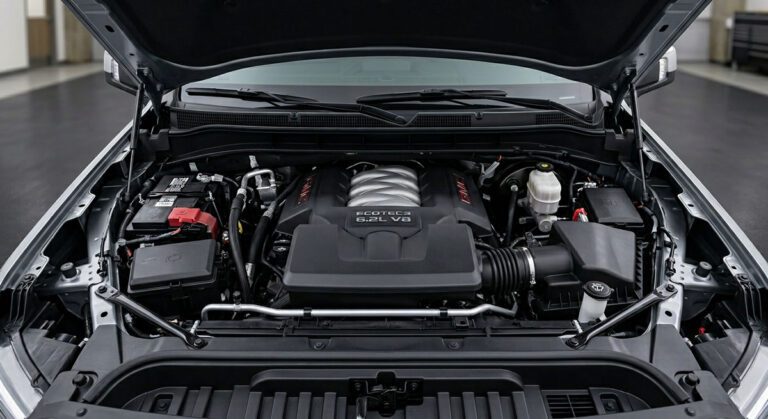
For anyone new to the mechanical side of things, a V8 engine is exactly what it sounds like: an engine built with eight piston cylinders arranged in a V-shape. Four cylinders sit on one side, four on the other, and both rows work together around a shared crankshaft.
That V-shaped layout is not just for looks. It allows the engine to stay more compact than a straight eight-cylinder design would, while still delivering the smooth, balanced power that comes from having more cylinders firing in sequence. More cylinders generally mean smoother power delivery and more overall output, which is exactly why the V8 became such a favorite among performance car manufacturers.
A Quick Trip Back to Where It All Started
The V8 engine actually traces its roots back to France, not America, though most people assume otherwise. Around 1904, a French manufacturer named Antoinette introduced what is widely considered the first V8 design, and at the time, it was genuinely groundbreaking.
Antoinette, however, did not get to keep the spotlight for long. American manufacturer Cadillac took the concept and refined it, eventually releasing the Cadillac L-Head engine in 1914. That version proved powerful enough and reliable enough that history largely credits Americans with popularizing, if not outright inventing, the V8 as we know it today.
Ford was not about to sit on the sidelines either. In 1932, the company released its own take on the V8, one that ran smoother, performed better, and caused fewer headaches than earlier versions. That engine helped cement the V8’s reputation as the go-to choice for anyone wanting serious power under the hood.
Fast forward to today, and you will mostly find V8 engines tucked under the hoods of luxury vehicles, muscle cars, and sports cars. Part of the reason for that narrowing focus comes down to fuel consumption. V8 engines are thirsty, and as fuel efficiency standards tightened over the decades, manufacturers leaned more heavily on smaller, turbocharged engines for everyday commuter vehicles, reserving the V8 for cars where raw performance matters more than miles per gallon.
The Most Powerful V8 Engines You Can Actually Drive Today
That 700 horsepower average holds up reasonably well across the board, but averages rarely tell the full story. Some V8 engines have pushed well past what most drivers would consider reasonable, and remarkably, several of them are completely street legal. You might have driven past one without even realizing it.
Let us look at a few standouts.
Koenigsegg Jesko: The Numbers Sound Almost Fake
This 5.0 liter twin-turbo engine produces an eye-watering 1,281 horsepower on standard fuel. Switch it over to biofuel, and that number jumps to 1,603 horsepower. Yes, you read that correctly.
The Jesko engine is an evolved version of the earlier Koenigsegg Agera, refined to be lighter while allowing for a higher redline. Less weight combined with more available RPM range translates directly into that staggering horsepower figure. This is not a car built for grocery runs. This is a machine engineered purely to dominate top speed records.
Hemi Supercharged: American Muscle at Its Loudest
The Hemi Supercharged engine has become something of a legend among muscle car enthusiasts, and for good reason. This 6.2 liter monster powers the Dodge Challenger to genuinely terrifying speeds, producing 717 horsepower on regular fuel. Switch to racing fuel, and output climbs to 840 horsepower.
What makes the Hemi particularly interesting is its lineage. It is an improved version of engines originally used in more modest Challenger trims, refined over time until it became one of the most respected supercharged V8s on the market.
Ferrari F154 CD: Italian Engineering at Its Finest
No conversation about powerful engines is complete without an Italian entry, and Ferrari delivers with the F154 CD. This 4.0 liter engine relies on a flat-plane crankshaft paired with twin-scroll turbochargers, a combination that pushes output to 769 horsepower.
There have been skeptics over the years questioning whether Ferrari’s numbers hold up in real-world testing, but the consistent performance results speak for themselves. Few engines manage to squeeze this much power out of a relatively modest 4.0 liter displacement.
Ford Predator: The Engine Behind the Mustang’s Bite
Ford owes a lot of its modern performance reputation to the Predator engine. Built as an advanced version of the earlier Coyote engine, the Predator has played a significant role in boosting Ford’s standing among performance car buyers.
At 5.2 liters, this engine cranks out up to 760 horsepower. You will find it under the hood of the Ford Mustang, paired with a sleek body design that gives drivers exactly what they are looking for: serious power wrapped in a package that turns heads.
Ranking the Heavy Hitters: A Quick Comparison Table
New V8 variations show up regularly as manufacturers keep pushing the boundaries of what these engines can do. Still, a handful have earned lasting respect within the performance car community. Here is how some of the top contenders stack up against each other.
| Engine Name | Horsepower | Displacement |
|---|---|---|
| Koenigsegg Jesko | 1,603 hp | 5.0 liters |
| Hemi Supercharged | 840 hp | 6.2 liters |
| Ferrari F154 CD | 769 hp | 4.0 liters |
| Ford Predator | 760 hp | 5.2 liters |
| Chevrolet Supercharged LT5 | 760 hp | Varies |
| Mercedes M178 LS2 | 730 hp | 4.0 liters |
Notice something interesting here. The Ferrari and Mercedes engines both manage to produce serious horsepower out of a smaller 4.0 liter displacement, while the Hemi needs a larger 6.2 liters to get into similar territory. This comes down to differences in turbocharging, engine design, and how efficiently each manufacturer manages combustion and airflow.
Want More Power? Here Is How Owners Boost Their V8’s Horsepower
Even a factory V8 with impressive stock numbers is not always enough for some drivers. There is a whole world of aftermarket modifications built around squeezing extra horsepower out of an already powerful engine, and honestly, it is one of the more accessible ways to make your car feel noticeably faster.
Here are some of the most common upgrades people turn to.
Cold Air Intake Systems
Cooler air is denser air, and denser air burns better during combustion than warm air does. That is the entire principle behind cold air intake systems.
By installing a stronger, better designed intake with specialized filters, your engine can pull in more cold air, leading to a more efficient combustion process and a noticeable bump in performance. This is often one of the cheapest and easiest upgrades available, which is exactly why it is usually the first thing enthusiasts install.
Upgraded Exhaust Systems
A wider exhaust system lets your engine push out waste gases faster. That improved flow allows the engine to complete more combustion cycles in less time, which translates into more usable power.
Beyond the performance benefit, a lot of owners simply enjoy the deeper, more aggressive sound that comes with an upgraded exhaust system. It is one of those modifications that improves both function and character at the same time.
Superchargers
A supercharger forces more air into the engine than it would normally draw in on its own. More air allows for more fuel to be combusted, and more fuel combustion means more horsepower.
Superchargers are mechanically driven directly off the engine, which means they deliver power almost instantly, without the slight delay associated with some other forced induction systems.
Turbochargers
Turbochargers work on a similar principle to superchargers, but instead of drawing power directly from the engine, they harness energy from exhaust gases that would otherwise go to waste. This makes them remarkably efficient, and a well installed turbocharger setup can increase horsepower by up to 25 percent.
The tradeoff is something called turbo lag, a brief delay between pressing the accelerator and feeling the boost kick in. Modern turbo designs have gotten much better at minimizing this, but it is still worth knowing about if you are considering this upgrade.
How Much Extra Horsepower Does Tuning Actually Add?
Engine tuning typically happens in stages, with each stage building on the last and offering progressively larger horsepower gains, along with progressively larger price tags.
Stage 1 Tuning: The Entry Point
Stage 1 tuning focuses on relatively minor upgrades, things like exhaust system improvements and basic tuning adjustments. This stage typically results in around a 15 percent horsepower increase, with costs ranging between $300 and $350.
Stage 2 Tuning: Bringing in the Camshaft
Moving into Stage 2, your mechanic will usually replace the camshaft with a more aggressive, higher performance version. This stage brings power gains of around 25 percent, with costs sitting around $450.
Stage 3 Tuning: Serious Gains for Serious Drivers
Stage 3 tuning involves upgrading the engine’s bore along with further camshaft improvements. Some previously modified components from earlier stages may also get further refinement here. When done with genuine, quality parts, this stage can deliver horsepower gains up to 40 percent. Expect to pay somewhere between $550 and $650.
Stage 4 Tuning: The Deep End
Most car owners never go beyond Stage 4, and honestly, there is rarely a need to. This stage focuses on compression, bore work, cylinder head improvements, and any other specific areas the owner wants addressed. Costs climb above $700, but in return, you are looking at roughly 60 percent more horsepower compared to stock.
Dyno Tuning: Fine-Tuning What You Already Have
There is a fair amount of conflicting information floating around about dyno tuning, with some sources overselling what it can realistically achieve. At its core, dyno tuning involves replacing underperforming components with stronger alternatives while using a dynamometer to measure real-time performance changes.
Costs and results here depend heavily on which specific parts get swapped out. Working with a skilled, experienced mechanic, you can reasonably expect around a 15 horsepower gain from a well executed dyno tuning session.
A Quick Look at Tuning Stages Side by Side
| Tuning Stage | Focus Area | Horsepower Gain | Estimated Cost |
|---|---|---|---|
| Stage 1 | Exhaust and basic tuning | ~15% | $300 to $350 |
| Stage 2 | Camshaft upgrade | ~25% | ~$450 |
| Stage 3 | Bore and cam refinement | ~40% | $550 to $650 |
| Stage 4 | Compression, bore, cylinder head | ~60% | $700+ |
| Dyno Tuning | Component replacement and calibration | ~15 hp | Varies |
Something worth keeping in mind here: horsepower gains listed as percentages mean more on higher output engines. A 25 percent gain on a 300 horsepower engine adds roughly 75 horsepower, while that same percentage on a 700 horsepower V8 adds around 175 horsepower. The math works in favor of already powerful engines, which is part of why V8s remain such popular candidates for aftermarket tuning.
Is Modifying Your V8 Worth the Investment?
Here is where things get a little personal, because the answer really depends on what you want out of your car. If you are chasing raw performance numbers for track days or want your daily driver to feel noticeably quicker, these upgrades absolutely deliver measurable results.
That said, it is worth thinking through a few practical considerations before diving into aftermarket modifications:
- Warranty implications: Significant engine modifications can void portions of your manufacturer warranty, so check the fine print before committing.
- Insurance costs: Insurers sometimes charge more to cover modified vehicles, particularly ones with documented horsepower increases.
- Fuel consumption: More power generally means more fuel burned, especially if you are actually using that extra horsepower rather than letting it sit unused.
- Long-term reliability: Pushing an engine beyond its factory specifications, especially through aggressive tuning stages, can shorten its lifespan if not done carefully by an experienced professional.
None of this means modifications are a bad idea. Plenty of drivers modify their V8s responsibly and enjoy years of reliable, enhanced performance. It just means going in with realistic expectations, and choosing a mechanic who genuinely understands high-performance engine work rather than someone learning on your dime.
Frequently Asked Questions
What is considered a normal horsepower range for a V8 engine?
Most standard V8 engines found in trucks and everyday performance cars fall somewhere between 300 and 500 horsepower. High-performance and specialty V8 engines, like the ones covered earlier, can push well beyond 700 horsepower.
Why do V8 engines use more fuel than smaller engines?
With eight cylinders firing instead of four or six, a V8 simply burns more fuel to generate its power output. This is one of the primary reasons manufacturers have shifted toward smaller turbocharged engines for everyday commuter vehicles.
Can any V8 engine be turbocharged or supercharged?
Technically, most V8 engines can be fitted with forced induction systems, but not every engine block is built to handle the additional stress safely. Consulting with an experienced tuner before adding forced induction is highly recommended.
Does adding horsepower always mean sacrificing reliability?
Not necessarily, but it depends heavily on how the modifications are done. Quality parts, professional installation, and proper tuning all play a significant role in maintaining reliability alongside increased performance.
Which V8 engine offers the best balance of power and daily usability?
The Ford Predator and Hemi Supercharged engines are both good examples of V8s that deliver serious performance while still being practical enough for regular street driving, unlike something as extreme as the Koenigsegg Jesko.
From its unexpected French origins to the roaring American muscle cars that made it famous, the V8 engine has earned its reputation the hard way, through decades of refinement, competition, and raw performance. Whether you are eyeing a factory Mustang or dreaming about squeezing another 200 horsepower out of your current ride, one thing is clear: this engine still has plenty left to prove. What would you do with an extra 100 horsepower under your hood?