
Your car starts acting strange. The acceleration feels delayed. The engine suddenly stalls at traffic lights. Fuel economy drops for no obvious reason. Then the check engine light appears and stays there like it owns your dashboard.
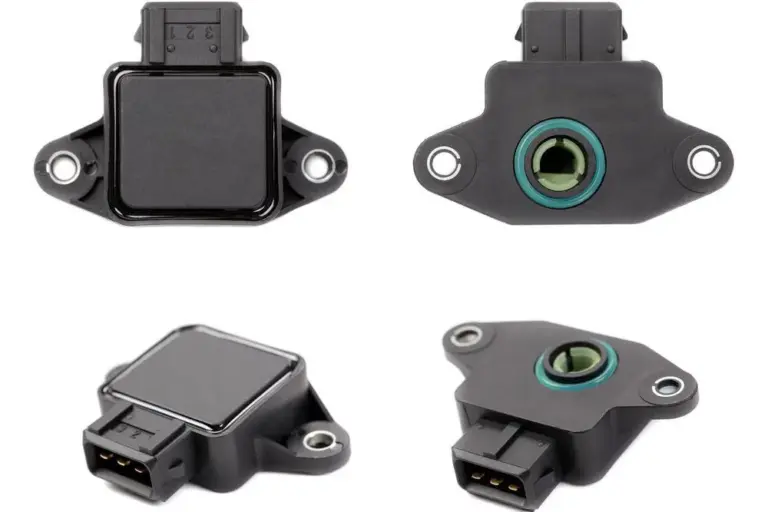
One small component can sit behind all of that chaos: the throttle position sensor, usually called the TPS.
Most drivers never think about the TPS until something feels off. When it starts malfunctioning, you may notice hesitation when you press the gas, an idle that feels uneven, rough shifting, or even surging that makes you second-guess every light change.
The good news is that not every TPS problem means you need an expensive part. In many cases, resetting the throttle position sensor helps, especially when the issue is related to a temporary electrical glitch, contamination, or a calibration problem the ECU can relearn.
This guide walks you through what the TPS does, how to reset it properly, the symptoms that point to TPS failure, and when you should stop resetting and start planning for replacement.
Why the Throttle Position Sensor Matters More Than Most Drivers Realize
Modern cars are not “dumb machines.” They are sensor-driven systems where the engine control unit constantly collects data and makes decisions every second.
Your engine computer uses sensor inputs to calculate how much fuel to inject, how to control idle, how to set ignition timing, and how to adapt the throttle behavior over time.
The TPS is one of the sensors the ECU leans on heavily.
Its job is simple to explain and complicated to run correctly. It monitors the position of the throttle valve inside the throttle body. That valve regulates how much air flows into the engine.
When you press the accelerator, the throttle opens. The TPS measures that opening and sends the information to the engine control module, often referred to as the ECU or ECM.
That signal affects several systems at once, not just engine performance. If the TPS sends incorrect information, the ECU does what it is programmed to do: it makes decisions based on bad data.
Here is what the TPS information commonly influences:
- Fuel injection timing and fueling amount
- Air-fuel ratio calculations
- Transmission shift behavior on vehicles that use electronic throttle control
- Idle speed control and idle stability
- Acceleration response
- Ignition timing adjustments
This is why even “minor” TPS problems can feel major. The engine is not just reacting. It is reacting to the wrong input.
And once you start feeling drivability issues, you need to take it seriously. The goal is not panic. The goal is clarity and control.
How the Throttle Position Sensor Actually Works
The TPS is typically mounted directly on the throttle body so it can track throttle movement precisely. On many vehicles, it bolts to the throttle assembly and shares the same environment, heat, and vibration as the throttle plate itself.
Inside the TPS is a component that acts like a variable electrical signal sender. In many designs, it is a potentiometer, which means it changes the electrical output in relation to physical movement.
When the throttle plate opens and closes, the sensor changes the voltage it sends. The ECU reads that voltage and translates it into throttle position.
In a simplified flow, this is what happens:
- The TPS changes voltage output
- The ECU reads that voltage
- The ECU interprets throttle position from the signal
- The engine adjusts fuel and timing accordingly
At idle, the TPS sends a low voltage signal. When you open the throttle, the sensor output increases smoothly as throttle angle changes.
The ECU expects that voltage to change in a consistent, predictable pattern. That is where problems show up. If the sensor output becomes erratic, jumps around, or drops out, the ECU loses confidence and often triggers diagnostic trouble codes.
That confusion is what creates the symptoms drivers notice. Hesitation, surging, and stalling are often just the visible results of a sensor that is no longer telling the truth.
Signs Your Throttle Position Sensor Is Failing
TPS issues rarely arrive like a storm with perfect timing. They usually start subtle and then become more noticeable as the sensor continues to degrade.
At first, you may notice hesitation or a slightly rough idle. Over time, the symptoms may become more consistent and more annoying, until the check engine light makes sure you cannot ignore it anymore.
Here are the most common warning signs, written in plain language so you can connect them to what you feel when you drive.
1. Poor Acceleration Response
This is one of the most noticeable TPS symptoms.
You press the gas pedal, but the engine hesitates before it responds. Sometimes the delay is brief. Sometimes it feels inconsistent, like the car cannot decide how much power you asked for.
The ECU may not interpret throttle opening correctly because the TPS signal is inaccurate. The result is delayed or improper fueling and timing.
In the real world, this often shows up when you:
- Try to accelerate smoothly from a stop
- Merge into traffic
- Speed up on a highway ramp
- Give light throttle and expect an immediate response
2. Rough Idle or Engine Stalling
A failing TPS can confuse the ECU about the throttle position at idle.
When idle throttle readings are wrong, idle control can become unstable. That can lead to:
- Fluctuating idle speed
- Engine shaking at idle
- Sudden stalling
- Difficulty maintaining smooth idle
Stalling is not just inconvenient. It can be dangerous in traffic or when you are turning through an intersection. If your engine stalls repeatedly, treat it as a serious issue rather than something to “watch for later.”
3. Unexpected or Surging Acceleration
Sometimes a TPS sends false signals that the throttle is opening more than it actually is.
The driver experience can feel alarming. You barely press the gas and the engine suddenly revs higher. Or you press the pedal normally and the car surges forward like you stepped harder than you did.
This symptom should never be ignored. Surging can lead to poor control of speed, especially in stop-and-go traffic where small speed changes matter.
4. Poor Fuel Economy
When the TPS reports incorrect airflow demand, the ECU may inject too much fuel. That creates a richer fuel mixture than the engine needs.
Rich mixtures burn more fuel, and your fuel economy drops.
If your mileage suddenly worsens without an obvious cause, a TPS problem is worth investigating, especially if you also notice rough idle or hesitation.
5. Check Engine Light
A failing TPS frequently triggers diagnostic trouble codes. The ECU stores those codes so technicians can identify the source of the problem using a scan tool.
Common TPS-related codes often point to throttle position circuit issues or voltage irregularities.
- P0120
- P0121
- P0122
- P0123
- P0220
An OBD-II scanner can help confirm whether the TPS is involved. If your scan results show throttle-related codes alongside your symptoms, you are not guessing anymore. You have direction.
When Resetting the TPS Can Actually Help
Here is the key detail people miss. Not every TPS issue is permanent sensor failure.
Modern vehicles rely on electronic calibration and adaptive memory. Sometimes the ECU stores incorrect throttle position data. Other times, the ECU experiences a temporary communication glitch and flags an error it should not have flagged.
Resetting can help when the issue is caused by things that can be relearned or cleared, such as:
- Temporary electrical faults
- Throttle body cleaning events
- Battery replacement or battery power changes
- Minor sensor calibration drift
- Intermittent TPS signal issues
- Idle relearn problems
Resetting does not “repair” a sensor that has worn out internally. But it can restore the ECU’s baseline calculations so the engine can respond properly again.
This is why resetting is such a reasonable first step. It is low cost. It is low risk when done correctly. And it helps you confirm whether the problem is calibration related or truly mechanical.
How to Reset Your Throttle Position Sensor Step by Step
Reset procedures vary a little by vehicle, but the basic approach is consistent across many cars.
When people say, “Reset the TPS,” they often mean resetting the ECU memory that stores throttle calibration values.
The most common method uses electrical power interruption. Disconnect power long enough for the ECU capacitors to discharge, reconnect battery power, then let the ECU relearn throttle and idle behavior.
Here is the step-by-step process, written to be clear and safe for a typical home garage setup.
Step 1: Park the Vehicle Safely
Park on a level surface and turn the engine completely off.
Set the parking brake. If your vehicle has keyless start, switch it fully off so the ECU goes into a sleep state.
If you just drove the car, allow the engine bay to cool slightly. You are working near the battery and electrical connections. Cooling time helps prevent burns and lets you handle components more comfortably.
Step 2: Disconnect the Negative Battery Terminal
Locate the battery and disconnect the negative battery cable using the right tool size.
This interrupts electrical power to the ECU and resets stored adaptive behavior related to throttle control.
Use insulated gloves if you are not used to working around battery terminals. Battery systems can still discharge unexpectedly, and gloves add a layer of protection.
The negative terminal is usually marked with a minus sign and often has a black cable attached. The positive terminal is marked with a plus sign and often has a red cable.
Step 3: Wait 5 to 20 Minutes
Leave the battery disconnected for at least 5 minutes.
Some technicians prefer waiting 15 to 20 minutes. The goal is to allow residual electrical charge to dissipate from ECU capacitors and fully clear adaptive throttle memory.
During this time, the engine computer loses stored adaptive throttle settings. That is what allows the ECU to relearn from a clean baseline once power returns.
While you wait, you can take five minutes to inspect battery terminal clamps for corrosion. If you see heavy corrosion, clean it carefully before you reconnect later. Loose or corroded terminals can create electrical problems that mimic sensor failures.
Step 4: Reconnect the Battery
Reconnect the negative battery terminal securely.
Make sure the connection is tight and clean. Any looseness here can cause additional electrical issues, including intermittent sensor readings and unstable idle.
Do not overtighten to the point where you damage the terminal clamp. Tight and stable is the target.
Step 5: Turn the Ignition On Without Starting the Engine
Now you turn the ignition key to the “ON” position without starting the engine.
Leave it there for about 10 to 15 seconds.
This lets the throttle system perform an initialization sequence. Many electronic throttles and ECU modules perform checks during this time.
You may notice slight clicking or humming sounds. If the noises are brief and do not come with a serious warning, they are often normal initialization behavior.
Step 6: Start the Engine and Let It Idle
Start the engine and let it idle. Do not touch the accelerator pedal during this part.
Allow it to idle for several minutes so the ECU can relearn throttle position and idle parameters.
You might see idle speed fluctuate slightly while the relearn process happens. That can be normal right after a reset.
Once idle stabilizes and the engine behavior feels normal, take the car for a careful test drive. Keep it gentle at first. Smooth acceleration tells you more than flooring the pedal.
If the symptoms improve after resetting, you have likely solved a calibration or temporary communication issue. If symptoms continue unchanged, you should move toward cleaning, wiring inspection, scanning trouble codes, or replacement depending on what you find.
Alternative Throttle Position Sensor Reset Methods
Some vehicles do not rely on battery disconnect alone. They require a throttle relearn sequence using pedal inputs and ignition cycles.
For example, certain Nissan, Toyota, Honda, and GM vehicles may use throttle relearn procedures involving accelerator pedal sequences.
One common pattern looks like this:
- Turn the ignition on
- Press the accelerator pedal slowly
- Wait for specified intervals
- Allow throttle recalibration
Because procedures vary heavily, you should not guess. If the simple battery reset does not work, look up the model-specific procedure in a service manual or a trustworthy repair guide for your exact year, make, model, and engine.
If you want a practical approach, think of it this way: battery reset clears memory. Relearn procedure teaches the ECU the correct throttle endpoints. Both can matter, depending on how your specific ECU works.
Why Loose or Corroded Connections Cause TPS Problems
Many TPS problems are not caused by a worn sensor. They are caused by electrical connection issues.
Electrical connections are exposed to real-world conditions: vibration, heat cycling, moisture, and grime. Over time, the sensor might be fine internally, but the signal reaching the ECU becomes unreliable.
What usually happens over time:
- Connectors loosen from vibration
- Corrosion develops on terminals
- Wiring insulation becomes brittle
- Moisture contaminates connections
Any interruption in the TPS signal can create drivability problems that feel exactly like a bad sensor. That is why inspecting connections matters before buying parts.
If you have access to the TPS wiring, inspect the harness and connector for:
- Loose plugs
- Green corrosion or white corrosion residue
- Broken wires
- Damaged insulation
- Oil contamination around the connector
Sometimes simply cleaning and reconnecting the connector solves the problem entirely. If you see corrosion, cleaning the terminals and applying dielectric grease can improve signal stability. Then you reset or relearn the system and test drive again.
Here is a real-world example. A driver notices hesitation only when the engine is warm. The TPS itself tests poorly with a multimeter. Then the driver discovers a connector pin with partial corrosion that expands with heat. Cleaning the connector fixes the symptom without replacing the sensor.
That is the kind of time-saving win you get when you check the basics first.
Cleaning the Throttle Body Can Help Too
A dirty throttle body can mimic TPS problems. It can also create symptoms that make you think the sensor is lying, when the real problem is airflow control that is not responding smoothly.
Carbon buildup forms around the throttle plate and can affect how smoothly the valve moves. The throttle plate might stick slightly, then release, then stick again. The ECU may compensate, but it cannot fully correct a mechanically sticky throttle.
Symptoms of a dirty throttle body often include:
- Rough idle
- Hesitation
- Poor acceleration
- Stalling
Cleaning the throttle body periodically can restore smoother operation and make TPS readings more meaningful.
When you clean, use a throttle body cleaner designed for intake systems. Avoid harsh solvents that can damage sensors, intake materials, or electronic components.
After cleaning, a TPS reset or throttle relearn procedure is often necessary so the ECU relearns the new baseline. If you clean but do not reset, you may still see idle weirdness for a short time because the ECU is using old adaptation values.
When Resetting the TPS Will Not Fix the Problem
Resetting works when the issue is calibration, memory, wiring connection stability, or temporary electrical behavior. It does not work when the sensor itself is mechanically or electrically worn out.
TPS components experience constant movement and electrical cycling. Over time, internal components can wear down. Potentiometers can become scratchy. Tracks can wear unevenly. Internal electronics can drift out of tolerance.
Resetting cannot repair problems such as:
- Worn potentiometers
- Internal electrical shorts
- Broken sensor housings
- Severe corrosion inside the sensor
- Failed electronics
If symptoms continue after resetting, you should treat replacement as the likely next step. At that point, scanning trouble codes and verifying sensor output data can prevent unnecessary guesswork.
Signs You Need a New Throttle Position Sensor
Here are the clearest signs that resetting has become a dead end and replacement is needed.
- Persistent stalling after reset
- Repeated TPS-related fault codes
- Erratic acceleration continues
- Transmission shifting problems remain
- Engine still surges unexpectedly
- Fuel economy remains poor
- Check engine light keeps returning
When these symptoms persist, continuing to reset usually wastes time. The sensor itself has likely failed mechanically or electronically.
That does not mean you should jump straight into replacement without checking. A quick wiring and connector inspection is still smart. But if the sensor is confirmed faulty by codes and live data, replacing it is the clean fix.
How Much Does Throttle Position Sensor Replacement Cost?
The good part is that TPS replacement is usually not one of the most expensive engine repairs. It is typically smaller and less labor-intensive than many other underhood repairs.
Costs commonly include the part and labor for installation. In many cases, a TPS replacement runs within this range:
| Repair | Estimated Cost |
|---|---|
| TPS Sensor Only | $50 – $150 |
| Professional Labor | $50 – $100 |
| Total Replacement Cost | $150 – $250 |
Luxury vehicles and performance cars can cost more due to calibration needs or integrated throttle body designs. Some modern vehicles also integrate the TPS directly into the throttle body assembly, which increases replacement cost.
If you are working with a shop, ask whether they will verify the sensor output and reset adaptations after installation. That step matters for getting the drivability back to normal quickly.
Can You Drive With a Bad Throttle Position Sensor?
Technically, yes. Realistically, it depends on how bad it is and how it is failing.
A failing TPS can create unpredictable engine behavior. Sometimes it is only a mild hesitation. Other times it can cause stalling, surging, or sudden changes in acceleration response.
That unpredictability becomes especially risky in situations like:
- Highway merging
- Passing traffic
- Heavy city driving
- Stop-and-go traffic
- Sharp intersections
Unexpected stalling or sudden acceleration problems can easily create hazardous driving conditions. If your vehicle begins stalling repeatedly or accelerating unpredictably, address the issue immediately rather than continuing to drive it like normal.
One helpful practical approach is to avoid the situations that have the highest consequences. If you can get the vehicle fixed sooner, you reduce both safety risk and the chance of secondary damage.
How to Prevent Future TPS Problems
TPS sensors do wear out eventually. But proper maintenance can greatly reduce the chances of early TPS problems and can also prevent contamination and wiring issues that mimic sensor failure.
- Keep the throttle body clean.
- Replace dirty air filters regularly.
- Fix oil leaks promptly.
- Avoid pressure washing engine electronics.
- Inspect wiring during maintenance.
- Address check engine lights early.
Small issues ignored for too long often turn into larger repairs. A dirty throttle body today can become a TPS-style drivability complaint tomorrow. That is why early attention matters.
It is not just about saving money. It is also about keeping your vehicle predictable. Predictability reduces stress, reduces unsafe moments, and helps you catch problems before they become emergencies.
The Biggest Mistake Drivers Make With TPS Problems
The biggest mistake is assuming every drivability problem means the TPS is bad.
TPS symptoms overlap with several other issues. Many components can affect throttle response, idle control, acceleration, and fuel trim. If you replace parts without verifying, you can end up paying for the wrong repair.
Here are common problems that can create nearly identical symptoms:
- Dirty throttle body
- Vacuum leaks
- Mass airflow sensor problems
- Fuel pressure issues
- Ignition coil failures
- Bad spark plugs
- Transmission faults
That is why scanning fault codes matters so much. Codes help confirm what the ECU actually detected, and live sensor data helps you see what is happening in real time.
Blindly replacing parts without proper diagnosis gets expensive quickly. It also wastes time, which is frustrating when your car is your daily transportation.
If resetting does not solve the issue and symptoms continue, a professional diagnostic inspection is the smartest next step. The earlier you confirm the true cause, the sooner you get back to smooth driving.
Final Thoughts
The throttle position sensor may be small, but its influence on engine performance is enormous. When it starts sending inaccurate information, your engine, transmission, and fuel system may all react incorrectly. That is when acceleration feels wrong, idle becomes unstable, and fuel economy drops.
Resetting the TPS is often worth trying first because it costs nothing and can clear temporary calibration or communication issues quickly. In many cases, pairing a reset with basic throttle body cleaning restores smoother acceleration and stable idle behavior.
But if symptoms continue after a reset, do not keep forcing the same solution. A failing TPS can eventually leave you stranded or create unsafe driving conditions. That is why the best next move is simple: scan the vehicle, confirm the fault source, and decide on cleaning, wiring repair, or replacement based on evidence.
Here is your next action: If your vehicle is showing TPS-related symptoms, reset it once properly, then test drive. If the symptoms return, grab the codes with a scanner and check TPS readings before you spend money guessing. What code (if any) is your car storing right now?