
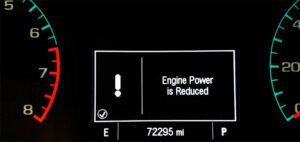

You are merging onto a highway. You press the accelerator to pick up speed, expecting the engine to respond the way it always does. But this time, nothing happens the way it should. The engine feels strangled. The RPMs refuse to climb above 3,000. The transmission seems stuck in one gear. Your turbocharged engine feels like a naturally aspirated lawnmower. The check engine light is staring at you from the dashboard, and a sinking feeling is forming in your stomach.
Your car just went into limp mode. And it chose the worst possible moment to do it.
Table of Contents
If you have never experienced limp mode before, it is alarming. The car feels broken. Genuinely, mechanically broken. You cannot accelerate past 25 or 30 miles per hour. Other drivers are honking at you. You are trying to figure out whether you can even make it to the next exit, let alone home or to a shop.
But here is the thing. Limp mode is not your car breaking down. It is your car protecting itself from breaking down. The engine control unit detected something it did not like, something that could cause real damage if full power continued, and it deliberately cut performance to prevent a catastrophic failure.
That does not make it any less frustrating. But understanding what triggered it, why your car reacted the way it did, and how to fix it will save you time, money, and a whole lot of stress. So let us go through everything. What limp mode actually is, the most common reasons it kicks in during acceleration, how to diagnose the root cause, and what the repairs typically look like.
What Limp Mode Actually Is (And Why Your Car Does This to You)
Limp mode goes by several names depending on the manufacturer. Some call it “failsafe mode.” Others call it “reduced power mode” or “emergency running mode.” BMW calls it “EML” (Electronic Motor Limitation). GM vehicles might display “Engine Power Reduced” on the dashboard. Whatever your car calls it, the concept is the same across every make and model.
Limp mode is a self-preservation strategy programmed into your vehicle’s engine control unit (ECU). When the ECU detects a fault that could potentially damage the engine, the transmission, the turbocharger, the catalytic converter, or another expensive component, it deliberately reduces the engine’s output to prevent that damage from occurring.
What Your Car Does When It Enters Limp Mode
The specific restrictions vary by vehicle, but the typical limp mode experience includes some combination of the following:
- RPM limitation. The engine will not rev above a set threshold, usually somewhere between 2,500 and 3,000 RPM. This effectively caps your speed at 25 to 40 mph depending on the gear you are in.
- Turbo boost disabled. If your vehicle has a turbocharger or supercharger, the forced induction system is shut down entirely. The engine runs on naturally aspirated power only, which on a turbocharged engine can feel like losing half your horsepower.
- Transmission locked in a single gear. On vehicles with automatic transmissions, the transmission may lock itself into second or third gear and refuse to shift up or down. This is called “limp home gear” and is designed to provide enough speed to get off the road without allowing the transmission to do further damage to itself.
- Auxiliary systems disabled. Some vehicles disable the air conditioning, traction control, or other non-essential systems to reduce load on the engine.
- Warning lights and messages. The check engine light illuminates. Some vehicles display a specific message like “Reduced Engine Power,” “Limp Mode Active,” or “Service Engine Soon.”
The result is a vehicle that feels gutless, unresponsive, and barely capable of maintaining highway speed. It is designed to give you just enough power to pull over safely, drive to the nearest exit, or limp to a repair shop at low speed. It is not designed for normal driving. And it is not something you should try to drive on for days or weeks.
Why Limp Mode Tends to Hit During Acceleration
There is a reason limp mode so frequently kicks in when you are accelerating rather than when you are cruising or idling. Acceleration is the most demanding state for your engine and drivetrain. It is when the engine is producing the most power, burning the most fuel, generating the most heat, and putting the most stress on every component in the system.
Many faults that exist at a low level during cruising or idling become dramatically worse during hard acceleration. A small boost leak that the turbo can compensate for at partial throttle might cause a massive pressure drop at full throttle. A weak fuel pump that can keep up with demand at cruise might starve the engine during wide-open throttle. A transmission that slips slightly during gentle driving might slip badly enough under hard acceleration to trigger a fault code.
Acceleration is the stress test that exposes hidden problems. And the ECU is watching all of it in real time, comparing actual sensor readings to expected values. The moment the discrepancy exceeds the programmed threshold, limp mode activates.
The Five Most Common Causes of Limp Mode During Acceleration
While there are dozens of potential triggers for limp mode, most cases during acceleration trace back to one of five categories. Let us go through each one in detail, because understanding the cause is the first step toward an efficient and cost-effective fix.
1. Sensor Failures: The Most Frequent Trigger by Far
If limp mode has a “most likely cause,” this is it. Your engine relies on a network of sensors to measure everything from airflow to throttle position to exhaust gas composition. The ECU uses this sensor data to make real-time decisions about how much fuel to inject, when to fire the spark plugs, how much boost to allow, and when to shift gears. When a sensor fails or sends bad data, the ECU loses its ability to manage the engine safely, and limp mode is the result.
The three sensors most commonly involved in acceleration-related limp mode are:
Mass Airflow (MAF) Sensor or Manifold Absolute Pressure (MAP) Sensor
The MAF sensor measures the volume and density of air entering the engine. The MAP sensor measures the pressure in the intake manifold. Both are used by the ECU to calculate the correct amount of fuel to inject. If either sensor fails or sends inaccurate readings, the fuel-to-air ratio gets thrown off.
During acceleration, the airflow through the engine increases dramatically. A MAF sensor that is contaminated with oil residue, dirt, or debris may read accurately at low airflow (idle and cruise) but produce wildly inaccurate readings at high airflow (full throttle). The ECU sees these implausible readings, determines that it cannot safely manage the engine at high power, and activates limp mode.
A common real-world scenario. A vehicle owner replaces the air filter and accidentally touches the MAF sensor element during the process. The oil from their fingers contaminates the sensor’s hot wire or hot film element. The car runs fine for a while, then one day during a hard merge onto the highway, limp mode kicks in. A $10 can of MAF sensor cleaner could have prevented a $200 sensor replacement.
Throttle Position Sensor (TPS)
The TPS tells the ECU how far the accelerator pedal is pressed and how quickly you pressed it. This information is used to determine driver intent. Are you gently accelerating? Are you flooring it? Are you coasting with your foot off the gas?
If the TPS sends a reading that does not match reality, the ECU gets confused about what the driver wants. Worse, if the sensor sends erratic or implausible signals (like jumping from 10 percent throttle to 90 percent throttle instantaneously when the driver barely moved the pedal), the ECU interprets this as a potential sensor failure and goes into limp mode as a precaution.
TPS failures often manifest as intermittent limp mode. The car works fine most of the time, but during certain throttle positions or during rapid pedal inputs, the sensor glitches and triggers the failsafe. This intermittent nature makes it frustrating to diagnose because the problem might not be present when the technician is testing the vehicle.
Oxygen Sensors (O2 Sensors)
Your vehicle has oxygen sensors in the exhaust system that measure the oxygen content of the exhaust gas. The ECU uses this data to fine-tune the fuel mixture (a process called “closed-loop fuel control”). If an oxygen sensor fails, the ECU cannot accurately adjust fuel delivery.
A failed oxygen sensor might cause the engine to run too rich (too much fuel) or too lean (too little fuel). Running too lean during hard acceleration is particularly dangerous because it can cause detonation (pre-ignition), which can destroy pistons, valves, and head gaskets. The ECU knows this, and if it sees oxygen sensor data that suggests an extremely lean condition during acceleration, it will activate limp mode to protect the engine from detonation damage.
2. Turbocharger and Supercharger Problems
If your vehicle has a turbocharged or supercharged engine, the forced induction system is one of the most common sources of limp mode during acceleration. This makes sense when you think about it. The turbo or supercharger is the component that provides the biggest power increase during acceleration, and it is also the component under the most stress during those moments.
The most frequent turbo-related triggers for limp mode include:
Boost Leaks
A boost leak occurs when pressurized air escapes from the intake system between the turbo compressor and the engine’s intake valves. This pressurized air (boost) is what gives a turbocharged engine its power advantage. If it leaks out, the turbo has to work harder to build pressure, and it may not be able to reach the target boost level that the ECU expects.
The ECU monitors boost pressure through a sensor. It knows how much boost the turbo should be producing at a given RPM and throttle position. If actual boost falls significantly below the expected level, the ECU logs an underboost fault code (commonly P0299) and activates limp mode.
Boost leaks come from several common sources:
- Cracked or split rubber intercooler hoses. These hoses carry pressurized air and are subjected to constant heat cycling. Over time, the rubber hardens, cracks, and eventually splits under pressure.
- Loose hose clamps. A clamp that was not tightened adequately (or that loosened from vibration) allows the hose to blow off or leak under boost.
- Cracked intercooler end tanks. Many factory intercoolers have plastic end tanks that can crack from heat cycling and pressure.
- Failed gaskets or seals at the turbo outlet, throttle body, or intake manifold connections.
A real-world example that happens constantly. A 2018 Ford F-150 with the 3.5L EcoBoost engine develops intermittent limp mode during hard acceleration. The owner notices it happens most often when towing or when making aggressive highway merges. A scan reveals code P0299 (Turbo/Supercharger Underboost). Physical inspection finds a hairline crack in one of the charge air cooler (intercooler) pipes. The crack is small enough that it does not leak at light throttle, but under full boost pressure, it opens up and dumps pressurized air. A new pipe costs $80 to $120 and takes about 30 minutes to install. Problem solved.
Wastegate Failure
The wastegate is a valve that controls how much exhaust gas flows through the turbo’s turbine wheel. By controlling the exhaust flow, the wastegate controls how fast the turbo spins, which controls how much boost pressure it produces. If the wastegate sticks closed, the turbo over-boosts (too much pressure). If it sticks open, the turbo under-boosts (not enough pressure). Either condition triggers limp mode.
On vehicles with electronic wastegate actuators (most modern turbocharged vehicles), the actuator can fail electrically or mechanically. A common failure mode is the actuator motor burning out or the linkage rod seizing due to carbon buildup. When the ECU commands the wastegate to a specific position and the feedback sensor says it did not move, the ECU flags a fault and limits engine power.
Variable Geometry Turbo (VGT) Problems
Many modern diesel engines and some gasoline engines use variable geometry turbochargers. Instead of a traditional wastegate, these turbos have movable vanes inside the turbine housing that change the effective size of the turbine. This allows the turbo to produce boost across a wider RPM range.
The problem is that these vanes operate in extremely hot, soot-laden exhaust gas. Over time, they can stick due to carbon and soot buildup. A stuck VGT mechanism means the turbo cannot adjust its boost output, which triggers a fault code and limp mode.
This is particularly common on diesel trucks and diesel SUVs. The combination of short trips (which do not get the exhaust system hot enough for a proper DPF regeneration) and the inherently sooty nature of diesel combustion creates the perfect recipe for VGT vane sticking.
3. Transmission Faults That Limit Engine Power
This one confuses a lot of people. You are accelerating, the engine loses power, and you assume the problem is the engine. But the root cause might actually be the transmission.
The ECU and the Transmission Control Module (TCM) communicate constantly over the vehicle’s data network. The TCM monitors the transmission’s internal behavior and reports back to the ECU. If the TCM detects a problem with the transmission, it can request that the ECU reduce engine torque to prevent the transmission from being damaged.
In other words, the engine is not the one with the problem. The engine is being throttled down to protect the transmission. But from the driver’s seat, it feels identical to engine-related limp mode.
Common transmission-related triggers include:
Slipping Clutch Packs or Bands (Automatic Transmissions)
Inside an automatic transmission, clutch packs and bands are what physically lock different gear sets together to create the various gear ratios. When these friction elements wear out, they slip instead of gripping firmly. Slipping means the engine’s torque is not being fully transmitted to the wheels.
The TCM can detect slipping by comparing the engine RPM (from the ECU) to the transmission output shaft speed. If the engine RPM rises faster than the output shaft speed indicates it should (given the current gear ratio), the TCM knows the clutch is slipping.
Slipping is most pronounced during hard acceleration because that is when the torque load on the clutch packs is highest. The TCM responds by requesting reduced engine torque (limp mode) to prevent the already-worn clutch packs from overheating and failing completely. Overheated clutch packs can warp, disintegrate, and send debris throughout the transmission, turning a $1,500 clutch pack replacement into a $4,000+ full transmission rebuild.
Faulty Transmission Solenoids
Automatic transmissions use electrically controlled solenoid valves to direct hydraulic fluid to the various clutch packs and bands. These solenoids open and close on command from the TCM to engage and disengage gears. If a solenoid fails (stuck open, stuck closed, or producing the wrong flow), the transmission cannot shift properly.
A failed shift solenoid might cause harsh shifts, delayed shifts, or no shifts at all. The TCM detects the abnormal shift behavior, logs a fault code, and puts the transmission (and by extension, the engine) into limp mode to prevent further damage.
TCM Software Glitches and Communication Errors
Sometimes the transmission hardware is fine, but the software controlling it has a hiccup. A temporary communication error between the TCM and the ECU, a corrupted adaptive shift table, or a software bug triggered by a specific combination of conditions can all cause the transmission to enter limp mode.
This is actually more common than most people realize, especially on vehicles that have had their battery disconnected recently (which resets the adaptive shift tables) or on vehicles that have been reflashed with a software update that introduced a bug.
In some cases, simply clearing the fault codes and allowing the TCM to relearn its shift points over 50 to 100 miles of normal driving resolves the issue. In other cases, the dealership needs to reflash the TCM with updated software.
4. Fuel System Failures
Your engine needs three things to produce power: air, fuel, and spark (or compression, in a diesel). If the fuel system cannot deliver enough fuel to match the air coming into the engine during hard acceleration, the mixture goes lean. A lean mixture during high-load conditions is extremely dangerous for the engine. It can cause pre-ignition, detonation, melted pistons, and burned exhaust valves.
The ECU monitors the fuel system closely and will activate limp mode if it detects that fuel delivery is insufficient. The most common fuel-related causes are:
Weak or Failing Fuel Pump
The fuel pump is an electric motor submerged in your fuel tank. Its job is to pressurize fuel and deliver it to the engine at a specific pressure (typically 40 to 60 psi for most gasoline engines, and significantly higher for direct-injection and diesel engines). Over time, the pump motor wears, and its ability to maintain pressure under high demand diminishes.
A fuel pump in the early stages of failure might maintain adequate pressure at idle and cruise (low demand) but drop below the required pressure during wide-open throttle acceleration (high demand). The ECU monitors fuel rail pressure through a sensor. When fuel pressure drops below the programmed minimum during acceleration, the ECU cuts power to prevent lean-condition engine damage.
This is one of those problems that starts intermittently and gradually gets worse. You might notice limp mode only during very hard acceleration at first. Over weeks or months, it starts happening during moderate acceleration. Eventually, the pump gets weak enough that it cannot maintain pressure even at cruise, and the car starts stalling or refusing to start.
Clogged Fuel Filter
The fuel filter catches contaminants and debris before they reach the fuel injectors. Over time, the filter collects enough material to restrict fuel flow. Like a clogged air filter, a clogged fuel filter has the most impact at high flow rates (hard acceleration), while it might still pass enough fuel for low-demand situations.
On many older vehicles, the fuel filter is an external, serviceable component that should be replaced every 30,000 to 50,000 miles. On many newer vehicles, the fuel filter is integrated into the fuel pump module inside the tank, and it is designed to last the life of the pump (which typically means it never gets replaced until the pump fails).
If your vehicle has a serviceable external fuel filter and it has not been replaced in over 50,000 miles, it is worth checking. A $15 to $30 fuel filter replacement could resolve a limp mode issue that otherwise looks like a much more expensive problem.
Clogged or Failing Fuel Injectors
Fuel injectors spray a precisely measured amount of fuel into each cylinder. Over time, injectors can become clogged with carbon deposits, varnish from low-quality fuel, or debris that made it past the fuel filter. A clogged injector delivers less fuel than the ECU commands, causing that cylinder to run lean.
A single lean cylinder might cause a misfire code. Multiple lean cylinders can cause the ECU to detect a system-wide fueling problem and activate limp mode, especially during high-load conditions where the discrepancy between commanded and actual fuel delivery is most pronounced.
Professional fuel injector cleaning (either on-car using a pressurized cleaning solvent or off-car using an ultrasonic cleaning machine) can often restore injector performance without replacement. Replacement is necessary when cleaning does not resolve the flow issue.
5. Exhaust and Emissions System Problems
The exhaust system is not just a pipe that carries fumes away from the engine. Modern exhaust systems contain several components that are actively monitored by the ECU and that can directly trigger limp mode when they malfunction.
Clogged Diesel Particulate Filter (DPF)
If you drive a diesel vehicle, the DPF is one of the most common causes of limp mode. The DPF captures soot (particulate matter) from the exhaust and periodically burns it off through a process called regeneration. If the filter gets too clogged for regeneration to handle (often because of too many short trips that prevent the exhaust from getting hot enough to trigger regeneration), the backpressure in the exhaust system rises to a level that threatens engine performance.
The ECU monitors DPF pressure differential through sensors mounted before and after the filter. When the pressure differential exceeds the programmed threshold, the ECU activates limp mode to prevent excessive backpressure from damaging the turbocharger or the engine itself.
A forced regeneration (performed by a technician using a scan tool to command the engine into a high-idle regeneration cycle) can sometimes clear a moderately clogged DPF. If the filter is severely clogged or damaged, replacement is necessary, and DPF replacement is not cheap. Expect to pay $1,000 to $3,000 or more depending on the vehicle.
Prevention is much cheaper than the cure here. If you drive a diesel vehicle, make sure you take it on highway drives regularly (at least 20 to 30 minutes at highway speed) to allow the DPF to regenerate naturally. Short-trip city driving is the number one killer of DPFs.
Stuck or Failed EGR Valve
The Exhaust Gas Recirculation (EGR) valve redirects a portion of the exhaust gas back into the intake manifold. This lowers combustion temperatures and reduces nitrogen oxide (NOx) emissions. Over time, the EGR valve can become clogged with carbon deposits and either stick open or stick closed.
A stuck-open EGR valve allows too much exhaust gas into the intake, which dilutes the fresh air charge and reduces engine power. During hard acceleration, this effect is magnified because the engine needs maximum fresh air to produce maximum power. The ECU sees that the engine is not producing the expected power for the given throttle position and may activate limp mode.
A stuck-closed EGR valve causes NOx emissions to rise, which can trigger an emissions-related fault code. Depending on the vehicle and the severity, this may or may not trigger limp mode.
EGR valve failures are particularly common on Volkswagen and Audi TDI diesel engines, Ford diesel trucks, and many GM diesel applications. The combination of diesel exhaust soot and the recirculation of that soot through the intake system creates a heavy carbon buildup problem that eventually overwhelms the valve.
Clogged Catalytic Converter
On gasoline vehicles, a clogged or failing catalytic converter can create enough exhaust backpressure to trigger limp mode during acceleration. The converter can become clogged from excessive oil consumption (oil coating the catalyst substrate), coolant contamination (head gasket leak), or catalyst substrate breakdown due to age and heat cycling.
The ECU monitors catalytic converter efficiency through downstream oxygen sensors. If the converter is not processing exhaust gases efficiently, or if exhaust backpressure exceeds the programmed threshold, limp mode can be the result.
Less Common But Worth Knowing: Other Limp Mode Triggers
The five categories above cover the vast majority of acceleration-related limp mode events. But there are several other potential triggers that are worth mentioning because they do come up, and they can be tricky to diagnose if you are not aware of them.
Low Battery Voltage or Charging System Problems
A weak battery or a failing alternator can cause limp mode in some vehicles. The ECU, TCM, and various sensor circuits all need stable voltage to function correctly. If voltage drops below a threshold during high electrical demand (headlights on, AC running, heated seats active), the ECU may detect implausible sensor readings caused by the low voltage and activate limp mode.
This is more common than most people realize, and it is especially sneaky because the symptoms look like a sensor problem or an engine problem, not a battery problem. If your limp mode is intermittent and seems to correlate with cold starts, heavy electrical load, or short trips, get your battery and alternator tested before chasing sensor issues.
Overheating Engine or Transmission
Most modern ECUs will activate limp mode if the engine coolant temperature or the transmission fluid temperature exceeds a safe threshold. This is a direct thermal protection measure. The ECU reduces power output to reduce the amount of heat being generated, giving the cooling system a chance to catch up.
Overheating-related limp mode during acceleration is common during towing (especially uphill towing in hot weather), during track driving, and on vehicles with cooling system problems (low coolant, failed thermostat, clogged radiator, failed cooling fan).
If your vehicle goes into limp mode and the temperature gauge is reading higher than normal, pull over and let the engine cool down. Continuing to drive an overheating engine, even in limp mode, can cause head gasket failure, cylinder head warping, or engine seizure.
Wiring and Connector Issues
A loose connector, a corroded wire terminal, or a chafed wire can cause intermittent limp mode that drives you absolutely crazy. The connection is good most of the time, but during hard acceleration (when the engine vibrates more, when components flex, when heat causes thermal expansion), the connection momentarily breaks or degrades, causing a sensor signal to drop out.
The ECU sees the momentary signal loss, logs a fault, and activates limp mode. Then you pull over, turn the car off and back on, and everything works fine again. Until the next time you hit the throttle hard.
These intermittent wiring issues are the bane of automotive technicians. They can take hours to track down because the problem only occurs under specific conditions that are hard to replicate in a shop. A thorough visual inspection of connector pins, wire insulation, and ground connections is the starting point, but sometimes the only way to catch these faults is to monitor live data while driving and watch for the signal dropout in real time.
Software Bugs and Calibration Issues
Sometimes the hardware is all working perfectly and the problem is purely software. The ECU’s calibration (the programmed tables that define what “normal” looks like for every sensor and actuator) might have a bug or a calibration error that causes it to interpret normal operating data as a fault condition.
Manufacturers address these issues through Technical Service Bulletins (TSBs) and software updates. If your vehicle is experiencing limp mode and the diagnostic process has ruled out all hardware causes, ask your dealership to check for TSBs related to your specific model, year, and powertrain. A software reflash might be the only fix needed.
How to Diagnose the Root Cause Without Throwing Parts at It
Guessing at the cause and replacing parts randomly is the most expensive way to fix limp mode. A systematic diagnostic approach will save you hundreds or thousands of dollars. Here is the process that professional technicians follow.
Step 1: Read the Fault Codes
This is always the first step. Plug an OBD2 scanner into the diagnostic port under your dashboard and read the stored fault codes. The codes will point you directly to the system or component that triggered the limp mode.
Some common limp-mode-related codes and what they mean:
| Code | Description | Most Likely System |
|---|---|---|
| P0101 | MAF sensor range/performance | Air intake / MAF sensor |
| P0121 to P0124 | Throttle position sensor range/performance | Throttle body / TPS |
| P0171 / P0174 | System too lean (bank 1 / bank 2) | Fuel system, vacuum leak, or MAF |
| P0299 | Turbo/supercharger underboost | Turbo system, boost leak, wastegate |
| P0234 | Turbo/supercharger overboost | Wastegate, boost control solenoid |
| P0401 | EGR flow insufficient | EGR valve, EGR passages |
| P0420 / P0430 | Catalyst efficiency below threshold | Catalytic converter |
| P0700 | Transmission control system malfunction | Transmission / TCM |
| P0730 to P0736 | Incorrect gear ratio | Transmission internal (clutch packs, solenoids) |
| P2263 | Turbo boost system performance | VGT actuator, boost system |
| P2BAD / P244B | DPF differential pressure | DPF clogged or pressure sensor |
A basic OBD2 code reader ($20 to $50) can read most powertrain codes. For transmission-specific codes and turbo-related codes, you may need a scanner with enhanced capabilities. Many affordable Bluetooth scanners paired with smartphone apps (like Torque Pro for Android or OBD Fusion for iOS) can access a wider range of codes than basic handheld readers.
One important note: do not just clear the code and keep driving. Clearing the code might temporarily deactivate limp mode, but if the underlying problem still exists, the code will come back (usually within minutes or miles) and limp mode will reactivate. The code is a clue. Use it.
Step 2: Monitor Live Data
Once you have the fault code(s), the next step is to connect a scanner capable of displaying live data and monitor the relevant sensor readings in real time. This lets you see what the sensor is actually reporting, not just that it triggered a fault.
Key live data parameters to watch during acceleration testing:
- MAF sensor reading: At idle, most gasoline engines show 2 to 7 grams per second (g/s). During wide-open throttle acceleration, the reading should climb smoothly and proportionally with RPM. If it flatlines, drops out, or shows erratic spikes, the MAF sensor is suspect.
- Boost pressure: Compare the actual boost reading to the manufacturer’s specification for your engine. A significant shortfall during acceleration confirms an underboost condition.
- Fuel rail pressure: This should match the manufacturer’s specification for the given RPM and load. A drop during acceleration indicates a fuel delivery problem.
- Throttle position: Should track smoothly with your pedal input. Erratic jumps or dead spots indicate a TPS problem.
- Transmission temperature: Should stay below the manufacturer’s maximum (typically 200 to 220 degrees Fahrenheit for most automatics). Higher readings indicate a cooling or overload issue.
- Short-term and long-term fuel trims: These show how much the ECU is adjusting fuel delivery to compensate for real-world conditions. Trims above +15 percent or below -15 percent indicate a fueling problem.
Step 3: Physical Inspection
Codes and live data point you in the right direction. Physical inspection confirms the problem. Based on what the codes and data are telling you, focus your inspection on the relevant components.
For turbo-related codes:
- Inspect all boost hoses and intercooler connections for cracks, splits, or loose clamps.
- Listen for a hissing sound during acceleration. A boost leak often produces an audible hiss under load.
- Check the wastegate actuator for free movement. On some vehicles, you can push the actuator rod by hand to see if it moves freely.
For fuel system codes:
- Check fuel pressure with a mechanical gauge (if your vehicle has a Schrader valve test port on the fuel rail). Compare the reading at idle and during acceleration to the manufacturer’s spec.
- Inspect the fuel filter if accessible. Replace it if it has not been changed in over 50,000 miles.
- Listen for the fuel pump priming when you turn the key to the ON position. A healthy pump makes a brief, steady hum for about two seconds. A failing pump may whine, buzz erratically, or not make any sound at all.
For transmission codes:
- Check the transmission fluid level and condition. Low fluid or fluid that is dark brown and smells burnt indicates a problem.
- Note whether the transmission shifts at all, or if it is stuck in one gear. A transmission locked in a single gear is a strong indicator of an internal fault or a solenoid failure.
Step 4: Actuator and Component Testing
Many professional scan tools (and some better consumer tools) allow you to command specific actuators to operate on demand. This is called “bi-directional control” or “active testing.” It lets you test components directly without having to wait for the conditions that trigger them during normal driving.
For example:
- You can command the wastegate actuator to open and close and verify that it responds correctly.
- You can command the EGR valve to open and verify that engine behavior changes (RPM drop, rough idle) as expected.
- You can command individual fuel injectors to fire and monitor the RPM change for each one to identify a weak or dead injector.
- You can command the transmission to shift into specific gears and verify that the shifts happen cleanly.
This level of testing typically requires a mid-range to professional-grade scan tool ($200 to $2,000+) or a trip to a shop that has one.
What the Repairs Typically Cost
Repair costs for limp mode vary enormously depending on the root cause. Some fixes are under $50. Others can run into the thousands. Here is a comprehensive breakdown.
| Cause | Typical Fix | Estimated Cost (Parts + Labor) |
|---|---|---|
| Dirty MAF sensor | Clean with MAF sensor cleaner spray | $8 to $15 (DIY) |
| Failed MAF sensor | Replace the sensor | $50 to $250 |
| Throttle position sensor failure | Replace TPS or throttle body assembly | $80 to $400 |
| Oxygen sensor failure | Replace faulty O2 sensor | $100 to $350 |
| Boost leak (cracked hose) | Replace cracked hose, tighten clamps | $20 to $150 |
| Boost leak (cracked intercooler) | Replace intercooler or repair end tank | $200 to $800 |
| Wastegate actuator failure | Replace actuator or turbocharger | $200 to $1,500 |
| VGT actuator or vane sticking | Clean vanes or replace turbo | $300 to $2,500 |
| Weak fuel pump | Replace fuel pump assembly | $300 to $800 |
| Clogged fuel filter | Replace fuel filter | $15 to $100 |
| Clogged fuel injectors | Professional cleaning or replacement | $80 to $600 (cleaning) / $800 to $2,000+ (replacement) |
| Clogged DPF | Forced regeneration or replacement | $100 to $300 (regen) / $1,000 to $3,000+ (replacement) |
| Stuck EGR valve | Clean or replace EGR valve | $150 to $500 |
| Clogged catalytic converter | Replace catalytic converter | $500 to $2,500 |
| Transmission solenoid failure | Replace solenoid(s) | $200 to $600 |
| Transmission clutch pack wear | Transmission rebuild or replacement | $1,500 to $4,000+ |
| ECU/TCM software glitch | Reset adaptations or reflash software | $100 to $300 (dealer reflash) |
| Wiring or connector repair | Repair or replace damaged wiring | $50 to $500 (depending on accessibility) |
Notice the range. Some of the most common limp mode fixes (MAF sensor cleaning, boost hose replacement, fuel filter replacement) cost less than a decent dinner out. The expensive fixes (DPF replacement, transmission rebuild, turbo replacement) are the ones that tend to result from deferred maintenance or ignored warning signs.
The best way to keep costs down is to diagnose accurately first and fix the right thing the first time. A $100 diagnostic fee at a reputable shop is a bargain compared to replacing a $500 sensor that turned out to be fine while the $15 cracked hose was the actual problem.
Real-World Limp Mode Scenarios and How They Were Resolved
Reading about causes and costs is helpful, but sometimes a real story makes the picture clearer. Here are a few actual cases that illustrate how limp mode diagnoses play out in the real world.
Case 1: 2015 Volkswagen Golf TDI with Limp Mode During Hard Acceleration
The owner reported that the car would go into limp mode during spirited driving but ran fine during gentle commuting. A scan revealed code P0401: EGR Flow Insufficient. Live data showed that the EGR valve was barely opening when commanded.
The technician removed the EGR valve and found it almost completely blocked with carbon deposits. The EGR cooler was also partially clogged. Both were cleaned using a combination of carburetor cleaner and manual carbon removal. The codes were cleared, and the car was test-driven aggressively for 30 miles with no recurrence.
Total cost: About $300 for labor and cleaning supplies. No parts were needed because the valve and cooler were mechanically sound once the carbon was removed.
Case 2: 2018 Ford F-150 3.5L EcoBoost with Intermittent Limp Mode
This truck would randomly go into limp mode during highway merges and when towing a boat. The owner had been living with it for three months, assuming it was an expensive turbo problem. A scan showed code P0299: Turbo/Supercharger Underboost.
The technician performed a boost leak test by pressurizing the intake system with shop air and listening for leaks. A hairline crack was found on the cold-side intercooler pipe (the pipe between the intercooler and the throttle body). The crack was on the underside of the pipe and not visible without removing it.
A new pipe was installed, the code was cleared, and the truck was put through a towing test with no further issues.
Total cost: $120 for the pipe and about $80 in labor. The owner had been dreading a $2,000 turbo replacement that turned out to be completely unnecessary.
Case 3: 2016 Chevrolet Cruze with “Engine Power Reduced” During Every Acceleration Attempt
This car would not go above 20 mph. Every time the driver pressed the gas, the “Engine Power Reduced” message appeared and the car crawled. A scan revealed codes related to the electronic throttle body and the accelerator pedal position sensor.
Live data showed that the accelerator pedal position sensor was reading 45 percent throttle when the pedal was not being touched. The ECU, seeing a constant 45 percent throttle signal that did not match the throttle body position, went into full limp mode as a safety measure.
The accelerator pedal assembly (which contains the position sensor) was replaced. After clearing the codes and performing a throttle relearn procedure, the car drove normally.
Total cost: About $180 for the pedal assembly and $100 in labor.
Case 4: 2019 Ram 2500 6.7L Cummins Diesel with Limp Mode at Highway Speed
This truck was used for heavy towing and went into limp mode during a long uphill grade pulling a 10,000-pound trailer. The owner pulled over, turned the truck off for 10 minutes, restarted it, and the limp mode was gone. It happened again two days later under similar conditions.
A scan showed a DPF-related code indicating excessive soot loading. The owner primarily used the truck for short-distance towing around town (10 to 15 minute trips), which never allowed the exhaust to get hot enough for a full DPF regeneration.
The dealer performed a forced regeneration using their scan tool, which burned off the accumulated soot over about 30 minutes at high idle. The owner was advised to take the truck on a 30-minute highway drive at least once a week to allow natural regeneration to occur.
Total cost: $150 for the forced regeneration. No parts needed. A $3,000 DPF replacement was avoided by catching the problem early.
How to Prevent Limp Mode from Happening in the First Place
You cannot prevent every possible cause of limp mode, but you can dramatically reduce your odds of experiencing it by staying on top of a few maintenance items and driving habits.
Keep Up With Your Filters
Air filters and fuel filters are cheap. A dirty air filter restricts airflow and causes the MAF sensor to read inaccurately. A clogged fuel filter restricts fuel delivery and can starve the engine during high demand. Replace both according to your vehicle’s maintenance schedule, and if you drive in dusty conditions or use fuel from questionable sources, replace them more frequently.
Use Quality Fuel
Low-quality fuel can cause carbon buildup on fuel injectors, intake valves (on direct-injection engines), EGR passages, and turbo components. Using Top Tier fuel (fuel that meets the Top Tier detergent additive standards) helps keep these components cleaner. Periodically using a quality fuel system cleaner (like Chevron Techron or Gumout Regane) can also help prevent carbon-related issues.
Do Not Ignore the Check Engine Light
The check engine light is your early warning system. When it comes on, it means the ECU has detected a fault that is not yet severe enough to trigger limp mode but is heading in that direction. Addressing check engine lights promptly, before they escalate to limp mode, is almost always cheaper and easier than dealing with a full limp mode event.
A $20 OBD2 scanner can read the code and tell you what system is affected. Even if you do not plan to fix it yourself, knowing the code gives you leverage when you take it to a shop. You can verify that they are diagnosing the right system instead of going on an expensive fishing expedition.
Let Diesel Engines Get Hot Regularly
If you drive a diesel vehicle with a DPF, make a conscious effort to take the vehicle on highway drives that last at least 20 to 30 minutes at a stretch. This allows the exhaust system to reach the temperatures needed for DPF regeneration. Short trips are the enemy of diesel emissions systems.
Maintain Your Battery and Charging System
A weak battery causes low voltage. Low voltage causes sensor glitches. Sensor glitches cause limp mode. Get your battery tested annually and replace it before it gets weak enough to cause problems. Clean the terminals, check the alternator output, and make sure the ground connections are solid.
Stay Current on Software Updates
Manufacturers release ECU and TCM software updates through TSBs and recalls. These updates often fix known calibration issues that can cause false limp mode events. Check with your dealership periodically, or use the NHTSA recall lookup tool (nhtsa.gov) with your VIN to see if any updates apply to your vehicle. Recall-related updates are free. TSB updates may or may not be covered depending on your warranty status.
Inspect Turbo Components Periodically
If you drive a turbocharged vehicle, add turbo hose and intercooler inspection to your regular maintenance routine. Check for cracks, loose clamps, oil residue (which indicates a seal leak), and any signs of wear. Catching a cracked boost hose before it splits completely is a $20 fix that prevents a limp mode event and a potential roadside breakdown.
What to Do When Limp Mode Hits While You Are Driving
Knowing what to do in the moment can prevent a bad situation from getting worse. Here is a simple action plan for when your car suddenly goes into limp mode during acceleration.
- Stay calm. Limp mode is a protection feature, not a failure. Your car is still drivable. The brakes still work. The steering still works. You are not in immediate danger.
- Get out of traffic safely. Turn on your hazard lights if you are on a highway and you cannot maintain the speed of traffic. Move to the right lane and take the nearest exit or pull onto the shoulder if necessary.
- Try a restart. Once you are safely stopped, turn the engine off completely. Wait 30 seconds to a full minute. Then restart the engine. In some cases, limp mode will clear after a restart if the trigger was a momentary sensor glitch. If the underlying problem is still present, limp mode will reactivate as soon as you try to accelerate.
- Check for obvious issues. If it is safe to do so, pop the hood and look for anything obviously wrong. A disconnected hose, a visibly loose connector, or steam/smoke coming from the engine bay. Do not touch anything hot.
- Drive to a safe location at low speed. If limp mode persists after a restart, you can still drive the vehicle at reduced speed. Keep your hazard lights on if you are significantly below the speed of traffic. Drive to the nearest safe location, whether that is home, a shop, or a parking lot where you can call for assistance.
- Do not force it. Do not try to “push through” limp mode by flooring the accelerator. The ECU is limiting power for a reason. Trying to override it by demanding full throttle will not work and can cause additional stress on whatever component is already having a problem.
- Get the codes read as soon as possible. The sooner you identify the fault code, the sooner you can determine whether this is a $15 fix or a $1,500 fix. Every auto parts store will read your codes for free, and most results take less than five minutes.
Limp Mode is Not the Enemy. The Problem It is Warning You About Is.
It is easy to be frustrated with limp mode. It always seems to hit at the worst possible moment. You are merging into traffic. You are pulling onto a highway. You are trying to pass a slow vehicle on a two-lane road. The car suddenly loses power and you feel helpless.
But think about what would happen without limp mode. That lean fuel condition during hard acceleration would cause detonation and melt a piston. That transmission slip would overheat the clutch packs and send metal debris through the entire transmission. That overboost condition would blow a turbo seal and dump oil into the intake. That clogged DPF would create enough backpressure to blow a turbo oil seal or damage exhaust manifold gaskets.
Limp mode is the thing that stands between a $200 sensor replacement and a $6,000 engine rebuild. It is your car telling you, “Something is wrong, and I need you to deal with it now before it becomes something catastrophic.”
Read the codes. Follow the diagnostic path. Fix the root cause. And next time you press the gas pedal and the engine responds with full power, take a second to appreciate the fact that every sensor, every solenoid, every hose, and every module in that complex system is doing its job exactly the way it should.
Because when one of them stops doing its job, your car will make sure you know about it.