
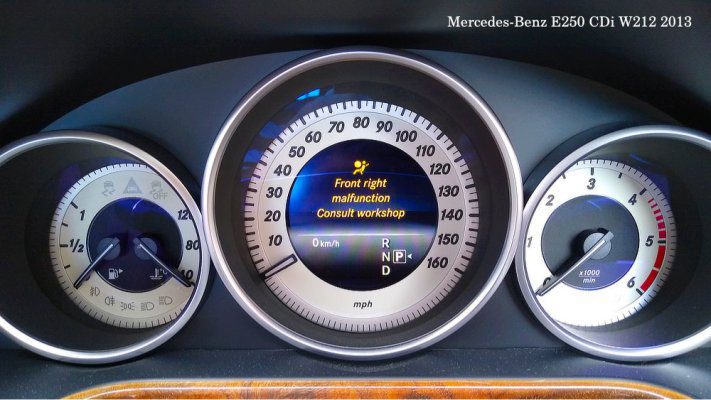
If you have ever glanced down at your Mercedes dashboard and seen the message Front Right Malfunction Service Required, you already know it is one of those warnings that makes you pause. It can feel urgent because it is tied to the car’s safety systems, not just convenience features.
This guide breaks down what that message means, what the common codes point to, and what usually causes the problem on the front passenger side. More importantly, it lays out what you should do next, including careful DIY steps you can take, plus what to leave to a certified shop.
One quick reality check before we get technical: with SRS warnings, the goal is not to “reset and hope.” The goal is to understand the fault so the airbag and seatbelt tensioning system can protect you the way Mercedes designed it to.
What the “Front Right Malfunction Service Required” Message Really Means
That error is pointing to a problem in the Supplemental Restraint System (SRS). In plain terms, SRS is the umbrella for the safety tech that deploys protection during a crash.
The SRS handles components such as airbags, crash sensors, seatbelt tensioners, and belt force limiters. When the system detects a fault in one of those parts, it lights up the dashboard warning so you know the safety system is not behaving as expected.
For the “Front Right” version of the message, the issue is on the front passenger side. That means the car is seeing a fault affecting SRS components located on the passenger side, or the wiring and signals that feed those components.
In the real world, this matters because the passenger-side airbags and related tensioning and restraint functions may not deploy correctly if a crash happens. Even if the car drives normally today, the warning is still your clue that the safety system needs attention.
How You Notice a Front Right SRS Malfunction
Sometimes this warning is obvious, like it appears right after you start the car. Other times, it shows up after bumps, a pothole run, or a cold morning. Either way, your Mercedes is telling you that it detected a fault related to the front passenger side SRS circuit.
You may also have specific stored error codes. These codes help narrow down the problem to a particular circuit, stage, or component, and you can often read them with an OBD-II scanner that supports Mercedes SRS or generic code reading.
Here are the most commonly referenced codes tied to this warning, including what each one usually indicates on the SRS side.
| Code (as reported) | What It Points To | Typical “What Is Wrong” |
|---|---|---|
| B007F13 – SRS (ORC177) | Emergency tensioning retractor for front passenger | Open circuit in SRS, usually a wiring or connector issue |
| B275113 – SRS (ORC177) | Front passenger side airbag wiring | Open circuit in the wiring for the front passenger airbag |
| B001013 – SRS (ORC177) | Front passenger airbag circuit | Wiring issue due to an open circuit |
| B001113 – SRS (ORC177) | Second stage front passenger airbag | Fault in second stage caused by an open circuit |
| B001313 – SRS (ORC177) | Passenger knee airbag wiring | Open circuit in the knee airbag wiring |
Do not treat those codes like guesswork. They are your breadcrumb trail. When codes are stored, the car typically logs what circuit is failing and often how it is failing, such as “open circuit,” “high resistance,” or a component fault.
The Most Common Symptoms Owners Report
Not every SRS fault changes how your Mercedes drives. This is the part that can make owners second-guess the seriousness. You can have a perfectly normal driving feel and still have a safety circuit that would not behave correctly in an impact.
Here are the typical ways this problem shows up for drivers, based on the “Front Right” passenger-side nature of the system.
- SRS or restraint-related warning on the dashboard, often “Front Right Malfunction Service Required” specifically.
- Stored error codes that reference SRS circuits for the front passenger airbag, knee airbag, or the emergency tensioning retractor.
- Faults described as open circuit, which often means a broken, loose, or disconnected connection, or a wire section that intermittently loses contact.
- Intermittent behavior when the wiring harness moves, such as after seat movement, normal cabin vibration, or road bumps.
If you have ever had a “check engine” light that came and went, you already understand intermittent faults. SRS faults can behave similarly, but the stakes are higher because it relates to airbag and restraint deployment.
So what should you do with symptoms like these? You treat them as information and act, not as a “monitor it for a while” situation.
What Causes the “Front Right Malfunction Service Required” Error?
Let us get straight to the most common cause pattern. For this front passenger SRS warning, the leading cause is usually wiring issues.
When the system detects an open circuit, it is often because the electrical path is interrupted. That can happen from short circuits, high resistance, or a connection that is loose, moving, or damaged over time.
In some cases, the fault is not only the wiring. A defective SRS component can also be the reason. That includes things like the airbag or tensioner assembly itself, especially if a specific code keeps returning even after wiring checks.
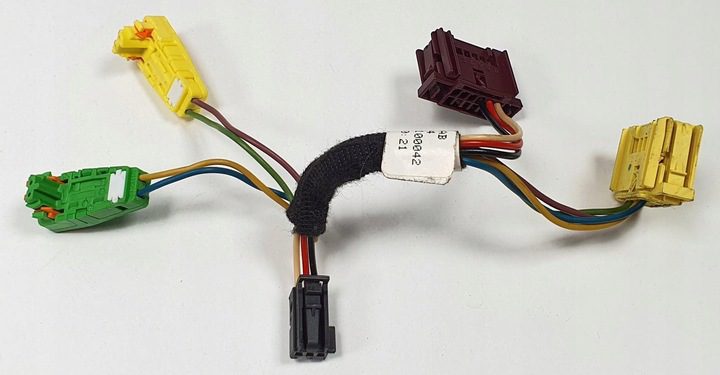
Here are the most commonly listed causes behind this error:
- Defective emergency tensioning retractor
- Damaged wiring harness
- Faulty airbag module
Notice the mix. Two of those are wiring or harness related, and one is the actual airbag module. That is why diagnostics matter. A “bad airbag” can sometimes be the wiring feeding it. A “bad wiring” can sometimes be a component that is failing internally. The fix should match the root cause.
Before You Touch Anything: Safety Rules for SRS Work
Because SRS includes airbags and seatbelt tensioners, you treat this job differently than normal electrical troubleshooting. Even if you are careful, you do not want to accidentally trigger a deployment.
Here are basic safety habits that car owners use when dealing with airbag-related circuits. If any step feels unclear, stop and let a professional handle it.
- Do not probe SRS connectors with the system powered. Follow your service procedure, especially any battery disconnect guidance.
- Keep the airbag connector areas clean and undamaged. Do not yank connectors by the wires.
- Handle wiring harnesses gently. The goal is to avoid additional strain or pinched wires while inspecting.
- Do not ignore warning codes. Clearing codes without fixing the fault can bring the issue back, and the safety system remains unreliable.
Even when you follow a DIY guide, the part that protects you in a crash is not the dashboard message. It is the airbag and restraint circuits doing their job.
How to Fix the Front Right Malfunction (DIY Steps That Match the Error)
Let us focus on the practical side. The recommended approach starts with checking wiring connections. If a component is visibly damaged, it should be replaced. If the wiring looks intact, the error often still comes from looseness, damaged harness sections, or connector issues that need careful reseating and securing.
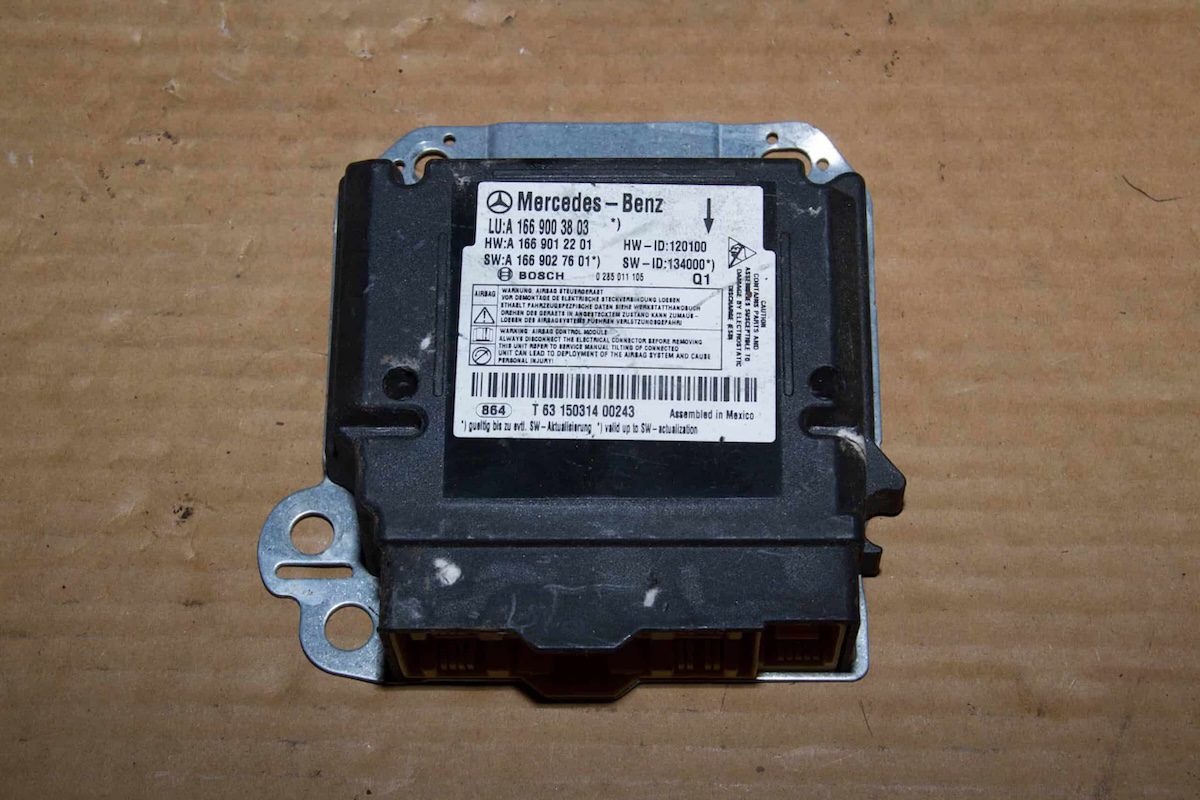
You also need to locate the airbag control unit using your car’s electrical schematic. The guide references using the schematic and specifically notes: refer to N2/10, plug 1.
Then you follow the steps below. These steps are aimed at the connectors and harness area associated with the airbag control unit.
Step-by-Step: Connector and Harness Checks
Follow this sequence carefully:
- Disconnect the 104-pin connector from the airbag control unit.
- Remove any fasteners or cable ties from the connector housing.
- Carefully unwrap the fabric tape from the wiring and secure the harness with a new cable tie.
- Reconnect the 104-pin connector.
- Inspect the 20-pin connector (N2/10, plug 2), which is a sub-harness of the 104-pin, and secure it with a felt strip.
Why these steps matter is simple. Many open-circuit faults happen when harnesses move, connectors are not properly secured, tape wears through over time, or a cable tie allows strain at a specific junction. The steps above are about returning the wiring to its correct, stable routing and securing it the way it was intended.
After you complete the connector and harness work, the next part is verification.
If the error persists, use an OBD-II scanner to clear the codes. That does not replace the repair if the wiring problem remains, but it is part of confirming whether the fault is truly resolved.
Important tip: if the code immediately returns, that is a clue the underlying issue is still present. At that point, the best move is to move from “inspection and resecuring” to deeper testing or professional diagnosis.
Does This Error Affect Safety? Yes, and Here Is Why
Yes. This error can compromise safety. The SRS warning is tied to the possibility that airbags or seatbelt tensioners may not work properly in a crash scenario.
When the SRS detects an open-circuit or related fault on the front passenger side, it can disable or limit deployment strategies. Even if it does not fully disable every feature, you have no way to predict how the system will behave under impact if the fault is still present.
Because of that, the safe move is clear: have a professional inspect your vehicle immediately.
If you only remember one thing from this section, remember this. An SRS warning is not a “wait until next month” problem.
A “What Would I Do Today?” Plan
Let us make it easy. If your dashboard shows the message and you want to act like a responsible owner, do these steps in order.
- Take note of the exact wording on your display and whether the light is steady or intermittent.
- Check for stored codes with an OBD-II scanner so you know which circuit is flagged.
- Look for obvious issues only if you can do it safely, such as visible damage to harness areas or connectors.
- Follow the connector and harness resecuring steps if you are comfortable with careful DIY work.
- Clear codes with the scanner only after you address the wiring issue, then monitor whether the warning returns.
- If the message persists, book an inspection immediately, because safety systems are not meant to be left uncertain.
You might be thinking, “But my Mercedes still drives fine.” That is common. The SRS system can fail in a way that does not affect normal driving. The warning exists to keep you informed about what might not work when you actually need it.
Frequently Asked Questions About Front Right SRS Malfunctions
Where Is the SRS Module Located?
It is typically located under the center console between the front seats. Even so, do not assume. Mercedes placements can vary by model and year, so check your vehicle’s electrical schematic for exact placement.
What Is a Front Left SRS Malfunction?
A front left SRS malfunction points to an SRS issue on the driver’s side. That usually affects the driver’s airbag or seatbelt-related components. A diagnostic scan is still needed to identify the specific code and circuit involved.
Is It Safe to Drive With the SRS Light On?
No. Driving with the SRS light on is risky. The warning suggests the safety features may not function as intended. The safest move is to visit a mechanic as soon as possible for inspection and repair.
How Much Does It Usually Cost to Repair?
Repair costs typically range from $300 to $700, depending on the issue and the labor involved. Since this is an SRS safety system, prioritize the fix over the cost discussion.
What to Expect at a Shop (So You Are Not Left Guessing)
If you take your Mercedes in, you can expect the technician to treat this as a circuit and connector problem first, not as a random “replace parts” situation. That is usually the smartest way to work through open-circuit SRS codes.
In practice, a shop will often do some combination of the following: inspect connector seating, inspect harness integrity, confirm where the open circuit is occurring, and test whether the airbag module or tensioner is actually defective. The goal is to match the repair to the code and the circuit behavior.
When a technician charges you for diagnostic time, you should understand what they are doing. They are trying to stop the trial-and-error loop that wastes money and keeps the warning active longer than necessary.
Why “Clearing Codes” Is Not the Same as Fixing the Problem
You might clear the code and see the warning disappear. That can feel like victory. But here is the thing. Clearing codes removes the record from the scanner and can turn off the light temporarily, while the underlying electrical issue remains.
In SRS systems, the car monitors circuits continuously. If there is still an open circuit in the passenger-side wiring or module, the code often returns. That is why proper repair work is tied to the reason the circuit is open in the first place.
So if you clear codes after resecuring connectors and the fault comes right back, treat it as confirmation. Something is still wrong, and the next step should be deeper diagnosis.
A Simple Example From Real Life
Picture an owner who reseats a connector once, clears codes, and then drives for a week. Everything seems fine until a day of more cabin vibration and seat movement. The warning returns because the harness routing or tape securing allowed slight movement at the connector.
This is exactly why the recommended DIY steps include removing fasteners and cable ties and then securing the harness again with a new cable tie, plus securing the sub-harness with a felt strip. Those details are not random. They help stabilize the wiring so the circuit does not open again with movement.
Pinpointing the Fault: What the Codes Suggest About the Passenger Side
When you see codes like those listed earlier, they point toward specific passenger-side circuits. This matters because the front passenger airbag system can include multiple parts: the front airbag itself, potentially a knee airbag, and the emergency tensioning retractor in the seatbelt restraint area.
For example, an emergency tensioning retractor code typically points to the retractor circuit being open, meaning the car is not detecting the expected electrical continuity. That is consistent with damaged wiring or a faulty module affecting the retractor’s function.
Similarly, codes that mention “second stage” indicate the system is not seeing proper circuit behavior for that particular stage of the passenger airbag. Again, “open circuit” often points to wiring or connector issues, but the module can fail as well.
So when you discuss repair with a technician, you can reference the codes directly. That can make your appointment faster because everyone starts from the same point.
Common Questions Owners Ask Before Doing the DIY Steps
Before you touch the connectors, owners often wonder if the DIY steps will actually help. The honest answer is this: if the fault is driven by harness movement, loose routing, damaged tape sections, or an unstable connector connection, resecuring the harness is often a logical fix path.
If the fault is driven by an internal component failure, you may still need a replacement. That is why the guide includes an “if the error persists, clear codes using an OBD-II scanner” step, followed by the practical expectation that professional inspection may be required.
Let us turn this into a straightforward decision guide.
| Your Observation | What It Usually Means | Most Reasonable Next Step |
|---|---|---|
| Fault appears after bumps or intermittent cabin movement | Wiring or connector stability may be the cause | Inspect and reseat as needed, then clear codes and recheck |
| Multiple passenger-side circuit codes keep returning | Either harness issue or module issue is likely | Professional diagnosis to confirm faulty component vs harness |
| Error persists immediately even after resecuring | Open circuit still exists | Do not keep driving. Get inspection as soon as possible |
When You Should Stop Driving and Get Help Fast
Because this warning relates to safety systems, you should not treat it like a minor annoyance. The safest approach is to schedule inspection quickly. Still, there are times when you should move even faster.
Stop-and-slow down your plan if you notice any of the following:
- The warning remains active and does not clear after a battery restart or scanning.
- The car logs the same or similar SRS open-circuit codes repeatedly.
- You notice changes in how the passenger restraint system behaves, even if subtle.
- You plan to drive with passengers soon and you want the safety system fully verified.
This is not about fear. It is about protecting the people in the car and making sure the safety system has no unknowns.
Conclusion: Treat This Warning Like a Safety Appointment, Not a Later Project
Your safety is not something you postpone. The Front Right Malfunction Service Required error is a real SRS warning, and it can affect whether airbags or seatbelt tensioners work properly.
If you have already taken the DIY steps and the error persists, do not keep testing it. Book a professional inspection today so the front passenger SRS circuit gets confirmed and repaired correctly.
Now ask yourself one question: when was the last time you checked the stored SRS codes for this warning, and are you confident the open circuit on the passenger side is truly fixed?