
Most drivers give the battery all the credit for keeping their car’s electrical systems running. The headlights, the radio, the power windows, the dashboard displays. It is easy to assume the battery is doing all that work. But here is what is actually happening: the battery’s job is to start the engine. Once the engine is running, the alternator takes over almost everything else.
When an alternator starts failing, the symptoms are easy to misread. The battery warning light comes on and you replace the battery. The car stalls and you assume it is a fuel issue. The lights dim and you figure the bulbs need replacing. Meanwhile, the alternator keeps deteriorating until the car leaves you stranded somewhere inconvenient.
Understanding what an alternator actually does, how it works, and what to watch for when it starts going wrong is practical knowledge that every driver should have. This article covers all of it.
What Is a Car Alternator?
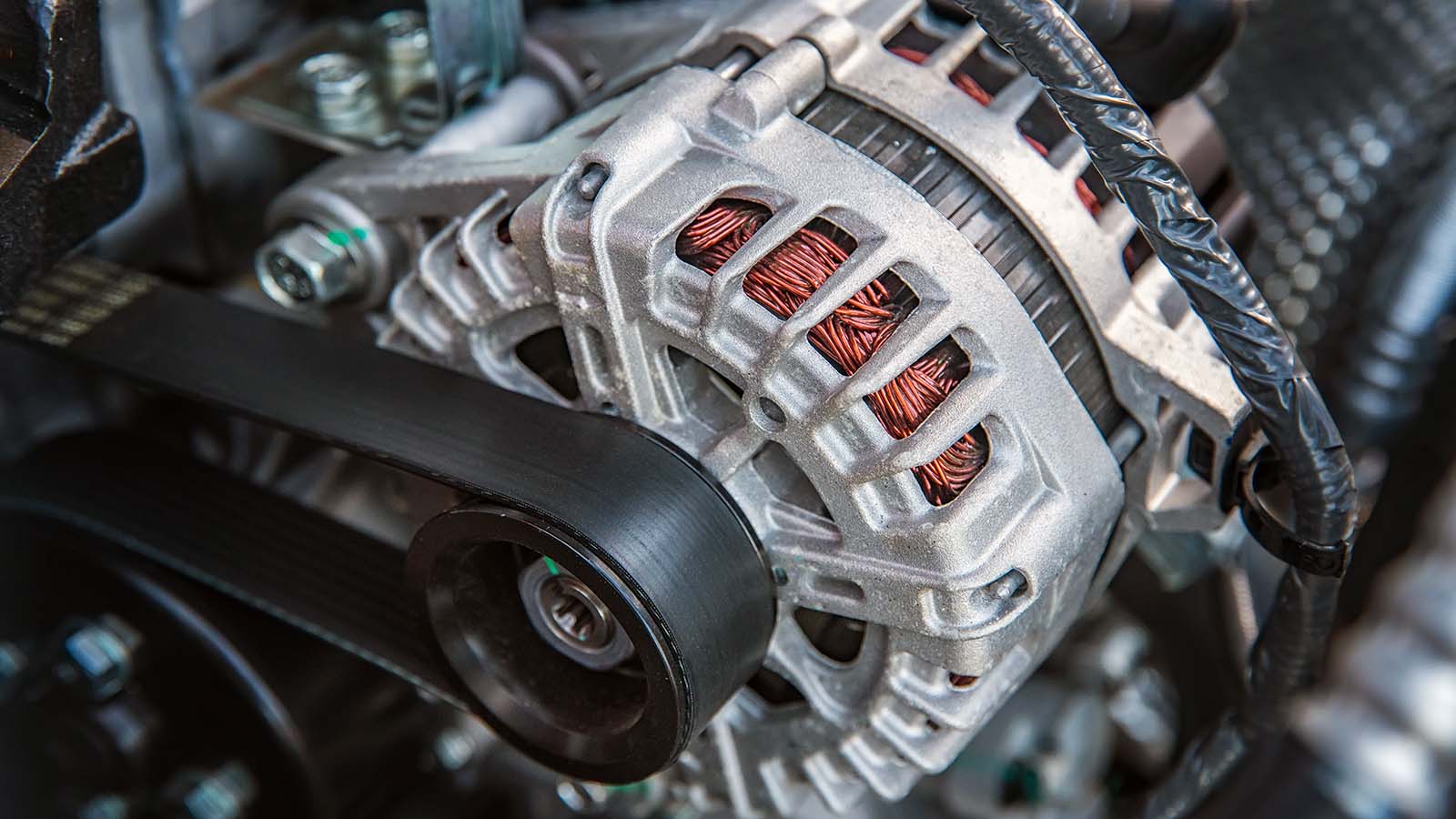
An alternator is a generator. Specifically, it is an electrical generator driven by the engine that continuously produces electricity while the engine is running. That electricity powers everything in your car that runs on electrical current and simultaneously recharges the battery so it is ready for the next start.
Every car with a conventional internal combustion engine has one. Hybrid vehicles are a partial exception, since some hybrid systems handle electrical generation differently, but the vast majority of vehicles on the road today depend on a conventional alternator for their electrical supply.
Physically, an alternator is roughly the size of a coconut. It mounts to the front of the engine, typically driven by the serpentine belt that wraps around the engine’s crankshaft and several other accessories. It is not a large or complicated-looking component, which is part of why people underestimate how much work it is actually doing at any given moment.
What Does a Car Alternator Do?
The alternator’s core job is to convert mechanical energy into electrical energy. It takes the rotational force produced by the running engine, converts it into electricity, and then distributes that electricity in two directions: to the battery to keep it charged, and to every electrical system in the car that is currently drawing power.
Think of it this way. The battery is like a water tank. The alternator is the pump that keeps refilling it. When you start the engine, the battery discharges a large burst of power to crank the starter motor. The moment the engine fires and the alternator kicks in, it begins replenishing what the battery just used and takes over powering everything else. From that point until you turn the engine off, the alternator is the primary electrical source for the entire vehicle.
Without a functioning alternator, a running engine will drain the battery completely within minutes. The battery alone does not have the capacity to run all the vehicle’s systems for any meaningful length of time. It is specifically designed for high-current, short-duration discharge, not sustained operation. That is the alternator’s role.
How Does a Car Alternator Work?
The operating principle behind an alternator is electromagnetic induction, which is the same fundamental concept that underlies virtually all electrical generation from power plants to the dynamo on a bicycle. Moving a magnetic field through a coil of wire generates an electrical current in that wire. The alternator applies this principle using a spinning rotor and a stationary stator.
How the Alternator Produces Electricity
The process starts with the engine. As the crankshaft rotates, the serpentine belt transfers that rotational energy to the alternator’s pulley. In older vehicles, a dedicated V-belt sometimes ran directly from the crankshaft pulley to the alternator. Either way, the result is the same: the mechanical energy of the running engine spins the alternator’s internal rotor at high speed.
The rotor is a cylindrical component surrounded by magnetic poles. As it spins at speed inside the stator, the changing magnetic field passing through the stator’s copper windings induces an electrical current. The faster the rotor spins, the more electricity is produced. This is why revving the engine increases alternator output, and why an alternator at idle speed produces less electricity than one at highway cruising speed.
That generated electricity then flows to the voltage regulator, which manages how much gets sent where.
How the Alternator Charges the Battery
Here is where it gets slightly technical, but it is worth understanding. The electricity produced by the alternator is alternating current, which is abbreviated as AC. The name “alternator” actually comes from this. Alternating current changes direction periodically, flowing back and forth rather than in one consistent direction.
Car batteries, on the other hand, run on direct current, abbreviated as DC. Direct current flows in one direction only. A battery cannot be charged by alternating current, so before the alternator’s output can reach the battery, it needs to be converted.
That conversion is handled by the diode rectifier, which is a component built into the alternator. Diodes are electrical one-way valves: they allow current to flow through in only one direction and block it in the other. By arranging multiple diodes in a specific configuration, the rectifier transforms the alternating current into direct current that the battery can accept and store. Only after passing through the rectifier does the power reach the voltage regulator and then the battery for charging.
What Are the Main Components of a Car Alternator?
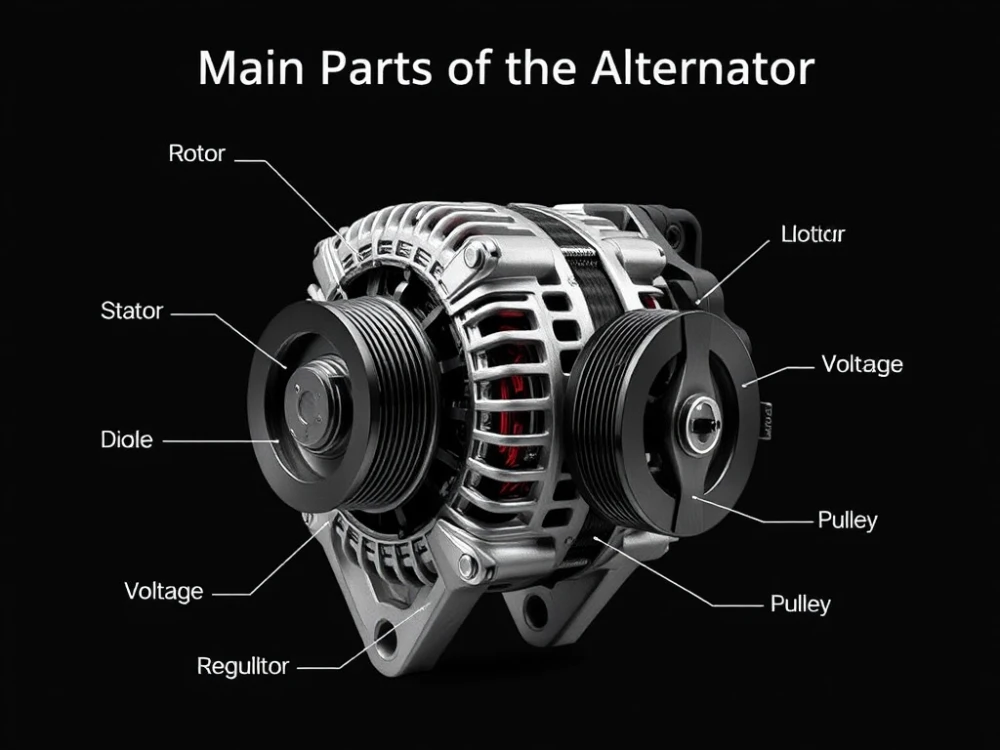
An alternator is not a complex device by modern engineering standards, but each of its components plays a specific and necessary role. Here is what is inside one and what each part actually does.
Rotor
The rotor is the spinning core of the alternator. It is a cylindrical component wrapped with copper wire coils and surrounded by magnetic poles. When energized, it creates a rotating magnetic field. The rotor is connected to the pulley on the outside of the alternator, so it spins whenever the belt is moving and the engine is running. The speed at which the rotor spins directly determines how much electricity the alternator produces.
Stator
The stator is the stationary outer housing that surrounds the rotor. It contains a fixed arrangement of copper wire windings. As the rotor’s magnetic field passes through these windings, it induces an electrical current in the copper wire. The stator does not move. It just captures the electrical output generated by the spinning rotor’s magnetic field passing through it repeatedly.
Voltage Regulator
The voltage regulator is the management system of the alternator. Without it, the alternator would produce varying output depending on engine speed, which would damage sensitive electronics and overcharge or undercharge the battery. The voltage regulator monitors the battery’s state of charge and the vehicle’s electrical demand, then adjusts the alternator’s output to keep everything at the correct voltage, typically around 13.5 to 14.5 volts in most passenger vehicles. On modern cars, the voltage regulator is often integrated directly into the alternator housing rather than mounted separately as it was on older vehicles.
Diode Rectifier
The diode rectifier handles the AC to DC conversion described earlier. It consists of a set of diodes arranged in a bridge configuration. This bridge allows current to flow through during both the positive and negative phases of the alternating current cycle, but always in the same output direction, which produces the direct current the battery needs. A failed diode rectifier is one of the more common alternator failure modes and can cause a range of electrical symptoms that are easy to misdiagnose.
Cooling Fan
Generating electricity produces heat, and an alternator running under load in an engine bay that is already hot needs active cooling to prevent component damage. Alternators address this with a combination of aluminum housing, which dissipates heat efficiently, ventilation slots in the housing, and cooling fans. Older alternator designs used external fan blades visible on the outside of the unit. Most modern alternators use internal fans built into both ends of the rotor assembly, drawing air through the housing and out through the ventilation slots. A hot alternator that cannot cool itself will fail prematurely, which is one reason why towing heavy loads or running all electrical accessories simultaneously for extended periods puts extra stress on the unit.
Warning Signs of a Failing Car Alternator
Alternator problems are genuinely easy to misdiagnose because the symptoms often look exactly like battery problems or other electrical faults. A mechanic who replaces the battery without testing the alternator will send you home with a new battery that will be flat again within days. Knowing the specific signs of alternator failure helps you ask the right questions and get the right repair the first time.
The Battery Warning Light Comes On
On most vehicles, the battery warning light on the dashboard is not exclusively a battery indicator. It is more accurately a voltage warning light that monitors the entire charging system. If the alternator’s output drops below or rises above the expected range, the warning light activates. Many drivers see this light and immediately assume the battery needs replacing. Sometimes it does. But before changing the battery, always have the charging system tested, which includes testing the alternator’s output. A five-minute test at any auto parts store can tell you whether the battery or the alternator is the actual source of the problem.
Battery Draining Repeatedly
If you find yourself jump-starting your car more than once in a short period, and the battery tests as healthy when checked in isolation, the alternator is a strong suspect. A battery that drains repeatedly despite being in good condition is almost always being robbed of charge by a charging system that is not replenishing what gets used. The battery gets weaker with each deep discharge cycle, which can eventually damage a battery that was perfectly functional before the alternator problem started. Replacing the battery without fixing the alternator will produce the same result again within weeks.
Difficulty Starting the Engine
A battery that is not being properly recharged by a failing alternator will gradually lose the reserve charge it needs to crank the starter motor. The result is an engine that cranks slowly, struggles to start, or fails to start entirely. This symptom is particularly noticeable in cold weather, when a battery needs more power to start a cold engine and a partially discharged battery is even less capable of delivering it. If starting difficulty is paired with any of the other symptoms on this list, have the charging system tested before assuming the starter or the battery itself is at fault.
Dim or Flickering Lights
The headlights and interior lighting are among the most immediately visible electrical loads in the vehicle. When an alternator begins producing inconsistent or insufficient output, the lighting is often the first place that shows it. Headlights that are noticeably dimmer than usual, dashboard lights that are harder to read, or interior lights that flicker when you turn on other accessories are all signs that the electrical supply is not stable. Some failing alternators produce output that fluctuates with engine speed, so lights that brighten when you rev the engine and dim at idle are a particularly telling symptom.
Electrical Accessories Behaving Strangely
Modern vehicles have a lot of electrical accessories: power windows, heated seats, the infotainment system, the climate control fan, the power steering pump on some models, and many others. When the alternator cannot supply enough current to meet all these demands simultaneously, the vehicle’s electrical management system will typically begin shedding load by reducing power to lower-priority accessories. Power windows that move more slowly than normal, a radio that resets or cuts out, or heated seats that do not reach full temperature are all potential indicators of insufficient alternator output. The more accessories you have running at once, the more obvious the shortage becomes.
Unusual Noises From the Engine Bay
Alternator failure is sometimes audible before it becomes visible through other symptoms. A worn alternator bearing will produce a grinding or whining noise that changes with engine speed. A slipping serpentine belt caused by a seized alternator pulley will produce a squealing sound, particularly under electrical load when the alternator is being asked to work harder. If you hear a new noise from the front of the engine that seems to change with RPM, have the alternator and belt system inspected.
Burning Smell
A failing alternator that is overloaded or has an internal short can produce a burning rubber smell from the belt slipping on a hot pulley, or a burning electrical smell from overheated wiring inside the unit. Either smell coming from the engine bay warrants immediate attention. Continuing to drive a vehicle with an overheating alternator risks damaging surrounding components and, in serious cases, creates a fire risk from overheated wiring.
How Long Does a Car Alternator Last?
A well-maintained alternator in a vehicle with a healthy electrical system will typically last between 80,000 and 150,000 miles. Some last longer. Some fail earlier, particularly if the vehicle regularly runs a heavy electrical load or if the serpentine belt was allowed to slip and wear the pulley excessively.
Factors that shorten alternator life include:
- Consistently running all electrical accessories at maximum load for extended periods
- Aftermarket accessories that draw more current than the charging system was designed for
- A faulty battery that forces the alternator to work harder than normal to compensate
- Operating in extreme heat without adequate cooling in the engine bay
- Water intrusion from driving through deep puddles or floods
- A worn or misaligned serpentine belt that puts abnormal load on the alternator pulley
Alternator vs. Battery: Which One Is Actually the Problem?
This is the question that causes the most confusion and the most unnecessary parts replacements. Here is a straightforward way to think about it.
| Symptom | More Likely the Battery | More Likely the Alternator |
|---|---|---|
| Car will not start but clicks | Yes | Possibly, if battery is drained by alternator |
| Car starts fine but dies while driving | Unlikely | Yes |
| Battery warning light on while driving | No | Yes |
| Jump start works but car dies again soon after | Unlikely | Yes |
| Lights dim while engine is running | No | Yes |
| Battery drains overnight repeatedly | Possibly | Yes, if no parasitic drain found |
| Grinding noise from engine bay | No | Yes, worn alternator bearing |
The most reliable way to distinguish between the two is a proper charging system test. Most auto parts retailers will test both the battery and the alternator output for free. The test takes minutes and gives you actual voltage readings rather than guesswork. A healthy alternator at idle should produce between 13.5 and 14.5 volts. Below that range while the engine is running points strongly to alternator problems. A battery that tests below 12.4 volts when fully charged is on its way out regardless of what the alternator is doing.
The alternator is one of the hardest-working components in your vehicle and one of the most consistently underappreciated. It runs every time the engine runs, converting mechanical energy into the electrical power that keeps every system in the car functioning. When it starts to fail, the symptoms spread across the entire vehicle because the entire vehicle depends on what it produces. Knowing that before you are standing next to a dead car in a parking lot is exactly the kind of knowledge that saves time, money, and frustration.