
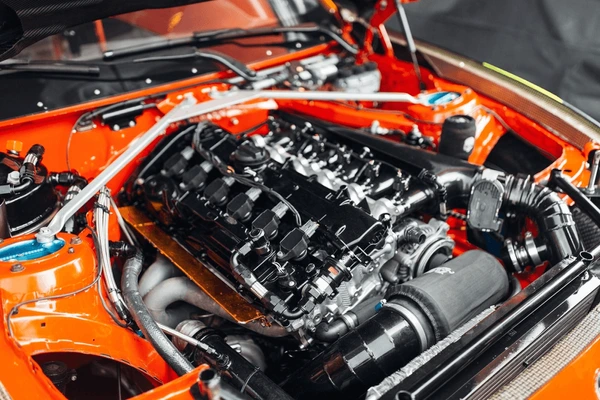
Ask ten different mechanics how long a car engine lasts and you will get ten different answers. The truth is, there is no single number. Engine longevity is not a fixed specification, it is an outcome. And it depends far more on how the engine is treated than on what brand badge sits on the bonnet.
But here is the short answer if you want one: a petrol or diesel engine that is properly maintained, fed quality oil, and driven with reasonable care can last well over one million kilometres. Some do. The ones that do not usually fail not because of a design flaw, but because of decisions made by the person driving them.
Let us get into what actually determines how long an engine lasts, and what you can do to make sure yours is in the group that goes the distance.
The Real Answer to “How Many Miles Will My Engine Last?”
There is a version of this question that has a clean answer and a version that does not. The clean version is: under ideal conditions, with proper maintenance and sensible driving, a modern engine can exceed one million kilometres or one million miles. That is not a marketing claim. There are well-documented real-world examples of engines achieving exactly that.
The version without a clean answer is: how long will your specific engine last given how you actually drive and maintain it? That depends on a collection of factors, each of which has a meaningful impact on long-term engine life.
Those factors include:
- The quality and consistency of oil changes
- How often the engine is started cold and immediately pushed hard
- Whether the car is used mainly for short trips or long ones
- The quality of fuel used
- Whether scheduled servicing is followed or ignored
- Any modifications made to the engine
- The driving style of the person behind the wheel
Every single one of these things sits within your control as a driver. Which means engine longevity is far more a product of your habits than your luck.
Oil Is Not Just Important. It Is Everything.
If there is one thing to take away from this entire article, it is this: oil is the lifeblood of your engine. Not a slight exaggeration, a literal mechanical reality.
Every moving part inside your engine, the pistons, crankshaft, camshaft, bearings, valves, all of them rely on a thin film of oil to prevent metal-on-metal contact. When that film is there and fresh, the engine runs smoothly. When the oil is old, degraded, contaminated, or low, that protective film breaks down. Metal surfaces start making contact. Wear accelerates. Components that should last hundreds of thousands of kilometres get damaged in a fraction of that time.
Run an engine completely dry of oil and you will not have a long-term wear problem. You will have an engine that seizes within minutes. The pistons lock up, the engine stops, and the repair bill is usually the cost of a replacement engine rather than a fix.
This is why oil change intervals are not suggestions. They are the foundation of everything else on this list. Use quality oil that matches the manufacturer’s specification, change it on time, and check the level regularly between changes. That single habit alone is responsible for more engine longevity than almost anything else you can do.
Cold Starts: The Most Damaging Thing Most Drivers Do Every Day
Here is something that surprises a lot of drivers. The most damaging moment in your engine’s day is the first few seconds after you start it, particularly when the engine is cold.
When an engine has been sitting overnight or for several hours, the oil drains down from the upper components and pools in the sump. The moment you turn the key, the engine starts spinning before the oil pump has had a chance to circulate fresh oil back up to the top end. For a fraction of a second, and sometimes longer in very cold conditions, the upper parts of the engine are running with minimal lubrication.
Under normal conditions, this is a manageable stress. The engine is designed to handle it. But when you start a cold engine and immediately accelerate hard, rev it high, and push it before the oil has fully circulated and the engine has reached operating temperature, you are compounding that already-vulnerable moment with maximum mechanical stress. Do that regularly over months and years and the cumulative wear is significant.
The fix is simple and costs nothing. After a cold start, drive gently for the first few minutes. Keep revs low. Let the engine warm up to operating temperature before asking it to work hard. This single habit, applied consistently, can add years and tens of thousands of kilometres to an engine’s life.
Short Trips vs. Long Trips: Why Distance Matters More Than You Think
A car that lives its life on short urban trips, five minutes here, ten minutes there, constant stop-start traffic, is working under some of the harshest conditions an engine faces. And it is not just the stop-start stress. It is what happens inside the engine when it never fully warms up.
An engine that never reaches full operating temperature accumulates moisture in the oil, in the exhaust system, and in other components. Short trips mean the engine gets cold-started repeatedly but never gets hot enough to burn off that moisture or fully circulate and condition the oil. Over time, this leads to sludge buildup, corrosion inside the engine, and accelerated wear on components that would otherwise last much longer.
Long-distance driving is, counterintuitively, much kinder to an engine. The engine gets properly up to temperature, the oil circulates fully, the moisture burns off, and the engine runs in the operating window it was designed for. This is one of the reasons fleet vehicles and motorway-heavy cars often have engines in better condition than city runabouts with similar mileage.
A Real-World Example That Makes the Point Perfectly
A few years ago, in a workshop belonging to a mechanic friend in Germany, a customer brought in a 2016 Volkswagen Passat fitted with a 2.0-litre common-rail diesel engine. The car looked well used, which was not surprising once you found out why.
That Passat had 800,000 kilometres on the clock. Roughly 500,000 miles. The first three years of its life, it had been a German police vehicle, running almost continuously, 24 hours a day, seven days a week, on long patrol routes. The customer had bought it at auction for a very reasonable price after the police decommissioned it.
The engine was still running. Still functional. At 800,000 kilometres.
That example illustrates two things clearly:
- An engine that runs continuously, without long periods of cold starts and inactivity, tends to last longer. Consistent operation at operating temperature is far kinder to an engine than constant cold starts.
- An engine used predominantly on longer runs outlasts one used mainly for short urban trips. The police patrol use case is essentially the ideal scenario for engine longevity: regular running, steady operating temperatures, and predominantly highway-speed operation.
Fleet maintenance schedules also played a role. Police vehicles are serviced regularly and on strict schedules. The maintenance was not optional or delayed. That consistency is a major part of why the engine survived to 800,000 kilometres in working condition.
Petrol vs. Diesel: Which Engine Actually Lasts Longer?
This debate comes up constantly, and the answer is genuinely more nuanced than most people expect.
From a pure engineering perspective, the petrol engine should theoretically be the longer-lasting unit. It operates at lower compression ratios, produces less vibration, and runs at smoother power outputs. In theory, that means less stress on internal components over time.
In practice, however, diesel engines have historically been the ones clocking seven-figure mileage numbers in everyday cars. The diesel compression cycle, while mechanically more demanding in some ways, produces excellent low-RPM torque, and engines that spend most of their working life at lower RPM under load tend to experience less cumulative wear per kilometre than engines that spin at higher RPMs.
Truck diesel engines make this point most dramatically. A heavy-duty truck diesel typically operates between 1,500 and 2,500 RPM under load, produces enormous torque at those low speeds, and is built for continuous high-mileage operation. It is not uncommon for these engines to exceed 1,600,000 miles with proper maintenance. They are not comparable to a car engine in design or use, but they demonstrate the principle clearly.
For passenger car engines specifically, the picture has shifted somewhat in recent years. Modern petrol engines have increasingly moved toward smaller, turbocharged, downsized units. A 1.0-litre or 1.2-litre turbocharged three-cylinder is doing the work that a 1.6-litre naturally aspirated engine used to do, and it is doing that work under significantly more stress. The turbocharger adds heat, pressure, and an additional component that can fail. The smaller displacement means the engine is often working near its limits at everyday driving speeds.
This trend has made modern turbocharged petrol engines somewhat more sensitive to maintenance neglect than their predecessors were. Extended oil changes and poor-quality oil hit a small turbocharged engine harder than they would have hit the older, larger-displacement engines they replaced.
| Factor | Petrol Engine | Diesel Engine |
|---|---|---|
| Typical operating RPM | Higher | Lower |
| Compression ratio | Lower | Higher |
| Vibration level | Lower | Higher |
| Modern trend | Downsized, turbocharged | Common-rail, turbocharged |
| Real-world high-mileage examples | Fewer, especially modern units | More common, especially older units |
| Sensitivity to oil quality | High (especially turbocharged) | High |
| Ideal use case for longevity | Long runs, gentle acceleration | Long runs, steady load |
Are Modern Engines Less Durable Than Older Ones?
This is a question that mechanics of a certain age tend to answer with a knowing nod. There is something to it, though the full picture is more complicated than simple nostalgia suggests.
Older engines, particularly those from the 1980s and early 1990s, were often built with wider tolerances, simpler designs, and a focus on mechanical durability above all else. They were heavier, less efficient, and far less sophisticated, but they were also forgiving. You could miss an oil change or two. You could use an oil that was not quite right. The engine would absorb it and keep going.
Modern engines operate to much tighter tolerances. The components are machined more precisely, the clearances are smaller, and the materials are often chosen for weight reduction and cost as much as for pure durability. This tighter engineering makes modern engines more efficient and more powerful for their size, but it also makes them less tolerant of neglect. A skipped oil change that a 1985 engine would have shrugged off might cause measurable wear in a modern turbocharged unit.
Car manufacturers have also made deliberate trade-offs in response to what the market demands. Buyers want smaller engines, lower fuel consumption, more technology, and lower purchase prices. Delivering all of that simultaneously has required compromises somewhere, and durability has taken some of those hits. Manufacturing costs have been managed by using lighter materials and tighter production budgets in some areas.
Could manufacturers build engines with the mechanical robustness of those older units? Almost certainly. The engineering knowledge exists. The manufacturing capability is there. But the cost and weight penalties would conflict with what the modern market is asking for, so the trade-off remains.
What this means practically is that modern engines are not fragile. They are perfectly capable of reaching very high mileages. But they demand more consistent, higher-quality maintenance than older engines did. The margin for error is smaller. Treat them well and they will last. Cut corners on maintenance and the consequences show up sooner than they would have on an older, simpler engine.
The Habits That Actually Determine How Long Your Engine Lasts
Pull all of this together and the practical guidance becomes clear. Engine longevity is not mysterious. It follows directly from a set of consistent habits.
- Use quality oil and change it on schedule. Not near the interval. On the interval. And use the grade and specification recommended for your engine. If you drive a turbocharged engine, this matters even more than it does for a naturally aspirated one.
- Check oil level regularly. Between services, check the dipstick every few weeks. Engines can consume small amounts of oil between changes, and running even slightly low accelerates wear.
- Give the engine time to warm up before pushing it. After a cold start, keep revs low for the first few minutes. This applies especially in winter.
- Use the fuel quality your manufacturer specifies, or better. Higher-octane fuel in an engine rated for it is not wasted money. Fuel quality affects combustion efficiency and long-term deposit accumulation.
- Keep up with all scheduled servicing, not just oil changes. Air filters, fuel filters, coolant, spark plugs, and timing belts all play roles in how efficiently and safely the engine operates. Neglect one of these and you can create knock-on damage that extends well beyond the missed service item.
- Drive smoothly, not slowly. Aggressive driving is not necessarily harmful if the engine is at operating temperature. Aggressive driving on a cold engine, in stop-start traffic where you are never warming up properly, is where the damage accumulates.
- Take longer trips occasionally. If your daily driving is entirely short urban trips, plan a longer run periodically. It gives the engine a chance to fully warm up, burn off accumulated moisture, and operate in the temperature range it was designed for.
None of these habits are complicated or expensive on their own. Together, they are the difference between an engine that makes it past a million kilometres and one that needs a rebuild at 200,000.
Your engine will tell you, through oil condition, sounds, and performance, whether it is being treated well or not. The question is whether you are listening closely enough to hear it before small issues become expensive ones. The drivers who do tend to have engines that just keep going.