
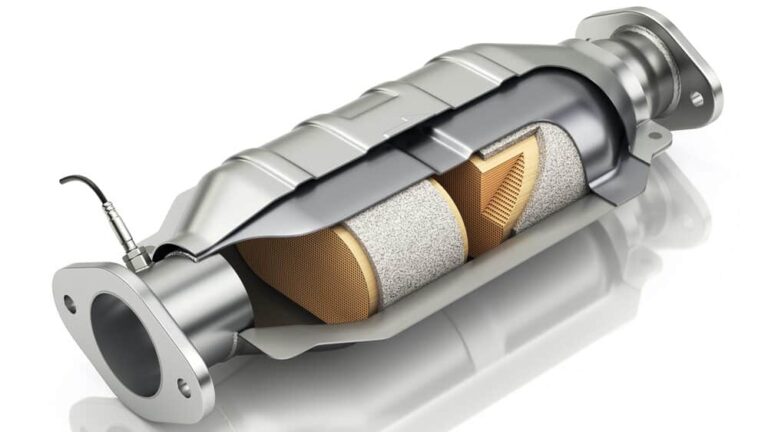
Somewhere underneath your car sits a small metal canister that most drivers never think about until it gets stolen. That little box happens to hold more raw material value than practically any other part on your vehicle, pound for pound. We are talking about the catalytic converter, and the reason thieves crawl under trucks at 2 a.m. with a battery powered saw comes down to one word: palladium.
Before diving into the numbers, it helps to understand what this device actually does every time you start your engine. Your car burns fuel, and that combustion process creates a mix of nasty byproducts, things like hydrocarbons, nitrogen dioxide, nitric oxide, and carbon monoxide. Left untreated, these gases would pour straight out of your tailpipe and into the air you and everyone around you breathes.
The catalytic converter exists specifically to stop that from happening. Inside its metal shell, a chemical reaction takes those toxic compounds and transforms them into far less harmful substances, mainly water vapor and carbon dioxide. It is a small piece of engineering doing genuinely important work, and it relies almost entirely on a handful of precious metals to pull it off.
What Actually Makes a Catalytic Converter Work
Three metals do the heavy lifting inside every catalytic converter: rhodium, palladium, and platinum. Each one plays a distinct role in the chemical process, and none of them work particularly well without the other two backing them up.
Today, the spotlight falls on palladium specifically, since it tends to be the metal people ask about most, mainly because of its price tag and its role in one of the most important reactions happening inside that little canister.
The Job Palladium Actually Does
Palladium’s main responsibility is oxidation. It takes harmful compounds like carbon monoxide and converts them into less dangerous substances before they ever reach open air. Think of it as a chemical bouncer standing at the exit door, refusing to let the worst offenders leave the building unchanged.
Palladium performs this job remarkably well. In fact, palladium is responsible for converting more than 89 percent of the harmful substances passing through a typical catalytic converter into safer compounds. That is not a minor contribution, that is the bulk of the entire cleanup operation happening under your car every time you drive.
How Much Palladium Is Actually Inside Your Catalytic Converter?
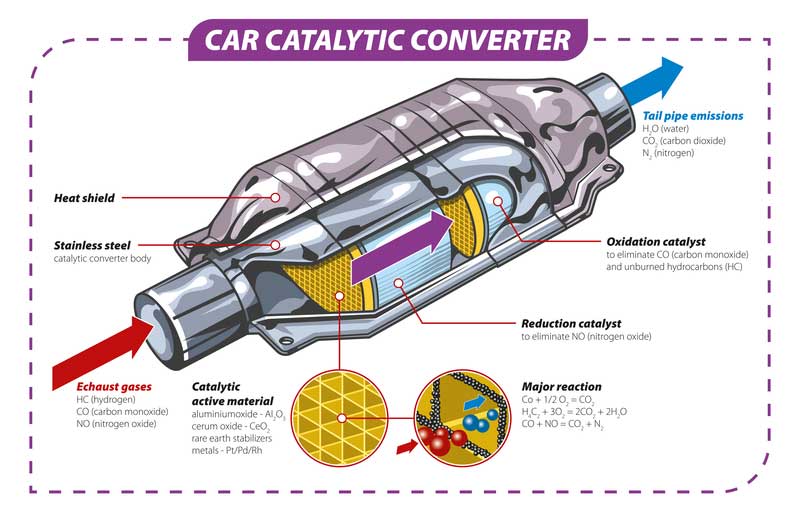
Here is the number most people are actually searching for. On average, a catalytic converter contains somewhere between 2 and 7 grams of palladium. That range is not arbitrary, and it depends heavily on the specific converter model, the vehicle it was built for, and the manufacturer’s engineering choices.
Smaller converters designed for compact cars generally sit toward the lower end of that range, while larger converters built for trucks, SUVs, or higher performance vehicles often carry more palladium to handle the increased volume of exhaust gases passing through them.
The Other Two Metals Scale Alongside It
Palladium does not work alone, and neither platinum nor rhodium get thrown into the mix in random amounts. Manufacturers ratio these metals carefully to complement whatever amount of palladium is present in a given converter.
For every 2 to 7 grams of palladium in a converter, you will typically find:
- Rhodium: Roughly 1 to 2 grams
- Platinum: Roughly 3 to 7 grams
If you want a deeper breakdown of how those other two metals specifically function, there are dedicated guides covering exactly how much rhodium sits in a catalytic converter and how much platinum you can expect to find as well, since each metal deserves its own explanation.
| Metal | Typical Amount Per Converter | Primary Function |
|---|---|---|
| Palladium | 2 to 7 grams | Oxidizes carbon monoxide and hydrocarbons |
| Platinum | 3 to 7 grams | Boosts oxidation reactions |
| Rhodium | 1 to 2 grams | Reduces nitrogen oxides |
All three of these metals together explain exactly why a replacement catalytic converter costs what it does at the parts counter, and why thieves target them so aggressively in the first place.
Why Manufacturers Combine Palladium, Platinum, and Rhodium Instead of Using Just One
You might wonder why engineers bother mixing three different precious metals rather than simply loading up a converter with whichever one works best on its own. The answer comes down to chemistry, and each metal genuinely excels at a different part of the cleanup job.
Each Metal Brings Something Different to the Table
- Palladium shows a naturally high potential for improving oxidation reactions, making it excellent at breaking down carbon monoxide and hydrocarbons.
- Platinum works alongside palladium to further increase the overall oxidation rate happening inside the converter.
- Rhodium specializes in reducing nitrogen oxides, and it also plays a role in hydrogenation reactions along with acetic acid and nitric acid chemistry.
When palladium or platinum gets combined with rhodium, the resulting reaction actually forms more ammonia under reduction conditions. That chemical relationship helps decrease nitric oxide conversion specifically under oxidizing conditions, which is exactly the kind of environment your exhaust system creates constantly while your engine runs.
In practical terms, this means using all three metals together accomplishes something none of them could pull off alone. Toxic pollutants get trapped and transformed rather than escaping straight into the surrounding air, which is the entire point of the device existing in your exhaust system to begin with.
Why Palladium Costs So Much Right Now
Here is where things get genuinely interesting, and honestly, a little painful if you are the one paying for a replacement converter. Palladium is not cheap, and the price has fluctuated wildly over the past several years depending on global supply and demand.
Current Market Pricing
As of recent market data, a single gram of palladium runs around $73.75, and a full ounce averages roughly $2,130.00. These numbers shift regularly based on broader market conditions, so treat them as a general reference point rather than a fixed number carved in stone.
| Unit | Approximate Price |
|---|---|
| 1 gram | $73.75 |
| 1 ounce | $2,130.00 |
Even so, the number on a commodities chart is not the only thing driving the final price you pay for a replacement converter. Extraction costs play just as big a role, and honestly, that part of the story surprises most people.
Why Extracting Palladium Is Its Own Expensive Process
Getting palladium out of raw ore, or out of a used catalytic converter for recycling purposes, is not a simple task. It involves several distinct stages, each one adding cost along the way.
- Leaching: Chemicals like nitric acid and sulfuric acid dissolve the raw material to begin separating out the valuable metal content. These chemicals themselves are not cheap to source or handle safely.
- Impurity removal: The leached solution goes through a purification process to strip out unwanted materials mixed in with the palladium.
- Precipitation: This stage produces dichloramine-palladium, sometimes referred to as yellow palladium salt, which is an intermediate form on the way to pure metal.
- Reduction: The yellow salt gets chemically reduced down to metallic palladium.
- Smelting: The metallic palladium ore then gets melted at high temperatures to extract a usable base metal.
Out of all these stages, smelting stands out as the most expensive part of the entire process. It demands significant heat and energy to properly melt the ore and separate a clean base metal from whatever remains behind. Once every step finishes successfully, the end result is 99.9 percent pure palladium metal, ready to head to market or get incorporated into a brand new catalytic converter.
All of this explains why palladium never comes cheap, regardless of whether you are buying it fresh from a refinery or recovering it from an old, worn out converter pulled off a scrapped vehicle.
Why This Makes Petrol Vehicles a Bigger Target for Theft
Here is a detail that connects directly back to real world consequences for regular car owners. Petrol powered vehicles tend to run higher quality catalytic converters compared to many diesel vehicles, and those converters typically carry more valuable metal content as a result.
That difference has not gone unnoticed by thieves. Even accounting for overall vehicle theft trends, petrol vehicles get targeted for catalytic converter theft far more frequently than diesel vehicles. The thieves are not after the car itself in these cases, they crawl underneath, cut the converter free in under two minutes with a portable saw, and disappear before anyone notices anything happened.
In the real world, this means owning a Toyota Prius, a pickup truck riding higher off the ground, or any vehicle known for a particularly metal-rich converter puts you at a genuinely higher risk. Scrap buyers pay well for these stolen units specifically because of the palladium, platinum, and rhodium locked inside, and that resale value drives the entire underground market.
How to Protect Your Catalytic Converter From Theft
Given everything covered so far, it makes sense to take this threat seriously rather than just hoping it never happens to you. A few practical steps can genuinely reduce your risk.
- Install a catalytic converter shield or cage. These metal enclosures bolt around the converter, making it significantly harder and more time consuming for a thief to cut through.
- Park strategically. Whenever possible, park in a garage, or if that is not an option, park in well lit areas close to building entrances or high foot traffic zones.
- Etch your VIN onto the converter. Some auto shops and local police departments offer free VIN etching services specifically for this purpose, which makes stolen converters much harder for thieves to sell to scrap buyers.
- Consider a motion sensor alarm. Aftermarket alarms sensitive to vibration or tilt can trigger the moment someone starts working underneath your vehicle.
- Check your insurance coverage. Comprehensive auto insurance policies often cover catalytic converter theft, though it is worth confirming this explicitly with your provider rather than assuming.
None of these steps make theft impossible, but each one adds friction, and friction is often enough to send a thief looking for an easier target elsewhere.
What Happens If Your Catalytic Converter Gets Stolen
If you have ever started your car only to hear an unbelievably loud roar coming from underneath, congratulations, you have likely just experienced converter theft firsthand. It is impossible to miss once it happens.
Beyond the deafening exhaust noise, expect these symptoms as well:
- A noticeable drop in fuel efficiency, since the exhaust system is no longer functioning as designed.
- A rattling sound from underneath the vehicle, sometimes from loose cut pipe ends.
- A check engine light triggered almost immediately, since the vehicle’s computer detects the missing emissions component right away.
- A strong smell of exhaust fumes, sometimes even noticeable inside the cabin.
At that point, your options come down to filing a police report, contacting your insurance provider if you carry comprehensive coverage, and sourcing a replacement converter, which brings the conversation right back around to those precious metal prices covered earlier.
Recycling and the Secondary Market for Precious Metals
Interestingly, the exact same properties that make catalytic converters attractive to thieves also make legitimate recycling a genuinely profitable and environmentally valuable industry. Scrap metal recyclers extract palladium, platinum, and rhodium from old, worn out converters every single day through legal, regulated channels.
This recycled supply actually plays a meaningful role in the overall global palladium market. Mining new palladium from the ground is slow, geographically limited, and expensive, so recovered material from old converters helps meet ongoing industrial demand without requiring endless new mining operations.
If you ever need to responsibly dispose of an old converter, whether from a repair shop or a personal project, look specifically for a licensed metal recycler rather than an informal scrap buyer. Licensed recyclers follow proper documentation procedures, which also protects you from any suspicion of handling stolen material.
A Quick Look at Palladium Versus Platinum and Rhodium Pricing
It is worth understanding how these three metals stack up against each other price wise, since that comparison explains a lot about why certain converters cost more to replace than others.
| Metal | General Price Trend | Why It Matters for Converters |
|---|---|---|
| Palladium | Historically volatile, often trading at a premium | Primary metal for oxidation reactions in gasoline engines |
| Platinum | Generally more stable, sometimes trading lower than palladium | Common in both gasoline and diesel converter designs |
| Rhodium | Often the most expensive per gram of the three | Smallest quantity used, but critical for nitrogen oxide reduction |
Rhodium frequently commands the highest price per gram out of the three metals, even though converters contain the least amount of it. That combination of scarcity and small quantity still contributes meaningfully to overall converter value, which is worth keeping in mind if you are ever comparing replacement costs across different vehicle types.
Frequently Asked Questions
Does every catalytic converter contain the same amount of palladium?
No. The amount varies based on converter size, vehicle type, and manufacturer specifications. Smaller compact car converters typically sit at the lower end of the 2 to 7 gram range, while larger vehicles often use converters containing more.
Why is palladium worth more than gold in some periods?
Palladium’s price is driven heavily by industrial demand, particularly from the automotive sector, combined with limited global mining supply concentrated in just a few countries. When demand spikes and supply stays tight, prices can climb past gold, something that has genuinely happened in recent years.
Can I legally sell a used catalytic converter for its metal content?
Yes, provided you own the converter legitimately and sell through a licensed scrap metal recycler. Many recyclers require identification and documentation to prevent stolen converters from entering the legal market.
Do electric vehicles need catalytic converters?
No. Fully electric vehicles produce no exhaust emissions, so they have no need for a catalytic converter at all. This is worth noting since the ongoing shift toward electric vehicles will likely affect long term palladium demand from the automotive sector.
Palladium quietly does one of the most important jobs on your entire vehicle, working away under intense heat every single time you drive, and it does so using a genuinely rare and valuable metal that most drivers never think twice about. Understanding what sits underneath your car, and why it is worth protecting, might just save you an expensive and frustrating repair down the road. Keep an eye on that converter, because plenty of people out there already know exactly what it is worth.