
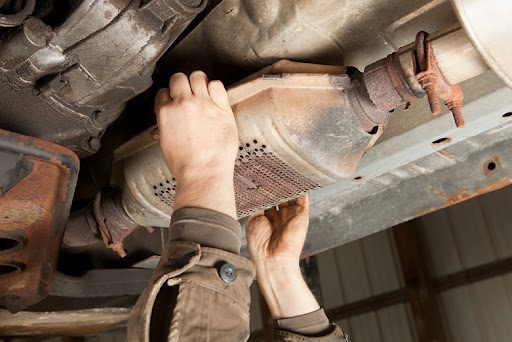
Every time a gas-powered car starts up and drives down the road, it pushes a cocktail of harmful gases out of its exhaust pipe. Left unchecked, those gases, nitrogen oxides, carbon monoxide, and unburned hydrocarbons, contribute to smog, respiratory illness, and environmental damage on a massive scale. Multiply that by hundreds of millions of vehicles on the road worldwide, and you start to understand why vehicle emissions are one of the most serious pollution problems we have.
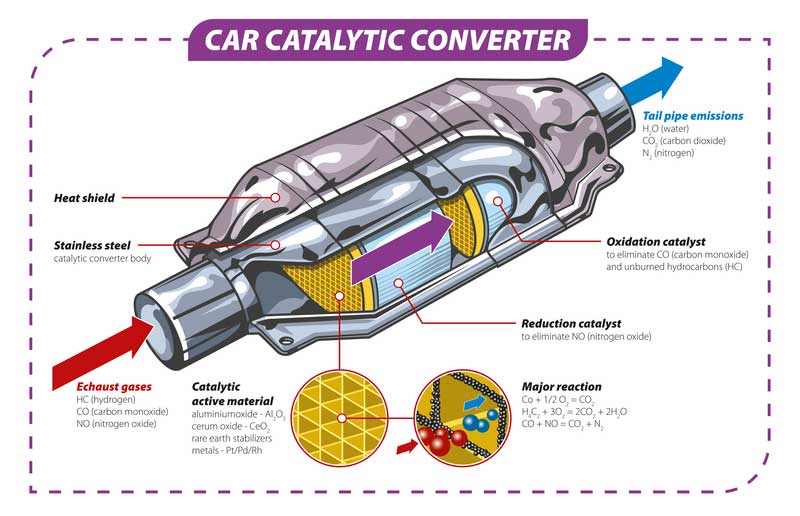
The catalytic converter is the device sitting in your exhaust system doing something about that. It takes the toxic gases coming out of your engine and chemically converts them into less harmful compounds before they exit the tailpipe. It works constantly, silently, and most drivers never think about it until it fails or someone steals it.
But do all cars actually have one? The short answer is: it depends on the type of vehicle. Let us break it down properly so you understand exactly what your car has, why it has it, and what the future looks like for these devices.
So Do All Cars Have Catalytic Converters?
Not exactly. The honest answer is that it depends entirely on what kind of engine the vehicle uses. Catalytic converters exist specifically to deal with the byproducts of burning fuel. If a vehicle does not burn fuel, there are no harmful exhaust gases to clean up, and no converter is needed.
Here is how it breaks down by vehicle type.
Petrol Cars
Yes, every petrol-powered car on the road today has a catalytic converter. In fact, in the United States and most of Europe, it has been a legal requirement for decades.
Petrol engines are prolific producers of nitrogen oxides, which are a major contributor to smog and acid rain. The catalytic converter in a petrol car uses precious metals, typically platinum, palladium, and rhodium, to trigger chemical reactions that convert those nitrogen oxides into less harmful nitrogen and water. It also handles carbon monoxide and unburned fuel vapors in the same process.
The legal requirement to fit catalytic converters to petrol cars came into effect in 1992 in many countries. At that point, it became non-negotiable. Any petrol car manufactured after that date came with one fitted from the factory, and removing it is illegal in most places.
The shift to unleaded fuel was actually what made catalytic converters viable in petrol cars. Leaded fuel destroyed the precious metal catalysts inside the converter, rendering the device useless. Once lead was removed from petrol, converters could do their job effectively.
Diesel Cars
Diesel engines also produce harmful emissions, just a different mix compared to petrol engines. Diesel combustion generates significant amounts of particulate matter (the black soot you sometimes see from older diesel trucks) along with nitrogen oxides and carbon monoxide.
To deal with this, diesel vehicles use two specific types of catalytic converters rather than the single three-way converter found in petrol cars.
DOC (Diesel Oxidation Catalyst): This works similarly to the converter in a petrol car. It uses precious metals to oxidize carbon monoxide and unburned hydrocarbons, converting them into carbon dioxide and water. It does not, however, deal effectively with nitrogen oxides on its own.
SCR (Selective Catalytic Reduction): This system handles the nitrogen oxide problem in diesel engines. It injects a urea-based solution, commonly known as AdBlue or DEF (Diesel Exhaust Fluid), into the exhaust stream. The ammonia in that solution reacts with nitrogen oxides in the presence of a catalyst, converting them into harmless nitrogen gas and water vapor.
Many diesel vehicles also use a Diesel Particulate Filter (DPF) alongside these catalytic systems. The DPF physically traps soot particles and periodically burns them off through a process called regeneration. It is not technically a catalytic converter, but it works alongside the DOC and SCR as part of the overall emissions control system.
The legal requirement for diesel cars to carry emissions control devices came about eight years after petrol cars, around 2000 in most markets. The reasoning was that diesel engines were initially considered cleaner in some respects, though that view has been revised significantly since then.
Hybrid Cars
Hybrids sit in an interesting middle ground. Whether a hybrid car needs a catalytic converter comes down to one simple question: does it have a petrol or diesel engine on board? If the answer is yes, it needs a converter.
Non-plug-in gas/electric hybrids like the Toyota Prius combine a petrol engine with an electric motor. The electric motor handles low-speed driving and assists the petrol engine under heavy load. But because the petrol engine is there and it burns fuel, it produces emissions. That means a catalytic converter is required, full stop.
Plug-in hybrids (PHEVs) work similarly. They have a larger battery pack that can be charged from an external power source, which means they can drive meaningful distances on electricity alone. But when the battery depletes or when extra power is needed, the petrol or diesel engine kicks in. Again, the presence of a combustion engine means a catalytic converter is part of the package.
The electric portion of a hybrid produces zero exhaust emissions. But the converter is there to clean up what the combustion engine produces when it is running.
Electric Cars
This one is simple. Battery electric vehicles (BEVs) have no combustion engine. They produce zero exhaust emissions. There is no exhaust pipe in the traditional sense, no harmful gases to convert, and no catalytic converter anywhere on the vehicle.
This is one of the genuine mechanical advantages of going fully electric. No converter means no risk of it clogging, no risk of theft (more on that shortly), and one less expensive component to worry about over the life of the vehicle.
Hydrogen fuel cell vehicles are in the same category. They produce electricity through a chemical reaction between hydrogen and oxygen, with the only byproduct being water vapor. No harmful emissions, no catalytic converter needed.
Why Petrol Cars Got Catalytic Converters Before Diesel Cars
The eight-year gap between the 1992 mandate for petrol cars and the later requirement for diesel vehicles comes down to the nature of the emissions each engine type produces.
Petrol engines in their pre-converter era were responsible for extremely high levels of carbon monoxide and nitrogen oxide emissions. The environmental and public health impact was significant and measurable. Regulators moved quickly.
Diesel engines, by contrast, were initially seen as producing lower levels of some harmful gases, particularly carbon monoxide. The bigger concern with diesel was particulate matter, which is harder to address with a traditional catalytic converter and requires the DPF system instead. As scientific understanding of diesel emissions evolved, and as the health impacts of diesel particulates and nitrogen oxides became clearer, regulation caught up.
The Volkswagen emissions scandal in 2015 accelerated public and regulatory scrutiny of diesel emissions significantly. It revealed that many diesel vehicles were meeting lab test standards while producing far higher emissions in real-world driving conditions. That triggered tougher standards and enforcement across multiple markets.
How Catalytic Converters Differ Between Petrol, Diesel, and Hybrid Vehicles
They all share the same basic goal of reducing harmful emissions, but the specific chemistry and components differ depending on the fuel type.
| Vehicle Type | Converter Type | What It Converts | Catalyst Used |
|---|---|---|---|
| Petrol | Three-way catalytic converter | NOx to nitrogen and water; CO and hydrocarbons to CO2 and water | Platinum, palladium, rhodium |
| Diesel | DOC + SCR (often with DPF) | CO and hydrocarbons via DOC; NOx via SCR using urea solution | Platinum, palladium (DOC); vanadium or zeolite (SCR) |
| Hybrid (gas/electric) | Same as petrol or diesel depending on engine type | Same as the combustion engine it uses | Same as above |
| Full Electric | None | No exhaust emissions to convert | Not applicable |
The petrol three-way converter is the most common and the most well-known. It handles three pollutants simultaneously in a single unit, which is why it carries that name. Diesel systems require separate devices for different pollutants because diesel combustion chemistry does not allow a single converter to handle everything efficiently.
The Real-World Advantages of Driving a Car Without a Catalytic Converter
This is not about encouraging anyone to remove their converter. It is about understanding the genuine advantages that fully electric vehicles have precisely because they do not need one. These are real, practical benefits that affect daily ownership.
1. No Clogged Converters or Blocked DPFs
Over time, catalytic converters accumulate deposits. Debris from combustion, contaminants from oil burning, or damage from overheating can restrict the flow of exhaust gases through the converter. A clogged converter causes reduced engine performance, poor fuel economy, failed emissions tests, and eventually a check engine light that will not go away.
Diesel DPFs have an even more specific problem. The filter traps soot particles and periodically burns them off during a regeneration cycle. That regeneration requires the exhaust to reach a high enough temperature, which typically means sustained driving at highway speeds. If you mostly drive short urban trips in a diesel car, the DPF never gets hot enough to complete regeneration properly. Soot builds up. Eventually the filter blocks completely, and the repair bill is substantial.
Electric car owners never deal with any of this. There is no converter to clog and no DPF to maintain. It is simply not part of the ownership experience.
2. Catalytic Converter Theft Is a Serious and Growing Problem
The precious metals inside catalytic converters, particularly rhodium, platinum, and palladium, are genuinely valuable. Rhodium in particular has traded at prices exceeding gold at various points in recent years. Thieves know this, and catalytic converter theft has become a significant problem in many cities.
A determined thief with an angle grinder can remove a catalytic converter from underneath a parked vehicle in under two minutes. The converter then gets sold to scrap metal dealers for anywhere from fifty to several hundred dollars. The repair cost to the vehicle owner is typically between one thousand and three thousand dollars or more depending on the vehicle.
Certain vehicles are targeted far more often than others. The Toyota Prius, Honda Element, and various trucks and SUVs with high ground clearance top the theft lists in many areas because their converters are either particularly valuable, particularly easy to access, or both.
Protective measures exist. You can have a protective shield installed over the converter, use specialized locking devices, park strategically to block access to the underside, or use etching services that mark the converter with your vehicle’s VIN to make it harder to sell. But all of these measures add cost and inconvenience. Electric vehicle owners have no converter to steal and need not think about any of this.
3. Lower Maintenance Complexity Overall
Internal combustion engines require regular servicing. Oil changes, filter replacements, coolant flushes, spark plug changes, and occasional catalytic converter inspections or replacements all add up over time. The older the vehicle, the more frequently some of these services are needed, and the higher the cumulative cost.
Electric vehicles have far fewer moving parts and far fewer fluids to maintain. No oil to change, no spark plugs to replace, no exhaust system to service. The maintenance schedule is genuinely simpler and, over time, cheaper for most owners.
This does not mean electric vehicles are maintenance-free. Tires, brakes, and cabin air filters still need attention. Battery health is a consideration that does not exist with combustion vehicles. But the specific costs associated with exhaust emissions control systems simply do not apply.
4. Access to Low-Emission Zones Without Fines
Many cities around the world, particularly in Europe, have established Low Emission Zones (LEZ) or Ultra Low Emission Zones (ULEZ) where older, higher-polluting vehicles face restrictions or daily charges to enter. London’s ULEZ is one of the most well-known examples, but similar schemes exist in cities across Germany, France, Italy, and increasingly in other parts of the world.
Drivers of older petrol and diesel vehicles that do not meet current emissions standards can face significant daily charges for driving in these zones. For regular commuters, those charges accumulate quickly.
Fully electric vehicles are exempt from these charges and restrictions in virtually every scheme currently operating. Hydrogen fuel cell vehicles are also typically exempt. This exemption has real financial value for drivers who live in or regularly travel into affected urban areas.
What Actually Happens If You Remove Your Catalytic Converter?
Some drivers consider removing their catalytic converter to avoid replacement costs when it fails, or because they have heard it can improve engine performance. Let us be direct about both the reality and the consequences.
On the performance question, removing the converter does reduce backpressure in the exhaust system, which can marginally increase power output in some vehicles. But modern engine management systems are calibrated to work with the converter in place. Removing it can trigger fault codes, put the engine into a reduced performance mode, and cause the check engine light to illuminate permanently.
On the legal question, driving without a catalytic converter is illegal in most jurisdictions, including all US states with emissions testing requirements and throughout the European Union. Getting caught without one during an emissions test or roadside inspection can result in fines, a failed inspection, and the inability to register the vehicle legally.
Beyond the legal issue, removing the converter means your vehicle is pumping unfiltered exhaust gases directly into the atmosphere. The environmental impact of one vehicle doing this is small. The cumulative impact of many vehicles doing it is not.
If your converter is failing or has been stolen, the correct course of action is to replace it with a proper unit, either OEM or an approved aftermarket equivalent that meets your local emissions standards.
Will Future Cars Still Need Catalytic Converters?
The trajectory is clear. As the automotive industry moves toward electrification, the relevance of catalytic converters shrinks. Battery electric vehicles do not need them. Hydrogen fuel cell vehicles do not need them. Every year, a larger percentage of new vehicles sold globally are fully electric.
That said, the transition is not happening overnight. Internal combustion engines are not disappearing from the road any time soon. The global vehicle fleet turns over slowly. A car bought today might still be on the road in 2040. Many parts of the world are decades away from widespread EV adoption due to infrastructure limitations, cost barriers, and energy availability.
For as long as petrol and diesel engines are burning fuel, catalytic converters will be required. They are not optional, they are not a suggestion, and they are not going anywhere in the short term.
What may change is the technology inside the converters. Researchers are working on formulations that use less of the expensive precious metals while maintaining effectiveness, which would reduce both the cost of converters and the incentive to steal them. Some work is being done on converters that reach operating temperature faster, which improves their effectiveness during the cold start period when most harmful emissions occur.
Synthetic fuels and hydrogen combustion engines are also possibilities that could allow combustion technology to survive with significantly reduced emissions, though both face substantial technical and economic hurdles.
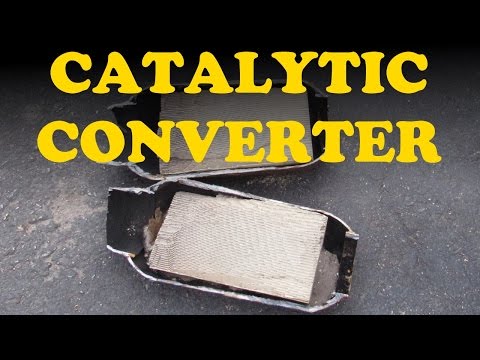
Video: How a Catalytic Converter Works
Frequently Asked Questions
Can you tell if a catalytic converter is failing without a scan tool?
Sometimes, yes. A failing converter often causes a noticeable drop in engine performance, particularly at higher speeds. You might also notice a sulfur or rotten egg smell from the exhaust, which indicates the converter is not processing sulfur compounds properly. A rattling noise from underneath the vehicle, especially on startup, can mean the internal catalyst substrate has broken apart. Any of these symptoms warrants investigation.
How long do catalytic converters typically last?
A properly maintained catalytic converter on a healthy engine should last the life of the vehicle, often 100,000 miles or more. They tend to fail prematurely when the engine has other problems, such as oil burning, coolant leaks into the combustion chamber, or misfires that push unburned fuel into the exhaust and overheat the catalyst substrate.
Are aftermarket catalytic converters as good as OEM units?
It depends heavily on the brand and the specific application. In states with strict emissions standards like California, replacement converters must meet specific CARB (California Air Resources Board) certification requirements, and not all aftermarket converters qualify. A cheap, non-certified converter might pass an initial visual inspection but fail an actual emissions test. Buy from reputable suppliers and confirm the converter meets your local legal requirements.
Does a catalytic converter affect fuel economy?
A functioning catalytic converter has a negligible effect on fuel economy. A clogged or failing one, however, can significantly reduce fuel economy by creating excessive backpressure in the exhaust system that the engine has to work harder to overcome.
My check engine light came on and the code is related to the catalytic converter. Does it definitely need replacing?
Not always. The most common catalytic converter code, P0420, indicates the converter is operating below efficiency threshold. But that code can also be triggered by a failing oxygen sensor upstream or downstream of the converter, exhaust leaks near the sensors, or engine issues causing the converter to run too hot or too cold. Diagnose the root cause before buying a replacement converter. Many people replace a perfectly repairable converter when the real culprit was a twenty-dollar oxygen sensor.
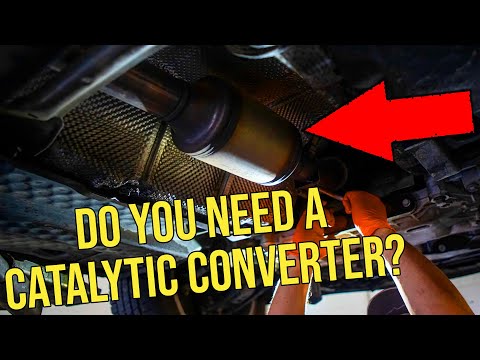
The catalytic converter is one of the most important emissions control devices ever fitted to a vehicle. It is also one of the most stolen, one of the most misunderstood, and, as the industry shifts toward electrification, one of the components that may eventually fade from relevance entirely. For now, if your vehicle has a combustion engine, it has a catalytic converter, and keeping it in good working order is both a legal obligation and a genuine contribution to cleaner air. Treat it accordingly.