
Your catalytic converter is one of those parts that most drivers never think about until something goes wrong. It sits quietly in the exhaust system, doing its job every single time the engine runs. But lately, more people are asking whether they can simply drive without one, either because theirs failed, because a replacement costs a small fortune, or because it was stolen right off their car.
The short answer is yes, you can technically drive without a catalytic converter. The engine will still start, and the car will still move. But what happens beyond that is where the real story is, and it is not a good one.
Before getting into the details, here is a quick breakdown of what you are actually dealing with when the catalytic converter is missing. The car will produce significantly more harmful emissions, it will smell bad inside the cabin, the exhaust will be noticeably louder, and you will likely fail any emissions or vehicle inspection test. It is also illegal in most countries to drive without one.
What a Catalytic Converter Actually Does
The catalytic converter is part of your car’s exhaust system. Its job is to reduce the toxic gases produced when your engine burns fuel. Carbon monoxide, hydrocarbons, and nitrogen oxides are the main offenders, and without the catalytic converter, all of them exit the exhaust pipe untreated and go straight into the air.
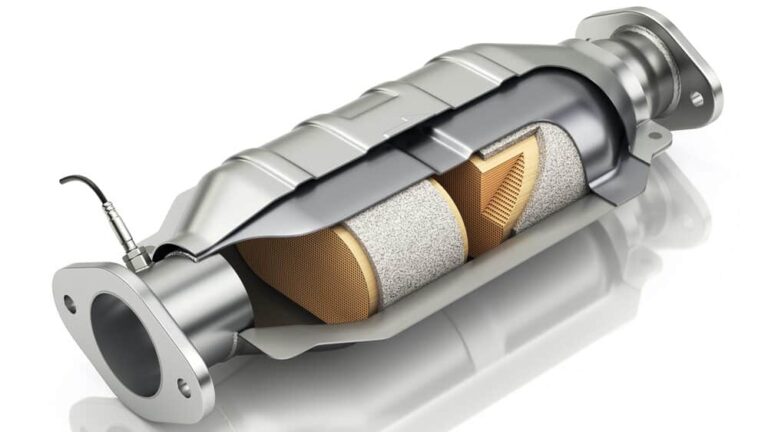
Inside the converter, there is a honeycomb-like structure coated with precious metals, specifically platinum, palladium, and rhodium. These metals act as catalysts, triggering chemical reactions that convert the harmful gases into less dangerous substances like carbon dioxide, water vapor, and nitrogen.
The system is also monitored by one or two oxygen sensors, sometimes called lambda probes. These sensors send data to the ECU, the car’s main computer, which uses that information to adjust the air-to-fuel mixture for optimal combustion. When the catalytic converter is gone, those sensors are reading exhaust gases that have not been processed, and the ECU starts operating on incorrect data.
Why Do Some Drivers Remove the Catalytic Converter?
Removing the catalytic converter is not legal in most countries. The factory exhaust system is regulated, and modifying it by cutting out or gutting the converter violates those regulations. Even so, it happens regularly, and there are a few common reasons why.
The most common reason is cost. A genuine replacement catalytic converter is expensive because of the precious metals inside. When a converter fails or gets clogged, some drivers look at the replacement price and decide to simply remove it instead of paying for a new one.
Another reason is a mistaken belief that removing it will increase engine power or reduce fuel consumption. This idea gets passed around in certain driving communities and is also sometimes promoted by unreliable repair shops looking to sell a service. The reality is that neither of those claims holds up in practice.
A third reason is that the converter has reached the end of its lifespan. Under ideal conditions, a catalytic converter can last between 120,000 and 170,000 kilometers, which is roughly 74,000 to 100,000 miles. After that, performance issues begin. The engine may feel sluggish, fuel consumption may rise, and idle speed can become inconsistent. At that point, some drivers choose removal over repair.
Theft is also a growing problem. Catalytic converter theft has increased significantly because the precious metals inside can be sold to scrap dealers for good money. Older vehicles where the converter sits exposed beneath the car are especially vulnerable.
The Real Pros and Cons of Driving Without a Catalytic Converter
Let’s be honest here. The list of advantages is very short. The list of problems is much longer. Here is what the situation actually looks like when you break it down properly.
1. Saving Money on a Replacement: The Only Real Advantage
This is the one area where removing the catalytic converter seems to make financial sense on the surface. Original replacement converters are expensive, and for some drivers, that cost feels unjustifiable when the car is older or they are on a tight budget.
But here is what most people do not factor in. You cannot simply remove the converter and call it a day. You will need to install a replacement pipe or spacer in its place to maintain exhaust flow. You will also need to have the ECU software adjusted so the car does not continuously trigger fault codes and go into reduced performance mode. That work costs money too.
So you are not actually escaping all costs. You are just swapping one set of costs for another, and in many cases, the total is not as dramatically different as people expect.
2. Will Fuel Consumption Actually Improve? Probably Not.
This is one of the most common myths around catalytic converter removal, and it needs to be addressed directly.
A clogged or failing catalytic converter does cause increased fuel consumption because the engine has to work harder to push gases through a restricted system. So when that blockage is removed, some drivers assume fuel economy will improve significantly.
Some dishonest repair shops even claim fuel savings of up to 30 percent. That number is simply not accurate.
In practice, drivers report mixed results. Some notice no improvement at all. Others say their fuel consumption actually got worse. Even in cases where ECU adjustments were made after removal, any fuel savings were described as almost imperceptible over time.
If a clogged converter is genuinely hurting your fuel economy, the correct fix is replacement, not removal.
3. Does Removing It Increase Engine Power? No.
This claim follows the same logic as the fuel consumption argument. If the converter is clogged and restricting exhaust flow, removing it should free up power, right?
In theory, there is a small element of truth to the idea that a severely clogged converter hurts power. Removing that blockage could restore some of the power that was being lost. But it does not add power beyond the car’s original output.
There is no significant performance gain from removing a properly functioning catalytic converter. On a modern engine, the ECU is calibrated to work with the converter in place. Removing it disrupts that calibration and can actually make performance worse without proper software adjustments.
Do not expect a performance upgrade from this. It simply does not work that way.
4. What About Engine Oil Consumption? No Connection.
Some automotive enthusiasts believe removing the catalytic converter will reduce engine oil consumption. This idea circulates in car forums and between people who share half-understood technical knowledge.
The truth is straightforward. The catalytic converter has no meaningful connection to engine oil consumption. The exhaust system does indirectly relate to how efficiently the engine vents pressure, and that in turn has a very minor influence on oil use. But the effect is so small that removing the converter to address oil consumption makes no practical sense whatsoever.
If your car is burning oil, that is a separate mechanical problem that needs its own diagnosis. The catalytic converter is not the cause, and removing it is not the solution.
5. Exhaust Noise Will Get Significantly Louder
This one is not a myth. Remove the catalytic converter and your exhaust will be substantially louder than before.
The converter plays a role in managing exhaust flow and sound. Without it, hot exhaust gases moving at speed resonate through the empty space where the converter used to sit. The result is a droning, often unpleasant noise that gets worse under acceleration and at highway speeds.
In a car with decent sound insulation, this may be manageable. In an older vehicle or one with worn cabin seals, that noise travels directly into the passenger compartment and makes every drive a noisy, irritating experience.
The only way to bring noise levels back to normal is to install a new converter or a properly designed replacement that includes noise management.
6. The Car Will Smell Bad Inside
This is a serious quality-of-life issue that drivers often underestimate until they experience it firsthand.
The catalytic converter processes exhaust gases and significantly reduces the concentration of harmful and odorous compounds before they exit the tailpipe. When it is gone, unprocessed gases move through the system. These include carbon monoxide at higher concentrations, sulfur compounds, and partially burned hydrocarbons.
These gases have strong, unpleasant smells. And because exhaust systems are not perfectly sealed, especially in older vehicles, traces of those gases find their way into the cabin. The result is a persistent, unpleasant smell that no amount of air freshener will fully mask.
Carbon monoxide exposure is also a real health risk here. Even at low concentrations, extended exposure causes headaches, fatigue, and reduced alertness. In a poorly ventilated cabin, this becomes a genuine safety concern.
7. Your Car Becomes a Bigger Polluter
Without a catalytic converter, your car emits untreated exhaust gases directly into the air. The level of toxic emissions increases dramatically.
Carbon monoxide, nitrogen oxides, and unburned hydrocarbons are released without any chemical treatment. These gases contribute to air pollution, smog formation, and health problems in populated areas.
Many drivers dismiss this concern when weighed against the cost of a replacement converter. But the environmental impact is real and measurable, and in urban areas where air quality already struggles, every vehicle that removes its emission controls makes things worse for everyone around it.
8. You Will Fail Emissions Inspections
Most countries and regions require periodic vehicle inspections. These tests check whether your car meets minimum safety and emissions standards before it can legally remain on the road.
Without a catalytic converter, your car will fail the emissions portion of that inspection. It does not matter how well the rest of the car is maintained. The missing converter means automatic failure.
Once you fail, you cannot legally drive the vehicle on public roads until the issue is corrected. Depending on your region, the consequences can include fines, a suspended registration, or a required repair before the car is allowed back on the road.
Some drivers choose to drive anyway and take their chances. That adds legal risk to an already problematic situation.
Is It Illegal to Drive Without a Catalytic Converter?
In most countries, yes. Removing the catalytic converter is illegal because it alters the factory design of the exhaust system in a way that violates emissions regulations.
In the United States, the Clean Air Act makes it illegal to remove or tamper with any emission control device. Fines can be substantial, and repair shops that perform the removal can face even larger penalties.
In Europe, similar regulations apply under Euro emissions standards. In Australia, Canada, and most other developed countries, the same principle holds. The exhaust system must remain as the manufacturer designed it.
Getting caught driving without a catalytic converter can result in:
- Significant fines
- Vehicle impoundment in some jurisdictions
- Failure to renew registration
- Increased scrutiny at future inspections
If the converter was stolen from your vehicle, that is a different legal situation. You are the victim in that case. But you still cannot legally drive the car until a replacement is installed.
What Happens to the Engine Without a Catalytic Converter?
Beyond the noise, smell, and legal issues, there are also mechanical consequences worth understanding.
Modern engines are managed by the ECU, and the catalytic converter’s performance is part of the data the ECU uses to manage fuel delivery and combustion. The oxygen sensors upstream and downstream of the converter constantly monitor exhaust composition and report back to the ECU.
When the converter is removed, the downstream oxygen sensor reads completely different values than expected. The ECU detects a fault and triggers the check engine light. In many cases, the car enters a fault mode that limits performance and fuel efficiency as a protective measure.
Without software adjustments to account for the missing converter, the ECU will continuously try to compensate for the incorrect sensor readings. This ongoing miscalibration can affect:
- Fuel injection timing and quantity
- Engine idle stability
- Overall fuel economy
- Long-term engine management accuracy
Over time, running the engine in a state of continuous fault management is not good for its longevity.
What Should You Do If Your Catalytic Converter Is Failing?
If your converter is clogged, worn out, or has been stolen, removal is not the answer. Here are the options that actually make sense.
Replace It With an OEM or Quality Aftermarket Converter
The most straightforward solution is replacing the failed converter with a new one. Original equipment manufacturer converters are the most reliable option, though they are also the most expensive.
Quality aftermarket converters are available at lower prices and can be a reasonable choice for many vehicles. The key is working with a reputable supplier and avoiding cheap imitations that will not meet emissions standards or last very long.
Stay away from used converters sourced from junkyards. You have no way of knowing their actual condition, and they could be close to failing themselves.
Get a Professional Diagnosis Before Assuming the Converter Is the Problem
Not every symptom that points toward a failing converter actually means the converter is the cause. Oxygen sensor failures, exhaust leaks, and engine misfires can all produce similar symptoms.
A proper diagnostic scan will pull the fault codes and help identify the real source of the problem. Replacing an expensive converter when the actual issue is a $30 oxygen sensor would be a frustrating and costly mistake.
Check Your Insurance if the Converter Was Stolen
Catalytic converter theft has become increasingly common because the precious metals inside are valuable and easy to sell. If yours was stolen, check your comprehensive auto insurance policy. Many policies cover theft of vehicle components, and a claim may cover most or all of the replacement cost.
Why Catalytic Converter Theft Is Increasing
It is worth addressing this directly because it is affecting more and more drivers.
The precious metals inside a catalytic converter, particularly platinum, palladium, and rhodium, have significant market value. Rhodium in particular has seen dramatic price increases in recent years. A stolen converter can be sold to scrap dealers quickly and with minimal traceability.
The theft typically takes only a few minutes with basic cutting tools. Vehicles that sit higher off the ground, such as trucks and SUVs, are easier targets because the converter is more accessible. Older vehicles where the converter is mounted lower and more exposed under the car are also frequently targeted.
If you want to protect your vehicle, consider:
- Parking in well-lit areas or enclosed garages when possible
- Installing a catalytic converter protection shield or cage
- Having your converter marked with a VIN or other identifying information to make it harder to sell
- Checking whether your insurance covers converter theft
A Quick Summary: Driving Without a Catalytic Converter
| Factor | Impact |
|---|---|
| Acceleration and power | Minor or no improvement, may decrease |
| Fuel economy | No meaningful improvement |
| Engine oil consumption | No connection |
| Exhaust noise | Significantly louder |
| Cabin smell | Noticeably worse |
| Emissions | Dramatically increased |
| Legal compliance | Illegal in most countries |
| Emissions inspection | Automatic failure |
| ECU performance | Fault codes, reduced efficiency |
When you look at the full picture, the case for removing the catalytic converter falls apart quickly. There is almost no situation where removal is the smarter financial or practical decision compared to replacement. The short-term cost savings are largely offset by the problems it creates.
If your catalytic converter is failing and the replacement cost feels overwhelming, talk to multiple shops, explore quality aftermarket options, and check your insurance coverage before deciding anything else. Driving without it is not a solution. It is a shortcut to more problems than you started with.