
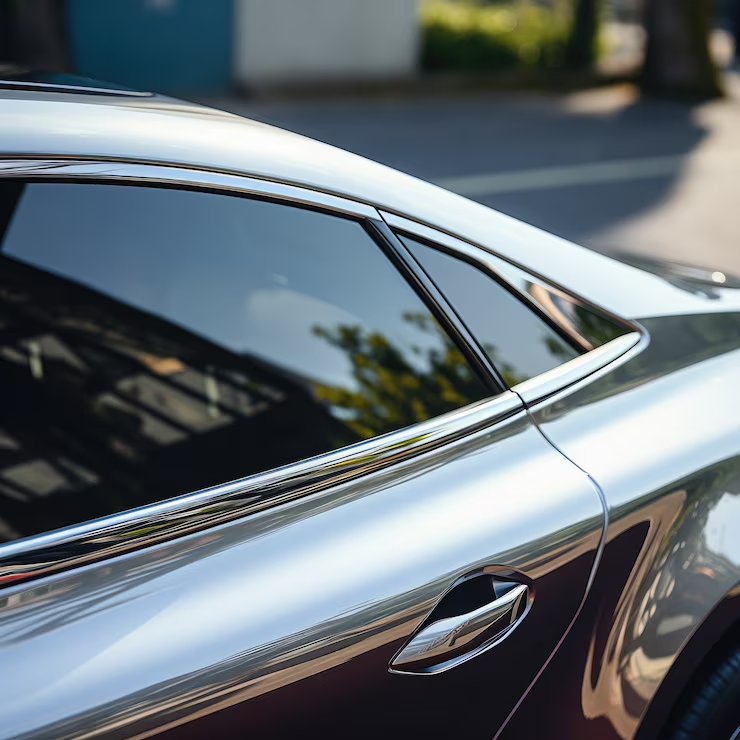
Tinted windows used to feel like a “nice-to-have” car accessory. These days, they are showing up everywhere. You see them on compact cars, family vehicles, and even ride-hail setups. The look is part of the appeal, sure. But once you understand what tinted film actually does, you realize it is not just style.
The tinted film on the car is also called “car foil,” and people apply it to different windows, including the rear window and, in some cases, multiple windows all around. A lot of drivers choose it because it can dramatically change how a car looks. Still, the real benefits go deeper than appearance.
Some people dismiss tint as a whim. But the truth is that tinted windows can improve comfort, help protect passengers from ultraviolet rays, reduce heat buildup, and even help protect the interior materials in the long run. That matters when you spend time in the car every day, especially during hot weather.
In this article, I will walk you through the main advantages, how tinted film works, the common legal limits on light transparency (with the numbers often used in Europe and the USA), and what rules installers and drivers typically have to follow. You will also get a clear look at costs, installation time, and what to watch out for so you do not end up paying for something that is not safe or not legal.
Tinted windows: the real benefits (not just the look)
Car tinted film has become more popular because it gives you a different vibe instantly. A darker, cleaner window can make the exterior look sharper, more aggressive, or more premium depending on the car. Even so, that aesthetic upgrade is only one layer of what you are paying for.
There are also practical gains that drivers notice quickly. The film can support UV protection and thermal protection. In plain terms, it can help reduce sun impact inside the cabin, and that affects both comfort and the way you use the air conditioning.
Privacy and comfort on longer drives
One of the biggest reasons people love tinted windows is privacy. The tinted film helps create more intimacy inside the car. If you take longer trips, passengers can rest more peacefully because they are not constantly exposed to outside viewing.
Privacy also helps when you leave items in the car. If you park somewhere briefly and you have goods inside, tinted windows make it harder for someone to look in and decide that your car contains something worth stealing. It is not a magical anti-theft shield, but it does remove an easy opportunity for thieves.
UV protection that works like sunglasses
Tinted film also works like a pair of sunglasses. It reduces the influence of ultraviolet rays on passengers. The biggest win is that people inside the car are less disturbed by harsh sunlight. They can focus on the drive, not on squinting and heat stress.
To make it real, imagine a driver who spends a lot of time on long sunny routes. Without tint, eyes can get strained and passengers can feel irritated quickly. With tint, the journey feels smoother because the glare is reduced.
Thermal protection that can reduce fuel consumption in summer
Another reason drivers like tinted film is that it reduces fuel consumption during the summer. The reason is simple: tinted film provides very good protection against sunlight, meaning it does not let the heat enter the car as easily. When the cabin does not heat up quickly, the air conditioning does not have to work as hard to cool the interior.
When the air conditioning does not need to be set to maximum all the time, you can often avoid that extra load on the engine. That is one of the reasons tinted windows are linked with better fuel economy in hot seasons.
Here is a common real-world scenario. You park under strong sun, then get back into the car and turn on air conditioning immediately. With tint, the cabin heat buildup is usually less intense. That means you can start cooling sooner without running the system at maximum power for as long.
Protection for upholstery and interior materials
Tinted windows also help protect the interior. They reduce how much the sun directly hits upholstery and surfaces like dashboards and panels made from wood, plastic, or leather. Less sun exposure helps extend the life span of those materials.
When leather is exposed to strong sunlight, it dries out, hardens, and cracks over time. Plastic can soften, fade, crack, and become brittle. Wood color can fade too. Tinted film reduces the level of damage those materials take from sunlight, so your interior does not age as quickly.
A major exterior style upgrade
The exterior design can be changed quite a lot with tinted film on the windows. It can radically change how the car looks. Whether your car is elegant or sporty, the tinted film tends to highlight the style and aggressiveness of the vehicle.
There is also a “de-anonymizing” effect. When you tint windows, your car does not blend into the crowd the same way. People notice it more, and your interior feels more private.
Because tint is considered a long-term investment, many drivers treat it as a plan for the future. The film can last up to five years, depending on quality and proper installation.
Weather conditions are also usually not a problem for the film. Even when it is decorative, tinted film is intended to withstand different types of weather. It can help protect windows from scratches, heat, and cold, while the inside stays a more comfortable environment.
Anti-theft tinted film: added resistance
There is a more advanced option too: anti-theft tinted film. If you can afford it, it is designed to resist impacts better than basic tint films. But even a simpler tint option can still discourage thieves from looking into the car.
Anti-theft films have greater resistance to the window they are mounted on. You can find demonstration videos online that show how strong anti-theft films can be under impact. The key safety idea is this: in the event of an accident, the windows will not break into scattered pieces as easily. The film helps keep fragments gathered.
So the benefit is not only about prevention. It is also about how the glass behaves when things go wrong.
How long tinting takes and what it costs
One practical detail that matters when you plan your day: applying tinted film usually takes around two hours. That timing can vary depending on the number of windows and the workshop workflow, but “up to 2 hours” is a common estimate.
Pricing depends heavily on the quality of the film and the size of your car. The cost of tinted films and protective films can range from $200 up to $3000, depending on the type of film you choose.
If you are budgeting, do not only compare the cheapest price tag. Cheaper tint can peel faster or distort at night. Quality tint, when installed properly, holds up better over time and stays visually clear.
Are tinted windows legal? Light transparency rules you should know
Tinted film is popular, but it is also regulated. Some laws in Europe and the USA set minimum light transparency levels. The reason behind these rules is safety, especially for the driver’s visibility and the ability for law enforcement to see inside when needed.
Keep in mind that laws vary by country. Your local rules may be stricter or more relaxed, but the numbers below are common reference points.
| Window area | Common minimum light transparency | Typical note |
|---|---|---|
| Windshield (driver visual field) | 75% minimum transparency | Used as a reference in some Europe and USA rules |
| Side windows on the front | 70% minimum transparency | Front side windows must meet this threshold |
| Other windows | Can be less than 70% | Depending on local regulations |
The important takeaway is that tint is not a “free for all.” If you choose film that does not meet your local minimum transparency, you can get pulled over and forced to remove it.
Certification and installation rules (the part many people ignore)
If you want to apply tinted or transparent (protective) film properly, you must make sure the film is certified, and in some cases marked. The application should also be done in an authorized workshop.
The rear window is also treated differently in some regulations. It is not usually considered to be as important for the driver’s visibility provided the car is equipped with exterior rear-view mirrors on both sides. That is why many drivers tint primarily the side-rear windows and rear window.
Most drivers choose to install tinted film on the side-rear windows and the rear window. Some countries allow installation on the front windows as well, but that depends on your local law and the exact film you use.
Windshield tinting is the most delicate part legally. Some drivers apply an anti-UV film on the windshield. You might have seen cars with a purple look on the windshield. That purple tint is often the result of that type of anti-UV film.
At high speeds, small stones can jump from the road and crack the windshield. A protective film can also help protect against scratches produced by wipers. Because of that, some people prefer windshield protection instead of heavy dark tint.
There is also a strong suggestion in many guidelines: on the windshield, it is best to apply only a protective film with 100% transparency, especially if you want to stay legal. This is commonly known as a light-adaptive film.
What exactly is a light-adaptive film?
A light-adaptive film normally works like this: when sun rays hit it, the film closes or tints. When the sun is not hitting it, it opens and becomes transparent again. So the film reacts to light conditions rather than staying permanently dark.
This feature protects the eyes of the driver from blinding light of the sun, but it still allows maximum visibility during poorer light conditions. That is why it is seen as a useful investment, especially for drivers who spend a lot of time on the road.
Some more expensive cars even come with this type of film from the factory. You might hear it called infrared solar glass.
Now, the legal warning is real. If someone does not obey the law and gets caught with a non-approved film, the consequences can be serious. In some cases, you can be left without your car’s registration papers until the issue is solved, or even without the car, and you can also face a fine. It is not a small penalty, and it is usually not worth the risk.
Authorities can also use devices that measure window transparency. That means a “guess” about whether the tint is acceptable is not a strategy. You either meet the legal threshold with certified film, or you risk problems.
Installation do’s and don’ts (the rules that keep tint safe and legal)
If you want a clean install that does not create visibility problems, the workshop needs to follow correct procedures. The guidance below covers common rules about where the film can be applied, what minimum transparency should be used in certain viewing zones, and what conditions must be met after installation.
Related Posts
Key rules for applying tinted and protective films
- Film goes on the inside only: Regardless of mounting technology (with or without disassembly), the plastic film is applied only on the inside of the windows relative to the vehicle.
- No plastic film on the windshield: Never apply the plastic film, regardless of the light transmittance value, on the windscreen of vehicles.
- Driver field of vision windows (non-windscreen): For windows other than the windscreen that are in the driver’s field of vision, the normal light transmittance for the assembly of the initial glass and the applied film must not be less than 70%. A film with light transmittance of at least 70% can be applied to those windows only if the films are clear (colorless).
- Driver field of vision windows (with mirror exception): For windows in the driver’s field of vision, the normal light transmittance for the assembly made of the initial glass and applied foil must not be less than 70%. However, if the vehicle is equipped with two exterior rear-view mirrors (left and right), these windows are considered no longer part of the backward field of vision. In that case, the light transmittance for the whole assembly may be less than 70%.
- Do not block stop lamp light area: If the vehicle has an additional stop lamp (S3, S4) installed inside the car cabin and whose light is diffused through the rear window glass, the applied film must not obstruct the light area of the lamp.
- Perfect finish after installation: After installation, the films should not have creases, ruptures, or scratches that affect visibility or distort the image optically. On each window, the certification mark for the type of film applied and a specific label identifying it (including name and authorization number) should be applied. The label also specifies the final transmission of the glass.
- Defrosting system windows have special limits: The assembly of films on windows provided with defrosting systems is allowed only if the film is included in the glass mass. It is not allowed to mount the films on defrosting system windows applied to the glass.
Those rules are not there to slow you down. They protect visibility, keep the film properly aligned, and help ensure the installation meets legal requirements.
For example, many people want to tint every window quickly. But if you tint a window that has a defrost system without following the rule above, you can interfere with the defrost performance. That can create fogging issues during rain and harm safety when visibility matters most.
Another example is optical distortion. If a film has creases or scratches, you can get warped reflections or a blurred view at night. That is why the finish quality matters as much as the tint level.
How to choose tinted film that fits your driving (and stays safe)
Choosing tinted windows is not only about how dark you want the tint. You also want to consider where the film will be installed, what the film is designed to block, and how it affects visibility at night.
Here is a simple approach that works for most car owners, even if you have never handled car glass before.
1) Decide the goal first: privacy, UV, heat, or all of them
If your main goal is privacy, the focus is usually on side-rear windows and the rear window. If you are trying to reduce glare and UV exposure, you care about UV-blocking quality. If you want to reduce heat buildup and air conditioning workload, you care about thermal protection.
Many drivers end up wanting all of the above. In that case, you choose a film that balances UV and thermal performance without making visibility too difficult.
2) Pick a realistic darkness level
It is tempting to go as dark as possible for the best look. The problem is that too-dark tint can reduce visibility. That becomes especially important during dawn, dusk, rainy conditions, and night driving.
Also, legal limits are based on light transparency, not on style preferences. That means the “darkness” you see in a shop might not match the measurable transparency you need to be compliant. Certified film and proper measurement matter.
3) Do not ignore windshield strategy
For the windshield, most drivers should consider protective films designed to improve comfort and protection rather than heavy tint. In many guidelines, the suggestion is to apply only a protective film with 100% transparency for legal friendliness. This approach is also what people commonly associate with light-adaptive film.
If you want sun glare control, the light-adaptive concept is appealing because it tints when exposed to sun and becomes transparent when sun is not present. That gives you protection without permanently reducing night visibility.
4) Consider anti-theft film if you park in high-risk areas
If you regularly park in areas where car break-ins are common, anti-theft tinted film can add resistance. The main point is that it increases resistance to window breakage and helps keep fragments gathered. Even basic tint helps reduce how clearly thieves can see into the car, but anti-theft is built for tougher situations.
One owner might see it as a luxury. Another owner sees it as a practical insurance-like upgrade, especially if they transport tools, electronics, or goods as part of their daily life.
What a good tint workshop should do for you
A tinted window job is only as good as the workshop. That is why you should not treat it as a simple “apply and forget” service. A professional installation should protect visibility, meet certification requirements, and leave you with clean results and correct labels.
When you speak to a workshop, these are reasonable questions to ask, based on the rules and details people often miss.
Workshop checklist (ask before you pay)
- Certification: Is the film properly certified and marked as required?
- Authorized installation: Will the job be done in an authorized workshop?
- Labels and final transmission info: Will certification marks and labels be applied to identify the film type and authorization details, including final transmission?
- Windshield approach: Will they only use a protective approach that follows the “100% transparency” guidance when relevant?
- Defrost systems: Are they following the rule about defrost windows and glass-mass inclusion?
- Stop lamp light area: Will the rear lamp light area remain unobstructed if your vehicle has an additional stop lamp diffused through the rear glass?
- Finish quality: How do they ensure there will be no creases, ruptures, or scratches that affect visibility?
If the workshop gets defensive when you ask questions, that should tell you something. You want transparency and paperwork, not pressure.
How to care for tinted windows so they last
Tinted film can last up to five years when it is high quality and installed properly. Still, the way you care for it matters. After all, the film is a layer on your glass, and incorrect cleaning can reduce clarity or damage the finish.
A simple rule is to be gentle during the early curing period after installation. Many films need time to settle and bond. You also want to avoid harsh cleaners that can attack the film surface.
Here is a practical care routine you can follow:
- Clean with care: Use soft cloths and cleaners that are safe for window film surfaces.
- Avoid abrasive tools: Do not use rough sponges or anything that can scratch.
- Be careful with blades: If you are cleaning regularly, avoid scraping the film with metal edges.
- Let it cure: Give the film the installation cure time recommended by the installer.
- Watch for lifting edges: If an edge starts peeling, handle it early rather than waiting.
If you ever notice bubbling, creases, or distorted views, address it quickly. Waiting can turn a small installation mistake into a bigger job later.
Common tinting mistakes that cost drivers money and safety
Most mistakes are not intentional. Drivers want a nice look, and the decision gets rushed. Here are the most common errors that pop up when people ignore the legal and installation rules.
Mistake 1: Tinting without certified film
Some people buy film on faith and install it in a casual workshop. The problem is that your car may not meet transparency rules. The outcome can be painful: you can be asked to remove the tint, and you can even face fines and registration issues.
Because authorities can measure transparency, guessing is risky. Certified film plus correct labels helps you stay on the right side of the law.
Mistake 2: Choosing too-dark film for the driver’s field of vision
Even if the exterior looks great, too-dark tint can affect visibility. The guidance about minimum transparency of 70% in certain windows is there because the driver needs clear sight lines.
A practical way to think about it is this: if you drive a lot at night, you care more about night clarity than you care about day appearance.
Mistake 3: Ignoring defrost system rules
Defrosting is a safety feature. If you mount film incorrectly on defrost windows, you can interfere with the defrost function. The result can be foggy glass and poor visibility when rain hits or when temperatures drop.
That is why the rule says film on defrost windows is allowed only if it is included in the glass mass, not by applying a separate film on top of the existing defrost window assembly.
Mistake 4: Blocking important rear light signals
Some vehicles use an additional stop lamp inside the cabin with light diffused through the rear window glass. If tint obstructs that light area, it can reduce braking signal visibility. The film must not obstruct the light area of the lamp.
Mistake 5: Installing film that has creases, scratches, or distortions
After installation, films should not have creases, ruptures, or scratches affecting visibility or distorting the image optically. When you see distortion, you may not get the safe, clear vision you expect.
If the shop delivers a shaky visual result, it is not only an aesthetic issue. It can affect how you judge distance and react in traffic.
Frequently asked questions about tinted windows
How long can tinted film last?
Tinted film can last up to five years when it is good quality and properly installed. The exact lifespan depends on film quality, the care routine, and how the car is used and cleaned.
Does weather affect the tinted film?
Weather conditions generally do not affect the film the way you might expect. Tinted film is designed to withstand all kinds of weather conditions. It can also protect windows from scratches and temperature extremes.
How long does installation take?
Installing tinted film typically takes about up to two hours, depending on the car size and how many windows are being tinted.
Is anti-theft film worth it?
If you park in areas where break-ins are common, anti-theft tinted film can be a smart upgrade. It offers greater resistance and helps keep fragments gathered in an accident. Even basic tint can discourage thieves from looking into the car, but anti-theft is built for stronger protection.
How much does tinted film cost?
Tinted films and protective films can cost from $200 up to $3000, depending on film type and the size of the car. Quality and authorized installation also matter, because cheap film can create visibility problems later.
What happens if I install non-approved tint?
If you use a non-approved film and you get caught, you can be left without registration papers until the issue is solved and you may face a fine. Authorities can also use devices to measure transparency, so the risk is not theoretical.
What is the best windshield film approach?
Many guidelines recommend protective film only on the windshield with 100% transparency, which is known as a light-adaptive film. It tints when sun rays hit it and becomes transparent again when the sun is not present. That design supports driver comfort without heavy loss of visibility.
Your next step before tinting your windows
Before you sign anything or hand over money for tinted windows, ask a simple, direct question: Can the installer provide certified film, proper labels, and a compliant transparency outcome for your specific windows and your local rules?
If the workshop cannot clearly answer that, choose another shop. Your comfort matters, but your visibility and legal compliance matter just as much. Are you ready to confirm certification and transparency first, then choose the look?