
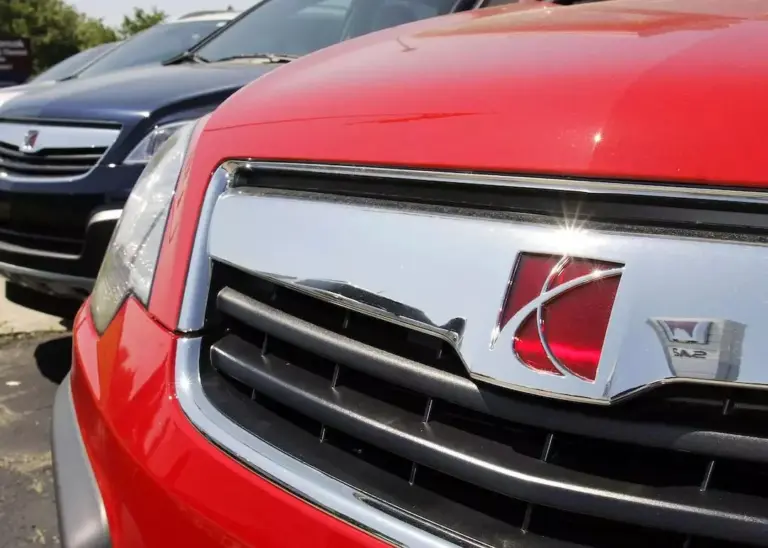
The American auto industry has always been a brutal game. One decade a brand is selling cars faster than they can build them, and the next, they are shutting off the lights and locking the doors for good. It happens more often than most people realize.
Some of these brands died because of bad timing. Others made terrible business decisions. A few were simply victims of a market that moved faster than they could adapt. And some were killed off by the very parent companies that were supposed to keep them alive.
Here is a look at 20 American car brands that once roamed the roads and what actually brought each one down. A few of the stories on this list might genuinely surprise you.
1. Mercury (1938 to 2011): Ford’s Forgotten Middle Child
Mercury was never the flashiest name on the lot. It was not meant to be. Ford created it to fill a very specific gap, sitting right between the affordable everyday Ford models and the premium Lincoln lineup. Think of it as the “Goldilocks” brand. Not too cheap, not too expensive. Just right for the middle-class American buyer.
For a while, it worked. The Grand Marquis, in particular, became a staple on American roads from the 1960s all the way through the 2000s. You could not drive through a suburban neighborhood without spotting one parked in a driveway.
But here is the thing. Mercury’s loyal customer base was aging out, and the brand never found a way to attract younger buyers. Lincoln and Mercury had already merged operations back in the mid-1940s, which stripped Mercury of its own identity. By the time Ford realized the brand had become irrelevant, it was too late to save it.
Ford officially pulled the plug in 2011. Mercury’s last stand was quiet, with almost no fanfare, which honestly felt fitting for a brand that had spent its final decades blending into the background.
2. Pontiac (1926 to 2010): The Muscle Car Brand That Lost Its Muscle
If you grew up in the 1960s or 1970s, Pontiac was cool. Genuinely cool. Under bold leadership in the late 1950s, General Motors transformed Pontiac from a budget-friendly alternative into a high-performance, street-racing machine. The GTO, the Firebird, the Trans Am. These were not just cars. They were statements.
Then the 1970s hit, and everything changed. Fuel shortages rocked the industry. Safety regulations tightened. The muscle car era effectively died, and Pontiac lost the thing that made it worth buying in the first place.
GM tried to keep the brand alive through the 1980s and 1990s, but Pontiac never fully recovered its identity. The cars got softer. The excitement faded. By the time GM filed for Chapter 11 bankruptcy in 2008, Pontiac was already on life support. Two years later, it was gone.
The painful truth is that Pontiac did not have to die. With the right product lineup and a clear vision, there was still a market for what it represented. But GM had bigger financial problems to solve, and Pontiac became a casualty of that crisis.
3. Saturn (1985 to 2010): The “Different” Brand That Was Never Different Enough

Saturn was born out of a genuinely interesting idea. GM wanted to create a brand that operated completely differently from its other divisions. Saturn was set up as an employee-owned, independently operated company with its own culture, its own plants, and its own way of doing things. The tagline said it all: “A Different Kind of Car Company.”
And for a while, customers responded to that. Saturn built a loyal following, especially among buyers who appreciated the no-haggle pricing and the community feel the brand cultivated. Saturn owners genuinely liked their cars and the experience that came with buying one.
But Saturn’s independence created resentment within GM. Other divisions did not appreciate the special treatment Saturn received. Internal politics slowly chipped away at what made Saturn unique. In 2004, GM dissolved Saturn’s one-of-a-kind arrangement and brought it back under the corporate umbrella like everything else.
Once Saturn lost its identity, it lost its reason to exist. When GM started slashing divisions during its 2008 financial collapse, Saturn had nothing left to defend itself with. The brand officially closed in 2010.
4. Hummer (1992 to 2010): Too Big, Too Thirsty, Too Late
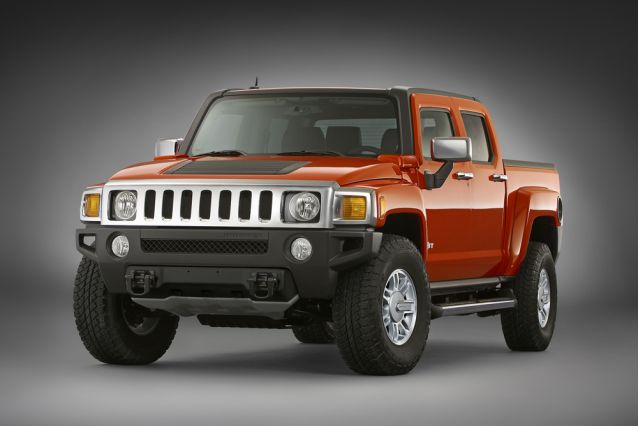
The Hummer story starts with the military. AM General began delivering early Humvee prototypes to the U.S. Army in 1982 under a production contract worth $1.2 billion. These were serious, purpose-built machines designed for combat, not commuting.
Then Arnold Schwarzenegger got involved. He reportedly saw a military convoy of Humvees on the street and decided he needed one. He pushed AM General to build a civilian version, and in 1992, the H1 was born.
GM bought the Hummer brand from AM General in 1999 and immediately started expanding the lineup with the more practical H2 and H3 models. For a brief period in the early 2000s, Hummer was everywhere. It was the ultimate status symbol for a certain kind of American buyer.
But the timing could not have been worse. Gas prices spiked. Environmental awareness grew. Suddenly, driving a vehicle that got roughly 10 miles per gallon felt less like a flex and more like a statement nobody wanted to make. Multiple sale attempts to Chinese buyers fell through. GM shut Hummer down in 2010.
The brand has since been revived under GM’s electric vehicle push, so the Hummer name is technically still alive, though in a completely different form than anyone would have predicted.
5. Oldsmobile (1897 to 2004): America’s Oldest Brand Could Not Keep Up With the Times

Oldsmobile holds a remarkable piece of American history. Founded in 1897, it is one of the oldest automotive brands the country ever produced. General Motors acquired it in 1908, and for decades, Oldsmobile was a legitimate powerhouse.
The “Rocket V8” engine made Oldsmobile’s reputation in the 1950s. It was fast, it was powerful, and it set the tone for an entire era of American performance cars. Through the 1960s and 1970s, the brand maintained strong sales and a clear identity.
The 1980s and 1990s were a different story. Oldsmobile started chasing younger buyers with redesigned models, but the re-branding efforts felt forced and confused existing customers. A brand that had been built on heritage and performance suddenly seemed lost.
GM officially discontinued Oldsmobile in 2004, ending 107 years of American automotive history. It was a quiet ending for a brand that had once been anything but quiet on the road.
6. Plymouth (1928 to 2001): Badge Engineering Killed It Slowly
Plymouth entered the market in 1928 as Chrysler’s affordable option, giving everyday Americans access to a reliable car without breaking the bank. Through the 1950s and 1960s, Plymouth built a genuine identity around bold, futuristic styling. The cars were exciting. They stood out. People wanted them.
Then came the 1990s and one of the most self-destructive practices in automotive history: badge engineering. Chrysler started taking existing models from other divisions, slapping a Plymouth logo on them, and calling it a day. The result was a lineup of cars that were virtually identical to Chrysler and Dodge vehicles. There was no reason to choose Plymouth over anything else.
Chrysler actually tried to give Plymouth one last shot at relevance. The Prowler and the PT Cruiser were originally planned as Plymouth models, designed to recapture that old-school, original spirit the brand was known for. But Plymouth was discontinued before either car made it to production under that badge.
By 2001, Plymouth was gone. It is a textbook example of how a parent company can slowly destroy a brand by stripping away everything that made it worth buying.
7. American Motors Corporation (1954 to 1988): The Little Engine That Could… Until It Could Not
AMC was born from one of the biggest automotive mergers in U.S. history, combining Hudson Motor Company and Nash-Kelvinator Corporation in 1954. From the start, AMC positioned itself as the scrappy underdog against GM, Ford, and Chrysler.
And sometimes, being the underdog works in your favor. In the late 1950s, AMC made the bold decision to focus on small, fuel-efficient cars at a time when everyone else was building land yachts. It was a risky bet, but it paid off when fuel costs rose in the 1960s and consumers started caring about what their car cost to run.
Through the 1970s, AMC survived largely because of one thing: Jeep. The Jeep lineup was a cash cow that kept the company breathing while the rest of its passenger car business struggled. But Jeep could only carry AMC so far.
Chrysler stepped in during the 1980s, acquired AMC primarily to get its hands on the Jeep brand, and the rest of AMC’s lineup was quietly discontinued. Chrysler got what it wanted, and AMC ceased to exist in 1988.
8. Rambler (1900 to 1983): A Name That Outlasted Three Different Companies
Rambler is a unique case because the name survived long after the original company behind it had disappeared. The brand started with the Thomas B. Jeffery Company from 1900 to 1914. Then Nash Motors picked up the Rambler name from 1950 to 1954. After Nash merged with Hudson to form AMC, the Rambler name continued to be used domestically until 1969 and in international markets as late as 1983.
The Rambler American, in particular, was seen as a practical, no-nonsense vehicle that appealed to budget-conscious buyers. During the fuel crisis years, smaller Ramblers gained renewed interest while the gas-guzzling giants struggled.
But the Rambler name was ultimately phased out as AMC worked to establish its own brand identity. By the time AMC itself folded in 1988, the Rambler name had already been retired for years. It remains one of the longer-running automotive names in American history, even if it spent most of that time being passed from one company to the next.
9. DeLorean (1975 to 1982): The Car That Time Travel Made Famous
John DeLorean was a legitimate automotive legend before he ever started his own company. He is credited with developing the iconic GTO at Pontiac and holds the distinction of being one of the youngest executives ever to reach the top levels of General Motors. So when he left GM to build his own car, people paid attention.
The DMC-12 was his vision. Gull-wing doors. Stainless steel body panels. A mid-engine layout. On paper, it sounded extraordinary. DeLorean secured backing from the British government and built a manufacturing plant in Northern Ireland, which was itself an unusual choice that came with its own set of logistical challenges.
When the car arrived in the United States, the reception was mixed at best. Quality control issues were a major problem. The car was underpowered for its price point. Buyers who expected a sports car got something that performed more like a touring vehicle. The gap between the promise and the reality was significant.
By 1982, DeLorean Motor Company was in serious financial trouble. John DeLorean was arrested in a drug trafficking sting operation that year, which effectively destroyed any chance of saving the company. Only about 9,000 cars were ever built.
Of course, the DMC-12 achieved a kind of immortality it never found during its actual production run. The moment it appeared in Back to the Future in 1985, it became one of the most recognized cars in the world. That is a legacy no amount of business failure can erase.
10. Studebaker (1852 to 1967): 114 Years of American Industry, Gone
Studebaker’s story is one of the longest in American manufacturing history. The company started in 1852 in South Bend, Indiana, building wagons, buggies, and horse-drawn carriages. It was not even an automobile company for its first few decades of existence.
When the auto industry took off in the early 1900s, Studebaker made the transition to cars and built a solid reputation over the following decades. But by the late 1950s, Studebaker was struggling to compete with the massive resources of GM, Ford, and Chrysler.
The decision to merge with Packard in 1954 was supposed to create a stronger combined company. It had the opposite effect. The merger brought financial strain rather than stability, and Studebaker never fully recovered.
The South Bend plant closed in December 1963, ending American production. Operations in Hamilton, Ontario, kept going until March 1966, and the company officially shut its doors that year. After 114 years in business, Studebaker was done.
11. Willys-Overland (1908 to 1963): The Company That Built the Most Important Vehicle in Military History
Most people have never heard of Willys-Overland, but they have almost certainly heard of the vehicle that made it famous. Willys-Overland built the original Jeep, the rugged, go-anywhere military vehicle that became one of the most important pieces of equipment used by Allied forces in World War II.
John North Willys founded the company, and it adopted the Willys-Overland name in 1912. The early years were rough. The company went bankrupt during the Great Depression, partly because of poor management decisions, including a refusal to maintain safe working conditions that created internal turmoil and financial instability.
The Jeep contract saved the company during WWII, but civilian car sales were never strong enough to sustain the business long-term. Kaiser Motors eventually acquired Willys-Overland, and the Willys brand was quietly retired by 1963. The Jeep nameplate lived on, eventually making its way through American Motors Corporation before landing at Chrysler, where it remains today as one of the most valuable automotive brands in the world.
Willys-Overland created the Jeep but never got to fully benefit from what it built.
12. DeSoto (1928 to 1961): Killed by Its Own Family
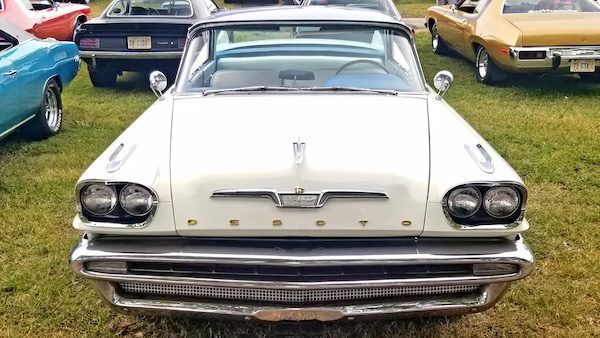
DeSoto was never really given a fair chance. From the moment Chrysler launched it in 1928 as a mid-priced vehicle, the brand faced an internal problem that would follow it to its grave.
Almost immediately after DeSoto launched, Chrysler acquired Dodge. Now DeSoto was competing directly against its own sister brand in the exact same price range. That is a fight no brand can win when both sides are owned by the same company.
Chrysler tried repositioning DeSoto in 1933, pushing it upmarket to make room for Dodge at the mid-price level. But constant repositioning does more damage than good. Every time a brand changes its identity, it loses customers who bought in the first place because of what the brand originally stood for.
The 1958 recession delivered the final blow. DeSoto sales collapsed, and Chrysler had no appetite to keep funding a brand that was effectively competing with itself. DeSoto was discontinued in 1961, just 33 years after it launched.
13. Edsel (1957 to 1960): Ford’s Most Expensive Mistake
The Edsel deserves its own chapter in business school textbooks. Ford spent millions of dollars on market research before launching this car. They talked to thousands of potential customers. They analyzed data. They built the entire concept around what they believed American buyers wanted. And then they got it catastrophically wrong.
When the Edsel debuted on “E Day,” September 4, 1957, the response from the public was not excitement. It was confusion and ridicule. The styling was polarizing in the worst possible way. The vertical front grille was immediately compared to a toilet seat by critics and consumers alike, and that image stuck.
The quality control problems made things worse. Early Edsels had mechanical issues that damaged the car’s reputation before it ever had a chance to recover. And despite being positioned as a mid-priced vehicle, it ended up being priced closer to premium territory, which meant buyers could look up slightly and get a Lincoln or look down and get a regular Ford for significantly less money.
Ford killed the Edsel in 1960 after just three model years. The financial loss in today’s dollars came out to roughly $2.9 billion. The Edsel became so synonymous with product failure that the name is still used today as shorthand for a catastrophic commercial flop.
14. Packard (1899 to 1958): Luxury Brand That Destroyed Itself Chasing Volume
Packard was the real deal when it came to American luxury. In its prime, a Packard cost more than four times what you would pay for a comparable Oldsmobile. These were vehicles for the genuinely wealthy, and Packard knew how to cater to that market.
Remarkably, Packard actually survived the Great Depression better than most. Its loyal upper-class customer base kept buying even when the economy collapsed. The brand’s reputation for quality and exclusivity was its armor.
But then Packard made the mistake that kills luxury brands. It went downmarket. Management decided to introduce mid-priced Packard models to boost volume and compete more directly with GM and Ford. The problem is that once you dilute a luxury brand, you cannot easily go back. Customers who paid a premium for exclusivity suddenly found that anyone could afford a Packard. The mystique was gone.
The merger with Studebaker in 1954 was the final miscalculation. Instead of gaining strength from the union, Packard inherited Studebaker’s financial problems. The last true Packard rolled off the line in 1956. By 1958, it was over.
15. Hudson (1909 to 1954): Refused to Build a V8 and Paid the Price
Hudson built some genuinely impressive cars. The Hudson Hornet, in particular, dominated NASCAR racing in the early 1950s. These were not slow, boring machines. They were fast, well-engineered automobiles that earned real respect on the track.
But Hudson made one stubborn decision that auto historians point to as the central reason for its downfall. When the rest of the American auto industry was moving to V8 engines, Hudson refused. The company stuck with its inline six-cylinder “Twin H-Power” setup and declined to develop a V8.
In a market where V8 power was quickly becoming the benchmark for performance, this was a fatal miscalculation. Buyers who wanted a real performance car went elsewhere, and Hudson’s sales numbers reflected that shift painfully clearly.
Hudson merged with Nash-Kelvinator in 1954 to form American Motors Corporation. The Hudson name continued to be used through the 1957 model year as a rebadged Nash product, but by then it was a name without a brand behind it. Hudson’s legacy lives on in NASCAR history, but the brand itself never made it past the mid-1950s.
16. Kaiser (1945 to 1953): Won the Battle, Lost the War
Kaiser-Frazer holds a legitimate piece of American automotive history. When World War II ended and the auto industry was scrambling to get back into civilian production, Kaiser-Frazer beat everyone else to market. They were the first American automaker to introduce a completely new postwar car, which was no small achievement given the supply chain chaos of the mid-1940s.
The partnership between industrialist Henry Kaiser and automotive executive Joseph Frazer looked promising on paper. And for a few years, it worked. Kaiser-Frazer vehicles sold reasonably well in the late 1940s when demand was high and competition had not fully ramped back up.
By 1951, the cracks started showing. Kaiser and Frazer disagreed fundamentally on sales strategy, and the partnership dissolved. Without a unified direction, the company struggled against the sheer financial muscle of GM, Ford, and Chrysler.
Kaiser Motors later acquired Willys-Overland, which brought Jeep into the fold. That acquisition gave the company a lifeline through AMC. But the Kaiser passenger car brand itself was done by 1953, just eight years after it started.
17. Tucker (1947 to 1951): 51 Cars and a Conspiracy That Still Gets Debated
Preston Tucker had vision. His Tucker 48, sometimes called the Tucker Torpedo, was genuinely ahead of its time. Designed and briefly built in Chicago in 1948, the Tucker 48 featured a center headlight that turned with the steering wheel, a padded dashboard for safety, a windshield designed to pop out in a crash, and a rear-mounted engine. These were innovations that the mainstream industry would not widely adopt for years.
But only 51 cars were ever built, including the prototype, before the whole operation collapsed.
The official reason for the company’s 1949 bankruptcy was a combination of financial mismanagement and devastating negative press coverage. Tucker and several associates were indicted on securities fraud charges, though they were ultimately acquitted. Many Tucker supporters have long argued that established automakers and government officials worked together to bring Tucker down before his innovative car could threaten their market position.
Whether that conspiracy theory holds water or not, the result was the same. Tucker was finished. Most of the 51 cars built are still in existence today, making them among the most valuable American collectibles ever produced. A Tucker 48 in good condition can sell for several million dollars at auction.
18. Stutz (1911 to 1939): America’s First Sports Car Maker
Stutz does not get nearly enough credit in conversations about American automotive history. The Indianapolis-based manufacturer was building fast, performance-oriented cars at a time when most American vehicles were built for utility rather than excitement.
The Stutz Bearcat, introduced in the 1910s, is often cited as America’s first true sports car. That is a significant claim, and it holds up. Stutz was chasing speed and performance decades before those ideas became mainstream in American car culture.
By 1924, the company shifted its focus toward luxury cars for wealthy clients, which made sense as the market evolved. The high-end models that followed were beautifully crafted machines that attracted buyers with serious money to spend.
Production ended in 1935, and the company officially closed in 1939. The Great Depression hit luxury car manufacturers particularly hard, and Stutz was not immune. Interestingly, the Stutz name was briefly revived in 1968 by Stutz Motor Car of America, which produced retro-styled luxury vehicles. Elvis Presley was among the brand’s high-profile clients during that revival era. But that is a different story entirely.
19. Pierce-Arrow (1901 to 1938): Presidential Cars That Could Not Survive a Depression
Pierce-Arrow was not just a car manufacturer. It was an American luxury institution. Based in Buffalo, New York, Pierce-Arrow built vehicles that were considered among the finest in the world during the early twentieth century. Presidents rode in them. The ultra-wealthy demanded them.
The company was remarkably versatile for its era. Beyond luxury automobiles, Pierce-Arrow also produced commercial trucks, fire trucks, motorcycles, bicycles, boats, and camp trailers. It was a serious manufacturing operation, not a niche boutique.
Pierce sold his personal rights to the company in 1907, and the firm was renamed Pierce-Arrow Motor Car Company in 1908. Designer Herbert Dawley joined in 1912 and shaped the visual identity of the brand’s vehicles for the rest of its existence.
But luxury car companies are deeply vulnerable to economic downturns. The Great Depression wiped out a significant portion of Pierce-Arrow’s customer base. People who could still afford a luxury car in the 1930s often chose European alternatives. Pierce-Arrow struggled through the decade and finally ceased operations in 1938.
20. Duesenberg (1913 to 1937): The Greatest American Car That Ever Existed
Ask any serious car collector or automotive historian to name the greatest American car ever built, and Duesenberg will almost always come up. Brothers August and Frederick Duesenberg founded the company in 1913 in Saint Paul, Minnesota, initially building engines and racing cars. They were exceptional engineers who understood performance at a level that few of their contemporaries could match.
The Model J, introduced in 1928, set a benchmark that American cars would not surpass for generations. It was faster, more powerful, and more mechanically sophisticated than virtually anything else on the road. The nickname “Duesy” became American slang for anything extraordinary, which tells you everything you need to know about how the public viewed these cars.
Duesenberg was acquired by Errett Lobban Cord in 1926, and the brand became part of the Cord Corporation alongside Auburn Automobiles. When Cord’s financial empire collapsed in 1937, Duesenberg went down with it. Two more vehicles were completed between 1937 and 1940, giving the marque what felt like a dignified final chapter.
A surviving Duesenberg Model J today can sell for tens of millions of dollars. They are considered the crown jewels of American automotive collecting, and rightfully so.
Why Did So Many Great American Car Brands Disappear?
Looking at all 20 of these brands together, a few clear patterns emerge. Understanding them is genuinely useful if you want to make sense of the American auto industry, past and present.
The Common Causes of Failure
| Cause | Brands Affected |
|---|---|
| Parent company mismanagement | Mercury, Pontiac, Saturn, Oldsmobile, Plymouth, DeSoto |
| Fuel crisis and environmental pressure | Pontiac, Hummer, AMC |
| Economic depression or recession | Packard, Stutz, Pierce-Arrow, DeSoto, Duesenberg |
| Identity loss or brand dilution | Plymouth, Mercury, Oldsmobile, Packard |
| Failed mergers or partnerships | Packard/Studebaker, Kaiser/Frazer, Hudson/Nash |
| Underfunding or quality issues | Tucker, DeLorean, Edsel |
| Stubborn refusal to adapt | Hudson (no V8), Studebaker (late investment) |
The fuel crises of the 1970s caused enormous damage across the entire industry, but the brands that were already weakened by identity problems, aging demographics, or internal politics had no buffer to absorb the shock. They simply collapsed.
Badge engineering, which is the practice of rebadging one car as multiple different brand names, is one of the most destructive things a company can do to its own lineup. Plymouth and Oldsmobile are textbook cases of what happens when a parent company stops investing in a brand’s unique identity and just starts recycling parts.
And then there is the luxury segment problem. Brands like Packard, Pierce-Arrow, Duesenberg, and Stutz all learned the same brutal lesson: luxury brands survive in good times and collapse in bad ones. Without the volume to sustain operations through a downturn, and without the financial backing of a larger parent company, these brands had no safety net when the economy turned.
What Modern Car Buyers Can Take Away From All of This
These brands are not just historical footnotes. They are case studies in what happens when companies stop listening to their customers, when corporate politics override product decisions, and when the market shifts faster than a manufacturer can respond.
Today’s automotive landscape is going through changes just as dramatic as anything these defunct brands faced. Electric vehicles, rising fuel costs, software-defined cars, and shifting buyer preferences are reshaping the industry at a pace that would be familiar to anyone who watched Pontiac or Saturn disappear.
Some brands currently on sale today will not exist in 20 years. The question is which ones have learned from the mistakes of the 20 brands on this list, and which ones are quietly making the same errors all over again.