
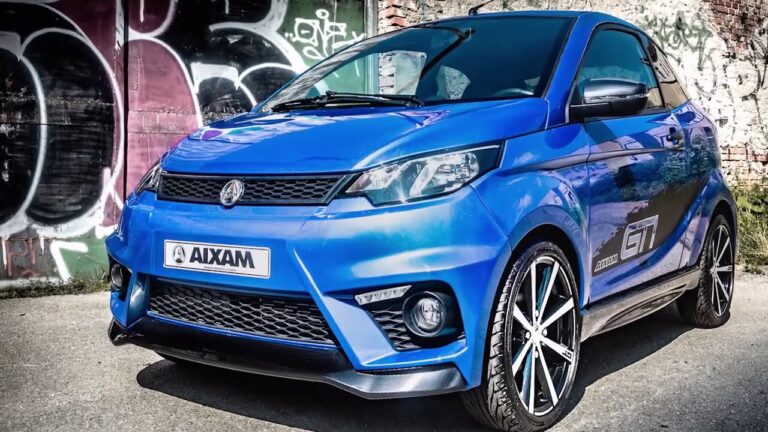
Most people assume that if you want to get behind the wheel of a car, you need a license. Full stop. But that is not entirely true, and the reality is a lot more interesting than most drivers realize.
There is actually a growing category of vehicles specifically built to be driven without a traditional driver’s license. These are not golf carts or toy cars. Some of them look surprisingly close to real production vehicles, come with diesel or electric engines, air conditioning, parking sensors, and actual cargo capacity. They just happen to fall below the legal thresholds that require a license to operate.
So who actually needs one of these? More people than you might think.
Think about the person whose license just got suspended after a traffic violation. They still have to get to work, pick up groceries, handle appointments. Life does not pause because your driving privileges did. Then there are teenagers who are old enough to need independence but not yet old enough to get a full license. And in some parts of Europe and Australia, older adults who have voluntarily given up their licenses but still need to get around are turning to these vehicles as a practical solution.
The market for these cars is growing steadily, especially in Europe, where regulations around “light quadricycles” are well established. Manufacturers have responded by building vehicles that are surprisingly capable within their legal limits. This guide breaks down exactly what these cars are, what the rules look like, and which specific models are worth knowing about.
What Exactly Are Cars You Can Drive Without a License?
These vehicles go by several names depending on where you are. In Europe, they are commonly called “voiturettes” or light quadricycles. In France, they are sometimes called “voitures sans permis,” which literally translates to “cars without a license.” Whatever you call them, they share a common set of characteristics that keep them in a different legal category from standard passenger cars.
Here is what typically defines them:
- Top speed is capped at 45 km/h (28 mph) in most countries, though some go up to 50 km/h (31 mph)
- Engine displacement is limited, usually to around 50cc for petrol engines or equivalent electric output
- Maximum power output is typically 4 to 8 horsepower depending on the model and country
- Unladen weight must stay below 350 to 400 kilograms depending on the regulation
- Seating is limited, usually to two occupants
Within those boundaries, manufacturers have actually gotten pretty creative. You will find diesel models, fully electric versions, two-seaters, mini trucks, and even a replica of a famous Porsche. The engineering limitations are real, but the variety is wider than most people expect.
Are There Any Requirements at All?
Here is where people sometimes get confused. “No license required” does not mean zero requirements. It means you are not required to pass a full driving exam and obtain a standard license. That is a meaningful distinction.
In many countries, especially across Europe, there are still some baseline rules:
- Minimum age is typically 14 years old, though this varies by country
- Some countries require a basic road safety certificate obtained through a short course at a driving school, but no exam is required to get it
- The vehicle itself must be registered and insured just like any other road vehicle
- The driver may need to carry documentation showing they meet the age and training requirements
So yes, there is still a framework. But compared to earning a full driver’s license, the bar is dramatically lower. For someone whose license has been suspended, this is a genuinely useful legal workaround. For a 14-year-old in rural France who needs to get to school, it is a real transportation solution.
That said, always check the specific rules in your country or region before assuming you can just jump in and drive. Regulations around these vehicles are not universal, and what is legal in France may not apply the same way in Germany, Australia, or anywhere else.
Cars You Can Actually Drive Without a License
Now for the part most people came here for. Here is a rundown of specific models that fall into the no-license category, with honest details on what each one offers and what it costs.
Aixam Minauto: The Most Recognizable Name in the Category
If you have spent any time researching license-free cars, Aixam is probably the first brand that came up. They have been at this longer than most, and the Minauto is their most accessible entry point.
Under the hood, you get a 2-cylinder diesel engine with a maximum output of 8 horsepower. That is not going to win any drag races, but it will get you from point A to point B reliably, and fuel consumption is genuinely impressive at around 4 liters per 100 kilometers, which works out to roughly 58 miles per gallon. For a daily commuter in a city or suburban area, that kind of efficiency matters.
The base price starts at around $9,500. If you want extras like the GT or Cross packages, you are looking at $11,000 to $12,000. Those upgrade packages add comfort features and styling tweaks rather than performance upgrades, so what you are paying for is a nicer interior experience rather than anything mechanical.
For a first look at what the Minauto actually looks like in person, check the official Aixam page here.
Aixam Sensation: More Features, Higher Price Tag
The Sensation is Aixam’s step-up model, and it brings real-world conveniences that make a noticeable difference in daily use. We are talking parking sensors and air conditioning as standard features, which sounds small until you are trying to squeeze into a tight city parking spot in the middle of summer.
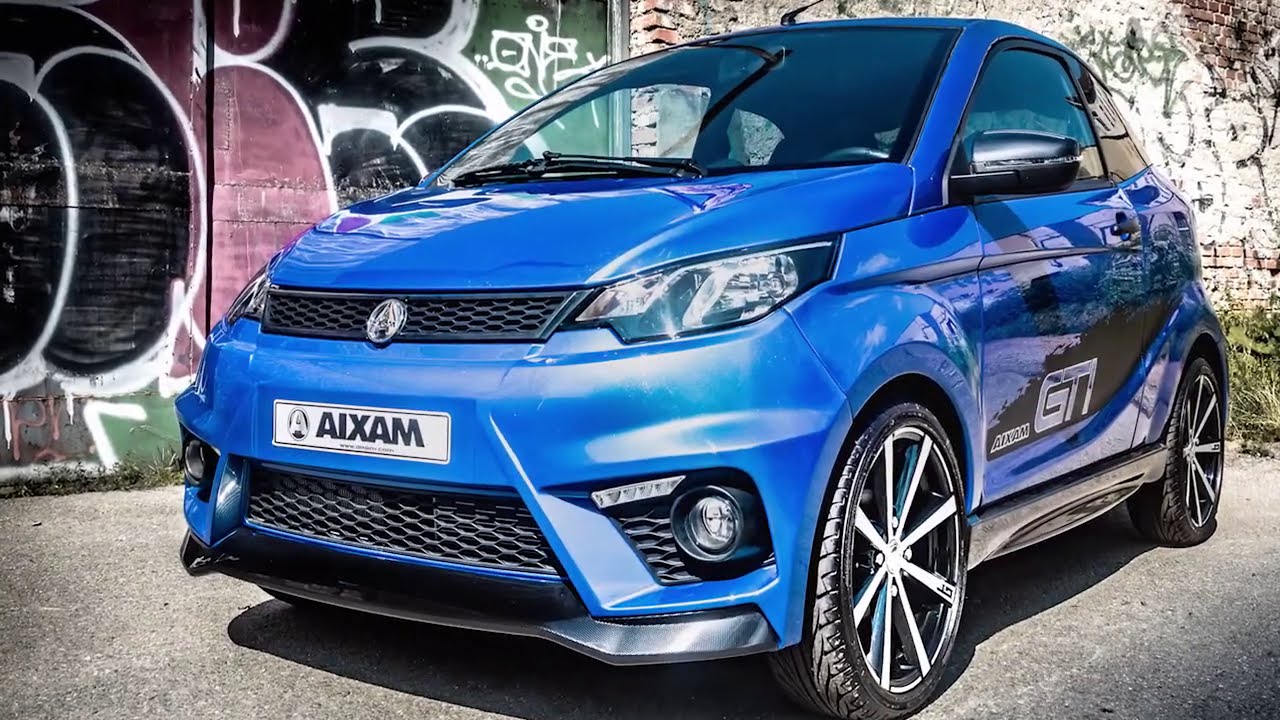
One of the more interesting aspects of the Sensation is that buyers can choose their preferred engine configuration, giving a bit more flexibility depending on driving habits and range needs. Prices start at around $11,300 and can go up to $17,500 depending on spec. That upper end of the range starts to overlap with entry-level conventional cars, which is worth keeping in mind when you are budgeting.
Aixam D-Truck: When You Actually Need to Move Things
This one often surprises people. Aixam did not just build passenger cars. They built a mini commercial vehicle designed for light hauling, and it is fully license-free.
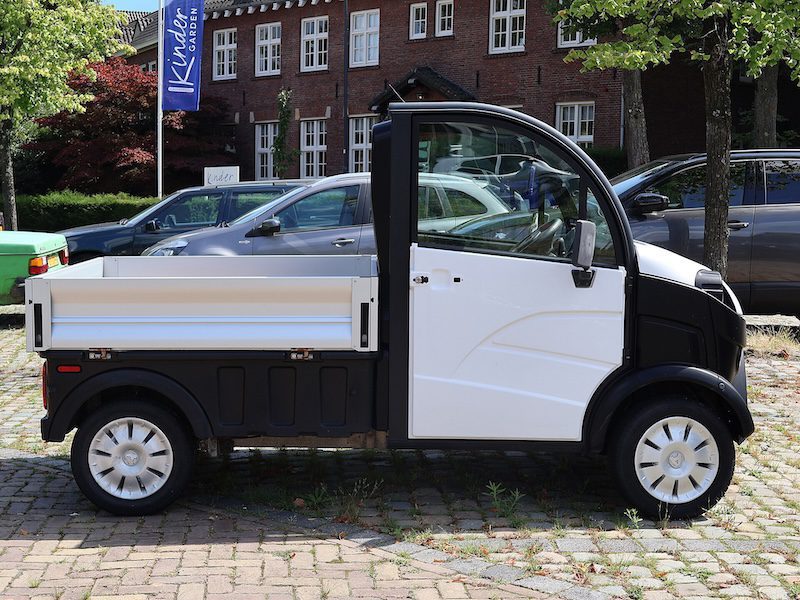
The D-Truck uses a 400cc diesel engine and is capable of carrying up to 175 kilograms, which is about 385 pounds. That is more than enough for small business deliveries, farm use, or moving equipment around a property. The cargo compartment offers up to 299 cubic feet of space, and the 24-liter fuel tank paired with fuel consumption of around 3.5 liters per 100 kilometers means you get roughly 67 miles per gallon. You are not going to fill up very often.
The truck version starts at around $14,500. The minivan variant pushes closer to $15,500. Check out the D-Truck specs here.
For a small business owner whose license is suspended, or for someone managing a property who needs a utility vehicle without the licensing paperwork, the D-Truck is a legitimately practical option that most people have never heard of.
The Chinese Porsche 356 Replica: Yes, This Is Real
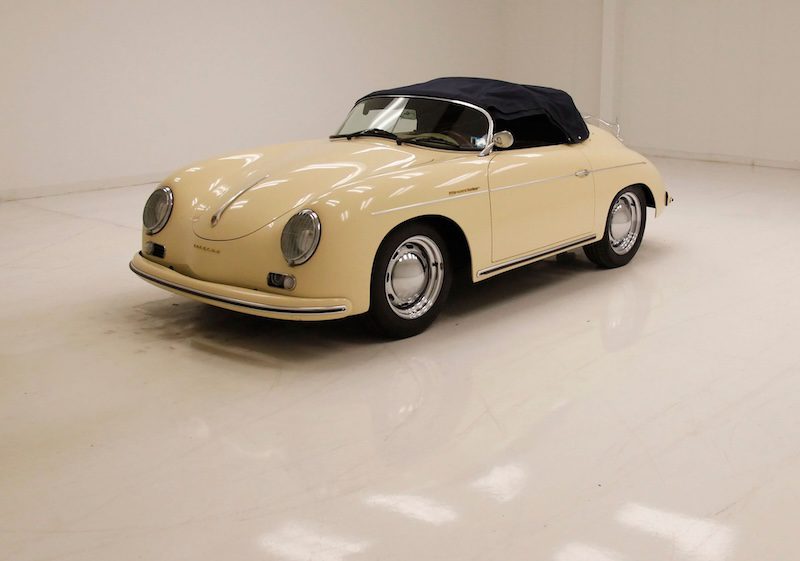
This one needs a moment to sink in. There is a Porsche 356-inspired vehicle that you can drive without a license, and it is electric.
Before anyone contacts Porsche’s legal team, this is not made by Porsche AG. It is a replica produced by KingWoo, a subsidiary of a Chinese company based in Henan province. It draws heavily on the iconic Porsche 356 silhouette but is built as a low-speed electric vehicle under Chinese regulations for that category.
The electric motor produces 8 horsepower and can push the car to a top speed of 80 kilometers per hour, which is actually faster than most vehicles in this category. At around $13,000, it sits in the mid-range of the license-free market. Is it a real Porsche? Absolutely not. Is it an interesting conversation starter that you can legally drive without a license? Yes, and that is genuinely unusual.
Chatenet: The One With Futuristic Styling
Chatenet is a French manufacturer that has carved out a niche by leaning into design more aggressively than most competitors in this space. While brands like Aixam play it relatively conservative with their styling, Chatenet goes for a more modern, angular look that actually turns heads.
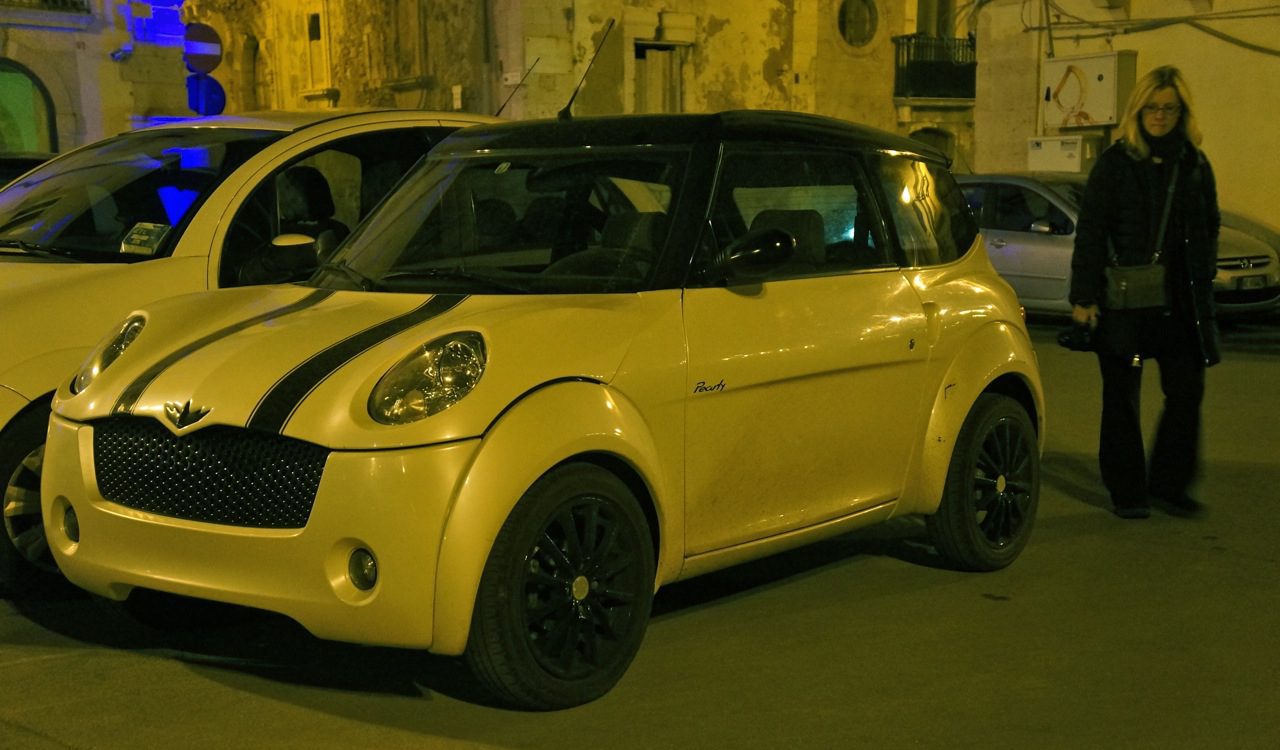
Technically, the Chatenet sits in roughly the same territory as the Aixam. The 480cc engine produces 8.2 horsepower and comes in three different configurations. Honestly, the differences between those configurations are subtle at best. The Sport version, for example, stands out primarily through cosmetic touches: a special red color, aluminum pedal pads, and seats with better lateral support. Not exactly a performance package, but for buyers who care about how the car looks and feels inside, those details add up.
Prices start at around $11,000. Full specs are available here.
Bellier Jade: Exceptional Fuel Economy in a Compact Package
The Bellier Jade is a two-seater diesel that stands out for one number above everything else: fuel consumption. At just 3.2 liters per 100 kilometers, that works out to approximately 73 miles per gallon. Combined with a 20-liter tank, you are looking at a vehicle that can cover serious distances between fill-ups relative to its size and price.
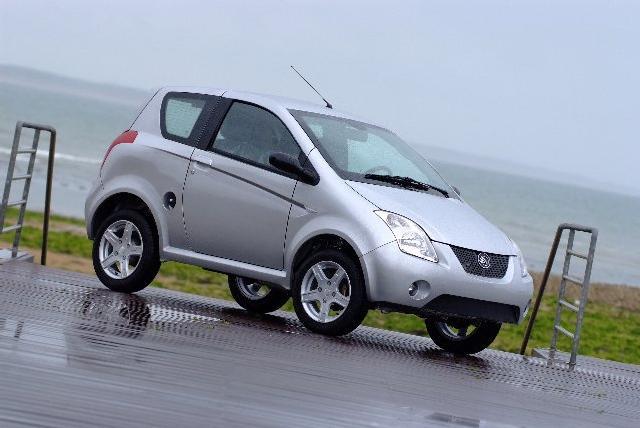
The engine displaces 523 cubic centimeters, and top speed is capped at 45 km/h, which is 28 mph. It is a city and suburban vehicle through and through. Trying to use it for highway driving would be both dangerous and, in most places, illegal given the speed limitations of this vehicle class.
Starting price is $11,800. Detailed specs are here for anyone wanting to compare it against the other options in this list.
Henan M7: The Electric Option From China
China is by far the largest producer of low-speed electric vehicles globally. The Henan M7 is one of many in this category, and it represents an increasingly common path for buyers who want a license-free vehicle without a diesel engine.
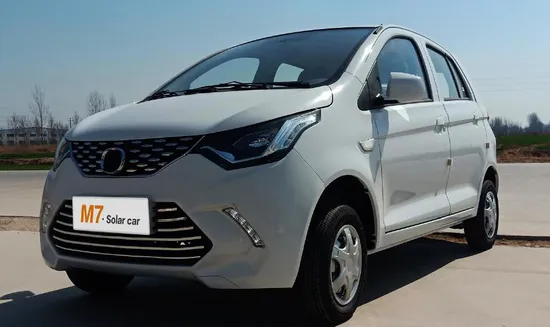
Henan as a company is better known for tricycles than for passenger vehicles, so the M7 is something of a departure for them. The electric motor produces 4 horsepower, and the manufacturer claims a battery range of up to 300 kilometers, which is 186 miles. That range claim deserves some skepticism. Real-world range for low-speed EVs in this class typically falls short of manufacturer estimates, particularly in cold weather or hilly terrain. Take the 300km figure as a best-case scenario rather than a reliable daily expectation.
The M7 starts at around $11,500 and can be sourced directly from platforms like Alibaba for buyers who are comfortable with that import process. That route brings its own complications around warranty support and parts availability, so factor that in before committing.
Side-by-Side Comparison: Which One Makes the Most Sense?
Here is a quick reference table so you can compare these vehicles without jumping back and forth through the article.
| Model | Engine Type | Power Output | Top Speed | Starting Price | Notable Feature |
|---|---|---|---|---|---|
| Aixam Minauto | 2-cylinder diesel | 8 hp | 45 km/h | ~$9,500 | Most affordable entry point |
| Aixam Sensation | Diesel (choice) | 8 hp | 45 km/h | ~$11,300 | A/C and parking sensors standard |
| Aixam D-Truck | 400cc diesel | 8 hp | 45 km/h | ~$14,500 | 175 kg cargo capacity |
| Chinese Porsche 356 | Electric | 8 hp | 80 km/h | ~$13,000 | Highest top speed in category |
| Chatenet | 480cc diesel | 8.2 hp | 45 km/h | ~$11,000 | Most distinctive styling |
| Bellier Jade | 523cc diesel | Not listed | 45 km/h | ~$11,800 | 73 mpg fuel economy |
| Henan M7 | Electric | 4 hp | 45 km/h | ~$11,500 | Claims 300km range |
The Real-World Limitations You Need to Know Before Buying
Being honest here is important. These vehicles solve a real problem for a specific group of people, but they come with genuine trade-offs that should factor into your decision.
Speed Caps Make Highway Use Impossible
A top speed of 45 km/h means these vehicles are strictly for urban streets, suburban roads, and lower-speed routes. They cannot legally or safely be taken onto highways or motorways in virtually any country. If your commute or regular driving involves high-speed roads, a license-free car is not the right solution for you.
The Price-to-Value Ratio Is a Real Conversation
Starting prices of $9,500 to $17,500 for a vehicle that tops out at 28 to 31 mph will raise eyebrows. For that same budget, you could buy a perfectly functional used conventional car with a full engine, airbags, and considerably more capability. The premium you pay here is specifically for the ability to operate without a license. That premium makes sense for some buyers and is completely unjustifiable for others. Be clear about which category you fall into.
That said, the used market for these vehicles is worth exploring. A used Aixam or Chatenet in good condition can be found at significantly lower prices, which changes the value calculation considerably.
Parts and Service Availability Varies Significantly
Brands like Aixam and Chatenet have established dealer networks across Europe, so finding a service center and sourcing parts is reasonably straightforward if you are in that region. But for Chinese-manufactured vehicles like the Henan M7 or the Porsche 356 replica, the support infrastructure outside of China is thin. Before buying any vehicle in this category, confirm that you can actually get it serviced locally. A cheap car that you cannot get repaired is not actually cheap.
Safety Standards Are Lower Than Regular Cars
This is worth stating plainly. Light quadricycles are not subject to the same crash safety requirements as conventional passenger cars. They typically do not go through the same Euro NCAP testing process. They are built to be light and simple, which means the protection they offer in a serious collision is limited compared to a modern passenger vehicle. For urban low-speed use, the risk profile is manageable. But going in with realistic expectations about what these vehicles are and are not is important.
Electric vs. Diesel: Which Powertrain Makes More Sense for License-Free Cars?
Most of the established European brands in this category use diesel engines. Most of the newer Chinese entrants use electric motors. Both approaches have genuine merits depending on how you plan to use the vehicle.
The Case for Diesel
The diesel models from Aixam, Chatenet, and Bellier have been refined over many years. The engines are proven, parts are available, and the fuel efficiency numbers are genuinely impressive, as shown with the Bellier Jade hitting 73 miles per gallon. For buyers in rural areas or anyone covering longer daily distances, the ability to refuel quickly at any petrol station is a real advantage over waiting for a battery to charge.
The Case for Electric
Electric license-free vehicles have near-zero running costs once charged, produce no local emissions, and are extremely simple mechanically, meaning fewer moving parts and potentially lower long-term maintenance costs. For strictly urban use with predictable short-range daily trips and overnight charging at home, an electric model like the Henan M7 can work well. The concerns are primarily around range accuracy claims and long-term battery degradation, which is harder to evaluate for vehicles that do not have the same track record as the established diesel models.
Who Is Actually Buying These Cars and Why
The customer base for license-free vehicles is more diverse than most people assume. It is not just suspended drivers or teenagers. Here are the groups that actually drive demand for these vehicles, particularly in Europe:
- Drivers with suspended licenses who need to maintain mobility for work or family obligations during their suspension period
- Teenagers aged 14 and above in countries where the rules allow it, particularly in rural areas where public transport is limited
- Older adults who have voluntarily stopped driving full-size vehicles due to health or confidence reasons but still need local mobility
- Urban commuters who only need to cover short distances and want something more weatherproof and comfortable than a bicycle or scooter
- Small business owners who need a light utility vehicle for local deliveries or property management, where the D-Truck type of vehicle genuinely fills a gap
None of these groups are niche in population. Together, they represent a meaningful and growing segment of buyers who have pushed manufacturers to invest more seriously in this category over the past decade.
What About Electric Bikes and Scooters? Are They a Better Alternative?
It is a fair question, and worth addressing directly. Electric bikes and scooters are often cheaper, easier to park, and require even less regulatory paperwork than a license-free car. For some buyers, they genuinely are the better answer.
But there are real situations where a car, even a slow one, beats a two-wheeler every time:
- Carrying passengers, particularly children
- Driving in heavy rain, snow, or cold weather
- Transporting cargo or shopping beyond what a basket or backpack can hold
- Buyers who have mobility limitations that make riding a bicycle or scooter impractical
- Anyone who simply wants an enclosed, weather-protected vehicle with a seat belt
A license-free car is not always the right answer. But in many of these scenarios, it is the only one that actually works.
How the Regulations Differ Across Countries
This is where things get complicated, and it is genuinely important to get right before spending any money. The rules around license-free vehicles are not uniform globally, and the differences between countries can be significant.
France
France has one of the most developed frameworks for these vehicles in the world. The “voiture sans permis” category is legally recognized, well understood by insurers, and supported by an established dealer network. Drivers must be at least 14 years old and are required to complete a basic road safety training course, known as the “Brevet de sécurité routière” (BSR). No exam is required to pass it.
Germany
Germany follows EU regulations for light quadricycles but has historically been less accommodating of this category than France. The rules exist, but the infrastructure and market penetration are smaller. Always confirm current German requirements directly with a local authority before purchasing.
Australia
Australia has seen growing interest in this category, but regulations vary by state. What is permitted in Victoria may not be treated the same way in Queensland. Research your specific state’s road authority guidelines before assuming any particular vehicle is legal to operate without a license in your area.
United States
The US does not have a direct equivalent to the European light quadricycle category. Low-speed vehicles (LSVs) exist as a regulated category and can be operated on roads with speed limits of 35 mph or less in most states, but they still typically require a valid driver’s license to operate. The license-free angle that applies in France largely does not carry over to the American regulatory environment.
Tips for Buying a License-Free Car Without Getting Burned
Whether you are buying new or used, a few practical points can save you a lot of headaches.
- Verify the vehicle is properly classified in your country. Do not assume. Ask your local road authority or a lawyer familiar with traffic regulations before you buy.
- Confirm insurance availability before purchasing. Not all insurers offer policies for light quadricycles, and premiums can vary significantly.
- For used vehicles, check service history carefully. These are small vehicles with small engines, but they still wear out. A used Aixam with no service records is a risk.
- Test the vehicle in conditions that match your actual use. If you need to carry a passenger regularly, make sure two people are genuinely comfortable. Some of these vehicles are tight.
- For Chinese-manufactured models, research parts availability. If a critical component fails and you cannot source a replacement locally, you have an expensive driveway ornament.
- Ask about dealer support and warranty terms explicitly. European manufacturers like Aixam typically offer warranty coverage through their dealer network. Understand what is included and for how long.
The Future of License-Free Vehicles
The trajectory here is clear. As urban congestion grows, as electric vehicle technology becomes cheaper and more accessible, and as more people look for cost-effective mobility solutions that do not require the full commitment of a conventional car and license, this category will expand.
Several mainstream automakers have already started paying closer attention to light urban mobility. The electric vehicle push has lowered the technical barriers for new entrants, and Chinese manufacturers in particular are producing license-free EVs at a pace that European brands cannot easily match on price. The next five to ten years will likely see this category become far more visible and far more competitive than it is today.
For now, Aixam remains the most trusted name for buyers who want proven reliability and dealer support. For buyers chasing value or something electric, the Chinese market offers options, but those options come with more unknowns.
If you have a suspended license and need to keep moving, or you are a teenager in a country where these vehicles are legal, or you are simply someone who wants basic, weatherproof urban transportation without the cost and commitment of a full car ownership experience, this category deserves a serious look. Just do your homework on the regulations in your specific location before you put any money down. That single step will save you from a very expensive mistake.