
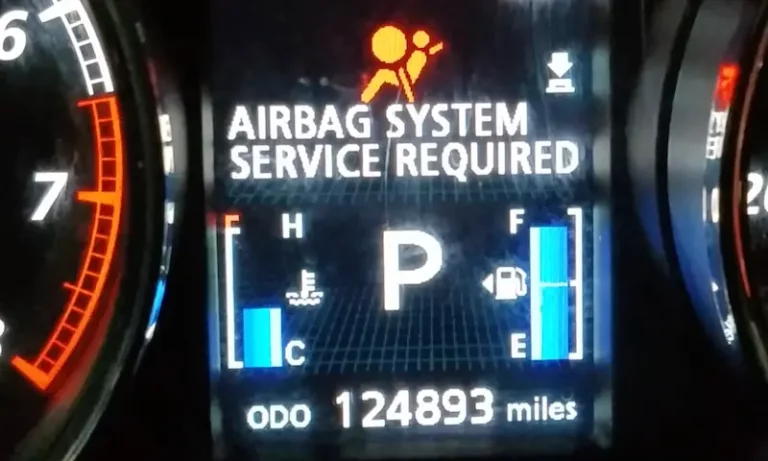
Your Mitsubishi has one job above everything else, and that is to keep you alive in a crash. The airbag system is the last line of defense between you and serious injury. So when that “Airbag System Service Required” warning message shows up on your dashboard, you do not ignore it. You do not put it off until next week. You deal with it.
Here is the thing most people get wrong: they see the warning light, the car still drives fine, and they assume it is just a glitch. It probably is not. That warning message is your Mitsubishi telling you that something inside the airbag system is broken, and if you get into an accident tomorrow, those airbags might not deploy. At all.
This guide breaks down exactly what this message means, what causes it, and what you need to do to fix it. No jargon, no fluff. Just straight answers from a mechanic’s perspective.
What Does “Mitsubishi Airbag System Service Required” Actually Mean?
When this message pops up, it means the vehicle’s onboard computer has detected a fault somewhere inside the airbag system. That fault could be a bad sensor, a wiring issue, a low voltage problem, or something left over from a previous accident. Whatever the cause, the system has flagged it and is telling you it cannot guarantee the airbags will work correctly if you need them.
Mitsubishi calls their airbag system the Supplemental Restraint System, or SRS for short. The word “supplemental” is important here. The airbags are not the primary safety system. Your seatbelt is. The airbags are designed to work alongside the seatbelt to reduce injury. Together, they are a team. But if the SRS is compromised, you are only working with half of that team.
How the Mitsubishi SRS Airbag System Works
Before you can understand what goes wrong with this system, you need to understand how it works when everything is going right. The process is actually pretty straightforward once you break it down.
Think about what happens in a crash. In a split second, your car goes from moving at speed to a dead stop. The human body cannot absorb that kind of force without help. The SRS system is designed to detect that collision event and deploy the airbags in milliseconds, literally faster than you can blink.
Here is how the sequence works:
- Crash sensors positioned around the vehicle detect the impact.
- Those sensors send a signal to the Engine Control Unit (ECU).
- The ECU processes the signal and determines the severity of the collision.
- If the impact is severe enough, the ECU commands the SRS module to deploy the airbag.
- The airbag inflates in roughly 30 milliseconds and cushions the occupant.
The whole process takes less time than it takes you to sneeze. That speed only works if every single component in the chain is functioning correctly. Break one link, and the whole system can fail.
The Key Sensors Inside Your Mitsubishi Airbag System
Modern Mitsubishi vehicles use multiple sensors placed at different points around the car. Each one has a specific job. If even one of them fails, the SRS system throws a fault code and that warning message appears on your dash.
Here is a breakdown of the main sensors involved:
Front Impact Sensor
These sensors sit at the front of the vehicle inside what is called the crush zone. Most Mitsubishi models have two of them. Their job is simple: detect a frontal collision and send a signal to the ECU immediately. They are the first responders in any front-end crash scenario.
If one of these sensors fails, the ECU may not register a frontal crash fast enough, and the front airbags may not deploy when you need them most.
Side Impact Sensor
Side-impact crashes are some of the most dangerous because there is very little structural protection between you and another vehicle hitting your door. The side impact sensors measure the force of a collision on the passenger door side and trigger the side curtain airbags.
Most Mitsubishi models have four of these sensors placed at strategic positions on both sides of the vehicle. If any of these go bad, the side airbags become unreliable.
Seat Slide Sensor
This one surprises most people. The seat slide sensor monitors the position of the driver’s seat relative to the steering wheel. Why does that matter for airbags? Because if you are sitting very close to the steering wheel, an airbag deploying at full force could actually hurt you more than help you.
The seat slide sensor gives the ECU that positional data so it can adjust the airbag deployment force accordingly. A failure here can either prevent deployment or cause the airbag to deploy with the wrong force.
Passenger Seat Weight Sensor
This sensor lives under the front passenger seat. It measures the weight of whoever is sitting there. The reason it exists is important: if a small child is sitting in the front seat, a full-force airbag deployment could be fatal to them.
The weight sensor tells the ECU whether the passenger is an adult or a child, and adjusts the front passenger airbag deployment accordingly. This sensor is also one of the most common culprits when the “Airbag System Service Required” warning message shows up. More on that in a moment.
| Sensor | Location | Function | Failure Risk |
|---|---|---|---|
| Front Impact Sensor | Front crush zone (x2) | Detects frontal collision, signals ECU | Moderate |
| Side Impact Sensor | Door panels, both sides (x4) | Detects side collision intensity | Moderate |
| Seat Slide Sensor | Under driver’s seat | Monitors seat position relative to steering wheel | Moderate |
| Passenger Seat Weight Sensor | Under front passenger seat | Determines occupant weight for deployment control | High |
5 Real Causes of the Mitsubishi Airbag System Service Required Warning
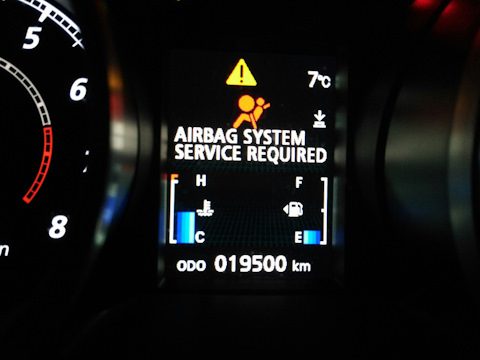
Now that you know how the system works, let us get into why it fails. There are five main culprits. Some are simple fixes, and others require a bit more work. But knowing which one you are dealing with is half the battle.
1. Faulty Sensors
This is the most common cause. And within the sensor category, the passenger seat weight sensor is the most frequent offender. It deals with constant pressure and movement every time someone gets in or out of that seat, and over time, it wears down.
The other sensors, like the front impact and side impact sensors, can fail too. But it is less common unless they have been physically damaged in a minor fender bender or replaced with an aftermarket part that does not meet OEM specs. If you bought the vehicle used and it had any bodywork done, that is worth knowing.
A real-world example: imagine you bought a used Mitsubishi Outlander and the previous owner had a minor front-end collision repaired at a budget shop. If the shop used a cheap aftermarket front impact sensor or failed to properly reconnect the sensor harness, you could see the airbag warning light as soon as you drive the car home.
2. Low Battery Voltage
This one catches a lot of people off guard. The SRS system is entirely electrical. It relies on a stable voltage supply to collect data from sensors, process that data, and execute airbag deployment when needed. When the voltage drops below a certain threshold, the system does not get enough power to function reliably, and it throws a fault code.
A weak or aging battery is usually the root cause here. But a failing alternator can also be responsible since it is the alternator’s job to keep the battery charged while the engine runs. If the alternator is underperforming, the battery slowly drains, and voltage across the whole electrical system drops.
Here is a clue worth noting: if your airbag warning message appeared around the same time your car was slow to start, or if your headlights seem dimmer than usual, a battery or charging system issue is a very likely suspect.
3. Damaged Wiring Harness
The wiring harness is the nervous system of the SRS. Every sensor, every module, every connection runs through it. If that wiring gets damaged, the signals between components get interrupted or lost entirely, and the system triggers the warning message.
Wiring damage can happen in a few ways:
- Corrosion: Moisture gets into connectors over time, especially in older vehicles or those driven in humid or salty environments. The corrosion creates resistance in the circuit and disrupts signal transmission.
- Rodent damage: Rats and mice love chewing through wiring. If your car has been parked outside or in a garage for extended periods, this is a real possibility.
- Physical damage: A previous repair job gone wrong, someone routing a wire incorrectly, or even a sharp edge in the cabin rubbing against the harness over time can cause exposed or broken wires.
- Heat damage: Wires running near the engine bay can deteriorate from prolonged heat exposure.
The tricky part with wiring damage is that it can be intermittent. The warning light might come and go depending on temperature or vibration. That inconsistency makes it harder to track down but no less serious.
4. A Previous Accident Stored in the SRS Module
This is one of the most overlooked causes, especially for people who buy used vehicles. When a vehicle is involved in a collision, even a minor one, the event gets recorded in the SRS control module. In some cases, the airbags deploy. In others, they do not, but the crash data is still written to the module’s memory.
That stored crash data can trigger the airbag warning message even if every other component is perfectly fine. Think of it like an error log that never got cleared. The system sees old crash data, flags it as an unresolved issue, and keeps the warning light on.
If you picked up a used Mitsubishi at auction or from a private seller with an unknown history, there is a reasonable chance this is why your airbag light is on. You need a proper scan tool to read and clear SRS-specific codes. A generic OBD2 scanner from an auto parts store will not cut it here. You need a scanner that can communicate with the SRS module specifically.
5. A Damaged Clockspring
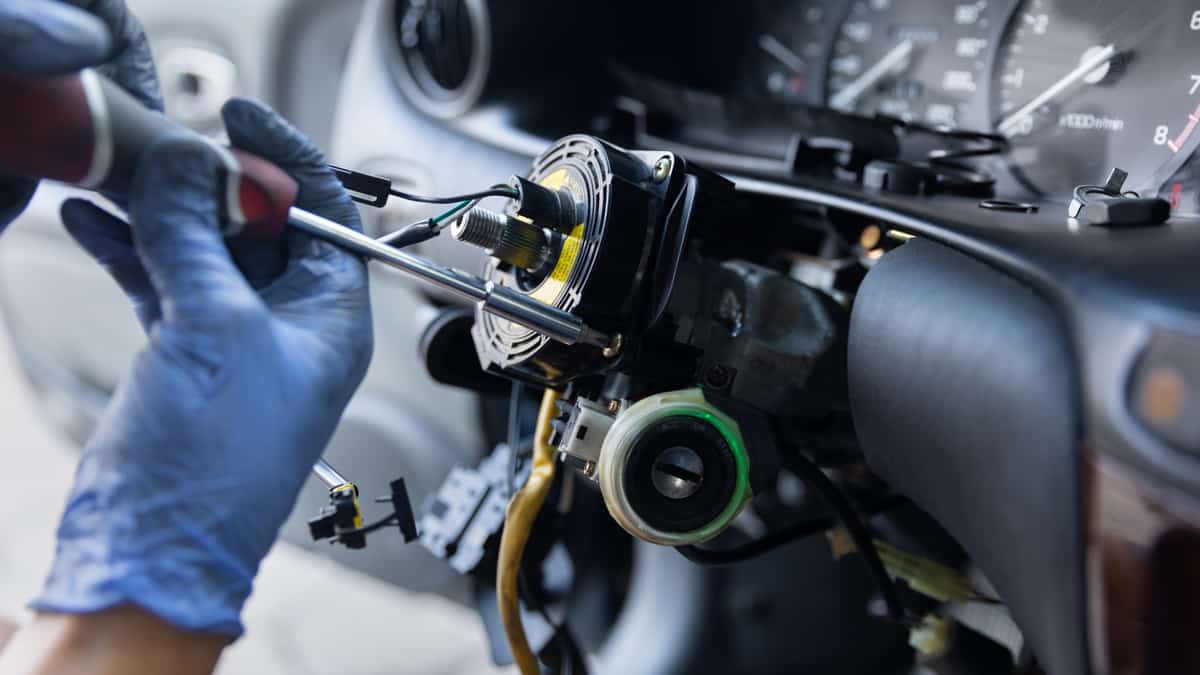
The clockspring might sound like something out of a watch, but it is actually a critically important electrical component inside your steering column. It is a coiled ribbon of electrical wiring that allows the steering wheel to rotate freely while maintaining a constant electrical connection between the steering wheel controls and the rest of the vehicle’s electrical system.
The driver’s airbag is housed in the steering wheel. The signal that tells that airbag to deploy runs through the clockspring. If the clockspring is damaged, worn out, or broken, that communication pathway is severed. The ECU cannot command the steering wheel airbag to deploy because the electrical connection is broken.
Beyond the airbag warning, a failing clockspring often shows up with other symptoms too. If your horn stops working, if your steering wheel-mounted audio controls become intermittent, or if you feel or hear a crackling sound when you turn the wheel, those are all classic signs of a clockspring on its way out.
Clocksprings wear out naturally over time. Every time you turn the steering wheel, that ribbon winds and unwinds. Do that hundreds of thousands of times over years and decades, and eventually it breaks. It is not a question of if, it is a question of when.

How to Diagnose the Problem Before You Start Replacing Parts
Here is where a lot of people go wrong. They read about a possible cause, buy a replacement part, swap it in, and the warning light is still on. Now they have spent money on a part they did not need. Do not do that.
Diagnosis comes first. Always.
The most effective diagnostic tool for an SRS issue is a professional-grade scan tool that can communicate with the SRS/airbag control module. Standard OBD2 scanners that plug into the port under your dashboard can read engine codes, but most of them cannot read SRS-specific fault codes. You need a scanner with SRS capability, or you need to take the vehicle to a shop that has one.
When you pull the SRS codes, you will get specific fault codes that point to exactly which component or circuit has failed. That narrows your work down significantly. Instead of guessing between five possible causes, you are working from a specific code that says, for example, “Passenger seat weight sensor circuit malfunction” or “SRS module crash data detected.”
Beyond scanning for codes, a thorough visual inspection is worth doing before anything else. Look at the wiring harness connections under the seats, especially the passenger seat. Check the connectors at the seat slide sensor. Look for any obvious signs of rodent damage, corrosion, or chafed wires. Sometimes you will find the answer just by looking.
How to Fix the Mitsubishi Airbag System Service Required Warning
Once you have a diagnosis in hand, the fix becomes much more straightforward. Here is how to address each of the main causes.
Fix 1: Replace the Faulty Sensor
Once your scan tool has identified which sensor is throwing the fault code, use your vehicle’s owner’s manual or a factory service manual to locate that sensor in the vehicle. Test the sensor and its wiring connector before assuming the sensor itself is bad. Sometimes the connector is corroded or loose, and cleaning or reseating it solves the problem without needing a new sensor.
If the sensor is genuinely damaged or reading out of range, replace it. A few important things to keep in mind when replacing airbag system sensors:
- Always disconnect the battery before working near airbag components. Wait at least 10 to 15 minutes after disconnecting the battery before touching anything SRS-related. Residual voltage in the system capacitors can still trigger accidental airbag deployment.
- Use OEM or OEM-equivalent parts wherever possible. Cheap aftermarket sensors can have calibration issues that cause ongoing fault codes.
- After replacing the sensor, use the scan tool to clear the fault codes and verify the issue is resolved.
For the passenger seat weight sensor specifically, replacement usually involves removing the front passenger seat entirely. It is bolted to the floor with four bolts, and the sensor assembly is located between the seat frame and the seat mounting bracket. It is a bit of a job, but it is manageable for a mechanically confident DIYer.
Fix 2: Address the Low Voltage Problem
Start by testing the battery. You want to know two things: the battery’s resting voltage and its voltage under load. Here is how to test it with a multimeter:
- Turn off the engine and all electrical accessories: lights, radio, climate control, everything.
- Set your multimeter to 20V DC.
- Place the red (positive) lead on the positive battery terminal.
- Place the black (negative) lead on the negative battery terminal.
- Read the voltage on the display.
Here is what those numbers mean:
| Voltage Reading | Battery Condition | Action Required |
|---|---|---|
| 12.6V or higher | Fully charged, healthy | No action needed |
| 12.4V to 12.5V | Slightly low | Charge and retest |
| 12.0V to 12.3V | Significantly discharged | Charge and load test |
| Below 12.0V | Weak or failing | Replace the battery |
| 9.5V or lower | Dead or internally shorted | Replace immediately |
If the battery tests fine but you are still getting low voltage issues, shift your attention to the alternator. A simple way to test the alternator is to start the engine and then take a voltage reading at the battery terminals again. With the engine running, a healthy alternator should push the voltage up to somewhere between 13.5V and 14.8V. If it is not doing that, the alternator is not charging the battery properly and needs attention.
Once the voltage issue is resolved, clear the SRS fault codes and see if the warning message returns.
Fix 3: Repair or Replace Damaged Wiring
Tracking down wiring faults in an SRS system requires patience. Pull up the wiring diagram for your specific Mitsubishi model from the factory service manual. That diagram will show you exactly where the SRS wiring harness runs and which connectors are associated with which components.
Physically inspect every connector and every inch of harness you can access. Pay close attention to:
- Areas where the harness passes through metal panels or grommets, since these are high-wear spots.
- Connectors under the seats, which are frequently disturbed when seats slide forward and back.
- Any area with visible moisture, rust staining, or white powdery corrosion on the connector pins.
- The wiring under the carpet near the seat rails, which is a common spot for wear.
If you find corroded connector pins, you can sometimes clean them with electrical contact cleaner and a small wire brush. If the corrosion is severe, the connector or section of harness needs to be replaced. When replacing wiring, use wire of the same gauge and type as the original. Do not splice in just anything and hope for the best. The SRS system is too important for that kind of shortcut.
Fix 4: Clear Crash Data from the SRS Module
If your scan tool reveals that the fault is stored crash data from a previous accident, the SRS module needs to have that data cleared. On some vehicles and with some scan tools, you can do this yourself. On others, the module needs to be sent to a specialist who can rewrite the module’s memory, or the module needs to be replaced entirely.
Some shops that specialize in airbag system repairs can reset SRS modules without replacing them, which is significantly cheaper than buying a new module. If your Mitsubishi is older and the module is discontinued, this kind of reset service can be a real lifesaver for the repair bill.
Do not try to clear this fault with a generic OBD2 code reader. If the scanner does not have proper SRS module access, it will not clear the crash data. You will just see the codes again immediately.
Fix 5: Replace the Clockspring
Replacing the clockspring is one of those jobs that looks intimidating because it involves the steering wheel and airbag components, but once you understand the process it is actually manageable. That said, because you are working directly around the driver’s airbag, you must take the proper safety precautions.
Before you start, disconnect the battery and wait at least 15 minutes. This is not optional. It lets the SRS capacitors discharge so you are not working around a live airbag circuit.
Here is the basic process for replacing the clockspring on a Mitsubishi:
- Disconnect both battery cables and wait 15 minutes.
- Remove the plastic trim panels covering the airbag module on the steering wheel. These usually unclip or have small bolts on the back of the steering wheel.
- Disconnect the airbag wiring connector. Handle the airbag module carefully and set it aside face-up on a flat surface away from your work area.
- Rotate the horn wiring post approximately 90 degrees and disconnect it from the clockspring.
- Remove the steering wheel center nut. This is typically a 21mm nut. Keep the steering wheel straight before you remove it.
- Pull the steering wheel off the column shaft. It may need a slight wiggle to break free. Do not force it aggressively.
- You will now see the clockspring mounted on the steering column. Disconnect its electrical connectors and remove it.
- Before installing the new clockspring, center it. Most new clocksprings come with a locking tab that keeps them centered during installation. Remove that tab only after the steering wheel is fully reassembled.
- Install the new clockspring and reconnect all wiring.
- Reinstall the steering wheel and torque the center nut to spec.
- Reinstall the airbag module and reconnect its wiring connector.
- Reconnect the battery and clear any fault codes.
If the clockspring is not centered properly during installation, you will have problems with your steering controls and the airbag system even after the replacement. Take your time with step 8.
Can You Drive with the Airbag Warning Light On?
Technically, yes. The car will drive. The engine runs, the transmission shifts, the brakes work. The airbag warning does not put the vehicle into limp mode or prevent it from starting.
But here is the reality: you are driving without a functioning airbag system. If you get into a serious accident, those airbags may not deploy. You are relying entirely on your seatbelt to absorb the crash forces. That is a significant risk, and it is not one worth taking lightly.
Beyond the personal safety issue, there is also a legal consideration in many regions. Driving a vehicle with a known safety system defect can complicate insurance claims if you are involved in an accident. And if you ever try to sell the vehicle, that stored fault code is going to show up in a pre-purchase inspection and affect the sale.
The bottom line: drive it to the shop. Do not drive it indefinitely with this warning light on.
What to Expect in Terms of Repair Cost
Repair costs for an airbag system service required warning vary quite a bit depending on which component has failed. Here is a realistic breakdown to give you a starting point:
| Repair | DIY Cost (Parts Only) | Shop Cost (Parts + Labor) |
|---|---|---|
| Passenger Seat Weight Sensor | $50 to $150 | $200 to $450 |
| Front or Side Impact Sensor | $30 to $100 | $150 to $350 |
| Clockspring Replacement | $40 to $120 | $200 to $500 |
| Battery Replacement | $100 to $200 | $150 to $300 |
| Wiring Harness Repair | $20 to $80 (materials) | $200 to $600+ |
| SRS Module Reset or Replacement | $50 to $150 (reset service) | $300 to $1,000+ |
These numbers will vary based on your specific Mitsubishi model, the year, and where you live. An Outlander Sport from 2015 might have different part costs than a 2022 Eclipse Cross. Always get a diagnosis before authorizing any repairs, and get a written estimate with a breakdown of parts and labor before you agree to anything.
Tips for Avoiding Airbag System Issues in the Future
You cannot prevent every possible failure, but there are some habits that will help you keep the SRS system in good shape for longer.
- Do not let the battery get weak. A healthy battery is foundational to every electrical system in the vehicle, including the SRS. Test the battery annually if your vehicle is more than three years old.
- Be careful about what goes under the passenger seat. Sliding heavy items under the seat can damage the weight sensor wiring. Avoid storing things under there that will bang around during driving.
- Do not let minor accident damage go uninspected. Even a low-speed parking lot bump can store crash data in the SRS module. Get it checked out after any collision, no matter how minor it seems.
- Keep moisture out of the interior. A leak around a door seal or window can get moisture into wiring connectors over time. Fix any water leaks promptly.
- Check for rodent activity if the car sits unused. If you park a vehicle for an extended period, rodent wiring damage is a real risk. A few mothballs near the car or rodent repellent tape on the wiring can go a long way.
Quick Reference: Symptoms, Causes, and Fixes at a Glance
| Symptom | Likely Cause | Recommended Fix |
|---|---|---|
| Airbag warning light on, no other symptoms | Faulty sensor or stored crash data | SRS scan and diagnosis |
| Warning light on after buying used vehicle | Stored crash data in SRS module | SRS module reset or replacement |
| Warning light on with slow engine crank | Weak or dead battery | Test and replace battery |
| Warning light on with intermittent horn or audio controls | Damaged clockspring | Replace clockspring |
| Warning light on after flood or water damage | Corroded wiring or connectors | Inspect and repair wiring harness |
| Warning light on after seat replacement or adjustment | Disconnected or damaged seat sensor | Inspect seat sensor wiring and connectors |
One Last Thing Worth Saying
The airbag system is not like a check engine light for a minor emissions issue that you can sit on for a few months. This is your safety system. The one that is supposed to protect you when everything else has already gone wrong. Ignoring this warning is a gamble, and the stakes are your life and the lives of anyone riding with you.
Get the codes pulled. Identify the cause. Fix it. It really is that simple. The repair might cost you a couple hundred dollars. Not fixing it could cost you far more than that.
If your airbag warning light is on right now, what are you waiting for?