

A Hyundai door lock that refuses to cooperate is one of those problems that starts as a minor annoyance and quickly becomes a genuine security concern. Whether your door will not lock at all, the power locks are behaving erratically, or your key fob stopped responding out of nowhere, something in the system has broken down. The good news? Most of these issues have a clear cause, and many of them are fixable without an expensive trip to the dealership.
This guide walks you through everything you need to know about Hyundai door lock problems, from the most likely culprits to practical repair steps, warranty coverage, and when it makes sense to call in a professional.
Why Your Hyundai Door Lock Stopped Working (And What to Check First)
Before you start pulling apart door panels or spending money on parts, it helps to understand how your door lock system actually works. In most modern Hyundai vehicles, the door lock system is a combination of electrical and mechanical components working together. The key fob sends a signal, the car’s body control module receives it, and then a small motor inside the door called the actuator physically moves the lock mechanism.
When any one of those components fails, the whole system can go silent. So the first step is not to assume the worst. Start simple. Then work your way deeper.
The Door Lock Actuator: The Most Common Reason Things Go Wrong
If there is one part that fails more than any other in a Hyundai door lock system, it is the door lock actuator. Think of it as the muscle of the whole operation. Inside that small housing is a tiny electric motor, a set of plastic gears, and a rod that physically pushes or pulls the lock into position. It does this every single time you lock or unlock your car, which over the years adds up to thousands of cycles.
Eventually, those plastic gears wear down. The motor weakens. The rod gets stiff. And one day, you press the lock button and either nothing happens, or you hear a clicking or grinding noise from inside the door.
Here are the signs that point directly to a failing actuator:
- The door locks and unlocks on its own without you touching anything
- You press the lock button and hear a clicking or grinding sound from inside the door, but the lock does not move
- One specific door will not lock or unlock while all the others work fine
- The lock works sometimes but not consistently
- The door locks respond slowly, as if the motor is struggling
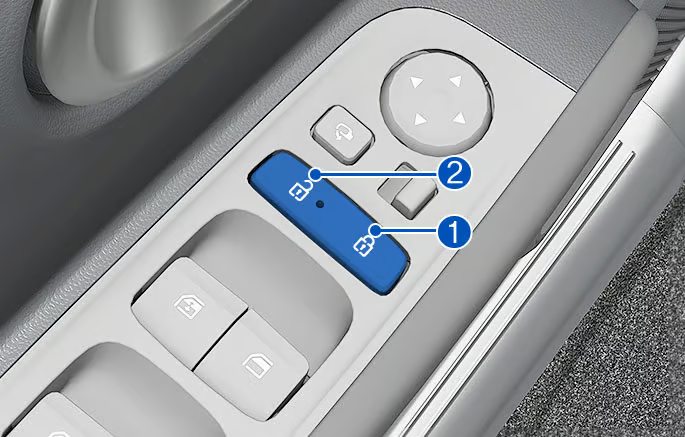
A failing actuator on just one door is actually a helpful clue. If only the driver’s door is affected, for example, the problem is almost certainly inside that door, not in the electrical system as a whole.
Replacing the actuator is a job many mechanically comfortable owners can handle themselves. But if you have never taken apart a car door before, it is worth watching a model-specific tutorial first. The general process involves removing the door panel, disconnecting the actuator’s wiring connector, unbolting the actuator from the door frame, sliding in the new unit, and reversing the process. It sounds involved, but on most Hyundai models it takes about an hour.
A Blown Fuse: The Two-Minute Fix You Should Check Before Anything Else
Before you go anywhere near the door panel, check the fuse. This takes about two minutes and costs nothing if the fuse is fine or about a dollar if you need a replacement.
Fuses exist to protect your car’s electrical circuits from overloads. When too much current flows through a circuit, the fuse blows intentionally, cutting power to prevent damage to more expensive components. The door lock circuit is no exception. If something caused a brief electrical surge, the fuse that protects your power locks may have blown, and the system simply stopped working.
Here is how to check it:
- Turn the vehicle off completely
- Locate the fuse box, which is typically found in the engine compartment near the battery or inside the cabin near the driver’s left knee area (check your owner’s manual for the exact location on your model)
- Open the fuse panel cover and look for the diagram printed on the inside of the lid or in your manual to identify the door lock fuse
- Pull the fuse out using a fuse puller or a pair of needle-nose pliers
- Hold it up to a light source, a blown fuse will have a visible break or melted metal inside the transparent casing
- Replace a blown fuse with a new one of the exact same amperage rating
One important thing to keep in mind: if the fuse blows again shortly after replacement, that is a signal that something else in the circuit is causing an overload. Do not just keep swapping fuses. A repeatedly blown fuse means there is a deeper electrical issue that needs proper diagnosis.
Broken or Damaged Wiring Inside the Door
Here is something most people do not think about: your car door opens and closes hundreds of times a year. Every time it does, the bundle of wires running from the car’s body into the door flexes slightly. Over time, that constant bending and twisting can cause individual wires to crack, fray, or break entirely, especially at the point where the wiring passes through the rubber conduit or boot between the door and the door frame.
Corrosion is another factor. If moisture gets into the wiring, it can oxidize the connections and interrupt the electrical signal, even if the wire itself is not physically broken.
Symptoms of a wiring problem can look a lot like actuator failure, which is why it is worth inspecting before you replace any parts. Look for:
- Visible cracks or breaks in the rubber boot where wires enter the door
- Frayed or bare copper showing on any wire
- Green or white corrosion around wire connections or connectors
- Door lock behavior that changes depending on whether the door is fully open or closed
Wiring repairs are something most people should leave to a qualified technician. Improper splicing or patching can create new problems and, in a worst case, a fire risk. If you find damaged wiring, take it to a Hyundai dealer or a trusted independent shop.
Your Key Fob Might Just Need a New Battery
This one is so simple it often gets overlooked. If your door locks are not responding to the key fob but still work when you use the button inside the car or the physical key, the problem is almost certainly the key fob battery.
Key fob batteries typically last two to four years depending on usage. When they start to die, you might notice the range decreasing, meaning you have to stand closer to the car for it to respond, before it stops working entirely.
Replacing the battery is straightforward:
- Find the small slot or notch on the edge of the key fob
- Use a flat-head screwdriver or a coin to gently pry it open
- Note the battery type printed on the old battery (most Hyundai key fobs use a CR2032)
- Pop out the old battery and insert the new one with the positive side facing the correct direction
- Snap the fob back together and test it
If the fob still does not work after a battery swap, inspect it for physical damage. A cracked circuit board inside the fob, a broken button, or water damage can all prevent it from transmitting a signal. In that case, you will need a replacement fob, which will need to be programmed to your vehicle by a Hyundai dealer or an automotive locksmith.
How to Fix Hyundai Door Lock Problems Step by Step
Now that you know the main causes, let us get into the actual repair process for each one. Some of these you can handle at home with basic tools. Others are better left to a professional, and it is worth being honest with yourself about which category you fall into.
How to Replace a Hyundai Door Lock Actuator
This is the most involved DIY repair on this list, but it is very doable if you are patient and methodical. Here is a general walkthrough:
Tools you will need:
- Panel removal tool or a flathead screwdriver wrapped in tape
- Phillips head screwdriver
- Socket wrench set
- Replacement door lock actuator (make sure it matches your exact Hyundai model and year)
The process:
- Remove any screws hiding behind the door handle bezel or armrest
- Use your panel removal tool to pop the door panel clips around the perimeter of the panel
- Lift the panel upward to release it from the window rail, then set it aside carefully
- Peel back the plastic vapor barrier if there is one, being careful not to tear it
- Locate the actuator, which is bolted to the door latch assembly toward the rear edge of the door
- Disconnect the electrical connector by pressing the tab and pulling it free
- Remove the bolts holding the actuator in place
- Slide the actuator out and disconnect the lock rod
- Connect the lock rod to your new actuator, bolt it in, and reconnect the electrical connector
- Reattach the vapor barrier, snap the door panel back on, and reinstall the screws
- Test the locks before calling it done
If at any point you are not sure what you are looking at, stop and look up a video specific to your Hyundai model and year. The basic procedure is similar across most models, but the exact layout inside the door can vary.
Checking and Replacing the Door Lock Fuse
As covered above, this is the first thing to check. Refer to your owner’s manual for the fuse box location and the specific fuse number for the door lock circuit. Always replace with the same amperage. Never use a higher-rated fuse thinking it will help, it will not, and it can cause serious damage or a fire.
Addressing Damaged Wiring
If you have identified broken or corroded wiring as the source of your problem, the safest path forward is professional repair. A technician can trace the exact fault, repair or replace the affected wires, and ensure all connections are properly sealed against moisture. This is not the place to cut corners.
When the Door Handle Itself Is the Problem
Sometimes the lock mechanism works perfectly, but the door handle has broken or come loose from the internal rod that connects it to the latch. When this happens, pulling the handle does nothing even though the lock itself is fine.
Replacing a door handle follows a similar process to replacing the actuator. You remove the door panel, disconnect the lock rod and any connecting clip from the back of the handle, unscrew the handle from its mount, and install the new one in reverse order. Make sure the replacement handle is the correct part for your specific Hyundai model, as even slight differences in the attachment points can cause problems.
Replacing a Dead Key Fob Battery
Already covered above, but worth repeating: this should always be the first thing you check if the issue is with remote locking. It takes two minutes and costs less than a cup of coffee. A CR2032 battery is widely available at any pharmacy, grocery store, or auto parts retailer.
Hyundai Door Lock Problems by Model: What Owners Report Most Often
While door lock issues can affect any Hyundai, certain models and model years have developed a reputation for specific recurring problems. Here is a breakdown of what has been reported most frequently:
| Hyundai Model | Common Door Lock Issue | Most Likely Cause |
|---|---|---|
| Elantra (2013-2016) | Rear door locks failing or locking spontaneously | Faulty actuator, wiring issues |
| Elantra (2017, AD) | Door latch failure | Known defect, extended warranty issued |
| Sonata (2011-2014) | Driver’s door lock not responding to fob or button | Actuator failure, blown fuse |
| Santa Fe (2010-2013) | All doors locking/unlocking randomly | Body control module issues, wiring |
| Tucson (2016-2018) | Key fob range reduced, intermittent lock response | Fob battery, fob damage, antenna issues |
| Accent (2012-2017) | Manual lock rod disconnected inside door | Broken or dislodged lock rod clip |
This is not a complete list, but it gives you a starting point if you own one of these models and are trying to narrow down the cause of your problem.
The 2017 Hyundai Elantra Door Latch Issue: What You Need to Know
The 2017 Hyundai Elantra deserves its own section here because it is one of the more well-documented door lock problems in recent Hyundai history. Certain AD-generation Elantra models were found to have a door latch defect that could cause the door to fail to latch properly. In some cases, this led to doors opening unexpectedly while the car was in motion.
Hyundai responded to this by issuing an extended warranty specifically for the door latch on affected 2017 Elantra models. That extended warranty covers the repair for 10 years with unlimited mileage from the date of original retail sale. That is a significant coverage window and reflects how seriously Hyundai took the issue.
If you own a 2017 Elantra and are experiencing any door latch or lock problems, contact your local Hyundai dealer immediately and reference the extended warranty. Do not assume your vehicle is not covered. Bring your VIN and let them verify it.
Understanding What Your Hyundai Warranty Actually Covers for Door Lock Problems
Warranty coverage is one area where a lot of car owners leave money on the table simply because they do not know what is included. When it comes to door lock issues on a Hyundai, there are a few different warranty types worth knowing about.
The Hyundai New Vehicle Limited Warranty
All new Hyundai vehicles come with a 5-year/60,000-mile bumper-to-bumper limited warranty. This covers defects in materials or factory workmanship under normal use. Door lock actuators, key fob components, and wiring that fail due to manufacturing defects during this period would fall under this coverage.
The keyword here is “defect.” If your door lock actuator wears out prematurely because of a design or manufacturing issue, that is covered. If it failed because someone slammed the door repeatedly into a concrete post, that is not.
The 10-Year/100,000-Mile Powertrain Limited Warranty
This is the warranty Hyundai is famous for, and it covers engine and transmission components. Door lock actuators and the associated electrical components are not powertrain parts, so they do not fall under this coverage. Do not assume this warranty applies to your door lock issue.
One important note: if you buy a used Hyundai that is still within its 10-year powertrain warranty period, that coverage drops to 5-year/60,000-mile for you as a second owner. The bumper-to-bumper coverage does not transfer beyond its original time and mileage limits at all.
Extended Warranties and What They Cover
Hyundai offers extended warranty plans through their dealership network that can cover components beyond the standard warranty period. These plans vary in what they include, so it is worth reading the fine print carefully. Some plans cover electrical components like actuators and fobs. Others are more limited.
If you purchased an extended warranty through Hyundai or a third party, call them before you pay out of pocket for any repair. Give them the vehicle identification number, describe the problem, and ask directly whether the component is covered. The worst they can say is no.
What Warranty Will Not Cover
It is just as important to know the exclusions. Hyundai warranty coverage generally does not apply to:
- Damage caused by accidents, collisions, or fire
- Wear and tear from normal use over time
- Damage from improper modifications or aftermarket parts
- Neglect or failure to maintain the vehicle properly
- Environmental damage such as flooding or hail
If your door lock actuator simply wore out after many years of use, that may be considered normal wear and tear rather than a defect, meaning it would not be covered under the basic limited warranty. The extended warranty or a specific technical service bulletin might still help, which is why it always pays to ask your dealer.
Should You Use a Mobile Mechanic for Hyundai Door Lock Repairs?
There is a growing number of Hyundai owners who are skipping the dealership entirely and booking mobile mechanics instead. And honestly, for something like a door lock actuator replacement, it makes a lot of sense.
A mobile mechanic comes to your home or workplace. You do not have to arrange a ride from the dealership or sit in a waiting room for hours. They bring their own tools, perform the repair on-site, and in most cases charge less than a dealership would for the same job.
That said, there are a few situations where a mobile mechanic may not be the best fit:
- If the issue requires a specialized diagnostic scan tool that most mobile mechanics may not carry
- If the problem is wiring-related and requires access to detailed Hyundai wiring schematics
- If the repair needs to be covered under your Hyundai warranty, in which case it must be done at an authorized dealer
- If the problem involves a recall or technical service bulletin that requires dealer-specific software
For straightforward actuator swaps, door handle replacements, or fuse checks, a mobile mechanic is a perfectly solid option. Just make sure they have experience working on Hyundai vehicles and check reviews before booking.
Before booking anyone, clarify whether the repair might fall under your warranty. If it does, going to an independent mechanic instead of an authorized Hyundai dealer could void that coverage.
How Much Does It Cost to Fix a Hyundai Door Lock?
Let us talk money. Repair costs vary depending on what is actually broken, whether you DIY or pay a shop, and whether you are covered under warranty. Here is a general cost breakdown:
| Repair Type | DIY Cost | Professional Repair Cost |
|---|---|---|
| Key fob battery replacement | $3 – $8 | $10 – $25 at a dealer |
| Fuse replacement | $1 – $5 | $20 – $50 with labor |
| Door lock actuator replacement (one door) | $30 – $80 (parts only) | $150 – $350 (parts + labor) |
| Door handle replacement | $20 – $60 (parts only) | $100 – $250 (parts + labor) |
| Wiring repair | Not recommended DIY | $100 – $400+ depending on scope |
| Key fob replacement and programming | $30 – $100 (aftermarket) | $150 – $400 at a dealer |
These are general estimates and prices will vary by location and model. But even in the worst-case scenario, fixing a door lock should not cost you more than a few hundred dollars. If a shop is quoting you significantly more, it is worth getting a second opinion.
Diagnosing Hyundai Door Lock Problems Like a Pro: A Step by Step Approach
If you want to avoid throwing money at random parts hoping something fixes the problem, use this systematic approach to narrow down the cause before you spend anything.
Step 1: Identify Whether the Problem Is Mechanical or Electrical
Try locking the door manually using the physical lock knob or button inside the door. If it locks and unlocks smoothly by hand but the power lock does not work, the issue is electrical. If it is stiff or jammed even when operated manually, you are likely looking at a mechanical problem with the latch or lock rod.
Step 2: Check If All Doors Are Affected or Just One
If all four doors are failing, the problem is likely in the fuse, the body control module, or the main wiring. If it is just one door, the fault is almost certainly local to that door, pointing to the actuator, wiring inside that door, or the handle mechanism.
Step 3: Test the Key Fob Versus the Door Button
Press the lock and unlock button on the inside of the door. If the doors respond to the inside button but not the key fob, replace the fob battery. If neither the inside button nor the fob works, the issue is somewhere in the car’s wiring or control system.
Step 4: Pull the Fuse and Inspect It
If you determined the problem is electrical and affects multiple doors, check the door lock fuse right away. A blown fuse is the easiest and cheapest fix. If the fuse is fine, move on.
Step 5: Listen for Sounds From Inside the Door
Press the lock button and listen carefully at the door. A clicking or buzzing sound that does not result in the lock moving strongly suggests a struggling actuator. No sound at all could mean the actuator has completely died or is not receiving power.
Step 6: Inspect the Door Jamb Wiring
With the door open, flex the rubber conduit between the door and the body and watch for any cracking or fraying. If wires inside look damaged or corroded, that is your answer.
Step 7: Remove the Door Panel If Needed
If you have ruled out everything else, remove the door panel and visually inspect the actuator, the lock rods, and all connections inside the door. Look for anything that is obviously broken, disconnected, or corroded.
Follow these steps in order and you will almost always find the cause before you spend any money on parts.
Preventing Door Lock Problems Before They Start
Most door lock failures are not sudden. They develop gradually, and there are things you can do to extend the life of your door lock components.
- Do not slam your doors. Every hard slam puts stress on the latch mechanism and the actuator mounting points. Close doors with a firm but controlled push.
- Keep the door latch lubricated. Once or twice a year, spray a small amount of white lithium grease or silicone lubricant into the door latch opening. This reduces the effort the actuator has to exert to lock and unlock the door.
- Protect your key fob. Dropping it, getting it wet, or exposing it to extreme heat can damage the circuit board inside. Keep it in a protective case and away from liquids.
- Address moisture issues promptly. If water is getting into your door, either from a faulty window seal or a clogged drain hole, it can accelerate corrosion on wiring and connectors. Fix water ingress as soon as you notice it.
- Replace the key fob battery proactively. Do not wait until it dies completely. Swap it every two years or when you notice the range starting to decrease.
What To Do If Your Hyundai Door Lock Fails While You Are Driving
This is a scenario that alarms a lot of drivers, and reasonably so. If you notice your doors are locking and unlocking on their own while you are driving, or if a door does not fully latch closed, pull over safely as soon as you can.
A door that is not properly latched is a serious safety hazard. Even if the door appears closed, it may fly open during a turn or stop. Before driving anywhere, check all doors to make sure they are fully latched. You should feel and hear a solid click when the door closes. If a door only partially latches or feels loose, hold it shut from inside if necessary and drive directly to a shop, do not take the highway.
Random locking and unlocking while driving is usually a wiring or body control module issue. It is annoying but less immediately dangerous. Still, get it checked out promptly. An intermittent electrical fault in the door lock system can sometimes mask a more serious underlying issue.
Choosing the Right Parts: OEM vs Aftermarket Door Lock Actuators
If you are buying a replacement actuator or door handle yourself, you will face a choice between OEM (Original Equipment Manufacturer) parts and aftermarket alternatives. Here is the honest breakdown:
| Factor | OEM Parts | Aftermarket Parts |
|---|---|---|
| Fit | Exact fit, designed for your model | Usually fits, but tolerances may vary |
| Quality | Consistently high, same as factory | Varies widely by brand |
| Cost | Higher (often 30-50% more) | Lower upfront cost |
| Warranty | Covered by Hyundai parts warranty | Depends on the seller/brand |
| Availability | Through Hyundai dealers | Widely available online and in stores |
For a door lock actuator, a quality aftermarket part from a reputable brand like Dorman or Standard Motor Products will usually work perfectly well and costs significantly less. Where OEM tends to be worth the premium is for components that interact with the car’s computer system, such as a replacement key fob, where compatibility can be more finicky.
If you buy aftermarket, stick with a brand that has strong reviews specifically for your Hyundai model and year. Cheap, unbranded parts often fail within months and end up costing more in the long run.
Quick Reference: Hyundai Door Lock Symptoms and What They Mean
| Symptom | Most Likely Cause | First Step |
|---|---|---|
| All doors not responding to fob or button | Blown fuse or body control module issue | Check and replace the door lock fuse |
| One door not locking/unlocking | Faulty actuator in that door | Listen for motor sounds, inspect actuator |
| Doors locking/unlocking randomly | Wiring fault or body control module | Inspect door jamb wiring, consult a technician |
| Fob not working but interior button works | Dead key fob battery or damaged fob | Replace key fob battery |
| Clicking sound but lock does not move | Worn actuator gears or broken lock rod | Remove door panel and inspect actuator |
| Door handle pulls freely but door won’t open | Broken or disconnected lock rod or handle clip | Remove door panel and inspect rod connections |
| Door does not latch closed | Faulty door latch or damaged latch striker | Check latch and striker alignment, consult dealer |
When to Stop DIYing and Go See a Professional
There is no shame in knowing when a job is beyond your current skill level. In fact, recognizing that early can save you from turning a $150 repair into a $600 one.
Here are the situations where professional help is genuinely the right call:
- The fuse keeps blowing after replacement, which signals a short circuit somewhere in the system
- You have replaced the actuator and the problem persists
- Multiple doors are affected and the fuse is fine, pointing to a potential body control module issue
- You see physical damage to wiring inside the door
- The door latch itself is failing and the door is not closing properly
- The issue is covered under warranty and you need it repaired at an authorized dealer to maintain coverage
A good independent mechanic who specializes in Hyundai or Asian vehicles is often a more affordable alternative to the dealership while still offering solid expertise. Ask for a written estimate before any work begins.
Your door lock is not just a convenience feature. It is part of what keeps you and your passengers safe inside the vehicle. A door that will not latch or a lock that fails unpredictably deserves prompt attention, not a wait-and-see approach. Get it diagnosed, understand what part needs replacing, verify whether warranty covers it, and then either fix it yourself or get it done properly. That is the sensible path forward.