
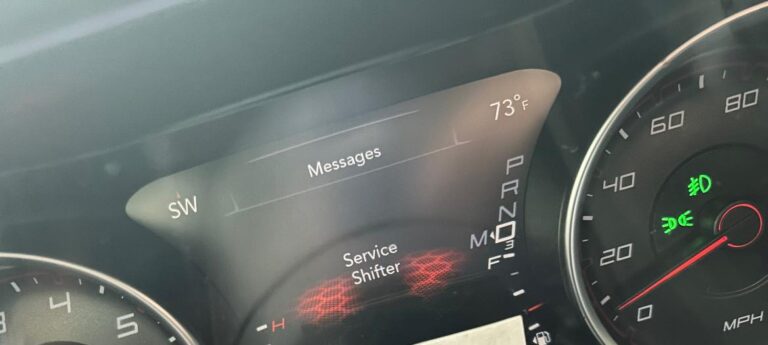
You turn the key, the engine fires up, and right there on the dashboard is a message you have never seen before: “Service Shifter.” Worse, the gear selector will not budge out of park, or the car is stuck in first gear and refuses to move the way it should. It is one of those moments that instantly ruins your morning.
The good news is that this message, while alarming, has a defined set of causes and a clear path to diagnosis. Some of them you can address yourself. Others need a professional with the right equipment. Either way, understanding what is actually happening under the surface is the first step toward getting your Charger back on the road.
What the “Service Shifter” Message Is Actually Telling You
The Dodge Charger uses an electronic shift-by-wire system rather than a traditional mechanical gear linkage. Instead of a physical cable connecting the shifter to the transmission, the system uses electrical signals to communicate your gear selection to the transmission control module. The shifter itself is essentially a sophisticated electronic input device.
When the “Service Shifter” message appears, it means the vehicle’s computer has detected a fault in this communication chain. Something between the shifter assembly, the wiring, and the control modules is not working the way it should. The system flags the fault and, as a safety measure, may lock the transmission in park or prevent normal shifting to protect the drivetrain from being operated in an uncertain state.
This is not a message you can simply ignore and drive through. Unlike a loose gas cap that triggers a check engine light with no real consequence, a shifter fault can physically prevent the car from moving or, in some scenarios, prevent it from returning to park properly. Both situations create real safety concerns.
What Triggers the Dodge Charger “Service Shifter” Warning?
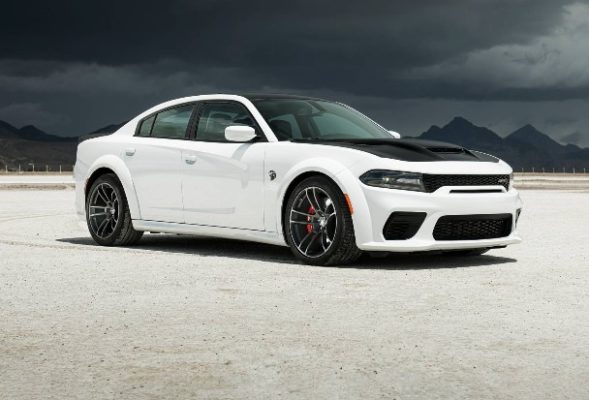
There are several distinct causes for this message, and they vary considerably in severity and complexity. Here is a thorough breakdown of each one.
1. An Electrical Wiring Problem
Electrical issues are one of the most common triggers for the service shifter warning. The shifter communicates with the transmission control module through a network of wires and connectors. When any part of that circuit is disrupted, the signal breaks down and the system flags a fault.
Electrical problems that commonly cause this include:
- A broken or frayed wire inside the shifter assembly or along the wiring harness
- A loose connector that has partially separated over time due to vibration
- Wires that have been chafing against a sharp edge or a rough surface, gradually wearing through the insulation until the copper inside makes contact with metal and creates a short
- Rodent damage, which is more common than most people expect, particularly in vehicles that are parked in garages or near fields where rodents seek shelter inside engine bays and chew through wiring
A useful first check before anything else: remove the center console trim around the shifter and physically wiggle the wiring harness connected to the shifter assembly while watching the dashboard. If the message flickers, disappears, or the gear selector suddenly responds, you have just found your problem. A loose or broken connection in the shifter wiring is causing intermittent signal loss.
Inspect every connector and every inch of visible wire for corrosion, physical damage, or improper routing. Any wire that is rubbing against a metal edge needs to be repositioned and protected with split loom conduit or electrical tape. Any damaged wire needs to be properly repaired or replaced, not just taped over.
2. A Faulty or Failed Shifter Mechanism
The shifter assembly itself can fail. Inside the unit are sensors, internal electronics, and moving parts that can wear down or develop faults over time. What makes this particularly frustrating is that the failure can happen gradually and without warning. You might drive 150 miles without a single problem, park the car overnight, and then wake up to find the shifter completely unresponsive with the service message on the dash.
That is because many internal component failures build up slowly before they cross the threshold that triggers a full fault. One day the degradation reaches the point where the system can no longer function within its acceptable parameters, and the message appears.
A failed shifter mechanism typically needs to be replaced entirely. This is not a component that can be repaired in most cases. The replacement also requires programming to ensure the new unit is properly recognized by the vehicle’s control modules. Expect the cost to start around $400 and potentially go higher depending on the shop and your location. Make sure you use a shop that has specific experience with Dodge Charger shifter systems, as programming the replacement unit requires the right software.
3. Incorrect Shifter Installation
If the “Service Shifter” message appeared shortly after having the shifter assembly replaced or serviced, there is a real chance the installation was not done correctly. This is not necessarily a knock on the mechanic. Shifter installation on the Charger involves proper alignment, correct connector seating, and accurate programming of the replacement unit. Miss any one of those steps and the message will come back, sometimes immediately and sometimes after a short drive.
A scenario many Charger owners report: the car drives fine leaving the shop, makes it home, and then the next morning the service shifter message appears and the gear selector will not shift out of park. In some cases, the issue forces the driver to shut the engine off while the selector is still in run mode because the car will not shift to park.
The fix here is to take the vehicle back to whoever performed the installation and have them review their work. Whether it is a dealership or an independent shop, they need to verify that every connector is fully seated, the unit is correctly aligned, and the programming was completed properly. Do not pay again for a repair that was not done right the first time.
4. Fault Codes Stored in the Engine Computer
Here is a situation that trips up a lot of Charger owners. The physical problem has already been fixed, whether it was a bad shifter, a wiring repair, or something else entirely, but the “Service Shifter” message is still sitting on the dashboard. The computer still thinks the problem exists because the fault code is stored in its memory and has not been cleared.
When a fault is detected, the vehicle’s electronic control unit logs a diagnostic trouble code. Even after the fault is repaired, that code stays in memory until it is cleared. The warning message remains as long as the code is active.
There are a few ways to clear stored codes:
- Battery disconnect: Disconnect the negative battery terminal and leave it disconnected for at least 30 minutes. For a more thorough reset, leaving it overnight and drawing down remaining power by leaving the headlights on briefly after disconnection can help drain residual voltage from the capacitors in the system. Reconnect in the morning and check whether the message has cleared.
- OBD-II scan tool: A scan tool that accesses the TCM and ECM can read the specific fault codes and clear them directly. This is a faster and more reliable method than a battery disconnect, and it also tells you exactly what code was stored so you can confirm the right problem was fixed.
- Professional reset: A dealer or a shop with Chrysler/Dodge diagnostic software can perform a complete module reset and confirm all fault codes are cleared.
Keep in mind that clearing the code is not a fix on its own. If the underlying problem still exists, the code will return after a few drive cycles. Only clear codes after you are confident the actual fault has been corrected.
5. A Loose or Corroded Connection at the PCM
The Powertrain Control Module is the main brain of the vehicle. It manages communication between all the major electronic systems including the transmission, the engine, the stability control, and more. When the PCM has a loose or corroded connection at its connector, the fault cascade that follows can look like a lot of different problems happening at once.
Here is what a PCM connection issue can look like as it progresses:
- The “Service Shifter” message appears first
- Shortly after, “Service Electronic Throttle Control” and “Service Electronic Stability Control” warnings follow
- The windshield wipers may activate on their own
- Power steering becomes unreliable or disappears
- A critical warning appears: “Continue in drive, do not shift or turn off engine, you may be unable to restart”
- Eventually, the engine stalls and the vehicle cannot be restarted
If you are seeing multiple warnings cascading across the dashboard alongside the service shifter message, a PCM connection problem should be high on your list of suspects.
The PCM on the Dodge Charger is located in the engine compartment on the passenger side, positioned close to the windshield. Inspect the large multi-pin connectors that plug into the PCM. Look for corrosion on the pins, bent or damaged pins, or connectors that are not fully seated. Disconnecting and reconnecting them can sometimes clear mild connection issues, but if corrosion is present, the pins need to be cleaned carefully with an appropriate electrical contact cleaner before reconnection.
6. A Faulty Alternator
This one surprises people. Most owners associate alternator problems with the battery warning light or dim headlights. But a failing alternator can trigger the service shifter message as well.
Here is why: the electronic shifter system is sensitive to voltage. When the alternator develops an intermittent short or begins producing inconsistent voltage output, it can cause voltage spikes or drops across the vehicle’s electrical system. The shifter’s electronics detect these fluctuations as a fault and throw the service shifter code.
A failing alternator can also damage the PCM over time by repeatedly subjecting it to voltage outside its operating range. If a bad alternator has been running for a while before being identified, the PCM may need to be replaced alongside the alternator and possibly the battery.
If you see the service shifter warning alongside a battery warning light, flickering headlights, or accessories that are behaving erratically, test the alternator output before doing anything else. A healthy alternator should produce between 13.5 and 14.7 volts while the engine is running. Any shop or auto parts store can run this test for free in most cases.
Step by Step: How to Diagnose and Fix the Service Shifter Warning
Rather than jumping straight to expensive parts, work through these steps in order. The causes range from free to fix all the way up to several hundred dollars, so starting simple always makes sense.
Step 1: Check for Other Warning Messages
Before touching anything, note every warning message on the dashboard. A service shifter message appearing alone points to a different set of causes than one appearing alongside multiple other warnings. Multiple simultaneous warnings strongly suggest a PCM connection issue or an alternator problem affecting the entire electrical system.
Step 2: Pull the Fault Codes
Connect an OBD-II scanner to the diagnostic port under the driver’s side dashboard and pull all stored fault codes. Write them down. The specific codes stored will tell you exactly which module detected the fault and what type of fault it was. This is the single most valuable piece of information for diagnosing this problem efficiently.
Common Dodge Charger codes associated with the service shifter message include:
- U0101: Lost communication with transmission control module
- U0100: Lost communication with ECM/PCM
- P0706: Transmission range sensor circuit range or performance
- B1009 or similar shifter-specific codes depending on model year
Note that a basic OBD-II scanner from an auto parts store may only read powertrain codes. For full access to transmission and body control module codes on a Dodge Charger, you ideally need a scanner that supports Chrysler/Dodge proprietary protocols, or you can have a dealer pull the codes with their equipment.
Step 3: Inspect the Shifter Wiring and Connections
Remove the center console trim panels around the shifter assembly. This typically involves popping off a few plastic trim pieces and possibly removing a few screws. Consult a model-specific guide or your owner’s manual if you are not sure how the trim comes apart.
Once you have access to the shifter assembly and its wiring:
- Wiggle each connector firmly and check whether the service shifter message responds on the dashboard
- Inspect each wire carefully for chafing, fraying, or breaks
- Check for any signs of rodent damage, which often looks like gnawed insulation or missing sections of wire
- Confirm that all connectors are fully seated and that the locking tabs have clicked into place
Step 4: Check the PCM Connections
Locate the PCM in the engine compartment on the passenger side near the windshield. Inspect the large connectors carefully. Disconnect each one and look for corrosion on the pins, which appears as a dark or greenish discoloration. Use an appropriate electrical contact cleaner and a soft brush if needed, allow everything to dry completely, and reconnect firmly. Make sure each connector is fully seated before starting the vehicle.
Step 5: Test the Alternator and Battery
If you have not already done so, test the alternator output and the battery. This rules out electrical supply problems as the cause before you spend money on shifter components. Both tests are typically free at auto parts stores.
Step 6: Attempt an ECU Reset
If the physical inspection found no obvious problems or if you have already fixed a known issue, try a full ECU reset to clear any stored fault codes:
- Turn the vehicle completely off
- Disconnect the negative battery cable
- Turn the headlight switch to the on position to draw down residual power stored in the system
- Wait at least 30 minutes, preferably overnight
- Reconnect the negative cable
- Start the vehicle and check the dashboard for warning messages
If the message is gone and does not return after several drive cycles, the fault was stored from a past issue that has since been resolved. If the message comes back, the underlying problem still exists and needs further diagnosis.
Step 7: Have the Shifter Assembly Tested or Replaced
If all of the above steps have been checked and the problem persists, the shifter assembly itself is likely the fault. At this point, professional diagnosis and replacement is the right path. Make sure the shop you choose has experience with Dodge electronic shifters and has the software tools necessary to program the replacement unit. A shifter installed without proper programming will not work correctly and may generate the same service message again.
What Happens If You Ignore the Service Shifter Warning?
The service shifter message is not one that gets better on its own. In a best-case scenario, the fault is intermittent and the car continues to operate, but the shifter may behave unpredictably. In a worse scenario, the transmission locks in park and the vehicle will not move at all.
The most dangerous situation is when the fault causes the vehicle to become stuck in gear while driving. Some Charger owners have reported being unable to shift back to park after the service shifter fault appeared mid-drive. Having to shut the engine off while in drive is not an outcome anyone wants, and it can be genuinely dangerous depending on where you are when it happens.
If the “Service Shifter” message appears alongside a warning that says “Continue in drive, do not shift or turn off engine, you may be unable to restart,” treat it as an emergency. Drive directly to a Dodge dealer or a qualified shop without turning the engine off. Have someone meet you there if possible, because you may not be able to restart the vehicle once the engine is off.
How Much Does It Cost to Fix the Dodge Charger Service Shifter Problem?
| Cause | DIY Cost | Professional Repair Cost |
|---|---|---|
| Loose or corroded electrical connector | $0 – $20 (contact cleaner, tools) | $50 – $150 with labor |
| Damaged wiring repair | $10 – $50 (wire, connectors) | $100 – $300 depending on scope |
| ECU fault code reset | $0 – $30 (if you own a scanner) | $50 – $100 at a shop |
| PCM connector cleaning and reseating | $10 – $20 (contact cleaner) | $50 – $150 with labor |
| PCM replacement | Not recommended for DIY | $500 – $1,500 depending on model year |
| Alternator replacement | $150 – $300 (parts only) | $350 – $700 with labor |
| Shifter mechanism replacement and programming | Not recommended for DIY | $400 – $900 depending on shop and model year |

Frequently Asked Questions
Will Resetting the ECU Harm the Dodge Charger?
No, resetting the ECU will not damage the vehicle. It clears the stored fault codes and returns the computer’s adaptive settings to their default state. The car may feel slightly different for the first few drive cycles after a reset as the ECU relearns fuel trim, idle settings, and transmission shift points. But this is completely normal and harmless. Resetting the ECU is a diagnostic step, not a permanent fix. If the fault reappears after a reset, the underlying problem has not been resolved.
Is the Service Shifter Message a Common Problem on the Dodge Charger?
It is not an everyday complaint, but it comes up with enough regularity that there is a well-established body of owner experience and repair knowledge around it. The Dodge Charger is generally considered a reliable vehicle, earning solid ratings across most reliability assessments. But the electronic shifter system, like any complex electronic component, has its points of vulnerability. Certain model years appear more prone to this issue than others, particularly those with higher mileage or vehicles that have had previous electrical work performed.
Can I Drive the Car With the Service Shifter Warning On?
It depends on how the fault is presenting. If the car is shifting normally and the message appeared without any other symptoms, it may be drivable in the short term while you arrange a diagnosis. If the transmission is stuck in park, stuck in gear, or behaving unpredictably, do not attempt to drive it. And if you see multiple cascading warnings appearing alongside the service shifter message, treat it as an urgent situation and get it to a shop without delay.
How Easy Are Dodge Chargers to Repair Generally?
The Charger earns around 3.5 out of 5.0 on most reliability and repairability assessments. It is a capable and well-built car with a strong engine lineup and a loyal ownership community that produces a lot of shared repair knowledge. That said, the electronic systems on modern Chargers, including the shift-by-wire system, require specific diagnostic tools for accurate repair. Routine mechanical work is straightforward, but anything involving the transmission control, PCM, or body control modules is better handled by someone with Dodge-specific diagnostic software.
Dodge Charger Model Years Most Commonly Affected
| Model Year Range | Most Reported Trigger | Notes |
|---|---|---|
| 2011 – 2014 | PCM connection issues, wiring faults | Earlier generation of the electronic shifter system |
| 2015 – 2019 | Shifter mechanism failure, alternator faults | Higher owner reports of shifter replacement needed |
| 2020 – 2023 | Software fault codes, connector issues | Software updates from Dodge address some cases |
If your Charger is in the 2015 to 2019 range and you are seeing this message, the shifter mechanism itself has a higher probability of being the direct cause based on owner reports. For 2020 and newer models, start with a diagnostic scan and check for any available software updates before moving to hardware replacement.
The service shifter message on a Dodge Charger is one of those problems where the diagnosis is more than half the battle. Get the fault codes first, inspect the simple stuff before spending on parts, and do not let a shop talk you into replacing the shifter assembly without confirming through testing that it is actually the source of the fault. A methodical approach gets you back on the road faster and for less money than guessing.