

Finding water inside your Nissan Rogue is never a good moment. Whether it is a damp headliner you notice on a Tuesday morning, wet carpet you discover after a weekend of rain, or actual water dripping onto your lap while driving, a sunroof leak demands attention. The longer you wait, the worse it gets. Water that sits in a vehicle interior breeds mold, destroys electronics, and ruins upholstery that costs far more to replace than the leak itself would have cost to fix.
The Nissan Rogue is a popular crossover with a solid reputation overall, but like virtually every vehicle with a factory sunroof, it has a known weakness: the drainage system. When that system gets neglected or components wear out, water finds its way inside. The good news is that most Rogue sunroof leaks are diagnosable and fixable without a massive repair bill, especially if you catch the problem early.
This guide walks through every aspect of the problem, from identifying where the leak is coming from, to clearing the drains yourself, to knowing when worn seals or a design issue requires professional attention.
How to Tell If Your Nissan Rogue Sunroof Is Leaking
Water is sneaky. It enters a vehicle at one point and travels significant distances before you ever see it. This is why Rogue owners sometimes look directly at the sunroof, see nothing obviously wrong, and still cannot figure out where the water is coming from. Here are the signs that point specifically to a sunroof as the source.
Wet or Stained Headliner
The headliner is the fabric-covered panel on your interior ceiling. When the sunroof drainage system fails, water typically saturates the foam backing behind this fabric before it becomes visible. By the time you see a water stain or notice the fabric sagging, water has been building up inside for a while.
Run your hand across the headliner around the sunroof perimeter after a rainstorm. If any area feels soft, spongy, or damp, water is actively soaking into the backing material. Catching it at this stage, before visible mold or full saturation, dramatically reduces the repair cost.
Damp or Wet Carpet
Wet carpet in a Nissan Rogue, particularly on the passenger side or in the rear, is often traced back to sunroof drain tube failure. The rear drain tubes on the Rogue run down through the C-pillars and exit near the rear of the vehicle. When those tubes get clogged, water backed up inside them overflows into the cabin and runs down to the lowest point, which is the carpet.
Press your hand firmly into the carpet in multiple locations. Wet carpet padding underneath feels spongy even when the surface appears dry. Do not ignore this. Carpet padding that stays wet grows mold within days and creates a persistent musty odor that is very difficult to eliminate once it sets in.
Water in Unexpected Locations
Water showing up in cup holders, door pockets, or along the dashboard after a car wash or heavy rain is a clear indicator of a sunroof drainage issue rather than a windshield seal or door seal problem. This happens when the drain tray around the sunroof overflows and water runs along interior channels to wherever gravity takes it. The location where you find the water is rarely the location where it entered.
Visible Water Dripping During Rain
This is the most obvious and unambiguous sign. If you are sitting in your Rogue during rainfall and you can see or feel water dripping inside the cabin, the leak is active and the source is likely directly above or nearby. Note the exact drip location. Front drips usually point to front drain tube issues. Rear drips more often indicate rear drain tube blockage or a rear seal failure. That location detail helps narrow the diagnosis considerably.
What Actually Causes a Nissan Rogue Sunroof to Leak
Understanding the cause is what separates a targeted, cost-effective repair from an expensive guessing game. The Rogue’s sunroof system has three main failure points, and knowing which one you are dealing with determines how you fix it.
Clogged Sunroof Drain Tubes: The Number One Culprit
Here is something most Rogue owners do not know. Even a perfectly sealed, fully functional sunroof allows some water into the drain tray around the opening. That is intentional. The design assumes some water will get in, and it routes that water through four drain tubes, one at each corner of the sunroof tray, down through the body of the vehicle, and out underneath.
When those tubes stay clear, the system works invisibly and you never know it is happening. When they get clogged, the tray fills up and water has nowhere to go except into your cabin. Leaves, pine needles, pollen buildup, road dust, and decomposed organic material all accumulate in the tray and eventually pack into the drain openings. This happens on every vehicle with this design, regardless of brand. The Rogue is not unique in this way, but it does have drain tubes that are particularly prone to clogging if the vehicle is parked under trees regularly.
The front drains on the Rogue exit near the front wheel wells. The rear drains run through the D-pillars or C-pillars and exit near the rear. A blockage anywhere along that path creates a backup. In some cases, the tubes themselves can also become disconnected from their exit points, which means water drains directly into the pillar cavity rather than outside the vehicle.
Worn or Deteriorated Seals and Gaskets
The rubber seal that runs around the perimeter of the sunroof glass is what keeps water out when the sunroof is closed. Like all rubber components, this seal ages. It dries out, shrinks, develops cracks, and eventually loses its ability to form a watertight contact with the glass or the frame. UV exposure accelerates this process, particularly in hot climates or on vehicles that spend significant time in direct sunlight.
A compromised seal allows water to pass directly into the cabin rather than into the drain tray. This type of leak is different from a drain clog because it bypasses the drainage system entirely. Even if your drains are perfectly clear, a bad seal means water gets in every time it rains. The two problems can also exist simultaneously, which is why a thorough inspection covers both.
Design Issues on Specific Model Years
Some Nissan Rogue model years have documented sunroof leaks that go beyond normal wear and drain maintenance. The 2021 Rogue in particular has been the subject of owner reports regarding rear sunroof leaks that appear even on relatively new vehicles with low mileage. When a leak shows up on a nearly new vehicle with clean drains and an intact seal, a design or manufacturing issue is worth considering.
If your Rogue is relatively new and already leaking, check whether Nissan has issued a Technical Service Bulletin (TSB) or recall for your specific model year and production date before spending money on repairs. A TSB-covered repair at a Nissan dealer may be performed at no cost or reduced cost even if the vehicle is outside its standard warranty period.
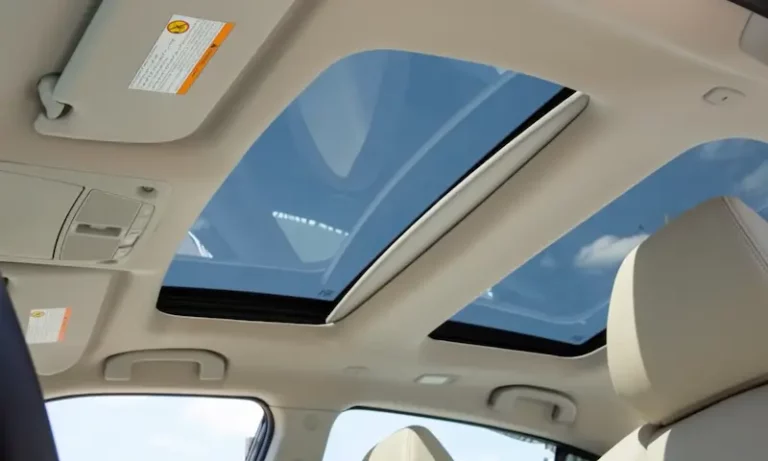
Step-by-Step Guide to Fixing a Nissan Rogue Sunroof Leak
Work through these fixes in order. Start with the drains because that is the most common cause and the easiest to address. If clearing the drains does not resolve the leak, move on to the seal inspection. Reserve professional help for situations where the basic fixes have been confirmed not to be the cause.
Fix 1: Clean the Sunroof Drain Tubes
This is a job most Rogue owners can handle at home with basic supplies. Budget about 30 to 45 minutes and gather the following before starting:
- A piece of stiff but flexible wire (a straightened metal coat hanger works well, as does a piece of weed trimmer line)
- A garden hose or a jug of water for testing
- A can of compressed air (optional but helpful)
- A soft cloth for wiping down the tray
Follow these steps carefully:
- Open the sunroof completely so you have full access to the tray and all four drain hole openings at the corners.
- Remove visible debris from the tray. Use your fingers or a soft cloth to clear out any leaves, dirt, pine needles, or gunk sitting in the tray. Do not push this debris into the drain holes.
- Test the drains with water. Pour a small cup of water into each corner of the tray, one at a time. Water that drains freely and disappears quickly means that drain is clear. Water that pools and sits means the drain is partially or fully blocked.
- Clear the blockage with wire. Insert the wire into any blocked drain hole gently. Work it back and forth and twist it slightly to break up and dislodge the compacted debris. Do not use aggressive force. You are trying to break up the clog, not puncture the drain tube.
- Flush with water again after poking with the wire. If the drain is still slow, repeat the wire insertion process and flush again. For stubborn blockages, a small amount of drain cleaner solution poured into the opening and left for 15 to 20 minutes before re-poking can help dissolve the organic material causing the clog.
- Use compressed air after the wire treatment to blow out any remaining loose debris. Hold the nozzle a short distance from the drain opening rather than pressing it against the hole directly. This prevents the air pressure from damaging the flexible tube inside.
- Confirm the drain is clear by pouring a larger volume of water into the tray and watching for it to exit underneath the vehicle near the wheel wells (front drains) or rear of the vehicle (rear drains). When water flows freely out the bottom, the drain is clean.
- Repeat for all four drains even if only one appeared blocked. Partial clogs in the others will become full blockages faster if left unaddressed.
After clearing all four drains, do a final test by running the garden hose gently over the closed sunroof for a few minutes and checking the interior for any signs of water. If the interior stays dry, the drain cleaning resolved the leak.

Fix 2: Inspect and Replace the Sunroof Seal
If the drains are flowing freely but water is still getting in, the rubber seal around the sunroof glass is the next thing to examine. Open the sunroof and run your finger slowly around the entire perimeter of the seal. You are looking for:
- Visible cracking or splitting in the rubber
- Sections that feel stiff or brittle rather than pliable
- Areas where the seal has pulled away from the channel or is sitting unevenly
- Any gaps in the seal, particularly at the corners
Close the sunroof and examine where the glass meets the seal all the way around. Uneven contact, visible gaps, or sections where light shows through are all indicators of seal failure.
If the seal is only slightly dried out but not cracked or physically damaged, applying a rubber conditioner can restore some flexibility and improve the seal’s contact. Products designed for automotive rubber seals, such as 303 Aerospace Protectant, are appropriate for this. Apply with a clean cloth and allow it to absorb fully.
If the seal is cracked, shrunk, or has visible gaps, it needs to be replaced. Nissan Rogue sunroof seals are available as OEM parts or quality aftermarket equivalents. The replacement process involves carefully peeling the old seal out of its channel, cleaning the channel thoroughly, and pressing the new seal into place. It is a manageable DIY job for someone comfortable working carefully with vehicle trim components. If the glass panel or the channel itself is involved in the misalignment, professional hands are worth the cost.
Fix 3: Check for Disconnected Drain Tubes
Sometimes the drain tubes are not clogged but simply disconnected from their exit points. A tube can slip off its fitting inside the pillar due to vibration over time or poor original installation. When this happens, the water that enters the drain tray does drain out of the tray correctly, but it exits inside the vehicle body rather than outside it. This causes water to appear in the carpet or inside the pillar without any obvious headliner leak.
Diagnosing a disconnected tube requires pouring water into the drain tray while someone watches inside the vehicle along the pillar base and floor edges for water appearing in unexpected places. If water pours into the drain hole at the top and shows up inside the cabin rather than underneath the vehicle, the tube is disconnected.
Reconnecting a drain tube that has slipped off at the bottom exit point may require removing interior trim panels along the pillar to access the tube connection. This is doable as a DIY job if you are comfortable with interior panel removal, but it requires care to avoid breaking the plastic clips that hold trim panels in place. If you are not confident with interior trim work, this is a reasonable repair to hand off to a shop. The labor time is modest and the cost should be on the lower end of the repair spectrum.
Fix 4: Apply Sealant as a Supplemental Measure
In some cases, applying a fresh bead of automotive-grade sealant around the sunroof perimeter can address small gaps or areas where the seal has degraded. This is not a substitute for replacing a genuinely failed seal, but it can be an effective supplemental step after a new seal is installed or as a short-term measure on a seal that is wearing but not yet fully failed.
Use a sealant that is rated for automotive exterior use and compatible with rubber and glass. Apply a thin, even bead to any areas where the seal meets the frame, allow it to cure fully per the product instructions, and then test with water before considering the repair complete. Silicone-based automotive sealants are generally the right product for this application.
Nissan Rogue Sunroof Leak Repair Costs: What to Expect
Cost varies widely based on what is causing the leak and whether you handle any part of it yourself. Here is a realistic breakdown.
| Repair Type | DIY Cost | Shop Cost (Parts + Labor) |
|---|---|---|
| Drain tube cleaning (basic) | $0 to $15 | $75 to $150 |
| Sunroof seal replacement | $30 to $100 (seal only) | $80 to $250 |
| Drain tube reconnection | Variable by access difficulty | $100 to $300 |
| Full sunroof assembly replacement | Not recommended as DIY | $600 to $1,500+ |
| Headliner replacement (water damage) | $100 to $200 (materials) | $400 to $900+ |
| Mold remediation | Variable | $200 to $600+ |
| Carpet drying and treatment | Variable | $150 to $400 |
The pattern here is familiar. A $15 drain cleaning kit and 45 minutes of work can prevent a chain of damage that runs well past $1,000 when mold, headliner replacement, and carpet treatment all get added together. Early action on a sunroof leak is always, without exception, the financially smarter choice.
Checking for Nissan Recalls and TSBs Related to Sunroof Leaks
Before spending any money on a sunroof leak repair on a Nissan Rogue, particularly on a newer model, take 10 minutes to check whether Nissan has issued a recall or Technical Service Bulletin for your specific vehicle.
Visit the National Highway Traffic Safety Administration recall database at nhtsa.gov and enter your VIN number. This will show any open recalls tied to your exact vehicle. A recall related to water intrusion or the sunroof system means the dealer is required to fix it at no charge to you.
Technical Service Bulletins are separate from recalls. A TSB documents a known problem and provides the dealership with a prescribed fix, but unlike recalls, TSBs are not automatically free unless you are within your warranty period. However, knowing a TSB exists gives you useful leverage when discussing the repair with a dealer or shop. It confirms the issue is a known problem rather than one-off damage, which can influence how the repair is handled and priced.
You can ask your Nissan dealer’s service department directly whether any TSBs apply to your Rogue’s sunroof. A good service advisor will tell you without making you dig for it.
Sunroof Maintenance to Prevent Leaks From Developing
The Nissan Rogue sunroof system works well when it is maintained. The vast majority of leaks that owners deal with are the direct result of skipped maintenance rather than fundamental design failure. Here is a straightforward prevention routine.
Twice a Year: Clean the Drains
Spring and fall are ideal times because those are when the most debris accumulates in the sunroof tray. Open the sunroof, clear the tray, and pour water into each corner drain to confirm it flows freely. This 15-minute task done consistently prevents the majority of Rogue sunroof leaks.
Once a Year: Condition the Seal
Apply a rubber conditioner or protectant to the sunroof seal to keep it flexible and maintain its contact quality. A seal that stays supple forms a better barrier and resists cracking far longer than one left to dry out in the sun year after year.
After Heavy Weather: Quick Visual Check
After any major rainstorm, take 60 seconds to run your hand across the headliner near the sunroof and press your hand into the carpet in the rear. If anything feels damp, investigate immediately rather than waiting to see if it gets worse. It will get worse.
Avoid Parking Under Trees When Possible
This one sounds too simple, but it makes a measurable difference. Trees are the primary source of drain-clogging debris. Sap, seed pods, leaves, and pine needles all funnel into the sunroof tray and pack into the drains. Parking in open areas or a garage dramatically reduces how quickly debris accumulates.
Common Questions About Nissan Rogue Sunroof Leaks
Can I drive my Rogue with an active sunroof leak?
Short trips in dry weather are fine. But driving in rain with an active sunroof leak allows water to continue entering and spreading through the interior. If your Rogue is leaking, keep it out of rain until the repair is completed. Even a short rainstorm adds more water to an already saturated headliner or wet carpet, compounding the damage and the eventual repair cost.
How do I know if the drain tube is clogged versus disconnected?
Pour water into one drain corner and watch carefully. If the water sits and does not drain at all, the tube is clogged. If the water drains from the tray but shows up inside the cabin rather than underneath the vehicle, the tube has likely come disconnected from its exit fitting. A clogged tube requires cleaning from the top. A disconnected tube requires accessing the connection point, which is typically inside the pillar trim.
Why is there a musty smell in my Rogue even when the car is dry?
If the musty smell appeared after a wet weather event or gradually over time, mold has almost certainly started growing somewhere in the interior, most likely in the carpet padding or the headliner foam. The smell persisting after the car dries out is a sign that moisture got into a material that did not fully dry. Addressing the source of the leak and then professionally treating the affected materials is the only real solution. Air fresheners will mask it temporarily but will not eliminate it.
Is the 2021 Nissan Rogue sunroof leak a known issue?
Based on owner reports and forum discussions, some 2021 Rogue owners have experienced sunroof leaks, particularly at the rear of the sunroof opening. If you own a 2021 Rogue and are experiencing a leak that appeared early in the vehicle’s life with clean drains and an intact seal, this is worth raising directly with a Nissan dealer. Ask specifically about any TSBs related to water intrusion on your model year and document the problem with photos and dates before your appointment.
Will my Nissan warranty cover a sunroof leak?
Nissan’s basic new vehicle warranty covers 3 years or 36,000 miles for defects in materials and workmanship. If your Rogue is within that window and the leak is caused by a manufacturing defect rather than debris accumulation or normal wear, it should be covered. If the warranty has expired, check for any active recalls or TSBs that might provide coverage even outside the standard period. The dealer’s service department can run your VIN and give you that information directly.
Nissan Rogue Sunroof Leak Quick Troubleshooting Guide
| Symptom | Most Likely Cause | First Action |
|---|---|---|
| Wet or stained headliner near sunroof | Clogged drain tubes or failed seal | Clean all four drains, then inspect seal |
| Wet carpet in rear of vehicle | Rear drain tubes clogged or disconnected | Clean rear drains, check tube exit points |
| Water in cup holders or door pockets | Drain overflow spreading through interior channels | Clean all drains and inspect tray for overflow |
| Visible drip from headliner in rain | Active drain clog or seal breach | Drain cleaning first, seal inspection second |
| Musty smell without visible water | Existing mold from prior water intrusion | Identify and fix leak source, then treat affected materials |
| New vehicle leaking within warranty period | Possible design issue or manufacturing defect | Dealer visit, request TSB and recall check by VIN |
| Water appearing inside pillar or door | Disconnected drain tube inside pillar | Water test to confirm, then professional reconnection |
The Real Cost of Waiting on a Nissan Rogue Sunroof Leak
Here is what actually happens when a Rogue owner ignores a sunroof leak for a few months. The headliner foam gets fully saturated and starts to separate from the roof panel. Mold begins growing in the foam within a week of sustained moisture. The carpet padding gets wet and stays wet, developing its own mold colony. Eventually the headliner falls, the mold smell permeates the entire interior, and you are looking at a full headliner replacement, carpet removal, mold remediation, and potentially electrical issues if water reached any connectors or modules. That repair can run $1,500 to $2,500 on a Nissan Rogue.
Compare that to a $10 can of compressed air, a flexible wire, and an hour of your time. The math is not complicated.
If your Rogue’s drains are clear and the leak persists, do not keep waiting and hoping it resolves itself. Water damage is cumulative. Every rainstorm adds to the problem. Get the seal inspected, check for a disconnected tube, and if the vehicle is still under warranty, get it to the dealer before that coverage expires. The right repair done promptly is always cheaper than the wrong repair done too late.