
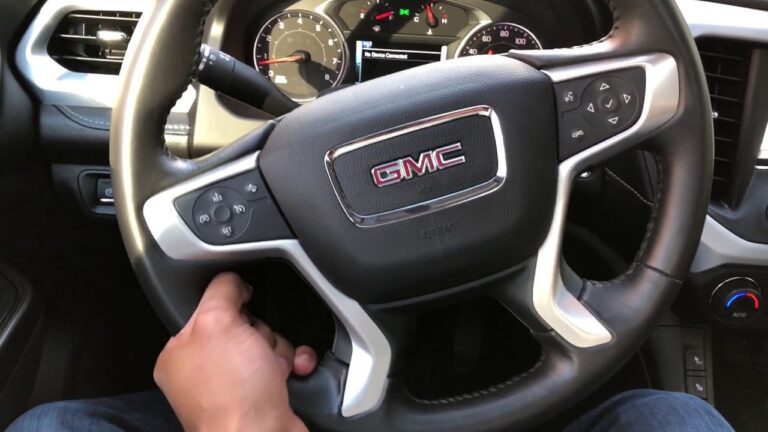
Let us be honest about something right off the bat. The GMC Acadia is a solid, comfortable, and family-friendly mid-size SUV. It has a lot going for it. But if you own one, or you are thinking about buying one, you need to know about the elephant in the room: the power steering system.
This is not a rare issue. It is a known headache for many owners. When the steering goes haywire, the driving experience changes instantly. It can turn a smooth highway cruise into a white-knuckle ordeal. That is the last thing you want when you have a car full of kids or a long commute ahead of you.
The good news? Most of the problems are fixable. Better yet, some of them are preventable. You just need to know what you are looking at. We are going to break down the most common failures, the warning signs you should never ignore, and the five best fixes to get you back on the road safely. No fluff, no jargon, just straight talk about what works.
Why Your Steering Feels Like a Workout
Before we dive into the fixes, we need to talk about the why. A stiff steering wheel is often the first sign that something is wrong. But why does it happen? It is not just one thing. It is usually a combination of parts getting tired or fluids running low.
Think about it like this. Your steering system is a hydraulic or electric network. It relies on fluid pressure to do the heavy lifting for you. When that pressure drops, you feel it. The wheel gets heavy. It feels like you are wrestling the car instead of driving it.
There is also the opposite problem. Sometimes the wheel feels too loose, like it has too much play. That is equally terrifying, especially at highway speeds. You should not have to constantly correct the wheel just to stay in your lane. If you are doing that, you have a serious issue on your hands.
The Service Power Steering Warning Light
This warning is the modern car’s way of screaming for help. If you see this pop up on your dashboard, do not ignore it. It is not a suggestion. It is a demand for attention.
In many cases, this warning appears on newer models, even the 2023 GMC Acadia. The system detects an anomaly, and as a safety precaution, it shuts down or reduces assist. That means you are fighting the wheel with no help. In a parking lot, that is annoying. On a curve, it is dangerous.
You need to pull over safely and turn the car off. Let it sit for a minute. Sometimes, a simple reset works. If the warning comes back, you have a real problem that requires diagnostic equipment. Do not just clear the code and hope for the best. That is how accidents happen.
Decoding the Steering Assist Reduced Message
This is another common one that sends owners into a panic. The good news? It is often not a mechanical failure. The bad news? It requires a bit of detective work to fix.
This specific error usually stems from a faulty signal. The Engine Control Module (ECM) sends a coolant temperature reading to the steering module. If that reading is inaccurate, the steering system thinks the engine is overheating. In a panic, it reduces steering assist to protect the vehicle.
So, you are sitting there with a steering warning, but your actual steering pump might be perfectly fine. The issue is communication. The fix involves reprogramming or replacing the ECM, or sometimes just cleaning the connectors. It is a job for a professional with the right scan tools, because guessing here will cost you money.
The 5 Top Fixes for GMC Acadia Power Steering Problems
Alright, let us get to the meat of the matter. You are here because you want solutions. These are the five most effective fixes we have seen work in real-world scenarios. They range from simple maintenance to full component replacement. We are going to rank them in order of complexity, starting with the easiest and cheapest.
Fix #1: Check and Flush the Power Steering Fluid
This sounds too simple, right? But you would be shocked at how many steering problems start with dirty or low fluid. The power steering fluid is the lifeblood of the hydraulic system. If it is low, the pump cavitates and whines. If it is dirty, it wears out the seals and the pump internals.
Here is what you need to do:
- Locate the reservoir. It is usually a small plastic tank with a cap labeled with a steering wheel icon.
- Check the level against the Cold and Hot marks on the side.
- If it is low, you have a leak. Do not just top it off and forget about it. You need to find out where the fluid is going.
- If the fluid looks dark brown or smells burnt, it is time for a flush.
A flush is not the same as a drain and refill. A flush removes all the old fluid from the entire system, including the lines and the steering gear. It replaces it with fresh, clean fluid. This can resolve stiffness and eliminate that annoying whining noise. It is one of the cheapest fixes you can do, and it goes a long way.
Pro tip: Always use the fluid type specified in your owner’s manual. Using the wrong fluid can cause the seals to swell or shrink, leading to leaks. Do not trust the universal stuff unless it specifically lists GM specs on the back.
Fix #2: Replace the Power Steering Pump
If the fluid is fresh and full, but the steering is still stiff, the pump is the next suspect. The pump is the heart of the hydraulic system. It generates the pressure that makes steering effortless. When it fails, you lose that assist.
Drivers often report this failing at low speeds. In a 2016 GMC Acadia, you might feel fine on the highway, but struggle to parallel park. That is a classic pump failure symptom. The impeller inside the pump wears out, or the bearings seize up, and pressure drops.
Symptoms of a failing pump include:
- A loud whining or groaning noise when you turn the wheel.
- A stiff steering wheel, especially when the car is idling.
- Fluid leaking from the pump body.
- Visible metal shavings in the fluid reservoir.
Replacing the pump is a moderate DIY job if you are handy. It involves removing the serpentine belt, unbolting the old pump, and installing the new one. However, you need to be careful. You also need to flush the system. If the pump grenaded, metal debris is floating around in the lines. If you do not flush it, that debris will destroy the new pump within a week.
If you are not comfortable with a wrench, this is a job for a shop. Labor costs vary, but expect to pay a few hundred dollars for the part and installation. It is worth it to have reliable steering again.
Fix #3: Repair or Replace the Steering Rack
This is the big one. The steering rack is the component that converts the rotational motion of the steering wheel into the linear motion that turns the wheels. It is a complex assembly with seals, bushings, and internal valves. When it fails, you will know it.
Owners of the 2014 GMC Acadia have reported significant issues here. The symptoms are often vague at first. You might notice uneven tire wear, which means the alignment is off. Or, you might feel a clunking sensation when you hit a bump. The steering can feel loose, like the wheels are not connected to the wheel.
Here is the tricky part: Sometimes the rack is fine, but the outer tie rod ends are worn. Those are the ball joints that connect the rack to the wheels. They are cheap and easy to replace. But if the rack itself is leaking fluid from the ends, or if there is internal wear, you are looking at a replacement.
Replacing a steering rack is not a beginner job. It requires dropping the subframe or at least loosening it to get the rack out. You also need a precise alignment afterward. If you skip the alignment, you will burn through tires quickly. This is a job where paying a professional is usually the smart move, even if it hurts the wallet.
Fix #4: Update the Software and Reprogram the Modules
We touched on this earlier with the Steering Assist Reduced message. Modern cars are rolling computers. Sometimes, the hardware is fine, but the software is glitchy. GM has released several software updates over the years to address steering quirks.
If you are experiencing intermittent issues, or if the warning light comes on and off randomly, a software update might be the cure. This is especially true for the Electric Power Steering (EPS) module. The EPS system uses an electric motor to provide assist, and it relies on sensor inputs. If the sensors are sending bad data, the module gets confused.
Why this matters: There was a recall in March 2021 involving a potential loss of power steering assist. The fix for many of those vehicles was not a mechanical part. It was a reprogramming of the Electronic Brake Control Module (EBCM) and the power steering control module.
You cannot do this at home with a basic code reader. You need a high-end scan tool that can access the proprietary GM software. A dealership or a specialized indie shop will have this. They will plug in, download the latest calibration, and flash it to the modules. It takes about an hour and usually solves the problem without replacing a single physical part.
Fix #5: Inspect and Replace Hoses and Seals
Leaks are a huge source of steering issues. You might not notice a leak until the fluid level drops enough to let air into the system. Air in the lines causes a spongy steering feel and an annoying groan.
The high-pressure hose from the pump to the rack is the most common culprit. It endures extreme pressure and heat. Over time, the rubber degrades, and it starts to seep fluid. Similarly, the return line can crack.
Here is a quick checklist for finding a leak:
- Look for puddles under the front of the car. Power steering fluid is usually reddish or clear, and it feels oily.
- Inspect the rubber boots on the steering rack. If they are swollen or cracked, fluid is getting in there.
- Check the hose clamps. Sometimes they just loosen up over time.
- Look for wet spots around the pump shaft.
Replacing hoses is straightforward. The hard part is getting to them, as they are often buried in the engine bay. Replacing seals is more invasive. If the rack is leaking from the ends, you technically can rebuild it with a seal kit. However, in the real world, the labor cost to rebuild often exceeds the cost of a remanufactured rack. It is usually smarter to just swap the whole unit.
Understanding the Recalls: What You Need to Know
We need to talk about recalls because ignoring them is a big mistake. The National Highway Traffic Safety Administration (NHTSA) has issued several notices for the Acadia regarding steering.
In March 2021, GM issued a recall for nearly 26,847 SUVs, including Cadillac, Chevrolet, and GMC models. The issue? The power steering assist could fail. The vehicles were placed on stop delivery, meaning dealerships could not sell them until they were fixed. If you own a model from that era, you need to check if your VIN is on the list.
How to check: Go to the NHTSA website and enter your Vehicle Identification Number. It takes two minutes. If your car is listed, take it to the dealer. The repair is free. You do not pay for recalls.
There is also a specific Diagnostic Trouble Code (DTC) U0401:71 that plagues some models. This code relates to the steering assist reduction after driving for about 20 minutes. Here is the kicker: Do not replace the steering gear for this code. It will not fix the problem. The issue is in the communication between the ECM and the steering module. Replacing a $1,500 steering rack to fix a $100 sensor issue is a waste of money. Get a second opinion if a shop suggests this.
How to Diagnose the Problem Yourself
You do not need to be a master mechanic to figure out what is wrong. You just need to be observant. Here is a step-by-step process you can follow in your driveway.
- Listen: Start the car and turn the wheel from lock to lock. Do you hear a whine? That points to the pump or low fluid. Do you hear a clunk? That points to the rack or suspension links.
- Feel: Is the wheel stiff? That points to the pump or a belt issue. Is the wheel loose with too much play? That points to the rack or tie rods.
- Look: Check the fluid level and condition. Check for leaks. Look at the condition of the serpentine belt. Is it cracked or glazed?
- Scan: If you have a code reader, plug it in. Even a cheap $20 reader can tell you if there are stored codes. If you see the U0401 code, you know it is a software issue.
This process will narrow down the issue significantly. If you are still unsure, a professional diagnostic is worth the money. It is better to pay $100 for a diagnosis than to guess and throw parts at the car.
Preventive Maintenance: The Secret to Avoiding Future Headaches
We all know the saying: An ounce of prevention is worth a pound of cure. That applies perfectly to the Acadia steering system. You can avoid most of these problems with a little routine care.
Here is your maintenance checklist:
- Check fluid monthly: Make it a habit. Open the hood and glance at the reservoir. It takes ten seconds.
- Flush the system every 50,000 miles: Do not wait for the 100,000-mile mark. The fluid degrades and collects moisture over time. A flush keeps the seals soft and the valves clean.
- Inspect the belt: The serpentine belt drives the pump. If it is worn, it can slip, reducing pump output. Replace it every 60,000 miles or so.
- Do not hold the wheel at full lock: This puts maximum strain on the pump. When you hit the stop, ease off slightly. This small habit can extend the pump’s life by years.
- Listen for changes: If the steering suddenly feels different, do not ignore it. Small issues become big issues quickly.
Following this list will keep you out of the repair shop for steering issues. It is that simple. Most owners who experience failures have neglected at least one of these steps.
The Cost Factor: What You Are Really Paying For
Money matters. We are not going to pretend it does not. The repair costs vary wildly depending on the issue. Here is a rough breakdown of what you can expect to pay at a reputable shop.
| Repair Type | Estimated Cost Range | Time Needed |
|---|---|---|
| Fluid Flush | $100 – $150 | 1 Hour |
| Pump Replacement | $400 – $700 | 3-4 Hours |
| Steering Rack Replacement | $1,200 – $2,000 | 6-8 Hours |
| Software Update/Reprogram | $100 – $200 | 1-2 Hours |
| Hose Replacement | $200 – $400 | 2-3 Hours |
These are estimates. Prices vary by region and by the specific shop. But this gives you a ballpark figure. Do not let the high cost of a rack replacement scare you. It is a rare failure compared to the pump or hoses. Most owners will never need to replace the rack.
Is Your Acadia Safe to Drive?
This is the question that keeps owners up at night. The answer depends on the severity of the symptom.
If you have a slow leak and the fluid level is still within range, you are probably safe for a short drive to the shop. If the steering assist has completely failed, you are not safe. Driving without power steering is physically demanding and dangerous in an emergency maneuver. You should have the car towed.
Do not take risks with steering. It is one of the top three safety systems in your vehicle, right up there with brakes and tires. If you feel like the car is not responding predictably, park it. Call a tow truck. The cost of a tow is far less than the cost of a collision.
Remember, the Steering Assist Reduced warning is not a limp home mode. It is a warning that the system is compromised. Treat it with respect.
Real-World Example: The 20-Minute Curse
Let us paint a picture. You are driving to work. It is a 25-minute commute. Everything is fine for the first 20 minutes. Then, out of nowhere, the dashboard lights up. Steering Assist Reduced. The wheel gets heavy. You pull over, turn the car off, and restart it. The warning is gone.
You think it is a fluke. You drive home that evening. Twenty minutes later, the same thing happens. This is not a coincidence. This is the specific DTC U0401:71 we mentioned earlier.
This exact scenario has been reported by hundreds of owners. The root cause is often a faulty engine coolant temperature sensor. The ECM sends a bad signal to the steering control module, which triggers a failsafe. The fix is to replace the sensor or update the ECM software.
The takeaway here is simple: If your issue is intermittent and tied to time, it is almost certainly electronic, not mechanical. Do not let a shop sell you a new pump or rack. Insist on a proper diagnosis of the sensor inputs first.
Why You Should Not Ignore Minor Symptoms
We get it. The car is driving okay. The steering is just a little bit stiff, or there is a small whine when you turn. You think you can live with it. Then, one day, you go to back out of a parking space, and the wheel locks up. Now you are stranded.
Ignoring minor symptoms is how you turn a $100 fix into a $1,500 fix. A small leak that you do not address will eventually drain the system. Running the pump dry destroys it. Then, the metal shavings from the destroyed pump clog the rack. Suddenly, you are replacing the entire system.
Pay attention to the small stuff. That little whine is the pump telling you it is thirsty. Give it what it needs before it dies. Your wallet will thank you.
Final Thoughts on Keeping Your Acadia Steering Smooth
You have the knowledge now. You know the symptoms, the causes, and the fixes. The GMC Acadia is a great vehicle, but it has this one achilles heel. The good news is that you do not have to be a victim of it.
Start with the simple stuff. Check the fluid. Listen for noises. Pay attention to the warnings. If you do those three things, you will catch the problem early. If the problem has already escalated, use the list of fixes we provided. Do not let a shop talk you into unnecessary repairs.
Your steering system is not a mystery. It is a collection of parts that work together. When they work, the car drives beautifully. When they do not, you know exactly where to look. Take control of the situation. Do not let a steering problem ruin your ownership experience.
So, here is the question for you: Have you noticed any of these symptoms in your Acadia? If so, which one? Start there, and you will find the solution.