
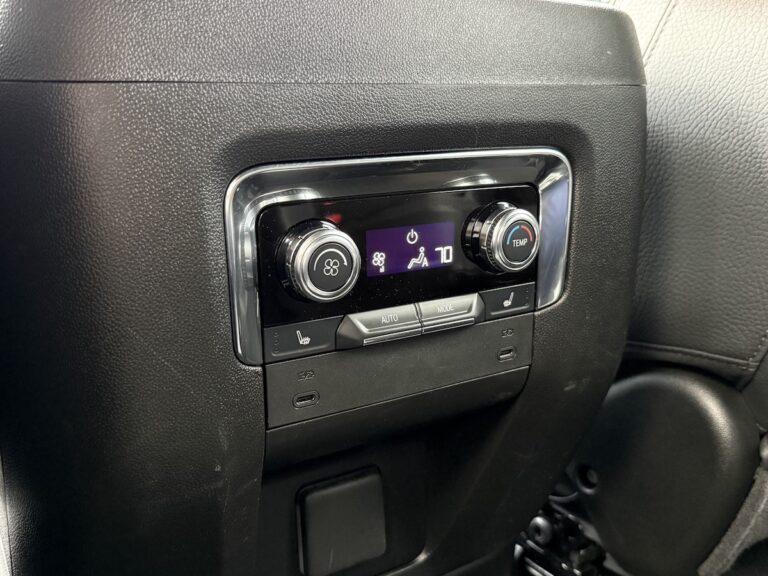
You are cruising down the highway. The front seats are perfectly chilled. But the kids in the back are complaining. It is either sweating or freezing back there. The rear climate control system in your GMC Yukon is acting up. It is frustrating. It turns a luxury ride into a battle zone.
The GMC Yukon is built for comfort. It is a massive SUV designed to haul families in style. The rear climate control is a big part of that promise. It lets back-seat passengers dial in their own temperature. But when that system fails, it throws a wrench into the whole driving experience. You might see the controls light up but nothing happens. Or maybe the air blows warm when it should be cold. Sometimes, you hear a strange clicking noise behind the dash. It is enough to drive anyone crazy.
Here is the good news. Many of these issues are fixable. You do not always need to run to the dealership and hand over a blank check. Some fixes are simple. Others require a bit of mechanical know-how. In this guide, we are going to break down exactly why your Yukon rear climate control might be failing. We will cover the common culprits. We will give you step-by-step instructions to fix them. And we will tell you when it is time to call in a professional.
Let us get your Yukon back to being the comfortable, quiet, and controlled environment it was meant to be.
Understanding Your Yukon Rear Climate System
Before we start tearing things apart, let us talk about what you are working with. The rear climate control system in your Yukon is not just a simple vent. It is a complex network of electronic controls, actuators, sensors, and ducts. Understanding how it works makes troubleshooting much easier.
In most modern Yukons, the system is part of the larger HVAC (Heating, Ventilation, and Air Conditioning) unit. The front and rear systems often share components. They pull air from the same blower motor. However, the rear system has its own set of ducts and doors that direct air to the back seats. It also has its own temperature sensors. This is why you can set the front to 70 degrees and the rear to 65 degrees. The system is designed to create separate zones.
When you press a button on the rear control panel, a signal is sent to the HVAC control module. This module is the brain of the operation. It interprets the signal and tells the actuators to move. These actuators are small electric motors. They open and close the blend doors. Those doors control the temperature and airflow. If any part of this chain breaks down, you have a problem.
The Key Components You Should Know
- HVAC Control Module: The computer that runs everything.
- Blend Door Actuators: Small motors that move the doors.
- Blend Doors: Physical flaps that direct air through the heater core or evaporator.
- Rear Blower Motor: Pushes air through the rear ducts.
- Temperature Sensors: Read the cabin temperature to maintain your setting.
- Fuses and Relays: Provide power and protect the system from surges.
When you understand this flow, you can start to see where things go wrong. A blown fuse kills power to the whole system. A bad actuator means a door does not move. A faulty sensor tells the module the wrong temperature. Let us dig into the specific symptoms and their causes.
Common Problems with GMC Yukon Rear Climate Control
Owners report a variety of issues. Some are minor annoyances. Others are complete failures. Here are the most common complaints and what they usually mean.
Temperature Control Issues: Hot Air When You Want Cold
This is the most frequent complaint. You set the rear climate to cool but hot air blasts out. Or maybe the temperature fluctuates wildly. One minute it is comfortable, the next it is sweltering. This inconsistency points to a few potential problems.
The Blown Fuse Scenario: It sounds too simple, but it happens. The HVAC system relies on specific fuses to power the blower motor and the control module. If a fuse blows, the system loses its mind. It might default to a fail-safe mode. In some cases, that fail-safe is heat. Check your fuse box first. It is a cheap and easy fix.
The Faulty Sensor: The rear climate system has sensors that read the air temperature back there. If a sensor fails, it sends a false reading to the control module. The module thinks the cabin is freezing, so it cranks up the heat. You get hot air blowing even though you asked for cold. Replacing a cabin temperature sensor is usually a straightforward job.
The Stuck Blend Door: This is a mechanical failure. The blend door is a flap inside the ductwork. It mixes hot and cold air. If the door gets stuck, it cannot move to the correct position. If it is stuck over the heater core, you get heat. Period. No amount of button-pressing will fix this. You need to access the door and free it or replace the actuator.
Electrical System Failures: The Ghost in the Machine
Sometimes the rear controls just do not respond. You press the button to turn on the rear system. Nothing happens. The lights flicker. The display goes crazy. This points to an electrical gremlin.
Common causes include:
- Damaged or frayed wiring: Wires can rub against metal brackets over time. The insulation wears away. This causes shorts and intermittent failures. This is common in the wiring harness that runs under the carpet or through the door jambs.
- Malfunctioning electrical components: The control panel itself can fail. The buttons wear out. The circuit board gets corroded. Sometimes, the HVAC control module just gives up.
- Blown fuses: We mentioned this before, but it deserves repeating. Check the fuse box religiously. Look for any fuse related to the HVAC system. If it is black or the metal strip inside is broken, replace it.
Electrical issues are tricky. They can be intermittent. The system works fine for a week, then dies again. This is often a wiring issue. A mechanic will need to use a multimeter to trace the circuit and find the break. Do not try to guess here. You will waste time and money replacing good parts.
Blend Door Malfunctions: The Clicking Nightmare
Ah, the click. You know the sound. You turn on the rear heat. You hear a rapid clicking noise coming from behind the dash or the rear quarter panel. It sounds like a plastic gear grinding. This is the blend door actuator failing.
The actuator is a small motor with plastic gears. Over time, the gears strip. The motor spins but cannot move the door. The clicking is the motor trying to engage the stripped gears. It is a death rattle.
This malfunction leads to:
- Inconsistent temperatures: The door does not move fully, so you get a mix of hot and cold that you cannot control.
- No temperature changes: The door is stuck in one position. Adjusting the temperature does nothing.
- The clicking sound: This is the most obvious sign. It is annoying and will not stop until you fix it.
Replacing the blend door actuator is the fix. It is not the most fun job in the world. The actuator is buried deep in the dashboard. But it is doable. We will cover the process later.
Airflow Problems: No Air Coming Out
Another common issue is that the controls work, but no air comes out of the rear vents. You can hear the blower motor running up front. But the back vents are silent. This is a duct or blower motor issue.
Sometimes, the rear blower motor itself fails. It is a separate motor from the front. If it burns out, you get no airflow in the back. Replacing the rear blower motor requires removing some interior panels. It is a bit of a job, but it is manageable.
Other times, the ductwork becomes disconnected. The ducts are plastic tubes that route air to the back. They can come loose from their mounting points. This often happens if the vehicle has been in an accident or if someone was rough during a repair. You might feel air leaking under the seats or behind the panels.
Diagnosing the Problem: A Step-by-Step Approach
Do not just start throwing parts at the problem. Take a systematic approach. This will save you time and money.
Step 1: Check the Basics (Fuses and Settings)
Start with the easiest stuff. Check the fuse box. Look at the diagram on the cover. Find the fuses labeled HVAC or Climate Control. Pull them out and inspect them. A good fuse has a continuous metal strip. A blown fuse has a break in the strip or looks burnt.
Also, check your settings. Is the rear climate control actually turned on? Some Yukons have a button on the front dash that toggles the rear system. Make sure the REAR button is lit. Check the temperature settings. Make sure they are not set to LO when you want heat or HI when you want AC.
Try the Sync button. This forces the rear system to match the front settings. Sometimes, this resets the rear control module and fixes glitches.
Step 2: Listen for the Click
Turn on the ignition. Do not start the engine. Just turn the key to the ON position. Adjust the rear temperature settings. Listen carefully. Do you hear a clicking noise? If you do, the actuator is likely failing. If you hear nothing at all, the problem might be electrical. The actuator is not getting power.
If you hear a faint whirring noise, that is normal. That is the actuator moving the door. If you hear a rapid clicking, that is a stripped gear.
Step 3: Check the Airflow
Turn on the rear blower. Put your hand over the rear vents. Feel for airflow. If you feel nothing, the blower motor is not spinning. This could be a motor failure or a wiring issue. If you feel a little air, but it is weak, the blower motor might be on its last legs. Or the ductwork might be clogged with debris.
Check the cabin air filter. If it is clogged, it restricts airflow. This can reduce the amount of air reaching the rear vents. It is a cheap fix and worth doing anyway.
Step 4: Scan for Trouble Codes
Modern vehicles store diagnostic trouble codes (DTCs). You need an OBD-II scanner to read them. You can buy a basic one for cheap. Or you can go to an auto parts store. They will often scan your car for free. These codes can point you in the right direction. For example, a code like B0185 might indicate a rear blend door actuator circuit fault.
Here is a quick reference table for common HVAC codes:
| Code | Component | Likely Issue |
|---|---|---|
| B0185 | Rear Blend Door Actuator | Circuit fault, motor stuck |
| B0223 | Temperature Sensor | Short or open circuit |
| B0418 | HVAC Control Module | Internal failure |
| B0285 | Rear Blower Motor | Motor circuit malfunction |
These codes give you a starting point. They do not tell you the exact fix, but they tell you where to look.
Repairing the GMC Yukon Rear Climate Control
Alright, you have diagnosed the issue. Now it is time to fix it. Here is how to handle the most common repairs.
Resetting the Climate Control System
This is the magic trick that works for glitches. It clears the memory of the control module and forces it to re-learn its positions. It sounds too easy, but it fixes a surprising number of issues.
Here is how to do it:
- Turn off your car completely. Remove the key from the ignition. Wait a few minutes. This ensures the system is fully powered down.
- Locate the fuse box. It is usually under the hood on the driver’s side. Or it might be in the trunk on the passenger side. Check your owner’s manual for the exact location in your model year.
- Find the HVAC fuse. Look at the diagram on the fuse box cover. It will show you which fuse is for the climate control system.
- Remove the fuse. Use a fuse puller or a pair of needle-nose pliers. Pull the fuse straight out.
- Wait. Leave it out for about 15 minutes. This allows all the capacitors in the control module to discharge.
- Reinsert the fuse. Push it back in firmly.
- Start your car. Turn the ignition on. Wait a few seconds. You might hear the actuators cycle through their positions. This is the system calibrating itself.
This reset often fixes issues where the controls are unresponsive or the temperature is stuck. It is the first thing you should try before spending any money.
Replacing the HVAC Fuse
If the reset does not work, check the fuse again. Maybe you missed a blown one. Or maybe the fuse blew again after you reset it. If it blew again, you have a short circuit. Do not just keep replacing the fuse. You need to find the short.
If the fuse is blown, replace it with a new one of the exact same amperage rating. Never use a higher-rated fuse. This can melt the wiring and cause a fire. The rating is printed on the fuse itself and in the owner’s manual.
After you replace it, test the system. If it works, great. If the fuse blows again immediately, you have a serious electrical issue. Stop there. Call a mechanic. Do not keep swapping fuses.
Fixing the Blend Door Actuator
This is the most common mechanical failure. It is a bit of a job, but you can do it. The actuator is usually located behind the glove box or under the dashboard on the passenger side. In some Yukons, the rear actuator is located in the rear quarter panel area.
Here is the general process:
- Disconnect the battery. Safety first. You do not want any airbags deploying while you are working.
- Remove the trim panels. You will need to remove the glove box or the trim panel below the dash. There are usually a few screws and clips holding them in place. Be careful not to break the clips.
- Locate the actuator. Look for a small black or white plastic box with an electrical connector plugged into it. It will be attached to the HVAC case.
- Remove the electrical connector. Press the tab and pull it straight out.
- Remove the mounting screws. There are usually two or three small screws holding the actuator in place.
- Pull the actuator out. It might be stuck. Gently wiggle it free.
- Install the new actuator. Make sure the splines on the actuator shaft line up with the splines on the blend door. This is crucial. If they are not aligned, the door will not move correctly.
- Reassemble everything. Put the trim panels back on. Reconnect the battery.
- Test the system. Turn on the rear climate control. Adjust the temperature. The clicking should be gone.
This is a straightforward repair. It takes about an hour for a beginner. If you are not comfortable working behind the dash, hire a mechanic. The labor cost is worth the peace of mind.
Managing Temperature Control and the Sync Feature
Sometimes the rear climate control is working fine, but you have a user error. The front and rear temperatures are set to different values. This is not a malfunction. It is a feature. But it can be confusing.
Use the SYNC button on your dashboard. This button links all the climate zones. It forces the rear temperature to match the front. Press it once. All zones should now be set to the same temperature. Adjust the front temperature, and the rear will follow.
If you want independent control, press the SYNC button again to turn it off. Then you can set the rear temperature separately. This is how you keep the driver comfortable and the kids happy.
If the rear system is blowing cold air when you have the heat on, or vice versa, check the SYNC settings first. It might be trying to do what you asked it to do.
Cleaning the Vents and Ducts
Over time, dust and debris can build up in the rear vents. This restricts airflow. It also blows dust into the faces of your passengers. It is gross.
Clean the vent slats with a soft brush or a microfiber cloth. You can use a can of compressed air to blow out the ducts. If you have a strong shop vacuum, you can try to suck out the debris.
Here is a quick tip. Turn the rear blower on high. Use a damp cloth to cover the vent. The suction will pull the cloth against the vent and help dislodge dust. It is not a perfect solution, but it helps.
When to Call a Professional
There is no shame in calling a mechanic. Some jobs are too complex for the average DIYer. If you have checked the fuses, reset the system, and you still have issues, it is time to get help. Especially if you see any of these signs:
- Burning smell: This indicates a wiring issue or a failing motor. It is a fire hazard.
- Smoke: Do not drive the car. Call a tow truck.
- Freon leaks: If you see oily residue near the AC lines, you have a refrigerant leak. This requires special tools to fix.
- Persistent electrical issues: If fuses keep blowing, you have a short circuit that needs professional diagnosis.
A qualified GMC technician has the tools and the knowledge to diagnose these issues quickly. They can access the wiring diagrams. They have the special tools to evacuate and recharge the AC system. They can save you from a costly mistake.
Preventative Maintenance: Keeping Your Rear Climate Control Healthy
An ounce of prevention is worth a pound of cure. Here are some habits that will extend the life of your rear climate control system.
Run the system regularly. Even in the winter, run the AC for a few minutes each week. This keeps the compressor seals lubricated. It also prevents moisture from building up in the system.
Change the cabin air filter. This is a cheap and easy maintenance item. A clogged filter restricts airflow. It makes the blower motor work harder. It can lead to premature motor failure. Check your owner’s manual for the recommended interval. Usually, it is every 15,000 to 30,000 miles.
Pay attention to the sounds. If you start to hear a faint clicking when you adjust the temperature, do not ignore it. It is a warning sign. Catching the actuator failure early might save you from a more expensive repair. The longer the stripped gears grind, the more damage they do.
Keep the vents clear. Do not pile luggage or gear against the rear vents. This blocks airflow and puts strain on the blower motor.
These simple habits will keep your Yukon comfortable for years to come.
Real-World Scenarios: What You Might Encounter
Let us look at a few real-world situations. These are the exact stories we hear from Yukon owners.
Scenario 1: The Family Road Trip
You are driving to the beach. The front is cool and comfortable. The kids in the back start complaining that it is too hot. You try to turn down the rear temperature. The display on the rear control panel is unresponsive. The buttons do nothing. You are stuck with hot air.
The Fix: Pull over. Turn off the car. Do the fuse reset we talked about earlier. More often than not, this is a software glitch. The reset will restore the control panel. If it does not, you are looking at a control panel failure.
Scenario 2: The Clicking Noise
You are driving to work. You turn on the rear heat to defrost the back windows. You hear a rapid clicking noise coming from behind the dashboard. It sounds like a mouse trapped in the vents. The noise stops when you turn the rear system off.
The Fix: This is the blend door actuator. It is dying. You can drive with it for a while, but it will eventually fail completely. You will need to replace the actuator. It is a $50 part, but the labor is the real cost if you hire a mechanic.
Scenario 3: No Air at All
You turn on the rear blower. The controls light up. You can adjust the temperature. But no air comes out of the rear vents. You can hear the front blower running, but the back is silent.
The Fix: The rear blower motor is likely dead. It is a separate motor from the front. It has burned out. You will need to replace it. This requires removing some interior trim in the rear of the vehicle. It is a job best left to a mechanic if you are not comfortable with interior disassembly.
Parts and Costs: What to Expect
Knowing the cost helps you budget. Here is a rough estimate of what you will pay for common repairs. These are estimates. Prices vary depending on your location and the specific model year.
| Repair | Part Cost (Est.) | Labor Cost (Est.) | Total (Est.) |
|---|---|---|---|
| HVAC Fuse Replacement | $5 – $15 | $0 (DIY) | $15 or less |
| System Reset | $0 | $0 (DIY) | $0 |
| Rear Blend Door Actuator | $50 – $150 | $150 – $300 | $200 – $450 |
| Rear Blower Motor | $80 – $200 | $200 – $400 | $280 – $600 |
| Temperature Sensor | $30 – $80 | $100 – $200 | $130 – $280 |
| HVAC Control Module | $200 – $400 | $150 – $300 | $350 – $700 |
As you can see, the cost varies wildly. A simple fuse fix is almost free. A control module replacement can be expensive. This is why diagnosis is so important. Do not replace the module if the fuse was the problem.
The Bottom Line
Your GMC Yukon is a beast on the road. It is a luxury vehicle that should provide a first-class experience for everyone inside. The rear climate control is a big part of that experience. When it fails, it is annoying. But it is rarely the end of the world.
Start with the simple stuff. Check the fuses. Do the reset. Listen for the clicks. Most of the time, you will find the culprit quickly. If you are not confident in your mechanical skills, do not be afraid to call a professional. A qualified GMC technician has seen every issue imaginable. They will fix it right the first time.
Do not let a broken rear climate control ruin your driving experience. Take action. Diagnose the issue. Fix it. Your passengers will thank you. And you will be able to enjoy the quiet, comfortable ride that you bought the Yukon for in the first place.
So, what is your next step? Are you going to pop the hood and check that fuse? Or are you going to schedule an appointment with your mechanic? Either way, you are on the right track to a cooler, more comfortable ride.