
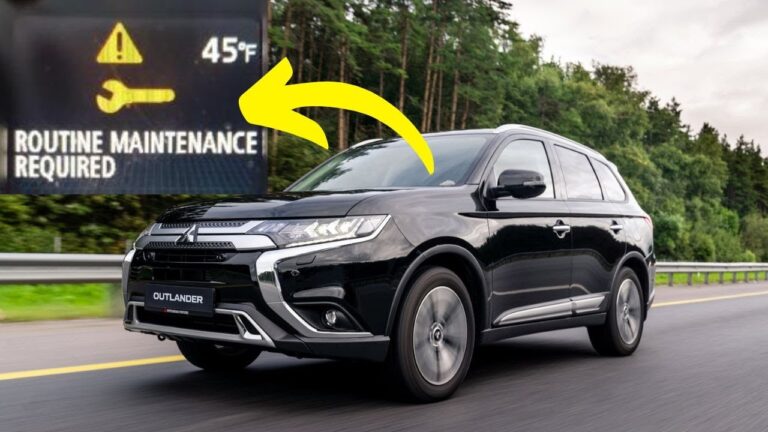
That little wrench icon popping up on your Mitsubishi’s dashboard with the words “Routine Maintenance Required” is not something your car is doing to annoy you. It is your vehicle’s way of tapping you on the shoulder and saying, “Hey, I need some attention.” And if you have been driving around ignoring it, you are not alone. But here is the thing: the longer you put it off, the more you are setting yourself up for bigger, more expensive problems down the road.
This message shows up based on a combination of factors: the specific model you drive, how many miles you have racked up since the last service, how much time has passed, and what Mitsubishi itself recommends for your vehicle. It is not random. The system is tracking all of that in the background, and when something crosses a threshold, it lets you know.
In this guide, we are going to break down exactly what this warning means, what causes it to appear, and what you actually need to do to fix it. No fluff. Just straight, practical information you can use.
What Does “Mitsubishi Routine Maintenance Required” Actually Mean?
Think of your Mitsubishi as a living machine. Just like your body needs regular checkups to stay healthy, your vehicle needs scheduled servicing to perform at its best. The “Routine Maintenance Required” message is simply a programmed reminder built into your car’s system to keep you on track with that schedule.
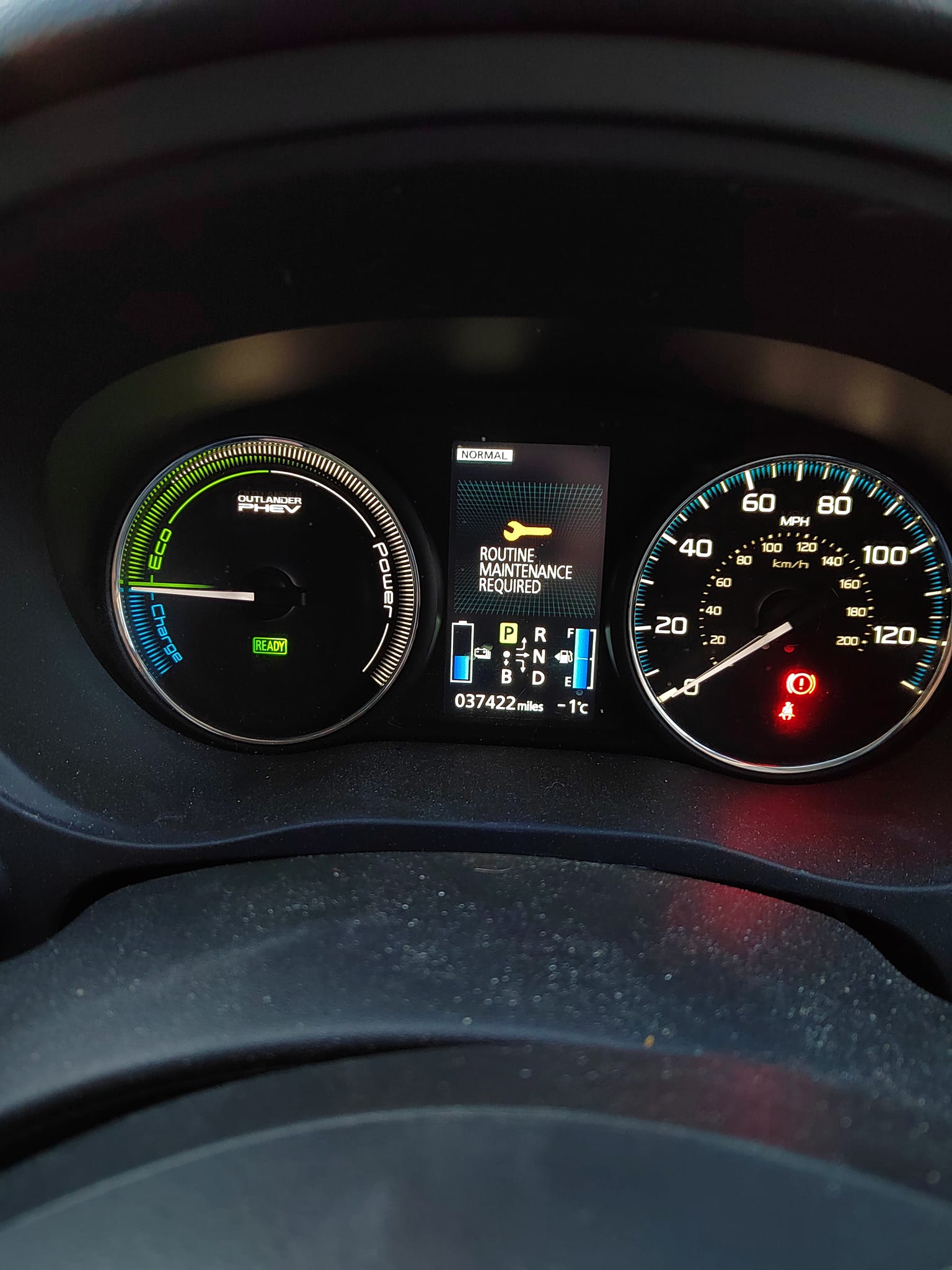
You will usually see it displayed on the instrument cluster, often represented by a small wrench icon sitting above the text. It is not an emergency warning like a check engine light. It will not cause your car to shut down or go into limp mode. But ignoring it is like ignoring a doctor’s appointment because you feel fine. The problems tend to show up later, and by then, they are usually worse and more expensive.
Mitsubishi builds a recommended maintenance schedule into every owner’s manual. That schedule is divided into intervals that match the natural wear and lifespan of the various components in your vehicle. Here is a rough breakdown of what those intervals typically look like:
| Maintenance Interval | Tasks to Perform |
|---|---|
| Every 3 months or 3,750 miles | Engine oil change, oil filter replacement, cabin air filter inspection |
| Every 6 months or 7,500 miles | Oil filter replacement, cabin air filter replacement, suspension system check, disc brake pad and rotor inspection |
| Every 12 months or 15,000 miles | Spark plug replacement, air filter replacement, oil filter replacement |
These are general guidelines. Your specific model may have slightly different requirements, so always cross-reference with your owner’s manual. But the point is clear: your Mitsubishi has a detailed care plan, and the system is keeping score.
When you miss one of these intervals, whether by time or mileage, the reminder fires up. And in some cases, even if you had the work done but forgot to reset the system, the warning will keep showing. We will cover all of that below.
Why Skipping Routine Maintenance Will Cost You More Than You Think

Before we get into the causes and fixes, let us talk about why this matters beyond just clearing a dashboard warning. A lot of drivers treat routine maintenance like a suggestion rather than a requirement. Bad idea.
Here is a real-world example. Say you skip your oil change for an extra 5,000 miles beyond the recommended interval. The oil gets thick, dirty, and loses its ability to lubricate properly. Now your engine components are grinding against each other with insufficient protection. Over time, that leads to sludge buildup, overheating, and eventually engine damage. What started as a $50 to $80 oil change can turn into a $3,000 to $5,000 engine repair. That is not an exaggeration.
Skipping maintenance can also affect your vehicle’s warranty. If Mitsubishi or a dealership can show that you did not follow the recommended maintenance schedule, they can legally deny warranty claims for related damage. That is a painful lesson to learn when you are staring at a repair bill.
And in worst-case scenarios, neglected maintenance can become a safety issue. Worn brake pads, failing suspension components, or degraded tires can put you and everyone around you at risk on the road.
What Triggers the Mitsubishi Routine Maintenance Required Warning?
The warning does not just pop up randomly. There are specific triggers behind it, and understanding them helps you know exactly what to address. Let us walk through each one.
Your Engine Oil Is Overdue for a Change
Engine oil is the lifeblood of your motor. It lubricates moving parts, helps regulate temperature, and carries contaminants away from sensitive engine components. Over time, it breaks down. It gets dirty, thick, and loses its viscosity.
When you skip routine maintenance, your oil goes from doing its job well to barely doing it at all. You end up with low oil pressure, oil leaks, sludge buildup inside the engine, and in serious cases, metal-on-metal contact that wears down your engine faster than it should.
The maintenance system in your Mitsubishi tracks how long or how far you have driven since the last oil change. When it crosses the programmed threshold, it triggers the reminder. Simple as that.
For conventional oil, you are typically looking at a change every 3,000 to 5,000 miles. For synthetic oil, that stretches to around 7,500 to 10,000 miles. Check your specific model’s recommendation to be sure.
You Have Passed the Time-Based Maintenance Window
Mileage is not the only thing the system watches. Time matters too. Even if you are a low-mileage driver who barely leaves the neighborhood, your car still needs servicing at regular time intervals.
Why? Because oil degrades over time even when a vehicle sits. Seals dry out. Coolant loses its effectiveness. Brake fluid absorbs moisture from the air. None of that is mileage-dependent. It happens with time, regardless of how much or how little you drive.
Mitsubishi recommends servicing at the 3-month, 6-month, 9-month, and 12-month marks as a general guide. If the car hits any of those time-based thresholds before you reach the mileage milestone, the reminder will still activate. Time and mileage work together in the system. Whichever comes first wins.
Your Mileage Has Crossed a Key Service Threshold
This is the more common trigger for most drivers. Certain components have a predictable lifespan measured in miles. The maintenance system keeps a running count and flags you when you are due.
Here is a quick breakdown of common mileage-based service points:
- Engine oil: Every 3,000 to 5,000 miles (conventional) or 7,500 to 10,000 miles (synthetic)
- Tire rotation: Every 5,000 to 7,500 miles
- Suspension system inspection: Every 7,500 miles
- Spark plug replacement: Every 15,000 miles (or longer depending on plug type)
- Air filter replacement: Every 15,000 to 30,000 miles depending on driving conditions
If you drive a lot, you will likely hit these mileage markers before the time intervals. Either way, the system catches it and reminds you. That is exactly what it is designed to do.
Your Vehicle’s Sensors Are Picking Up a Problem
Modern Mitsubishi vehicles are equipped with various sensors that monitor real-time conditions throughout the vehicle. These sensors do not just watch the odometer. They pay attention to actual operating data like fluid levels, engine load, temperature, component wear, and more.
So even if you are not quite at your scheduled mileage or time interval, if a sensor detects that something is degrading faster than expected, it can trigger the maintenance reminder early. This is actually a smarter system than a simple countdown timer because it adjusts to how you actually drive rather than just assuming everyone drives under ideal conditions.
For example, if you do a lot of stop-and-go city driving or frequently tow heavy loads, your engine oil degrades faster than it would during smooth highway cruising. The sensor-based system accounts for that and may prompt you sooner than the standard interval would suggest.
The Maintenance Reminder Was Never Reset After the Last Service
Here is one that catches a lot of people off guard. You took the car in, had everything serviced properly, and the reminder is still showing up. What gives?
The answer is simple: the system does not reset itself automatically after maintenance. Someone has to manually clear it. If the technician forgot to reset the reminder, or if you had the work done at a shop that was not familiar with Mitsubishi’s specific reset process, the warning will keep displaying even though your car is perfectly fine.
This is one of the most frustrating causes because there is nothing actually wrong with the vehicle. The computer just does not know the service was done. The fix is equally simple: reset the reminder manually. We will walk through exactly how to do that below.
How to Fix the Mitsubishi Routine Maintenance Required Warning
Now that you understand what is causing the warning, let us talk about what to actually do about it. There are a few different approaches depending on your specific situation.
Step 1: Reset the Maintenance Reminder First

If you recently had your Mitsubishi serviced and the light is still on, the first thing to try is resetting the reminder manually. This is a quick process and takes less than a minute. Here is how to do it:
- Turn the car off completely.
- Locate the “Info” button on your instrument panel or steering wheel controls.
- Use the “Info” button to navigate to the miles and month listing on the display.
- Hold down the “Info” button until the display begins to flash.
- Press the “Info” button once more to confirm the reset.
- The routine maintenance required light should now be cleared.
Keep in mind that the exact steps can vary slightly depending on your Mitsubishi model and year. Always check your owner’s manual for the specific reset procedure for your vehicle. Some newer models may have a slightly different menu navigation process.
One important thing to understand here: resetting the reminder does not fix any underlying maintenance issues. If your car actually needs service, resetting the light without doing the work just buys you time on the warning display. The actual problem is still there. So use this step to clear the message after service, not as a way to avoid the service itself.
Step 2: Get the Actual Maintenance Done
This is the real fix. No shortcut, no trick. You need to perform the maintenance tasks that are due based on your vehicle’s schedule. Here is a comprehensive look at the most common items that fall under Mitsubishi’s routine maintenance umbrella:
Engine Oil and Oil Filter Change
This is the one most people know about and arguably the most important. Fresh oil keeps your engine running smoothly, reduces heat, and prevents sludge from building up inside the motor. The oil filter traps contaminants and keeps them out of the oil circulating through your engine.
When you go in for an oil change, always replace the filter at the same time. Putting fresh oil through an old, clogged filter is a waste of good oil. Use the oil grade specified in your owner’s manual, whether that is conventional, synthetic blend, or full synthetic.
Tire Rotation
Your front and rear tires wear at different rates, depending on whether you have a front-wheel-drive, rear-wheel-drive, or all-wheel-drive Mitsubishi. Rotating the tires moves them to different positions on the vehicle, which evens out the wear pattern and extends their overall lifespan.
Skip tire rotations long enough and you will end up replacing a full set of tires far sooner than you should. A rotation costs very little compared to a new set of tires. It is one of the easiest ways to save money on maintenance in the long run.
Brake Pad and Rotor Inspection
Brakes are not something to gamble with. Worn brake pads increase your stopping distance and, if left too long, the metal backing plate starts grinding against the rotor. That ruins the rotor and turns a simple pad replacement into a much more expensive job.
During routine maintenance, a technician will measure the remaining thickness of your brake pads and inspect the rotors for scoring, warping, or thickness below the minimum spec. If you hear squealing or grinding when you brake, do not wait for the next scheduled service. Get it looked at immediately.
Cabin Air Filter Replacement
The cabin air filter keeps dust, pollen, and other airborne particles out of the air you breathe inside the car. A clogged cabin filter restricts airflow through your HVAC system, which means your air conditioning and heating have to work harder. It also means you are breathing dirtier air inside the vehicle.
This is a fairly cheap and straightforward replacement. On most Mitsubishi models, the cabin air filter is located behind the glove box and can be swapped out in about 10 minutes. No special tools required.
Engine Air Filter Replacement
Do not confuse the cabin filter with the engine air filter. These are two different components. The engine air filter protects your motor from dirt and debris that gets pulled in through the intake system. A dirty engine air filter restricts airflow to the engine, which can hurt fuel efficiency and power output.
In a dusty driving environment, you may need to replace it more frequently than the standard recommendation. If you drive on dirt roads regularly or live in a particularly dry, dusty area, inspect it every few oil changes.
Spark Plug Inspection and Replacement
Spark plugs ignite the air-fuel mixture in your engine’s cylinders. When they wear out, you get misfires, rough idling, poor fuel economy, and sluggish acceleration. Most standard spark plugs need replacement around every 15,000 miles. Iridium or platinum plugs can last significantly longer, sometimes up to 60,000 to 100,000 miles, but they still need to be checked.
If your Mitsubishi has been feeling a little rough off the line or you have noticed your fuel economy dropping, worn spark plugs might be part of the story.
Fluid Level Checks and Top-Offs
Your Mitsubishi relies on a whole network of fluids to operate safely and efficiently. During routine maintenance, all of the following should be checked and topped up or replaced as needed:
- Coolant (antifreeze): Prevents your engine from overheating in summer and freezing in winter. Needs flushing and replacement periodically.
- Brake fluid: Hydraulic fluid that transfers force when you press the brake pedal. Absorbs moisture over time, which lowers its boiling point and reduces braking effectiveness.
- Power steering fluid: Keeps your steering smooth and responsive. Low levels can cause stiff steering or whining from the steering pump.
- Transmission fluid: Keeps the gears shifting smoothly. Degraded transmission fluid can cause rough shifting, slipping, and eventually transmission failure.
- Windshield washer fluid: Not a mechanical necessity, but essential for visibility and safety.
Suspension System Inspection
Your suspension system is what keeps your tires in contact with the road. Worn shocks, struts, ball joints, or tie rod ends can affect your vehicle’s handling, increase stopping distances, and cause uneven tire wear. At 7,500-mile intervals, a technician should be looking at the condition of these components.
If your Mitsubishi feels like it bounces excessively over bumps, pulls to one side, or the steering feels loose, the suspension system is likely involved.
Rear Drum Brake Lining Inspection
Some Mitsubishi models use drum brakes on the rear axle. The brake linings inside the drum wear down over time just like disc brake pads do. They need periodic inspection to make sure they have enough material left to provide adequate braking force. This is often overlooked because drum brakes are out of sight, but they absolutely need to be checked.
Step 3: Check for Wiring and Sensor Issues
In some cases, the maintenance required warning can be triggered or persist because of a wiring issue rather than an actual service need. Loose connections, corroded terminals, or damaged wiring harnesses can send incorrect signals to your vehicle’s onboard computer.
This is more common in older Mitsubishi vehicles or in cars that have had previous electrical work done. A visual inspection of the wiring harness and connectors around the relevant sensors is a good starting point. If you find corroded or damaged wiring, it needs to be repaired or replaced before you can trust the accuracy of any dashboard warnings.
If you are not comfortable digging into wiring yourself, this is a job for a professional. Do not guess with electrical systems.
Step 4: Visit a Mitsubishi Service Center if the Problem Persists
If you have done the maintenance, reset the reminder, checked the wiring, and the warning is still showing up or coming back too soon, it is time to bring in the professionals. A Mitsubishi-authorized service center has the diagnostic tools and trained technicians to dig deeper into what is going on.
They can pull diagnostic trouble codes from the vehicle’s computer, check sensor data, and identify any underlying issues that are not obvious from a visual inspection. They will also make sure the maintenance reminder is calibrated correctly and reset properly for the next service interval.
Going to an authorized dealership also protects your warranty. If you are having warranty-covered work done, it needs to be performed and documented by a certified Mitsubishi technician.
How to Build a Maintenance Schedule That Actually Works
One of the biggest reasons people fall behind on maintenance is that they do not have a system in place. Life gets busy. You drive past the mileage marker without thinking about it. A few months go by. Suddenly you are way overdue and wondering why the wrench light is on.
Here are some practical ways to stay on top of it:
Use Your Phone Calendar
This sounds almost too simple, but it works. After every service appointment, open your calendar and set a reminder for the next one. If your Mitsubishi is on a 6-month service interval, set the reminder right then and there before you leave the dealership. You will thank yourself later.
Keep a Physical Maintenance Log
A small notebook in your glove box where you record every service visit, the mileage at the time, and what was done is old school but incredibly effective. It also adds value to your vehicle when you go to sell it. Buyers love seeing a documented service history. It shows you took care of the car.
Take Advantage of Dealer Reminders
Most Mitsubishi dealerships will send you a service reminder via text, email, or even a postcard when your vehicle is approaching its next service interval. Opt into those notifications when you buy the car or register it with the dealership. It is one less thing you have to remember yourself.
Download the MyMitsubishi App
Mitsubishi has a companion app that can help you track service history, set maintenance reminders, and connect with your local dealership. It is worth downloading and setting up if you want a more digital approach to staying on schedule.
What Happens to Specific Components When Maintenance Gets Skipped
Let us get specific. Here is what actually happens inside your Mitsubishi when you let routine maintenance slide for too long. This is not meant to scare you. It is just the reality of how mechanical systems respond to neglect.
Engine Damage from Old Oil
Old engine oil breaks down into a thick, gummy substance called sludge. Sludge clogs oil passages and prevents oil from reaching critical engine components like the camshaft, crankshaft bearings, and cylinder walls. When metal rubs against metal without proper lubrication, it generates intense heat and friction. Over time, this leads to scoring, pitting, and irreversible engine wear.
In the worst cases, a severely sludged engine can seize completely. An engine replacement on a Mitsubishi Outlander or Eclipse Cross can run anywhere from $4,000 to $8,000 or more depending on the model and where you have it done. All of that from skipping a few oil changes.
Brake Failure from Neglected Pads and Fluid
When brake pads wear down completely, the metal backing plate contacts the rotor directly. You will hear a loud grinding noise and feel pulsating through the brake pedal. Beyond just damaging the rotor, this also significantly reduces your stopping power, which is a genuine safety hazard.
Neglected brake fluid is a separate concern. Over time, brake fluid absorbs moisture from the atmosphere. Water in the brake fluid lowers its boiling point significantly. Under hard braking, the fluid can boil and vaporize, creating gas bubbles in the brake lines. Gas compresses, fluid does not. The result is a spongy brake pedal that feels like you are pressing on air. That is brake fade, and it can happen at the worst possible moment.
Overheating from Neglected Coolant
Coolant does not last forever. It loses its ability to protect against corrosion and regulate temperature as it ages. Old, degraded coolant can cause scale buildup inside the cooling system, which insulates the passages and reduces heat transfer efficiency. Your engine runs hotter than it should, and eventually, you are looking at overheating, a blown head gasket, or worse.
A coolant flush is inexpensive compared to the cost of repairing an overheated engine.
Transmission Problems from Old Fluid
Transmission fluid lubricates the gears and clutch packs inside your transmission and also serves as a hydraulic fluid for automatic transmission operation. Over time, it breaks down and becomes contaminated with metal particles from normal wear.
Running an automatic transmission on old, degraded fluid leads to rough or delayed shifting, slipping between gears, and increased heat inside the transmission. Left long enough, it can cause complete transmission failure. A transmission rebuild or replacement is one of the most expensive repairs you can face on any vehicle, often ranging from $2,500 to $5,000 or more.
Poor Fuel Economy from Dirty Filters and Old Spark Plugs
A clogged air filter restricts the airflow to the engine. When the engine cannot breathe properly, it has to work harder to produce the same power output. That means it burns more fuel to do the same job. The same principle applies to worn spark plugs. When they cannot fire efficiently, combustion is incomplete and you burn more fuel for less power.
Over time, the cumulative effect on your fuel bills is real. You might not notice it week to week, but if you track your fuel economy over a few months of neglected maintenance versus a few months after a proper service, the difference is often noticeable.
Mitsubishi Routine Maintenance Schedule: A Closer Look by Model
Different Mitsubishi models have slightly different maintenance requirements. Here is a broader breakdown to give you a better sense of what to expect depending on what you drive.
Mitsubishi Outlander and Outlander Sport
The Outlander is one of Mitsubishi’s most popular vehicles, and it has a fairly straightforward maintenance schedule. Oil changes every 5,000 miles or 6 months with conventional oil, or up to 10,000 miles with full synthetic. Tire rotations every 7,500 miles. Coolant replacement at 10 years or 120,000 miles for newer models using the long-life coolant, but check yours specifically.
The Outlander Sport shares a similar schedule but may have slightly different fluid specifications. Always verify with the owner’s manual.
Mitsubishi Eclipse Cross
The Eclipse Cross uses a turbocharged engine, which places more thermal stress on the engine oil. Mitsubishi recommends using synthetic oil and staying on top of oil changes here more diligently than you might with a naturally aspirated engine. Turbocharger components are oil-cooled, so clean, fresh oil is particularly important for keeping the turbo healthy and extending its life.
Mitsubishi Mirage and Mirage G4
The Mirage is Mitsubishi’s entry-level compact, and it has a relatively simple three-cylinder engine that does not demand as much from its fluids as larger engines do. Even so, regular oil changes, air filter replacements, and spark plug inspections are still necessary. The Mirage may seem low-maintenance by nature of its size, but cutting corners here still leads to the same problems over time.
Mitsubishi Galant and Older Models
For older Mitsubishi models, the maintenance schedule may be more demanding, particularly if the vehicle has high mileage. Older engines may need conventional oil rather than synthetic, more frequent coolant flushes, and closer attention to suspension components like bushings and ball joints that have had years of use. If you drive a higher-mileage Mitsubishi, consider having a comprehensive inspection done every 6 months rather than just following the standard mileage-based triggers.
DIY vs. Dealership: When to Do It Yourself and When to Get Help
Some routine maintenance tasks are perfectly manageable at home if you are comfortable with basic mechanical work. Others are better left to a professional. Here is a practical breakdown:
| Task | DIY Friendly? | Notes |
|---|---|---|
| Engine oil and filter change | Yes | Straightforward for most people with basic tools |
| Cabin air filter replacement | Yes | Usually behind the glove box, no tools needed |
| Engine air filter replacement | Yes | Located in the air box under the hood |
| Windshield washer fluid top-off | Yes | Takes about 30 seconds |
| Tire rotation | Possible | Requires a floor jack and stands; safe technique is important |
| Brake pad inspection | Possible | Visual check is doable; replacement requires more confidence |
| Spark plug replacement | Possible | Depends on engine access; some are tight fits |
| Coolant flush | Not recommended for beginners | Requires proper disposal of old coolant |
| Transmission fluid change | Not recommended for beginners | Complexity varies; risk of damage if done incorrectly |
| Suspension inspection and repair | No | Requires professional tools and expertise |
| Brake fluid flush | No | Must be done correctly to avoid air in the lines |
If you are a confident DIYer who enjoys working on your own vehicle, tackling the simpler items on this list can save you money and keep you more connected to your car’s condition. But for anything involving your brake system, cooling system, or suspension, having a professional do the work is the smarter and safer choice.
Common Questions About the Mitsubishi Routine Maintenance Required Warning
Can I Keep Driving With the Maintenance Required Light On?
Technically, yes. The warning does not prevent you from driving. But driving with it on means you are overdue for service, which puts unnecessary wear on your vehicle. The longer you ignore it, the more risk you take. Treat it as an urgent reminder rather than something to dismiss.
Is the Maintenance Required Light the Same as the Check Engine Light?
No. These are two completely different warnings. The check engine light (often shaped like an engine outline) signals a problem detected by the vehicle’s OBD-II system, which could be anything from a loose gas cap to a failing catalytic converter. The maintenance required warning is simply a scheduled service reminder. Do not confuse the two.
How Long Can I Go Past the Recommended Service Interval?
Ideally, not at all. In practice, going a couple hundred miles over a mileage-based interval is not going to cause catastrophic damage. But making it a habit to push well past the recommended interval is where problems start. If you use full synthetic oil, you have a bit more buffer than with conventional oil. But even then, do not stretch it past what Mitsubishi recommends for your specific vehicle.
Does Resetting the Light Fix the Problem?
No. Resetting the light only clears the reminder display. If the vehicle genuinely needs service, resetting without performing the maintenance just delays the warning from showing up again. It does not address any actual wear or fluid degradation that has already occurred. Always do the service first, then reset the reminder.
Will the Warning Affect My Warranty?
Yes, it can. If you can show that you ignored required maintenance and a component failed as a result, the manufacturer or dealership may deny a warranty claim for that repair. Mitsubishi’s warranty, like most manufacturer warranties, requires owners to follow the recommended maintenance schedule. Keeping records of your service history is your best protection here.
Understanding Mitsubishi’s Warranty and How Maintenance Affects It
Mitsubishi offers one of the most competitive new vehicle warranties in the industry: a 5-year/60,000-mile bumper-to-bumper warranty and a 10-year/100,000-mile powertrain warranty. Those are impressive numbers. But they come with conditions.
One of those conditions is that you maintain the vehicle according to the manufacturer’s recommended schedule. If a powertrain component fails and Mitsubishi determines that the failure was caused or worsened by a lack of maintenance, they can void the warranty coverage for that specific repair. You would be stuck with the bill.
This is why keeping service records matters so much. Every time you have work done at a dealership, they log it in their system. If you do your own oil changes or use an independent shop, keep your own receipts and records. A simple folder in your glove box with dated service receipts can save you thousands of dollars in a warranty dispute.
The Real Cost of Routine Maintenance vs. the Cost of Ignoring It
Let us put some real numbers on this so the picture is completely clear.
| Maintenance Task | Approximate Cost if Done on Schedule | Approximate Cost of Repair if Neglected |
|---|---|---|
| Oil change (synthetic) | $60 to $100 | Engine rebuild or replacement: $3,000 to $8,000+ |
| Brake pad replacement | $150 to $300 per axle | Rotor replacement + pads: $400 to $700 per axle |
| Coolant flush | $100 to $150 | Head gasket repair: $1,500 to $3,000+ |
| Transmission fluid change | $100 to $200 | Transmission rebuild or replacement: $2,500 to $5,000+ |
| Tire rotation | $20 to $50 | Full set of new tires: $500 to $1,200+ |
| Spark plug replacement | $100 to $250 | Ignition system damage, misfires, catalytic converter damage: $500 to $2,000+ |
The math is not complicated. Spending a few hundred dollars a year on routine maintenance can protect you from spending several thousand dollars on repairs that would have been preventable. No one enjoys writing a check for a service appointment, but it beats writing a much bigger one for an engine replacement.
Finding the Right Service Provider for Your Mitsubishi
You have a few options when it comes to where you get your Mitsubishi serviced, and the right choice depends on your situation.
Mitsubishi Authorized Dealerships
This is always the safest bet, especially if your vehicle is still under warranty. Dealership technicians are trained specifically on Mitsubishi vehicles, they have access to the latest technical service bulletins, and they use OEM (original equipment manufacturer) parts. The maintenance is logged in Mitsubishi’s system, which protects your warranty coverage.
The downside is cost. Dealerships typically charge more per hour for labor than independent shops. But for warranty-covered work or complex repairs, the expertise and documentation are worth it.
Independent Auto Repair Shops
A reputable independent shop can absolutely handle routine Mitsubishi maintenance. Oil changes, tire rotations, brake service, and fluid flushes are standard work that any competent mechanic can perform correctly. The key word is reputable. Look for shops with ASE-certified technicians and strong reviews from local customers.
If you go this route, make sure to keep your receipts and ensure the shop is using the correct oil grade and fluid specifications for your Mitsubishi. Using the wrong oil viscosity or wrong transmission fluid can cause damage and potentially affect your warranty coverage.
Quick Lube Chains
Places like Jiffy Lube or Valvoline Instant Oil Change are convenient and fast for basic oil changes. They are generally fine for straightforward services, but make sure to tell them exactly what oil type and viscosity your Mitsubishi requires. Some quick lube chains have had issues with using incorrect products or not tightening drain plugs properly. Verify the work before you leave the lot.
Final Thought
That maintenance required warning on your dashboard is not your enemy. It is one of the few times your car talks directly to you, and what it is saying is worth listening to. Your Mitsubishi is a significant investment. Treating routine maintenance as optional is the same as choosing to chip away at that investment one skipped service at a time. Do the work on schedule, reset the reminder, keep your records, and your Mitsubishi will give you a lot of reliable miles in return. If that little wrench icon is glowing on your dash right now, what is your plan for taking care of it this week?