
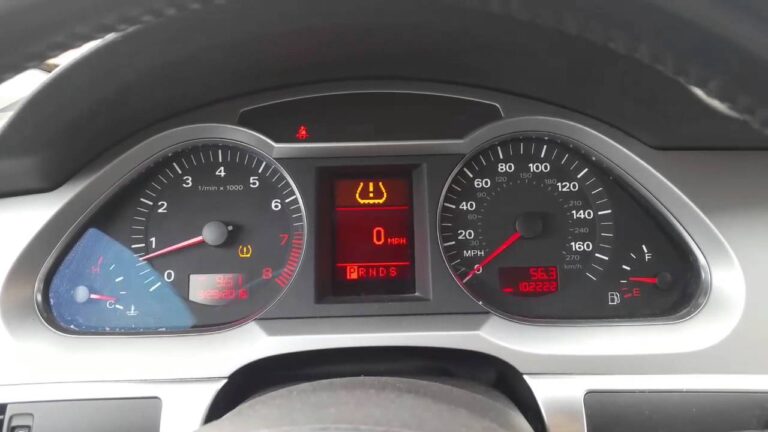
If you drive an Audi and you have ever seen that little yellow warning light pop up on your dashboard, you know the mild panic that follows. Is it a flat? A faulty sensor? Something more serious? The truth is, your Audi’s tire pressure system malfunction can mean a few different things, and not all of them require an expensive trip to the dealership.
This guide breaks down exactly what is going on with your Audi’s Tire Pressure Monitoring System (TPMS), why it malfunctions, how to diagnose the problem yourself, and what you can do to keep it working properly. No technical jargon, no fluff. Just straight, honest information you can actually use.
What Your Audi’s Tire Pressure System Actually Does
The TPMS: Your Silent Co-Pilot for Tire Safety
Your Audi’s Tire Pressure Monitoring System is not just some fancy add-on. It is a real-time safety net that watches the air pressure inside all four of your tires while you drive. The moment pressure in any tire drops below a safe threshold, the system sends a signal to your dashboard and alerts you before things get dangerous.
Think of it like this: you are cruising down the highway at 70 mph and one of your rear tires has slowly been losing air for the last 20 miles. You would not feel it right away. But your TPMS would. That early warning is the difference between a simple pit stop and a full-blown blowout at highway speed.
In Audi vehicles, the TPMS typically uses what are called direct sensors, which are small battery-powered devices mounted inside each wheel. They measure actual air pressure in real time and transmit that data wirelessly to your car’s onboard computer. Some older or entry-level systems use an indirect method, which calculates tire pressure by monitoring wheel rotation speeds through the ABS sensors rather than measuring air directly.
Both systems work well under normal conditions. But both can also fail. And when they do, that yellow warning light shows up.
What the Warning Light Actually Means
Here is where a lot of drivers get confused. There are actually two different warnings your Audi can show you, and they mean different things:
- Low tire pressure warning: This looks like a flat tire with an exclamation mark inside. It means one or more of your tires is actually low on air. Simple fix, usually.
- TPMS malfunction warning: This is a different beast. It usually appears as the same symbol but with the word “malfunction” on the MMI display, or the light blinks before staying on solid. This means the system itself has a problem, not necessarily that your tires are flat.
Mixing these two up is a common mistake. A malfunction warning does not always mean your tires are in bad shape. It means the system that monitors your tires is not working correctly. That is an important distinction because it changes how you respond.
Why Proper Tire Pressure Matters More Than You Think
Before getting into the causes of TPMS failure, it is worth spending a moment on why tire pressure even matters. Because a lot of drivers treat it as an afterthought, something to deal with when the light comes on rather than something to stay on top of proactively.
Here is the reality:
- Safety: Underinflated tires flex more than they should, which builds up heat. Heat is the enemy of tires. It accelerates rubber degradation and dramatically increases the chance of a blowout. Overinflated tires, on the other hand, have less contact with the road, which reduces grip and makes your car harder to control in emergency maneuvers.
- Fuel efficiency: Every pound per square inch (PSI) you drop below the recommended pressure increases rolling resistance. Your engine has to work harder to push the car forward. Over time, that adds up to real money at the gas pump.
- Tire lifespan: Running on the wrong pressure causes uneven wear. An underinflated tire wears faster on the outer edges. An overinflated tire wears down the center strip. Either way, you are burning through tires much faster than you should be.
- Handling and comfort: Tire pressure affects how your Audi feels on the road. The steering response, ride comfort, and cornering stability are all tied to having the right amount of air in your tires.
Most Audi models recommend tire pressures somewhere between 32 and 38 PSI, but this varies by model, trim, and tire size. The exact specification for your car is on a sticker inside the driver’s side door jamb. That is your reference point, not the number printed on the tire sidewall (that is the maximum pressure the tire can handle, not the recommended operating pressure).
The Real Reasons Your Audi TPMS Is Malfunctioning
So the light is on. Now what? Let us walk through the most common causes of an Audi tire pressure system malfunction, from the most likely to the less obvious.
1. A Faulty or Damaged Tire Pressure Sensor
This is the number one culprit. Each wheel on your Audi has a small sensor mounted to the inside of the rim, typically attached to the valve stem. These sensors are exposed to heat, cold, road vibration, and physical impact every single time you drive. Over time, they can fail.
Sensor failure can be gradual or sudden. Sometimes the sensor starts sending incorrect readings before it dies completely, which can cause the system to behave erratically, triggering warnings even when your tire pressure is perfectly fine. Other times, the sensor just stops transmitting altogether, and the system flags a malfunction because it is not receiving data from that wheel.
Physical damage is also surprisingly common. If you hit a pothole hard enough or scrape a curb, the sensor can crack or break. And if you recently had new tires installed, there is a chance the shop accidentally damaged one of your sensors during the mounting process. It happens more often than shops like to admit.
A faulty sensor generally needs to be replaced. You cannot repair them. A new OEM Audi TPMS sensor typically costs between $50 and $150 per sensor, plus labor. Aftermarket options are available for less, but make sure they are compatible with your specific Audi model and year before buying.
2. Dead Sensor Batteries
Here is something most drivers do not realize: the TPMS sensors in your wheels run on batteries. Small lithium batteries, built directly into the sensor housing. And unlike the battery in your key fob, you cannot just pop these out and swap them for new ones. The battery is sealed inside the sensor.
The typical lifespan of a TPMS sensor battery is around 5 to 10 years, depending on usage and driving conditions. Cold climates tend to drain batteries faster. If your Audi is getting up there in age and you have never had the sensors replaced, dead batteries are a very real possibility.
When a battery dies, the sensor stops transmitting. The system loses contact with that wheel and throws a malfunction warning. The fix is to replace the entire sensor, since the battery cannot be replaced separately.
Some Audi models will actually show you the battery status of individual sensors through the MMI display or via a diagnostic scan. If your mechanic has an OBD-II scanner with TPMS capabilities, they can pull that data and tell you exactly which sensor is running low.
3. Damaged or Corroded Valve Stems
The valve stem is that small rubber or metal nozzle sticking out of your wheel that you use to add air to your tires. On TPMS-equipped vehicles, the valve stem is often integrated directly with the sensor. That means if the valve stem is damaged, corroded, or leaking, it can affect both your tire pressure and your sensor’s performance.
Metal valve stems are particularly prone to corrosion, especially in areas where roads are salted during winter. Over time, corrosion can cause a slow air leak, which will drop your tire pressure and potentially trigger both a low-pressure warning and a system malfunction if the sensor is also compromised.
Rubber valve stems can crack or degrade with age. Either way, a damaged valve stem is a double problem: it causes a slow leak, and it may damage the attached sensor.
The good news is that valve stems are cheap to replace. They should be replaced every time you get new tires, and many tire shops include this as part of a standard tire change. If yours were not replaced recently, it is worth having them inspected.
4. Signal Interference
TPMS sensors communicate wirelessly with your car’s control module. Like any wireless system, they can experience interference. This is not the most common cause of TPMS malfunction, but it does happen.
Sources of interference include strong radio frequency signals from nearby equipment, certain types of aftermarket electronics installed in the car, and even some car washes or service equipment. The interference disrupts the signal between the sensor and the receiver, causing the system to interpret the lost signal as a malfunction.
If your TPMS malfunction light comes on briefly in certain locations and then goes away on its own, signal interference might be the cause. A persistent malfunction light that does not go away is more likely a hardware issue.
5. Incorrect Tire Size or Pressure Specifications After a Tire Change
This one catches a lot of Audi owners off guard. If you recently switched to a different tire size, or if you are running seasonal tires on a separate set of rims, the TPMS might need to be reconfigured. The system is programmed to expect specific sensor IDs from the sensors on your original wheels. Swap in a different set of wheels and the system may not recognize the new sensors, triggering a malfunction.
This is especially common when owners switch between summer and winter tire sets. If your winter wheels have a separate set of TPMS sensors, your Audi needs to be told about them. Some Audi models have a relearning procedure built into the MMI system. Others require a dealer or mechanic with a TPMS programming tool to register the new sensors.
Using non-TPMS wheels for your winter set and skipping sensors altogether is also an option, but your malfunction light will stay on all winter. Some owners accept this. Others find it annoying enough to invest in sensors for their winter wheels.
6. Damaged Wheel Speed Sensor Wiring
On Audi models that use an indirect TPMS, the system relies on the ABS wheel speed sensors to calculate tire pressure indirectly. If the wiring to one of those wheel speed sensors is damaged, frayed, or corroded, the system loses the data it needs to calculate pressure, and it throws a malfunction warning.
Wiring damage can happen from road debris, rodents (yes, rodents chewing on wiring is more common than you think), or just age and exposure. This is harder to diagnose without getting under the car, so it usually requires a professional inspection.
7. Control Module or Software Issues
In rare cases, the problem is not the sensors at all. It is the TPMS control module, the brain that receives and processes all the sensor data. If this module develops a fault, it can cause widespread system malfunction even when all the sensors are working perfectly.
Software glitches can also play a role. Audi regularly releases software updates for its MMI and control systems. An outdated or corrupted software version can occasionally cause TPMS errors that have nothing to do with the physical sensors or tires. A dealer with access to Audi’s diagnostic system can check for this and apply updates if needed.
How to Diagnose the Problem Step by Step
Before calling your mechanic, there are a few things you can do yourself to narrow down what is going on. Here is a practical, step by step approach:
Step 1: Read the Warning Carefully
Look at your dashboard and MMI display closely. Is the warning telling you that a specific tire is low on pressure? Or is it saying “tire pressure monitoring system malfunction” or something similar? These are two different problems with two different solutions.
If the warning names a specific tire or shows individual tire pressure readings, start by checking that tire with a physical gauge. If the warning is a general malfunction message, the system itself has a problem.
Step 2: Check All Four Tires Manually
Even if the light says “malfunction” and not “low pressure,” always check your tire pressure first. Use a quality tire pressure gauge, not the free ones at gas stations that are notoriously inaccurate.
Here is how to do it properly:
- Check the recommended PSI on the sticker inside your driver’s door jamb or in your owner’s manual.
- Remove the valve cap from the first tire.
- Press the gauge firmly onto the valve stem and hold it steady until you get a reading.
- Note the reading and compare it to the recommended PSI.
- Repeat for all four tires, including the spare if your Audi has one.
If any tire is more than a few PSI off, inflate or deflate it to the correct pressure. If all four tires are correct and the malfunction light is still on, the issue is with the system itself, not the tire pressure.
Step 3: Try the TPMS Reset
Once your tires are properly inflated, try resetting the TPMS. The process varies slightly by Audi model and year, but here is the general approach:
- Make sure all tires are inflated to the correct pressure.
- Turn the ignition to the “ON” position without starting the engine.
- Navigate to the tire pressure menu in your MMI system (usually under “Vehicle” or “Service”).
- Select “Store” or “Set tire pressure” to save the current pressures as the new baseline.
- Start the car and drive for a few minutes to allow the system to recalibrate.
Some older Audi models have a physical reset button, often located in the glove box or near the center console. Hold it down until the dashboard or MMI indicates the system is resetting.
If the light comes back on immediately after the reset, or if the system will not allow you to complete the reset, there is a hardware problem that needs professional attention.
Step 4: Use an OBD-II Scanner
If you own an OBD-II diagnostic scanner, or if a local auto parts store offers free scans (many do), plug it in and pull the fault codes. TPMS fault codes will typically identify which sensor has failed, whether it is a battery issue or a communication fault, and whether there are any related system errors.
Common TPMS fault codes you might see on an Audi include:
| Fault Code | What It Means |
|---|---|
| C1511 | Tire pressure sensor front left, battery low or failure |
| C1512 | Tire pressure sensor front right, battery low or failure |
| C1513 | Tire pressure sensor rear left, battery low or failure |
| C1514 | Tire pressure sensor rear right, battery low or failure |
| C1521 | No signal received from tire pressure sensor |
| C1600 | TPMS control module malfunction |
These codes give you a clear starting point and can save you a lot of money in diagnostic fees at the dealership.
Step 5: Have a Professional Inspect the Sensors
If you have gone through the steps above and the malfunction persists, it is time to bring in a professional. A mechanic with Audi-specific diagnostic tools can communicate directly with the TPMS control module, check individual sensor battery levels, verify signal transmission, and identify any wiring faults.
Do not just replace all four sensors at once without diagnosing which one is faulty first. That is an expensive assumption. A proper diagnostic will tell you exactly which component needs to be replaced.
Fixing the Problem: What It Costs and What to Expect
Here is a realistic breakdown of what different TPMS repairs typically cost for an Audi, so you can walk into the shop with some idea of what to expect:
| Repair Type | Estimated Cost (USD) | Notes |
|---|---|---|
| TPMS sensor replacement (single) | $80 – $200 | OEM sensors cost more; aftermarket is cheaper but verify compatibility |
| TPMS sensor replacement (all four) | $300 – $700 | Often recommended if one sensor battery is dead and others are old |
| Valve stem replacement | $20 – $60 per wheel | Usually done during a tire change at minimal extra cost |
| TPMS sensor programming/registration | $50 – $150 | Required when fitting new sensors or switching wheel sets |
| TPMS control module replacement | $200 – $500+ | Rare; confirm diagnosis before replacing |
| Wiring repair (wheel speed sensor) | $100 – $300 | Depends on extent of damage and labor rates |
One thing worth knowing: if your Audi is still under warranty, TPMS sensor failures are often covered. Check your warranty documentation before paying out of pocket.
How to Keep Your Audi TPMS Working Properly for Years
Prevention is always cheaper than repair. Here are practical habits that will extend the life of your TPMS and reduce the chance of a malfunction:
Check Tire Pressure Every Month (Not Just When the Light Comes On)
The TPMS is a backup, not a substitute for regular checks. It only triggers when pressure drops significantly, usually by 25% or more below the recommended level. By that point, your tires are already underinflated enough to affect handling and accelerate wear.
Make it a habit to check tire pressure once a month. Pick a consistent time, like the first weekend of every month, and stick to it. Check pressure when the tires are cold, meaning the car has been sitting for at least three hours. Driving heats up the air inside the tire and temporarily raises the pressure reading, which can give you a falsely optimistic number.
Also remember that tire pressure changes with temperature. For every 10 degrees Fahrenheit the outside temperature drops, your tire pressure decreases by roughly 1 PSI. In the winter months, your tires can lose several PSI overnight without any leak at all. That is completely normal, but you need to compensate by adding air.
Always Replace Valve Stems When Getting New Tires
This is a simple, inexpensive step that many tire shops will offer as part of a tire installation. Always say yes. New tires on old, corroded valve stems is a false economy. A leaking or cracked valve stem will cause a slow pressure loss that the TPMS will eventually flag, and it can also damage the attached sensor.
If your Audi has metal valve stems with integrated TPMS sensors, the sensor and stem are replaced together as a single unit. If you have rubber valve stems with separate snap-in sensors, the stem and sensor can sometimes be serviced separately.
Tell the Tire Shop About Your TPMS Before They Touch Your Wheels
Not all tire technicians are equally careful with TPMS sensors. When you drop your car off for a tire rotation, new tires, or wheel balancing, specifically ask the technician to be careful with the TPMS sensors. The sensors sit inside the wheel and can be cracked or broken by careless use of tire mounting equipment.
Also ask whether the shop can reprogram or relearn the sensors after any service that involves removing the wheels. Some services, like tire rotations, require the TPMS to be reset so the system knows the correct sensor is now in the correct position. Skipping this step can cause false readings or malfunction warnings.
Plan for Sensor Replacement Around the 5-Year Mark
If your Audi is approaching the 5 to 7 year mark and you have never had the TPMS sensors replaced, start budgeting for it. Sensor battery life varies, but by this point the chances of one or more sensors failing start to climb noticeably.
A smart time to replace sensors is when you are already getting new tires. The wheels are already off the car, which reduces labor costs significantly. If one sensor is failing, it is often worth replacing all four at the same time to avoid going back to the shop again in six months when the next one fails.
Use the Right Tools for Seasonal Tire Changes
If you switch between summer and winter tire sets, there are two ways to handle TPMS:
- Install TPMS sensors on both sets of wheels and have your mechanic register the correct set each time you swap. This is the cleanest solution, but it does mean buying a second set of sensors.
- Run your winter wheels without TPMS sensors and accept that the malfunction light will be on during winter. You will need to check tire pressure manually throughout the season, which is honestly a good habit anyway.
Either approach is valid. What does not work is expecting the system to function normally with unregistered sensors or no sensors at all without a warning light appearing.
Keep Your Owner’s Manual Handy
This sounds basic, but the owner’s manual for your specific Audi model has exact information about the TPMS, including the correct tire pressures for different load conditions and speeds, how to perform a manual reset, and what the warning lights mean. Different Audi models and model years handle TPMS slightly differently. What works on an A4 may not be the exact process on a Q7 or an e-tron.
If you do not have a physical copy of your manual, Audi makes digital versions available online. Find the one for your exact model year and keep it bookmarked on your phone.
Common TPMS Myths That Audi Owners Should Stop Believing
There is a lot of bad advice floating around about TPMS systems. Here are a few of the most persistent myths worth clearing up:
Myth 1: “If the TPMS light is not on, my tires are fine.”
Not true. The TPMS only alerts you when pressure is significantly off, typically 25% below the recommended level. Your tires could be 5 or even 10 PSI low without triggering any warning. At that level of underinflation, you are already experiencing increased wear and reduced fuel economy. Do not rely solely on the warning light as confirmation that your tire pressure is correct.
Myth 2: “A TPMS malfunction light means I have a flat tire.”
Not necessarily. As covered earlier, a malfunction warning and a low-pressure warning are different things. A malfunction warning means the monitoring system itself has a problem. You could have perfectly inflated tires and still see the malfunction light if a sensor has died or a battery has run out.
Myth 3: “I can just ignore the TPMS malfunction light.”
Technically you can drive with a malfunctioning TPMS. The car will not stop running. But you are now driving without the safety net that alerts you to pressure drops. If a tire starts losing pressure, you will not know until you feel it in the steering, by which point the damage may already be done. Fix the malfunction, do not just tape over the warning.
Myth 4: “Replacing TPMS sensors is always a dealership job.”
Not at all. A good independent mechanic with the right TPMS programming tool can replace and register Audi TPMS sensors just as effectively as the dealership, often for significantly less money. The key is finding a shop that has Audi-compatible diagnostic and programming equipment. Ask before you book.
Myth 5: “Aftermarket TPMS sensors are always inferior.”
Quality varies, but reputable aftermarket brands like Schrader, Denso, and Continental make TPMS sensors that meet or exceed OEM specifications. The key is to buy sensors that are specifically listed as compatible with your Audi model and year, and to have them properly programmed. A cheap, poorly made sensor is a false economy. A well-made aftermarket sensor from a trusted brand is perfectly fine.
A Quick Reference Guide: What to Do Based on the Warning You See
| Warning Type | What It Likely Means | What to Do First |
|---|---|---|
| TPMS light on solid (tire symbol) | One or more tires is low on pressure | Check all tires with a gauge and inflate to spec |
| TPMS light flashes then stays on | System malfunction (sensor or module issue) | Check tire pressure, then try a system reset |
| “Tire pressure system malfunction” on MMI | System cannot read one or more sensors | Scan for fault codes; inspect sensors |
| Light reappears immediately after reset | Hardware failure (sensor, battery, or wiring) | Take to a mechanic for professional diagnosis |
| Light on after seasonal tire swap | New sensors not registered in system | Have sensors programmed/registered to the car |
| Light on despite correct tire pressure | Dead sensor battery or faulty sensor | Scan for fault codes; replace indicated sensor |
The Bottom Line on Audi TPMS Issues
Your Audi’s tire pressure monitoring system is genuinely useful technology. It has likely saved plenty of drivers from dangerous blowouts and unnecessary fuel waste over the years. But like any system in your car, it needs attention when it stops working correctly.
The good news is that most TPMS malfunctions are not catastrophic. Dead sensor batteries, corroded valve stems, and unregistered sensors after a tire swap are all fixable problems that do not require major repairs. Even a failed sensor is a straightforward replacement job in the hands of a competent mechanic.
What matters most is not ignoring the warning light. Because the moment your TPMS goes offline, you are flying blind when it comes to tire pressure, and that is exactly the kind of situation the system was designed to prevent in the first place.
When was the last time you manually checked all four tires on your Audi? If you cannot remember, that answer tells you everything you need to know about what to do next.