
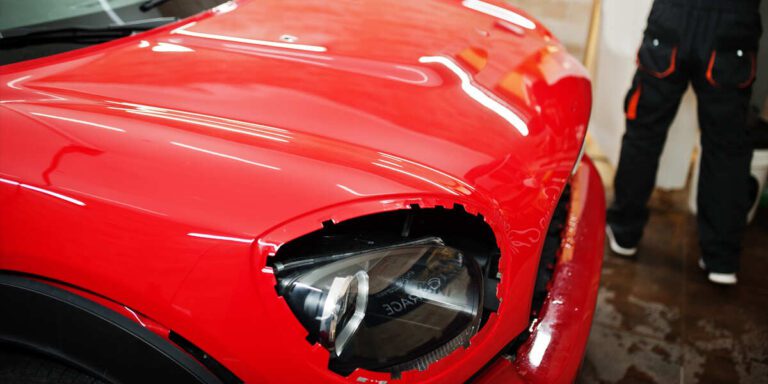
Got a dented or scratched car and wondering if a wrap can save the day? You are not alone. A lot of car owners ask this question, especially when repair shop quotes start looking scarier than the damage itself. The short answer is yes, you can wrap a car with dents. But like most things in the automotive world, the full answer is a bit more layered than that.
Let’s walk through everything you need to know about wrapping a car with dents and scratches, from what actually happens when vinyl meets a damaged surface, to whether you should bother fixing those dents first, to how long the whole process takes. By the time you finish reading this, you will know exactly what decision makes the most sense for your car.
Can You Wrap a Car That Has Scratches? Here Is the Honest Truth
Yes, you can wrap a scratched car. Vinyl wrap is flexible enough to conform to a surface that has light scratches, and in many cases, it does a decent job of hiding them. But here is the thing people do not often tell you upfront: the depth and size of the scratch matters a lot.
Shallow surface scratches? Vinyl wrap handles those pretty well. Deep gouges that cut through the clear coat, base coat, and primer? That is a different story. When the vinyl is applied over a deep scratch, it follows the contour of that scratch like a second skin. Instead of hiding the imperfection, it can actually highlight it, especially if light hits the surface at an angle.
Here is a quick way to check the severity of your scratches before deciding whether to wrap or repair first. Run your fingernail across the scratch slowly. If your nail catches or drags, the scratch is deep enough that wrapping over it will likely show through. If your nail glides smoothly, the scratch is shallow and the wrap should cover it without any issues.
A professional installer will almost always recommend filling deep scratches with a body filler or touch-up paint before applying the vinyl. That small extra step makes a huge difference in the final look of the wrap.
Can You Wrap a Car With Dents? What Actually Happens
Vinyl wrap is a thin, flexible film. It can stretch and conform to curves, edges, and even mild surface irregularities. So technically, yes, you can apply a wrap over a dented panel. But let’s be real about what you are actually getting.
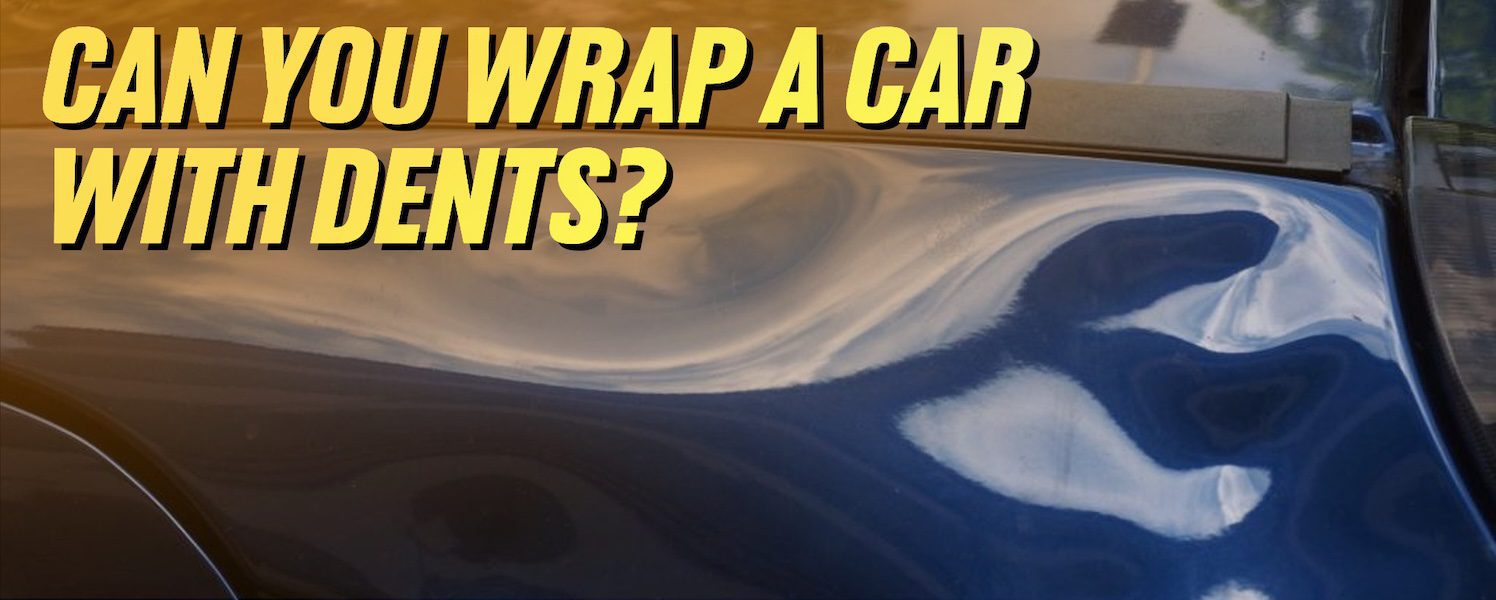
When vinyl is laid over a dent, it does not fill the dent. It drapes over it. Think of it like pulling a fitted bedsheet over a mattress that has a big indentation in the middle. The sheet covers it, but you can still see and feel the depression underneath. The same principle applies here.
For small, shallow dents, the wrap can do a reasonable job of making them less noticeable, especially if the wrap design has a bold pattern, color shift, or textured finish that draws the eye away from surface imperfections. But for larger, deeper dents, the wrap is going to settle into that contour and make the dent clearly visible to anyone who looks at the car in decent lighting.
There is also a practical concern: dented panels often have compromised paint. The impact that caused the dent frequently cracks or chips the paint around the edges of the dent. When paint is cracked or flaking, it creates an unstable surface that vinyl cannot properly bond to. The result is a wrap that starts lifting or peeling from those edges far sooner than it should.
One more thing worth mentioning: once the wrap has been applied over a dent, it does act as a protective barrier going forward. It will help shield that area from future minor impacts, road debris, and UV exposure. So while it is not a cosmetic fix for the existing dent, it does prevent the situation from getting worse.
Should You Fix Dents Before Wrapping? Almost Always, Yes
Let’s say you are weighing your options. On one hand, fixing dents costs money and takes time. On the other hand, you are already spending money on the wrap, so why not just let the wrap handle it? Here is why that logic often backfires.
A single layer of vinyl wrap actually makes dents more visible in certain lighting conditions, not less. The smooth, reflective surface of a fresh wrap amplifies surface imperfections in the same way a freshly waxed car reveals every swirl mark you never noticed before. So you could end up spending good money on a wrap and still have people pointing at your dents.
Beyond aesthetics, there are two more practical reasons to fix dents before wrapping:
- Adhesion problems. As mentioned earlier, dents often come with damaged paint. Vinyl needs a clean, smooth, intact surface to bond properly. Cracked or peeling paint around a dent will cause the vinyl to lift prematurely, which means your wrap starts failing well before its expected lifespan.
- Removal damage. At some point, every wrap comes off. Whether you want to change the look, sell the car, or the wrap simply reaches the end of its life, removal is part of the picture. When you pull vinyl off a surface where the paint was already compromised, you risk pulling that damaged paint off along with the film. Fix the paint first and you avoid that headache entirely.
If you are thinking about selling the car down the line, fixing the dents before wrapping is even more important. Buyers and appraisers know what to look for. A car with visible dents under a wrap is going to get discounted at negotiation time. A car with a smooth, well-applied wrap over a properly repaired surface is going to look and feel like a much more valuable vehicle.
The good news is that paintless dent repair (PDR) is a relatively affordable option for dents that have not cracked the paint. A trained PDR technician can often pop out minor dents in an hour or two without any filler or repainting, leaving you with a smooth surface that is ideal for wrapping.
How to Properly Prep Your Car Before Wrapping It
Preparation is where professional wraps succeed and DIY wraps fail. The condition of the surface underneath the vinyl determines how good the finished product looks and how long it lasts. Do not skip this step or rush through it.
Here is a step-by-step prep process that professional installers follow:
- Wash the car thoroughly. Use a pH-neutral car shampoo and water to remove all surface dirt, grime, and road residue. Pay extra attention to panel gaps, door handles, and trim areas where debris accumulates.
- Clay bar treatment. After washing, use a clay bar to remove embedded contaminants that a regular wash cannot pull out. This gives you a truly clean surface for the vinyl to bond to.
- Repair rusted areas. Rust is vinyl’s enemy. If rust is present under the surface, it will continue spreading after the wrap is applied, and it will eventually push through and destroy the vinyl from underneath. Treat and repair rust before wrapping, not after.
- Fill dents and scratches. For any dents or deep scratches, use body filler, touch-up paint, or have a body shop repair the panels before the wrap goes on. Let any filler or paint cure completely before moving on.
- Degrease the surface. Use isopropyl alcohol (typically 70% concentration) to wipe down every panel you plan to wrap. This removes wax, polish, oils, and any leftover residue that would prevent the vinyl from sticking properly.
- Check for peeling paint. Run your hand over every panel and look carefully for paint that is lifting, flaking, or bubbling. Any peeling paint needs to be addressed before wrapping, or it will cause the vinyl to bubble and lift in those areas.
Skipping prep work is the number one reason wrap jobs fail early. A professional installer will spend almost as much time prepping the car as they do actually applying the vinyl. That prep time is not wasted. It is what separates a wrap that lasts five-plus years from one that starts peeling in six months.
How Long Does It Take to Wrap a Car?
This is one of the most common questions people have, and the answer varies depending on a few key factors. In general, a professional full car wrap takes anywhere from two to five days. Here is a breakdown of what influences that timeline.
| Factor | How It Affects Wrap Time |
|---|---|
| Vehicle size | Larger vehicles like trucks and SUVs take longer than sedans or compact cars |
| Surface condition | Dents, scratches, and rust require prep work that adds time before wrapping even begins |
| Wrap complexity | Full wraps take longer than partial wraps or accent panels |
| Panel complexity | Deep curves, tight recesses, and complex body lines require more time and precision |
| Number of installers | A solo installer takes longer than a two-person team |
| Film curing time | After application, the vinyl needs at least 12 hours to fully set before the car should be driven |
Most professional shops will quote you two to three days for a standard full wrap on a passenger car. Add another day or more if the car has significant body damage that needs to be prepped first. After the wrap is applied, the film needs time to rest and bond to the surface, so plan on at least 12 hours before you drive the vehicle anywhere.
If you are doing a DIY wrap at home, be realistic with yourself. A solo effort on a standard sedan with no major body damage will likely take three full days. If you have a helper, you can shave that down, but do not rush it. Rushing a vinyl wrap is how you end up with bubbles, wrinkles, and lifting edges that drive you crazy every time you look at the car.
Also worth noting: do not plan to wrap your car outdoors in cold weather or high humidity. Vinyl wrap adheres best in temperatures between 60 and 80 degrees Fahrenheit. Cold vinyl becomes stiff and difficult to stretch, and high humidity can trap moisture between the film and the panel, causing adhesion failures down the road.
What Is the Best Material for Wrapping a Car?
Not all vinyl wrap is created equal. The quality of the film you choose has a direct impact on how the finished wrap looks, how long it lasts, and how easy it is to remove without damaging the paint underneath. Here is what you should know about the most popular options on the market.
3M Series 1080
3M is probably the most widely recognized name in automotive vinyl wrap, and for good reason. Their Series 1080 wrap is a cast vinyl film with a built-in air release technology that makes application significantly easier by allowing trapped air bubbles to escape during installation. It comes with a manufacturer warranty against peeling, cracking, and fading for up to five years when properly installed and maintained. If you are paying someone else to wrap your car, ask specifically whether they are using 3M 1080 or a comparable premium film.
Avery Dennison Supreme Wrapping Film
Avery Dennison is 3M’s biggest competitor in the wrap market, and their Supreme Wrapping Film series is genuinely excellent. It is known for being highly conformable, meaning it stretches and shapes around complex curves and recessed areas particularly well. Avery’s film is a favorite among professional installers who work on vehicles with aggressive body lines or deep panel contours.
Oracal 970RA
Oracal is a more budget-friendly option that still delivers solid quality for straightforward wrap jobs. The 970RA series includes a range of colors and finishes and is a popular choice for DIY wrappers who want a reliable film without the premium price tag of 3M or Avery. It is a bit less conformable than the top-tier brands, so it may not be the best choice for vehicles with complex curves.
As a general rule, avoid the cheapest generic vinyl films you find online. They often lack the conformability and adhesive quality of name-brand films, which means more bubbles during installation, more lifting and peeling over time, and potential paint damage when removed.
Cast Vinyl vs. Calendered Vinyl: What Is the Difference?
You will often see these two terms when shopping for wrap material, and understanding the difference can save you from making a costly mistake.
Cast vinyl is made by pouring liquid vinyl onto a casting sheet and allowing it to cure into a thin, stable film. The result is a highly conformable, dimensionally stable material that conforms to complex curves, lasts longer, and removes more cleanly. All of the premium wrap films from 3M, Avery, and similar brands are cast vinyl.
Calendered vinyl is made by running vinyl through a series of rollers to flatten it into a sheet. It is less conformable, more prone to shrinking over time, and does not conform as well to complex curves and deep recesses. It is also harder to remove cleanly. Calendered vinyl is typically used for flat or nearly flat surfaces like signs and banners, not automotive wrap applications.
Bottom line: for a full car wrap, always use cast vinyl. Full stop.
Clear Wraps: Protecting Your Paint Without Changing Your Color
Not everyone wraps their car to change its color. A lot of car owners, especially those with newer vehicles or fresh paint jobs, use clear vinyl wrap as a form of paint protection. Think of it as an invisible shield over your factory paint.
Clear wrap comes in a few different finishes:
- Gloss clear: Enhances the depth and shine of the underlying paint while protecting it. The paint looks almost wet, which is a popular look.
- Matte clear: Gives the car a satin or matte appearance without changing the base color. Great for factory gloss colors where you want to add some subtle aggression to the look.
- Satin clear: Sits between gloss and matte, giving the paint a refined, semi-sheen finish.
Clear vinyl wrap is not the same as paint protection film (PPF), though they serve similar purposes. PPF is typically thicker and has self-healing properties that allow minor scratches to repair themselves with heat exposure. Clear wrap is thinner and more cosmetically focused. Both protect the paint, but PPF offers more robust protection against rock chips and impacts.
If protecting your paint is the primary goal, clear wrap is an affordable and effective option. If you want maximum protection, especially for the front bumper, hood, and mirrors, PPF is worth the extra investment.
Will Removing a Car Wrap Damage the Paint?
This is a big question for anyone who sees a wrap as a temporary solution. The good news is that in most cases, removing a quality vinyl wrap from a car with good paint underneath does not damage the paint. In fact, the wrap actually protects the factory paint during its time on the car, which means the paint underneath often looks fresher and more vibrant than it would have otherwise.
But there are scenarios where removal can cause problems. Here is when damage is more likely to occur:
- The paint was already compromised before wrapping. If the paint was peeling, cracking, or poorly adhered to begin with, removing the wrap can pull those failing sections of paint off along with the vinyl.
- The wrap is very old. Vinyl wrap that has been on a car for many years, especially if exposed to extreme heat and UV, can become brittle and difficult to remove cleanly. The adhesive can also bond more aggressively over time, making removal trickier.
- Wrong removal technique. Using the wrong chemicals or trying to pull the wrap off cold and fast is a recipe for paint damage. Proper removal involves heating the vinyl with a heat gun to soften the adhesive, then peeling it off slowly at a low angle. Any adhesive residue left behind gets cleaned up with an adhesive remover that is safe for automotive paint.
- Cheap vinyl was used. Low-quality vinyl films often have more aggressive adhesives and less stable backing, making them harder to remove cleanly.
If you have any doubts about the removal process, let a professional handle it. The cost of professional wrap removal is a lot less than a full repaint caused by a botched DIY removal job.
Does Wrapping Your Car Increase Its Value?
This is a nuanced one. The short answer is: it depends on how the wrap is done and what condition the car is in underneath it.
Here is how a wrap can positively affect your car’s value:
- Paint preservation. By protecting the factory paint from UV rays, minor abrasions, bird droppings, and weather, a wrap keeps the original paint looking newer for longer. When buyers examine a used car, the condition and originality of the paint is a significant factor. A car with well-preserved original factory paint commands a higher price than one with faded or repainted panels.
- Fewer paint corrections needed. Cars that have been wrapped often need far less paint correction work (polishing, buffing, etc.) when they go to market because the wrap absorbed the everyday wear and tear instead.
- Reduced layer count. Serious buyers and appraisers use paint depth gauges to check how many layers of paint are on a car. Excessive repainting raises red flags about accident history. Because a wrap preserves the original paint without adding layers of new paint, the car’s paint history stays clean.
On the flip side, a wrap can hurt the car’s perceived value if the underlying condition is poor. A non-standard or unusual wrap color can also put off buyers who prefer classic or traditional finishes. But here is the thing: if the wrap is removed before the sale and the original factory paint underneath is in great condition, you actually have a compelling selling point. You can show buyers that the factory paint was protected the entire time the car was wrapped.
One real-world example: imagine a five-year-old black sedan that was daily-driven without a wrap. Black paint shows every swirl mark, scratch, and paint fade. Now compare that to an identical sedan that was wrapped for four of those five years. Remove the wrap, and you have a car with paintwork that still looks close to showroom condition. Which one do you think gets a better trade-in offer?
Partial Wrap vs. Full Wrap: Which One Is Right for Your Situation?
Not every wrap job has to cover the entire car. Depending on your budget, goals, and the location of the damage, a partial wrap might be the smarter choice.
Full Wrap
A full wrap covers every painted surface of the vehicle, including the roof, hood, trunk, doors, bumpers, and fenders. It gives you a completely uniform look and maximum paint protection. It is also the most expensive option, with professional full wraps on passenger cars typically ranging from $2,500 to $5,000 depending on the film quality, vehicle size, and installer.
Partial Wrap
A partial wrap covers specific sections of the car, such as the hood and roof, the lower half of the body, or just a couple of accent panels. This is a more affordable option that can still dramatically change the car’s appearance. It is also a practical choice if the damage is concentrated in specific areas. For example, if your driver’s door has a significant dent and the surrounding panels are fine, wrapping just that door (after proper prep and dent repair) is a cost-effective approach.
The challenge with partial wraps is color matching. If you are wrapping just the hood in a color that is supposed to match the existing body panels, getting an exact match can be tricky. Most partial wraps work best when the wrapped sections are intentionally contrasting with the rest of the car, rather than trying to perfectly blend in.
DIY Wrapping vs. Professional Installation: The Real Comparison
The idea of saving money by wrapping your own car is appealing, and for someone who is genuinely handy and patient, a DIY wrap can turn out well. But it is important to go in with realistic expectations about what the process actually involves.
| Factor | DIY Wrap | Professional Wrap |
|---|---|---|
| Cost | Lower (material cost only, typically $500-$1,500) | Higher (labor + material, typically $2,500-$5,000) |
| Time | 3-5 days for a first-timer | 2-3 days |
| Quality | Variable, depends heavily on skill and patience | Consistently high with an experienced installer |
| Tools required | Heat gun, squeegee, cutting tape, surface prep materials | All provided by the shop |
| Risk of mistakes | Higher, especially around curves and panel edges | Lower, with experience and proper technique |
| Warranty | No labor warranty | Most shops offer a warranty on workmanship |
If you have never wrapped a car before and you are planning to attempt it on a vehicle you care about, seriously consider doing a test panel first. Buy a small section of vinyl and practice on an old hood or door panel from a junkyard. Learn how the material stretches, how to work around curves, how to use the heat gun without scorching the film, and how to squeegee out bubbles without leaving marks. The skills involved are genuinely learnable, but they take practice.
If you have a tight timeline, a vehicle with complex body lines, or significant surface damage that complicates the job, a professional installation is the more practical path. The cost difference between a DIY job that needs to be redone and a professional job done right the first time is often not as large as it initially appears.
How to Maintain a Car Wrap So It Lasts as Long as Possible
A quality wrap from a reputable brand, properly installed by a skilled installer, should last five to seven years with proper care. But “proper care” is doing a lot of heavy lifting in that sentence. Here is what actually keeping a wrap in good condition looks like in practice.
- Hand wash when possible. Automated car washes with spinning brushes are hard on vinyl wrap. The mechanical action can lift edges, cause micro-abrasions, and work against the adhesive over time. A gentle hand wash with a pH-neutral soap is much kinder to the film.
- Avoid high-pressure washing at close range. If you use a pressure washer, keep the nozzle at least 12 inches away from the surface and avoid directing the stream at panel edges where the vinyl terminates. High pressure aimed at an edge can start a peel that spreads over time.
- Stay away from petroleum-based products. Products like bug and tar remover that contain petroleum distillates can degrade vinyl adhesive. Use products specifically formulated for wrapped surfaces.
- Clean bird droppings and bug splatter quickly. Both are acidic and will stain or degrade the vinyl surface if left to bake in the sun for extended periods. Wipe them off as soon as possible with a damp cloth.
- Use a wrap-safe detailer for spot cleaning. Several brands make spray detailers specifically designed for vinyl wrap. These clean the surface without damaging the film or lifting the adhesive.
- Apply a wrap-safe sealant. Some wrap manufacturers offer sealant products designed to protect the film and maintain its finish. These are applied like a traditional wax but are formulated for vinyl, not clear coat.
- Park in the shade when possible. UV exposure is the number one factor that degrades vinyl wrap over time. If you park in a garage or shaded area regularly, your wrap will last noticeably longer than if it sits in direct sun for hours every day.
Common Mistakes People Make When Wrapping a Dented Car
Let’s wrap up the technical side of things (pun intended) by going over the most common mistakes that lead to a disappointing result when wrapping a car with existing damage.
- Skipping surface prep entirely. This is the most frequent and most damaging mistake. No matter how good the vinyl is, it will not perform well on a dirty, oily, or damaged surface. Prep is not optional.
- Wrapping over peeling paint. Peeling paint and vinyl wrap are completely incompatible. The vinyl will pull the peeling sections off the car and bubble immediately. Fix the paint first.
- Using cheap vinyl over a damaged surface. Low-quality vinyl is less conformable, which means it is less forgiving of surface imperfections. If the surface has any issues, cheap vinyl will show every single one of them.
- Rushing the installation. Vinyl application requires patience. Rushing leads to air bubbles, wrinkles, misaligned seams, and lifting edges. Give the process the time it needs.
- Ignoring temperature and humidity. Applying vinyl in cold conditions or high humidity is asking for adhesion failures. Work in a controlled environment when possible.
- Not trimming edges properly. Wrap that is not trimmed cleanly at panel edges and door jambs will start lifting from those points and work its way inward. Take the time to trim precisely and tuck edges where possible.
- Not allowing adequate cure time before driving. The adhesive needs time to fully bond to the surface after application. Driving the car, especially at highway speeds, before the wrap has cured can cause the film to shift or lift.
So, Is Wrapping a Dented Car Worth It?
Here is the bottom line, said plainly: wrapping a car with dents and scratches is possible, but it is not a shortcut around proper body repair. If you go into it expecting the wrap to make your dents disappear, you are going to be disappointed. Vinyl follows the surface it is applied to. It does not fill, lift, or hide significant body damage.
That said, if the damage is minor, if you address the dents and scratches properly before wrapping, and if you use quality materials applied by someone who knows what they are doing, the result can be genuinely impressive. The car gets a fresh, protected surface. The underlying paint is preserved. Future scratches and minor impacts are resisted by the vinyl layer. And if you ever want to sell the car, you can remove the wrap and reveal factory-condition paint underneath.
The wrap is not the solution to body damage. But it is absolutely a smart protective investment for a car that has been properly repaired and is ready for a fresh start.
If your car is sitting in the driveway right now with a few dents you have been putting off, the question is not whether to wrap it. The question is whether you are willing to do the repair work first so the wrap actually does its job properly. Get those dents sorted, prep the surface right, choose a quality film, and the wrap will take care of the rest for the next five or more years.