
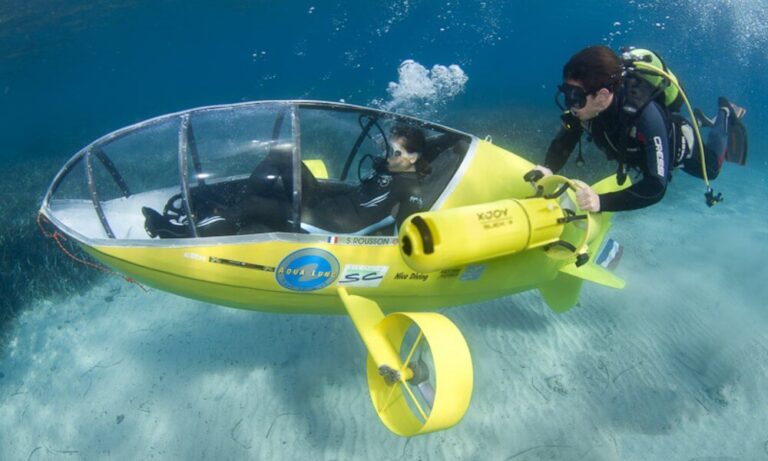
The ocean covers more than 70 percent of our planet, and we have explored less of it than we have the surface of the Moon. That is not an exaggeration. The deepest parts of the ocean are so remote, so hostile, and so crushingly pressurized that getting there requires a vehicle every bit as specialized as a spacecraft. And that is exactly what a submarine is: a spacecraft for the sea.
Submarines have been around for centuries, and their story is one of the most fascinating chapters in engineering history. What started as crude, hand-powered vessels designed to sneak up on enemy ships has evolved into nuclear-powered machines that can stay submerged for months, dive thousands of feet below the surface, and carry enough firepower to level entire cities. But submarines are not just instruments of war. They are tools of science, commerce, exploration, rescue, and even recreation.
The world beneath the waves is as varied as the world above it, and the submarines we have built to operate down there reflect that variety. Some are massive, displacing tens of thousands of tons. Others are tiny enough for two people. Some run on nuclear reactors. Others were once powered by human muscle alone. Each type was designed for a specific purpose, a specific depth, and a specific mission.
So let us take a deep dive, literally, into the different types of submarines that exist, how they work, what they are used for, and why they matter. Whether you are a history enthusiast, a military buff, or just someone who has always been curious about what happens beneath the ocean surface, this is your guide to understanding the machines that make underwater operations possible.
Why There Are So Many Types of Submarines
Before we get into the specific categories, it helps to understand why there is not just one kind of submarine. The answer comes down to a simple truth: the underwater environment is incredibly diverse, and different missions demand different tools.
A submarine designed to patrol the open ocean at great depth for months at a time looks nothing like a small submersible built to inspect an oil pipeline at 500 feet. A vessel designed to carry nuclear missiles does not share much in common with a tourist submarine that takes vacationers 100 feet below a Caribbean reef. The hull design, propulsion system, life support, crew size, depth rating, and weaponry (if any) all change depending on what the submarine needs to do.
There is also a historical dimension. Submarines have been evolving for over 400 years. Early designs were almost laughably primitive by today’s standards. Crews turned hand cranks to move through the water. There was no reliable way to replenish air. Navigation was guesswork. And the risk of never surfacing again was very real. Each generation of submarines solved some of these problems while introducing new capabilities, creating a branching family tree of designs that ranges from the absurdly simple to the staggeringly complex.
Think of it like vehicles on land. A city bus, a Formula 1 race car, a pickup truck, and a mining dump truck are all “vehicles,” but they are built for completely different purposes and share almost nothing in common beyond having wheels. Submarines are the same way. The label covers an enormous range of machines, and understanding the categories helps you appreciate just how varied and ingenious underwater engineering has become.
1. Human-Powered Submarines: Where It All Started
Every great technology has humble beginnings, and submarines are no exception. The very first submarines were powered by the most basic engine available: human arms and legs.
The earliest submarine designs relied on crew members physically rowing oars or turning hand cranks to move the vessel through the water. It was exhausting, slow, and incredibly dangerous. The air supply was whatever was inside the hull when it submerged. Once that ran out, you had to surface or suffocate. There was no margin for error.
One of the most famous early submarines was the Turtle, built in 1775 by American inventor David Bushnell. It was a one-person vessel shaped like an egg, and the operator had to turn a hand crank to drive a screw propeller while also managing ballast, steering, and attempting to attach an explosive charge to the hull of a British warship. It was a one-man band of underwater chaos, and it is honestly amazing that anyone was willing to climb inside it at all.
A more refined example came from Robert Fulton, an American living in France, who designed the Nautilus in the early 1800s. This submarine replaced oars with a screw propeller, but the crew still had to turn it by hand. Fulton built it as a warship intended to deploy naval mines against merchant vessels. It worked, but it was painfully slow and had extremely limited range.
During the American Civil War, the H.L. Hunley became the first submarine to successfully sink a warship in combat. Eight crew members sat shoulder to shoulder along a hand-cranked shaft that drove the propeller. The Hunley managed to destroy the USS Housatonic in 1864, but the submarine itself was lost immediately afterward, along with its entire crew. It was a grim reminder of how dangerous early submarine operations were.
Human-powered submarines are largely a historical curiosity today, though they do exist in a modern context. Engineering students at universities around the world compete in human-powered submarine races, building sleek, pedal-driven submersibles that compete for speed. These competitions push the boundaries of hydrodynamic design and materials science, even if the “engine” is still a pair of human legs.
2. Mechanically Powered Submarines: The Leap That Changed Everything
The introduction of mechanical propulsion was the moment submarines went from being interesting curiosities to genuine military threats. Once you could replace human muscle with an engine, submarines could go faster, farther, and stay out longer.
The first mechanically powered submarine was launched in 1863, and it ran on compressed air. It was a significant leap forward, but compressed air had its own limitations. The tanks were heavy, the range was limited, and once the air ran out, you were done.
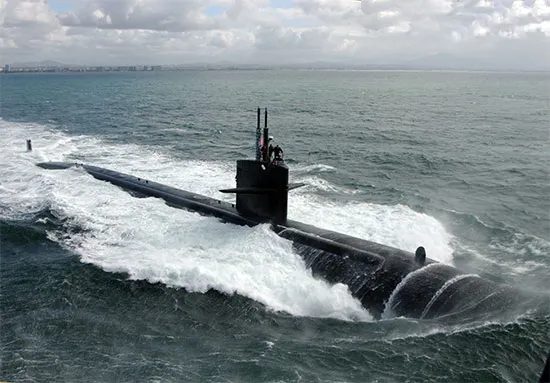
The real breakthrough came in the late 1800s and early 1900s with the development of diesel-electric propulsion. This became the standard power system for submarines for decades and is still used today in many non-nuclear submarines around the world.
Here is how it works. When the submarine is on the surface (or at snorkel depth, just below the surface with a breathing tube sticking up), it runs on diesel engines. Diesel engines need air to burn fuel, so they can only operate when they have access to the atmosphere. While running, the diesel engines do double duty: they propel the submarine and charge a large bank of batteries.
When the submarine dives below snorkel depth, the diesel engines shut down and the submarine switches to electric motors powered by those batteries. Electric motors do not need air, so the sub can operate fully submerged. But batteries have limited capacity. Eventually, the submarine has to come back up to recharge, which makes it vulnerable to detection.
This vulnerability is actually the main reason nuclear propulsion was developed (more on that when we get to military submarines). But diesel-electric submarines remain popular worldwide because they are significantly cheaper to build and operate than nuclear boats. More than 40 countries operate diesel-electric submarines in their navies today.
Modern diesel-electric subs are remarkably quiet and capable. When running on battery power, they produce almost no noise, making them extremely difficult to detect. Some of the latest designs, like Sweden’s Gotland-class submarines, have proven so stealthy that they have “sunk” American nuclear aircraft carriers during naval exercises. A $100 million diesel sub sneaking past a $13 billion carrier is a humbling demonstration of how effective these machines can be.
3. Air-Independent Propulsion (AIP) Submarines: Staying Down Longer Without Going Nuclear
The biggest weakness of a conventional diesel-electric submarine is that it has to surface (or at least come to snorkel depth) regularly to run the diesel engines and recharge the batteries. Every time it does, it risks being detected by enemy aircraft, ships, or satellites. The longer a submarine can stay submerged without surfacing, the safer and more effective it is.
Nuclear submarines solved this problem completely. A nuclear reactor does not need air, so a nuclear sub can stay submerged for months. But nuclear technology is expensive, complex, and politically sensitive. Most countries cannot afford nuclear submarines, and some do not want the political complications that come with operating nuclear-powered warships.
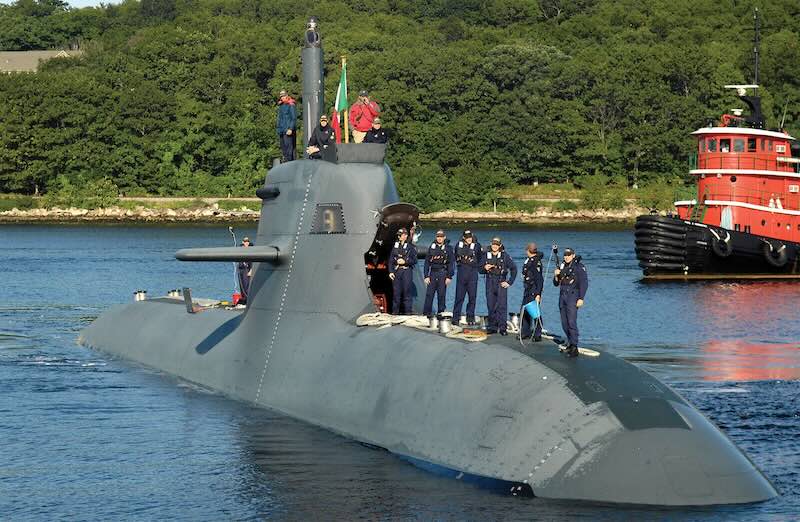
That is where Air-Independent Propulsion, or AIP, comes in. AIP submarines use alternative methods to generate power underwater without needing access to atmospheric air. The most common AIP systems include:
- Stirling engines that burn diesel fuel using liquid oxygen stored onboard (used by Sweden and Japan)
- Hydrogen fuel cells that combine hydrogen and oxygen to produce electricity with water as the only byproduct (used by Germany)
- Closed-cycle steam turbines that use stored oxidizer instead of air (used by France in earlier designs)
The result is a submarine that can stay submerged for two to three weeks without surfacing, compared to just a day or two for a conventional diesel-electric boat. That is a massive operational advantage. The submarine can patrol its assigned area, lie in wait for enemy vessels, or transit through dangerous waters without ever exposing itself.
AIP technology has become increasingly popular among navies that want to punch above their weight without the cost of nuclear propulsion. Countries like Germany, Sweden, Japan, South Korea, and India have all invested heavily in AIP submarine programs. The German Type 212 submarine, which uses hydrogen fuel cells, is considered one of the quietest and most advanced conventional submarines ever built.
The trade-off is that AIP systems are slower and produce less power than diesel engines or nuclear reactors. An AIP submarine cruising on its fuel cells might only make 3 to 5 knots, compared to 10 to 15 knots on diesel-electric power or 25+ knots for a nuclear submarine. So AIP is best suited for slow, stealthy patrols rather than high-speed chases. But in submarine warfare, stealth almost always matters more than speed.
4. Military Submarines: The Silent Backbone of Naval Power
Submarines are one of the most strategically important weapons any nation can possess. A single submarine lurking undetected beneath the ocean can hold an entire naval fleet at risk. It can deny an enemy access to shipping lanes, launch missiles at targets thousands of miles inland, or gather intelligence without ever being seen. There is a reason that the world’s major naval powers invest billions of dollars in their submarine fleets.
Military submarines come in many forms, but they broadly fall into a few categories based on their power source and their mission.
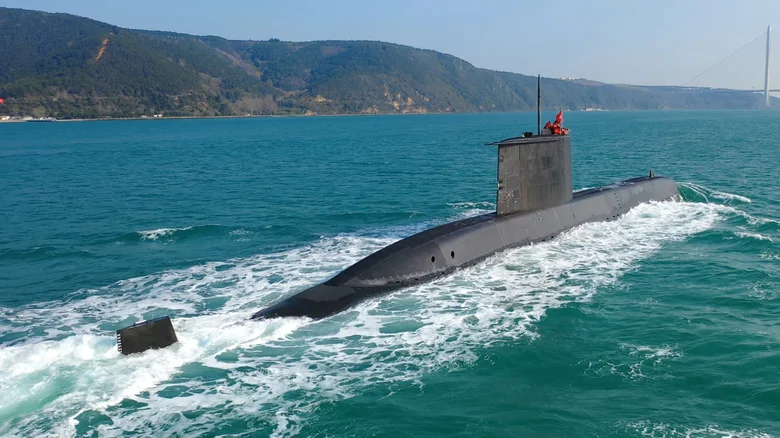
More than 46 countries currently operate submarines as part of their naval forces. The vast majority of these are conventional (diesel-electric or AIP) boats. Only six nations operate nuclear-powered submarines: the United States, the United Kingdom, Russia, France, China, and India. Operating a nuclear submarine fleet requires not just the financial resources to build and maintain the boats, but also the technical infrastructure to handle nuclear fuel, train nuclear-qualified crews, and manage the complex logistics of nuclear propulsion.
Within the military submarine world, there are several distinct sub-categories (no pun intended), each designed for a specific strategic role.
Ballistic Missile Submarines (SSBNs): The Ultimate Deterrent
These are the heavyweights of the submarine world, both literally and strategically. Ballistic missile submarines (designated SSBN in naval terminology) carry nuclear-armed intercontinental ballistic missiles (ICBMs) that can be launched from underwater and strike targets thousands of miles away.
Their entire purpose is deterrence. The idea is simple: if a country knows that its enemy has a submarine somewhere in the ocean carrying enough nuclear weapons to devastate the country, it will think very carefully before launching a first strike. Even if the enemy were to destroy every land-based missile silo and airbase in a surprise attack, the submarines at sea would survive and could retaliate. This concept is called “second-strike capability,” and it is the foundation of nuclear deterrence strategy.
The American Ohio-class SSBN, for example, is 560 feet long, displaces 18,750 tons submerged, and carries 24 Trident II ballistic missiles, each of which can carry multiple nuclear warheads. A single Ohio-class submarine can carry more destructive power than every bomb dropped in every war in human history combined. And the US Navy operates 14 of them.
Russia’s Typhoon-class submarine holds the record as the largest submarine ever built. At 574 feet long and displacing 48,000 tons submerged, it is essentially an underwater battleship. Russia’s newer Borei-class boats are smaller but more modern and carry the RSM-56 Bulava missile.
SSBNs spend most of their time hiding. Their mission is to be as undetectable as possible, lurking in the deep ocean, ready to launch their missiles if the order ever comes. The crews train relentlessly to ensure they can carry out their mission, but the whole point is that they never actually have to. Their existence alone keeps the peace. It is a strange paradox: the most destructive weapons ever built exist specifically so they will never be used.
5. Fast Attack Submarines: The Hunter-Killers of the Deep
If ballistic missile submarines are the strategic arm of a navy’s submarine force, fast attack submarines are the tactical arm. Also known as hunter-killer submarines, these boats are designed to find and destroy enemy submarines, warships, and merchant vessels. They are the predators of the underwater world.
Fast attack submarines are generally smaller and more agile than ballistic missile boats. They are built for speed, stealth, and offensive capability. Instead of carrying ballistic missiles aimed at cities, they carry torpedoes for sinking ships and submarines, and cruise missiles (like the Tomahawk) for striking land targets at shorter ranges.
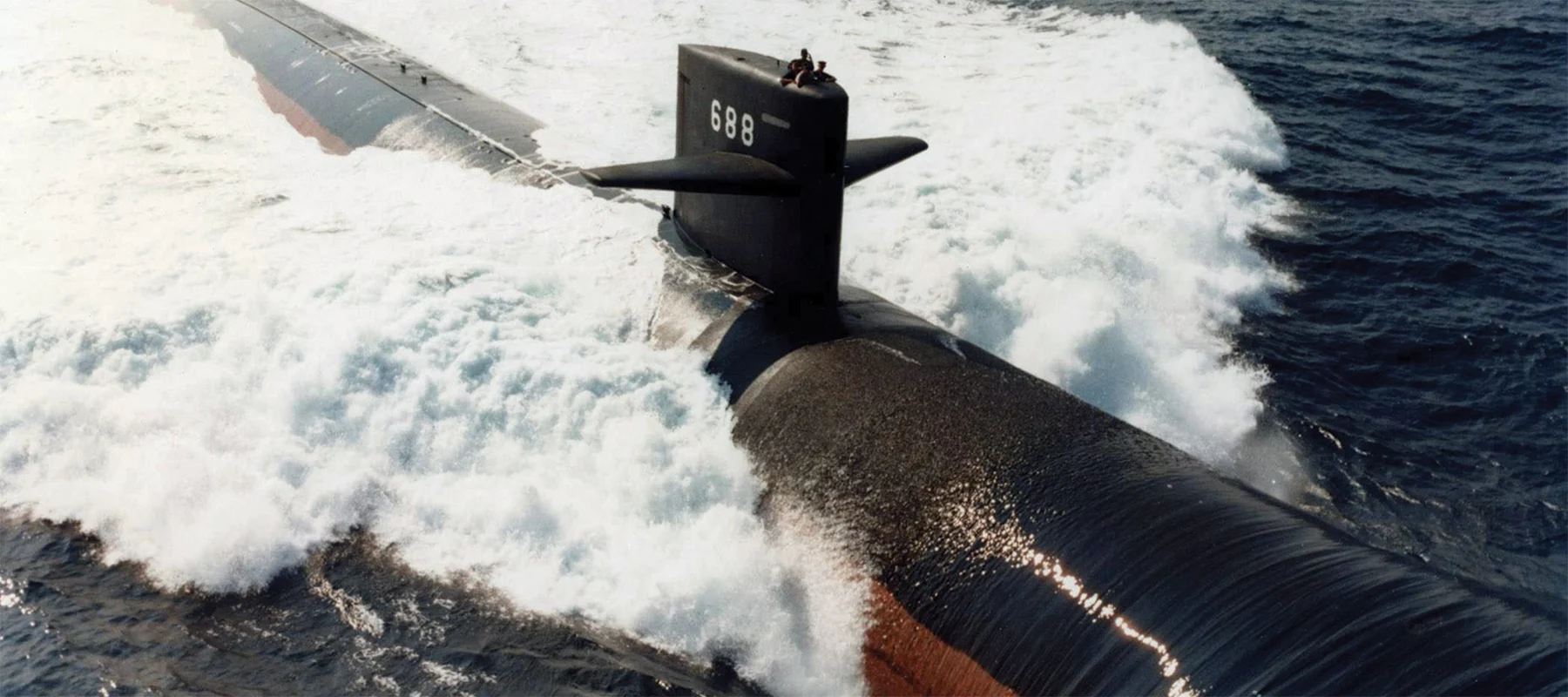
The American Virginia-class is the current front-line fast attack submarine for the US Navy. At about 377 feet long and displacing 7,800 tons, it is fast (25+ knots submerged), quiet, and bristling with sensors. It can hunt enemy submarines, attack surface ships, launch cruise missiles, deploy special operations forces, gather intelligence, and lay mines. It is an incredibly versatile platform.
Russia’s Akula-class and the newer Yasen-class are their fast attack counterparts. The Yasen-class, in particular, is considered one of the most capable submarines Russia has ever built, with advanced quieting technology and a formidable missile and torpedo armament.
Fast attack submarines can be nuclear-powered or diesel-electric. Nuclear-powered boats have the advantage of unlimited range and can maintain high speeds indefinitely. Diesel-electric fast attack boats are cheaper and can be extremely quiet on battery power, but they lack the endurance and speed of their nuclear counterparts.
The “fast” in “fast attack” is no joke, by the way. Some nuclear fast attack submarines can exceed 30 knots underwater. That is about 35 mph, which might not sound fast on land, but underwater, pushing a 7,000-ton steel tube through water at 35 mph requires an enormous amount of power. The Russian Alfa-class submarine, built during the Cold War with a titanium hull and a liquid-metal-cooled reactor, could reportedly reach over 40 knots submerged. It was so fast that it could outrun some of the torpedoes fired at it.
6. U-Boats: Germany’s Infamous World War Submarines
No discussion of submarine history is complete without talking about U-boats. The term “U-boat” comes from the German word Unterseeboot, which simply means “undersea boat.” During both World Wars, but especially World War II, U-boats were one of the most feared and effective weapons in the German military arsenal.
Germany’s U-boat strategy during World War II was straightforward: strangle Britain by cutting off its supply lines. Britain, an island nation, depended on merchant ships carrying food, fuel, raw materials, and military equipment from North America. If Germany could sink enough of those merchant ships, Britain would starve and be forced to surrender.
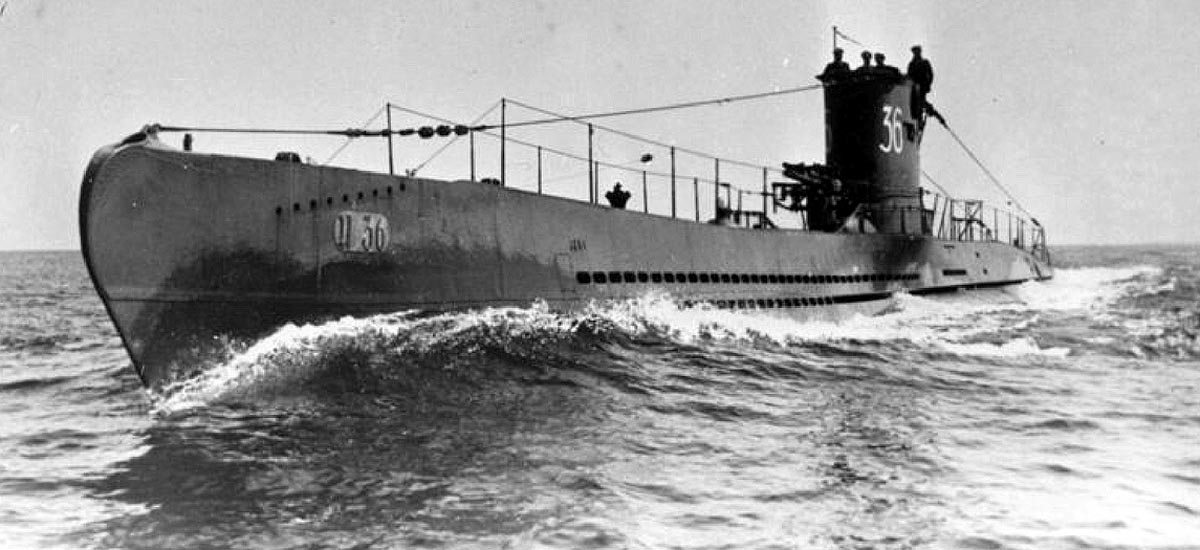
The U-boats operated in groups called wolf packs. A patrol line of submarines would spread out across the likely shipping routes in the Atlantic Ocean. When one U-boat spotted a convoy of merchant ships, it would radio the position to the others, and the pack would converge for a coordinated nighttime attack. Operating on the surface at night (where they were faster and harder to spot), the U-boats would slip in among the merchant ships and fire torpedoes at close range. The results were devastating.
During the early years of the war, the U-boat campaign was alarmingly effective. German submariners called this period the “Happy Time” because Allied shipping losses were catastrophic and U-boat losses were minimal. At the peak of the campaign, Germany was sinking merchant ships faster than the Allies could build replacements.
But the Allies eventually developed effective countermeasures. Improved radar, sonar, depth charges, long-range patrol aircraft, escort carriers, and the breaking of the German Enigma code all contributed to turning the tide. By 1943, U-boat losses had become unsustainable, and the wolf pack strategy collapsed. Of the roughly 1,100 U-boats Germany built during the war, about 780 were lost, along with approximately 30,000 crew members. It was one of the highest casualty rates of any military branch in the war.
Despite their ultimate defeat, U-boats fundamentally shaped modern submarine warfare. The technology and tactics developed during the U-boat campaigns influenced every submarine program that came after, including the nuclear submarines of the Cold War era.
7. Midget Submarines: Small Size, Big Impact
Not all submarines are massive, nuclear-powered warships. At the other end of the scale are midget submarines, compact vessels that pack a surprising amount of capability into a very small package.
A midget submarine is generally defined as any submarine displacing less than 150 tons. To put that in perspective, a Virginia-class fast attack submarine displaces about 7,800 tons. A midget sub is a fraction of that size. Most can be operated by a crew of just two to nine people, and they are designed for short-duration missions, typically measured in hours rather than weeks or months.
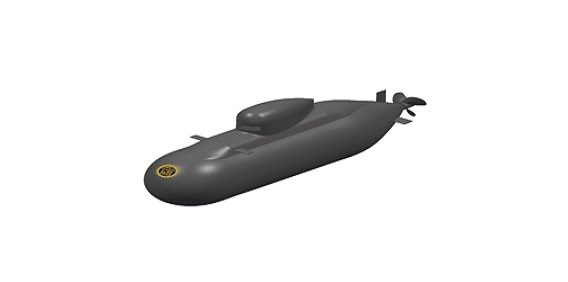
Because of their small size, midget submarines do not have the space for sleeping quarters, galleys, or extended life support systems. The crew climbs in, does the job, and comes back. There is no room for comfort or luxury. It is like the difference between a long-haul airliner and a crop duster. Both fly, but the experience could not be more different.
Midget subs have been used for both military and civilian purposes:
- Military missions: Infiltrating enemy harbors, deploying naval mines, delivering combat divers and special operations forces, conducting reconnaissance in shallow coastal waters, and attacking enemy ships in confined waterways where a full-size submarine could not operate.
- Civilian missions: Underwater scientific research, pipeline and infrastructure inspection, salvage operations, and archaeological exploration of shipwrecks.
During World War II, several nations used midget submarines with varying degrees of success. The Japanese launched midget sub attacks against Pearl Harbor and Sydney Harbor. The British used X-craft midget submarines to attack the German battleship Tirpitz in a Norwegian fjord, damaging it severely enough to keep it out of action for months. The Italians used midget subs and human torpedoes to attack British ships in the Mediterranean with notable effectiveness.
Today, midget submarines remain in service with several navies, particularly those of North Korea, Iran, and various Southeast Asian countries. They are relatively inexpensive to build and operate, making them attractive to smaller navies that cannot afford full-size submarines but still want an underwater capability.
8. Human Torpedoes: The Most Dangerous Ride in Naval History
Of all the types of submarines ever built, human torpedoes might be the most terrifying from the perspective of the people who operated them. The name says it all. A human torpedo is essentially a torpedo that a person rides, steering it toward an enemy ship and either attaching an explosive charge to the hull or releasing the warhead at close range before (hopefully) escaping.
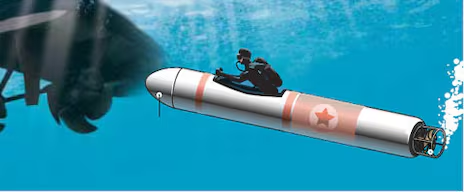
The Italian Navy pioneered the concept during World War I and refined it extensively during World War II. The Italian Maiale (which translates to “Pig,” not exactly a glamorous name) was a slow-speed torpedo with two operators who rode it while wearing diving suits. They would approach an enemy ship in a harbor, detach the warhead and attach it to the ship’s hull using clamps, set a timer, and then try to get away before the explosion.
Italian human torpedo operators achieved remarkable successes, including the famous attack on Alexandria harbor in December 1941, where three Maiale teams penetrated the harbor defenses and severely damaged two British battleships, HMS Queen Elizabeth and HMS Valiant, along with a destroyer and a tanker. It was one of the most audacious naval raids of the war.
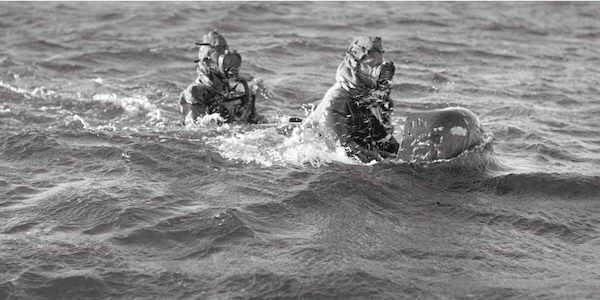
The British, inspired by the Italian success, developed their own version called the Chariot. The British, Egyptian, and Greek navies all operated human torpedoes during the war. Japan took the concept even further with the Kaiten, a human torpedo that was intended as a suicide weapon. Unlike the Italian and British versions, where the operators were expected to survive, Kaiten pilots steered the torpedo directly into enemy ships, sacrificing themselves in the attack.
Human torpedoes are no longer used in modern naval warfare. The development of guided torpedoes, precision-guided missiles, and unmanned underwater vehicles has eliminated the need to put a human being on a torpedo. But the courage (or desperation, depending on how you look at it) of the men who operated these devices remains one of the most remarkable stories in military history.
9. Personal and Recreational Submarines: Underwater Fun for the Ultra-Wealthy
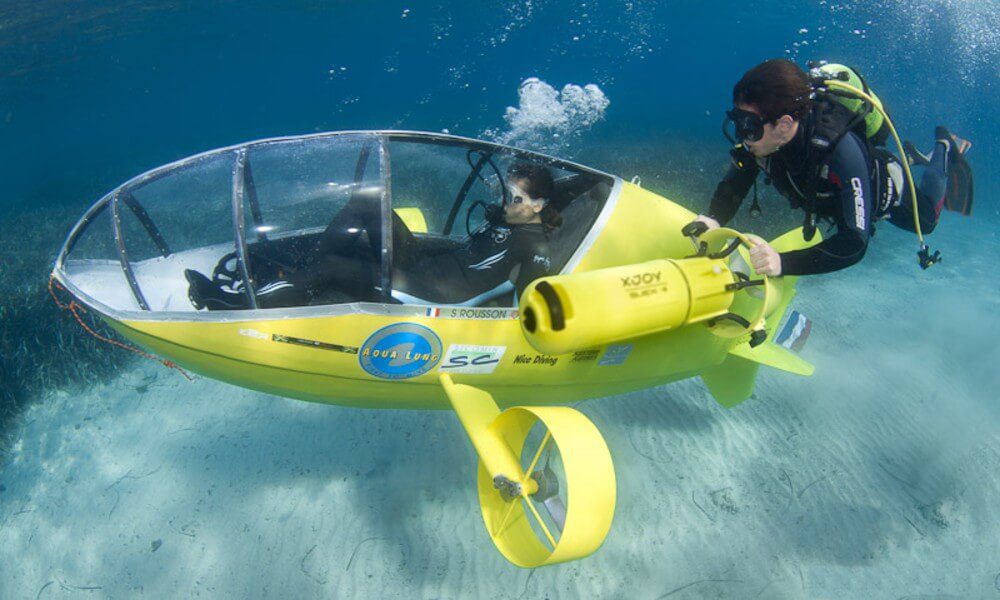
Submarines are not just for militaries and scientists. In recent decades, a niche market has emerged for personal submarines, also known as recreational submarines. These are privately owned submersibles designed for exploration, adventure, and the sheer novelty of cruising beneath the waves in your own underwater vehicle.
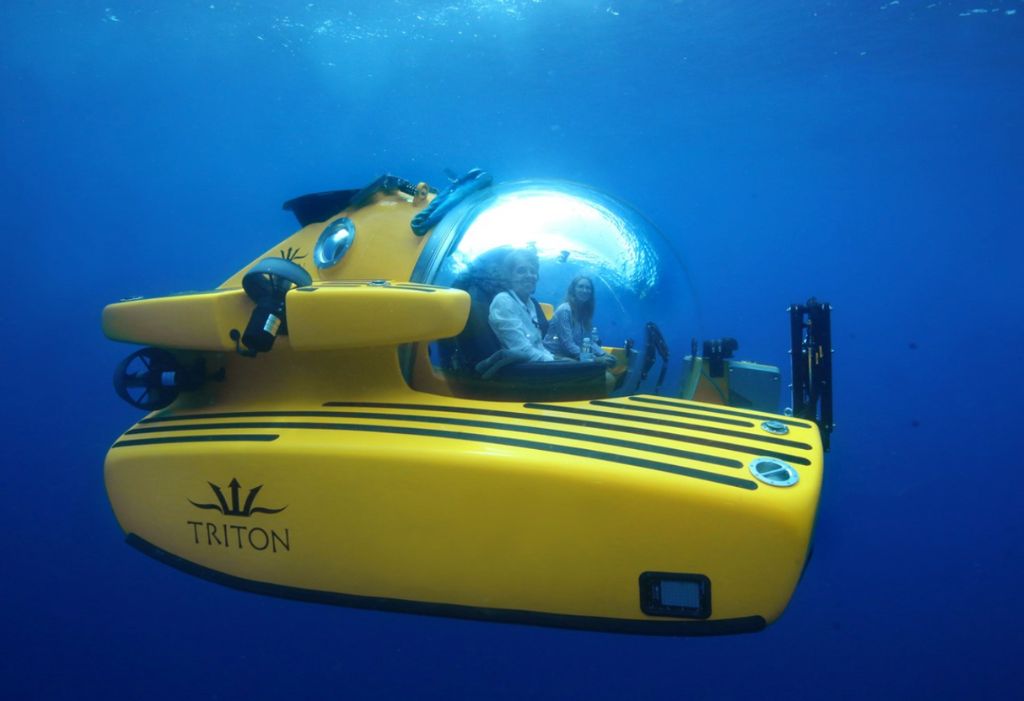
The concept was pioneered in the 1970s by engineer Graham Hawkes, who initially designed small submersibles for naval applications but quickly recognized their potential for civilian use. Since then, the technology has advanced dramatically, and today you can find personal submarines ranging from simple two-person pods to luxurious submersibles that would not look out of place in a James Bond film.
Modern mega-yachts increasingly come equipped with personal submarines as standard or optional equipment. These yacht-based subs are typically capable of diving to 300 to 1,000 feet and carry two to six passengers in a pressurized, air-conditioned cabin with panoramic viewing windows. Imagine anchoring your yacht over a coral reef and then hopping into your personal submarine to explore it up close. That is the kind of experience these machines offer.
Some cruise lines have also gotten in on the action, offering submarine excursions as a premium shore activity at tropical destinations. These tourist submarines typically carry 40 to 60 passengers and dive to modest depths of 100 to 150 feet, providing views of reefs, fish, and underwater landscapes that you would otherwise need scuba gear to see.
On the higher end of the spectrum, companies like Triton Submarines and U-Boat Worx build custom personal submersibles that can reach depths of 3,000 feet or more. Prices start at around $2 million and go up from there, well into the tens of millions for the most advanced models. It is an extreme luxury, but for those who can afford it, there are few experiences on Earth that compare to seeing the deep ocean firsthand from the comfort of your own submarine.
10. Submersibles: The Workhorses of Underwater Science and Industry
A submersible is technically different from a submarine, though the terms are often used interchangeably in casual conversation. The key distinction is this: a submarine is a vessel that operates independently and can replenish its own power supply (by surfacing to run diesel engines, using nuclear power, etc.). A submersible has limited energy reserves and typically depends on a surface ship for launch, recovery, and recharging.
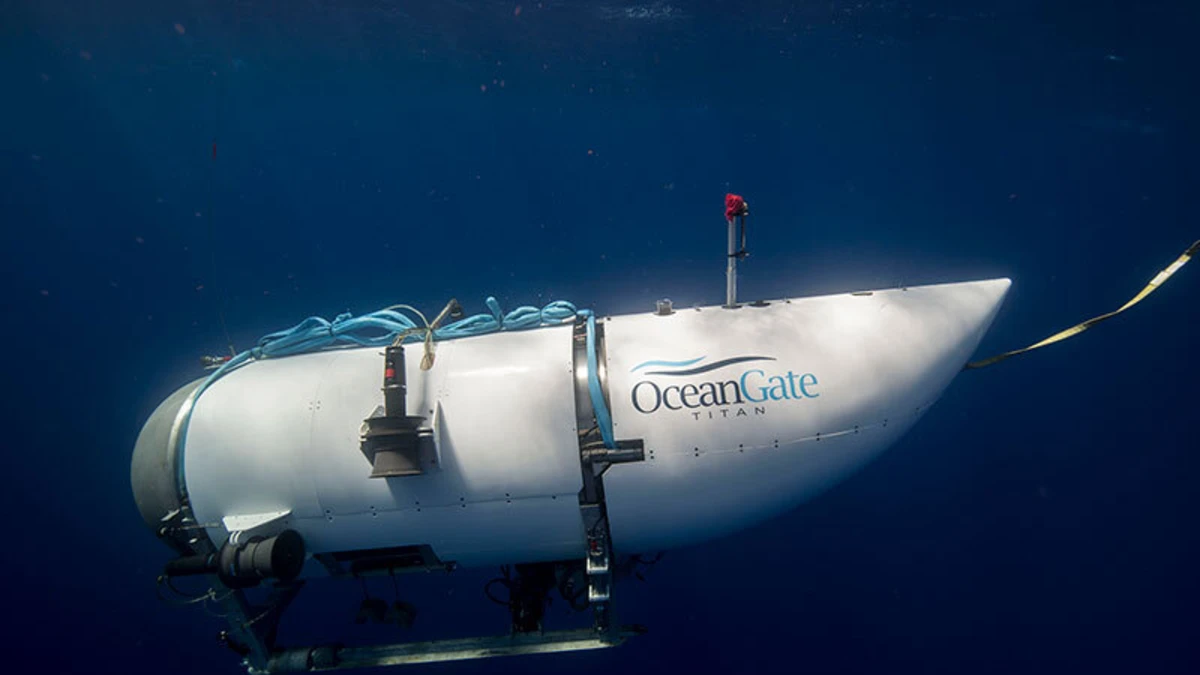
Think of it like the difference between a car and a golf cart. A car can drive anywhere, refuel itself, and operate independently for long distances. A golf cart is designed for short trips within a specific area and needs to be recharged at its home base. Submersibles are the golf carts of the underwater world: highly capable within their design parameters but dependent on a support ship for extended operations.
Submersibles can be manned or unmanned, and they come in an enormous range of sizes and configurations. Their most common applications include:
- Scientific research: Studying deep-sea ecosystems, geology, hydrothermal vents, and marine biology at depths that divers cannot reach.
- Oil and gas industry: Inspecting and maintaining underwater pipelines, wellheads, and offshore drilling infrastructure.
- Telecommunications: Laying and repairing undersea cables that carry internet traffic between continents.
- Salvage operations: Recovering objects, cargo, or wreckage from the ocean floor.
- Archaeology: Exploring and documenting shipwrecks and other underwater historical sites.
One of the most famous submersibles in history is Alvin, operated by the Woods Hole Oceanographic Institution. Alvin has been in service since 1964 (with extensive upgrades over the years) and has made more than 5,000 dives. It was used to explore the wreck of the Titanic, study hydrothermal vents on the Mid-Atlantic Ridge, and investigate the Deepwater Horizon oil spill. It can carry a pilot and two scientists to depths of nearly 15,000 feet.
On the unmanned side, Remotely Operated Vehicles (ROVs) and Autonomous Underwater Vehicles (AUVs) have become indispensable tools for underwater work. ROVs are tethered to a surface ship by a cable and controlled by an operator on the ship. AUVs are pre-programmed to carry out missions independently. Both types have expanded the reach of underwater operations far beyond what manned submersibles can achieve, simply because you do not have to keep a human being alive inside them.
11. Bathyspheres: The First Deep-Sea Explorers
Before there were submarines capable of reaching the deep ocean, there were bathyspheres. A bathysphere is exactly what it sounds like: a sphere designed for the deep (from the Greek word bathys, meaning deep). It is a spherical, unpowered pressure vessel that is lowered into the ocean on a steel cable from a ship on the surface.
The bathysphere was invented in the early 1930s by William Beebe and Otis Barton. Their design was simple but ingenious. A sphere is the ideal shape for resisting external pressure because the force is distributed evenly across the entire surface. Beebe and Barton’s bathysphere was a hollow steel ball with thick walls, a small window for observation, and just enough room for two people to sit inside.
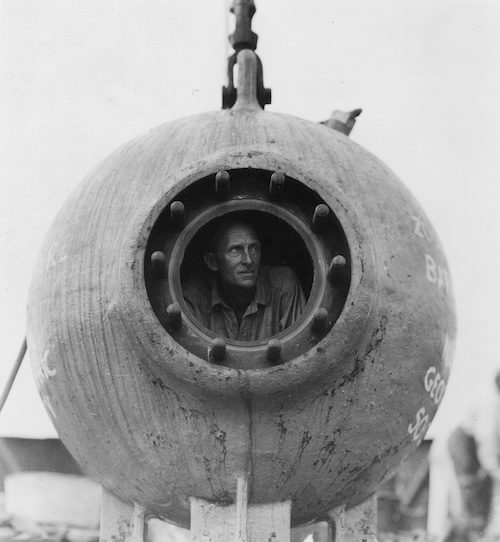
In 1934, Beebe and Barton descended to a depth of 3,028 feet (923 meters) off the coast of Bermuda. At the time, this was by far the deepest any human being had ever gone in the ocean. They observed and described deep-sea fish and other creatures that no one had ever seen alive before. It was a landmark achievement in ocean exploration.
But bathyspheres had severe limitations. They could not move under their own power. They went straight down and straight back up, entirely dependent on the cable and the ship above. If the cable broke, the occupants were dead. There was no escape, no backup plan, and no way to ascend independently. It was, by any measure, an incredibly brave (some would say reckless) thing to do.
Bathyspheres were eventually superseded by bathyscaphes, which solved the cable problem by being self-propelled. But the bathysphere deserves its place in history as the vessel that first took humans into the deep ocean and showed us what was down there.
12. Bathyscaphes: Reaching the Bottom of the World
If the bathysphere was the first step into the deep ocean, the bathyscaphe was the giant leap. A bathyscaphe is a self-propelled deep-diving submersible that does not depend on a cable from a surface ship. Instead, it uses a buoyancy system similar to a hot air balloon, but inverted.
The bathyscaphe was designed by Swiss physicist and adventurer Auguste Piccard in the late 1940s. The basic concept is clever. The crew compartment is a small, extremely strong pressure sphere (similar to a bathysphere) suspended beneath a large float filled with gasoline. Gasoline was chosen because it is lighter than water and is virtually incompressible, meaning it maintains its buoyancy even at extreme depths.
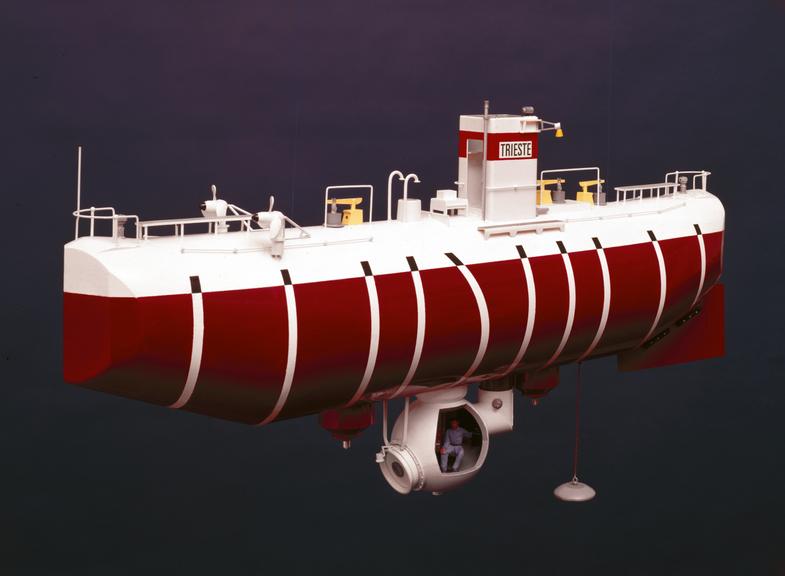
To descend, the bathyscaphe releases air from ballast tanks and fills them with water, making the vessel heavier. To ascend, it drops iron shot ballast from hoppers on the bottom of the float, making the vessel lighter. The gasoline float provides the upward buoyancy needed to bring the craft and its crew back to the surface. Small electric motors provide limited horizontal movement for positioning.
The most famous bathyscaphe dive in history took place on January 23, 1960. Auguste Piccard’s son, Jacques Piccard, and US Navy Lieutenant Don Walsh descended to the Challenger Deep in the Mariana Trench aboard the bathyscaphe Trieste. They reached a depth of approximately 35,814 feet (10,916 meters), roughly 6.8 miles below the ocean surface. It remains one of the most extraordinary achievements in exploration history.
At that depth, the pressure is about 16,000 pounds per square inch, more than 1,000 times the pressure at the surface. The Trieste’s crew compartment walls were five inches thick. When Piccard and Walsh reached the bottom, they observed a flat, featureless seabed and, to their amazement, a small flatfish and a shrimp. Life existed even at the deepest point on Earth.
The Trieste’s record depth stood for over 50 years until filmmaker James Cameron made a solo dive to the Challenger Deep in the Deepsea Challenger in 2012. More recently, explorer Victor Vescovo made multiple dives to the Challenger Deep in the submersible Limiting Factor, reaching a slightly deeper point than the Trieste.
13. Air-Sea Rescue Submarines: Saving Lives in Combat
Submarines are usually associated with destruction, sinking enemy ships and projecting military power. But during World War II, a group of submarines took on a very different mission: saving lives.
In the Pacific Theater, American pilots flew bombing and strafing missions against Japanese-held islands and naval forces. Many of these missions were hundreds of miles from the nearest friendly airfield. If a pilot’s plane was damaged or shot down over the ocean, his chances of survival depended on being rescued before he drowned, died of exposure, or was captured.
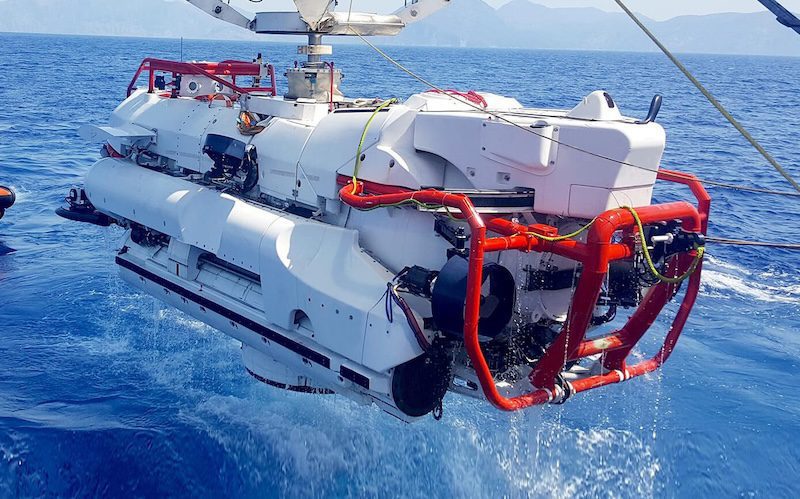
The US Navy organized a group of submarines into what became known as the “Lifeguard League.” Before major air raids, these submarines were strategically positioned along the flight paths and near the target areas. Their job was to surface and recover any pilots who had to ditch their planes or bail out over the water.
This was dangerous work. The submarines had to operate on the surface in waters that were often patrolled by enemy aircraft and ships. They were sitting targets while conducting rescue operations. But the mission was considered so important that the risk was accepted. The reasoning was practical as well as humanitarian: trained combat pilots were incredibly valuable and expensive to replace. Every pilot rescued was a pilot who could fly again.
Over the course of the war, Lifeguard League submarines rescued hundreds of downed aviators. One of the most famous rescues involved a young Navy pilot named George H.W. Bush, the future President of the United States, who was pulled from the water by the submarine USS Finback after his torpedo bomber was shot down over the Bonin Islands in September 1944.
The air-sea rescue mission became one of the most important and celebrated operations conducted by submarines in the Pacific during World War II. It demonstrated that submarines could be instruments of preservation as well as destruction.
14. Narco-Submarines: The Dark Side of Underwater Innovation

Not all submarine innovation serves noble purposes. In one of the stranger chapters of modern maritime history, drug trafficking organizations in Central and South America have been building their own submarines to smuggle narcotics into the United States.
These vessels, known as narco-submarines, range from crude, barely functional semi-submersibles to surprisingly sophisticated fully submersible craft. The simpler versions are not true submarines. They are low-profile boats that ride just below the waterline with only a small portion of the vessel visible above the surface, making them extremely difficult to detect by radar or visual observation. More advanced versions can fully submerge and travel underwater for significant distances.
The typical narco-submarine is built in a jungle workshop, often using fiberglass over a wooden frame, powered by diesel engines, and capable of carrying several tons of cocaine or other drugs. They are usually one-way vessels. The builders do not expect to get them back. The crew navigates using GPS, runs the submarine from Colombia or Ecuador up to the coastal waters of Mexico or the United States, offloads the drugs, and either scuttles the vessel or abandons it.
The numbers are staggering. Law enforcement agencies estimate that narco-submarines transport hundreds of tons of cocaine each year, with each vessel carrying anywhere from 1 to 10 tons per trip. The US Coast Guard and Navy intercept some of these vessels, but the ocean is vast, and catching a low-profile or submerged vessel in millions of square miles of water is an enormous challenge.
In recent years, narco-submarine construction has become more sophisticated. Some intercepted vessels have had air conditioning, periscopes, advanced communications equipment, and even torpedo-tube-style hatches for quick drug offloading. It is a grim but undeniable example of how submarine technology, even in its crudest form, can be adapted for purposes far removed from its original military and scientific applications.
15. Single-Hull vs. Double-Hull Submarines: The Engineering Behind Surviving the Deep
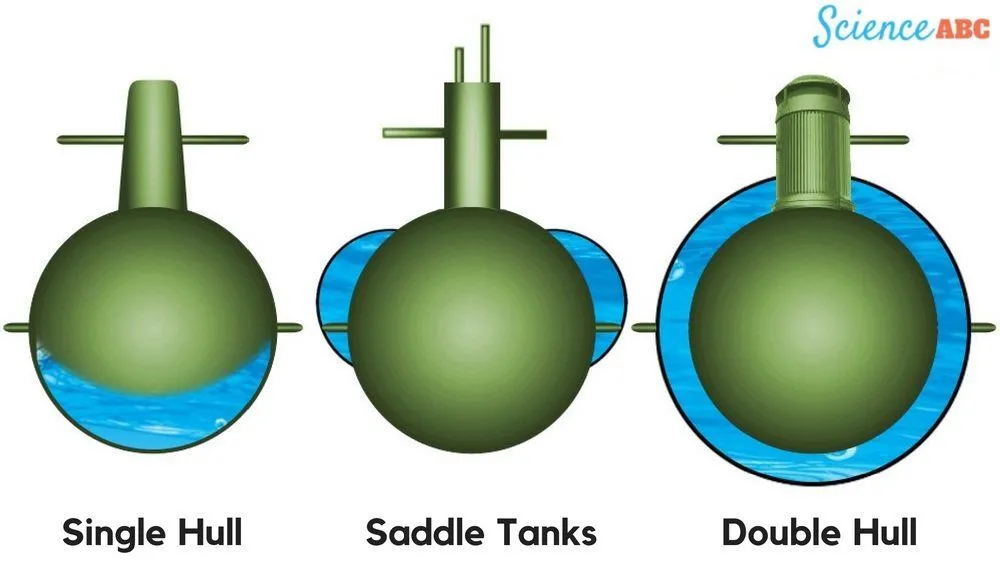
One of the most fundamental design decisions in submarine engineering is the hull configuration. How the hull is designed determines how deep the submarine can go, how fast it can travel, and how survivable it is under the immense pressures of the deep ocean.
Single-Hull Design
A single-hull submarine has one pressure hull that serves as both the structural shell of the vessel and the outer surface that contacts the water. The pressure hull is the critical component. It is the airtight, reinforced structure that keeps the ocean out and the crew alive. It must withstand the crushing pressure of deep water, which increases by about 44 pounds per square inch for every 100 feet of depth.
The ideal shape for a pressure hull is a cylinder, because cylindrical shapes distribute external pressure evenly around the circumference. A perfect sphere would be even better (which is why deep-diving submersibles like the Trieste used spherical crew compartments), but a sphere does not give you much usable interior space for a full-size submarine. So most submarines use a cylindrical pressure hull with hemispherical or elliptical end caps.
The limitation of a single-hull design is that a cylinder is not the most hydrodynamically efficient shape. It creates more drag than a teardrop or whale-shaped form, which means it requires more power to push through the water at speed. For small submersibles and early submarines where speed was not a priority, this was acceptable. For military submarines that need to move fast and quietly, it became a problem.
Double-Hull Design
The solution was the double-hull design. A double-hull submarine has two separate shells: an inner pressure hull that protects the crew (still cylindrical, because physics does not care about aesthetics) and an outer hydrodynamic hull that gives the submarine a sleek, streamlined shape optimized for moving through water with minimal resistance.
The space between the two hulls is used for ballast tanks (which are filled with water to dive and blown with compressed air to surface), fuel storage, equipment, and piping. This arrangement gives the submarine designer much more flexibility because the outer hull can be shaped for optimal hydrodynamic performance without compromising the structural integrity of the pressure hull.
Most modern military submarines use some variation of a double-hull design. Russian submarines, in particular, have traditionally favored a full double-hull configuration, with a significant gap between the inner and outer hulls. Western submarines (American, British, French) tend to use a partial double hull, where the bow and stern sections have an outer hull for streamlining but the midsection relies more heavily on the pressure hull itself.
The trade-off with a double hull is weight and complexity. Two hulls mean more material, more construction time, and a larger overall vessel. But for military submarines where speed, depth capability, and survivability are non-negotiable, the benefits far outweigh the costs.
16. The Future of Submarines: What Is Coming Next
Submarine technology continues to evolve at a remarkable pace. Several trends are shaping the next generation of underwater vessels:
Unmanned Underwater Vehicles (UUVs): Just as drones have transformed aerial warfare and surveillance, unmanned submarines are poised to do the same underwater. Large UUVs like the Boeing Orca (being developed for the US Navy) can carry out missions including mine countermeasures, intelligence gathering, and anti-submarine warfare without putting any human lives at risk. Smaller UUVs are already widely used for oceanographic research, pipeline inspection, and mine detection.
Lithium-ion battery technology: Modern lithium-ion batteries offer dramatically higher energy density than the traditional lead-acid batteries used in older diesel-electric submarines. Japan’s Soryu-class submarines have already adopted lithium-ion batteries, giving them significantly more underwater endurance and faster recharging times. This technology could make conventional submarines competitive with AIP boats in terms of submerged endurance, at a lower cost.
Advanced materials: New high-strength steel alloys, titanium, and composite materials are allowing submarines to dive deeper and withstand greater pressures. The use of advanced composites could also reduce weight and improve stealth characteristics by absorbing rather than reflecting sonar signals.
Stealth improvements: Every new generation of submarine is quieter than the last. Advanced propulsion systems, including pump-jet propulsors that replace traditional propellers, vibration-isolating hull mounts, and acoustic dampening coatings, are making modern submarines nearly undetectable at slow speeds. The quietest modern submarines produce less noise than the ambient ocean itself, making them effectively invisible to passive sonar.
Deep-sea exploration: Private companies and research institutions are building submersibles capable of reaching the deepest parts of the ocean repeatedly and reliably. The Limiting Factor, built by Triton Submarines for explorer Victor Vescovo, has dived to the bottom of all five of the world’s oceans, including multiple trips to the Challenger Deep. These vehicles are opening up the deep ocean for sustained research in ways that were impossible even a decade ago.
A Quick Reference: Submarine Types at a Glance
| Type | Primary Use | Power Source | Crew Size | Era / Status |
|---|---|---|---|---|
| Human-Powered | Early warfare, modern competitions | Human muscle | 1 to 8 | Historical / Niche |
| Mechanically Powered (Diesel-Electric) | Military patrol, coastal defense | Diesel engines + batteries | 20 to 65 | Active worldwide |
| AIP Submarines | Extended underwater patrol | Fuel cells, Stirling engines, etc. | 20 to 40 | Active, growing |
| Nuclear Submarines (SSBN/SSN) | Strategic deterrence, fast attack | Nuclear reactor | 100 to 160 | Active (6 nations) |
| U-Boats | Commerce raiding, anti-shipping | Diesel-electric | 25 to 60 | Historical (WWII) |
| Midget Submarines | Special ops, harbor attack, research | Battery / diesel | 2 to 9 | Active (limited) |
| Human Torpedoes | Ship attack, mine deployment | Electric motor / human | 1 to 2 | Historical |
| Personal / Recreational | Tourism, exploration, recreation | Battery electric | 1 to 6 | Active, growing |
| Submersibles | Research, industry, inspection | Battery electric | 1 to 3 (or unmanned) | Active worldwide |
| Bathysphere | Deep-sea observation | None (cable-lowered) | 1 to 2 | Historical |
| Bathyscaphe | Extreme depth exploration | Buoyancy + electric motors | 1 to 2 | Historical / Niche |
| Rescue Submarines | Rescuing downed pilots, stranded crews | Diesel-electric / nuclear | Varies | Active (specialized) |
| Narco-Submarines | Drug smuggling | Diesel / outboard motors | 2 to 4 | Active (illegal) |
What Makes Submarines So Endlessly Fascinating
There is something about submarines that captures the imagination in a way that few other machines can. Maybe it is the idea of disappearing beneath the surface of the ocean, invisible to the world above. Maybe it is the extreme engineering required to keep human beings alive in an environment that would kill them in seconds without protection. Or maybe it is the sheer audacity of it, the fact that people have been climbing into sealed metal containers and sinking themselves into the ocean for over 200 years, constantly pushing deeper, faster, and farther.
Submarines and spacecraft really do share more in common than most people realize. Both operate in environments that are lethal to unprotected humans. Both require self-contained life support systems. Both demand extraordinary engineering precision. And both allow us to explore frontiers that would otherwise be completely beyond our reach. The difference is that while we have sent people to the Moon, we have barely scratched the surface of the ocean that covers most of our own planet.
From hand-cranked wooden shells to nuclear-powered leviathans carrying enough missiles to end civilization, submarines have come an astonishing distance in a relatively short time. And the pace of innovation is not slowing down. Unmanned underwater vehicles, advanced battery technology, new hull materials, and deepening scientific curiosity are all driving the next wave of submarine development.
The ocean is still mostly unexplored. We know more about the surface of Mars than we do about the floor of our own oceans. And the machines that will change that, the ones that will take us to the places we have never been and show us things we have never seen, will be submarines of one kind or another. The question is not whether we will keep building them. The question is how deep they will take us next.