
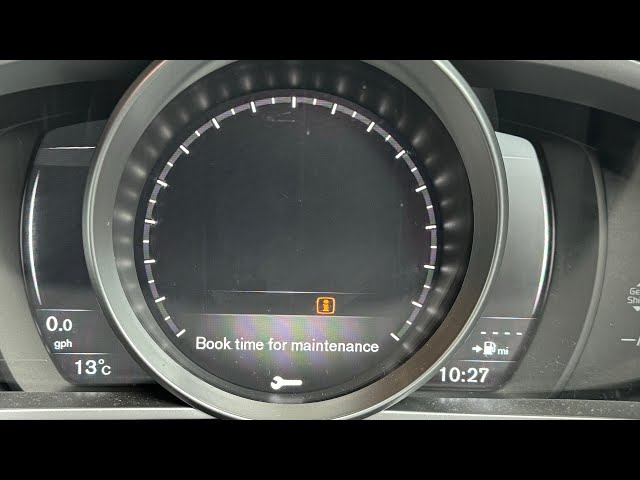
If you own a Volvo and you have ever glanced at your dashboard to see the message “Book Time for Maintenance” staring back at you, you probably had one of two reactions. Either you thought, “Great, I will get that sorted,” or you thought, “Is something wrong with my car?” The good news is that this alert is not telling you something is broken. It is your Volvo doing exactly what it is designed to do, which is keeping you informed before a problem ever has a chance to develop.
Understanding what this reminder means, how to respond to it, and what happens during a typical Volvo service visit can save you a lot of guesswork, and potentially a lot of money. So let us get into all of it.
What the “Book Time for Maintenance” Alert Is Actually Telling You
Your Volvo is constantly monitoring its own systems. Oil life, mileage intervals, time elapsed since the last service, fluid levels, and more. When the onboard computer determines that your vehicle is due for scheduled maintenance, it triggers the Service Reminder Indicator, and that message pops up on your instrument panel.
This is not a warning light in the traditional sense. It is not telling you something is failing or that you are about to be stranded on the side of the road. Think of it like a calendar notification on your phone. It is proactive, not reactive.
That said, ignoring it for too long is where people run into trouble. Volvo builds these intervals based on engineering data, real-world testing, and emissions compliance requirements. The schedule exists for a reason, and pushing past it consistently can lead to wear and damage that would have been completely preventable.
Why Volvo’s Maintenance Schedule Is More Thorough Than You Might Expect
Volvo vehicles come with a factory maintenance schedule that covers the vehicle up to 240,000 km, which is roughly 150,000 miles. That is not just oil changes. The schedule includes inspections, fluid services, filter replacements, brake checks, and component assessments that keep the car running safely and efficiently at every stage of its life.
One thing that sets Volvo’s program apart is that it factors in emissions performance alongside mechanical health. Some of the service items exist not just to protect your engine but to ensure the vehicle stays within environmental compliance standards. If you live in a state with emissions testing requirements, this matters even more.
Your specific schedule will vary depending on your model, year, and how you drive. A Volvo driven primarily on highways in moderate climates will have different service needs than one used for short city trips in extreme heat or cold. The best reference point is always your Service and Warranty Booklet, which outlines the exact intervals for your specific vehicle.
But here is the thing most people skip: driving habits genuinely change when service is needed. If you do a lot of stop and go driving, tow loads frequently, or drive in dusty or cold environments, your oil and filters can degrade faster than the standard interval assumes. Volvo accounts for this to some degree, but it is worth being aware of.
How the Service Reminder Indicator Works
The Service Reminder Indicator, or SRI, is the system behind the “Book Time for Maintenance” message. Here is a simple breakdown of how it operates:
- The SRI tracks mileage and time since the last service reset.
- When your vehicle reaches the next scheduled maintenance interval, the message appears on the instrument panel.
- On some Volvo models, the message will display as “Book Time for Maintenance” and on others as “Time for Regular Service.” Both mean the same thing.
- After a certified technician completes the service, they reset the SRI so the clock starts fresh for the next interval.
- If the reset is skipped after a service visit, the indicator will keep displaying the message even though the work was done. Always confirm with your technician that the reset has been performed before you leave the shop.
It is a straightforward system, but it only works correctly if it is maintained properly. A missed reset is a common source of confusion for Volvo owners who bring their car in for service, drive away, and then see the same message pop up again a few days later.
How to Reset the “Book Time for Maintenance” Light on Your Volvo
Now, a quick word before we get into the steps. The service reminder reset should ideally be done by your Volvo technician after completing the actual maintenance work. Resetting it without performing the service means the car’s internal tracking becomes inaccurate, and you lose the reliability of the system telling you when you genuinely need attention.
That said, there are situations where a DIY reset makes sense. Maybe you performed the oil change yourself and want to clear the reminder. Or maybe the light came on prematurely due to a software glitch. Whatever the reason, here is how to do it on most Volvo models.
Reset Method Using the Start Button and Left Steering Wheel Stalk
- Insert your key or, if you have a keyless model, make sure the key fob is inside the vehicle.
- Press the start-stop button once without pressing the brake pedal. This puts the car in accessory mode without starting the engine.
- Locate the OK button on the left steering wheel stalk. This is the button you use to navigate through your instrument cluster menus.
- Simultaneously hold the OK button and the start-stop button for approximately two seconds.
- Watch your instrument cluster. When you see the yellow service icon begin flashing, release both buttons.
- A confirmation notice should appear on your display indicating the service reminder has been reset.
If your steering wheel stalk does not have an OK button, look for the T1/T2 trip reset buttons on your dashboard. On older Volvo models, these can serve the same function in the reset process. The exact button layout varies between model years, so if neither method works, check your owner’s manual for the specific procedure for your vehicle.
Reset via Volvo’s On-Screen Menu (Newer Models with Touchscreen)
On newer Volvo models equipped with the Sensus infotainment system or the Android-based Google infotainment system found in recent XC40, XC60, and XC90 models, the process is slightly different. You can navigate to the Settings menu, find Vehicle Service, and access the service reminder reset from there. The exact path varies by model year, but the menu labels are clear and intuitive once you know where to look.
If you are unsure which method applies to your specific Volvo, a quick call to your local dealer’s service department will get you pointed in the right direction within minutes.
Common Volvo Maintenance Services You Should Know About
When the “Book Time for Maintenance” alert appears, a lot of Volvo owners are not entirely sure what the actual service involves. Here is a breakdown of the most common maintenance items your Volvo will need at various intervals throughout its life.
Engine Oil and Filter Change
This is the most frequent item on any Volvo maintenance schedule, and for good reason. Engine oil lubricates and protects the internal components of your engine. Over time, it breaks down, collects contaminants, and loses its ability to protect effectively. Running on old, degraded oil is one of the fastest ways to accumulate engine wear.
For most current Volvo models, the recommended oil change interval is every 10,000 miles or 12 months, whichever comes first. Some models using Volvo’s full synthetic oil can extend this to 15,000 miles under ideal conditions. Always verify the interval and the required oil specification in your owner’s manual. Using the wrong viscosity or oil type can void your warranty and potentially cause engine damage.
Here is how to check your oil level between service visits:
- Park on a flat, level surface.
- Turn the engine off and wait at least five minutes for the oil to settle back into the sump.
- Open the hood and locate the dipstick. It usually has a yellow or orange handle.
- Pull the dipstick out fully, wipe it clean with a lint-free cloth, and reinsert it completely.
- Pull it out again and check where the oil level sits between the two markers. It should be near the upper marker but not above it.
- If it is low, add the correct oil in small amounts, checking the level after each addition. Overfilling is just as harmful as underfilling.
Some newer Volvo models do not have a traditional dipstick. Instead, they use an electronic oil level sensor accessible through the vehicle’s menu. Your owner’s manual will clarify which system your car uses.
Brake Inspection and Service
Brakes are one of the most safety-critical systems on any vehicle. During a Volvo service visit, the technician will inspect brake pad thickness, rotor condition, brake fluid level and quality, and the overall condition of calipers and brake lines.
Brake fluid absorbs moisture over time, which lowers its boiling point and reduces braking effectiveness. Volvo recommends replacing brake fluid every two years regardless of mileage. This is one service item that gets overlooked frequently, and it can directly affect braking performance in high-stress situations like emergency stops or mountain driving.
Brake pad replacement intervals depend heavily on driving style. City drivers who brake frequently will go through pads much faster than highway drivers. Generally, expect to replace front brake pads every 40,000 to 60,000 miles and rear pads slightly less often. But always let inspection results, not just mileage, guide the decision.
Air Filter Replacement
Your Volvo has two filters worth knowing about: the engine air filter and the cabin air filter. They are completely separate systems with different functions.
The engine air filter protects the engine by filtering dust, debris, and particulates out of the air before it enters the combustion chamber. A clogged air filter restricts airflow, which reduces engine efficiency, hurts fuel economy, and in severe cases, can cause rough idling or hesitation. Most Volvo models need their engine air filter replaced every 20,000 to 30,000 miles.
The cabin air filter cleans the air that flows through your heating and air conditioning system before it enters the passenger compartment. A dirty cabin filter reduces HVAC performance and can allow allergens, dust, and pollutants into the car. Volvo recommends replacing this filter every 15,000 to 20,000 miles, or more frequently if you drive in areas with high pollution or dust.
Tire Rotation and Wheel Alignment
Tire rotation is typically included in Volvo’s factory maintenance schedule and should happen every 5,000 to 7,500 miles. Rotating the tires moves them to different positions on the vehicle to ensure even wear across all four tires. Uneven wear shortens tire life significantly and can affect handling and braking.
Wheel alignment is not always part of a routine service, but it should be checked any time you notice the car pulling to one side, after any significant impact like hitting a pothole or curb, or roughly every two years as part of general upkeep. Misaligned wheels cause uneven and accelerated tire wear and can reduce fuel economy.
Transmission Fluid Service
Volvo’s automatic transmissions are sealed units, and the manufacturer specifies transmission fluid as “lifetime fill” under normal driving conditions. But in reality, fluid degrades over time, especially under demanding driving conditions. Many Volvo technicians recommend inspecting transmission fluid condition around 60,000 to 80,000 miles and replacing it if the fluid shows signs of contamination or breakdown.
If your Volvo is used for towing, driven in extreme temperatures, or has accumulated significant mileage, a transmission fluid service is worth discussing with your dealer even if the mileage interval has not technically been reached.
Coolant System Service
Coolant, also called antifreeze, regulates engine temperature and prevents both overheating and freezing. Over time, coolant degrades and becomes acidic, which can corrode the radiator, water pump, and other cooling system components. Volvo recommends replacing coolant every 4 to 5 years or 60,000 to 75,000 miles. If you live in a region with extreme cold winters, staying on top of this service is especially important.
Spark Plug Replacement
Modern Volvo engines use iridium or platinum spark plugs that last significantly longer than older copper plugs. For most Volvo models, spark plug replacement is scheduled around 60,000 to 90,000 miles. Worn spark plugs cause misfires, rough idling, poor fuel economy, and hard starting. Replacing them on schedule is inexpensive compared to the cost of dealing with the downstream effects of running on worn plugs.

Volvo Maintenance Schedule at a Glance
Here is a general overview of typical Volvo maintenance intervals. Keep in mind that your specific model and year may have different requirements, so always confirm with your owner’s manual.
| Service Item | Typical Interval |
|---|---|
| Engine oil and filter change | Every 10,000 to 15,000 miles or 12 months |
| Cabin air filter replacement | Every 15,000 to 20,000 miles |
| Engine air filter replacement | Every 20,000 to 30,000 miles |
| Tire rotation | Every 5,000 to 7,500 miles |
| Brake fluid replacement | Every 2 years regardless of mileage |
| Spark plug replacement | Every 60,000 to 90,000 miles |
| Coolant replacement | Every 4 to 5 years or 60,000 to 75,000 miles |
| Transmission fluid inspection | Around 60,000 to 80,000 miles |
| Wheel alignment check | Every 2 years or after significant impact |
How to Book a Volvo Service Appointment
Once you see the “Book Time for Maintenance” alert, the next step is actually making the appointment. Volvo has made this genuinely easy, with a couple of different ways to get it done.
Using the Volvo Cars App
The Volvo Cars app is hands down the most convenient option. Once you have it set up and your vehicle is linked to your profile, booking a service takes only a few minutes. Here is how the process works:
- Open the Volvo Cars app and log into your account.
- Tap on the Maintenance or Service tab.
- Select “Book Service” to start the scheduling process.
- Choose your preferred Volvo retailer from the list of nearby options.
- Select the type of service and add any additional items you want checked, such as an air conditioning inspection or tire rotation.
- Pick a date and time that works for your schedule.
- If you need a loaner vehicle or a ride while your car is being serviced, you can request that through the app as well.
One feature worth mentioning is the Volvo Valet service, which is available through select retailers. With this option, Volvo will pick up your vehicle from your home or workplace, take it in for service, and return it when it is done. If your retailer offers this, it is worth taking advantage of, especially for routine maintenance that does not require you to be present for any decisions.
Booking Directly Through a Local Volvo Dealer
If you prefer a more direct approach or do not want to use the app, calling or visiting your local Volvo dealership’s service department is equally effective. Most dealerships can get you scheduled within a few days for routine maintenance, though busier locations may book out a bit further.
When you call, have the following information ready to speed up the process:
- Your vehicle’s make, model, and year
- Current mileage
- Your VIN number (usually found on the driver’s side dashboard or inside the driver’s door jamb)
- A description of any additional concerns or symptoms you have noticed, beyond just the maintenance reminder
You can also visit the Volvo Cars website directly and use the online scheduling tool to find your nearest retailer and book an appointment without making a phone call.
What Happens If You Keep Skipping the Maintenance Alert?
This is the part most people do not think about until it is too late. The “Book Time for Maintenance” alert does not go away on its own, and the underlying service need does not either. Here is what can happen when maintenance gets repeatedly delayed:
- Engine wear accelerates. Old oil cannot lubricate effectively. Metal surfaces start to grind and wear against each other. Over time, this leads to costly internal engine damage.
- Fuel economy drops. A dirty air filter, worn spark plugs, and degraded oil all force the engine to work harder than it needs to. You end up spending more at the pump every week.
- Warranty coverage can be affected. Volvo’s warranty terms require that the vehicle be maintained according to the factory schedule. If a major component fails and the service records show neglected maintenance, your warranty claim could be denied.
- Small issues become big repairs. A technician performing routine service will often catch minor problems, a slightly worn belt, a small coolant seep, a brake pad approaching the wear limit, before they turn into failures. Skip the service visits and those small issues get discovered later, at a much higher repair cost.
- Resale value takes a hit. A Volvo with a complete, documented service history is worth noticeably more on the used market than one with gaps in maintenance records. Buyers and dealerships check this, and they will use incomplete records as leverage to lower their offer.
Volvo Maintenance Plans: Are They Worth It?
If you bought your Volvo new, it likely came with a complimentary maintenance plan covering the first few scheduled services. After that initial period, Volvo offers prepaid maintenance plans that cover factory-scheduled services for a set term or mileage. Whether these plans are worth purchasing depends on your situation.
For drivers who plan to keep their Volvo for a long time and prefer the certainty of knowing their service costs are covered, a prepaid plan makes a lot of sense. The per-service cost is typically lower when bundled, and it removes the temptation to delay a service because of the out-of-pocket expense.
On the other hand, if you do a lot of your own basic maintenance or have a trusted independent shop that does quality work at lower rates, a prepaid dealer plan may not offer the same value. Run the numbers based on your specific model’s service costs before committing.
Tips to Get the Most Out of Every Volvo Service Visit
Walking into a service appointment prepared puts you in a much better position as a customer. Here are some practical habits that will serve you well:
- Keep a log of any symptoms. If your car has been idling rough, making an unusual noise, or showing any changes in behavior, write it down with the date and conditions when it happened. This gives the technician specific, useful information to work with.
- Request a multi-point inspection. Most Volvo dealers include a courtesy inspection with routine service visits, but ask for it explicitly to make sure it happens. A full inspection covers fluid levels, tire condition, battery health, belts, hoses, and more.
- Ask for the old parts back. If a component like a filter or spark plug was replaced, ask to see the old one. A worn or dirty part speaks for itself and confirms the service was performed.
- Review the inspection report before approving additional work. If the technician finds something that needs attention beyond the scheduled service, take a moment to understand what it is, why it matters, and what happens if you wait. Not every additional item found during an inspection is an emergency.
- Keep all service records. Whether paper or digital, hold onto your service receipts and inspection reports. These documents tell the story of how well your car has been cared for and are valuable when it is time to sell or trade in the vehicle.
Volvo Dealer vs. Independent Shop: What Should You Know?
This question comes up constantly among Volvo owners, particularly after the manufacturer’s warranty period ends. Both options have real merit, and the right choice depends on what your car needs.
| Factor | Volvo Authorized Dealer | Independent Shop |
|---|---|---|
| Access to Volvo proprietary software and updates | Yes | Rarely |
| OEM parts availability | Yes | Varies |
| Technician Volvo-specific training | Yes, Volvo certified | Varies by shop |
| Labor rates | Typically higher | Often lower |
| Warranty work | Required for warranty coverage | Not eligible for warranty claims |
| Convenience features (Valet, loaner cars) | Often available | Rarely |
For anything involving software updates, warranty repairs, recalls, or Volvo-specific programming, the authorized dealer is the only real option. For straightforward services like oil changes, brake pads, filters, or tires on an out-of-warranty vehicle, a well-reviewed independent shop with Volvo experience can do the work properly at a lower cost.
The key phrase there is “with Volvo experience.” Not every independent shop is equally comfortable with European vehicles. Ask specifically about their experience with Volvos before handing over your keys.
A Real-World Example of Why This Alert Matters
Imagine you are driving a Volvo XC60 with around 45,000 miles on the odometer. The “Book Time for Maintenance” alert pops up. You are busy, so you note it and think, “I will get to it next week.” Next week becomes next month. The car still runs fine, so you keep pushing it.
By the time you finally bring it in at 57,000 miles, the oil has gone almost 18 months without a change. The technician drains it and it comes out dark and thick, way past its useful life. During the multi-point inspection, they also find that the front brake pads are worn past the minimum thickness and the cabin filter is so clogged it looks like a dust collector from a construction site.
What could have been a straightforward oil change has now turned into an oil change plus brake pad replacement plus two filter replacements. The total bill is three times what it would have been if you had come in when the reminder first appeared. And that is the optimistic version of this story. It assumes no actual engine wear occurred during those extra 12,000 miles on degraded oil.
The maintenance reminder is not nagging you. It is protecting your investment.