
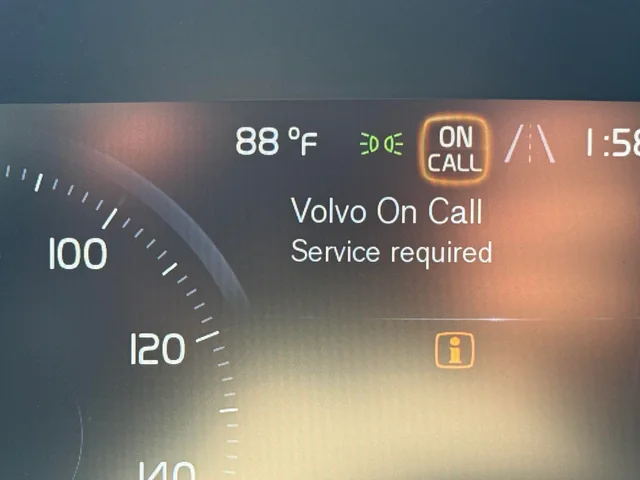
You hop in your Volvo S60, start it up, and there it is sitting right on the instrument cluster: “On Call – Service Required.” The car drives fine. Nothing feels off. But that message just stares back at you, and now you are stuck wondering whether you need to pull over and call a tow truck or whether it is something that can wait until your next scheduled service.
Here is what most Volvo owners do not realize: the On Call system is not just a fancy app feature that lets you unlock your car from your couch. It is directly woven into your vehicle’s safety and emergency response infrastructure. When it goes offline, you lose more than a convenient smartphone connection. You lose access to automatic emergency assistance, real-time vehicle location, and the SOS function that could genuinely save your life in a serious accident. That is not something you want to brush off.
This guide walks you through exactly what that warning means, what is likely causing it, and how to fix it, starting with the simplest possibilities and working up from there. No guesswork, no throwing parts at the problem.
What the Volvo On Call System Actually Does (And Why Losing It Is a Big Deal)
Most people know Volvo On Call as the app that lets you remotely lock and unlock the car, check fuel levels, pre-condition the cabin temperature before you step outside on a freezing morning, or find the car in a crowded parking lot. That stuff is genuinely useful, and plenty of Volvo owners use it daily.
But the less visible side of the system is the part that matters most when things go wrong. The VOC system contains a built-in cellular modem that keeps the car connected to Volvo’s customer care network at all times. In the event of a serious accident, the system can automatically contact Volvo’s On Call center and transmit your vehicle’s precise location using the Global Navigation Satellite System. You can also manually trigger an SOS call directly through the system if you are in trouble and need help fast.
Beyond the emergency functions, the VOC is also tied into the vehicle’s alarm system, security lock, and several other safety-related modules. It is not a self-contained feature that operates independently in a corner of the car’s electronics. It is integrated into the broader safety architecture of the vehicle.
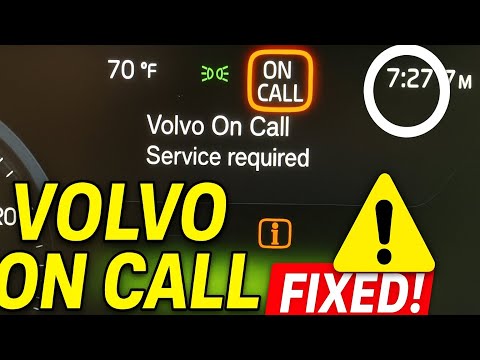
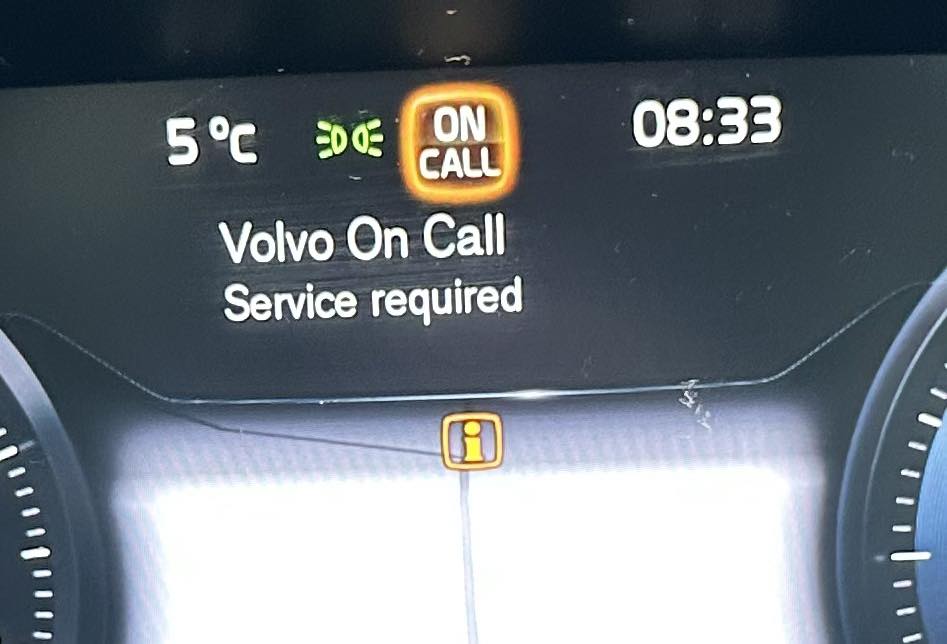
So when “On Call – Service Required” appears on your cluster, what it is really telling you is that the VOC system has gone offline. The app stops working. Remote functions become unavailable. And most importantly, the emergency assistance capability that Volvo built into the car simply is not there until you fix the problem.
What Actually Causes the Volvo On Call Service Required Warning?
There are several things that can trigger this warning, and they range from something as simple and cheap as a blown fuse to something more involved like a failing control module. The good news is that a proper diagnosis will tell you exactly what you are dealing with, so you are not replacing parts on a hunch and crossing your fingers.
A Blown Fuse
This is one of the most common causes, and ironically one of the most overlooked. Every electrical component in your Volvo is protected by a fuse, and the VOC system is no exception. Fuses exist for one specific reason: to sacrifice themselves when a circuit experiences an overcurrent event, protecting the more expensive electronics downstream from serious damage.
When the VOC fuse blows, the system loses power entirely and the warning message lights up on your cluster. The rest of the car keeps working perfectly normally, which is why this warning so often shows up completely alone without any other symptoms. Everything else feels and drives fine. It is just the VOC that has gone dark.
The fuse box location varies slightly by model year, but it is typically found under the hood on the passenger side. Your owner’s manual will identify the specific fuse associated with the VOC system. Pulling the fuse out and looking at it will usually tell you straightaway whether it has blown. A healthy fuse has an intact wire filament visible through the transparent body. A blown fuse shows a broken or melted filament. If it is blown, replace it with one of identical amperage. Do not be tempted to fit a higher-rated fuse as a quick workaround. That defeats the entire point of the fuse and can cause real damage to the circuit it is supposed to protect.
One thing to watch for: if the replacement fuse blows again within a short time, stop replacing it and get a professional diagnosis. A repeatedly blown fuse means something in the circuit is pulling more current than it should, and that underlying fault needs to be found and fixed before you go through another fuse.
Wiring Problems
The VOC modem and its supporting components connect to the rest of the car through a network of wiring. Any break, corrosion, or disconnection in that wiring can cut off power to the system or interrupt the signals it needs to communicate with other modules in the vehicle.
Wiring faults are harder to track down than a blown fuse because the affected wire may be buried behind trim panels or routed through areas that are not immediately accessible. Common culprits include rodents chewing through insulation (this happens more often than you would think, especially in vehicles parked outdoors in wooded areas), physical damage from a previous repair where wires were accidentally pinched or disturbed, and corrosion at connector points, particularly on older vehicles or those regularly exposed to wet or salty road conditions.
If wiring is suspected, a mechanic with proper Volvo diagnostic tools can trace the circuit and pinpoint exactly where the fault is occurring. This is not a job for guesswork. Incorrectly repaired wiring in a safety-critical system can appear fixed on the surface while creating new problems underneath.
Software Glitches
Like every modern vehicle system, the VOC runs on software. Bugs, incomplete updates, or conflicts within the software stack can cause the system to malfunction and throw the service required warning even when all the physical hardware is perfectly fine.
Software-related issues tend to have one telltale characteristic: they are inconsistent. The warning might appear and then disappear on its own within a day or two. It might show up immediately after a software update and then resolve with a system reset. Or it might persist stubbornly without any hardware fault showing up during a physical inspection, because the hardware is not the problem.
Volvo releases software updates for its connected systems on a rolling basis, and some of those updates specifically address known issues with the VOC platform. If the warning appeared around the time your vehicle received a software update, checking whether there is a subsequent patch available is a reasonable and often effective early step.
A Faulty Control Module
The VOC system has its own dedicated control module, separate from the main engine control module, though ECM faults can also affect VOC operation in certain circumstances. When the VOC module itself fails, whether from a hardware defect, internal software corruption, or physical damage, the system goes offline and the warning appears.
Module-level failures are less common than fuse or software issues, but they do happen, and they tend to show up more frequently in higher-mileage vehicles or in cars that have experienced electrical issues in the past. Diagnosing a module fault requires Volvo-compatible diagnostic software capable of communicating directly with the VOC module and pulling its specific fault codes. A standard OBD-II scanner from an auto parts store will not reach that depth of communication. It simply does not have access to the Volvo-specific module data you need.
If the module is confirmed faulty, it will need to be replaced and then programmed to the vehicle. This is not a simple plug-and-play swap. The replacement module has to be coded to your car’s VIN and configuration, which requires dealer-level tooling or a specialist with equivalent equipment.
A Weak or Failing Battery
Battery problems are behind a surprising number of warning messages across all Volvo systems, and the VOC is no exception. The system requires a stable, adequate voltage supply to operate. When battery voltage drops below the minimum threshold the system needs, the VOC can disable itself as a protective measure, triggering the service required message as it shuts down.
This is especially relevant for vehicles with batteries that are a few years old, cars that have been parked for extended periods without being driven, or vehicles that are primarily used for short trips that do not give the alternator enough run time to fully recharge the battery between uses. Gradual voltage depletion over many short trips is a real and common issue.
One important detail: a battery can show a healthy resting voltage of 12.6 volts and still fail under load. That is why a proper load test, not just a voltage reading with a multimeter, is the right way to assess battery condition accurately.
How to Fix the Volvo On Call Service Required Warning: Step by Step
Work through these steps in order. Always start with the simplest and cheapest possibilities before moving on to more involved repairs.
Step 1: Pull Fault Codes Before You Touch Anything
This step matters more than most people realize. Before you start pulling fuses or disconnecting the battery, plug in a Volvo-compatible diagnostic scanner and read the fault codes from all available modules. A generic OBD-II reader is not going to cut it here. You need a scanner that can access Volvo-specific modules, including the VOC module itself, not just the powertrain data that all OBD-II scanners can reach.
The fault codes will tell you directly what the system detected before it shut itself off. You might see codes pointing to a power supply fault, a communication breakdown between modules, an internal module error, or a network connectivity issue. That information gives you a clear starting point and saves you from replacing parts at random based on guesswork.
If you do not have access to Volvo-compatible diagnostic tools, many independent Volvo specialists and dealers can pull these codes for a nominal fee. It is money well spent at the start of the process.
Step 2: Test the Battery Properly
Run a full battery test, and make sure it includes a load test. A healthy battery should read around 12.6 volts at rest and hold adequate voltage when a load is applied. If the battery is marginal or clearly failing, replace it before chasing any other possible causes. A weak battery is one of those problems that triggers multiple seemingly unrelated warning messages across different systems at once, and replacing other components while the battery issue remains just wastes money.
While you are at it, check the battery terminals. Even a small amount of corrosion at the connection point creates resistance that reduces effective voltage reaching downstream components. Clean the terminals, make sure the connections are tight, and retest.
Step 3: Inspect the VOC Fuse
Locate the fuse box, find the fuse associated with the VOC system using the diagram in your owner’s manual, and pull it out for a visual inspection. If it is blown, replace it with a new fuse of the exact same amperage rating. Start the car and check whether the warning has cleared from the cluster.
If the new fuse blows again shortly after, do not keep replacing it. Something in the circuit is drawing more current than it should, and fitting another fuse without finding that root cause risks damaging other components in the system.
Step 4: Perform a System Reset
If the fuse and battery are both in good shape and the fault codes are not pointing clearly to a hardware failure, a full system reset is worth attempting. This is the most effective approach for software-related issues and temporary glitches.
- Turn the ignition fully off and remove the key.
- Disconnect the negative battery terminal.
- Wait a full five minutes to allow all control modules to fully discharge and reset.
- Reconnect the battery terminal securely.
- Start the car and check whether the warning has cleared.
If the warning clears and stays gone over the next several drives, it was most likely triggered by a temporary software state rather than a physical fault. Keep an eye on it for a week or two. If it comes back, something persistent is causing it and you need to dig deeper.
Step 5: Check Whether a Software Update Is Available
Contact an authorized Volvo dealer or use a Volvo-compatible diagnostic tool to check whether the software on your vehicle is current. If an update is available for the VOC system or any related modules, get it applied. Volvo has released patches over the years that directly address known VOC issues, and in some cases a software update resolves the warning entirely without any hardware work needed.
If your car is still within its warranty period, this service should be available at no cost through your authorized dealer.
Step 6: Have the Wiring Inspected
If the fault codes point to a communication or power supply issue and the fuse and battery have both been confirmed as healthy, the next step is a wiring inspection by a mechanic with access to the proper diagnostic tools. Ask them to look specifically for:
- Corrosion at connector points, especially any exposed to moisture
- Frayed or chewed insulation along wiring runs near the VOC modem and its connectors
- Loose or partially disconnected connectors that may be making intermittent contact
- Areas where previous repairs or modifications were performed that may have disturbed existing wiring
Any damaged wiring should be repaired using proper automotive wiring techniques. A tape-over patch on a safety system circuit is not an acceptable fix. If the damage is more extensive, a section replacement or a full harness repair may be the right call.
Step 7: Diagnose and Replace the Control Module If Necessary
If you have worked through every step above and the warning is still there, the VOC control module itself may have failed. A professional with Volvo-specific diagnostic equipment can confirm whether the module is operating correctly or has developed an internal fault. Do not jump to this conclusion without ruling out the earlier steps first. Module replacement is the most expensive option on this list, and it is only the right answer when everything else has genuinely been checked and cleared.
If the module does need to be replaced, the new unit has to be programmed to your specific vehicle. This is not a swap-and-go job. It requires dealer-level equipment or an independent specialist with equivalent capability to code the module correctly to your car’s VIN and configuration.
Quick Reference: Cause, What You See, and How to Fix It
| Cause | What You Might Notice | Recommended Fix |
|---|---|---|
| Blown fuse | Warning appears alone with no other symptoms; VOC app stops working | Inspect and replace the VOC fuse with the correct amperage |
| Weak or failing battery | Multiple warning messages appearing together; slow cranking; VOC warning alongside other alerts | Load test the battery; replace if failing; clean and tighten terminal connections |
| Software glitch | Intermittent warning that comes and goes; appeared after a software update | Perform a system reset; check for and apply available software updates |
| Wiring fault | Warning persists after fuse and battery have been checked; communication fault codes present | Professional wiring inspection and proper repair |
| Faulty VOC control module | All other causes ruled out; module-specific fault codes confirmed by diagnostic scan | Professional module diagnosis; replacement and programming if confirmed faulty |
Can You Keep Driving With This Warning on the Dashboard?
Technically, yes. The car will drive. Your engine, transmission, brakes, and core vehicle systems are not affected by a VOC fault. You are not going to break down on the highway because of this warning.
But here is the honest reality: every day you drive with this warning showing is a day you are operating without the emergency assistance capability Volvo built into the car. For the vast majority of trips, that will never matter. Most drives are uneventful, and most drivers never need to trigger an SOS function in their lifetime of owning a vehicle.
The problem is that emergencies are not scheduled. A serious accident, a medical event while driving, or a breakdown in an unfamiliar area at night are exactly the situations where having an automatic emergency connection to Volvo’s On Call center would make a real difference. Going without that capability indefinitely because you put off a repair is a risk that simply is not worth taking.
Treat this warning the way you would treat a seatbelt warning. The car still drives fine without a functioning seatbelt. But you would not ignore that either.
When to Skip the DIY Steps and Go Straight to a Professional
Some of these fixes sit comfortably within reach of a mechanically confident car owner. Checking a fuse, testing a battery, and performing a system reset are all reasonable things to try yourself before spending money at a workshop. If those steps clear the warning and it stays gone, you have saved yourself a diagnostic fee and a bit of time in a waiting room.
But the VOC system sits in a category where getting the diagnosis wrong has real consequences. This is not a heated seat or a sunroof. It is a safety and emergency platform. If you are not confident in what you are looking at, if the warning keeps returning after the simple fixes, or if the fault codes are pointing to something beyond a fuse or a battery, get it to an authorized Volvo workshop or a specialist with the right equipment.
When you go in, bring any fault codes you already pulled and explain what you have tried. That information saves diagnostic time and helps the technician start in the right place rather than going back over ground you have already covered.
A Few Volvo-Specific Tips That Can Help
Based on what Volvo owners commonly encounter with the On Call system, here are a few additional things worth knowing:
- The VOC modem location matters for cellular signal. The modem relies on a cellular connection to communicate with Volvo’s network. If you frequently park or drive in areas with very poor cellular coverage, occasional disconnections are not necessarily a system fault. But a persistent warning that does not clear when you return to areas with good signal does need attention.
- Check your VOC subscription status. In some markets, Volvo On Call connected services require an active subscription beyond the initial trial period included with a new vehicle. If your subscription has expired, the system may display a service required warning. Log into your Volvo ID account or contact your dealer to confirm whether your subscription is active before assuming there is a hardware or software fault.
- Used Volvo purchases sometimes have VOC issues tied to the previous owner’s account. If you recently bought a used Volvo and this warning appeared shortly after purchase, the vehicle may still be linked to the previous owner’s Volvo ID. Contact Volvo customer support to transfer ownership and relink the car to your own account.
- SIM card issues can cause VOC failures. The built-in modem uses a SIM card for cellular connectivity. In some cases, a faulty or improperly seated SIM card can cause the system to lose its connection and trigger the service required message. This is a less common cause but worth mentioning since it requires dealer intervention to address properly.
What Volvo On Call Can and Cannot Do: Keeping Expectations Realistic
It is worth taking a moment to understand the full scope of what the VOC system does, because knowing what you are missing when it is offline helps clarify why fixing it matters.
| VOC Feature | Available When VOC Is Working | Available When VOC Is Offline |
|---|---|---|
| Remote lock / unlock via app | Yes | No |
| Remote engine start via app | Yes (where supported) | No |
| Cabin pre-conditioning | Yes | No |
| Vehicle location tracking | Yes | No |
| Fuel / charge level check via app | Yes | No |
| Automatic accident detection and SOS | Yes | No |
| Manual SOS call | Yes | No |
| Journey history and trip data | Yes | No |
| Core driving functions (engine, brakes, etc.) | Yes | Yes, unaffected |
Every row in that table that says “No” under the offline column is a function you are doing without every time you drive with that warning on your dashboard. The convenience features are missed but manageable. The emergency functions are a different matter entirely.
The Bottom Line on the Volvo On Call Service Required Warning
This is not a warning you want to sit on for weeks waiting for your next service appointment. The fixes range from something as quick and cheap as swapping a fuse to something as involved as module replacement, and the only way to know which end of that spectrum you are dealing with is to diagnose it properly.
Start with the basics: pull the fault codes, test the battery, check the fuse, try a reset. Those steps cost you almost nothing and resolve the problem for a significant number of owners. If none of that moves the needle, take it to a qualified specialist with the right tools and let them work from the fault code data you have already gathered.
The Volvo On Call system exists because Volvo built safety into the DNA of the brand. Getting it back online is not just about restoring a convenient app feature. It is about making sure the car is doing the full job it was designed to do, including the job it would do for you on the one day you really need it.