
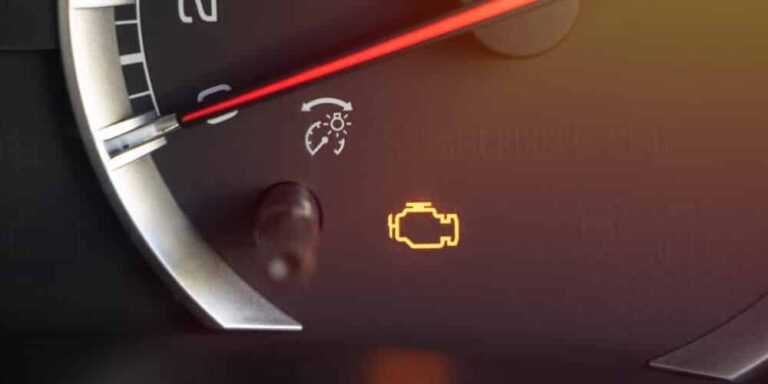
That little amber light on your Lexus dashboard showing “CHECK SYSTEM” can send a wave of panic through any driver. But before you assume the worst, take a breath. That light is essentially your Lexus telling you, “Hey, something needs your attention,” and it does not always mean your engine is about to give up on you.
The check engine or check system light is a catch-all warning. It can be triggered by something as simple as a loose gas cap or as involved as a failing catalytic converter. The tricky part is that you cannot tell just by looking at the light which one it is. That is where understanding the most common causes becomes really useful.
In this guide, we are going to walk through everything you need to know about the Lexus CHECK SYSTEM light, what causes it, what it costs to fix, and what you can do right now to start troubleshooting.
What Does the CHECK SYSTEM Light Actually Mean on a Lexus?
Your Lexus is not just a car. It is essentially a rolling computer system on four wheels. There are dozens of sensors and modules communicating with each other constantly, and the onboard computer is always listening. When something falls outside the expected parameters, the system flags it and lights up that warning on your dashboard.
The CHECK SYSTEM light is used as a general-purpose alert. It does not pinpoint one specific problem. Instead, it tells you that one or more systems in the vehicle have reported an issue. This could be related to the engine, the emissions system, the tire pressure monitoring system, the software, or even just a loose gas cap.
Here is the key distinction a lot of people miss: the CHECK SYSTEM light does not mean the car is about to break down. It means something needs to be looked at. Some causes are cheap and quick to resolve. Others will require a visit to a certified Lexus technician and a more serious repair budget.
So what exactly triggers it? Let us get into the most common culprits.
The Most Common Reasons Your Lexus CHECK SYSTEM Light Is On
1. Your Gas Cap Is Loose (Yes, Really)
This is one of the most anticlimactic causes of a check system light, and it happens more often than you would think. If the gas cap is not twisted on all the way after a fill-up, or if it was accidentally left sitting on top of the pump while you drove off, air can sneak into the fuel tank.
Modern vehicles are sealed systems, especially around the fuel tank. Even a small pressure change caused by a loose cap can trip the sensors and set off the warning light. Your Lexus is not being dramatic. It is doing exactly what it is designed to do.
The fix? Pull over safely, pop open the fuel door, and tighten the gas cap until you hear it click. Then drive normally for a short while. If the cap was the issue, the light may clear on its own within a few drive cycles. If it does not, there could be a secondary issue, or the cap itself might need replacing.
A replacement gas cap costs almost nothing. Usually under $20. So always check this first before spending money on diagnostics.
2. Tire Pressure Monitoring System (TPMS) Problems
This is one of the biggest categories when it comes to the CHECK SYSTEM light on a Lexus. The Tire Pressure Monitoring System, or TPMS, is a network of sensors and software that keeps tabs on the air pressure in each of your four tires. When something in that system is off, whether it is the tire pressure itself, a faulty sensor, or a software hiccup, the CHECK SYSTEM light can come on.
There are a few specific ways the TPMS can cause this warning to appear.
Low or Uneven Tire Pressure
The most straightforward TPMS trigger is actual low tire pressure. If one or more of your tires drops below the recommended PSI, the sensors pick that up and alert the system. Temperature swings are a common reason for this. On a cold winter morning, tire pressure can drop noticeably overnight, even if there is no leak.
The recommended tire pressure for most Lexus models sits somewhere between 32 and 36 PSI, but always check the sticker inside your driver’s door jamb for the exact spec for your vehicle. A tire gauge costs a few dollars and can save you from an unnecessary trip to the mechanic.
Inflate your tires to the correct PSI and see if the light clears after a short drive. If it does not, the issue might be with the TPMS sensors themselves rather than the tire pressure.
Dead TPMS Sensor Battery
Each TPMS sensor inside your Lexus’s wheels has its own small battery. These are not batteries you can swap out like you would in a remote control. They are sealed inside the sensor unit itself. Over time, they die. And when they do, the sensor goes silent, which the monitoring system interprets as a fault.
Most TPMS batteries last somewhere between 5 and 10 years, depending on driving conditions and how frequently the sensors are transmitting data. If your Lexus is getting up there in years, a dead sensor battery is a very likely cause of the CHECK SYSTEM alert.
Because the battery is sealed inside the sensor, you cannot replace just the battery. The entire sensor needs to go. A certified Lexus technician can swap out a dead TPMS sensor in under an hour, and the replacement process is straightforward. The cost varies, but expect to pay somewhere in the range of $50 to $100 per sensor, including parts and labor.
Faulty TPMS Sensor Sending Bad Data
Sometimes a sensor does not fully die. It just starts providing inaccurate or inconsistent readings. Maybe it reports that a tire is critically low when it is actually properly inflated. Or maybe it sends random signals that confuse the monitoring system. Either way, the result is the same: the CHECK SYSTEM light comes on even though your tires are completely fine.
This kind of issue is harder to diagnose on your own because the tire pressure looks normal when you check it manually. A mechanic with the right diagnostic tools can connect to your Lexus’s OBD system and pull up the actual sensor data to spot which sensor is acting up.
Replacing a faulty TPMS sensor typically runs up to around $150 per sensor, factoring in parts and labor. It is a routine service, not a major repair.
A Software Glitch in the TPMS
Here is something that surprises a lot of Lexus owners: the check system light can be triggered by a software bug. Think of the TPMS like an app running on your phone. If the app has a bug or the underlying data it is working with becomes corrupted, the whole thing can start misbehaving, even if there is nothing physically wrong.
Lexus vehicles receive periodic software updates, and sometimes the monitoring system starts flagging false warnings if an update is pending or if old corrupted data is still sitting in the system. Resetting or reinitializing the TPMS clears out that bad data and gives the system a fresh start.
We will walk through exactly how to do that reinitialize in a moment. But first, check to see if there is a software update available for your Lexus. If there is, getting it installed should be the first step.
3. A Failing or Clogged Catalytic Converter
This one is a bit more serious. The catalytic converter is the component in your exhaust system responsible for filtering out harmful pollutants before they exit through the tailpipe. It converts toxic gases like carbon monoxide and hydrocarbons into less harmful compounds. Without it working properly, your Lexus becomes a significant polluter, and in most states, it will fail an emissions test.
Your Lexus monitors the performance of the catalytic converter through oxygen sensors positioned before and after the converter. If the readings from those sensors do not match what the computer expects, it flags the catalytic converter as underperforming and triggers the CHECK SYSTEM light.
There are a few reasons a catalytic converter can stop performing correctly:
- Carbon buildup over time reducing the converter’s efficiency
- An engine misfire sending unburned fuel into the exhaust and damaging the converter
- Oil or coolant leaking into the combustion chamber and coating the converter’s internal components
- Physical damage from road debris or impact underneath the vehicle
A certified Lexus mechanic can use the onboard diagnostic system and their own tools to confirm whether the catalytic converter is the problem. Once confirmed, you have two options.
Option 1: Clean or flush the catalytic converter. If the converter is not completely destroyed, a professional cleaning can restore a lot of its function. This involves removing the converter and using a specialized flush process to clear out carbon deposits. The cost is usually under $50 and takes less than an hour. If this works, you have dodged a very expensive bullet.
Option 2: Replace the catalytic converter. If the converter is too far gone to clean, replacement is the only real option. And this is where it gets expensive. A new catalytic converter for a Lexus, including parts and labor, typically costs between $1,000 and $2,500. On some Lexus models, that number can go even higher depending on the specific exhaust configuration.
It is always worth trying the cleaning route first. If the mechanic inspects it and confirms there is still life in the converter, flushing it is the smarter financial move. But if they find physical damage or severe internal breakdown, replacement is unavoidable.
One more thing worth knowing: catalytic converter theft has become a significant problem across the United States in recent years. Lexus vehicles, particularly SUV models like the RX and GX that sit higher off the ground, are common targets because the converter is accessible from underneath. If you park in public areas frequently, it is worth asking your mechanic about anti-theft shields designed specifically for your model.
4. Oxygen Sensor Failure
Closely related to the catalytic converter issue is the oxygen sensor, or O2 sensor. These sensors measure the amount of oxygen in your exhaust gases and send that data to the engine control unit. The ECU uses this information to manage the fuel-to-air ratio in the engine.
When an oxygen sensor goes bad, the engine starts running either too rich (too much fuel) or too lean (not enough fuel). Neither is good. A rich mixture wastes fuel and can damage the catalytic converter. A lean mixture can cause misfires and overheating.
The CHECK SYSTEM light will almost certainly come on when an O2 sensor fails, and a diagnostic scan will typically return a P0136, P0141, P0155, or similar code pointing to which specific sensor is the problem.
The good news is that oxygen sensors are far less expensive to replace than catalytic converters. Parts and labor typically run between $150 and $400 depending on which sensor has failed and whether it is a primary or secondary sensor.
5. Engine Misfire
An engine misfire happens when one or more cylinders in your engine fail to fire properly. This can be caused by a failing spark plug, a bad ignition coil, a clogged fuel injector, or a vacuum leak. When a cylinder misfires, the engine runs roughly, and you might notice a vibration, a stumbling feeling, or a slight loss of power.
Misfires are one of the more common triggers for the CHECK SYSTEM light, and they need to be addressed promptly. Left unresolved, a misfire can push unburned fuel into the exhaust system, which can damage the catalytic converter. Now a problem that might have cost you $150 in spark plugs has turned into a $2,000 catalytic converter replacement.
A mechanic will pull a misfire code from the diagnostic system that pinpoints which cylinder is affected. From there, the troubleshooting process is fairly logical. Start with the cheapest fix first: spark plugs. If that does not resolve it, move on to ignition coils, then fuel injectors.
6. Mass Airflow Sensor Problems
The mass airflow (MAF) sensor measures how much air is entering the engine so the computer can calculate the right amount of fuel to inject. When this sensor gets dirty or fails, the engine gets wrong information and starts running inefficiently.
Symptoms of a bad MAF sensor include rough idling, poor acceleration, reduced fuel economy, and yes, a CHECK SYSTEM light. The fix is sometimes as simple as cleaning the sensor with a specialized MAF cleaner spray, which costs around $10 at any auto parts store. If cleaning does not help, replacing the sensor runs between $150 and $350.
7. Evaporative Emission System (EVAP) Leak
The EVAP system prevents fuel vapors from escaping into the atmosphere. It captures those vapors and routes them back into the engine to be burned. A leak anywhere in this system, whether it is a cracked hose, a faulty purge valve, or yes, that loose gas cap we mentioned earlier, will trigger the CHECK SYSTEM light.
EVAP-related fault codes are extremely common and are often the culprit when someone replaces a gas cap and the light still stays on. A smoke test performed by a mechanic is the most reliable way to locate an EVAP leak. Repair costs range from under $50 for a simple hose fix to a few hundred dollars if a major component like the purge valve or vent valve needs replacing.
How to Tell If Your Lexus CHECK SYSTEM Light Is Serious
Not all check system lights are created equal. Here is a quick way to gauge how urgently you need to act:
| Light Behavior | What It Likely Means | Urgency Level |
|---|---|---|
| Steady amber light | A non-emergency fault has been detected | Get it checked within a few days |
| Flashing or blinking amber light | Active misfire damaging the catalytic converter | Stop driving and call a mechanic immediately |
| Red check engine light | Severe issue requiring immediate attention | Pull over safely and do not drive further |
| Light comes on, then goes off | Intermittent fault, possibly software-related | Have it scanned to pull stored codes |
A steady amber light is not a reason to panic, but it is a reason to take action. A flashing light is a different story. If your CHECK SYSTEM light is blinking, pull over when it is safe to do so and do not drive the vehicle until a mechanic has looked at it.
How to Reinitialize the TPMS on Your Lexus
If the CHECK SYSTEM light is related to a TPMS software glitch, reinitializing the system can clear the problem by wiping out any corrupted data and giving the system a clean slate. This is worth trying before spending money on sensor replacements.
Here is how to do it:
- Start your vehicle and let it idle. Make sure you are parked safely before doing anything else.
- Activate the menu by pressing the on/off button on your multi-information display. You should see the “Check System” text on your dashboard.
- Scroll through the menu until you find the “Tire Pressure” option.
- Hold the on/off button for 3 seconds until the word “Initialized” appears on the display.
- Drive the vehicle at a steady speed for a few minutes to allow the sensors to recalibrate.
If the CHECK SYSTEM text disappears after the reinitialize, the problem was a software glitch and you are good to go. But if the warning stays on, there is an actual physical issue with the TPMS that needs a mechanic’s attention. The reinitialize process eliminates the software possibility so you are not chasing a ghost.
What Happens If You Ignore the CHECK SYSTEM Light?
Some people see the check system light come on and just… drive. Day after day. Week after week. And sure, sometimes the car keeps running fine. But here is what you need to understand: ignoring that light is essentially ignoring a warning sign that could be saving you from a much bigger repair bill down the road.
Take the misfire example again. A single misfiring cylinder might not feel dramatic at first. The car runs a little rough. Fuel economy drops slightly. But after days or weeks of misfiring, unburned fuel floods the exhaust system and destroys the catalytic converter. What started as a $30 spark plug replacement has now turned into a $2,000 job.
Or consider the oxygen sensor. A failing O2 sensor makes the engine run rich, burning excess fuel. Over time, this leads to significantly higher fuel costs, a damaged catalytic converter, and potentially other engine damage. The sensor itself is a relatively inexpensive fix. The downstream damage is not.
The CHECK SYSTEM light is not just an annoyance. It is information. And information is valuable when it tells you about a problem while it is still small and manageable.
Can You Pass a State Inspection or Emissions Test with the CHECK SYSTEM Light On?
Short answer: almost certainly not. In most U.S. states that require vehicle inspections or emissions testing, a vehicle with an active check engine or check system light will automatically fail the inspection. It does not matter if the car seems to be running fine. The light being on means the onboard diagnostic system has flagged a fault, and that is an automatic disqualifier.
There is also a little-known catch around emissions testing. Even if you clear the fault code right before your inspection and the light goes off, the system might still fail. Most emissions testing equipment checks whether the vehicle’s diagnostic monitors have completed their readiness cycles. If you just cleared the codes, those monitors reset and show as “not ready,” which also results in a failed test.
So the proper way to handle this is to fix the actual underlying problem, let the car run through a few normal drive cycles so the monitors complete, and then go in for your inspection. Trying to shortcut the process usually backfires.
Should You Get a Diagnostic Scan Before Taking Your Lexus to the Dealer?
Absolutely. Before you head to the dealership and potentially pay premium diagnostic fees, consider stopping at an auto parts store first. Most major chains like AutoZone, O’Reilly Auto Parts, and Advance Auto Parts offer free OBD-II diagnostic scans. You plug a small reader into the port under your dashboard, and it pulls up the fault codes stored in your car’s computer.
These codes will give you a starting point. They are not a complete diagnosis on their own, but they can tell you whether the issue is likely a simple fix (like a gas cap or a sensor) or something that needs more serious attention (like an engine misfire or catalytic converter failure).
Going into the dealership knowing your fault codes means you are not going in blind. You can have an informed conversation with the service advisor and make better decisions about what repairs are genuinely necessary.
That said, a free scan gives you codes, not a complete diagnosis. There is a difference between knowing the code P0420 (catalytic converter efficiency below threshold) and knowing exactly why the converter is underperforming. The mechanic still needs to do their job. But armed with codes, you are in a much stronger position.
How Much Does It Cost to Fix the Lexus CHECK SYSTEM Light?
The cost depends entirely on what is causing the light to come on. Here is a realistic breakdown:
| Cause | Estimated Repair Cost |
|---|---|
| Loose or missing gas cap | $0 to $20 |
| TPMS reinitialize (software glitch) | $0 (DIY) or minimal shop fee |
| Dead or faulty TPMS sensor | $50 to $150 per sensor |
| Oxygen sensor replacement | $150 to $400 |
| Mass airflow sensor cleaning | $10 to $50 |
| Mass airflow sensor replacement | $150 to $350 |
| Spark plug replacement | $100 to $300 |
| Ignition coil replacement | $150 to $400 |
| EVAP system repair | $50 to $600 depending on the issue |
| Catalytic converter cleaning/flush | Under $50 |
| Catalytic converter replacement | $1,000 to $2,500 |
As you can see, the range is enormous. This is exactly why getting a proper diagnostic scan before committing to any repair is so important. You do not want to spend $300 on a part that was not the problem.
How to Prevent the CHECK SYSTEM Light From Coming On in the First Place
You cannot prevent every fault that might trigger the CHECK SYSTEM light, but you can definitely reduce the chances of it showing up unexpectedly. Here is what consistent, basic maintenance does for you:
- Check your tire pressure monthly. Tire pressure naturally fluctuates with temperature changes. Keeping tires properly inflated extends their life, improves fuel economy, and keeps the TPMS sensors from triggering false alerts.
- Always tighten the gas cap completely. It sounds basic, but after filling up, give the cap an extra turn until you hear or feel it click. A few seconds of effort eliminates one of the most common CHECK SYSTEM light causes.
- Replace spark plugs on schedule. Most Lexus models use iridium spark plugs that last between 60,000 and 100,000 miles. Check your owner’s manual for the specific interval. Worn plugs lead to misfires, which lead to catalytic converter damage.
- Stay current with oil changes. Old, degraded oil increases engine wear and can contribute to a range of sensor faults. Follow the oil change schedule in your owner’s manual, which is typically every 5,000 to 10,000 miles depending on whether you use conventional or synthetic oil.
- Keep up with software updates. Lexus vehicles receive software updates periodically. If you take your car to an authorized dealer for regular service, they will typically apply any available updates. These updates can fix bugs that cause false warning lights.
- Have your TPMS sensors inspected every few years. If your Lexus is approaching the 5 to 7 year mark, it is worth having the sensor batteries checked. Proactive replacement is cheaper than dealing with an unexpected CHECK SYSTEM light on a road trip.
Lexus CHECK SYSTEM Light vs. Other Warning Lights: Know the Difference
Your Lexus dashboard can light up with several different warnings, and it helps to know which ones require immediate action and which ones give you a little more time.
| Warning Light | What It Means | How Urgent |
|---|---|---|
| CHECK SYSTEM (amber) | General fault detected in one or more systems | Moderate, get it checked soon |
| Oil pressure warning (red) | Critically low oil pressure | Pull over immediately |
| Temperature warning (red) | Engine is overheating | Pull over immediately |
| Battery warning | Charging system failure | Get to a mechanic soon |
| TPMS light (tire with exclamation) | Low tire pressure | Check and inflate tires soon |
| Brake warning light | Brake system issue or low fluid | Do not drive, call for service |
The CHECK SYSTEM light sitting alone on your dashboard, steady and amber, is not an immediate emergency in most cases. But a red oil pressure or temperature light demands that you stop driving right now. Mixing these up can cost you an engine.
Lexus Models Most Commonly Associated with CHECK SYSTEM Light Issues
While any Lexus can display the CHECK SYSTEM warning, some models and years have a higher frequency of TPMS-related and emissions-related alerts based on owner reports and technical service bulletins. These include:
- Lexus RX 350 and RX 450h: Frequently reported TPMS sensor issues and catalytic converter alerts, especially in higher-mileage examples.
- Lexus ES 350: Oxygen sensor and EVAP system faults are common triggers in this model.
- Lexus IS 250 and IS 350: Misfire-related alerts are more common, often tied to direct injection carbon buildup on intake valves.
- Lexus GX 460: TPMS battery failures are more frequent given the age range of many GX 460s currently on the road.
That does not mean these are bad vehicles. They are excellent cars. But knowing your specific model’s tendencies helps you ask smarter questions when you bring it in for service.
Dealer vs. Independent Shop: Where Should You Take Your Lexus?
This comes up all the time. And the honest answer is: it depends on the issue.
For software updates, TPMS resets, and warranty-related repairs, a Lexus certified dealer is usually the better choice. They have the exact factory diagnostic tools and access to Lexus technical service bulletins that independent shops may not have.
But for routine repairs like spark plug replacements, oxygen sensor swaps, or TPMS sensor replacements, a well-reviewed independent shop with experience on Japanese vehicles can do the job just as well, often at a meaningfully lower cost. The key is finding a shop that uses quality parts and has technicians who know Lexus vehicles specifically.
If you are out of warranty, paying dealer labor rates for basic maintenance is not always necessary. But for anything involving Lexus-specific software, programming, or technical service bulletins, the dealer’s access to proprietary systems is genuinely worth the premium.
A Quick Real-World Scenario to Tie It All Together
Picture this: you fill up your Lexus RX 350 at the gas station on a cold Tuesday morning. You are in a hurry, you toss the gas cap back on without fully tightening it, and you pull out of the station. By Wednesday afternoon, the CHECK SYSTEM light is on.
You panic, assume it is the engine, and drive straight to the dealer. The service advisor plugs in the diagnostic tool and pulls a code: P0457, which is an EVAP system large leak, almost always caused by a loose or missing gas cap. The technician tightens the cap, clears the code, and hands you a bill for a diagnostic fee that could have been avoided.
Alternatively, you check the gas cap yourself first. You notice it was not fully tight. You tighten it up, drive for a couple of days, and the light clears on its own. Problem solved. Cost: $0.
That is why starting with the simple, free checks before assuming the worst is always the smartest move. Work from cheapest to most expensive. Eliminate the easy stuff first.