
Winter driving separates the prepared from the unprepared. And while a dedicated winter tire will always be the gold standard for serious snow conditions, not every driver has the budget, storage space, or climate that justifies owning two separate sets of tires. That is where the best all-season tires for snow come in.
The technology behind all-season tires has improved dramatically over the past decade. What used to be a tire that handled mild winter conditions passably has evolved into a category where some products genuinely compete with dedicated winter rubber in light to moderate snow. The key is knowing which ones actually deliver and which ones rely on marketing language to convince you of performance they cannot back up.
Here is something a lot of people get wrong: they wait until their tires are genuinely worn or until the first snowstorm hits before shopping for replacements. At that point you are rushed, stressed, and far more likely to grab whatever is in stock rather than what is actually right for your vehicle and driving conditions. Do not be that person. Read through this guide now, understand what each option offers, and make a decision with a clear head.
Below are the ten best all-season tires for snow available right now, broken down honestly so you know exactly what you are getting with each one.
What Makes an All-Season Tire Good in Snow?
Before getting into the specific products, it helps to understand what separates a genuinely capable all-season snow tire from one that just claims to be.
The most important certification to look for is the 3PMSF rating, which stands for Three-Peak Mountain Snowflake. This symbol, stamped on the sidewall of the tire, means the tire has been independently tested and certified to meet a minimum performance threshold in severe winter conditions. It is a meaningful distinction. A tire without the 3PMSF rating has not passed that test, regardless of how many snowflakes appear in its marketing photos.
Beyond certification, the tread compound matters enormously. All-season tires use a compound designed to remain pliable in a wider temperature range than pure summer tires, which harden and lose grip in cold temperatures. The tread pattern also plays a role, specifically the presence of sipes, which are the fine cuts across the tread blocks that create additional edges for biting into packed snow and ice.
One important limitation to keep in mind throughout this list: all-season tires, even the best ones, are not replacements for dedicated winter tires in severe, sustained winter conditions. If you live somewhere that regularly sees heavy snowfall, ice-covered roads, and temperatures that stay well below freezing for months at a time, dedicated winter tires on a second set of wheels are genuinely worth the investment. But for the vast majority of drivers dealing with occasional snow, mixed conditions, and moderate winters, a quality all-season tire is a practical and capable solution.
1. Michelin CrossClimate 2: The Best All-Season Snow Tire You Can Buy Right Now
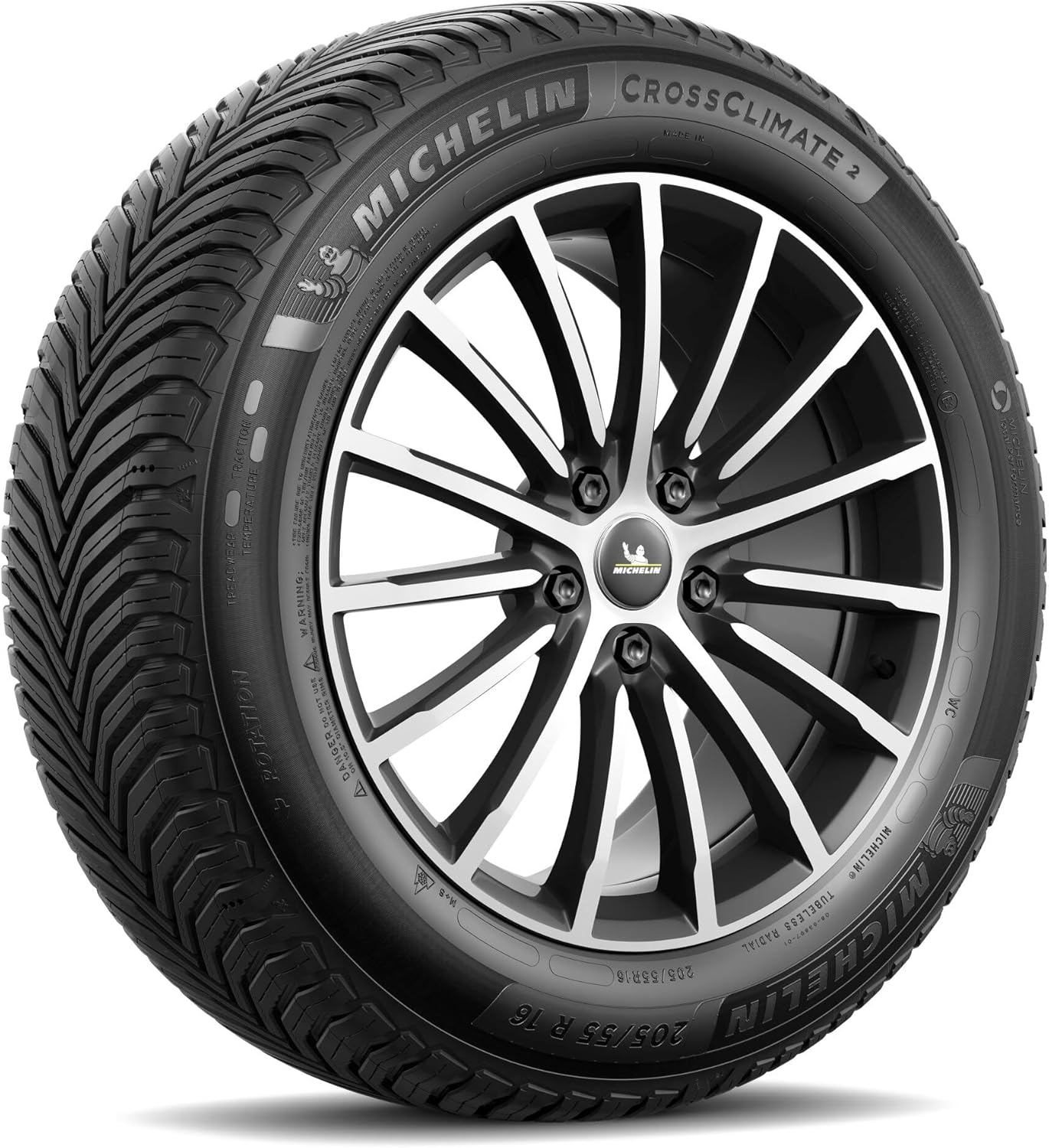
If you can only remember one name from this entire list, make it the CrossClimate 2. Michelin has done something genuinely impressive here: they built an all-season tire that carries the 3PMSF rating and backs it up with real-world performance that puts it ahead of most competitors across nearly every category.
The acceleration traction in snow is outstanding. Where most all-season tires start to struggle when the snow gets deeper, the CrossClimate 2 keeps pulling. The braking distances are short and consistent, which is where a lot of all-season tires fall apart on snow-covered roads. The tire also does something rare: it maintains excellent dry handling despite its winter capability. Most tires in this space trade off dry performance for winter grip. The CrossClimate 2 refuses to make that trade.
The wet performance is also among the best in the all-season category. Hydroplaning resistance is strong, cornering grip on wet pavement is confident, and braking on wet roads is reassuringly short. This is a tire that performs genuinely well in every condition it is designed for, not just one or two.
The honest downside is cost. The Michelin CrossClimate 2 is priced at the upper end of the all-season category, and for some buyers, that is a real barrier. But consider what you are getting: a single tire that replaces the need for separate summer and winter sets, carries the 3PMSF certification, and delivers class-leading performance in multiple weather conditions. Over the life of the tire, the value case is strong.
CrossClimate 2 Quick Facts
| Feature | Detail |
|---|---|
| 3PMSF Rated | Yes |
| Best For | Snow, ice, wet, and dry performance |
| Category | All-weather touring |
| Price Range | Premium |
| Standout Quality | No dry performance compromise for winter capability |
2. Goodyear Assurance All-Season: Solid Value for Everyday Winter Driving
Not everyone needs or can afford the best tire on the market. The Goodyear Assurance All-Season is aimed at drivers of minivans, sedans, compact cars, and SUVs who want solid year-round traction without spending premium money. And for a significant portion of drivers, it genuinely delivers.
In the snow, the Assurance performs better than its price would suggest. Traction is adequate for most everyday winter scenarios, and the braking distances, while not best-in-class, are not dangerously long either. For a commuter dealing with light to moderate snowfall on maintained roads, this tire handles its job competently.
Ice is where it gets harder to recommend. The Assurance All-Season is noticeably less capable on ice than on snow, but to be fair, that is true of virtually every all-season tire at any price point. Ice performance requires dedicated winter tire compounds and tread designs that no all-season product fully replicates.
Wet performance is actually one of the stronger points of this tire. Hydroplaning resistance is good, and the tire manages wet pavement with reasonable confidence. The grip level in wet corners is not exciting, but it is predictable, which matters more in real driving conditions than raw grip numbers.
If you are budget-conscious and you drive in conditions that occasionally include snow rather than heavy winter weather regularly, the Assurance All-Season is a sensible, honest choice that delivers good value for money.
3. Continental ControlContact Tour A/S Plus: The Quiet All-Rounder
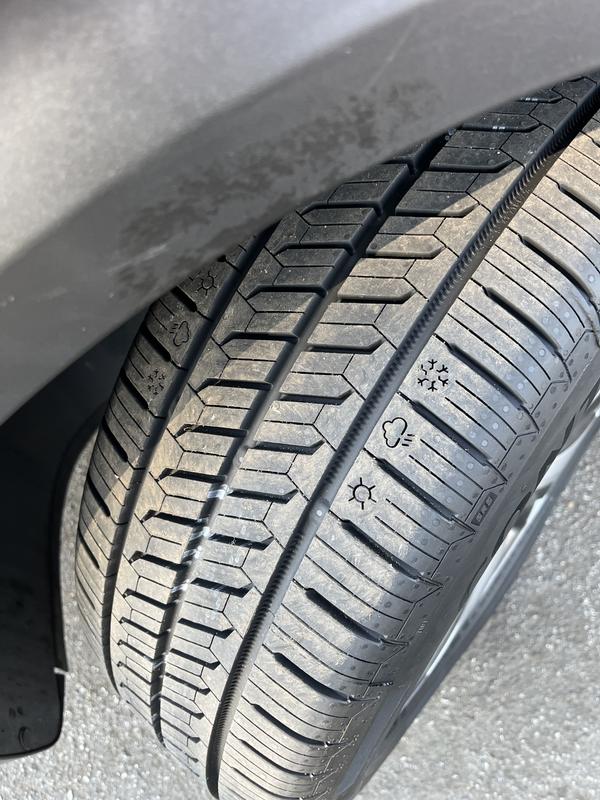
Continental builds some genuinely excellent tires, and the ControlContact Tour A/S Plus is a solid example of what the brand does well: a refined, quiet, comfortable tire that handles a wide range of conditions with competence.
The noise level is exceptional. On concrete highway surfaces, which are notoriously loud for tires, this tire remains genuinely quiet. If cabin noise and ride comfort matter to you on long drives, the ControlContact Tour A/S Plus deserves serious consideration.
In the rain, performance is reasonably good. The tire manages wet pavement well, with good hydroplaning resistance and acceptable braking distances. It is not the absolute best in the wet, but it is consistently capable and predictable.
Where it shows limitation is in heavy snow. In light snow, defined roughly as two inches or less, this tire performs well and provides decent traction. Get into deeper, heavier snow accumulation and the situation becomes less comfortable. Drivers who regularly encounter significant winter precipitation may find this tire’s limits come up sooner than expected.
This is a good tire for drivers in regions where winter means occasional light snow and primarily wet roads rather than sustained heavy snowfall. For those conditions, the quiet, comfortable ride quality is a genuine bonus that many other tires in this category cannot match.
4. Michelin Defender T+H: The Long-Distance Champion With Snow Capability
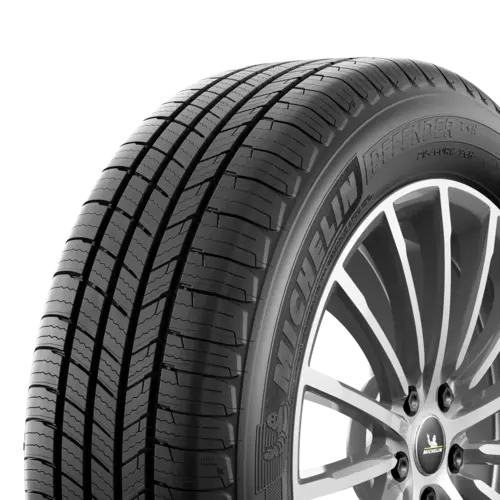
Michelin makes this list twice, and the Defender T+H earns its spot independently of the CrossClimate 2. It is a different kind of tire aimed at a different kind of driver, but it does its job with the same level of Michelin quality.
The Defender T+H is a touring tire first, which means it prioritizes comfort, refinement, and longevity over outright performance. In those areas, it is genuinely excellent. The ride quality is smooth, the tire is quiet on the highway, and the 80,000-mile treadwear warranty is one of the longest in the touring category. If you drive a lot of highway miles and want a tire that will go the distance without constant replacement costs, this is a compelling option.
The IntelliSipe Technology uses interlocking zigzag sipes that interlock below the surface, and in practice that translates to genuinely useful traction on wet roads and in light snow. The handling responsiveness is better than many touring tires, and high-speed stability is a particular strength.
The trade-off is cost. The Defender T+H sits at the higher end of the touring tire price range, above most of its direct competitors. But for a tire with an 80,000-mile warranty and consistent performance across all weather conditions, the per-mile cost works out reasonably well over the life of the tire.
5. General AltiMAX RT43: Dependable Value for Light Winter Conditions
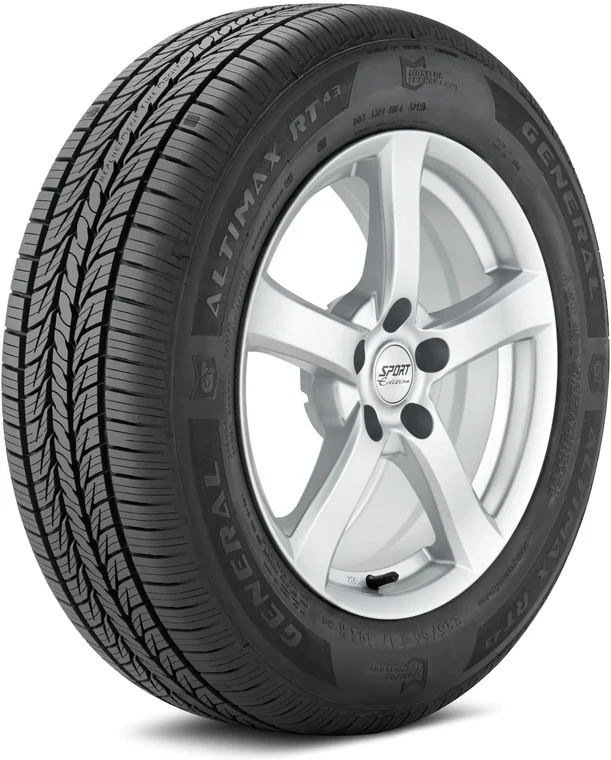
General Tire often flies under the radar in tire conversations dominated by the major premium brands, but the AltiMAX RT43 has built a solid reputation among drivers who want reliable performance without paying top-tier prices.
In light snow, the AltiMAX RT43 provides genuinely good traction and braking. It is not designed for extreme winter weather, and trying to use it as a heavy-snow tire will expose its limitations quickly. But for drivers in regions where winter means occasional snow days rather than months of heavy accumulation, this tire handles those conditions with confidence.
The dry and wet performance is consistent and capable throughout its tread life. The compound retains grip well across a good portion of the tire’s usable life, which means you are not paying for a tire that only performs well when it is brand new. For the price point, the AltiMAX RT43 is genuinely one of the best all-around values in the grand-touring category.
6. Bridgestone Turanza QuietTrack: The Quietest Ride in Its Class
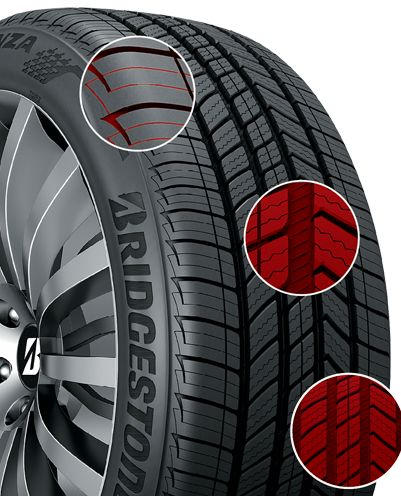
The Turanza QuietTrack has a clear design priority: make the most comfortable, quiet grand-touring tire possible. And on that specific objective, it succeeds better than virtually anything else in its category. The ComfortCruise technology genuinely works, and the result is a tire that absorbs road imperfections and isolates road noise to a degree that many drivers find remarkable.
But the QuietTrack is not just a soft, comfortable tire that sacrifices capability for refinement. Dry road responsiveness is good, traction and grip are class-competitive, and the braking performance is among the better options in the grand-touring segment. These are not just comfortable miles; they are also confident and capable miles.
In wet conditions, the Turanza performs well. Hydroplaning resistance is strong, wet braking is reassuringly short, and the tire manages rain-covered pavement with the kind of calm competence that inspires confidence in the driver. In light snow, it actually outperforms several competitors in its segment, which is a pleasant surprise for a tire whose primary selling point is comfort rather than winter performance.
The 80,000-mile treadwear warranty ties with the Michelin Defender T+H for the best in the grand-touring category. The price is also at the top of the range, but for drivers who spend significant time on the highway and value a refined, quiet experience above everything else, the QuietTrack is difficult to argue against.
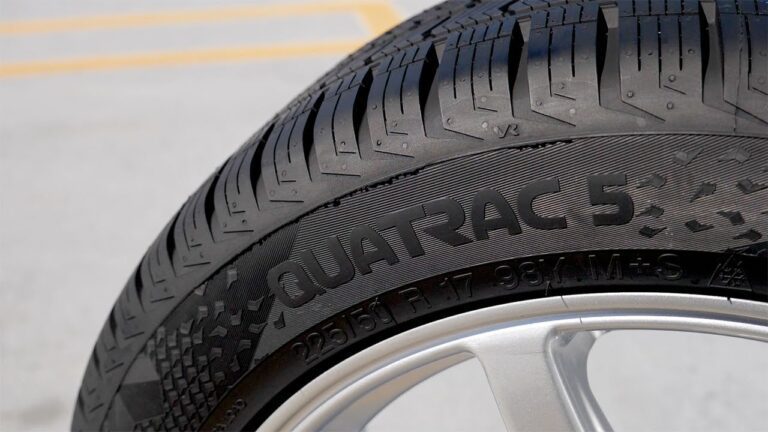
7. Vredestein Quatrac 5: The Winter-Adjacent All-Season That Surprises Everyone
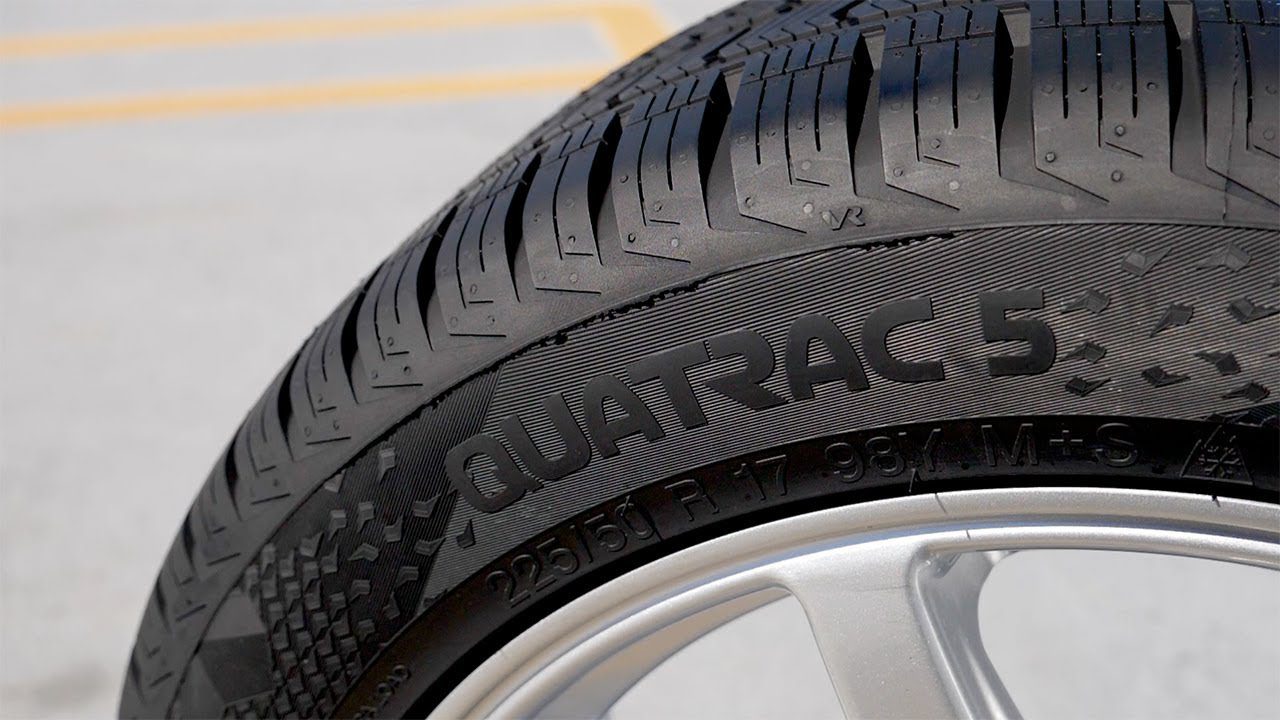
Vredestein is a Dutch brand that has not yet achieved the name recognition of Michelin, Goodyear, or Bridgestone in most markets, but the Quatrac 5 is a genuinely impressive product that deserves more attention than it typically gets.
What makes the Quatrac 5 special in this list is that it carries the 3PMSF certification while also functioning as a legitimate all-season tire in warmer conditions. The snow traction and grip are not just good for an all-season tire, they are genuinely approaching the territory of actual winter tires. That puts it in the same conversation as the Michelin CrossClimate 2 in terms of severe winter capability, though at a different price point.
In warmer, drier conditions, the Quatrac 5 is responsive and provides good grip and traction. The braking in these conditions is marginally behind the premium competition, but the gap is not dramatic. For a tire that prioritizes winter capability, the warm-weather performance is admirably well-rounded.
Comfort levels are good, and the ride quality is better than many performance-focused all-season options. Vredestein backs the Quatrac 5 with a 45,000-mile treadwear warranty, which is shorter than some competitors but reasonable given the tire’s performance priorities. If you want genuine winter capability without paying Michelin prices, the Vredestein Quatrac 5 belongs on your shortlist.
8. Goodyear Wrangler All-Terrain Adventure With Kevlar: For Trucks and SUVs That Go Anywhere
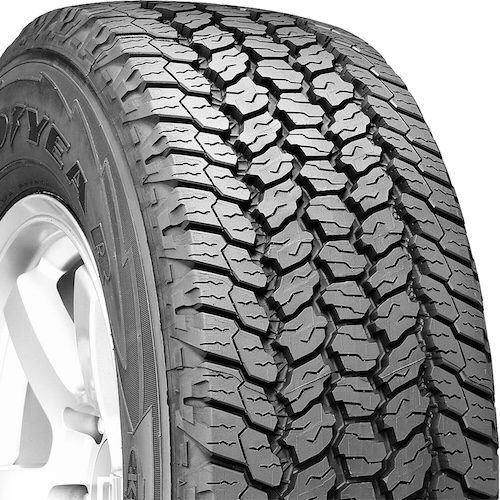
The Wrangler All-Terrain Adventure With Kevlar occupies a completely different space from the touring and grand-touring tires elsewhere on this list. This is a truck and SUV tire designed for drivers who need their vehicles to handle challenging terrain, including snow, without sacrificing year-round usability.
The Durawall technology and specialty rubber tread compound give this tire exceptional durability against punctures and cuts from sharp terrain, which is where the Kevlar reinforcement earns its place. The 60,000-mile treadwear warranty is solid for an all-terrain tire, which typically sacrifices tread life in exchange for off-road capability.
In snow, the aggressive tread pattern is a genuine advantage. Where touring tires struggle to find grip in packed snow, the Wrangler’s tread blocks dig in and provide the kind of forward traction that SUV and truck owners actually need when conditions get difficult. High-speed stability in snowy conditions is also a strength, which matters for drivers who cannot always slow down as much as conditions ideally warrant.
The trade-off, and it is a real one, is noise. At highway speeds, the aggressive tread pattern generates a noticeable tread roar that some drivers find intrusive. It is the price you pay for the off-road and snow capability built into that tread design. If highway comfort and quiet driving are priorities, this is not the right tire. If you need a capable all-terrain tire that handles winter conditions without complaint, the Wrangler earns its place on this list.
9. Continental TerrainContact H/T: The Best Highway Tire on Snow You May Not Know About
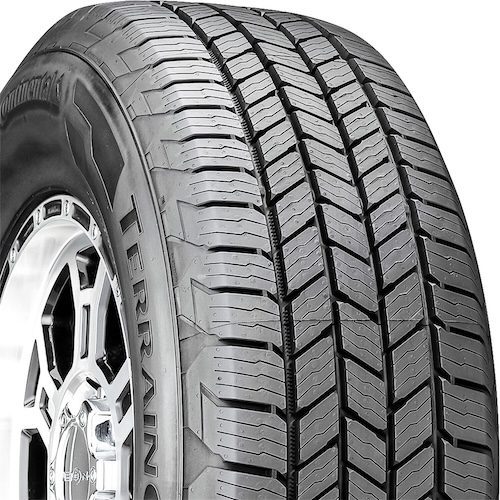
Continental has built a strong reputation for making tires that balance multiple performance attributes without obviously sacrificing any single one, and the TerrainContact H/T is a prime example of that philosophy applied to the highway all-season category.
The Traction Grooves with gripping teeth built into the tread design provide snow traction that is genuinely surprising for a highway tire. Where most highway all-season tires treat snow capability as an afterthought, the TerrainContact H/T approaches it as a core feature. The result is a tire that handles snowy conditions better than almost anything else in its specific category.
The tread compound with Silane additives improves dry handling responsiveness, and the symmetric tread pattern delivers good wet traction and braking consistency. In wet conditions, this tire performs with the confidence you would expect from a Continental product.
Like most Continental tires, the TerrainContact H/T is also notably quiet and comfortable, thanks to the Computer-Optimized Pattern Shifting that Continental uses to minimize road noise. The 70,000-mile treadwear warranty is among the best in the category and reflects genuine confidence in the tire’s durability. For SUV and light truck owners who want strong all-weather capability including snow performance without venturing into aggressive all-terrain territory, this is one of the most complete options available.
10. Bridgestone Potenza RE980AS: Ultra-High Performance That Does Not Give Up in the Cold
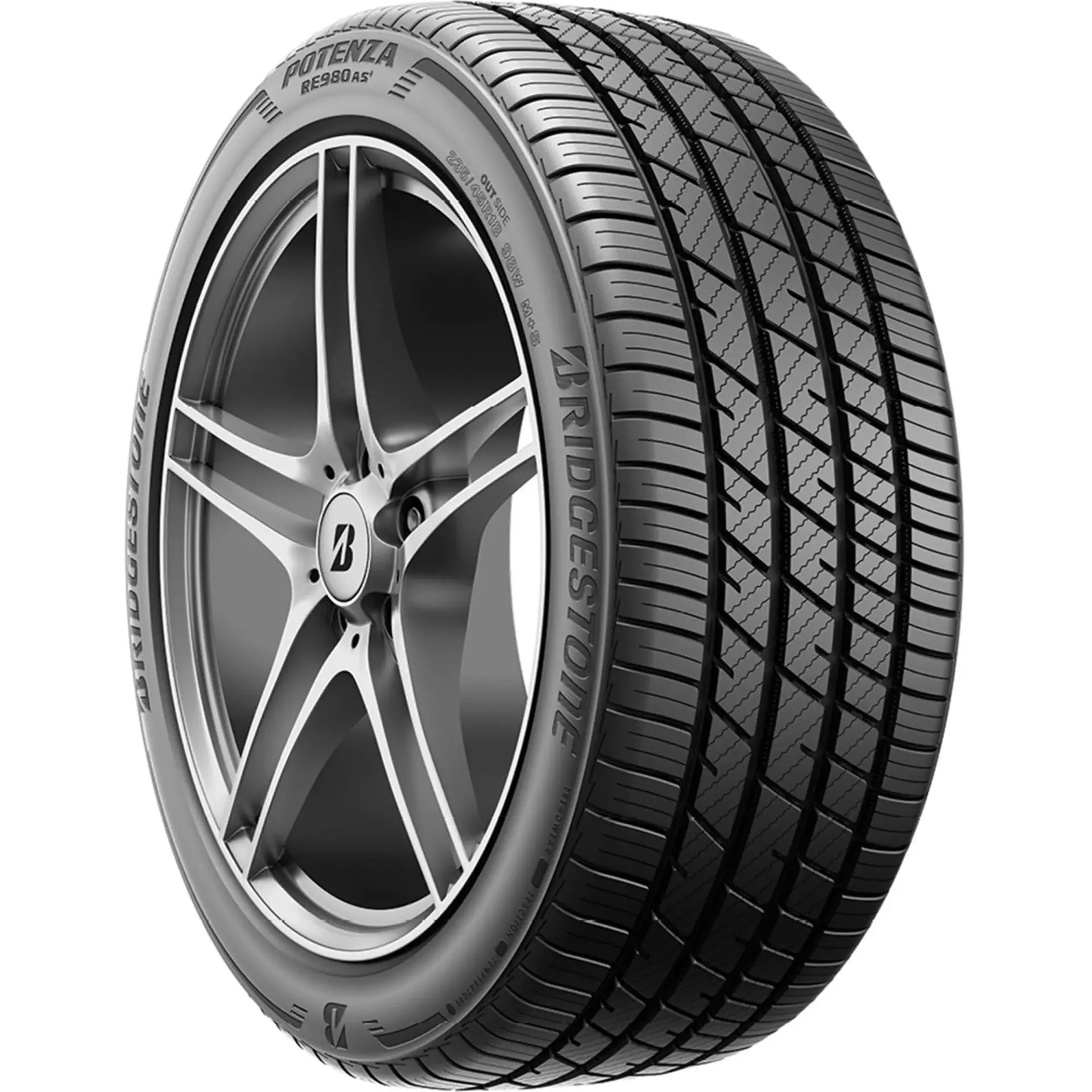
Most ultra-high-performance all-season tires make a quiet compromise: they are excellent in dry and wet conditions but become noticeably less capable as temperatures drop and snow appears. The Bridgestone Potenza RE980AS challenges that pattern more aggressively than most competitors in the segment.
The all-season compound used in the RE980AS remains effective in cooler temperatures, which means the tire does not suddenly become a liability when the thermometer drops. In light snow, it provides traction that many pure performance tires simply cannot match, which is a meaningful distinction for drivers in performance-oriented vehicles who live in climates with occasional winter weather.
In dry and wet conditions, the Potenza RE980AS delivers exactly what you expect from a performance tire. Traction, grip, and braking in all conditions are among the best available in the ultra-high-performance all-season category. The steering response is sharp and communicative, and the tire handles aggressive driving with genuine capability.
Ride quality is the area where it gives some ground. Ultra-high-performance tires run on lower-profile constructions with stiffer sidewalls, and the Potenza RE980AS is noticeably firmer over bumps than a touring tire. It is quiet for a performance tire, but comfortable is not the word most drivers would use to describe it. The 50,000-mile treadwear warranty is strong for the performance category and reflects the tire’s well-balanced compound design.
All Ten Tires Compared Side by Side
| Tire | Category | 3PMSF | Snow Performance | Treadwear Warranty | Price Range |
|---|---|---|---|---|---|
| Michelin CrossClimate 2 | All-weather touring | Yes | Excellent | Not specified | Premium |
| Goodyear Assurance All-Season | Standard all-season | No | Good in light snow | 65,000 miles | Budget-friendly |
| Continental ControlContact Tour A/S+ | Grand touring | No | Good in light snow only | 70,000 miles | Mid-range |
| Michelin Defender T+H | Touring | No | Good in light snow | 80,000 miles | Premium |
| General AltiMAX RT43 | Grand touring | No | Good in light snow | 75,000 miles | Budget to mid-range |
| Bridgestone Turanza QuietTrack | Grand touring | No | Good in light snow | 80,000 miles | Premium |
| Vredestein Quatrac 5 | All-weather | Yes | Excellent, near winter tire level | 45,000 miles | Mid-range |
| Goodyear Wrangler AT Adventure | All-terrain truck/SUV | No | Very good, aggressive pattern | 60,000 miles | Mid-range |
| Continental TerrainContact H/T | Highway truck/SUV | No | Excellent for highway category | 70,000 miles | Mid-range |
| Bridgestone Potenza RE980AS | Ultra-high performance | No | Good in light snow | 50,000 miles | Mid to premium |
How to Choose the Right All-Season Snow Tire for Your Vehicle
Reading through ten different tires is useful, but it only helps if you know how to apply that information to your specific situation. Here are the most important factors to work through before making a final decision.
What Kind of Winter Do You Actually Deal With?
Be honest with yourself here. If your area sees two or three light snow events per year and roads are generally cleared within hours, almost any tire on this list will serve you well. If you regularly deal with several inches of snow, prolonged freezing temperatures, and roads that stay snow-covered for days at a time, you should be looking specifically at the tires with 3PMSF ratings, which on this list means the Michelin CrossClimate 2 and the Vredestein Quatrac 5. Everything else is better suited to lighter winter conditions.
What Type of Vehicle Are You Fitting These Tires To?
Touring tires go on passenger cars and light crossovers. All-terrain tires like the Goodyear Wrangler go on trucks and SUVs. Ultra-high-performance tires like the Potenza RE980AS go on sport sedans, coupes, and performance-oriented vehicles. Fitting the wrong category of tire to your vehicle is not just a performance issue, it can also be a safety issue because the load ratings and handling characteristics are engineered for specific vehicle types.
How Much Do You Drive and How Important Is Tread Life?
High-mileage drivers should pay close attention to treadwear warranties. The Michelin Defender T+H and Bridgestone Turanza QuietTrack both offer 80,000-mile warranties, which for someone driving 20,000 miles a year translates to roughly four years of tires. At a lower annual mileage, any warranty above 50,000 miles is generally adequate. The Vredestein Quatrac 5’s 45,000-mile warranty is shorter than most competitors, which is worth factoring into the long-term cost calculation.
What Is Your Budget, Honestly?
Premium tires cost more upfront but often deliver lower cost per mile over their full usable life because they last longer and maintain performance better throughout that life. Budget tires cost less upfront but may need replacement sooner and may deliver diminishing performance as they wear. If you drive in demanding conditions and depend on your tires for safety, this is one area where spending more usually pays off. If you drive modest miles in mild conditions, a mid-range option is perfectly sensible.
Whatever you decide, do not make this purchase reactively. The right time to evaluate your tires is when they have plenty of life left, not when they are bald and the first winter storm is in the forecast. Get ahead of it, choose the right tire for your actual conditions and vehicle, and you will be far better served than anyone scrambling for whatever is left on the shelf in November.