
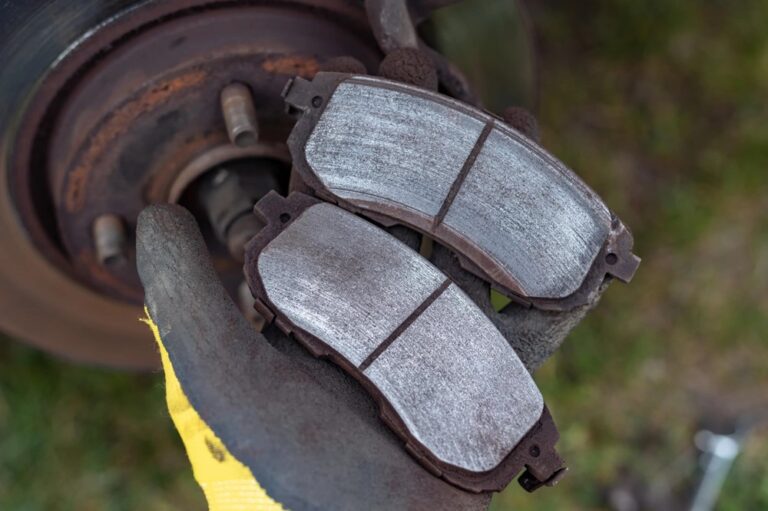
The brake pad market has a counterfeit problem that most drivers have no idea exists. Walk into any auto parts store or browse online, and you will find dozens of brake pads labeled as ceramic. The packaging looks legitimate, the price might even be in the right range, and the product description uses all the correct terminology. But a significant number of these pads are not genuinely ceramic. They are semi-metallic or low-metallic pads dressed up in ceramic marketing language.
This matters for a very practical reason. Ceramic brake pads are a premium product that commands a higher price because they genuinely perform differently from metallic alternatives. If you are paying ceramic prices for semi-metallic performance, you are being taken advantage of. More importantly, if you chose ceramic specifically for a reason, quiet operation, reduced wheel dust, or consistent braking at high temperatures, a fake ceramic pad will not deliver any of those benefits.
Before we get into how to identify the real thing, it helps to understand exactly what ceramic brake pads are and why anyone would want them in the first place.
What Are Ceramic Brake Pads and Why Do They Matter?
Ceramic brake pads are manufactured from a dense, durable ceramic compound that is typically reinforced with copper fibers or other friction materials to optimize both stopping power and heat dissipation. The fundamental difference between ceramic pads and their semi-metallic counterparts is the base composition. Semi-metallic pads are built primarily from steel fibers, copper, graphite, and other metal particles bonded together. Ceramic pads use a ceramic base material that behaves very differently under friction and heat.
The practical benefits of genuine ceramic pads are measurable and real.
- They are significantly quieter. The ceramic compound produces a friction sound frequency that falls outside the range audible to the human ear. Metallic pads generate that familiar squeal and grinding at certain temperatures.
- They produce less brake dust. The dust that ceramic pads do produce is lighter in color and does not bond aggressively to the wheel surface the way metallic dust does.
- They perform consistently across a wider temperature range. Ceramic pads maintain stable friction characteristics from cold starts in winter to sustained high-speed braking on mountain roads.
- They are gentler on brake rotors. The absence of hard metallic particles in the friction material means ceramic pads cause less rotor wear over time.
Ceramic pads are the preferred choice for luxury vehicles where cabin comfort is a priority, performance cars that see spirited driving on canyon roads or track days, and any driver who wants to keep their alloy wheels looking clean. They are worth paying more for, which is exactly why counterfeit versions exist.
Here are five straightforward tests you can perform with your own hands and a basic magnet to verify whether the brake pads you are holding are genuinely ceramic or a convincing imitation.
5 Ways to Identify Real Ceramic Brake Pads
Test 1: Look at the Surface Color and Texture
Pick up the brake pad and look at the friction surface directly under good lighting. Real ceramic brake pads have a very specific visual character that experienced mechanics describe as a dense, matte, stone-like appearance. The surface looks almost like a smooth, compressed pebble. The color is typically a consistent medium to dark grey or beige tone depending on the specific formulation.
What you are specifically looking for is the absence of metallic sheen. Genuine ceramic pads have no metallic glint or sparkle when light hits the friction surface at an angle. Semi-metallic pads, even in poor lighting, will show small flashes of metallic light reflecting off the embedded steel fibers and metal particles in the compound. It is subtle, but once you know what to look for, it becomes quite obvious.
If the pad surface shows any kind of metallic sparkle, sheen, or reflective flicker under light, it is not a pure ceramic compound. A real ceramic pad surface is visually flat and consistent with no bright spots at any angle.
Test 2: Run Your Finger Across the Friction Surface
This is the simplest test and requires no tools whatsoever. Run your fingertip firmly across the friction surface of the brake pad and then look at your finger. With a genuine ceramic brake pad, your finger will come away clean or very nearly clean. The ceramic compound does not transfer onto skin the way metallic compounds do.
Now do the same with a semi-metallic pad. Your finger will immediately pick up a dark grey or black metallic powder. This powder comes from the steel fibers, carbon particles, and metal fragments that make up the friction material. It is the same material that ends up coating your wheels as a dark grey dust film during normal driving.
If you are shopping in a store and want to verify before purchasing, this is the fastest check you can do. Simply open the packaging enough to expose the friction face, run your finger across it, and check the result. A clean finger confirms ceramic. A dirty finger tells you the pad is predominantly metallic regardless of what the box says.
Test 3: Check for Rust on the Friction Material
This test is particularly useful when inspecting brake pads that have been sitting in storage, left in a garage, or shipped and stored before installation. Expose the pads to some moisture, either leave them in a humid environment for a day or lightly mist the friction surface with water and wait a few hours.
Genuine ceramic brake pads will not develop rust on the friction surface. Because the compound is ceramic-based without significant iron or steel content in the friction material itself, there is nothing present that can oxidize. The pad will remain clean after moisture exposure.
A fake ceramic pad, or a low-metallic pad being misrepresented as ceramic, will show rust spotting on the friction surface after moisture exposure. The steel fibers, steel wool particles, or other ferrous metal components embedded in the compound will oxidize quickly when wet. Even light surface rust appearing on the friction face after brief moisture contact is a reliable indicator that the pad is not genuinely ceramic.
Note that the steel backing plate on the back of any brake pad, ceramic or otherwise, will rust normally because it is plain steel. You are checking the friction surface only, not the metal plate the pad is bonded to.
Test 4: Observe the Brake Dust Color After Use
This test only applies if you are evaluating pads that are already installed on the vehicle or comparing pads that have been used previously. It is one of the most definitive real-world indicators of pad composition.
After driving and applying the brakes, inspect the brake rotor surface and the inside face of the wheels. Genuine ceramic brake pads produce a light-colored dust, typically white, off-white, or very light grey. This dust is fine and does not bond aggressively to the rotor or wheel surface. It wipes away relatively easily.
Semi-metallic pads produce a very different result. The brake dust is dark grey to near black, and it bonds to wheel surfaces with notable tenacity. This dark dust comes from the carbon fibers, steel particles, and metal content in the compound abrading away during braking. If your previously labeled ceramic pads are leaving dark grey dust on your wheels and rotors, they are almost certainly not genuine ceramic.
This is also why ceramic pads are the preferred choice for drivers with high-end alloy wheels. The lighter dust does not stain the wheel surface the same way, making wheel cleaning far less labor-intensive.
Test 5: Use a Magnet on the Friction Surface
This is the most definitive field test available to anyone without a laboratory. Pick up a standard magnet, the kind you might find on a tool box or purchased at any hardware store, and hold it against the friction face of the brake pad. Not the steel backing plate on the rear, but the actual friction material on the front of the pad.
If the magnet is attracted to the friction material and sticks or pulls noticeably toward it, the pad contains significant ferrous metal content. Steel fibers, iron particles, and metallic compounds are all magnetic. A pad with this level of metallic content is not a genuine ceramic pad, regardless of what is printed on the packaging.
A genuine ceramic brake pad will show little to no magnetic attraction on the friction surface. The ceramic compound itself is not magnetic, and the copper fibers sometimes used in ceramic formulations are also non-magnetic. The magnet may show a very faint attraction if there is trace metallic content in the formulation, but there should be no meaningful pull or sticking.
A strong magnetic attraction on the friction face is the clearest evidence of a counterfeit ceramic pad. Many fake ceramic products are simply conventional semi-metallic pads with reduced metal content to lower cost while claiming a ceramic designation. The magnet test cuts through the marketing immediately.
Summary: Real vs. Fake Ceramic Brake Pads at a Glance
| Test Method | Genuine Ceramic Pad Result | Fake or Semi-Metallic Pad Result |
|---|---|---|
| Visual inspection under light | Flat, matte, stone-like surface. No metallic sparkle. | Metallic glint or sheen visible at certain angles. |
| Finger touch test | Finger comes away clean or nearly clean. | Dark grey or black metallic powder transfers to finger. |
| Moisture and rust test | No rust on friction surface after moisture exposure. | Rust spots appear on friction surface within hours. |
| Brake dust color after use | Light-colored dust, white to light grey, easy to clean. | Dark grey to black dust that bonds to wheels and rotors. |
| Magnet test on friction face | Minimal to no magnetic attraction on friction material. | Noticeable magnetic pull or sticking on friction surface. |
What to Do if You Suspect You Have Fake Ceramic Pads
If you have run through these tests and the results suggest you are holding a counterfeit ceramic product, your options depend on the situation.
If the pads are still in the packaging and have not been installed, return them to the retailer immediately and request a refund. Document your findings if possible, particularly the magnet test result, as this provides clear evidence that the product does not match its labeling.
If the pads have already been installed on the vehicle, the decision becomes more nuanced. Semi-metallic pads are not inherently unsafe. They work, they stop cars effectively, and they have been the industry standard for decades. However, if you specifically chose and paid for ceramic pads for a reason, whether that is rotor longevity, reduced wheel dust, or quieter operation, you are not getting what you paid for. A pad replacement at the next brake service using a verified ceramic product from a reputable brand is the appropriate course of action.
When purchasing ceramic brake pads, stick to established brands that have documented material specifications and a verifiable manufacturing reputation. The brake system is not an area of the vehicle where saving a few dollars on a questionable product makes sense. Apply these five tests before any unfamiliar brake pad goes anywhere near your vehicle, and you will always know exactly what you are working with.