
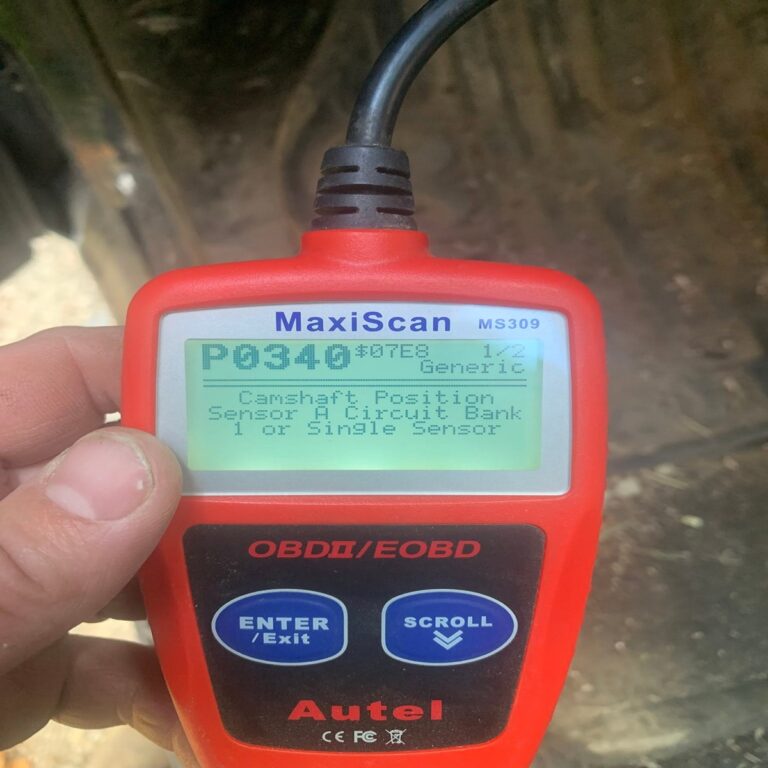
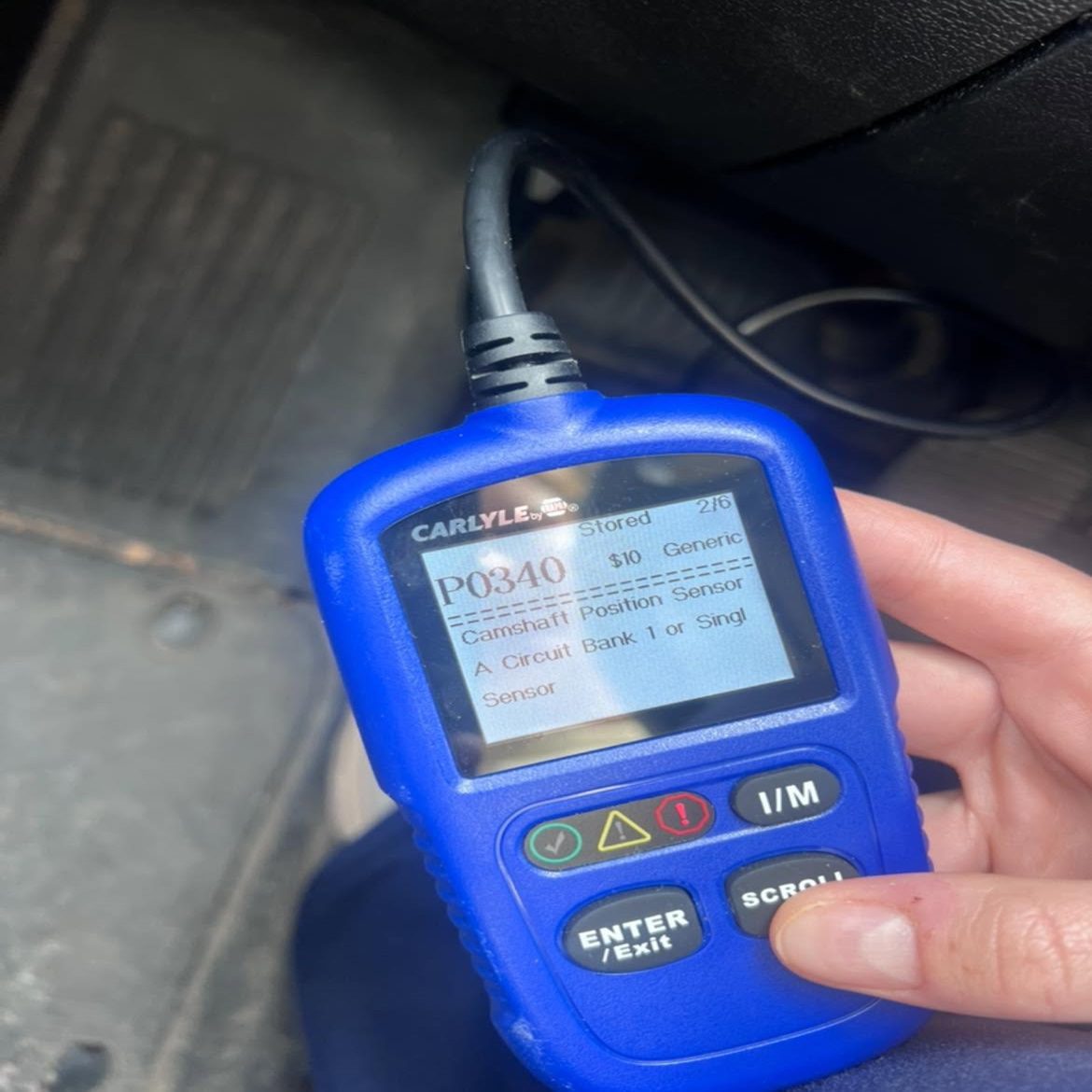
If your Dodge Ram 1500 is throwing a P0340 code, your truck is telling you something is wrong with the camshaft position sensor circuit. That might sound like a mouthful, but here is the simple version: your engine has a sensor that watches the camshaft spin and reports its position back to the brain of the vehicle, which is the Powertrain Control Module or PCM. When that communication breaks down, the PCM logs P0340 and turns on the check engine light.
This is not a code you want to ignore. The camshaft position sensor is directly tied to fuel injection timing and ignition firing. When it fails or sends garbled signals, your engine does not know when to fire the spark plugs or inject fuel. That leads to real drivability problems, and in some cases, it can leave you stranded on the side of the road.
The good news is that P0340 is a well-understood code on the Ram 1500. The causes are consistent, the fixes are usually straightforward, and you do not always need to spend a fortune to resolve it. Let us walk through everything you need to know.
What the P0340 Code Actually Means on a Dodge Ram 1500
P0340 specifically refers to a fault in the camshaft position sensor circuit for Bank 1. The camshaft position sensor, often called the CMP sensor, is a small but important component that monitors the rotational speed and exact position of the intake camshaft. It sends that data to the PCM continuously while the engine runs.
The PCM uses that data to synchronize fuel injection with ignition timing. Get the timing right and the engine runs cleanly and efficiently. Get it wrong, even slightly, and you start seeing power loss, rough running, and poor fuel economy. When the PCM stops receiving a proper signal from the CMP sensor circuit, it cannot do its job correctly, and it logs P0340 to let you know.
It is also worth knowing that the crankshaft position sensor works alongside the camshaft position sensor. If the CMP sensor fails completely, the PCM can sometimes use the crankshaft sensor signal as a backup reference to get the engine started. But relying on that backup is not a long-term solution. Both sensors need to be working properly for the engine to perform the way it should.
Symptoms You Will Notice When P0340 Is Active
The symptoms that come with a P0340 code can range from barely noticeable to completely disabling, depending on how far the sensor or circuit has degraded. Here is what to watch for.
Check Engine Light
This is always the first sign. The check engine light comes on and stays on. On its own, a check engine light tells you nothing specific, but when you scan the code and pull P0340, you know exactly which system has flagged a problem. Do not drive indefinitely with this light on hoping it resolves itself. P0340 does not go away on its own.
Loss of Power and Engine Misfires
The engine may feel sluggish under acceleration, or you might notice a stumble or hesitation when you press the gas. Misfires can show up as a rough, shaking sensation, especially under load. This happens because the PCM is working with bad or incomplete data from the camshaft circuit, causing fuel and spark timing to go out of sync.
Rough Idle
At a stop or in park, you might notice the engine shaking or struggling to maintain a steady RPM. The engine is essentially trying to hold a consistent idle without accurate camshaft position data, and it cannot do that cleanly. A rough idle that was not there before is a telltale sign the CMP sensor signal is degraded or missing entirely.
Increased Fuel Consumption
If you have noticed your Ram burning through fuel faster than usual, a faulty camshaft position sensor could be the reason. When the PCM cannot determine the correct camshaft position, it cannot calculate the optimal fuel delivery for each combustion cycle. The result is inefficient combustion, which means more fuel burned for less power output.
Engine Stalling
In more serious cases, the engine may stall while driving or at idle. The PCM needs the camshaft position signal to time the ignition correctly. If that signal drops out completely, the engine can lose the timing reference it needs to keep running and will cut out. Stalling on a Ram 1500 is a safety concern, particularly at highway speeds or in traffic. If this is happening, prioritize getting the vehicle diagnosed immediately.
Hard Starting or No-Start Condition
Some Ram owners with P0340 report that the truck cranks but takes much longer than normal to start. In severe cases, the engine will not start at all. This happens when the PCM cannot get any usable camshaft position signal and cannot establish proper ignition timing even for initial startup. If your Ram is cranking but not firing, P0340 is one of the first codes worth checking for.
What Causes the P0340 Code on a Dodge Ram 1500
There are several things that can trigger a P0340 code on the Ram 1500. Understanding the potential causes helps you diagnose the right thing rather than throwing parts at the problem and hoping something sticks.
Defective Camshaft Position Sensor
The sensor itself failing is the most common cause. CMP sensors wear out over time, particularly on high-mileage trucks. The sensor contains internal electronics that can degrade or fail outright. When the sensor stops producing an accurate signal or stops producing any signal at all, P0340 gets logged.
On most Dodge and Chrysler overhead cam engines, the CMP sensor is mounted at the back of the cylinder head near the intake camshaft. On overhead valve and cam-in-block engines, you will find it at the front of the engine, positioned closest to the camshaft itself. Locating the sensor is the first physical step in any diagnosis.
Damaged, Corroded, or Shorted Wiring
The wiring harness that connects the CMP sensor to the PCM runs through areas of the engine bay that see heat, vibration, and sometimes oil exposure. Over time, wires can develop cracks in the insulation, corrode at the connector pins, or chafe against metal edges and create a short circuit. Any of these wiring issues can cause the PCM to read no signal or an erratic signal from the CMP sensor, triggering P0340 even when the sensor itself is still functional.
This is why wiring inspection is non-negotiable when diagnosing this code. Replacing the sensor without checking the wiring first is a common mistake that leads to the code coming right back after the repair.
Faulty or Dirty Reluctor Ring
The reluctor ring is a toothed metal wheel that spins with the camshaft. The CMP sensor reads the teeth as they pass by, generating a pulsed signal that the PCM uses to determine camshaft position and speed. If the reluctor ring is damaged, missing teeth, coated in heavy oil sludge, or slightly misaligned, the sensor cannot generate a clean signal. This produces a P0340 code even when the sensor and wiring are in perfectly good condition.
Checking the reluctor ring requires removing the sensor to get a visual on the ring itself. Cleaning oil buildup from the ring and sensor tip can sometimes resolve a signal quality issue without needing any replacement parts.
Low or Unstable Voltage Supply to the Sensor
The CMP sensor needs a stable reference voltage to operate correctly. If the voltage supply to the sensor is low or fluctuating, the sensor will produce an erratic or weak signal that the PCM cannot interpret properly. Voltage issues at the sensor can originate from a weak battery, a failing alternator, a bad ground connection, or a fault further upstream in the vehicle’s electrical system.
A multimeter is your best friend here. Checking actual voltage at the sensor connector while the engine cranks tells you quickly whether the power supply is stable or not.
Timing Chain Wear or Misalignment
A stretched or worn timing chain causes the camshaft to shift out of its correct positional relationship with the crankshaft. Even if the CMP sensor is working perfectly and the wiring is fine, a timing chain that has jumped a tooth or stretched beyond specification will cause the camshaft position readings to be wrong. The PCM will detect the discrepancy and log P0340 along with potentially other timing-related codes.
Timing chain problems are more involved to address and typically require professional repair. If you hear a rattling noise from the front of the engine on startup, particularly when cold, that is a strong indicator the timing chain is worn and should be investigated before it causes further damage.
PCM Failure
A faulty PCM that cannot correctly process the camshaft position sensor signal is the least common cause of P0340, but it does happen. Before suspecting the PCM, every other cause on this list should be thoroughly ruled out. PCM replacement is expensive and, if done incorrectly, can create a host of other problems. This is always a last resort diagnosis after everything else has been confirmed functional.
How to Diagnose and Fix the P0340 Code on Your Dodge Ram 1500
Diagnosis needs to be systematic. Jumping straight to sensor replacement without checking the wiring, voltage, and reluctor ring is the most common mistake, and it wastes both time and money. Work through this in order.
Step 1: Scan the System and Record All Codes
Before touching anything under the hood, connect an OBD-II scanner and pull every code that is stored. P0340 rarely shows up completely alone. Related codes like P0335 (crankshaft position sensor), P0341 (camshaft position sensor performance), or misfire codes can provide important context that narrows down the actual root cause. Write down every code and every freeze frame data point before clearing anything.
Step 2: Inspect the Wiring and Connectors First
Locate the CMP sensor and trace the wiring harness from the sensor back toward the firewall. Look for:
- Cracked or melted insulation on any wire
- Green corrosion or moisture inside the connector
- Bent or pushed-back connector pins
- Wires rubbing against sharp metal edges
- Any obvious heat damage near exhaust components
Unplug the connector and inspect both sides carefully. Use electrical contact cleaner on the connector pins and allow it to dry before reconnecting. If any wires are damaged, repair them properly rather than just taping over the damage. A proper repair uses heat-shrink solder connectors or a pigtail replacement, not electrical tape alone.
Step 3: Check Voltage and Ground at the Sensor Connector
With a multimeter set to DC voltage, back-probe the sensor connector while the ignition is on. The CMP sensor on the Ram 1500 typically uses a three-wire setup: a reference voltage wire (usually 5 volts), a ground wire, and a signal wire. Verify that the reference voltage is present and stable. Check that the ground wire has a solid connection with minimal resistance. If the reference voltage is absent or the ground is open, the problem is in the wiring circuit, not the sensor itself.
Step 4: Inspect and Clean the Reluctor Ring
Remove the CMP sensor. Use a flashlight to look at the reluctor ring teeth through the sensor bore. Check for:
- Heavy oil sludge buildup coating the teeth
- Chipped, broken, or missing teeth
- Any visible damage to the ring itself
Also inspect the tip of the sensor itself for oil fouling, metal debris, or physical damage. Clean any buildup off the reluctor ring carefully and wipe the sensor tip clean before reinstalling. Sometimes this alone resolves the signal quality issue.
Step 5: Replace the Camshaft Position Sensor If Warranted
If the wiring checks out, voltage is correct, and the reluctor ring looks good, the sensor itself is the next logical replacement. CMP sensors for the Ram 1500 are not expensive parts, typically ranging from $20 to $80 depending on the engine and brand. Replacement is usually a straightforward job involving one bolt, an electrical connector, and careful reinstallation with the correct air gap.
After replacing the sensor, clear the code and take the truck for a test drive. Monitor the live data from the CMP sensor on the scanner to confirm the signal is clean and consistent. If the code returns within a short drive, go back and continue diagnosing rather than replacing the sensor again.
Step 6: Inspect the Timing Chain
If you have confirmed the sensor, wiring, and reluctor ring are all in order and P0340 keeps returning, the timing chain needs to be evaluated. A timing chain inspection involves checking chain stretch and verifying that the camshaft is in its correct positional relationship to the crankshaft. This requires either a mechanical inspection with the front cover off or, on some engines, a comparison of live CMP and CKP sensor data patterns on an advanced scan tool.
Timing chain replacement on the Ram 1500 is not a quick job. It is several hours of labor and involves removing the front cover, replacing the chain, guides, and tensioner, and then verifying correct timing before reassembly. This is the kind of repair where professional help is a reasonable choice if you are not comfortable with the scope of the work.
Step 7: Evaluate the PCM Only After Everything Else Is Confirmed
If every other component has been tested, inspected, and confirmed functional and P0340 is still present, the PCM is the final suspect. PCM diagnosis typically involves comparing actual sensor signal waveforms on an oscilloscope with what the PCM reports it is receiving. This is specialist territory. A dealership or a shop with factory-level diagnostic equipment is the right call at this stage.

What a P0340 Repair Will Cost You on a Dodge Ram 1500
Repair costs vary depending on which component is actually at fault. Here is a realistic breakdown so you know what to expect before you start making phone calls to shops.
| Repair | DIY Cost | Shop Cost (Parts + Labor) |
|---|---|---|
| OBD-II diagnostic scan | $0 (with own scanner) | $75 to $150 |
| Camshaft position sensor replacement | $20 to $80 (part only) | $150 to $300 |
| Wiring harness repair | $10 to $40 (materials) | $100 to $250 |
| Timing chain replacement | $80 to $200 (parts only, complex job) | $600 to $1,200+ |
| PCM replacement and programming | Not recommended as DIY | $500 to $1,500+ |
In the majority of P0340 cases on the Ram 1500, the fix is either the CMP sensor itself or a wiring issue. Both sit at the lower end of that cost range. The expensive repairs, timing chain and PCM, are less common causes and should only come into play after the straightforward possibilities have been ruled out.
Related Codes That Often Appear Alongside P0340
When diagnosing P0340, it helps to understand what related codes mean if they show up at the same time.
| Code | What It Means | Relationship to P0340 |
|---|---|---|
| P0335 | Crankshaft position sensor circuit malfunction | Could indicate a shared wiring or power issue |
| P0341 | CMP sensor circuit range/performance | Signal is present but out of expected range, often reluctor ring or timing |
| P0342 | CMP sensor circuit low input | Signal voltage too low, check power supply and ground |
| P0343 | CMP sensor circuit high input | Signal voltage too high, often a short in the circuit |
| P030X (misfire codes) | Cylinder-specific misfires | Often result from the timing disruption caused by P0340 |
If P0335 and P0340 appear together, focus on the power supply and ground circuits first since both sensors share related electrical infrastructure. If misfire codes appear alongside P0340, address the camshaft sensor issue first. In many cases, the misfires resolve on their own once the sensor circuit is repaired and ignition timing is restored to normal.
Common Questions About the Dodge Ram 1500 P0340 Code
Can I drive my Ram 1500 with a P0340 code active?
Short distances at low risk are technically possible, but it is not advisable. The engine may stall without warning, particularly in situations where consistent power delivery matters like merging onto a highway or pulling a load. If the truck is stalling, misfiring badly, or struggling to start, do not drive it until the issue is diagnosed. The risk of being stranded or causing additional engine damage outweighs any convenience of putting off the repair.
Will clearing the code make the check engine light go away?
Yes, but only temporarily. Clearing the code without fixing the underlying problem means the code will return, usually within the same drive cycle or within the next one or two trips. Clearing the code is useful for confirming a repair was successful, not as a substitute for the actual repair.
How do I know if the camshaft position sensor is actually bad versus a wiring issue?
The best way is to use a multimeter and, ideally, an oscilloscope or a scan tool with live data graphing capability. A healthy CMP sensor produces a consistent pulsed signal that you can see on a waveform display. A bad sensor may produce no signal, a weak signal, or a signal that drops out intermittently. If the voltage supply and ground are confirmed correct but the sensor output signal is still absent or erratic, the sensor is the problem. If the supply voltage is missing entirely, the wiring is the problem.
Is P0340 more common on specific Ram 1500 engine sizes?
P0340 has been reported across multiple Ram 1500 engine options including the 3.7L V6, 4.7L V8, and 5.7L Hemi. The 5.7L Hemi is the most common engine in circulation given its popularity, so you will see more reported cases on that platform simply due to the higher number of vehicles with that engine. The diagnosis and repair process is the same regardless of which engine you have.
Can a bad oil change cause P0340?
Not directly, but running low on oil or using the wrong oil viscosity can contribute to sludge buildup around the camshaft area and reluctor ring over time. Heavy sludge on the reluctor ring disrupts the sensor signal. This is not an immediate cause-and-effect situation, but it is a good reminder that consistent oil changes with the correct specification oil are part of keeping the camshaft position sensing system functioning cleanly.
Preventing P0340 From Coming Back
Once you have resolved the code, a few habits will help keep it from returning.
- Stay on top of oil changes using the viscosity specified in your owner’s manual. Clean oil prevents sludge buildup around the camshaft and reluctor ring.
- Inspect the CMP sensor wiring harness during routine maintenance, particularly if you have a high-mileage truck. Heat and vibration eventually take their toll on engine bay wiring.
- Address any unusual engine noises, particularly rattling on cold starts, promptly. Timing chain wear is a gradual process, and catching it early costs far less than dealing with a jumped chain.
- If you ever have to replace the CMP sensor, use a quality replacement part from a reputable brand. Cheap sensors from unknown suppliers sometimes fail within months, putting you right back where you started.
The Bottom Line on Dodge Ram P0340
P0340 sounds intimidating, but in the real world, most cases on the Ram 1500 come down to a failed CMP sensor or a wiring problem that costs relatively little to fix when diagnosed correctly. The key is working through the diagnosis in the right order rather than guessing and replacing parts at random.
Check the wiring first. Confirm the voltage supply is correct. Inspect the reluctor ring. Then replace the sensor if everything else checks out. That sequence saves time and money on the majority of P0340 repairs.
If the code keeps returning after you have addressed the obvious causes, do not keep throwing parts at it. That is when you bring in a shop with proper diagnostic equipment and let them chase the waveform data. A P0340 that persists after a correct sensor and wiring repair is telling you something more specific, and finding out what that is requires tools beyond a basic code reader.
Your Ram 1500 is a capable truck. Do not let a sensor code you can diagnose systematically turn into an engine problem that costs ten times more to fix because it was ignored too long.