
You have probably noticed it yourself on a summer afternoon. You reach for the door handle and it burns your hand. You slide into the seat and the steering wheel is almost too hot to touch. Your car has been sitting in the sun for two hours and it feels like an oven inside. The color of your car has more to do with that experience than most people realize.
Car color directly affects how much solar energy the exterior absorbs, which in turn affects how hot the surfaces get, how quickly the interior heats up, and ultimately how long your air conditioning has to work before the cabin becomes comfortable again. The difference between the coolest and hottest colors is not trivial. It is nearly 20 degrees Celsius, which is a significant gap in real-world comfort and fuel cost.
How Car Color Affects Interior Temperature
The physics behind this is straightforward. Light-colored surfaces reflect a greater portion of the sunlight that hits them. Dark-colored surfaces absorb that energy and convert it into heat. The exterior surface of your car, the roof, hood, and doors, is the first thing the sun strikes. The hotter that surface gets, the more heat radiates inward through the metal and glass into the cabin.
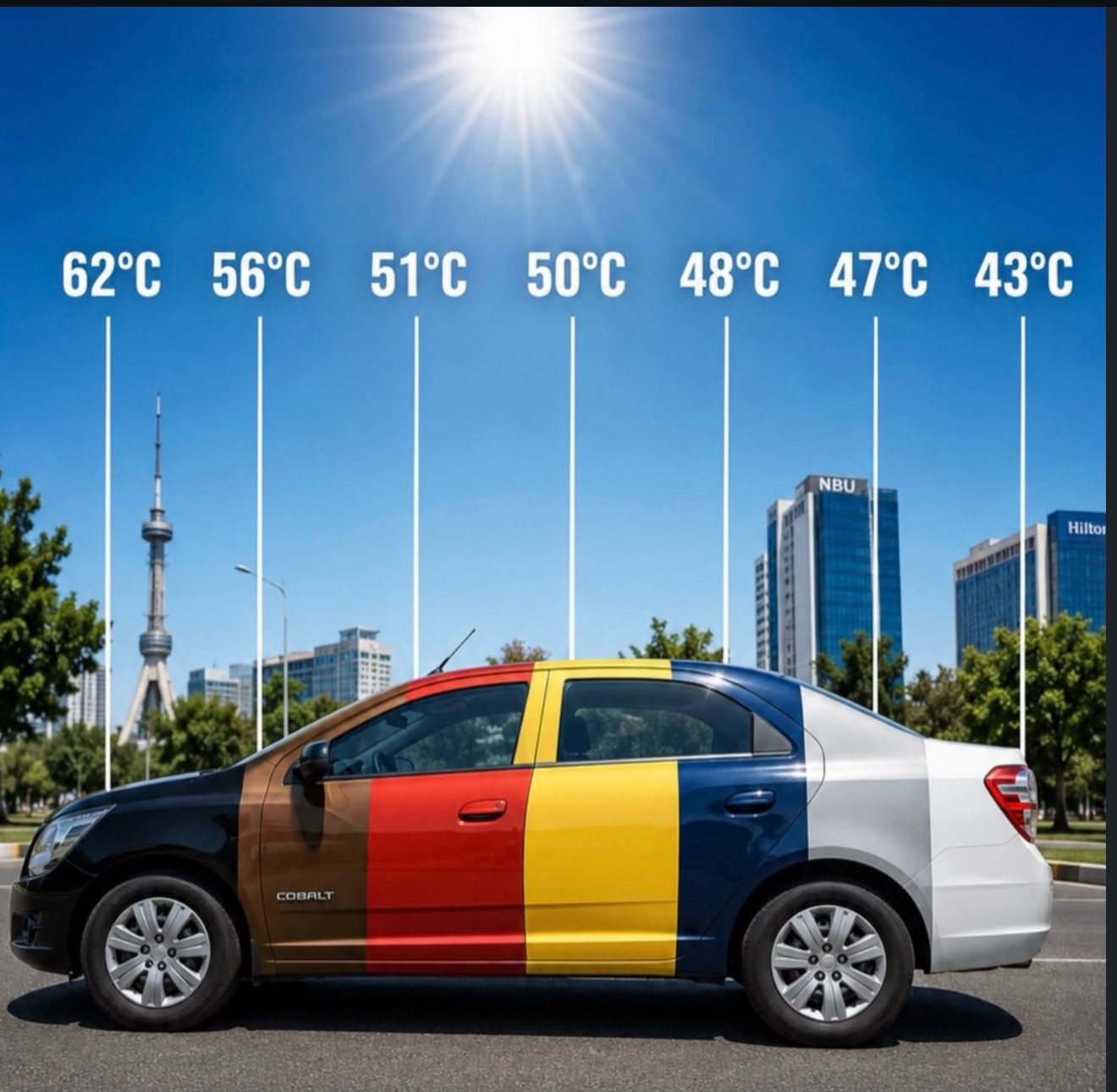
White is the best-performing color in hot weather conditions. A white car reflects approximately 60 percent of incoming sunlight, keeping the exterior surface temperature around 43°C (109°F) under direct sun exposure. That is the coolest any standard paint color will keep a vehicle’s exterior.
Black sits at the opposite extreme. A black car absorbs roughly 90 percent of the sunlight that hits it, pushing exterior surface temperatures up to approximately 62°C (143°F) under the same conditions. That is nearly 20 degrees hotter than white. Touch the roof of a black car parked in direct summer sun for an afternoon and you will understand that number immediately.
Surface Temperature by Color: The Full Breakdown
Scientific measurement of how different paint colors perform under direct sunlight shows a clear and consistent pattern. The lighter the color, the lower the surface temperature, and the closer the color sits to the infrared-absorbing end of the spectrum, the hotter things get.
| Car Color | Approximate Surface Temperature | Sunlight Behavior |
|---|---|---|
| White | 43°C (109°F) | Reflects approximately 60% of sunlight |
| Silver | 47°C (116°F) | Reflects approximately 50% of sunlight |
| Blue | 48°C (118°F) | Moderate reflection, mild absorption |
| Yellow | 50°C (122°F) | Higher heat absorption despite bright appearance |
| Red | 51°C (123°F) | Absorbs significant solar energy |
| Brown | 56°C (132°F) | Absorbs substantial heat, approaches dark spectrum |
| Black | 62°C (143°F) | Absorbs approximately 90% of sunlight |
A few things stand out in this data worth noting. Yellow and red both look bright and vibrant, which might suggest they would behave similarly to white. They do not. Both absorb considerably more solar energy than silver or white and push exterior temperatures meaningfully higher. The visual brightness of a color does not predict its thermal behavior. What matters is how much solar radiation the pigment absorbs across the full spectrum, including infrared wavelengths that are invisible to the human eye.
Brown and black are the two worst performers, with brown sitting at 56°C before reaching the extreme of black at 62°C. Anyone who has owned a dark brown or charcoal vehicle in a warm climate has experienced this firsthand, even if they never connected it specifically to the paint color.
The Best Car Colors for Hot Climates
If you live somewhere with consistently high summer temperatures and you are choosing a new vehicle, color is worth factoring into the decision beyond pure aesthetics.
- White: The clear leader in heat management. Best choice for hot climates where the car sits in direct sun regularly.
- Silver: A very close second to white in thermal performance, and for many buyers it offers a cleaner, more neutral aesthetic that fits a wider range of vehicle styles.
- Light gray: Falls in a similar range to silver, depending on the specific shade. Lighter grays perform meaningfully better than medium or dark grays.
- Beige and champagne tones: These light neutral shades reflect well and keep surface temperatures lower than mid-range colors.
- Light blue: Among the better performers in the mid-range category, though still warmer than silver or white.
Colors to Avoid in Hot Weather If Comfort Is a Priority
- Black: The worst performer in heat retention by a significant margin. If you regularly park outdoors in summer heat, a black car will consistently be the hottest vehicle in the lot.
- Dark brown and charcoal: Nearly as problematic as black in terms of heat absorption. Many people underestimate how hot dark brown vehicles get because the color is not as visually striking as black.
- Dark red and burgundy: Deeper shades of red perform much worse than lighter paint colors, often sitting in the same range as standard red at 51°C or higher.
- Dark blue and navy: Moderate performers at lighter shades, but deeper blues absorb substantially more heat and shift significantly upward in surface temperature compared to the 48°C figure measured for standard blue.
What If You Already Have a Dark-Colored Car?
Choosing a lighter color works best when you are making a new purchase. If you already own a dark vehicle and you live somewhere hot, the color is not something you can easily change. But the interior temperature absolutely is something you can manage with a few targeted approaches.
Use a Reflective Windshield Sunshade
A high-quality reflective sunshade placed across the inside of your windshield when parked is one of the most effective and affordable interventions available. The windshield is the largest glass surface on most vehicles and the primary entry point for solar radiation into the cabin. A good reflective shade can drop dashboard temperatures by 10 to 15 degrees and meaningfully reduce the overall cabin temperature after the car has been sitting in direct sun.
Folding accordion-style shades are the most convenient option because they store easily. Reflective foil material performs better than fabric shades. For maximum effectiveness, extend it to cover the full width of the windshield rather than leaving gaps at the edges.
Invest in Professional Window Tinting
Window tinting does more than reduce glare. Quality ceramic or carbon window film blocks a significant portion of infrared radiation, which is the primary carrier of heat through glass. A professionally installed tint rated at 50 percent infrared rejection will noticeably reduce how quickly the cabin heats up while the car is parked and improve comfort while driving even before the air conditioning fully takes effect.
Tinting regulations vary by state, and the permitted visible light transmission percentage differs depending on the window location. Front side windows are typically subject to stricter limits than rear side windows and the rear windshield. Before having tint applied, check your state’s specific regulations to ensure the film is within legal limits.
Choose Light Interior Colors If You Have the Option
The color of your interior surfaces matters in a similar way to exterior paint color. Black leather seats, black dashboards, and dark carpeting all absorb solar energy that enters through the glass and convert it into heat that stays in the cabin. Light gray or beige interiors reflect more of that energy, keeping surfaces cooler and reducing the overall heat load inside the car.
If you are purchasing a new vehicle, choosing a light interior alongside a light exterior color compounds the benefit. A white exterior with a beige or light gray interior will consistently run cooler than a dark exterior with a black interior, particularly after extended parking in direct sun.
Park Strategically Whenever Possible
Shade is the most direct way to eliminate the source of the heat problem entirely. A car parked under a tree or in a covered parking structure all day will be dramatically cooler than the same car parked in direct sun, regardless of color. If shade is available, use it. Even partial shade that covers the windshield and roof can make a significant difference.
Orientation matters too. Parking so the front of the car faces north rather than south reduces the direct sunlight hitting the windshield during peak afternoon hours in the northern hemisphere. For an employee who parks in the same spot every day, adjusting orientation by choosing a different space can reduce afternoon cabin temperatures noticeably over a full summer season.
Wind down the Windows When Parking
Leaving windows wind down by one to two centimeters allows hot air to escape the cabin rather than building up inside. The temperature differential between the cabin air and the outside air eventually drives convective airflow out through the gap. This does not eliminate the heat buildup entirely, but it reduces the peak temperature the cabin reaches during a long park. Make sure the gap is small enough that it does not create a security risk or allow rain to enter if weather is uncertain.
Does Car Color Affect Air Conditioning Fuel Consumption?
Yes, and the relationship is direct. A car that starts every afternoon drive at 62°C inside requires more air conditioning work to bring the cabin down to a comfortable temperature than a car that starts at 50°C. More air conditioning work means the compressor runs longer and the engine works harder, which consumes more fuel.
The difference in fuel consumption between a white and a black car driven in the same conditions in a hot climate is not enormous on any individual trip, but across a full summer of daily driving it adds up to a measurable amount. Research has estimated that darker vehicles can use up to five percent more fuel to maintain a comfortable cabin temperature compared to lighter-colored alternatives in hot climates. For high-mileage drivers in warm regions, that translates into real money over the course of a year.
Color, Heat, and Long-Term Vehicle Condition
There is also a longer-term consideration beyond daily comfort. Sustained high temperatures in a vehicle interior accelerate the aging of interior materials. Dashboard plastics, leather upholstery, and plastic trim all degrade faster under consistent UV and heat exposure. Vehicles that regularly reach very high interior temperatures show accelerated fading, cracking, and brittleness in these materials compared to vehicles that stay cooler.
This is another reason why the combination of a light exterior color, quality window tinting, and regular use of a sunshade is not just about comfort. It is a form of interior preservation that can keep the cabin looking newer and more intact over the full life of the vehicle.
If you are deciding between two otherwise equally appealing vehicles and you live somewhere with genuine summer heat, choosing the lighter color option is not a minor preference. It is a practical decision that will make every summer afternoon in that car more comfortable, potentially save fuel over years of driving, and help the interior last longer. The car that looks slightly more dramatic in the dark color will remind you of that choice every time you reach for a scalding steering wheel in July.