
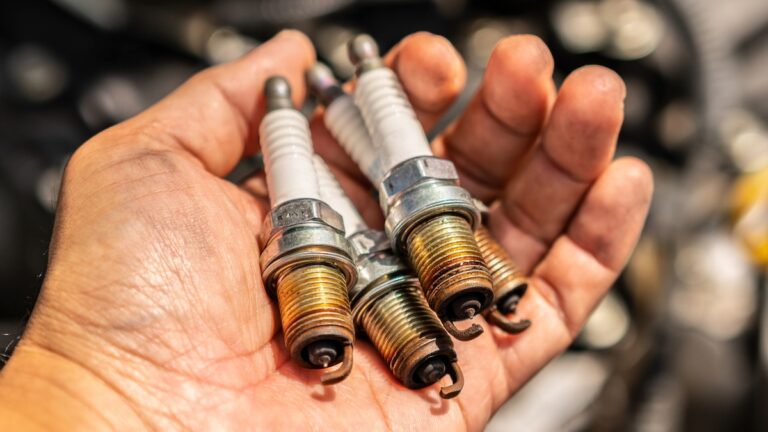
Pull a spark plug from an engine that has been running the way it should, and the electrode tip should be a light tan or gray color with minimal deposits. Pull one from a sick engine and the story it tells is immediately visible. A plug coated in wet, black, oily residue is not just a dirty part. It is a symptom report from deep inside the engine, written in the language of contamination. Something has gone wrong in the combustion chamber, and the spark plug absorbed the evidence of it.
Understanding what oil-fouled spark plugs mean, where the oil is actually coming from, and what happens if you ignore it can save you from a repair bill that starts in the hundreds and climbs into the thousands if the underlying cause continues unchecked. The spark plug itself is one of the cheapest components in an engine. The components that cause oil fouling are decidedly not.
What a Spark Plug Actually Does and Why Oil Destroys That Function
The spark plug has one job: produce an electrical arc across its electrode gap at precisely the right moment to ignite the compressed air-fuel mixture inside the combustion chamber. That tiny spark, fired thousands of times per minute, is what converts chemical energy into the mechanical energy that moves your vehicle. The plug has to survive extreme heat, extreme pressure, and chemical exposure from combustion byproducts, all while maintaining a precise gap and delivering a reliable spark every single time.
Oil contamination interferes with this at a fundamental level. When oil deposits coat the electrode and ceramic insulator, the electrical current takes the path of least resistance. Instead of arcing cleanly across the gap and igniting the fuel charge, it travels through the conductive oil film and grounds out without producing a usable spark. The combustion event either does not happen or happens incompletely. That is an engine misfire, and it creates a cascade of problems that goes well beyond the plug itself.
A misfiring cylinder sends raw unburned fuel into the exhaust system. The catalytic converter, which operates at high temperatures to process exhaust gases, receives fuel it was never meant to handle. Unburned fuel combusts inside the converter, overheating it and destroying the catalyst material. A converter that failed because of a long-running misfire is a $1,000 plus repair. A converter that failed because oil fouling was discovered early and fixed is a bill that never happened.
How Oil Gets Into the Combustion Chamber and Why It Should Not Be There
The combustion chamber is designed to be a sealed environment during each compression and power stroke. Air comes in, fuel is added, the mixture compresses, the spark fires, combustion occurs, and exhaust gases exit through the exhaust valve. Oil belongs in the crankcase, lubricating the moving parts below the piston, not in the space above the piston where combustion happens. Several specific mechanical failures break that separation and allow oil to reach the combustion zone, and from there it gets onto the plug.
Worn or Damaged Piston Rings and Cylinder Walls
Piston rings are the spring-loaded metal rings that sit in grooves around the piston’s circumference. They create a dynamic seal between the piston and the cylinder wall, keeping combustion pressure above the piston while preventing crankcase oil from rising past the piston into the combustion chamber. When piston rings wear thin, break, or lose their spring tension, the seal weakens. Oil from the crankcase can then work its way up past the piston on the intake stroke, coating the combustion chamber and the spark plug with a layer of oil before the next combustion event.
Cylinder walls develop similar problems. Worn or scored cylinder bores lose the smooth surface that the piston rings need to seat against properly. Scoring creates channels that oil uses as pathways around the rings. This type of wear is gradual and cumulative. An engine that has been run low on oil, overheated repeatedly, or simply accumulated very high mileage without proper oil change intervals is the most vulnerable to this failure mode.
The telltale sign of ring or cylinder wear beyond the fouled plugs is excessive blue smoke from the exhaust, particularly at startup when oil has pooled on top of the pistons overnight, and high oil consumption between changes without any visible external leaks. An engine that burns a quart of oil every thousand miles when it should go 5,000 miles between top-ups is telling you the rings or cylinders need attention.
Repairing this properly means engine work. Piston ring replacement requires engine teardown. Cylinder wall damage may require boring and honing the block and fitting oversized pistons. This is the repair that makes owners of older high-mileage vehicles do the math on whether the car is worth the investment. Catching the problem at the fouled plug stage, before the engine has suffered significant additional damage from oil contamination in the combustion chamber, gives you more time and more options.
Failed Valve Guide Seals
Intake and exhaust valves slide in and out of the cylinder head through passages called valve guides. To lubricate this movement, engine oil contacts the valve stem, and small rubber seals at the top of the guides prevent that oil from following the valve stem down into the combustion chamber. These seals are made of rubber and operate in a high-heat environment for the life of the engine. Over time, the rubber hardens, cracks, and loses its sealing ability. When that happens, oil migrates down the valve stem and drips into the combustion chamber every time the engine runs.
Valve stem seal failure produces a characteristic smoking pattern. The most classic sign is a puff of blue smoke at startup after the engine has sat overnight. Oil drips down through the guides when the engine is off and collects in the combustion chamber. When the engine first starts and the cylinders fire, that pooled oil burns off immediately and appears as a visible blue cloud from the exhaust. The smoke typically clears within a minute or two as the engine reaches operating temperature and normal oil flow patterns establish themselves. This start-up smoke pattern is one of the clearest diagnostic clues that valve stem seals are the culprit rather than piston rings, which tend to produce more consistent smoke during driving under load.
Replacing valve stem seals is significantly less invasive than a full ring job. On most engines, it can be accomplished without removing the cylinder head using a compressed air adapter to hold the valves in place while the seals are swapped. It is still a specialized procedure, but the labor time and cost are a fraction of what piston ring replacement requires.
A Leaking Head Gasket
The head gasket sits between the cylinder head and the engine block, sealing the combustion chambers and also separating the coolant passages from the oil passages in the engine. A failed head gasket can allow oil, coolant, or both to enter the combustion chamber, and the spark plug will show evidence of whichever fluid is leaking. A head gasket that allows oil into the combustion chamber produces oily, wet contamination on the plug similar to ring and valve seal failures. When coolant is leaking through, the plug may show a white, chalky residue from the minerals and additives in the coolant.
Head gasket failure is one of the more serious engine problems in terms of repair cost and complexity. The cylinder head must be removed to replace the gasket, and there is almost always machining work required to resurface the head and verify the block deck is flat before reassembly. The entire procedure on a typical four-cylinder engine runs several hours of skilled labor in addition to parts. On a complex V6 or V8 with two cylinder heads, the cost doubles.
There are chemical sealants marketed as head gasket repair products that can be added to the cooling system. These products circulate with the coolant and deposit sealant material at leak points. They work with varying effectiveness depending on the size and location of the leak, and they are not a permanent fix for a gasket that has failed significantly. For small seepage leaks on older vehicles where the economics of a full head gasket replacement are questionable, a sealer product buys time. For a head gasket that is actively blowing past and causing visible symptoms, a sealer is unlikely to be sufficient. Discuss the realistic options with a mechanic who has inspected the specific failure before deciding on a path forward.
A Rich Fuel Mixture
Rich fuel fouling is technically different from oil fouling, but it produces its own type of contamination on the spark plug that looks like dry, sooty black carbon deposits rather than the wet oily coating associated with oil contamination. It is worth covering here because the symptoms overlap and the diagnostic process on spark plugs often reveals one or the other.
A rich mixture means there is more fuel than air in the combustion charge. The excess fuel does not burn completely. Unburned fuel components deposit as carbon on the plug’s electrode and insulator, eventually fouling it. The causes of a rich condition include a faulty oxygen sensor that is giving the engine computer incorrect feedback about the exhaust composition, a fuel pressure regulator that is delivering too much fuel pressure to the injectors, a plugged fuel return line that allows fuel rail pressure to climb above specification, or a leaking fuel injector that drips fuel into the cylinder when it should be closed.
A scan tool that can read live fuel trim data from the engine’s control module will usually reveal a rich condition clearly. Long-term fuel trim values that are consistently negative indicate the engine is adding less fuel than the base map calls for, which means the actual mixture is richer than commanded. A faulty oxygen sensor is the most common cause and one of the cheaper repairs in this category. Fuel pressure testing with a gauge confirms whether the regulator or fuel pump is delivering excess pressure. Injector leak-down testing confirms whether any injectors are seeping when commanded off.
A Clogged or Malfunctioning Oil Ventilation System
The PCV (positive crankcase ventilation) system routes blow-by gases and oil vapors from the crankcase back into the intake manifold, where they are burned in the combustion process. This system keeps crankcase pressure from building up, which would otherwise push oil past seals and into areas where it does not belong. When the PCV valve sticks closed, becomes clogged, or the associated hoses collapse or crack, crankcase pressure increases and oil consumption accelerates. Oil can be pushed past gaskets and seals at a rate far beyond normal.
A PCV valve is a two-dollar or three-dollar part that is frequently overlooked during routine maintenance. On most engines it is accessible without tools and can be replaced in under five minutes. Testing it is equally simple. With the engine at operating temperature, remove the PCV valve and shake it. A functioning valve rattles freely. A stuck or clogged valve does not rattle. Alternatively, remove the oil filler cap with the engine running. A slight vacuum should pull the cap toward the opening. If pressure blows the cap away instead, the crankcase is pressurized and the PCV system is not functioning correctly.
Overfilling the engine with oil also creates a similar pressure problem. When the oil level sits above the full mark, the crankshaft and rotating assembly splash through oil rather than having it delivered only to bearing surfaces. This creates aerated oil, generates additional heat, and significantly increases crankcase pressure. The excess pressure pushes oil into places it should not be, including the combustion chamber via the PCV system. Always verify that you are adding the correct amount of oil during a change and check the dipstick before adding any additional quantity.
Reading the Spark Plug as a Diagnostic Tool
Experienced mechanics treat a set of removed spark plugs as a diagnostic report on the health of each cylinder. Knowing what different types of fouling look like helps you interpret what the engine is telling you.
| Plug Condition | Appearance | Likely Cause |
|---|---|---|
| Normal | Light tan, gray, or brown deposit on electrode, dry | Healthy combustion, correct heat range |
| Oil fouled | Wet, shiny black oily coating on electrode and insulator | Worn rings, failed valve seals, head gasket leak |
| Carbon fouled | Dry, sooty black matte deposits | Rich fuel mixture, short trip driving, cold fouling |
| Ash deposits | White or gray powdery buildup on electrode | Oil additives burning, coolant contamination |
| Overheating | White or blistered insulator, worn electrode | Lean mixture, incorrect heat range, cooling system fault |
| Mechanical damage | Chipped ceramic, bent electrode | Pre-ignition, detonation, debris in combustion chamber |
When you pull plugs for inspection, note which cylinders show fouling and which look normal. Fouling on a single cylinder points to a localized problem: one valve with a bad seal, one injector leaking, one cylinder with a leaking gasket at that specific bore. Fouling across all cylinders suggests a systemic issue affecting the whole engine: severe ring wear, heavily degraded valve seals throughout the head, or a PCV system that has completely failed.
Can You Clean a Fouled Spark Plug or Do You Always Need to Replace It?
In a genuine pinch, a lightly fouled plug can sometimes be cleaned with a wire brush and a solvent to remove soft deposits and temporarily restore function. But this is a field expedient, not a real solution. A plug that has been repeatedly fouled and cleaned has electrode wear that cleaning cannot reverse. The carbon or oil that was deposited at high temperatures chemically alters the ceramic surface in ways that make it more susceptible to future fouling. And if you clean the plug and reinstall it without fixing the underlying cause, it will be fouled again within a short distance.
The correct approach is to diagnose and fix the root cause first, then install fresh spark plugs. Putting new plugs into an engine that is still burning oil or running rich is money wasted. The new plugs will foul at the same rate as the old ones and you will have accomplished nothing except adding parts cost to the repair without improving the situation.
Should Spark Plugs Ever Have Oil on Them?
No. Oil should never be on the spark plug body, threads, or electrode. The plug threads are coated with a small amount of anti-seize on many engines to prevent galling, and a thin film of oil on the threads from installation is normal if you are reinstalling into a well-oiled head. But oil contamination on the electrode and ceramic portion of the plug, or oil soaking the entire plug including its boot and wire connection, indicates a problem that requires investigation.
The most common non-combustion-chamber source of oil on a spark plug is a leaking valve cover gasket. The valve cover sits over the top of the engine and protects the valve train. When its gasket fails, oil seeps out around the plug tubes on engines where the plugs are recessed into bores in the valve cover. Oil fills the plug well and contacts the spark plug body, wire boot, and coil. This does not necessarily mean oil is inside the combustion chamber, but it does cause ignition problems. Oil-soaked coil boots develop internal arcing and misfires. Oil around the plug threads can cause the plug to bond into the head, making future removal difficult and sometimes damaging the threads. A leaking valve cover gasket is a much simpler repair than internal engine work, and the valve cover gasket kit on most four-cylinder engines is inexpensive. The labor depends heavily on accessibility, but it is straightforward work on most vehicles.
What Happens If You Keep Driving on Oil-Fouled Plugs
The immediate consequence is misfires. Each cylinder that is not firing correctly contributes to rough idle, loss of power, and reduced fuel economy. The engine management system detects the misfires through the crankshaft position sensor’s reading of rotational irregularity and logs misfire codes. In many vehicles, a check engine light illuminates and may blink, which indicates an active misfire severe enough to damage the catalytic converter.
Unburned fuel reaching the catalytic converter is the most costly secondary consequence. The converter operates at temperatures where the unburned hydrocarbons ignite inside it, creating a temperature spike far beyond its design limits. The catalyst substrate melts and collapses, blocking the exhaust and eventually causing a loss of power so severe the vehicle can barely move. A new catalytic converter is not a cheap repair, and in many states a failed converter also means a failed emissions inspection.
In extreme cases where severe oil consumption is feeding combustion chambers with large quantities of oil, there is a genuine risk of an engine fire. Oil igniting in the combustion chamber at the wrong phase of the engine cycle or being expelled as burning oil droplets through the exhaust system is a low-probability but real danger. An engine that is visibly smoking blue from every cylinder and running very rough is not a vehicle to continue driving without diagnosis.
Bad Spark Plugs and Oil Burning: Clarifying the Relationship
A question that comes up often is whether bad spark plugs can cause oil burning. The relationship runs the other way. Bad spark plugs do not cause oil burning. Oil burning causes bad spark plugs. Worn valve stems, failed piston rings, and degraded seals are responsible for oil getting into the combustion chamber. The spark plug is just the component that bears the visible evidence of that oil consumption. Replacing the spark plugs without addressing the oil consumption issue simply replaces the symptom while leaving the disease untreated.
What bad spark plugs do cause is poor combustion quality. A plug that cannot deliver a reliable spark allows unburned fuel to exit the engine. Over time, this contributes to check engine lights, rough idle, and in severe cases, catalytic converter failure. The connection between spark plug failure and oil burning is indirect. When spark plugs are fouled by oil, the engine runs poorly and burns fuel inefficiently, which can increase the apparent rate of oil consumption by sending oil-contaminated exhaust gases through the system. But the root cause of the oil consumption is always mechanical wear of the containment surfaces, not the spark plug itself.
When your spark plugs come out coated in oil, that is your engine asking you to look deeper. The plug is not the problem. It is the messenger. Diagnose the source, fix the mechanical failure allowing oil into the combustion chamber, and then install fresh plugs in the clean environment they were designed to operate in. That is the sequence that actually resolves the problem rather than just replacing parts until the bill runs out of room to grow.